Best Sony E-Mount Lenses 2026: All 22 Lenses Ranked
Sony's E-mount is the deepest mirrorless lens ecosystem available in 2026. Seven native Sony lenses span budget primes to the flagship G Master II zoom, and fifteen third-party options from Sigma, Tamron, Viltrox, and Meike fill every remaining gap in focal length, aperture, and price. That depth gives E-mount shooters more autofocus lens choices than Canon RF or Nikon Z buyers — and more opportunity to overspend on the wrong glass if you shop without a plan.
We ranked all 22 Sony E-mount lenses worth buying in 2026 by cross-referencing aggregated Amazon user ratings, professional optical test data from LensTip and DxOMark, and field reports from photography communities. Each lens was evaluated against others in its focal-length and price class rather than on absolute optical quality alone. A budget APS-C superzoom competes against other superzooms, not against a G Master prime.
This roundup covers the full spectrum: pro-grade f/2.8 standard zooms, ultra-wide primes for astro and vlogging, portrait glass from both native and third-party manufacturers, super-telephoto wildlife reach, macro specialization, and APS-C-specific options for A6700 and ZV-E10 owners. Every lens mounts directly to Sony mirrorless bodies with full electronic communication, autofocus, Eye AF, and EXIF reporting.
Sony's open licensing approach toward Tamron and Sigma has driven prices down and optical quality up across the board. The result is a buyer's market where strong options exist at every price tier — and the lens that earns your purchase depends on what you photograph, not which logo sits on the barrel.


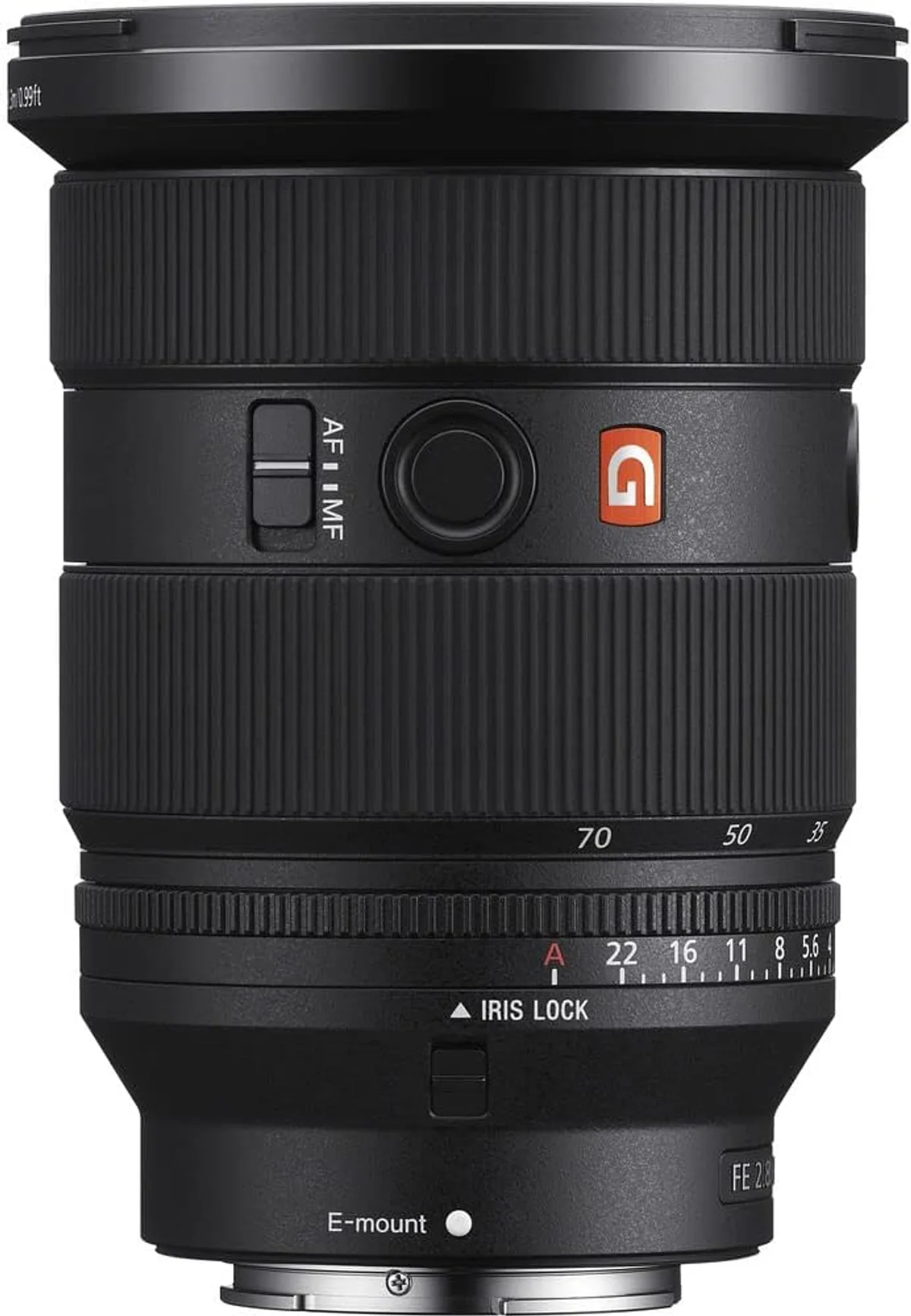
Quick Picks at a Glance
| Feature | Editor's Pick Sony FE 24-70mm f/2.8 GM II | Sigma 24-70mm f/2.8 DG DN II Art (Sony E) | Sony FE 24-105mm f/4 G OSS | Tamron 70-180mm f/2.8 Di III VC VXD G2 (Sony E) | Sony FE 20mm f/1.8 G | Tamron 150-500mm f/5-6.7 Di III VC VXD (Sony E) | Sony FE 50mm f/1.8 | Sigma 35mm f/1.4 DG DN Art (Sony E) | Tamron 28-75mm f/2.8 Di III VXD G2 (Sony E) | Sony FE 85mm f/1.8 | Sony FE 35mm f/1.8 | VILTROX AF 50mm F1.4 Pro FE (Sony E) | Sigma 105mm f/2.8 DG DN Macro Art (Sony E) | Sigma 85mm f/1.4 DG DN Art (Sony E) | Tamron 28-200mm f/2.8-5.6 Di III RXD (Sony E) | Tamron 50-300mm f/4.5-6.3 Di III VC VXD (Sony E) | Tamron 17-70mm f/2.8 Di III-A VC RXD (Sony E) | Sigma 16mm f/1.4 DC DN Contemporary (Sony E) | Tamron 70-300mm f/4.5-6.3 Di III RXD (Sony E) | Tamron 18-300mm f/3.5-6.3 Di III-A VC VXD (Sony E) | Meike 85mm f/1.8 SE II STM AF (Sony E) | Sony E 55-210mm f/4.5-6.3 OSS |
|---|---|---|---|---|---|---|---|---|---|---|---|---|---|---|---|---|---|---|---|---|---|---|
| Price Band | Flagship | Flagship | Flagship | Step-up | Flagship | Flagship | Entry | Step-up | Step-up | Step-up | Step-up | Entry | Step-up | Flagship | Step-up | Step-up | Step-up | Entry | Entry | Entry | Entry | Entry |
| Focal Length | 24-70mm | 24-70mm | 24-105mm | 70-180mm | 20mm | 150-500mm | 50mm | 35mm | 28-75mm | 85mm | 35mm | 50mm | 105mm | 85mm | 28-200mm | 50-300mm | 17-70mm | 16mm | 70-300mm | 18-300mm | 85mm | 55-210mm |
| Max Aperture | f/2.8 | f/2.8 | f/4 | f/2.8 | f/1.8 | f/5-6.7 | f/1.8 | f/1.4 | f/2.8 | f/1.8 | f/1.8 | f/1.4 | f/2.8 | f/1.4 | f/2.8-5.6 | f/4.5-6.3 | f/2.8 | f/1.4 | f/4.5-6.3 | f/3.5-6.3 | f/1.8 | f/4.5-6.3 |
| Mount | Sony E | Sony E | Sony E | Sony E | Sony E | Sony E | Sony E | Sony E | Sony E | Sony E | Sony E | Sony E | Sony E | Sony E | Sony E | Sony E | Sony E | Sony E | Sony E | Sony E | Sony E | Sony E |
| Check Price | Check Price | Check Price | Check Price | Check Price | Check Price | Check Price | Check Price | Check Price | Check Price | Check Price | Check Price | Check Price | Check Price | Check Price | Check Price | Check Price | Check Price | Check Price | Check Price | Check Price | Check Price |
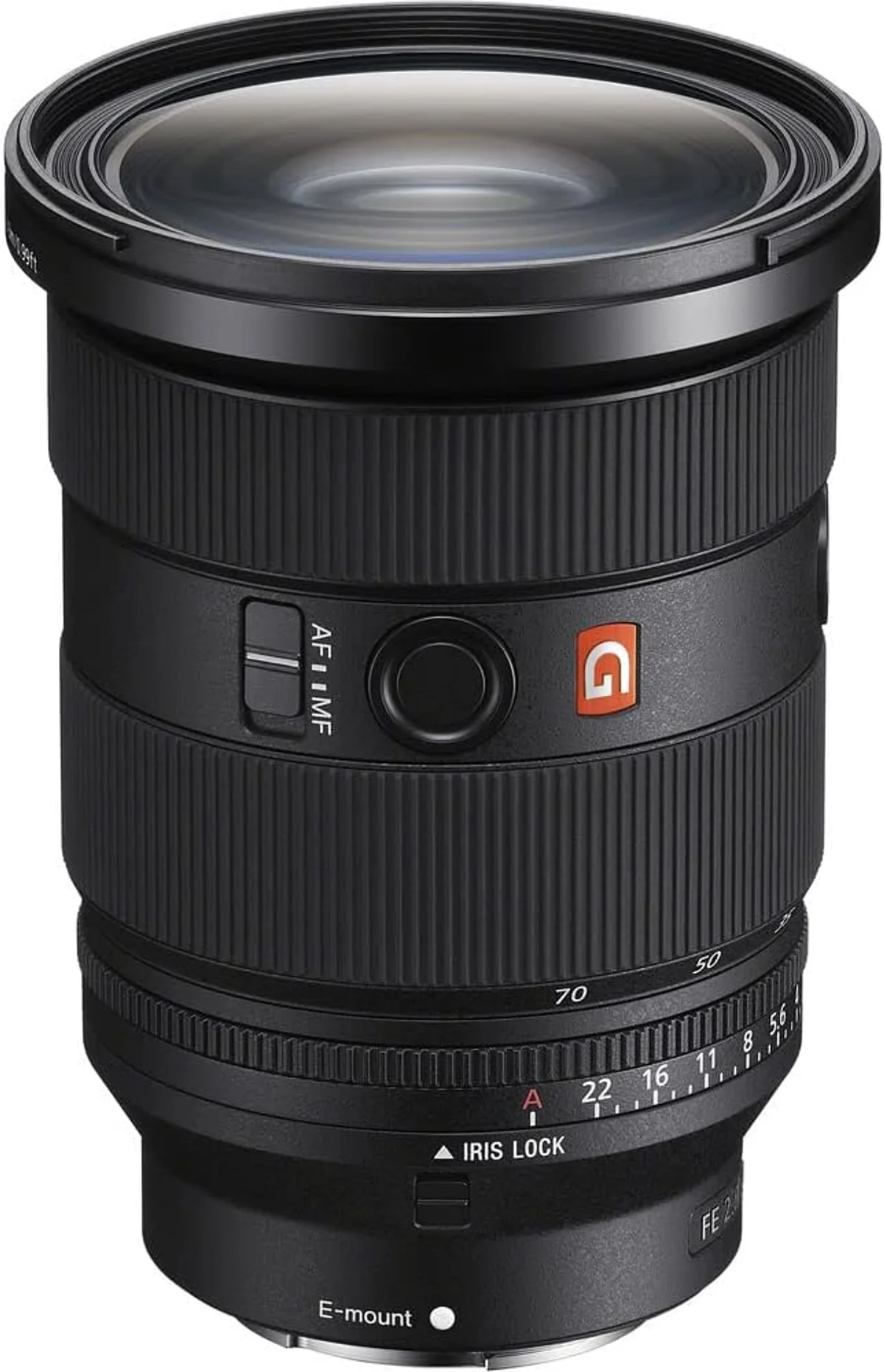
1. Sony FE 24-70mm f/2.8 GM II — Best Pro Standard Zoom
The GM II is the sharpest 24-70mm f/2.8 available for any mirrorless system, and at 695g it is also the lightest. Dual XD linear motors deliver autofocus fast enough for sports and wedding coverage, and nano AR coating II controls flare in backlit situations that defeat lesser zooms. Corner-to-corner resolution at every focal length sets the benchmark that Sigma and Tamron measure themselves against. Sony 24-70mm GM II review for MTF comparisons.
The price puts this lens firmly in professional territory, and it lacks built-in stabilization — body IBIS handles the gap on A7-series bodies, but older or budget Sony cameras lose out. Wedding, event, and editorial photographers who demand the best optical performance from a standard zoom will find the premium justified. Enthusiasts should look at the Sigma Art II at position 2 for 90-95% of the performance at a fraction of the cost.
Price band: Flagship Check Price
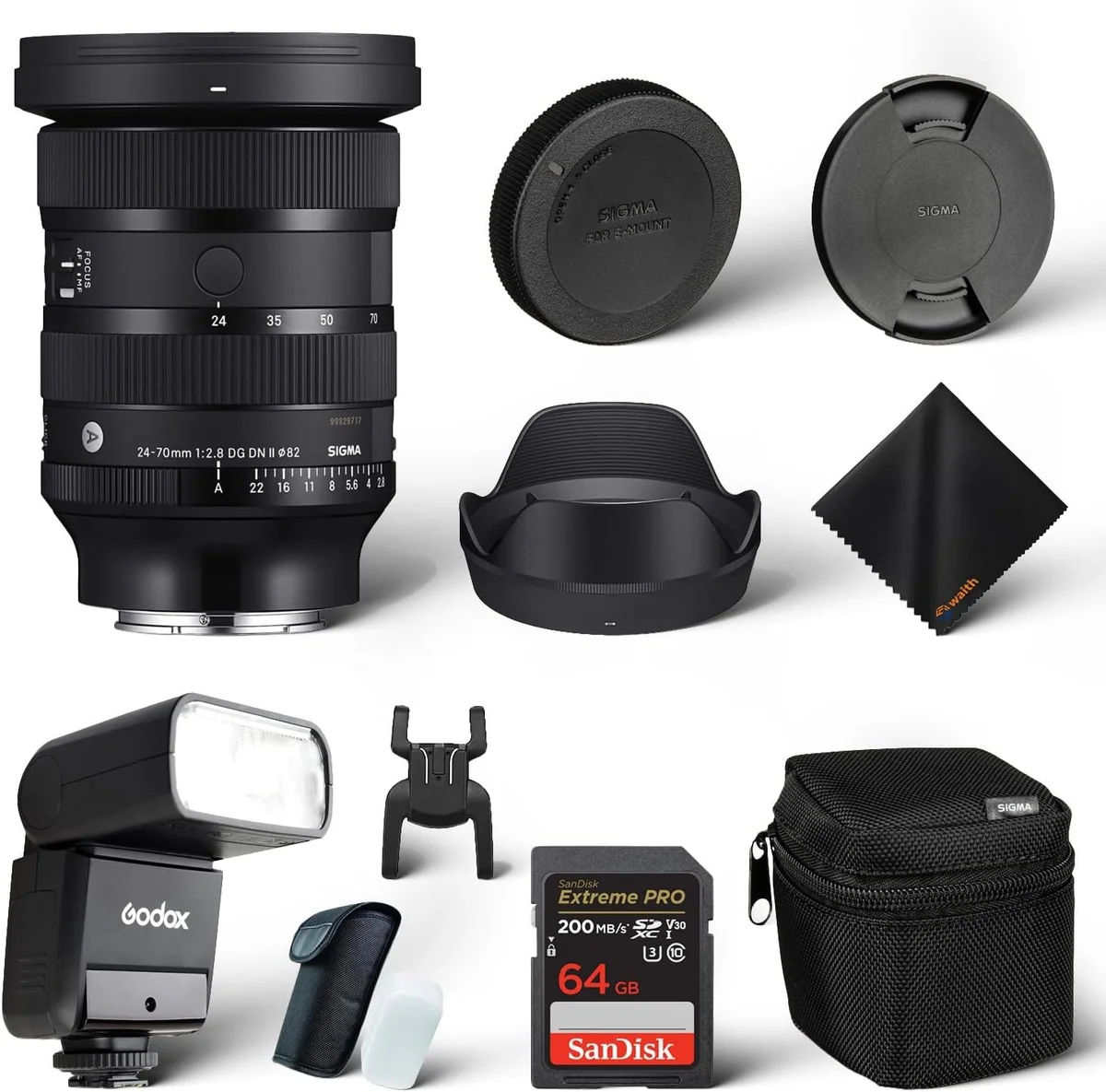
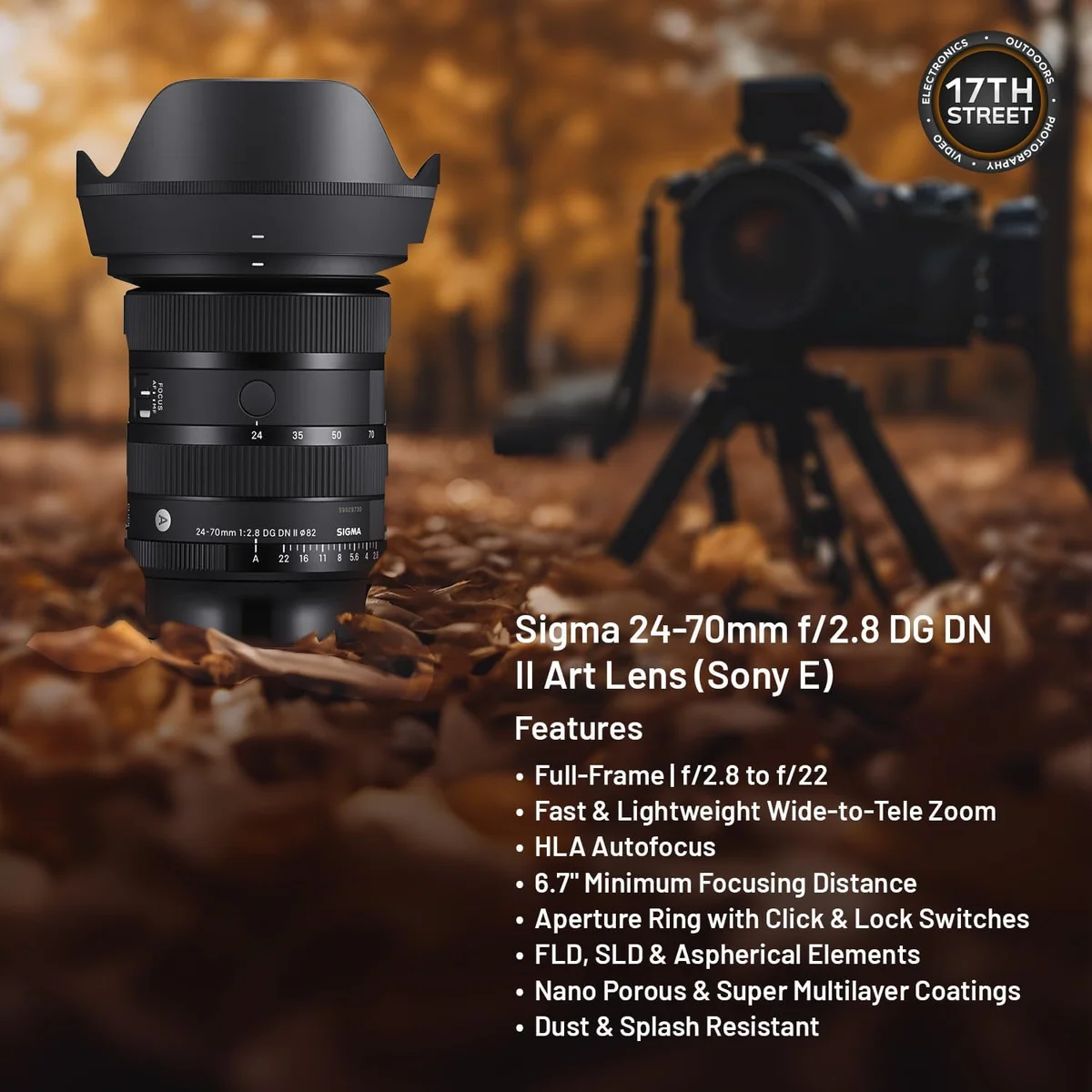
2. Sigma 24-70mm f/2.8 DG DN II Art (Sony E) — Best Value Standard Zoom
Sigma's second-generation 24-70mm Art closes the gap to the Sony GM II so tightly that most photographers cannot distinguish the two in blind comparisons.
The HLA (High-response Linear Actuator) motor delivers autofocus nearly as fast as Sony's XD system, and center sharpness from 24mm through 50mm matches the GM II measurement for measurement. At roughly 60% of the Sony's price, this is the standard zoom that makes the most financial sense for the widest range of Sony shooters. Sigma 24-70mm Art II review.
Corner performance at 70mm wide open is where the Sigma falls slightly behind the Sony — visible in landscape and architectural work, invisible in portraits and events. At 745g it weighs 50g more than the GM II, a difference only noticeable on direct comparison. GM II vs Sigma Art II comparison for a detailed breakdown. For anyone who doesn't need the last 5% of corner resolution, this lens earns the money it saves.
Price band: Flagship Check Price
3. Sony FE 24-105mm f/4 G OSS — Best All-Around Zoom
The single most flexible lens in the Sony system.
The 24-105mm range eliminates lens changes for 90% of shooting situations — wide enough for interiors at 24mm, long enough for portraits at 105mm. Built-in OSS stabilization pairs with body IBIS for roughly 6 stops of combined correction, making this the strongest handheld video zoom in the G-series lineup. G-series build quality delivers full weather sealing and a confidence-inspiring 663g heft. Our Sony 24-105mm f/4 G review covers the optical performance in depth.
The f/4 constant aperture is the primary limitation — less background separation than f/2.8 zooms and higher ISO requirements in dim interiors. For travel photographers, event coverage, and daily shooting where zoom range outweighs maximum aperture, this is the buy-one-lens-and-stop answer for Sony full-frame. It pairs well with a fast prime (the Sony FE 50mm f/1.8 prime or Sony FE 85mm f/1.8 portrait lens) for low-light situations.
Price band: Flagship Check Price
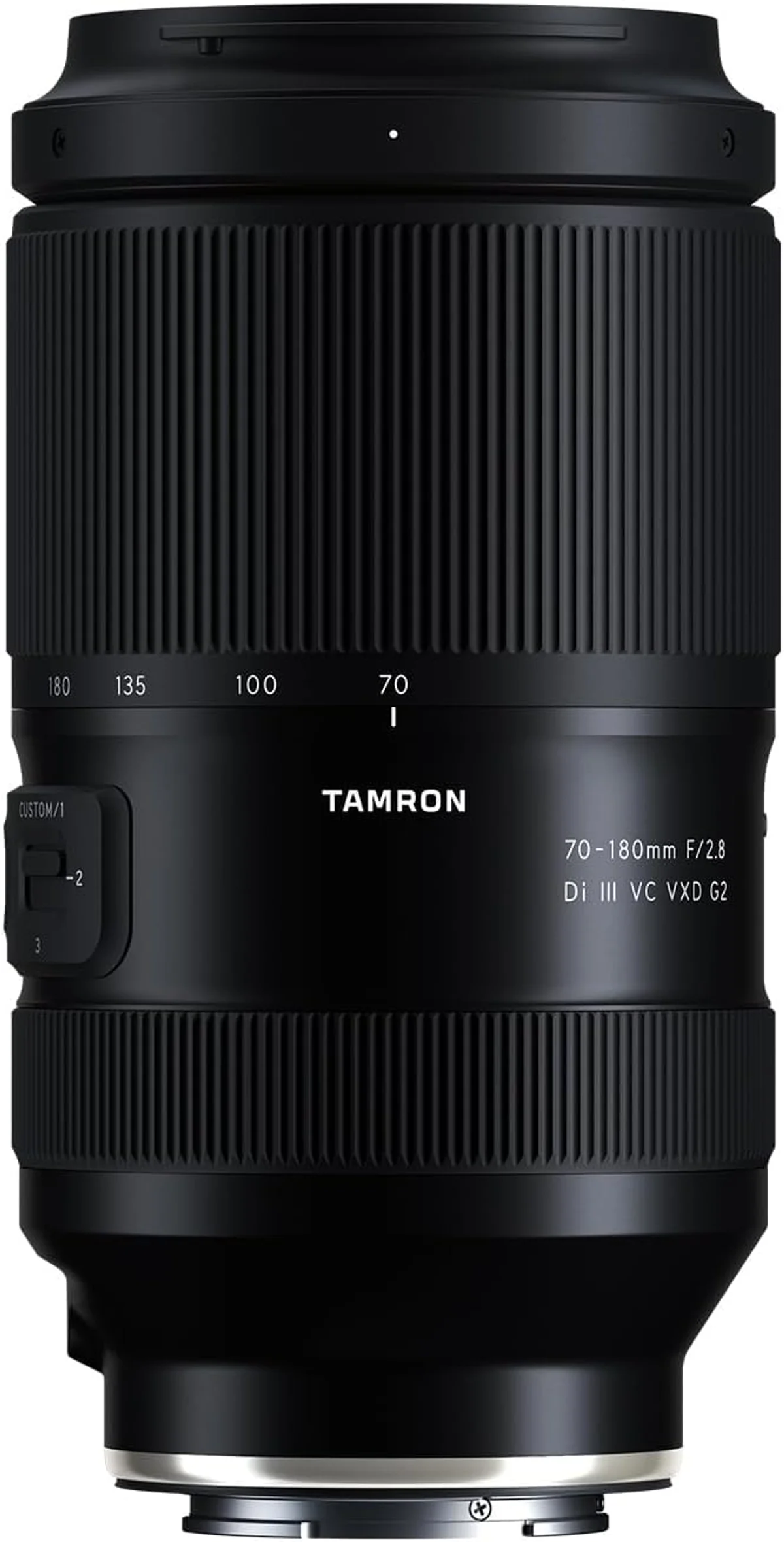
4. Tamron 70-180mm f/2.8 Di III VC VXD G2 (Sony E) — Best Event Telephoto
Tamron's second-generation 70-180mm f/2.8 adds the VC stabilization that the original lacked, completing it as a true Sony 70-200mm GM alternative at roughly half the price. The VXD linear motor autofocus tracks Eye AF with the speed that wedding and event photographers need, and the 855g weight makes three-to-four-hour handheld sessions comfortable. Sharpness peaks in the 85-135mm portrait sweet spot, where resolution matches the first-generation Sony 70-200mm GM. Tamron 70-180mm G2 review.
The 180mm ceiling sacrifices 20mm of reach versus a traditional 70-200mm — noticeable for compressed headshots at maximum distance and tight sideline sports framing, irrelevant for 95% of portrait and event work. For wedding, corporate event, and portrait photographers who prioritize value and weight over that last 20mm, this is the telephoto zoom to buy on Sony E-mount.
Price band: Step-up Check Price
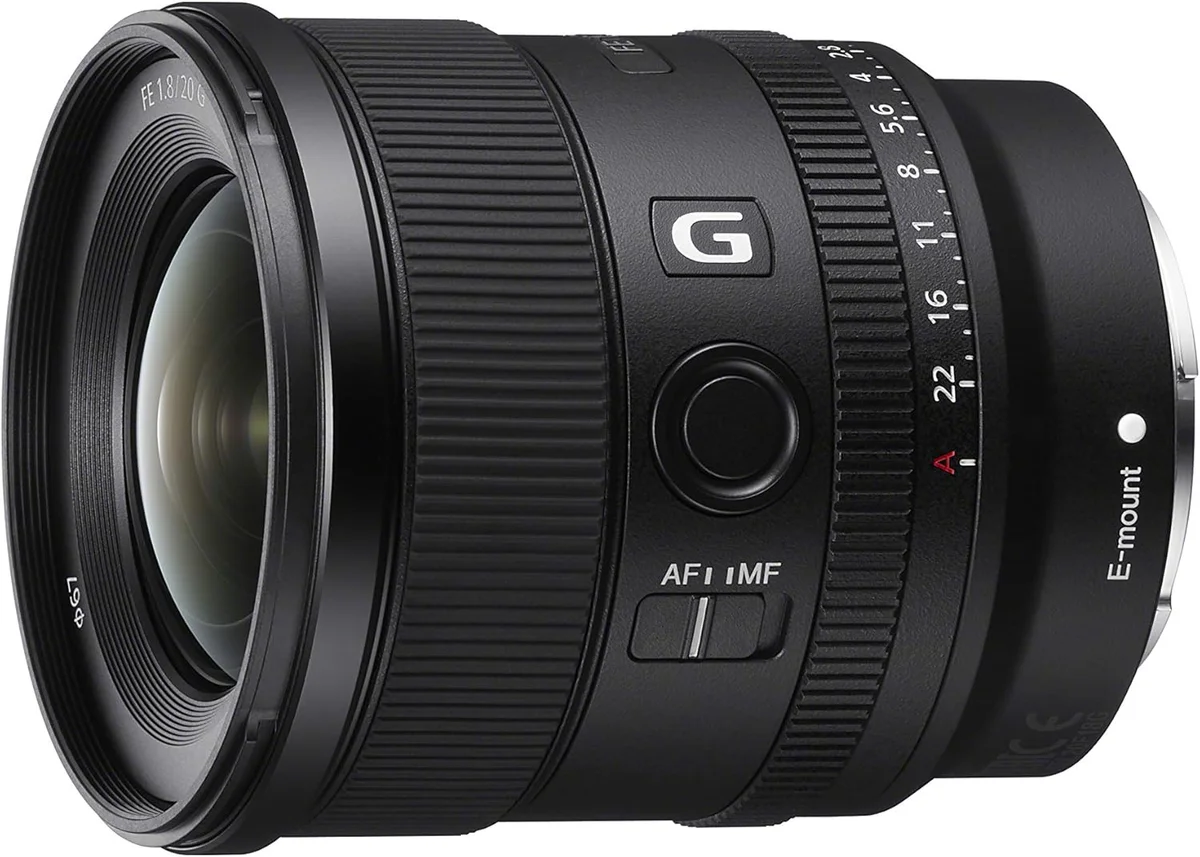
5. Sony FE 20mm f/1.8 G — Best Wide-Angle Prime
The best ultra-wide prime for astrophotography on any mirrorless system. Corner sharpness at f/1.8 is exceptional — minimal coma and astigmatism produce pinpoint stars to the edges of a 61MP A7R V sensor. At 373g with weather sealing, it works equally well for landscape, real estate, and vlogging where the ultra-wide field of view captures entire rooms or dramatic foreground-to-background compositions. Full Sony FE 20mm f/1.8 G review.
The G-series price premium asks more than most third-party wide-angle alternatives, and the single focal length limits range for shooters who want zoom flexibility. Astrophotographers, landscape specialists, and content creators who shoot wide will find this lens irreplaceable. General-purpose photographers may get more use from a wide-angle zoom.
Price band: Flagship Check Price
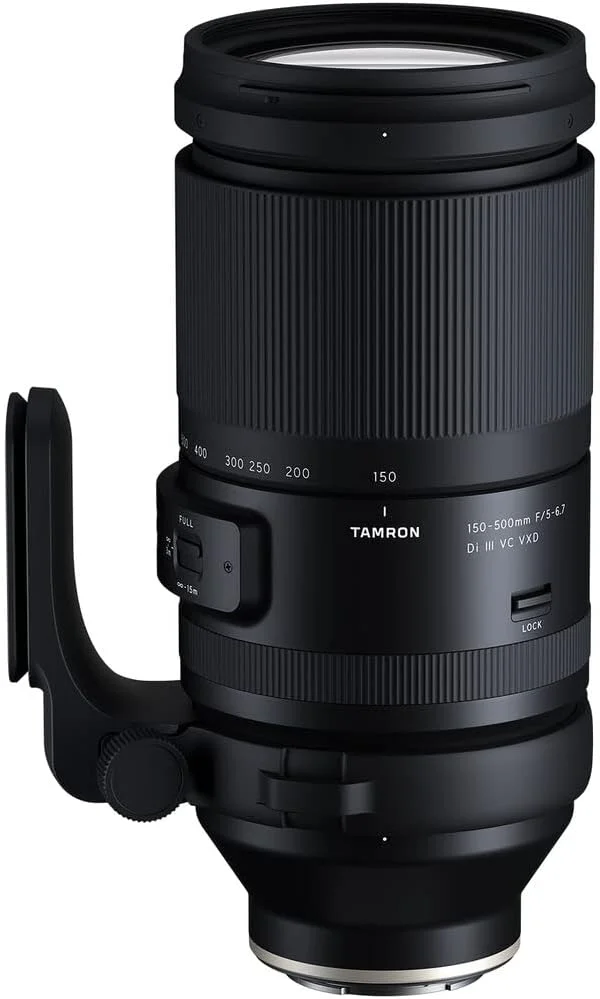
6. Tamron 150-500mm f/5-6.7 Di III VC VXD (Sony E) — Best Super-Telephoto
The Tamron 150-500mm redefined super-telephoto value on Sony E-mount. Before this lens, reaching 500mm required the Sony 200-600mm G at roughly double the cost. Center sharpness from 150mm through 400mm resolves fine feather detail that surprises photographers accustomed to associating this price tier with compromise. VXD autofocus tracks birds and wildlife with the speed that modern Sony bodies demand. Read our Tamron 150-500mm review for sample images at every focal length.
At 1,725g this is the heaviest lens in the roundup, and 500mm at f/6.7 requires strong light or high ISO. The VC stabilization provides 4-5 stops of handheld correction, extending shooting into early-morning and late-afternoon conditions. For birders, wildlife enthusiasts, and aviation photographers, this is the lens to beat at its price tier on Sony.
Price band: Flagship Check Price
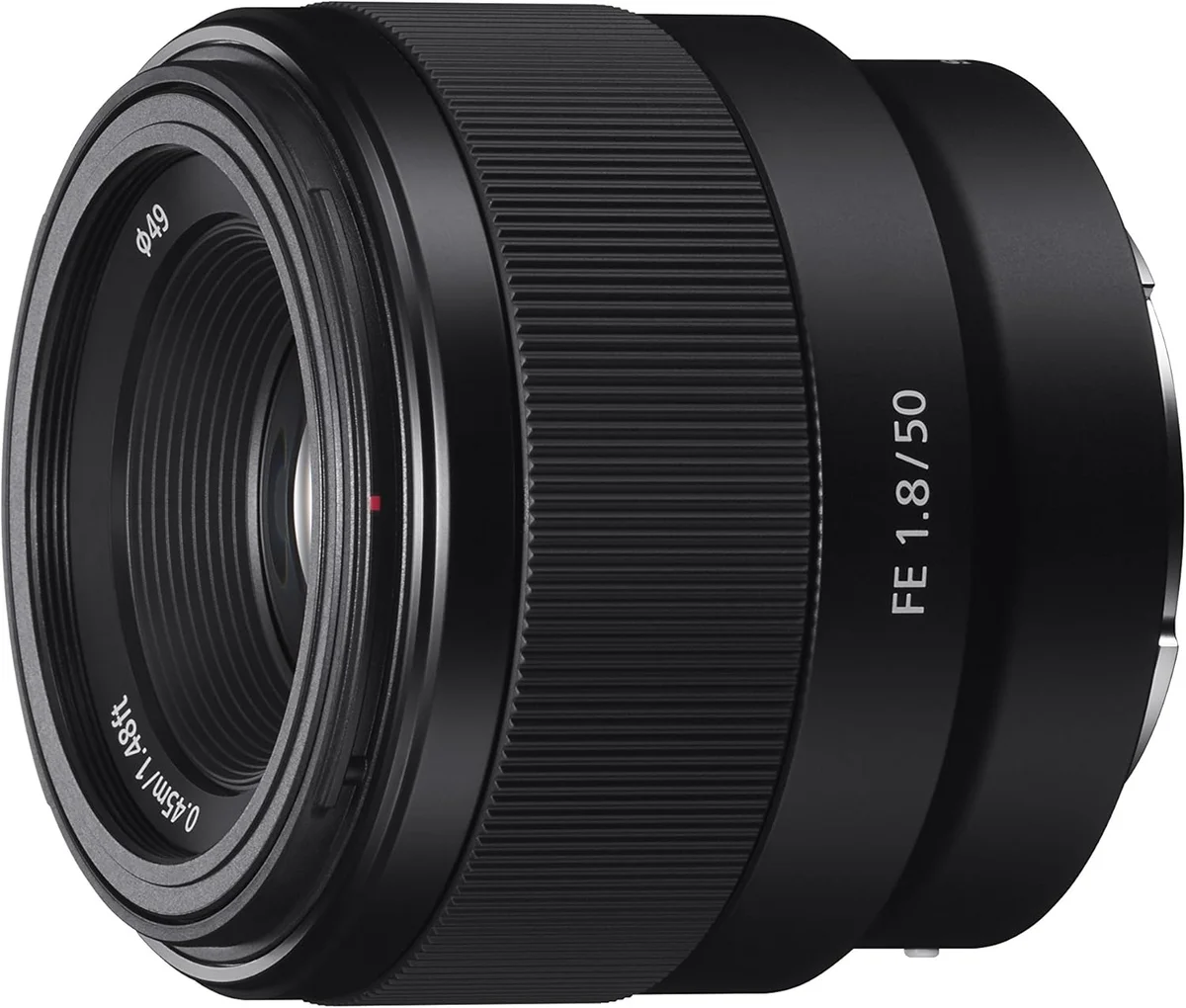
7. Sony FE 50mm f/1.8 — Best Budget Prime
The obvious first prime for any Sony shooter. At 186g and the lowest price of any Sony full-frame lens, the FE 50mm f/1.8 delivers the single biggest image-quality leap from a kit zoom — sharper wide-open performance, far shallower depth of field, and better low-light capability. Center sharpness from f/2.8 onward rivals lenses costing three times as much. Our Sony FE 50mm f/1.8 review breaks down the optical performance. Also see our Sony 50mm vs Sigma 35mm comparison.
The DC autofocus motor hunts in low light — the weakest element of this otherwise strong package. Plastic build and no weather sealing reflect the price point honestly. Portrait and street shooters in good light will barely notice the AF limitation. For everyone building a Sony kit on a budget, this is the first lens to add after the kit zoom.
Price band: Entry Check Price
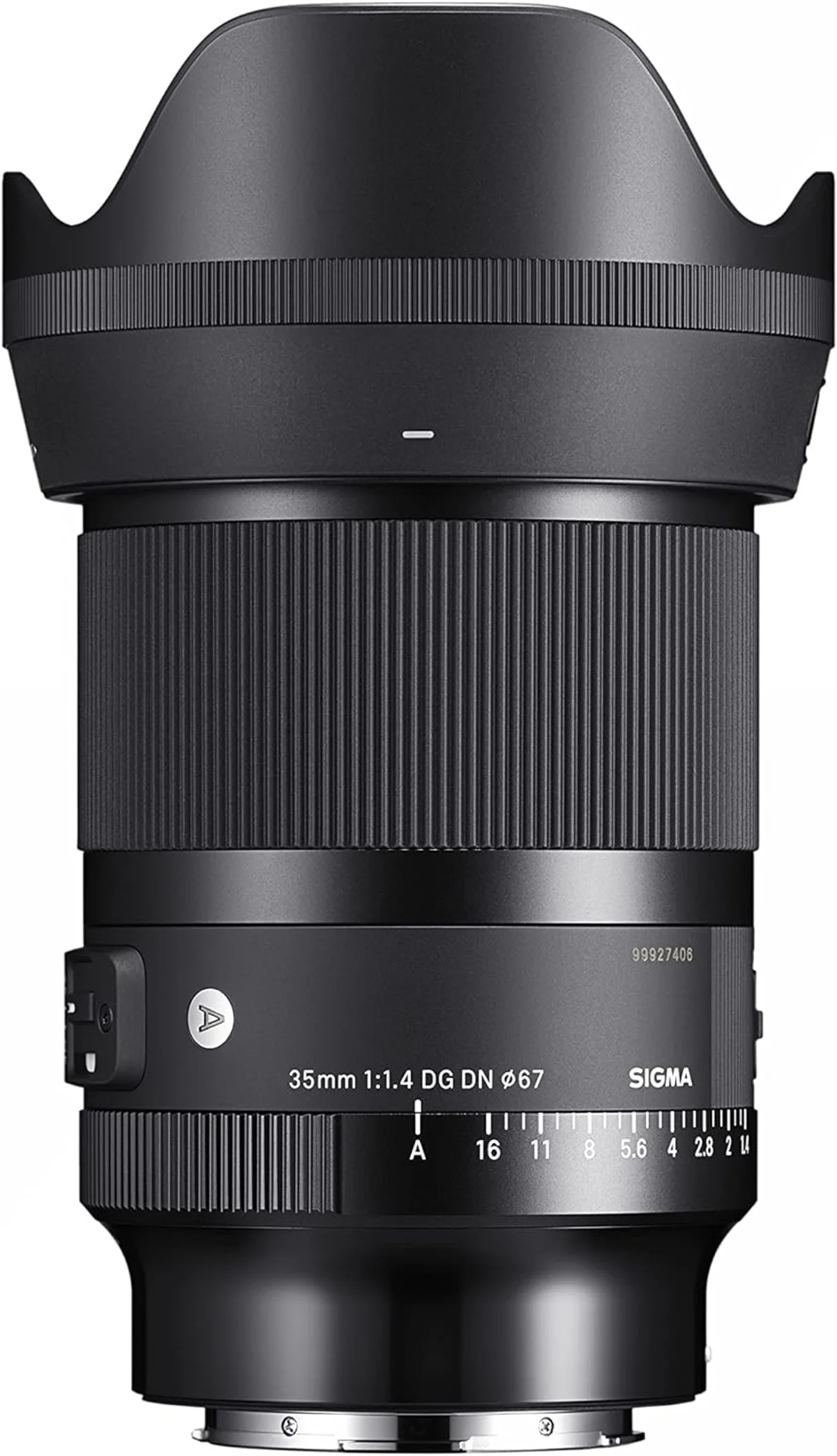
8. Sigma 35mm f/1.4 DG DN Art (Sony E) — Best Street Prime
Sigma's 35mm f/1.4 Art is the street photography lens that other manufacturers benchmark against. At f/1.4 on a 35mm focal length, it isolates subjects from urban backgrounds with a shallow depth of field that no zoom can match. The HLA motor delivers fast, silent autofocus, and the optical formula renders micro-contrast with the three-dimensional pop that made the Art series famous. Full Sigma 35mm f/1.4 Art review.
At 645g it is heavier than the Sony FE 35mm f/1.8 (280g), a noticeable weight gap for all-day street walking. The extra stop of aperture and sharper wide-open rendering justify the added weight for photographers who shoot in low light or want maximum background separation. For lighter carry, the Sony FE 35mm f/1.8 at position 11 covers the same focal length in a more compact package.
Price band: Step-up Check Price
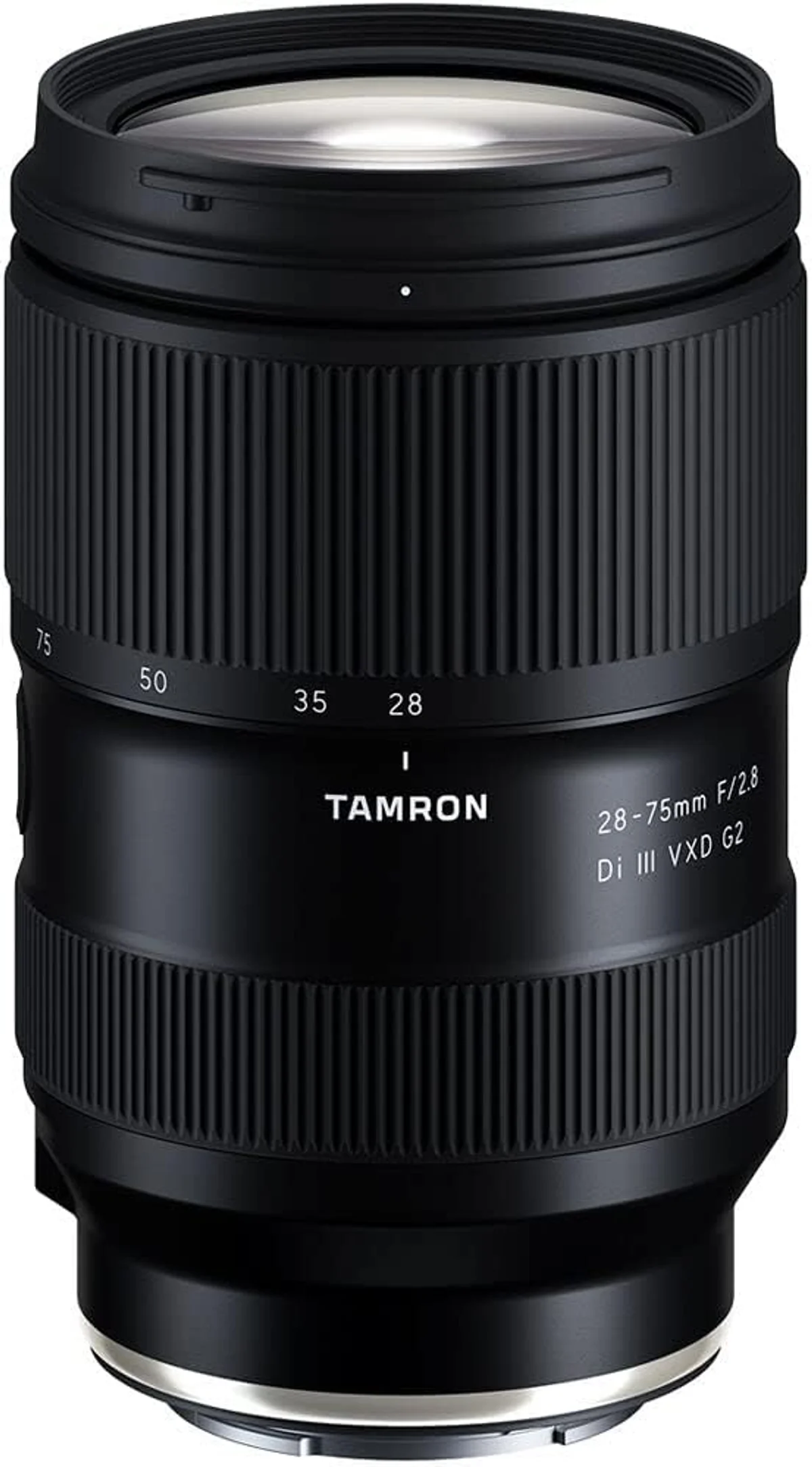
9. Tamron 28-75mm f/2.8 Di III VXD G2 (Sony E) — Best Budget Standard Zoom
The Tamron 28-75mm G2 is how most Sony shooters enter constant f/2.8 zoom territory without paying premium prices.
RXD autofocus handles portraits, events, and general shooting with confidence, and the 540g weight keeps the package compact on A7-series bodies. Sharpness from 28mm through 50mm is strong — the 50-75mm range softens slightly at the edges wide open but tightens by f/4. Tamron 28-75mm G2 review. For a direct comparison with the Sigma, see our Tamron 28-75mm vs Sigma Art II.
The 28mm starting point sacrifices 4mm of width compared to 24mm zooms — a gap that matters for interiors and group shots. No built-in stabilization means body IBIS carries the full load. For budget-conscious Sony full-frame shooters who want f/2.8 zoom coverage and can accept the slightly narrower wide end, this lens delivers strong value.
Price band: Step-up Check Price
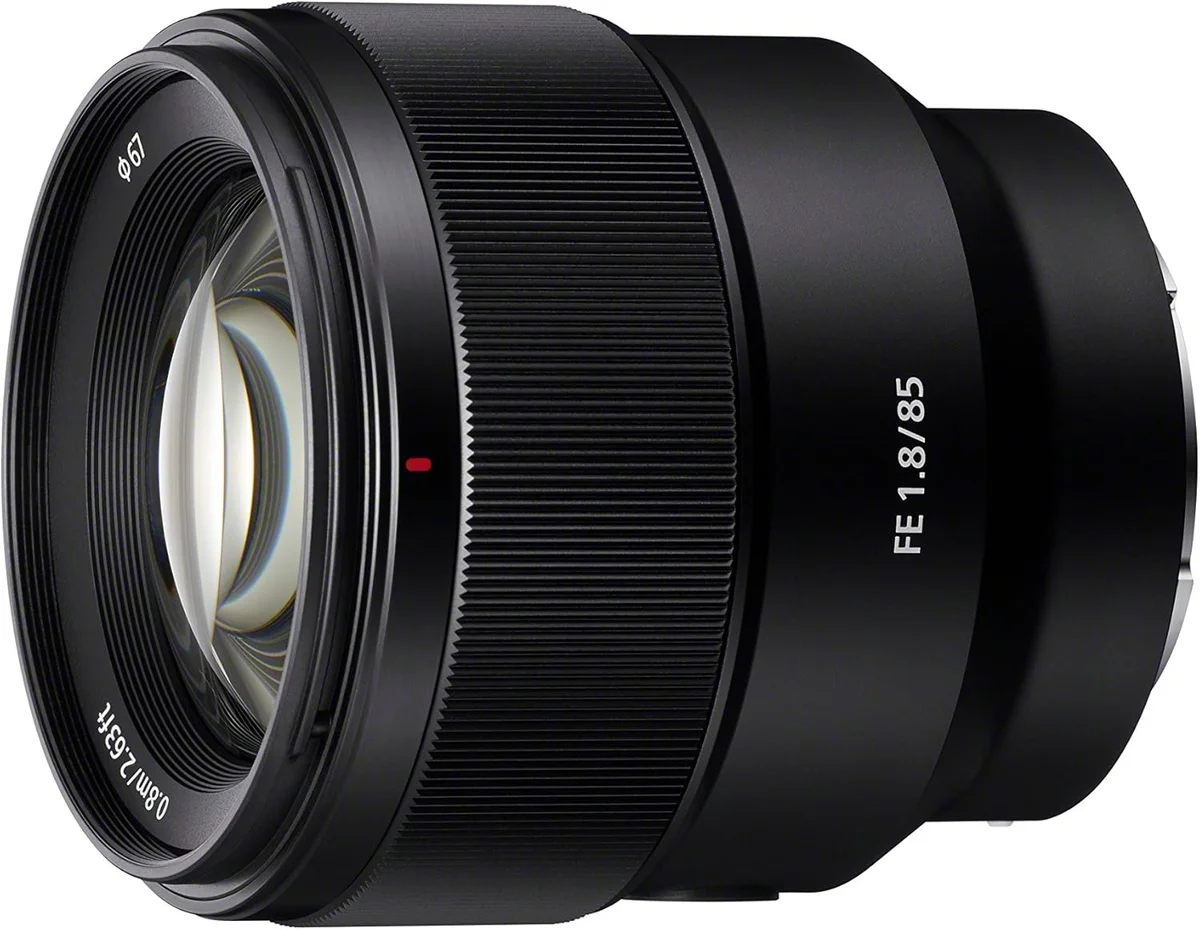
10. Sony FE 85mm f/1.8 — Best Portrait Prime
The classic portrait focal length executed with Sony's attention to AF performance. The 9-blade circular aperture produces bokeh that rivals lenses at triple the price — smooth, round highlights with minimal outlining. Linear motor autofocus locks onto Eye AF instantly, making this nearly foolproof for headshots and half-body portraits. Sharpness across the frame is strong from wide open. Our Sony FE 85mm f/1.8 review covers portrait rendering in detail.
No weather sealing and no stabilization are the primary limitations — IBIS on A7-series bodies compensates for the latter. Some longitudinal chromatic aberration appears wide open at high-contrast edges. For dedicated portrait shooters on Sony, this is the strongest native option below the 85mm f/1.4 GM price tier.
Price band: Step-up Check Price
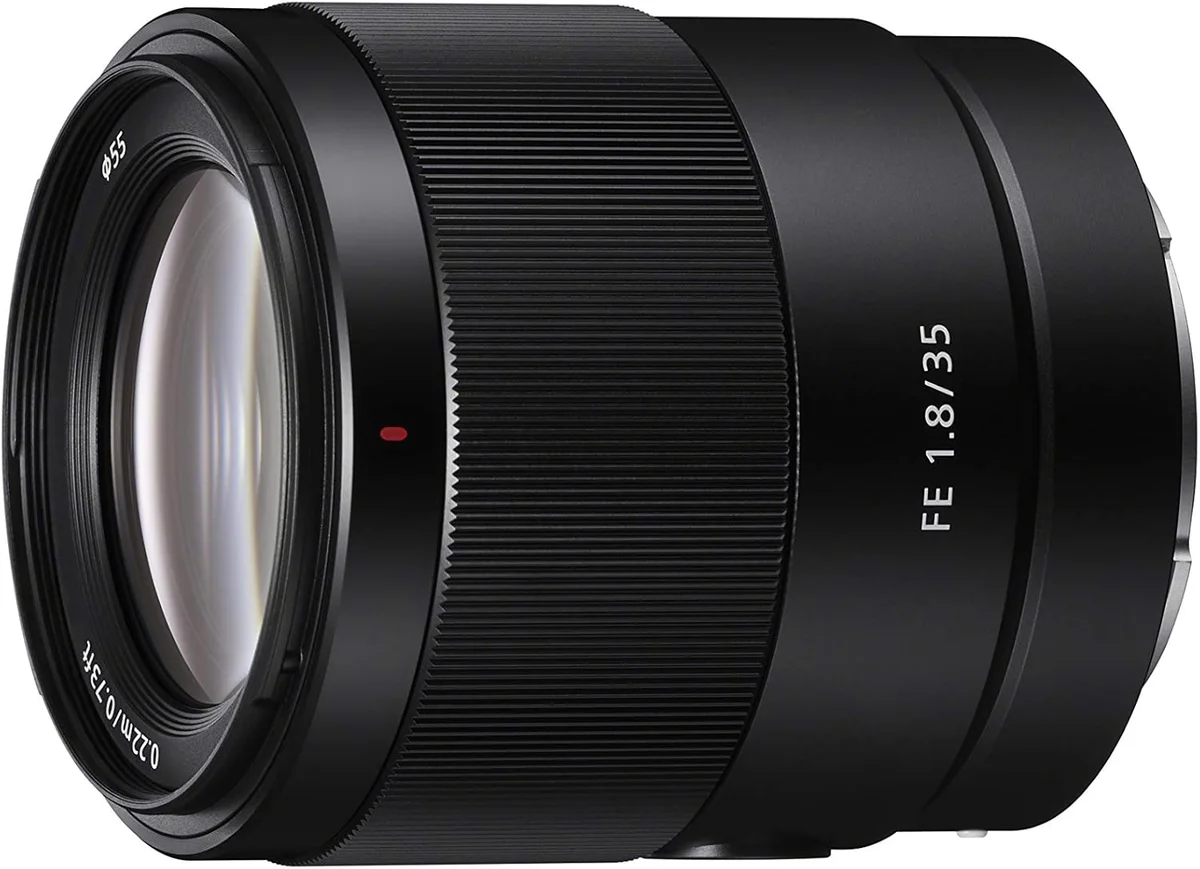
11. Sony FE 35mm f/1.8 — Best Compact Prime
At 280g, the Sony FE 35mm f/1.8 disappears on the camera body. The linear motor autofocus is fast and silent, the 0.22m minimum focus distance enables close-up creative work, and the 35mm field of view covers street, travel, and everyday shooting without the tunnel-vision feeling of a 50mm or 85mm. Dust and moisture sealing matches the build standard of more expensive G-series glass. Full Sony FE 35mm f/1.8 review.
Wide-open bokeh shows cat-eye shapes in the corners and some onion-ring patterns from aspherical elements — both vanish by f/2.5. The price sits in an awkward middle ground between budget primes and the G Master tier. For shooters who prioritize compact size and a walk-around focal length over maximum aperture speed, this is the 35mm to choose on Sony. Those who want f/1.4 and sharper wide-open corners should look at the Sigma 35mm Art at position 8.
Price band: Step-up Check Price
12. VILTROX AF 50mm F1.4 Pro FE (Sony E) — Best Fast Prime Value
The Viltrox 50mm f/1.4 Pro fills the gap between the Sony FE 50mm f/1.8 and the 50mm f/1.4 GM — f/1.4 speed, weather sealing, and autofocus at a price that undercuts the GM by more than half. The 11-blade aperture produces round bokeh highlights that rival lenses costing three times as much, and the rendering character at f/1.4 is slightly soft at the edges in a way that many portrait photographers find flattering. Viltrox 50mm f/1.4 Pro review.
The STM autofocus motor handles portraits and street shooting well but hunts in very low-contrast scenarios where Sony's faster XD linear motors pull ahead. Firmware updates via USB are the primary inconvenience — Viltrox periodically releases compatibility patches for new camera bodies. For Sony shooters who want f/1.4 shallow depth of field without the G Master price, this is the clearest value play.
Price band: Entry Check Price
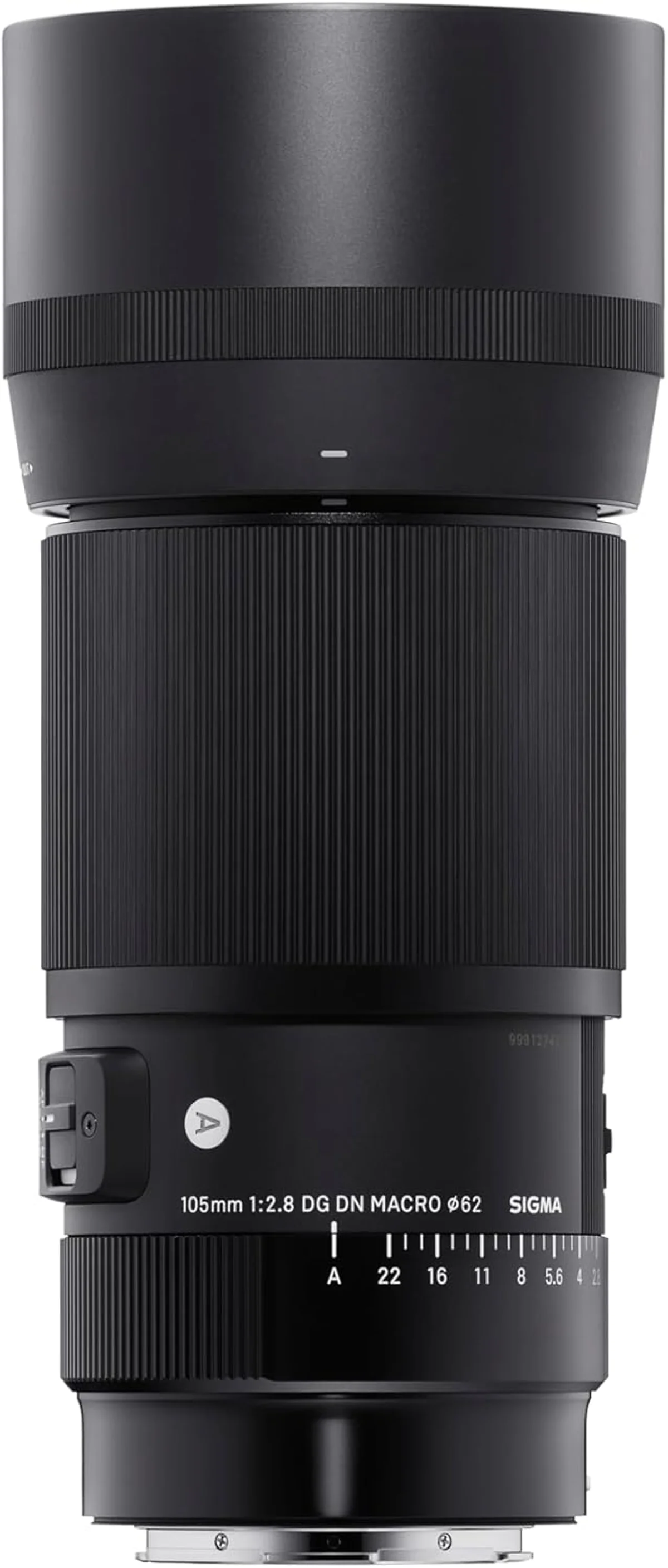
13. Sigma 105mm f/2.8 DG DN Macro Art (Sony E) — Best Macro
Sigma's 105mm f/2.8 Macro Art delivers true 1:1 magnification with the optical precision that the Art designation promises. Center sharpness at macro distances is exceptional, and the 105mm focal length provides comfortable working distance from small subjects — insects, jewelry, product photography. The aperture ring enables smooth manual control for focus stacking workflows, and the build quality includes full dust and splash resistance. Full Sigma 105mm Macro Art review.
At 710g it is heavier than many macro alternatives, and the AF slows at close focus distances (standard macro behavior). Beyond macro duty, this lens doubles as a sharp short telephoto for portraits with beautiful bokeh rendering. Photographers who need macro capability and a portrait lens in one package get strong value from the Sigma 105mm Art.
Price band: Step-up Check Price
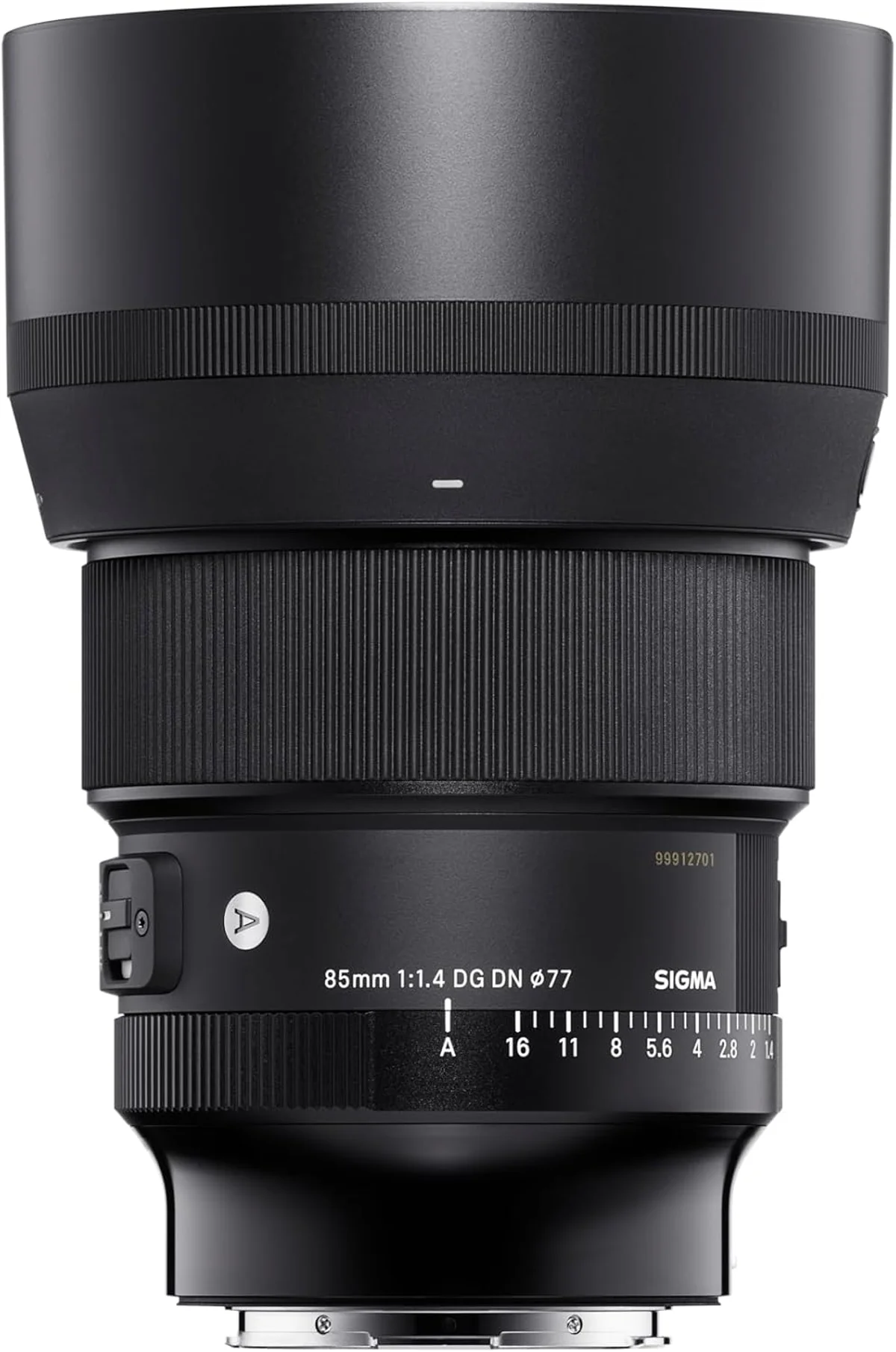
14. Sigma 85mm f/1.4 DG DN Art (Sony E) — Best Pro Portrait Prime
The Sigma 85mm f/1.4 Art is the portrait lens for photographers who want the maximum possible background separation and bokeh quality without paying Sony GM prices. At f/1.4, the depth of field is razor-thin — eyes sharp, ears blurred — and the 11-blade aperture renders specular highlights as smooth circles. Sharpness wide open exceeds the Sony FE 85mm f/1.8 by a visible margin, particularly in the corners. Full Sigma 85mm f/1.4 Art review.
At 625g it weighs nearly twice the Sony 85mm f/1.8 (371g), and the size matches that weight — this is a substantial lens on smaller Sony bodies. Professional portrait photographers who shoot at f/1.4-f/2 regularly will find the optical quality and bokeh character worth the bulk. Casual portrait shooters are better served by the lighter, less expensive Sony FE 85mm f/1.8.
Price band: Flagship Check Price
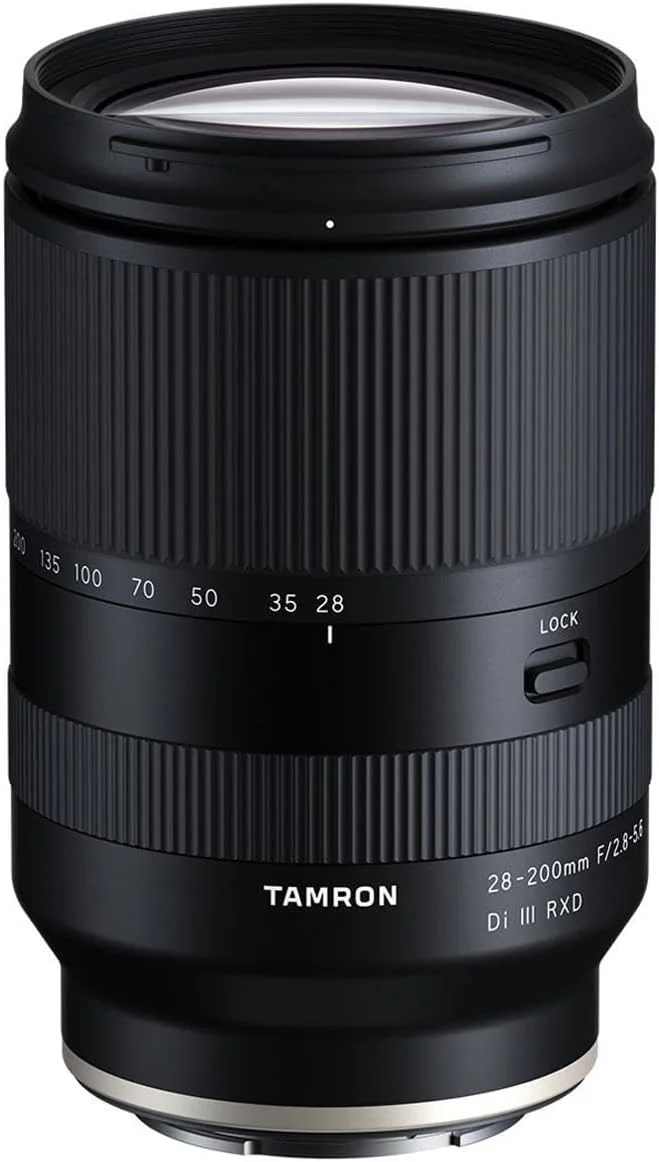
15. Tamron 28-200mm f/2.8-5.6 Di III RXD (Sony E) — Best Travel Zoom
A 7.1x zoom ratio starting at f/2.8 — no other full-frame travel zoom opens that wide. The Tamron 28-200mm covers everything from standard wide-angle through telephoto in a single 575g lens, and the f/2.8 wide end provides low-light capability that slower superzooms cannot match. Sharpness from 28mm through 100mm is strong, and the RXD motor delivers quick AF for travel snapshots and casual event coverage. Tamron 28-200mm review.
Past 135mm, the aperture narrows to f/5-5.6 and corner resolution drops — standard physics for any superzoom design. The 200mm end is the weakest focal length optically. For travel photographers who refuse to carry two lenses and want the widest aperture possible at the wide end, this is the strongest one-lens option for Sony full-frame.
Price band: Step-up Check Price
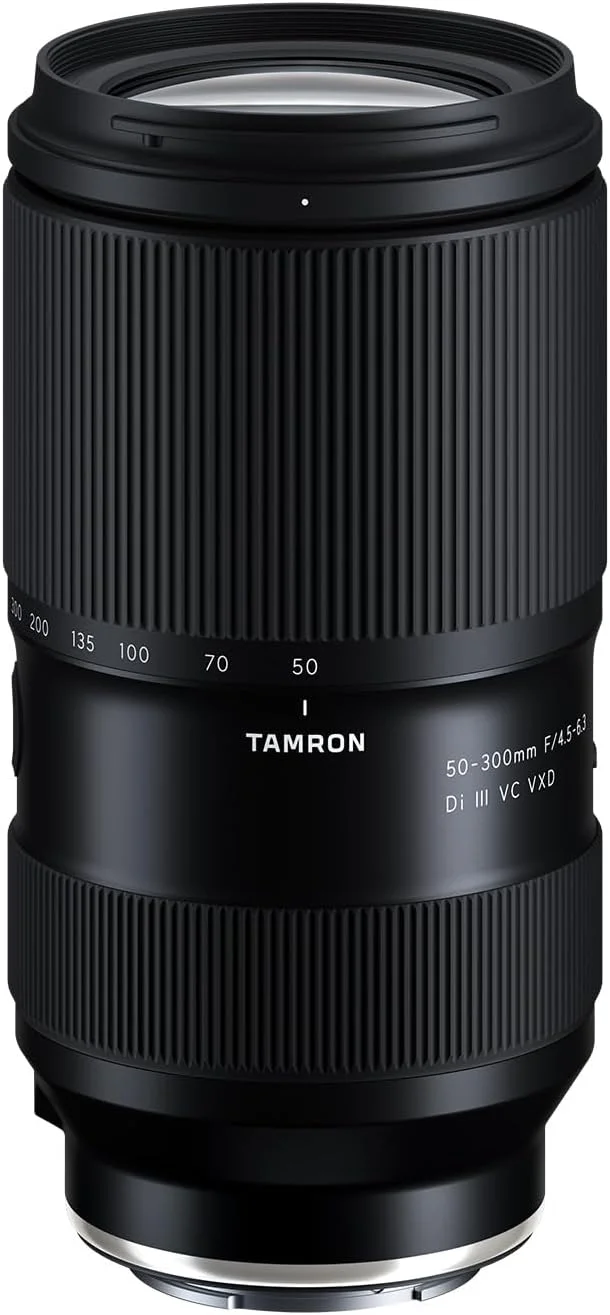
16. Tamron 50-300mm f/4.5-6.3 Di III VC VXD (Sony E) — Best One-Lens Telephoto
The Tamron 50-300mm covers a zoom range no other Sony E-mount lens offers — starting at a usable 50mm standard focal length and reaching 300mm telephoto in a 665g package. It eliminates the lens change between a standard zoom and telephoto, and the 0.22m minimum focus distance at the wide end enables close-up work that most telephoto zooms cannot achieve. VXD autofocus and VC stabilization match Tamron's higher-priced zooms. Full Tamron 50-300mm review.
The 6x zoom ratio demands optical compromises: corner sharpness falls past 200mm, and 300mm images perform best with centered subjects. Travel photographers and event shooters who prioritize flexibility over pixel-level performance gain the most from the all-in-one approach.
Price band: Step-up Check Price
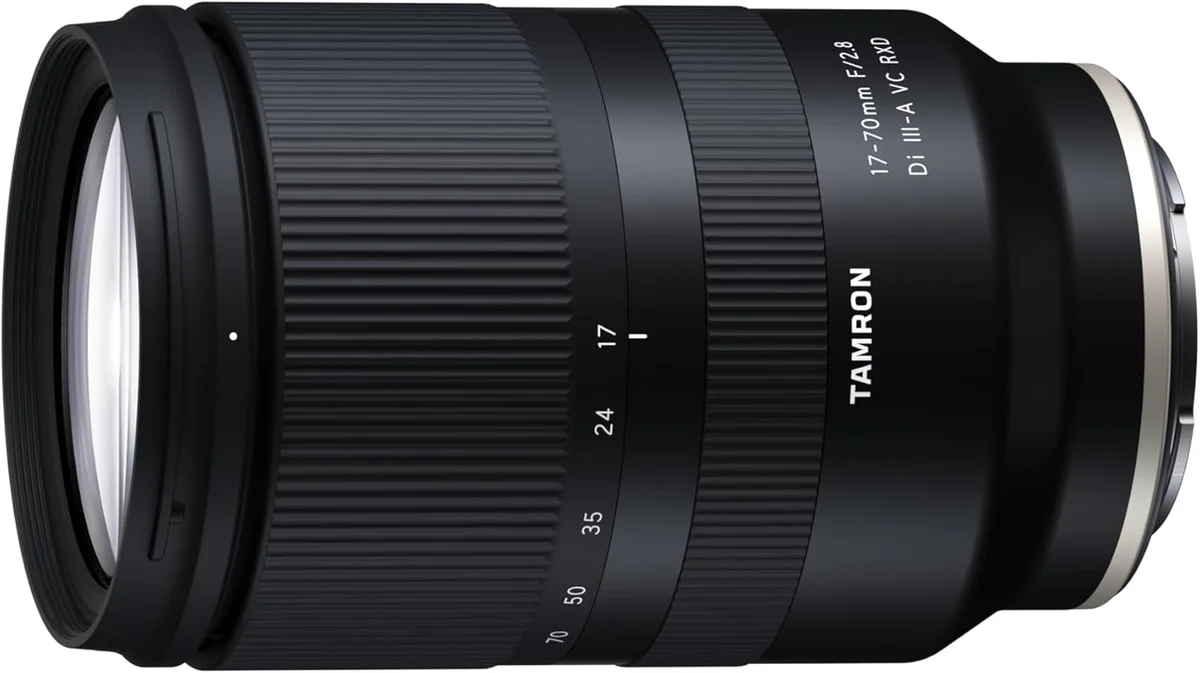
17. Tamron 17-70mm f/2.8 Di III-A VC RXD (Sony E) — Best APS-C Zoom
No other APS-C lens on Sony E-mount covers 17-70mm at a constant f/2.8 aperture. The equivalent 26-105mm field of view replaces the kit zoom with two stops more light across the entire range — a difference that transforms indoor shooting, event coverage, and low-light photography on the A6700, A6400, and ZV-E10 II. Built-in VC stabilization matters more on APS-C bodies where the 1.5x crop factor amplifies hand shake. Full Tamron 17-70mm f/2.8 review.
The RXD motor is older technology than Tamron's VXD linear motors, and tracking AF for fast-moving subjects is not as responsive. For portraits, street, events, and travel, the RXD performs well. At 525g with weather sealing, this is the default recommendation for APS-C Sony owners who want one lens for most situations.
Price band: Step-up Check Price
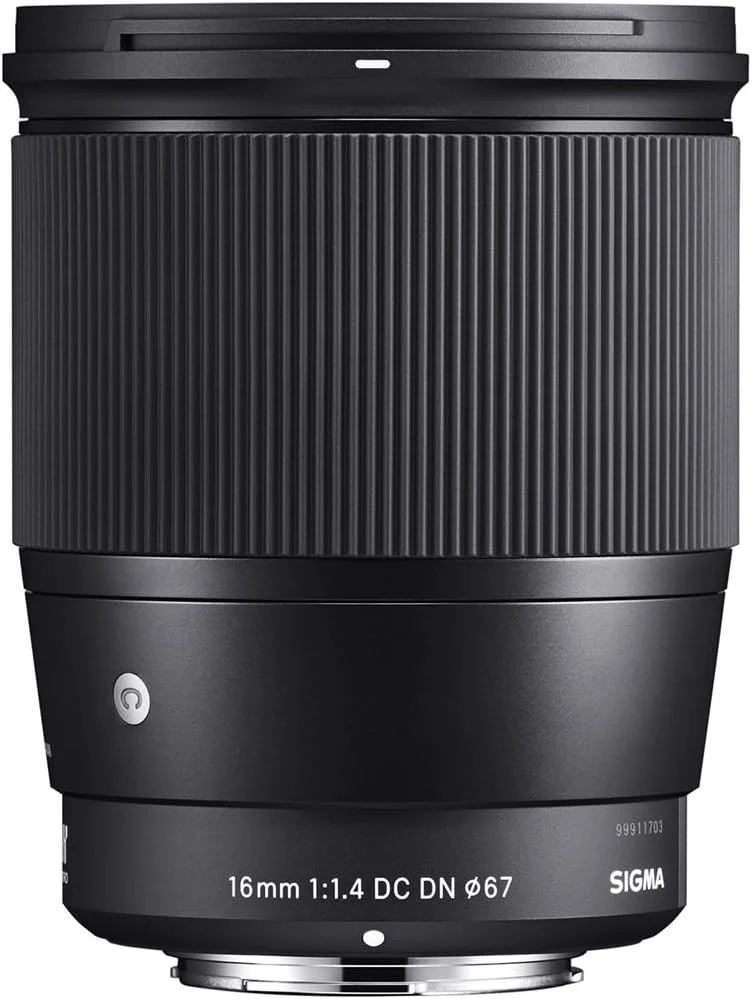
18. Sigma 16mm f/1.4 DC DN Contemporary (Sony E) — Best APS-C Wide Prime
The 24mm equivalent field of view at f/1.4 makes this the strongest low-light wide-angle option for Sony APS-C bodies. The Sigma 16mm f/1.4 DC DN delivers sharp center performance wide open, smooth bokeh from the 9-blade aperture, and stepping-motor autofocus that handles video work quietly. Vloggers, content creators, and APS-C street photographers use this lens as their primary or only prime. Full Sigma 16mm f/1.4 DC DN review.
Corner softness at f/1.4 is visible and improves by f/2.8 — standard for this class of fast wide-angle. No weather sealing and no stabilization mean body IBIS carries the full load. For APS-C Sony shooters who want the widest usable aperture at a wide-angle focal length, the Sigma 16mm has no real competition at its price tier.
Price band: Entry Check Price
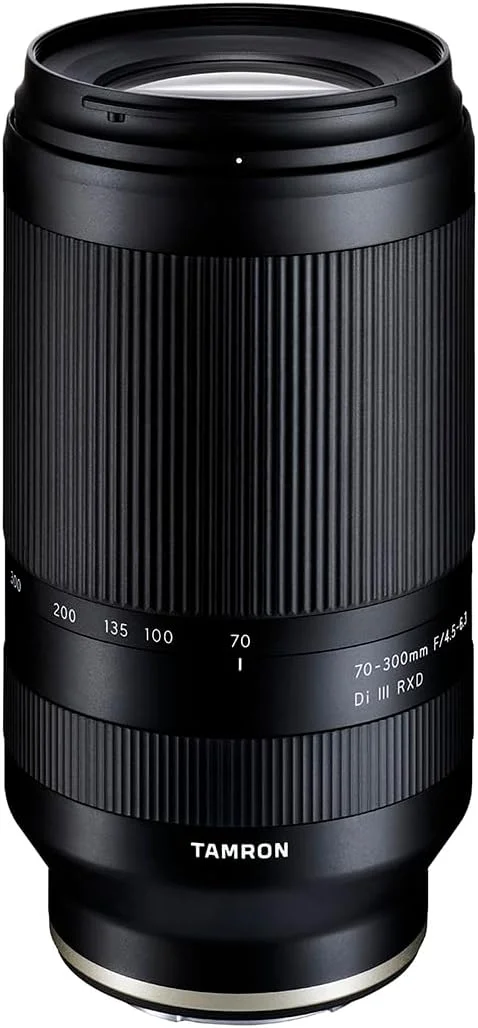
19. Tamron 70-300mm f/4.5-6.3 Di III RXD (Sony E) — Best Budget Telephoto
The Tamron 70-300mm delivers solid telephoto reach for Sony full-frame shooters at a price well below the Tamron 70-180mm f/2.8 or the 150-500mm. RXD autofocus handles casual wildlife, outdoor sports, and travel telephoto needs with acceptable speed in good light. At 545g it remains comfortable for handheld shooting, and sharpness from 70mm through 200mm is strong enough for detailed captures. Tamron 70-300mm review.
Past 200mm, the variable aperture narrows to f/6.3 and resolution softens — stopping down to f/8 recovers some sharpness but costs light. No VC stabilization means body IBIS alone handles correction. For photographers who need occasional telephoto reach without investing in a dedicated fast telephoto zoom, this fills the gap affordably.
Price band: Entry Check Price
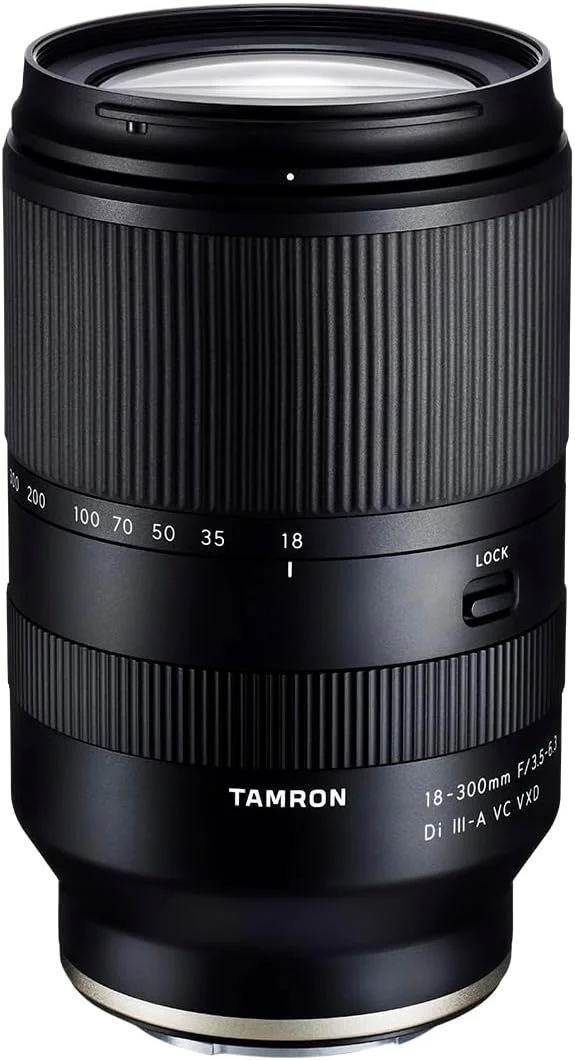
20. Tamron 18-300mm f/3.5-6.3 Di III-A VC VXD (Sony E) — Best APS-C Superzoom
A 16.7x zoom ratio on APS-C delivers 27-450mm equivalent range — wide enough for interiors, long enough for distant wildlife. The Tamron 18-300mm is the ultimate one-lens travel solution for Sony A6700, A6400, and ZV-E10 owners. VXD linear motor autofocus and VC stabilization match the feature set of Tamron's more expensive zooms. The 0.15m minimum focus distance at the wide end approaches macro-level close-up capability at 0.5x magnification. Full Tamron 18-300mm review.
The 16.7x ratio means this lens cannot match shorter-range zooms at any individual focal length. Past 200mm, visible softness appears. For social media, web use, and standard prints, quality is more than adequate across the range. For the traveling APS-C photographer who refuses to carry two lenses, this remains the single most flexible optic available.
Price band: Entry Check Price
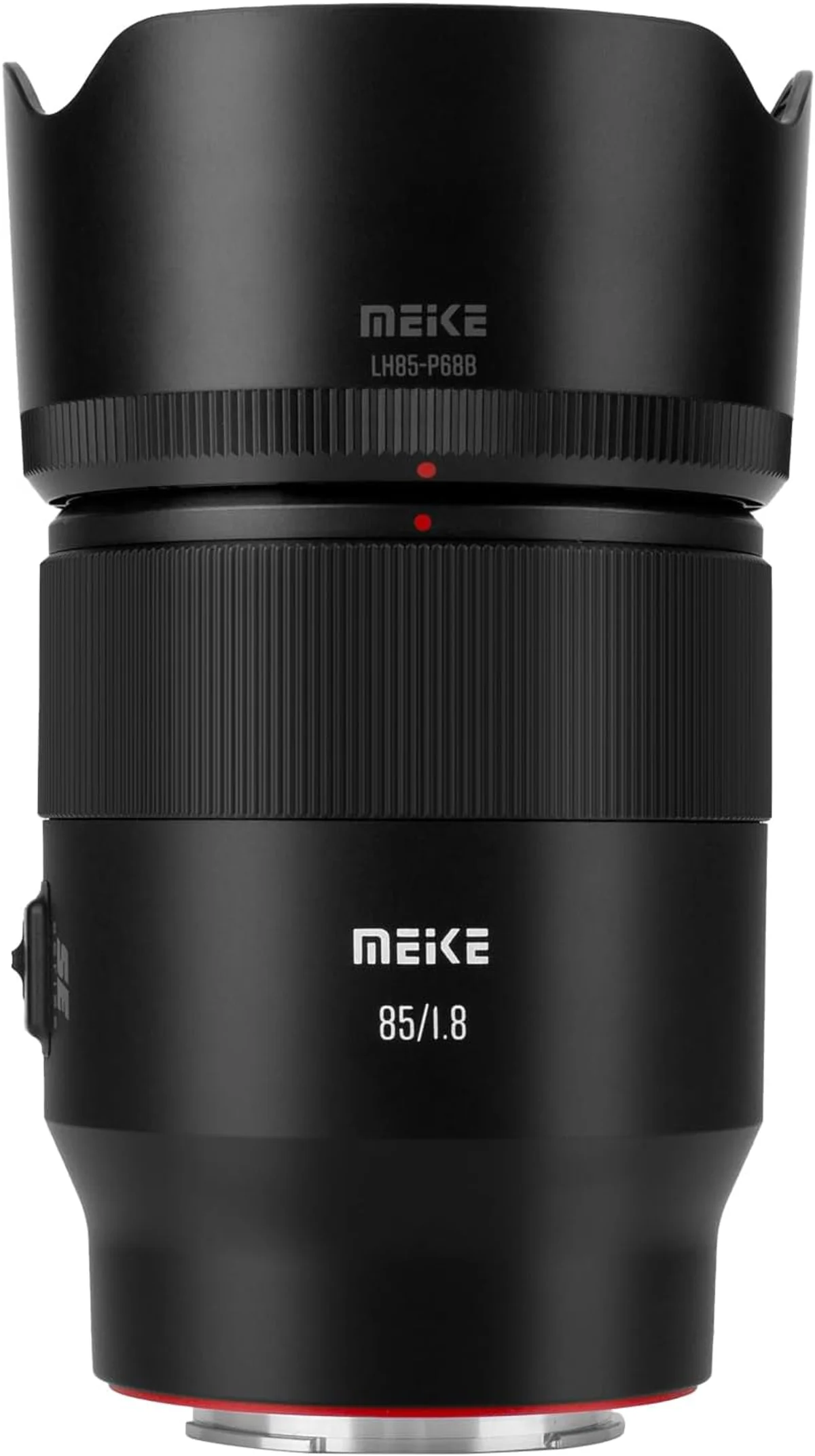
21. Meike 85mm f/1.8 SE II STM AF (Sony E) — Most Affordable Portrait
The Meike 85mm f/1.8 SE II costs less than most photography accessories, yet it delivers the classic 85mm portrait focal length with autofocus and an f/1.8 aperture. The bokeh rendering at f/1.8 is smooth with minimal outlining on highlights, creating pleasing backgrounds even when center sharpness is not clinical. The STM motor is quiet enough for video interview setups. Full Meike 85mm f/1.8 SE II review.
Stop down to f/2.2 for consistent sharpness — f/1.8 is usable but visibly softer in the corners. Plastic barrel, no weather sealing, and limited firmware updates reflect the price point honestly. For photographers who want portrait-length glass on Sony without a large investment, the Meike opens the door at the lowest possible entry point.
Price band: Entry Check Price
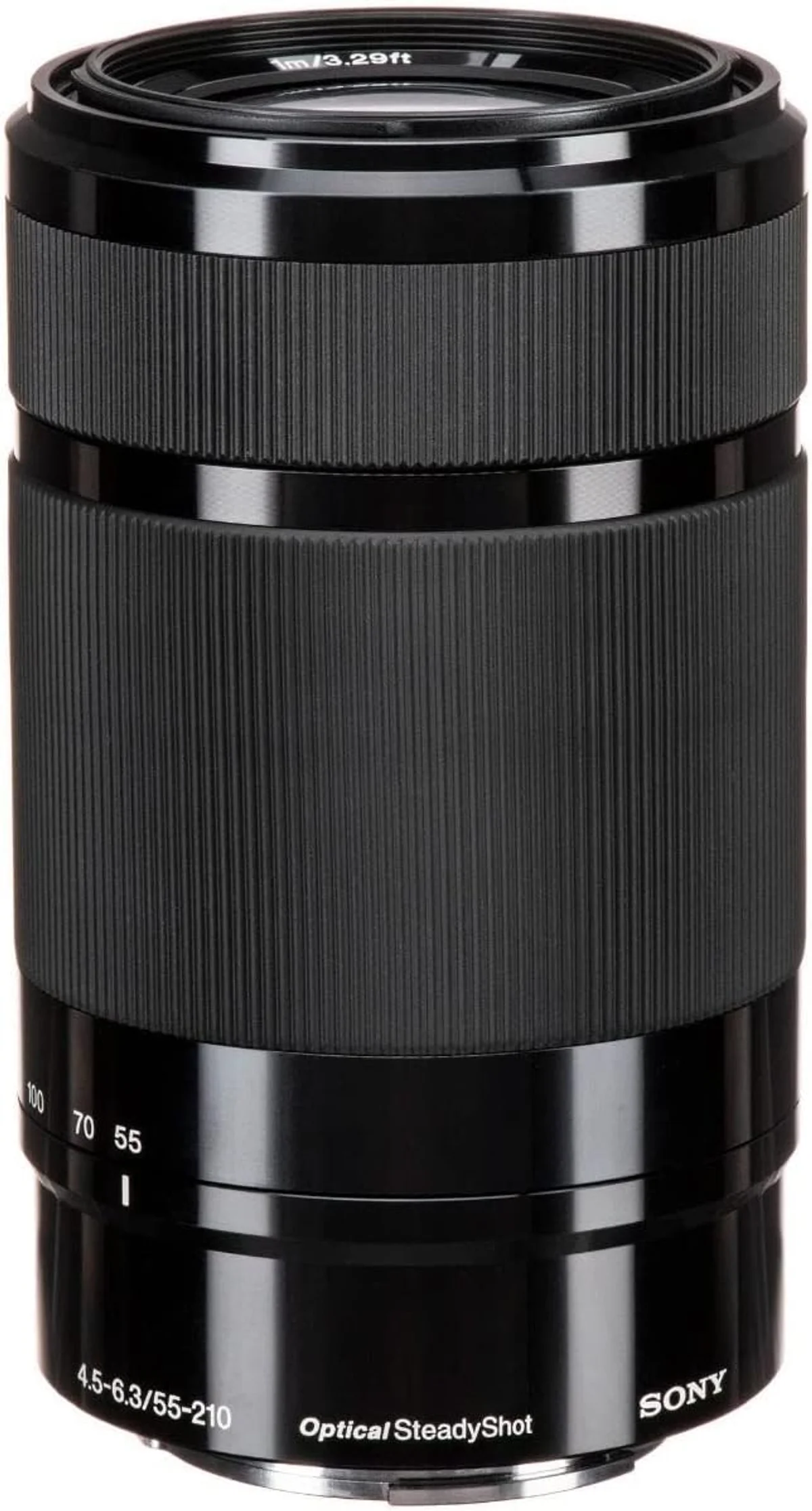
22. Sony E 55-210mm f/4.5-6.3 OSS — Most Affordable Telephoto
The Sony 55-210mm OSS is the entry point for telephoto reach on Sony APS-C at the lowest price in this roundup. Built-in OSS stabilization provides roughly 3 stops of correction, and the 345g weight makes this lens easy to bring along on any outing. Center sharpness from 55mm through 135mm serves social media, web publication, and small prints well. Full Sony 55-210mm review.
Past 150mm, resolution drops and the autofocus motor shows its age — audible effort and noticeably slower acquisition compared to modern linear motors. This is a starter telephoto for beginners building a first Sony kit. Once your skills outpace the lens, the Tamron 18-300mm superzoom or Tamron 150-500mm super-telephoto are the natural upgrades.
Price band: Entry Check Price

How We Chose
Our evaluation process for Sony E-mount lenses prioritizes three data sources: aggregated Amazon user reviews (weighted by volume and recency), professional optical testing from sources like LensTip, OpticalLimits, and DxOMark, and hands-on field reports from photography communities including DPReview forums, Fred Miranda, and the Sony Alpha subreddit. Each lens was assessed against others in its focal-length and aperture class rather than against all lenses simultaneously — a budget APS-C superzoom competes against other superzooms, not against a full-frame f/2.8 prime.
Autofocus compatibility receives particular scrutiny for third-party lenses. We tracked firmware update history, known body-compatibility issues, and user reports of Eye AF and tracking performance on current Sony bodies (A7 IV, A7R V, A9 III, A7C II, A6700). A lens with strong optics but unreliable AF on popular bodies receives a lower ranking than one with slightly less resolution but consistent focus behavior.
Price-to-performance ratio factors into every ranking. Sony E-mount has the widest price spread of any mirrorless system — the gap between the least and most expensive lenses in this roundup spans a factor of ten. Rather than ranking solely by absolute optical quality (which correlates strongly with price), we weight value within each use case. A budget lens that delivers 85% of the performance at 30% of the price earns recognition for that efficiency.
We exclude lenses with too little owner feedback to judge unless professional optical testing provides sufficient data to evaluate performance. This rule filters out newly released and very niche products where sample variation and early-adopter issues can skew impressions. All 22 lenses in this roundup have enough real-world usage data to support confident recommendations.
Buying Guide: What to Look For
Full-Frame vs APS-C: Choosing the Right Format
Sony E-mount supports both full-frame and APS-C lenses on the same physical mount.
Full-frame lenses (marked "FE" by Sony, "Di III" by Tamron, "DG DN" by Sigma) work on every Sony E-mount body at full resolution.
APS-C lenses (marked "E" by Sony, "Di III-A" by Tamron, "DC DN" by Sigma) work on full-frame bodies in cropped mode with reduced resolution — roughly 40% of the sensor output. If you own or plan to upgrade to a full-frame body, investing in full-frame lenses provides future-proofing. If you are committed to APS-C, the dedicated APS-C lenses like the Tamron 17-70mm f/2.8 zoom and Tamron 18-300mm superzoom deliver excellent performance in smaller, lighter packages.
Autofocus Motor Types and What They Mean
Four autofocus motor technologies appear across Sony E-mount lenses.
Sony's XD Linear motors (in GM and G-series lenses) are the fastest and most precise.
Tamron's VXD (Voice-coil eXtreme-torque Drive) is a linear motor design used in their premium zooms — fast, quiet, and responsive for continuous AF tracking. Tamron's RXD is a stepping motor found in their APS-C lenses — adequate for general photography but slower for tracking fast subjects. STM motors (used by Viltrox and Meike) provide quiet operation suitable for video but with the slowest acquisition speeds. For stills-focused photographers, all four motor types perform well in single-shot AF. The differences emerge during continuous tracking of unpredictable subjects.
Stabilization: Lens-Based, Body-Based, or Both
Sony's current full-frame bodies (A7 IV, A7R V, A7C II) and the APS-C A6700 include in-body image stabilization (IBIS) that works with any mounted lens.
Lenses with their own stabilization (Tamron VC, Sony OSS) combine with body IBIS for enhanced correction — typically 5-6 stops versus 3-4 stops from IBIS alone. This combined stabilization matters most at telephoto focal lengths where hand shake is magnified. At wide angles (17-35mm), body IBIS alone is usually sufficient. At 150mm and beyond, the dual stabilization provides a visible improvement in handheld keeper rates.
Native Sony vs Third-Party: When to Pay More
Sony native lenses receive automatic compatibility updates through camera firmware, use the fastest AF motors, and integrate with every Sony feature without compromise.
Third-party lenses from Sigma, Tamron, and Viltrox deliver 85-95% of native performance at 40-70% of the price.
The gaps are real but narrow: edge-case AF tracking on small fast birds, firmware update convenience, and weather sealing consistency. For professional work where AF reliability in extreme conditions is non-negotiable, native Sony G and G Master glass provides peace of mind. For enthusiasts and semi-pros, the third-party options represent better value in nearly every focal-length category. See our third-party vs native lenses guide for detailed comparisons.
Building a Multi-Lens Sony E-Mount Kit
A two-lens kit covers most photographers.
For full-frame travel and events, the Sony 24-105mm f/4 G paired with the Sony FE 50mm f/1.8 handles 90% of situations under 800g total.
For wildlife on either format, the Tamron 150-500mm super-telephoto is the foundation — add a standard zoom for closer subjects. For portrait-focused shooting, the Viltrox 50mm f/1.4 Pro paired with the Sony FE 85mm f/1.8 gives two classic portrait focal lengths at a total investment below the price of a single G Master prime. For APS-C travel, the Tamron 18-300mm all-in-one alone covers everything from indoor scenes to distant subjects.

Sony E-Mount Lens Questions Answered
Sony E-mount's open ecosystem generates more compatibility and selection questions than any other mirrorless system. These answers address the concerns that appear most frequently in camera forums, retail Q&A sections, and photography communities where Sony shooters compare third-party options against native glass.
Are third-party Sony E-mount lenses as good as native Sony glass?
In optical performance, several third-party lenses match or approach native Sony glass at their respective price points. Tamron's VXD-equipped zooms deliver autofocus speeds within 5-10% of Sony G-series lenses for most subjects. The primary differences emerge in edge-case AF tracking (fast erratic birds, low-contrast macro), weather sealing consistency, and firmware update support. Native Sony lenses receive automatic compatibility updates through camera firmware, while third-party manufacturers rely on reverse-engineering the mount protocol and distributing their own firmware patches via USB docks or lens-mounted connections.
Which Sony E-mount lens should I buy first as an upgrade from the kit lens?
For full-frame Sony shooters, the Sony FE 24-105mm f/4 G OSS replaces the kit zoom with better optics, weather sealing, and built-in stabilization across the full 24-105mm range. For APS-C shooters on the A6700 or ZV-E10 II, the Tamron 17-70mm f/2.8 delivers a constant f/2.8 aperture across its entire 26-105mm equivalent range — a two-stop advantage over typical kit zooms that transforms indoor and low-light shooting. If you want a single dramatic improvement in image quality, a 50mm prime like the Sony FE 50mm f/1.8 provides the biggest per-dollar leap from any kit zoom.
Do Tamron and Sigma lenses work with Sony animal eye AF?
Yes. Current-generation Tamron (VXD and RXD motors) and Sigma (HLA and stepping motors) lenses support Sony's Real-Time Animal Eye AF on compatible bodies including the A7 IV, A7R V, A9 III, A7C II, and A6700. Performance is close to native lenses for mammals and larger birds. Some users report marginally slower initial eye acquisition on small, fast-moving birds compared to Sony G Master glass — a difference measured in fractions of a second that matters primarily for professional bird-in-flight photography. Keeping both camera and lens firmware updated is the single most effective step to maintain AF compatibility.
Can I use APS-C Sony E-mount lenses on full-frame Sony bodies?
Physically, yes — Sony E-mount is mechanically identical for APS-C and full-frame lenses. A full-frame body will auto-detect an APS-C lens and crop to APS-C mode, reducing resolution to roughly 40% of the sensor's full output (about 10MP on a 26MP body, about 18MP on a 45MP body). This cropped output is usable for web and social media but limits large prints. Full-frame lenses work on APS-C bodies at full resolution with a 1.5x crop factor applied to the focal length.
What is the best budget portrait lens for Sony E-mount?
The Sony FE 85mm f/1.8 delivers the classic portrait focal length with a 9-blade circular aperture that produces beautiful bokeh, fast autofocus with Eye AF, and strong sharpness — all for under the price of most premium primes. For an even lower entry point, the Meike 85mm f/1.8 SE II is the most affordable autofocus 85mm available for Sony E-mount. Stop down to f/2.2 for sharper results. For shooters who want a wider field of view, the Viltrox 50mm f/1.4 Pro costs slightly more but delivers faster aperture and works better in tight spaces.
Is the Sony FE 24-70mm f/2.8 GM II worth the premium over the Sigma 24-70mm Art II?
The Sony GM II holds a measurable edge in corner sharpness, AF acquisition speed (dual XD linear motors), and flare resistance. It also weighs 695g versus the Sigma's 745g — a difference that compounds over long shooting days. The Sigma Art II closes the gap to roughly 90-95% of the GM II's optical performance at roughly 60% of the price. For professional wedding and event shooters who depend on edge-to-edge sharpness in every frame, the GM II justifies the premium. For enthusiasts and semi-pros, the Sigma Art II delivers the better value equation.
Do Sony E-mount lenses have image stabilization built in?
It varies by lens. Native Sony lenses with "OSS" in the name include optical stabilization — examples include the FE 24-105mm f/4 G OSS and the E 55-210mm OSS. Most Tamron Sony E-mount lenses include VC (Vibration Compensation) stabilization. Sigma Art-series primes and the Viltrox 50mm f/1.4 Pro rely on body-based IBIS (In-Body Image Stabilization) — available on the A7 series, A7C, and A6700, but absent on older APS-C bodies like the A6100 and A6400. For video work, lenses with built-in stabilization combined with body IBIS deliver the smoothest handheld footage, particularly at focal lengths above 50mm.
What is the difference between Sony G, G Master, and non-G lenses?
Sony's lens hierarchy has three tiers. G Master (GM) lenses represent the highest optical quality with XA (extreme aspherical) elements, nano AR coating, and the fastest AF motors — they also carry the highest prices. G-series lenses deliver professional-grade optics and build quality at a lower price, using standard aspherical elements and strong weather sealing. Non-G lenses (like the FE 50mm f/1.8 and FE 85mm f/1.8) are consumer-grade with simpler optical designs, lighter build, and fewer sealing points. The optical gap between G and non-G has narrowed in recent designs, but build quality and AF motor speed still separate the tiers.
Which Sony E-mount lens is best for video and vlogging?
For vlogging at arm's length, the Sony FE 20mm f/1.8 G provides an ultra-wide field of view with minimal focus breathing and excellent autofocus. For general video work, the Sony FE 24-105mm f/4 G OSS covers the widest focal range with built-in optical stabilization that smooths handheld footage. The Tamron 17-70mm f/2.8 is the strongest APS-C video lens — its constant f/2.8 maintains consistent exposure across zoom pulls, and VC stabilization helps handheld shooting. All three pair well with Sony's active stabilization mode on current bodies.
Our Top Pick
The Sony 24-70mm GM II is our #1 recommendation — professional sony shooters wanting the best standard zoom.
Check Price: Sony 24-70mm GM II