Canon RF 100mm Macro vs Nikon Z MC 105mm: Premium Macro Face-Off
The Canon RF 100mm f/2.8L Macro wins on innovation with its SA control ring and 1.4x magnification. The Nikon Z MC 105mm VR S counters with teleconverter compatibility and S-line optical precision. Both rank among the best macro lenses ever made for mirrorless.
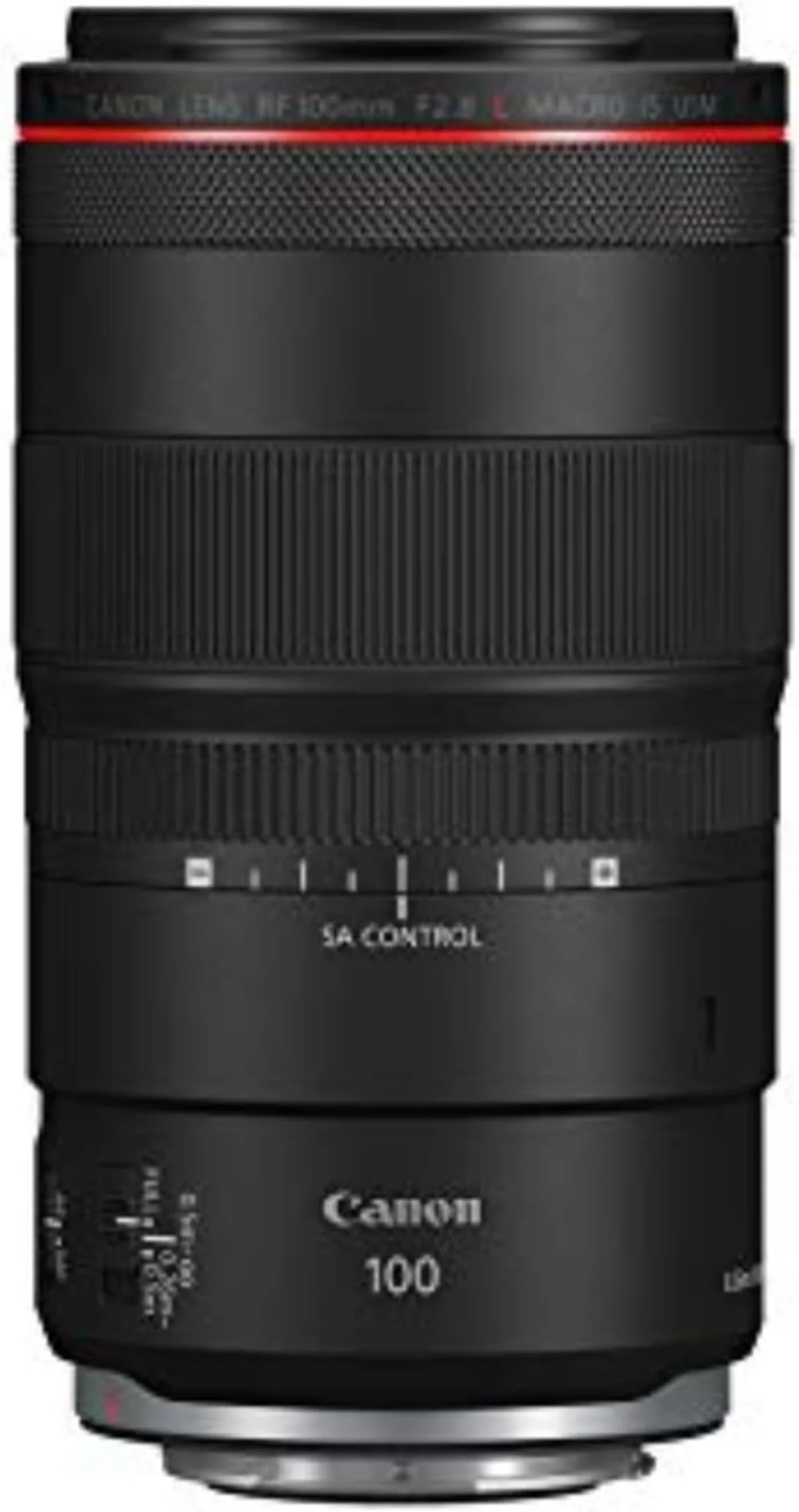
Canon RF 100mm f/2.8L Macro
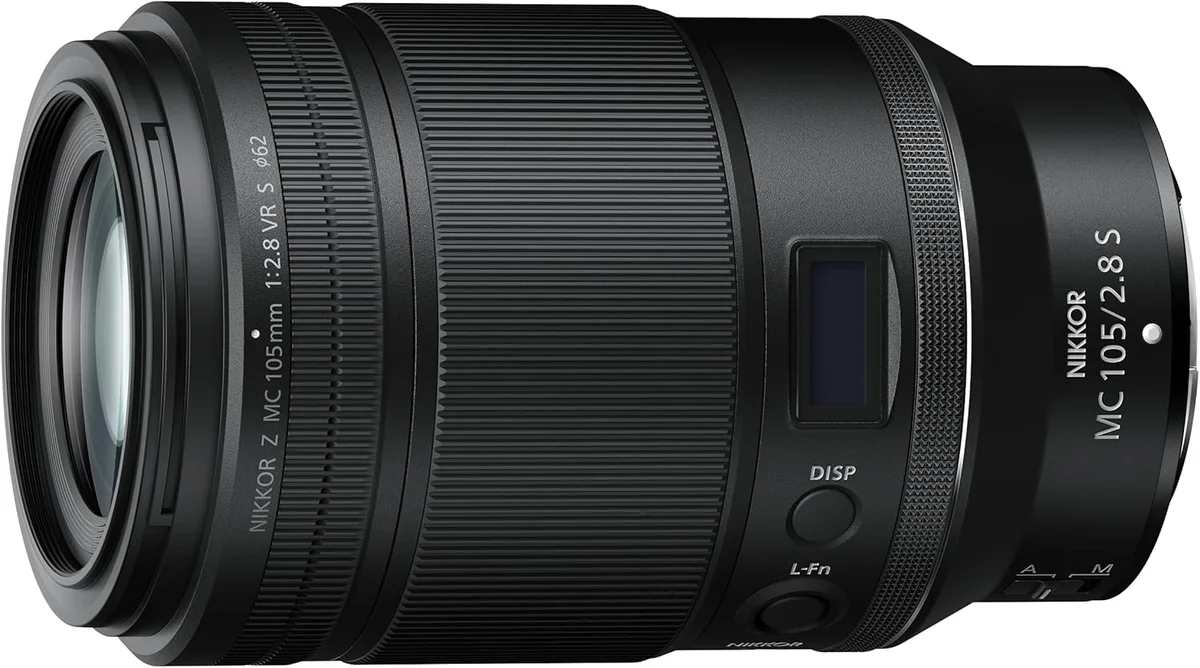
Nikon Z MC 105mm f/2.8 S
Canon and Nikon each brought their best optical engineering to the macro category. The Canon RF 100mm f/2.8L Macro IS USM breaks convention with a 1.4x maximum magnification and a world-first SA (Spherical Aberration) control ring that adjusts bokeh character in real time. The Nikon NIKKOR Z MC 105mm f/2.8 VR S answers with S-line sharpness, teleconverter compatibility that pushes magnification to 2x, and Nikon's mature VR stabilization system.
This is a cross-system comparison — you cannot use a Canon lens on a Nikon body or vice versa without severe compromises. The real question is which system's macro philosophy better serves your photography. Canon chose to innovate on magnification and bokeh control. Nikon chose to optimize for optical purity and expand the magnification ceiling through accessories. Both approaches produce extraordinary results.
We read Amazon owner reviews for both lenses, referenced independent macro test charts from specialized macro photography forums, and compared real-world macro galleries from photographers using each lens extensively. The differences between these lenses matter most at the extremes of macro work — for casual close-up shooting, both exceed what most photographers will demand.

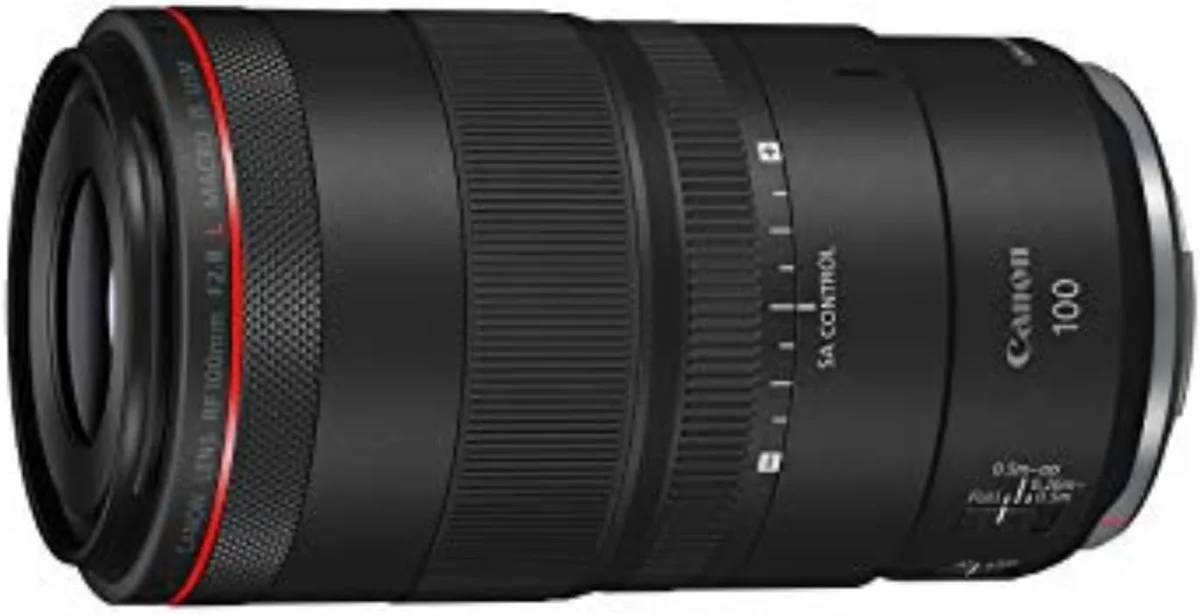
Canon RF 100mm f/2.8L Macro
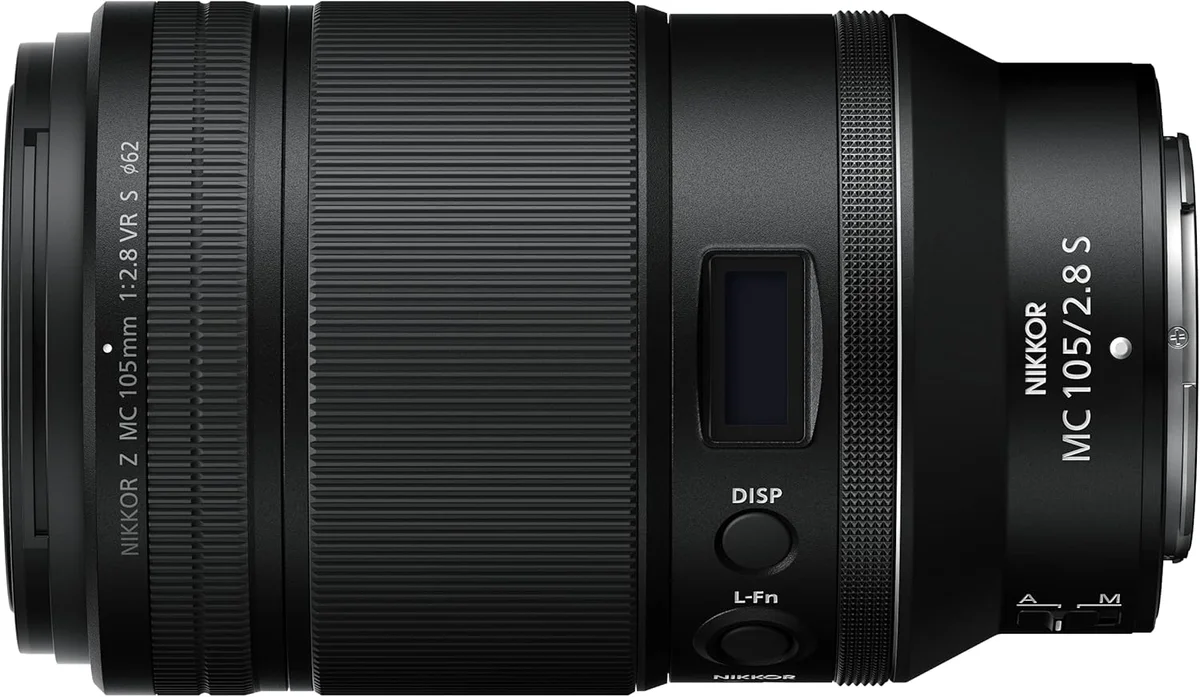
Nikon Z MC 105mm f/2.8 S
At a Glance
| Feature | Editor's Pick Canon RF 100mm F2.8 L Macro IS USM | Nikon NIKKOR Z MC 105mm f/2.8 VR S |
|---|---|---|
| Price Band | Flagship | Step-up |
| Focal Length | 100mm | 105mm |
| Max Aperture | f/2.8 | f/2.8 |
| Mount | Canon RF | Nikon Z |
| Format | Full Frame | Full Frame |
| Filter Size | 67mm | 62mm |
| Weight | 730g | 630g |
| Stabilization | 5 stops Hybrid IS | 4.5 stops VR |
| Check Price | Check Price |
Maximum Magnification and Close-Up Capability
The Canon RF 100mm achieves 1.4x maximum magnification — meaning the projected image on the sensor is 1.4 times life-size. A 10mm insect fills 14mm on a full-frame sensor. This exceeds standard 1:1 macro without extension tubes, adapters, or teleconverters. The lens achieves this through an internal focusing design that moves multiple element groups to produce magnification beyond what traditional macro optics deliver.
The Nikon Z MC 105mm reaches 1:1 (1.0x) magnification natively — standard for macro lenses. What sets it apart is teleconverter compatibility: with the Nikon Z TC-1.4x, magnification reaches 1.4x. With the TC-2.0x, you get 2.0x magnification — double life-size. This comes at a cost: the 1.4x extender reduces aperture to f/4 and slows AF, while the 2x extender drops to f/5.6 and makes AF unreliable. But for extreme macro specialists who want to go beyond 1:1, the Nikon offers a higher ceiling through stacking.
For photographers who primarily shoot at 1:1 or below — flowers, product details, jewelry, food close-ups — both lenses deliver more than enough magnification. The Canon's native 1.4x advantage matters most for insect and small-subject specialists who need that extra frame-filling capability without attaching accessories. The Nikon's extensibility through teleconverters appeals to extreme macro practitioners willing to work with the narrower apertures that extension brings — our macro lens guide covers these options across every budget and system.
Optical Sharpness and Rendering Quality
At standard focus distances (portrait range and moderate close-up), both lenses produce exceptional sharpness. The Nikon Z MC 105mm S-line designation means it passed Nikon's most demanding optical resolution standards. Center sharpness at f/2.8 matches the best 100-105mm primes in any mount system. Corner performance — less relevant for macro work but valuable for portraits — is excellent from wide open.
The Canon RF 100mm f/2.8L delivers L-series optical quality with particularly strong micro-contrast. At macro distances, both lenses exhibit diffraction-limited performance by f/8-f/11, which is where most serious macro work happens. The practical sharpness difference between these two lenses at macro distances is negligible — both resolve detail limited primarily by diffraction and subject movement rather than lens optics.
Where they diverge is rendering character. The Canon's SA control ring allows the photographer to adjust the balance between foreground and background blur softness. In the positive position, specular highlights bloom and backgrounds melt into smooth wash. In the negative position, bokeh edges sharpen and backgrounds gain a more defined quality. The Nikon produces a single, consistently pleasing bokeh character — smooth, round highlights with minimal optical irregularities — but without adjustability.
SA Control Ring: Canon's Defining Innovation
The SA control ring is the single most distinctive feature separating these two lenses. It physically adjusts the spherical aberration correction within the optical path, changing how the lens renders out-of-focus areas. This is not a software filter or post-processing effect — it alters the optical behavior of light passing through the lens in real time.
For portrait photographers who also shoot macro, the SA ring offers creative control that would otherwise require different lenses or extensive post-processing. A soft, dreamy background for a portrait session, then crisp, defined bokeh for a product shoot — achieved by turning a ring rather than swapping glass. The practical range of the SA control is subtle; it will not transform an image radically, but it provides a visible and useful adjustment especially in close-up work where bokeh dominates the frame.
The Nikon has no equivalent feature. Its bokeh character is fixed by the optical design — which happens to be very pleasing, but it cannot be adjusted on the fly. For photographers who value consistent, predictable rendering, this is actually a benefit: one less variable to manage during a shoot. For creative experimenters, the Canon's SA ring is a real differentiator that no competitor offers.
Image Stabilization at Macro Distances
Camera shake is amplified at high magnification. A 1mm shift at the sensor plane translates to large movement in the macro world. Both lenses address this with stabilization, but their approaches differ in important ways.
The Canon RF 100mm uses a Hybrid IS system that compensates for both angular shake (tilting) and shift shake (lateral movement). At macro distances, shift shake becomes the dominant problem — the camera moves side-to-side rather than tilting. Canon's dual-axis compensation addresses this directly. Canon rates the system at 5 stops, though practical macro performance is closer to 2-3 stops due to the physics of magnified movement.
The Nikon Z MC 105mm uses VR that coordinates with body IBIS on compatible cameras (Z5, Z6 series, Z7 series, Z8, Z9). The synergistic system is effective for general photography, but at extreme macro distances, VR alone struggles with shift-type shake. Nikon-body IBIS adds value at moderate magnifications and the overall system works well enough for handheld macro at 1:2 and below. At 1:1, both Canon and Nikon shooters benefit from a tripod or focusing rail for critical work.
Build Quality and Professional Construction
Both lenses are premium builds aimed at demanding photographers. The Canon RF 100mm carries the L-series designation: magnesium alloy construction, full weather sealing, fluorine-coated front element, and precisely damped rings. The tripod collar (sold separately) locks securely for vertical macro work. The lens feels dense and professional in hand, and the 730g weight provides stability during handheld close-up work.
The Nikon Z MC 105mm S-line build matches the Canon's professional grade: magnesium barrel, full gasket sealing, and Nikon's Nano Crystal Coat for flare resistance. The focus limiter switch is a welcome addition for macro shooters who don't want the lens hunting through its full range during portrait work. At 630g, it is 100g lighter than the Canon — a noticeable weight saving that compounds during long macro sessions in the field.
Both lenses include filter threads (67mm on both) and accept standard circular filters. The Canon's fluorine coating repels dust, moisture, and fingerprints more effectively than the Nikon's standard multi-coating — a small but practical advantage when shooting in dusty outdoor macro environments where pollen and debris constantly land on the front element.
Autofocus Performance in Macro and Portrait Use
At portrait distances, both lenses focus quickly and accurately. The Canon's Nano USM motor and the Nikon's STM system both deliver fast acquisition and smooth tracking with their respective body AF systems. Eye detection and face tracking work reliably on both. Neither lens shows hunting or hesitation in well-lit portrait conditions.
At macro distances, AF performance changes. Both lenses slow down as magnification increases — this is inherent to macro focusing physics, not a design flaw. The Canon's Nano USM motor maintains slightly faster and more decisive AF at close range than the Nikon's STM, but neither is fast enough for macro subjects that move unpredictably. Experienced macro photographers typically use manual focus with a focusing rail for critical 1:1 work regardless of which system they use.
The Nikon's focus limiter switch deserves mention: it restricts the AF search range to either full range or infinity-to-0.5m, preventing the lens from racking through the entire focus distance when you know you're shooting at normal distances. The Canon lacks a physical focus limiter, though the camera body can be set to limit AF range via menu. The Nikon's hardware switch is faster to access during active shooting.
Real-World Macro Scenarios Compared
Insect photography in a garden. Morning dew on a spider web, a beetle on a leaf. The Canon's 1.4x magnification fills the frame with smaller subjects without extension tubes — a genuine time-saver when insects are moving and you cannot adjust accessories between shots. The Nikon at 1:1 captures the same subjects with slightly less frame-filling, but the resulting images are still publishable. The Canon's Hybrid IS helps during the inevitable handheld tracking of a moving insect. Working distance at maximum magnification is approximately 26cm on the Canon and 29cm on the Nikon — close enough that lighting becomes a shared challenge for both.
Jewelry and product photography on a tabletop. Controlled lighting, tripod-mounted, focus-stacked. At f/8 on a tripod, both lenses produce virtually identical results. The SA control ring on the Canon adds a creative option for single-shot product photos where background blur character matters — softer for lifestyle shots, crisper for technical product images. The Nikon's consistent rendering simplifies focus stacking workflows where bokeh variation between frames could cause blending artifacts.
Portrait session switching to detail shots. A portrait photographer who also needs ring detail, flower arrangement close-ups, and invitation flat-lays within the same event. Both lenses handle this dual role beautifully. The 100-105mm focal length is ideal for headshots, and the macro capability means no lens change for detail work. The Canon's SA ring lets you shift bokeh style between the portrait and detail portions of the shoot. The Nikon's faster AF lock at portrait distances feels snappier during the fast-paced portions of the day.
Nature documentary extreme close-up. Stacking the Nikon with a 2x teleconverter, you achieve 2:1 magnification — revealing details invisible to the naked eye. Compound eyes, wing venation, pollen grains on stamens. The Canon tops out at 1.4x natively, requiring extension tubes to go further (which sacrifice infinity focus). For dedicated extreme macro work, the Nikon's accessory path offers higher ceilings, though at the expense of working with f/5.6 aperture and manual focus.
Flare Resistance and Coating Technology
The Canon RF 100mm benefits from Canon's Air Sphere Coating and Super Spectra Coating — L-series standard treatments that minimize ghosting and veiling flare when shooting toward light sources. Backlit subjects maintain strong contrast. For macro photographers working with natural backlighting (dewdrops catching morning sun, translucent leaves), the Canon holds saturation and contrast better than most macro lenses in challenging light.
The Nikon Z MC 105mm uses Nikon's ARNEO and Nano Crystal coatings — the S-line standard that reduces flare from both direct and oblique light. Performance is comparable to the Canon's L-series coatings in most conditions. Both lenses handle backlit macro subjects well, maintaining the color integrity and contrast that high-magnification work demands. Neither lens is particularly susceptible to flare in normal use; the difference between their coatings shows only under extreme backlight testing.
Focus Breathing Characteristics
Focus breathing — the change in field of view as you adjust focus — is present in both lenses. The Canon RF 100mm shows moderate breathing: at close focus, the field of view narrows noticeably compared to infinity focus. This is typical for internal-focus macro lenses and means the working magnification at the minimum focus distance differs slightly from the rated specification depending on focus position.
The Nikon Z MC 105mm shows slightly less breathing than the Canon. For video shooters using focus pulls between near and far subjects, less breathing means smoother transitions without the frame appearing to zoom in and out. For still photography, focus breathing is irrelevant — you compose the shot at the focus distance you intend to use. Video-centric macro shooters doing product reveal or focus-pull sequences may prefer the Nikon's more controlled breathing behavior.
Price and System Investment
The Canon RF 100mm f/2.8L Macro sits in the Flagship price band. The Nikon Z MC 105mm occupies the Step-up band — the Canon is modestly more expensive. The Canon's premium reflects its L-series build and unique SA control feature. Adding a Nikon teleconverter for extended magnification adds to the Nikon's total system cost but also extends its capabilities beyond what the Canon can achieve natively.
Both lenses represent serious investments in macro capability. For photographers already committed to one system, the decision is simple. For those evaluating macro capability as part of a system choice, the Canon offers more out of the box while the Nikon offers more potential ceiling through teleconverter extension.
Resale value for both lenses is strong. Premium macro lenses serve a specialized audience that consistently seeks quality optics, and neither Canon L-series nor Nikon S-line glass depreciates quickly. The Canon's unique SA control feature helps it retain value since no alternative exists — buyers who want that functionality must purchase this specific lens. The Nikon holds value through its S-line reputation and the growing installed base of Nikon Z shooters seeking native macro glass.
For photographers who split their time between macro and portrait work, the dual-purpose value of these lenses reduces the need for a separate portrait prime. A 100-105mm f/2.8 macro doubles as a short telephoto portrait lens with outstanding rendering. The investment in one lens covers two shooting disciplines — a financial argument that strengthens the case for either lens over buying a dedicated portrait prime and a separate macro option.
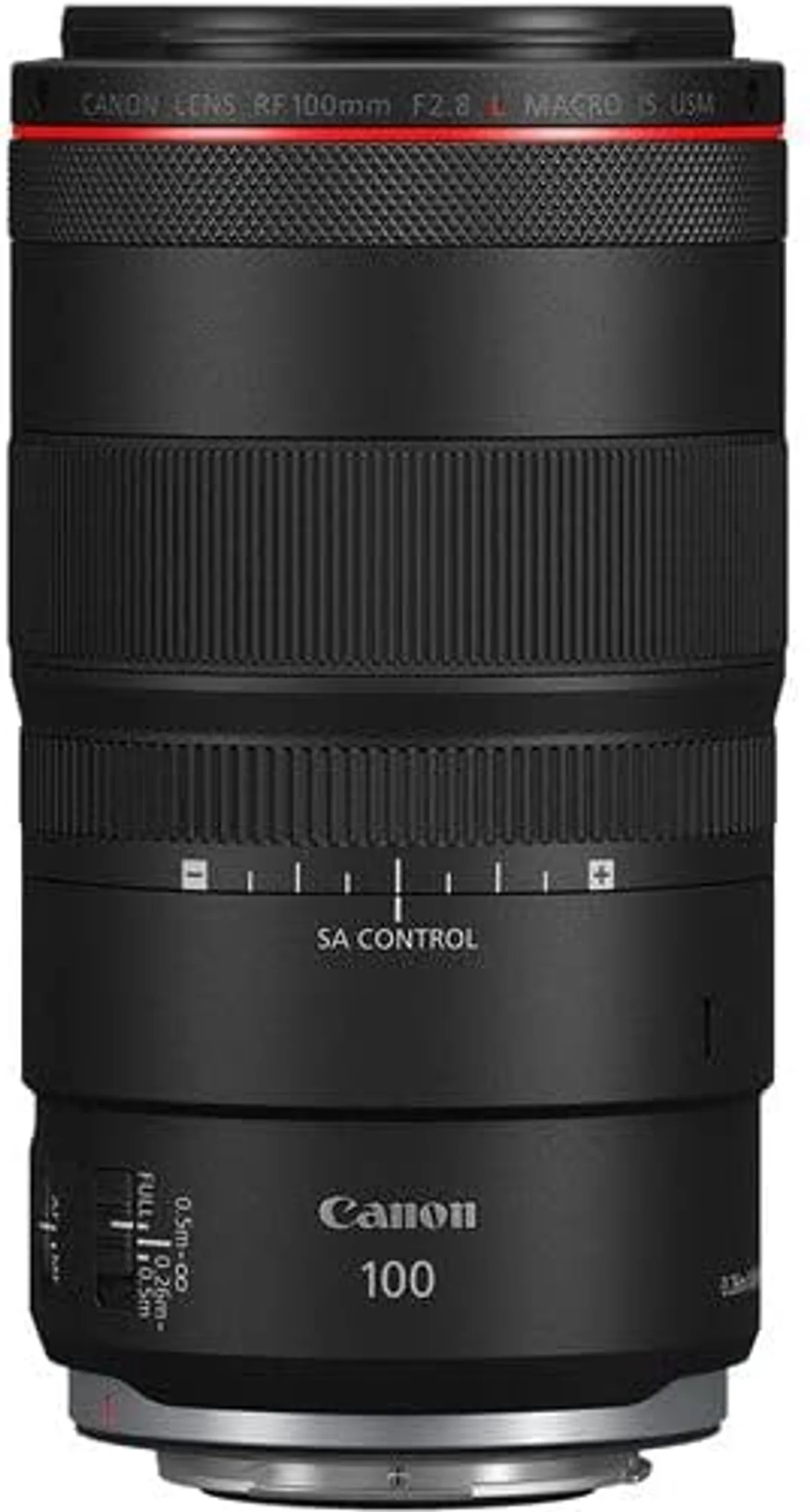
Canon RF 100mm f/2.8L Macro

Nikon Z MC 105mm f/2.8 S
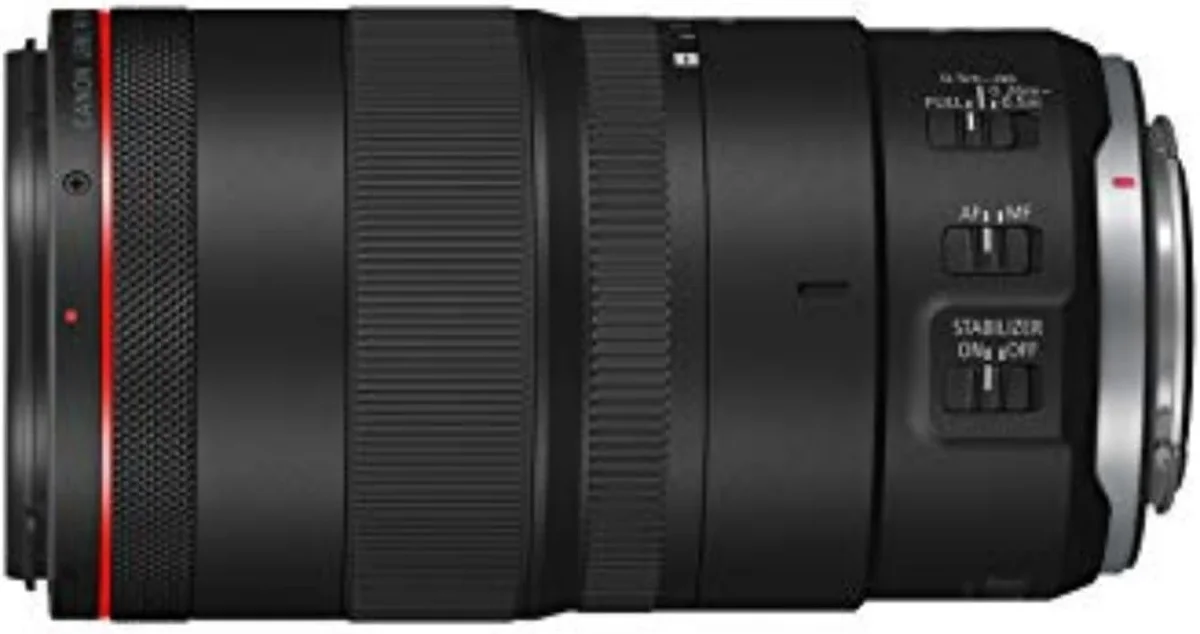
Canon or Nikon: Which Macro Fits Your System?
Get the Canon RF 100mm f/2.8L Macro If:
- You shoot Canon RF and want the highest native magnification without accessories
- The SA control ring appeals to your creative workflow for both macro and portrait work
- Hybrid IS matters for your handheld macro shooting style
- L-series build quality and weather sealing match your professional requirements
Get the Nikon Z MC 105mm f/2.8 VR S If:
- You shoot Nikon Z and want S-line optical quality with room to extend via teleconverters
- Extreme macro beyond 1:1 is in your plans — the teleconverter path reaches 2.0x
- Lighter weight matters for field macro sessions lasting hours
- The focus limiter switch fits your mixed macro-portrait workflow
The Bottom Line
These are two of the finest macro lenses available for any mirrorless camera system today, and choosing between them depends more on your existing mount than on optical quality. The Canon RF 100mm f/2.8L Macro stands out for photographers who value creative control through the SA ring and maximum native magnification at 1.4x in a single, self-contained package. The Nikon Z MC 105mm f/2.8 VR S appeals to photographers who want optical purity and the ability to push magnification further through the teleconverter ecosystem. If you already own one system, buy the matching macro — you will not be disappointed by either choice.
Macro Lens Decision Questions
Common questions from photographers choosing between these two premium macro lenses for their mirrorless camera system and creative macro work.
The biggest difference between these two lenses shows up in real-world shooting, not spec sheets.
We recommend the winner for most shooters, though the runner-up earns its place for specific use cases.
Which macro lens has higher magnification — Canon RF 100mm or Nikon Z MC 105mm?
The Canon RF 100mm f/2.8L Macro reaches 1.4x maximum magnification, exceeding true 1:1 macro. The Nikon Z MC 105mm achieves standard 1:1 (life-size) reproduction. In practical terms, the Canon can fill the frame with smaller subjects — a single ant fills more of the sensor than on the Nikon. For most macro subjects like flowers and jewelry, both deliver excellent close-up detail.
What is the SA control ring on the Canon RF 100mm Macro?
The Spherical Aberration control ring adjusts the character of out-of-focus areas in real time. Rotating toward the plus position softens foreground and background blur for a dreamy portrait effect. Rotating toward minus creates sharper, more defined bokeh edges. At the neutral position, the lens behaves like a standard macro. No other macro lens offers this level of bokeh control without post-processing.
Can I use these macro lenses for portrait photography?
Both are excellent portrait lenses. The 100-105mm focal length provides flattering facial compression without excessive working distance. At f/2.8, background separation is strong. The Canon SA control adds creative bokeh adjustment for portraits. The Nikon S-line sharpness captures skin texture with precision that some portrait photographers prefer to soften in post. Both produce professional portrait results with the bonus of macro capability.
How does image stabilization compare between these macro lenses?
The Canon RF 100mm uses a hybrid IS system rated at 5 stops that compensates for both angular and shift-type shake — especially valuable at high magnification where any movement is amplified. The Nikon Z MC 105mm uses VR stabilization that works with body IBIS for synergistic correction. Both stabilize well enough for handheld macro at moderate magnifications, but tripod use remains recommended for critical 1:1 work.
Are these lenses compatible with teleconverters for extra magnification?
The Nikon Z MC 105mm is compatible with Nikon Z teleconverters (1.4x and 2x), pushing magnification to 1.4x and 2x respectively — though AF slows and maximum aperture narrows. The Canon RF 100mm is not compatible with Canon RF extenders. For beyond-1:1 work on Canon, extension tubes are the alternative. Nikon teleconverter compatibility gives it a magnification ceiling advantage for extreme close-up specialists.