Sony E-Mount Lens Compatibility: What Fits, What Works, What to Avoid
Sony E-mount is the most widely compatible lens mount in modern photography. Every full-frame and APS-C Sony mirrorless camera made since 2010 uses this mount, and the open communication protocol means Sigma, Tamron, Viltrox, Meike, and dozens of other manufacturers produce lenses with full native autofocus. Add the short 18mm flange distance — which allows clean adaptation of nearly every legacy lens system — and you have a mount that supports more glass than any other system available today.
This guide covers the practical compatibility details: which lenses work on which bodies, what happens when you mix APS-C and full-frame glass, how adapters perform for A-mount and vintage lenses, and where third-party options match or beat Sony's own glass. If you are building a Sony lens collection or evaluating a system switch, this is the technical foundation you need.
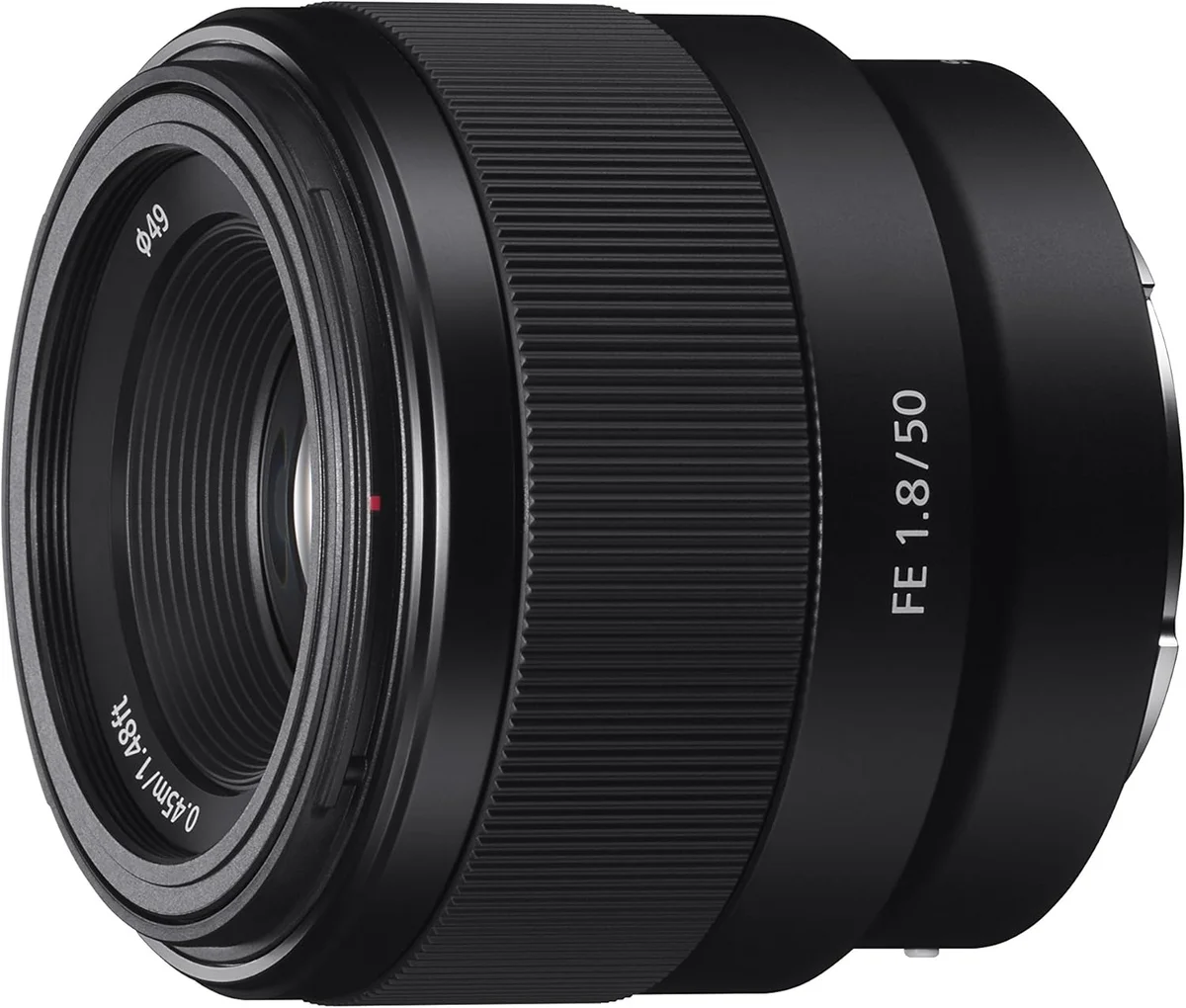
FE vs E: Full-Frame and APS-C Lens Designations
Sony uses two designations for E-mount lenses, and the distinction matters for sensor coverage. FE (Full-frame E-mount) lenses project an image circle large enough to cover a 35.6 x 23.8mm full-frame sensor. E lenses without the "F" prefix are designed for the smaller 23.5 x 15.6mm APS-C sensor. Both types share the same physical mount — any E-mount lens attaches to any E-mount body without modification.
The naming convention extends to Sony's premium tiers. G Master (GM) and G series lenses carry the FE prefix for full-frame coverage. Sony's APS-C lenses typically use the E prefix alone — the Sigma 16mm f/1.4 DC DN and Tamron 17-70mm f/2.8 are third-party APS-C examples that follow this convention with their own "DC" (Sigma) and "Di III" (Tamron) APS-C designators.
For buying decisions, the rule is simple: if you own or plan to buy a full-frame body (A7 series, A9 series, A1), prioritize FE lenses. If you shoot APS-C exclusively (A6000 series, ZV-E10, A6700), APS-C lenses are smaller, lighter, and often less expensive — though FE lenses work perfectly on APS-C bodies too.
APS-C Lenses on Full-Frame Bodies: Auto-Crop Behavior
Mounting an APS-C lens on a full-frame Sony body works, but the camera automatically crops the sensor. The APS-C lens projects a smaller image circle that does not cover the full sensor area. Rather than showing heavy vignetting around the edges, the camera detects the APS-C lens and switches to a cropped readout — using only the center portion of the sensor that the lens actually covers.
The resolution penalty is substantial. A 61-megapixel A7R V drops to about 26 megapixels in APS-C crop mode. A 33-megapixel A7 IV drops to roughly 14 megapixels. A 12-megapixel A7S III drops to about 5 megapixels — barely enough for social media. Whether this penalty matters depends on your output requirements. For web use and small prints, 14 megapixels is adequate. For large prints or heavy cropping in post, you lose the resolution headroom that justified buying a full-frame body.
You can override the automatic crop in the camera menu and shoot full-frame with an APS-C lens. The result is a usable center image surrounded by dark, vignetted corners. Some photographers do this intentionally with wider APS-C lenses, where the vignetting is less severe and can be cropped in post with less resolution loss than the full auto-crop. At focal lengths wider than about 16mm on APS-C lenses, the image circle sometimes covers more of the full-frame sensor than the camera assumes.
Full-Frame FE Lenses on APS-C Bodies: The 1.5x Crop Factor
Every FE lens works on every APS-C Sony body with zero restrictions. The APS-C sensor reads the center of the lens's image circle, applying a 1.5x crop factor to the effective field of view. A Sony FE 50mm f/1.8 becomes a 75mm equivalent on an A6700. The Sony FE 24-70mm f/2.8 GM II behaves as a 36-105mm equivalent — a more telephoto-oriented range than its full-frame focal lengths suggest.
This crop factor is not a disadvantage for every use case. Wildlife and sports photographers sometimes pair APS-C bodies with long FE telephoto lenses specifically to gain extra reach. A 200-600mm FE zoom becomes an effective 300-900mm on APS-C, at no cost to aperture or autofocus performance. Portrait shooters benefit too: the Sony FE 85mm f/1.8 on APS-C gives a 127.5mm equivalent, a flattering focal length for headshots with pronounced background separation.
The optical quality of FE lenses on APS-C bodies is typically excellent. The sensor only uses the center of the lens's image circle — the sharpest region. Edge softness, vignetting, and distortion that might appear on a full-frame sensor are cropped away entirely. For this reason, some APS-C shooters prefer buying FE lenses they can carry forward to a full-frame upgrade later, rather than investing in APS-C-only glass they would need to replace.
Third-Party Manufacturer Support: The Open Mount Advantage
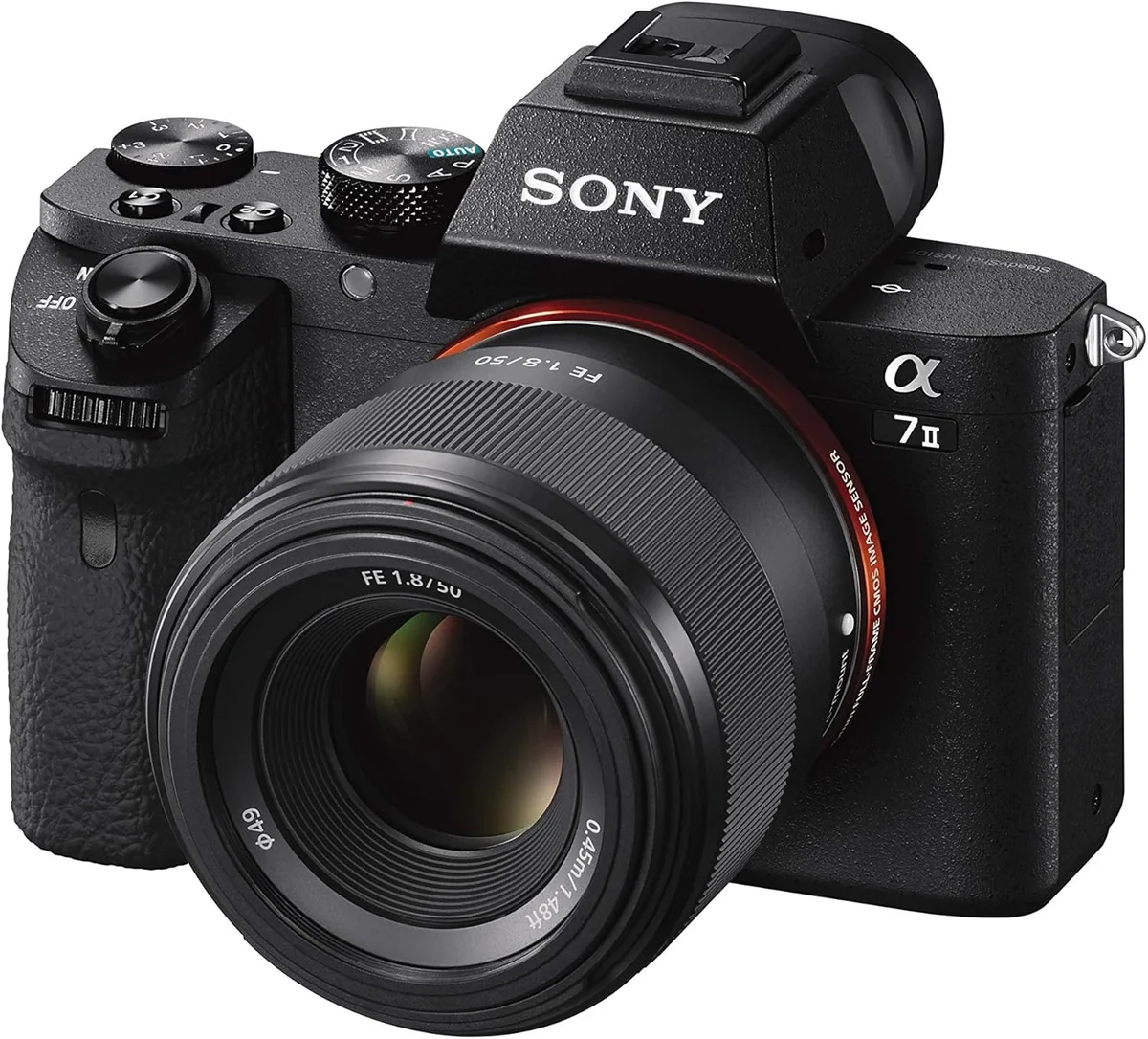
Sony E-mount has the broadest third-party lens support of any mirrorless system. Sony licenses its mount communication protocol to third-party manufacturers, giving them access to the electronic interface needed for autofocus, aperture control, image stabilization coordination, and EXIF data transmission. This open approach — in contrast to Canon's initially restricted RF mount — is the primary reason the E-mount ecosystem grew so large so quickly.
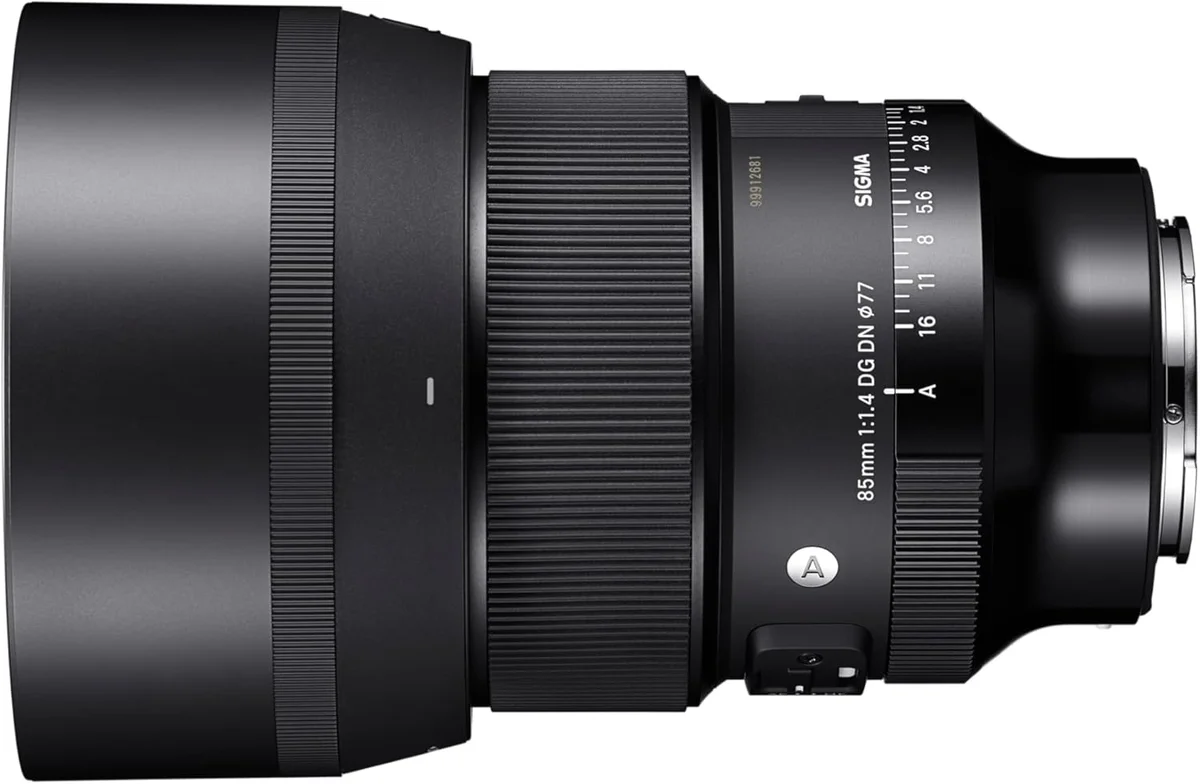
Sigma produces some of the strongest E-mount alternatives. The Art line delivers optical performance that matches or exceeds Sony's own G Master glass at lower prices. The Sigma 24-70mm f/2.8 DG DN II Art is a direct competitor to Sony's GM II zoom, and independent testing shows the Sigma matching the Sony's resolution across the frame. Sigma also produces a full APS-C lineup under the DC DN Contemporary series, including the popular 16mm f/1.4 DC DN.
Tamron focuses on value-oriented zooms that fill gaps in Sony's lineup. The Tamron 28-75mm f/2.8 G2 established the affordable full-frame f/2.8 zoom category on E-mount, and the Tamron 17-70mm f/2.8 Di III-A VC RXD remains the only APS-C zoom offering f/2.8 across a 17-70mm range. Tamron lenses use USB-C connections for firmware updates via the Tamron Lens Utility desktop app — no separate dock required.
Viltrox occupies the budget-to-mid-range segment with AF primes that undercut Sony and Sigma prices by 50-70%. The Viltrox AF 50mm f/1.4 Pro delivers f/1.4 speed with modern AF motor design at a fraction of what Sony charges for the FE 50mm f/1.4 GM. Viltrox AF performance has improved substantially in recent generations — early models hunted in low light, but current Pro-series lenses track reliably with Sony's Real-time Eye AF.
Meike targets manual-focus and budget AF niches. The Meike 85mm f/1.8 SE II offers AF capability at the lowest price point in its focal length, making it an entry point for portrait shooters. Build quality and weather sealing are reduced compared to Sigma and Tamron, but optical quality at the center of the frame is respectable for the price.
Other manufacturers with E-mount native lenses include Samyang/Rokinon (budget AF primes and cine lenses), Tokina (specialty wide-angles), Laowa (macro and ultra-wide), and Voigtlander (premium manual-focus primes). The total E-mount lens count from all manufacturers exceeds 300 options — more than any other mirrorless system. For a ranked selection of the best options, see our best Sony E-mount lenses roundup.
Sony A-Mount to E-Mount Adaptation
Sony's previous SLR system used the A-mount (also called Alpha mount or Minolta A-mount, since Sony acquired Minolta's camera division in 2006). A-mount lenses do not physically fit E-mount cameras without an adapter, but Sony produces official adapters that bridge the gap with full electronic communication.
The LA-EA5 is the current recommended adapter. Released in 2020, it passes all lens data to the camera body and relies on the body's own phase-detection AF system. On modern bodies like the A7 IV, A7R V, and A9 III, AF performance with A-mount lenses through the LA-EA5 is fast and accurate — not quite native E-mount speed, but close enough for most shooting situations including portraits, events, and casual sports.
Older adapters remain functional but have more limitations. The LA-EA4 contains a translucent mirror and a dedicated 15-point phase-detection AF module. It works on older E-mount bodies that lack on-sensor phase detection, but the mirror reduces light transmission by about 1/3 stop and the 15-point AF system is far less capable than modern 759-point on-sensor systems. The LA-EA3 is a simple electronic adapter with no AF motor — it only autofocuses with A-mount lenses that have built-in motors (SSM and SAM designations).
For photographers with large A-mount collections, the LA-EA5 makes a system transition practical. The Sony 70-200mm f/2.8 G SSM II, 135mm f/1.8 ZA, and 85mm f/1.4 ZA are all high-performance A-mount lenses that retain most of their capability when adapted. The main losses are AF tracking speed in continuous shooting and the physical bulk of the adapter itself, which adds about 3cm of length between body and lens.
Vintage and Manual Lens Adaptation
Sony E-mount's 18mm flange distance makes it one of the best platforms for vintage lens adaptation. Any lens system with a flange distance greater than 18mm can be adapted using a simple mechanical tube — no optical elements, no electronics, no image quality penalty. The adapter is nothing more than a precisely machined spacer that holds the lens at the correct distance from the sensor.
The most popular vintage lens adaptations on Sony E-mount include:
- Leica M lenses (27.8mm flange): The most common high-end adaptation. Leica Summilux and Summicron primes produce a distinctive rendering on Sony's full-frame sensors. A 9.8mm adapter bridges the gap. Focus peaking makes manual focusing practical even at wide apertures.
- Canon FD lenses (42mm flange): Canon's pre-EOS manual-focus system from the 1970s-80s. Many optically excellent primes available at low prices on the used market. The 50mm f/1.4 SSC and 135mm f/2.0 are standouts.
- Nikon F lenses (46.5mm flange): The longest-running SLR mount, with lenses produced from 1959 to the present. Manual-focus Nikon AI-S primes are mechanically excellent and widely available. The 105mm f/2.5 and 28mm f/2.8 AI-S are classics.
- M42 screw-mount lenses (45.46mm flange): A universal thread mount used by Pentax, Praktica, Fujica, and many others from the 1960s through 1980s. Enormous variety and very low prices. The Helios 44-2 58mm f/2.0 is famous for its swirly bokeh character.
- Pentax K lenses (45.46mm flange): Pentax's bayonet mount, with decades of glass available used. The SMC Pentax-M 50mm f/1.7 is a sharp, compact prime that costs very little.
- Medium-format lenses: Pentax 67, Mamiya RB67, and Hasselblad V lenses all adapt to E-mount for creative use. The massive image circles produce unique rendering, and the lenses can be focused closer than their original camera systems allowed.
Modern Sony mirrorless cameras make manual focusing much more practical than it was on DSLRs. Focus peaking overlays colored highlights on in-focus edges in the viewfinder, with adjustable sensitivity and color. Magnified focus assist zooms into the center of the frame at 5.9x or 11.7x for precise focusing. Combined, these features make vintage-lens shooting on Sony bodies a reliable experience rather than guesswork.
Adapter quality matters less than you might expect for simple mechanical tubes. Budget adapters from K&F Concept and Fotasy work fine for most vintage lenses. The primary quality differences are in the mount's mechanical tightness (cheap adapters may have slight play) and the precision of the flange distance spacing (which affects whether infinity focus is accurate). For lenses where you need reliable infinity focus — landscapes, astrophotography — spending more on a Fotodiox Pro or Voigtlander adapter is worthwhile. For portrait work and close-range shooting, a basic adapter serves identically.
Firmware Updates and Compatibility Considerations
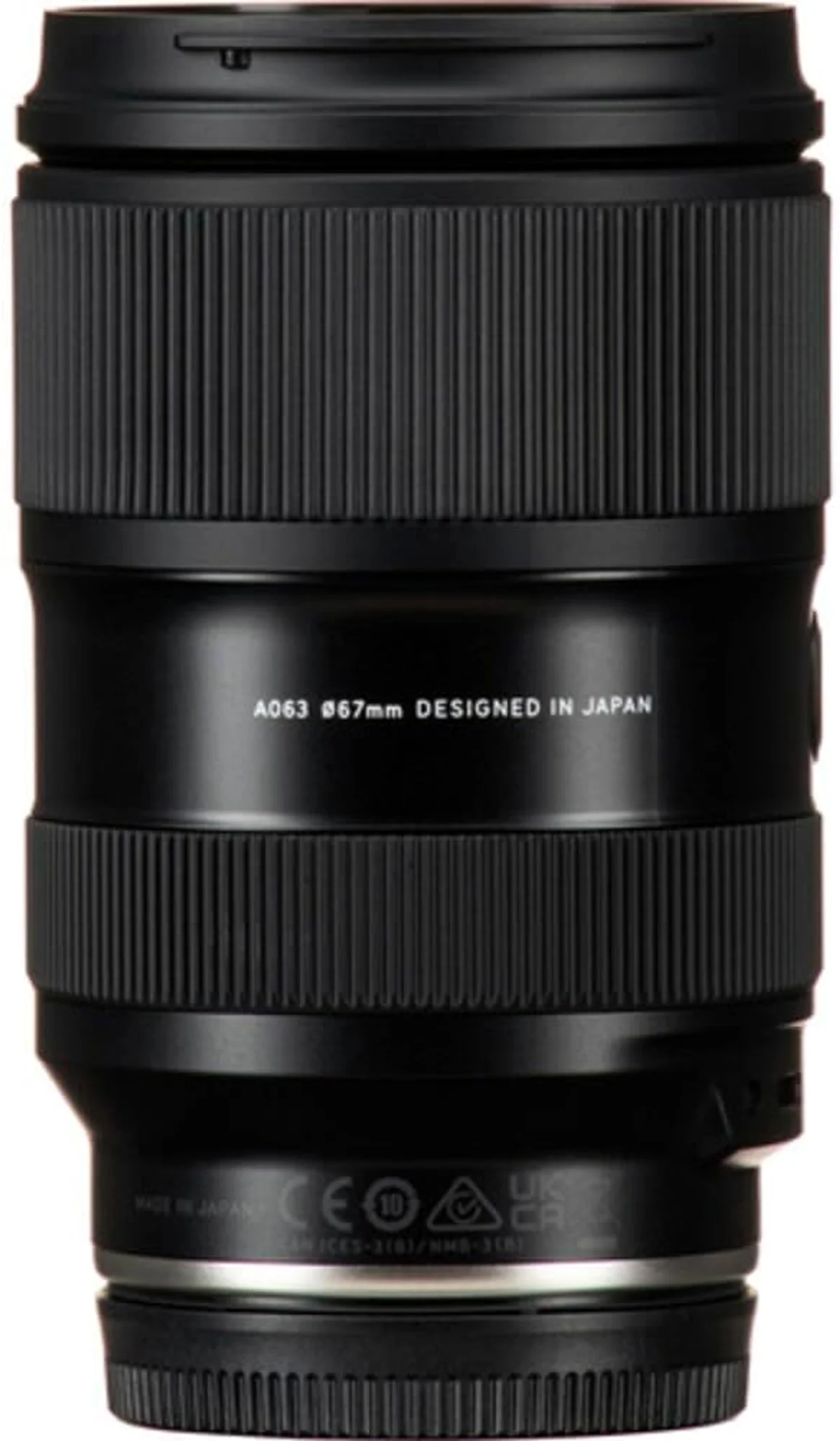
Lens firmware updates are an ongoing part of the E-mount experience, especially with third-party glass. When Sony releases a new camera body or a major firmware update for an existing body, third-party manufacturers sometimes need to release matching lens firmware to maintain full compatibility. A Tamron zoom that tracked eyes perfectly on one body firmware version might lose tracking accuracy after a body update until Tamron patches the lens.
Each manufacturer handles firmware updates differently:
- Sony: Native FE and E lenses receive firmware through the camera body during body firmware updates, or through Sony's Imaging Edge desktop software. Rarely need standalone updates since Sony controls both sides of the communication.
- Sigma: Uses the Sigma USB Dock (a lens-mount cradle connected to your computer via USB). The Sigma Optimization Pro software checks for available updates and applies them. Some newer Sigma lenses also support firmware updates via the camera body on select Sony bodies.
- Tamron: Newer lenses (RXD and VXD motor types) update via the Tamron Lens Utility app using a USB-C cable connected directly to the lens. No separate dock needed — one of the more convenient update processes.
- Viltrox: Updates through the Viltrox desktop app with a USB connection to the lens. Viltrox tends to release firmware updates more frequently than other third parties, often adding features like focus-limit switches or improving AF algorithms after launch.
A practical recommendation: before updating your Sony camera body firmware, check the lens manufacturers' websites for known compatibility issues. Sigma, Tamron, and Viltrox all maintain compatibility tables. If a lens firmware update is pending, apply it before or immediately after the body update. Keeping both lens and body firmware current eliminates the majority of AF inconsistencies and communication errors. For more on the broader question of third-party vs first-party glass, see our third-party vs native lenses guide.
How to Check Lens Compatibility with Your Specific Body
The fastest way to verify compatibility is to confirm that the lens uses Sony E-mount. If it does, it physically fits and electronically communicates with every Sony E-mount body ever made. The specific features available — Real-time Eye AF, breathing compensation, focus-limit presets — depend on the camera body generation and the lens model. Newer bodies unlock more features with any given lens.
For a thorough compatibility check, follow these steps:
- Check the mount designation. Sony E-mount lenses are labeled "FE" (full-frame) or "E" (APS-C). Third-party lenses specify "Sony E" or "E-mount" in the product name. If the lens says "Canon RF," "Nikon Z," or "Leica L," it is not E-mount and will not fit without an adapter.
- Check sensor format compatibility. If you have a full-frame body and are considering an APS-C lens, confirm you accept the resolution reduction from auto-crop mode. If you have an APS-C body, every E-mount lens — FE or E — works at full resolution.
- Check the manufacturer's compatibility table. Sigma, Tamron, Viltrox, and Meike publish camera-body-specific compatibility lists. Some features (like Direct Manual Focus override or Linear Response MF) only work on certain body-lens combinations. These tables are the authoritative source.
- Check firmware versions. If the lens was released before your camera body, a firmware update may be required for full feature support. Check the manufacturer's download page for your specific lens model.
- Check physical clearance for older bodies. Some very early E-mount bodies (NEX-3, NEX-5, original A7) have slightly different grip profiles that create physical interference with certain large modern lenses. This is rare with current-generation glass but worth checking if you shoot on pre-2016 bodies.
For A-mount adaptation, confirm your adapter model (LA-EA3, LA-EA4, or LA-EA5) and check whether the A-mount lens has a built-in focus motor (SSM or SAM). The LA-EA5 drives all A-mount lenses; the LA-EA3 only drives motor-equipped lenses.
Building an E-Mount Lens Collection: Practical Strategy
The sheer number of E-mount options — over 300 lenses — can make building a kit overwhelming. A few principles simplify the process.
Start with a standard zoom or a fast prime. For full-frame shooters, the Tamron 28-75mm f/2.8 G2 or Sigma 24-70mm f/2.8 DG DN II Art covers the most common shooting scenarios at a lower price than Sony's GM zoom. For a prime-first approach, the Sony FE 50mm f/1.8 is the traditional starting point, or the Viltrox AF 50mm f/1.4 Pro if you want the wider aperture. Our best Sony E-mount zoom lenses guide ranks the top options by use case.
Buy FE lenses if you might upgrade to full-frame later. If you currently shoot APS-C but anticipate moving to a full-frame A7 body within a few years, FE lenses protect your investment. They work on both formats. APS-C-only lenses become crop-mode-only on a full-frame body, costing you resolution. The price premium for FE glass is real, but the resale value is higher and the upgrade path is smoother.
Third-party lenses are not second-class on E-mount. Unlike systems where third-party manufacturers reverse-engineer the mount protocol and risk compatibility issues, E-mount third-party lenses use Sony's licensed specifications. A Sigma Art lens and a Sony G Master lens communicate with the camera body through the same protocol. AF speed, eye detection, and tracking work identically at the mount-communication level — any performance differences come from the lens's internal motor and optical design, not from the electronic interface.
Consider the Sony FE 20mm f/1.8 G for wide-angle needs. Wide primes are a category where Sony's native glass remains strong relative to third-party options. The 20mm f/1.8 G balances size, speed, and optical quality in a way that few third-party alternatives match at this focal length.
Vintage lenses fill specialty gaps at minimal cost. If you want a creative portrait lens with distinctive bokeh, or an ultra-fast 50mm for available-light shooting, the vintage market offers options that no current manufacturer produces. A Soviet-era Helios 44-2 for swirly bokeh, a Minolta MC Rokkor 58mm f/1.2 for available-light character, or a Canon FD 200mm f/2.8 for smooth telephoto rendering — each costs less than a budget modern autofocus prime.
Common Compatibility Mistakes to Avoid
A few errors appear repeatedly when photographers build E-mount systems:
- Buying A-mount lenses thinking they fit directly. A-mount and E-mount are physically different. You need an LA-EA adapter. Some sellers list A-mount lenses as "Sony mount" without specifying which mount — always verify the exact mount type before purchasing used glass.
- Assuming all Sony lenses are weather-sealed. Weather sealing varies by lens tier. Budget E-mount lenses (like the FE 50mm f/1.8) have minimal sealing. G and G Master lenses have full dust and moisture resistance. Third-party lenses vary — Sigma Art lenses typically include sealing; Viltrox and Meike budget lenses generally do not.
- Ignoring the APS-C crop penalty on full-frame bodies. An APS-C lens on a full-frame body works, but losing 60% of your sensor resolution defeats much of the purpose of owning a high-resolution full-frame camera. Budget APS-C lenses are best kept on APS-C bodies.
- Expecting adapted Canon EF lenses to match native AF. Adapting Canon EF glass to Sony E via a Sigma MC-11 or Metabones adapter provides functional autofocus, but tracking speed and reliability are noticeably worse than native E-mount AF. For critical work — weddings, sports, events — native glass or native-mount third-party lenses are the better choice.
- Skipping firmware updates after buying used lenses. Used lenses often run outdated firmware. Updating immediately after purchase prevents mysterious AF issues and confirms compatibility with your current camera body firmware. Check the lens serial number against the manufacturer's firmware changelog to identify which version you have installed.
The E-Mount Ecosystem in 2026
Sony E-mount enters 2026 as the most mature and extensive mirrorless lens ecosystem available. The mount specification has not changed since its 2010 introduction — every E-mount lens ever made still works on the newest A1 II and A9 III bodies. Sony has shown no indication of replacing the mount, and the open licensing model continues to attract new third-party manufacturers each year.
The competitive position is strong. Canon RF and Nikon Z both have excellent native lens lineups, but neither matches E-mount's third-party depth. Canon's initially restrictive approach to RF licensing slowed third-party development, though Tamron and Sigma have now entered that market. Nikon Z has expanded its third-party options rapidly. Still, the E-mount ecosystem has a multi-year head start and an installed base of millions of camera bodies — economic gravity that keeps manufacturers prioritizing E-mount releases.
For photographers choosing a system today, E-mount's compatibility strengths are a legitimate factor in the decision. The ability to use native Sony glass, high-quality Sigma and Tamron alternatives, budget Viltrox and Meike options, adapted A-mount lenses, and virtually any vintage lens ever produced gives E-mount shooters access to more optical tools than any other single system. The breadth of compatible glass — from third-party options to adapted vintage lenses — makes Sony E-mount a practical choice for photographers who value flexibility alongside performance.
Sony E-Mount Compatibility Questions
Answers to common questions about Sony E-mount lens compatibility, adapters, and cross-format pairing.
Can I use APS-C E-mount lenses on a full-frame Sony camera?
Yes. Full-frame Sony bodies like the A7 IV, A7R V, and A9 III automatically detect APS-C lenses and crop the sensor to the smaller image circle. You lose about 60% of your resolution — a 33-megapixel A7 IV drops to roughly 14 megapixels. The images are still usable for web and moderate print sizes, but you give up the full-frame resolution advantage.
What is the difference between Sony FE and Sony E lenses?
FE lenses produce an image circle large enough to cover a full-frame (35mm) sensor. E lenses without the "F" prefix are designed for APS-C sensors and produce a smaller image circle. Both physically fit the same E-mount — the FE/E distinction is about sensor coverage, not physical compatibility. FE lenses work on both full-frame and APS-C bodies. E (APS-C) lenses work on full-frame bodies with automatic cropping.
Do Sigma and Tamron lenses have full autofocus on Sony E-mount?
Yes. Sony opened the E-mount communication protocol to third-party manufacturers, so Sigma, Tamron, Viltrox, and others produce lenses with native E-mount electronics. Autofocus, eye detection, animal tracking, and EXIF data all function normally. Performance is comparable to Sony-branded lenses in most cases — Sigma Art and Tamron G2 lenses frequently match or exceed native AF speed.
Can I use old Sony A-mount lenses on my Sony mirrorless camera?
Yes, with an LA-EA adapter. The LA-EA5 is the best current option — it uses the camera body's own phase-detection AF system for fast, reliable focusing. Older adapters (LA-EA3, LA-EA4) had more limited AF capabilities. The LA-EA4 included a translucent mirror and dedicated AF module, which reduced light by about 1/3 stop. The LA-EA5 has no mirror and no light loss.
Why is Sony E-mount so popular for adapting vintage lenses?
Sony E-mount has an 18mm flange distance — one of the shortest among full-frame mirrorless systems. This short distance means there is enough physical space between the mount and the sensor to fit adapters for nearly every SLR, rangefinder, and medium-format lens system ever produced. Canon FD (42mm flange), Nikon F (46.5mm), Pentax K (45.46mm), Leica M (27.8mm), and even Pentax 67 medium-format lenses all adapt cleanly with simple mechanical tubes.
Do Sony E-mount lenses need firmware updates?
Some do. Sony, Sigma, and Tamron all release occasional firmware updates for their E-mount lenses. Updates typically fix AF tracking issues, improve compatibility with newer camera bodies, or add features like breathing compensation support. Sigma lenses update via the Sigma USB Dock. Tamron lenses update through the Tamron Lens Utility app and a USB-C connection. Sony lenses update through the camera body itself during a body firmware update or through Sony's desktop software.
How do I check if a lens is compatible with my specific Sony camera?
Sony maintains a lens compatibility list on its support website organized by camera model. For third-party lenses, check the manufacturer's compatibility page — Sigma, Tamron, and Viltrox each publish body-by-body support tables. The fastest real-world check: any E-mount lens physically fits any E-mount body. The question is whether advanced features (eye AF, tracking, breathing compensation) work fully with your specific body-lens pairing.
What happens to the crop factor when I put a full-frame lens on an APS-C Sony body?
APS-C Sony bodies apply a 1.5x crop factor to all lenses. A 50mm FE lens on an A6700 gives you a 75mm equivalent field of view. A 24-70mm zoom becomes a 36-105mm equivalent. The lens itself does not change — the smaller sensor simply captures the center portion of the image circle, making the effective field of view narrower. This is actually an advantage for telephoto work: a 200mm lens behaves like a 300mm equivalent.