Best Cinema and Video Lenses 2026: Budget to Professional
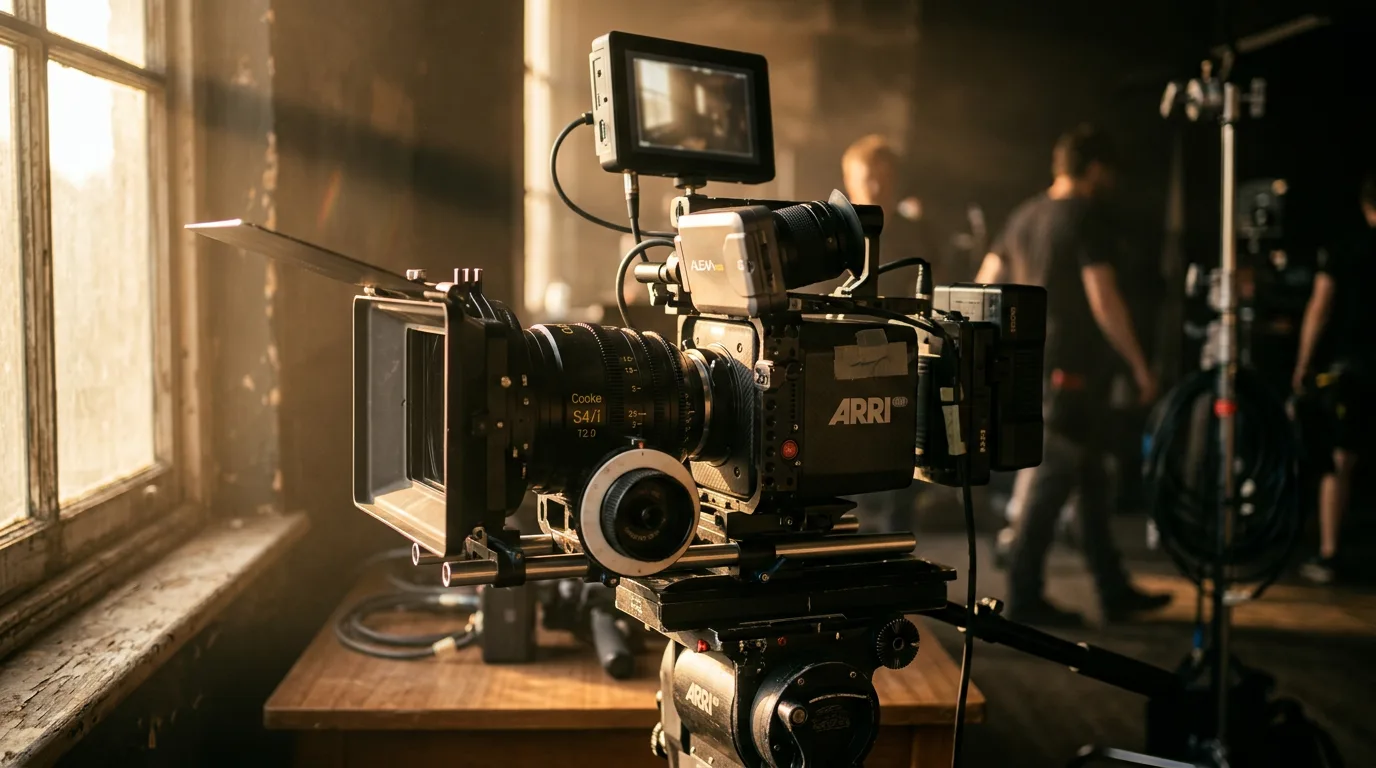
Cinema lenses operate under different rules than photo glass. A stills photographer evaluates autofocus speed, corner sharpness at maximum aperture, and chromatic aberration charts. A filmmaker asks different questions first: does the focus ring breathe? Is the iris geared and de-clicked? Will the color rendering match across three or four primes in a set? These priorities produce fundamentally different optical designs, and the gap between a photo lens pressed into video duty and a purpose-built cine prime shows up in every rack focus, every aperture pull, and every cut between angles.
We evaluated every cinema and video lens in our coverage universe against the criteria that matter on set: T-stop accuracy and consistency, focus breathing performance, mechanical build quality for follow focus and matte box compatibility, color matching within lens families, and price-to-performance at each budget tier.
The four lenses below span from entry-level MFT primes that pair with a BMPCC 4K to a professional PL-mount prime set built for full-frame cinema cameras. Each fills a different role, and none of them is universally "best" — the right pick depends on your camera system, production scale, and how you plan to grow your kit.
One pattern became clear during our evaluation: the budget cinema lens market has improved faster than any other lens category in the last three years. Options that did not exist in 2022 now deliver usable T1.2 glass with proper cine mechanics for less than some consumer zoom lenses. That shift changes the calculus for indie filmmakers, student productions, and content creators who previously had to choose between adapted vintage glass and a second mortgage on a Zeiss set.
Quick Picks at a Glance
| Feature | Editor's Pick Panasonic Leica DG SUMMILUX 9mm F1.7 ASPH (MFT) | SIRUI Night Walker 24mm T1.2 S35 (Canon RF) | Meike 50mm T2.2 Mini Cinema (M43) | DZOFILM Arles Prime 5-Lens Kit T1.4 (PL Mount) |
|---|---|---|---|---|
| Price Band | Entry | Entry | Entry | Flagship |
| Focal Length | 9mm | 24mm | 50mm | 25/35/50/75/100mm |
| Max Aperture | f/1.7 | f/1.1 | f/2.0 | f/1.2 |
| Mount | Micro Four Thirds | Canon RF | Micro Four Thirds | PL Mount |
| Filter Size | 55mm | 67mm | 55mm | 86mm |
| Weight | 130g | 535g | 290g | 1.2-1.5kg per lens |
| Check Price | Check Price | Check Price | Check Price |
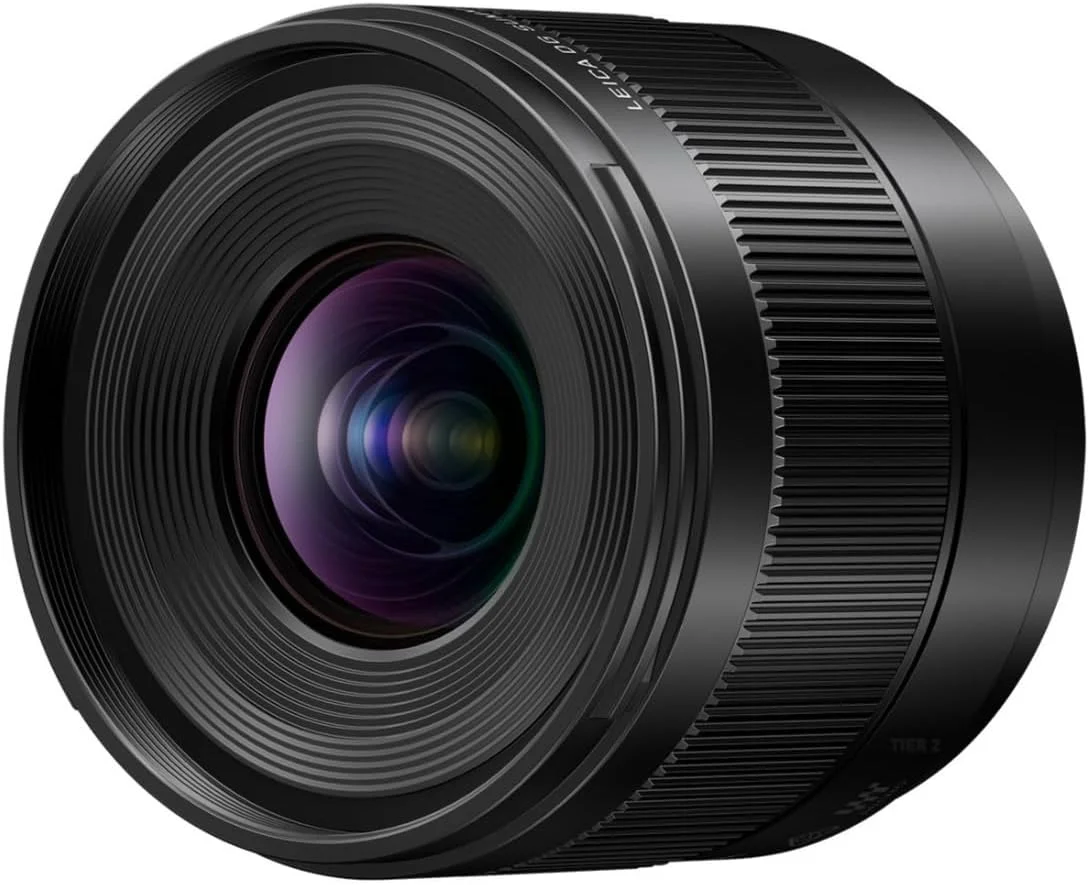
Panasonic Leica DG SUMMILUX 9mm f/1.7 — Best Video-First MFT Prime
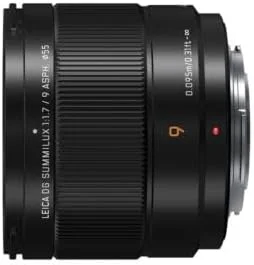
The Panasonic Leica 9mm f/1.7 is the best video-first ultra-wide prime on Micro Four Thirds — and one of the strongest arguments for MFT as a video platform in 2026. Its 18mm full-frame equivalent field of view captures expansive B-roll, vlog framing with environmental context, and interior establishing shots without the barrel distortion that plagues cheaper ultra-wides. Panasonic and Leica co-engineered this lens with near-zero focus breathing, a spec that transforms it from a good photo prime into genuine video glass.
The linear autofocus motor runs silently — critical if you record audio from an on-camera microphone, where AF motor noise from older screw-drive or micro-motor designs bleeds into your audio track. Paired with Panasonic GH6 or GH7 bodies, the continuous AF tracks subjects during walking vlogs and gimbal work without the hunting that some contrast-detect MFT combinations produce. Switching to a BMPCC 4K (which lacks continuous AF) means pulling focus manually, but the focus ring is smooth enough for controlled pulls.
At 130 grams, this lens weighs less than most camera batteries. The size advantage matters for gimbal work where every gram above the motor's rated payload degrades stabilization, and for vloggers who hold a camera at arm's length for extended takes. Weather sealing adds durability for outdoor shooting — rain, dust, and temperature swings between indoor and outdoor locations won't force you to swap to a protected lens mid-shoot.
The Leica certification is more than branding here. Contrast and color rendering carry the warm, saturated character that Leica glass is known for, and the lens produces a distinctly different look than Olympus or Sigma MFT primes at similar focal lengths. For video colorists, that starting point often means less work in the grading suite. The f/1.7 aperture delivers workable background separation at close focus distances despite the MFT sensor's deeper depth of field, and low-light performance is strong enough for indoor available-light shooting.
Where this lens falls short: the MFT mount limits your sensor options to Panasonic, OM System, and Blackmagic cameras. If you plan to move to full-frame cinema cameras within the next two years, investing in MFT glass creates a lens kit that won't transfer. The autofocus can also hesitate in very low-contrast scenes — flat walls, overcast skies, and dimly lit interiors sometimes produce brief focus searches before the motor locks.
Price band: Entry Check Price
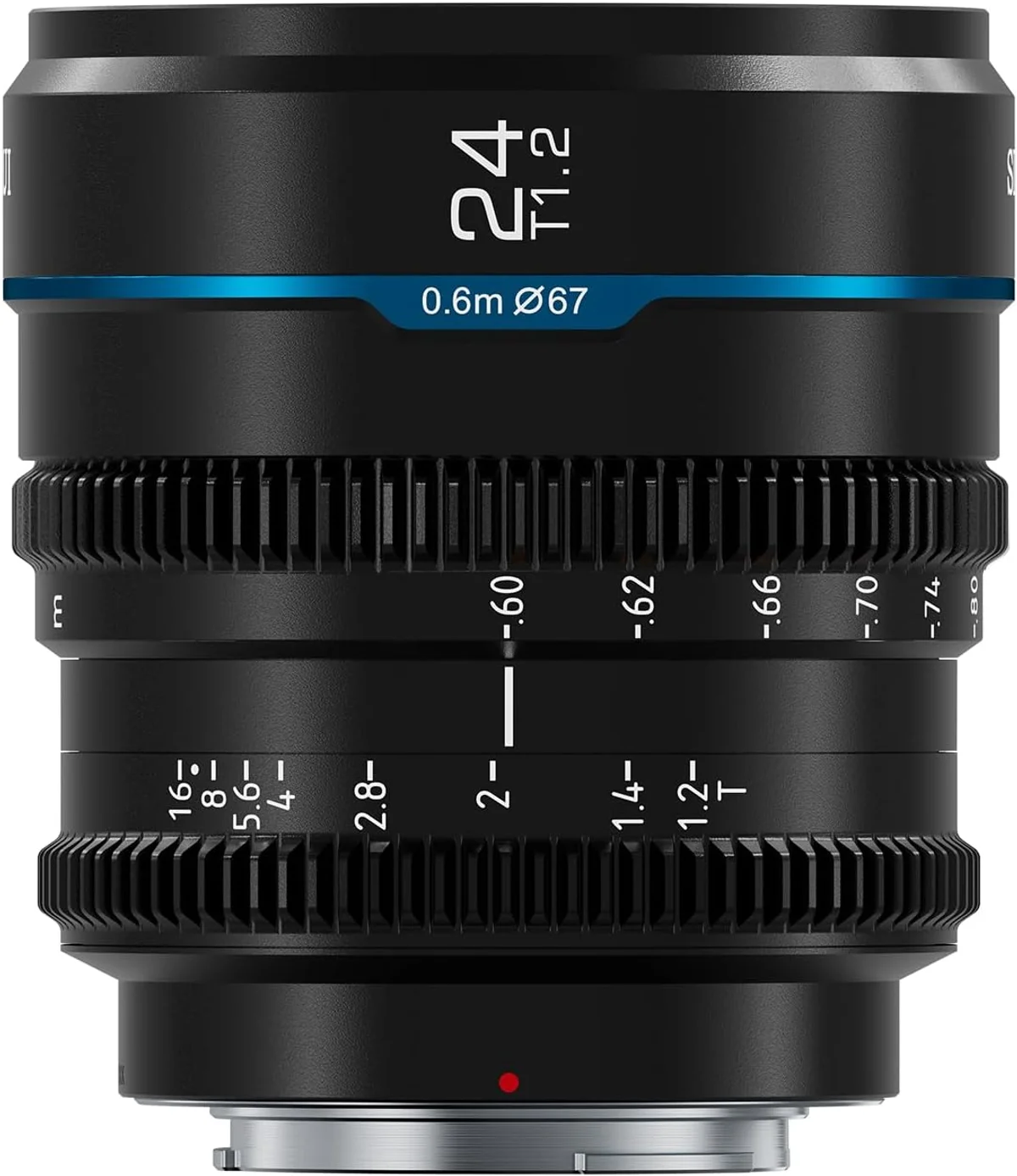
SIRUI Night Walker 24mm T1.2 — Best Budget Cinema Prime
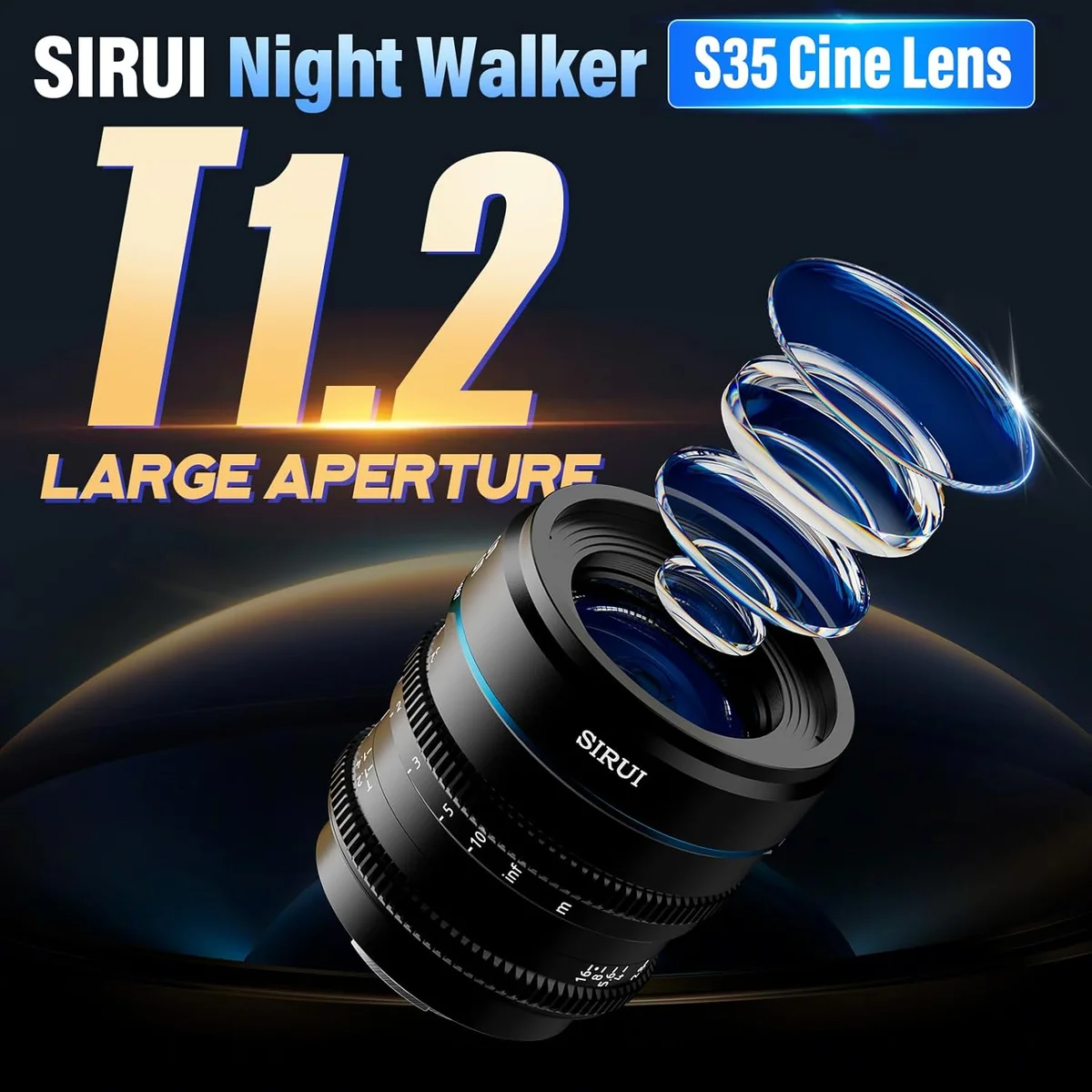
The SIRUI Night Walker 24mm T1.2 is the lens that proved budget cinema glass could be more than a compromise. Two years ago, T1.2 aperture on a dedicated cinema prime with proper geared rings required spending many times as much. SIRUI priced the Night Walker line in the range of a mid-tier photo prime and delivered cine mechanics that work with standard follow focus systems and matte box setups. That combination opened cinema-style shooting to indie filmmakers, film students, and hybrid creators who need the look without the rental budget.
Focus breathing is the spec that separates a photo lens adapted for video from real cinema glass, and the Night Walker 24mm controls it well.
Rack focuses between near and far subjects produce minimal framing shift — the kind of performance you expect from lenses costing three to four times as much. The de-clicked aperture ring rotates smoothly through its range, allowing mid-shot iris pulls without the visible exposure jumps that clicked photo lenses produce. Standard 0.8 mod gear pitch on both the focus and aperture rings means your wireless follow focus motor bolts on without custom gears.
The T1.2 aperture gathers enough light for available-light night exteriors and dimly lit practical sets — situations where even T2.0 cinema primes force you to push ISO higher than your camera's noise floor tolerates. Wide open, the bokeh has an organic, slightly vintage quality that many shooters prefer over the clinical rendering of more expensive optics. Stopped down to T2.0, center sharpness tightens up while retaining that cinematic roll-off in the out-of-focus areas.
Limitations are real and worth acknowledging. Super 35 sensor coverage means this lens vignettes on full-frame cameras unless you apply a 1.5x crop — sacrificing resolution. Manual focus only is standard for cinema primes but a dealbreaker for solo run-and-gun operators who depend on autofocus. Chromatic aberration at T1.2 shows purple fringing on high-contrast edges (backlit hair, window frames against bright skies), requiring correction in post. And vignetting wide open is visible in the corners, though it often adds to the cinematic character rather than detracting from it.
For Canon RF shooters building their first cinema lens kit on a constrained budget, the Night Walker 24mm is the entry point. Pair it with the 35mm and 55mm from the same line for a three-prime set that costs less than a single mid-range cinema lens from established brands.
Price band: Entry Check Price
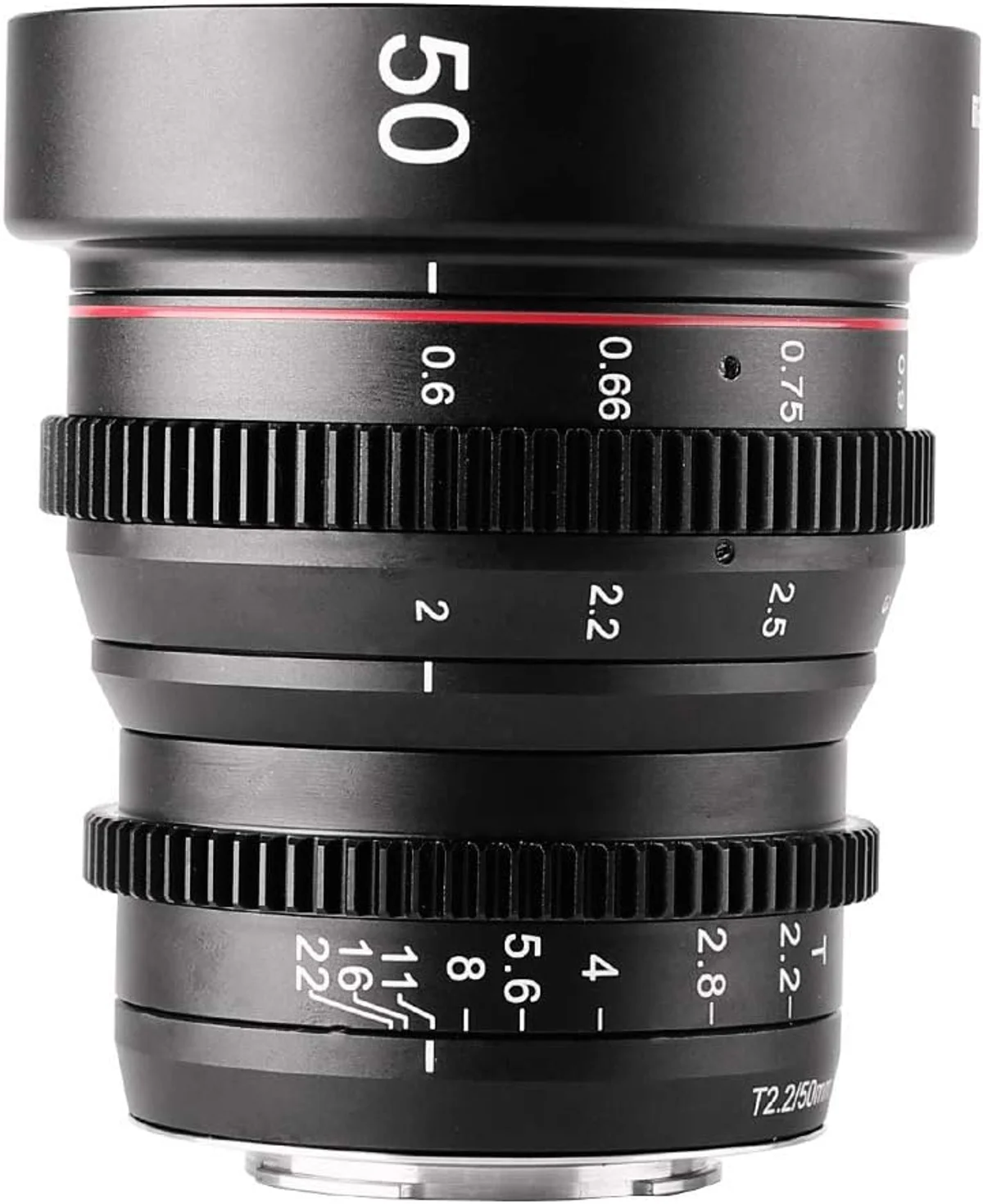
Meike 50mm T2.2 Mini Cinema — Lowest Entry Point for MFT Filmmakers
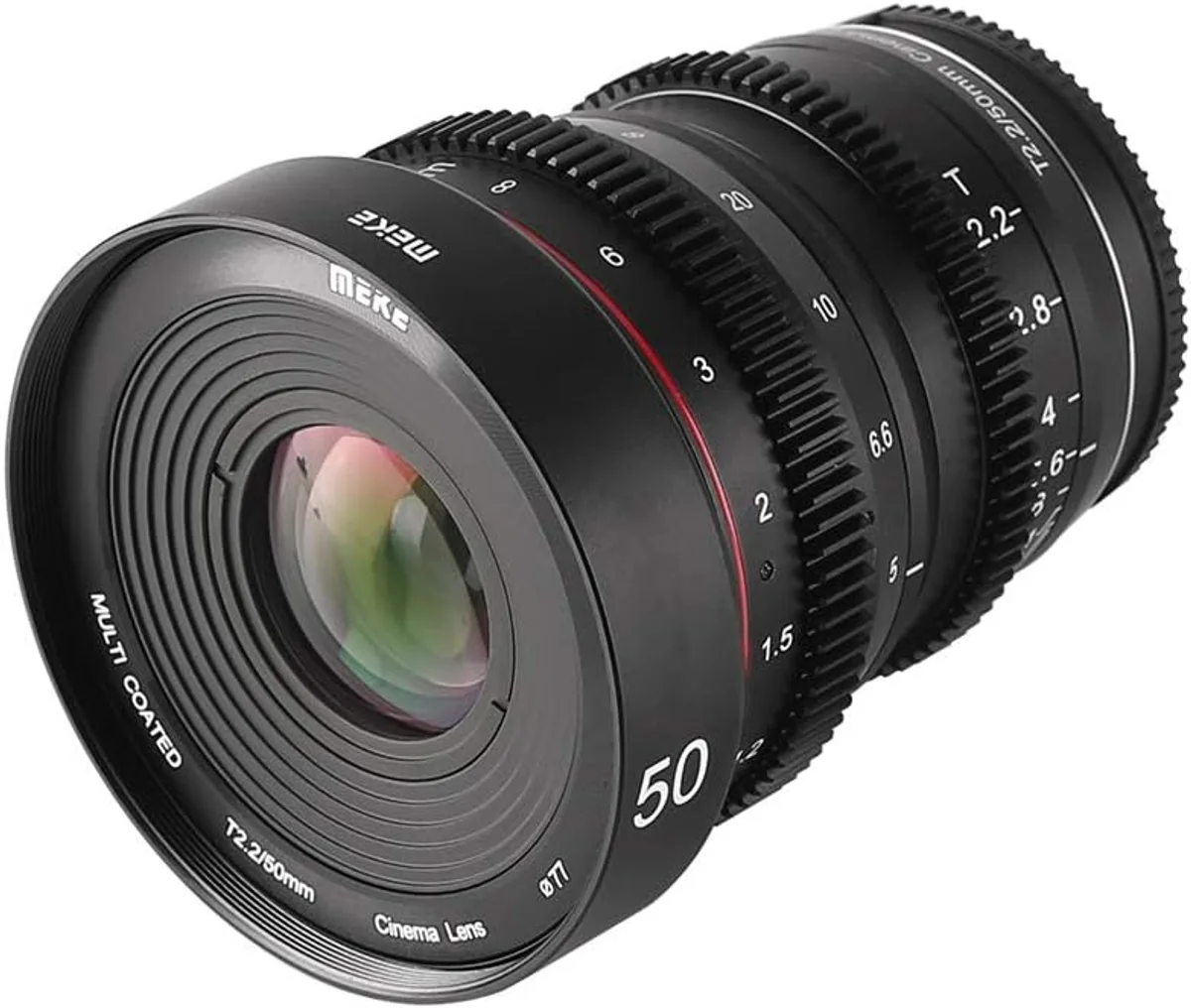
The Meike 50mm T2.2 exists for one specific scenario: pairing with a Blackmagic Pocket Cinema Camera 4K to create the cheapest real cinema rig available in 2026. Camera body plus lens totals well under the price of many single photo primes, yet the combination outputs ProRes or Blackmagic RAW in a color science that colorists love working with. The 100mm full-frame equivalent focal length serves interviews, medium close-ups, and portrait-style B-roll — the shots that fill the majority of indie narrative, documentary, and corporate video timelines.
Build quality is where the price becomes apparent. Several users report aperture rings that develop looseness after months of use, and the focus ring, while acceptably smooth for controlled pulls, lacks the buttery resistance of more expensive cinema glass. The 0.8 mod gear pitch is correct for follow focus compatibility, but the short focus throw (around 180 degrees) provides less precision than the 270-300 degree rotation found on purpose-built cine primes. For precise rack focuses, you need marks and rehearsal — there is little margin for error when each degree of rotation covers more focus distance.
Optically, the Meike performs above its price point from T2.8 onward. Sharpness in the center is good, and the rendering has a pleasing softness in the transitions between sharp and out-of-focus areas. Wide open at T2.2, corners soften and contrast drops slightly — not objectionable for most video work, but visible if you pixel-peep stills pulled from footage. The 100mm equivalent compression on MFT flatters faces in interviews and isolates subjects from cluttered backgrounds even at modest apertures.
The MFT mount constraint is the same trade-off as the Panasonic Leica 9mm: your lens investment is locked to Panasonic, OM System, and Blackmagic bodies. If a future camera upgrade takes you to Super 35 or full-frame, these lenses become drawer inventory. For filmmakers committed to the MFT ecosystem — or those building a kit specifically around the BMPCC — the Meike 50mm fills the portrait-length gap in an affordable cine prime collection.
Price band: Entry Check Price
DZOFILM Arles Prime 5-Lens Kit T1.4 — Professional Matched Set
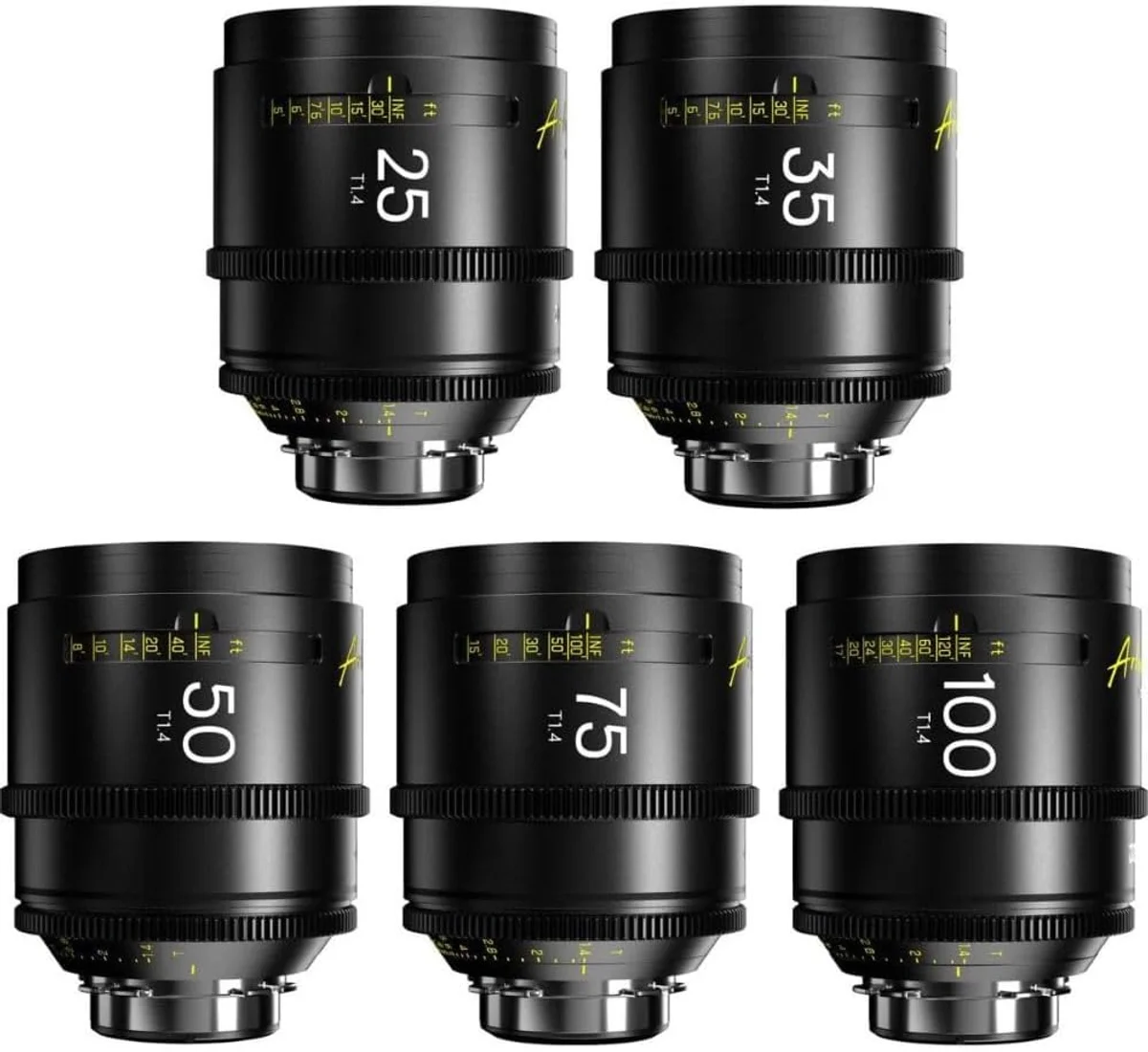
The DZOFILM Arles 5-Lens Kit T1.4 is a professional cinema prime set that competes with glass costing two to three times its price. Five focal lengths — 25mm, 35mm, 50mm, 75mm, and 100mm — cover the range that 90% of narrative feature and commercial productions require. Every lens in the set shares consistent color rendering, contrast characteristics, and T-stop calibration, eliminating the grading overhead of mixing brands or lens lines. For rental houses stocking sets and production companies that cut between multiple camera angles, matched optics save hours in the color suite.
Full-frame coverage is the headline spec beyond the T1.4 maximum aperture. The Arles set covers sensors up to and including the RED V-Raptor, Sony Venice 2, and ARRI ALEXA 35 — the cameras that anchor high-end commercial, documentary, and indie feature work in 2026. The PL mount is standard on these camera platforms, with adapter options for mirrorless bodies when needed. Buying full-frame PL glass means your lens investment survives camera upgrades across sensor sizes and mount generations.
Build quality reflects the professional target audience. Each lens sits in a proper cinema housing with standardized front diameters for 86mm clip-on matte boxes, smooth geared focus and iris rings, and focus marks that stay calibrated across temperature changes. The lenses weigh between 1.2 and 1.5 kilograms each — heavy for handheld work, but standard for cinema rigs built on 15mm rod systems with follow focus motors and matte box assemblies. The weight actually provides inertia that dampens micro-vibrations during handheld shots, a benefit that lightweight lenses lack.
T1.4 across all five focal lengths provides genuine creative control over depth of field. On full-frame sensors, T1.4 at 100mm isolates a subject's eyes from their ears — the kind of shallow focus that defines the "cinema look" audiences associate with high production values. Stopped down to T2.8 or T4.0 for wider depth of field, the optical performance sharpens further and any remaining optical aberrations disappear. The iris produces an 11-blade bokeh pattern that renders specular highlights as smooth circles rather than the polygonal shapes cheaper lenses produce.
The investment is substantial — approaching five figures for the complete set.
That price positions the Arles kit against entry-level Zeiss CP.3 lenses, Cooke Mini S4/i glass, and Canon Sumire primes. DZOFILM undercuts all three on price while delivering competitive optical performance. Where it falls short of those heritage brands is in long-term mechanical durability data — the Arles line has been on the market for roughly a year, while Zeiss and Cooke sets accumulate decades of rental house abuse without failures. For owner-operators and smaller rental inventories, the value proposition is strong. For large rental houses betting on five-year lifecycle glass, the jury is still out.
Price band: Flagship Check Price

How We Chose
Our evaluation framework for cinema and video lenses differs from photo lens testing. We weighted five factors, each addressing a specific production need that separates cinema glass from adapted photo lenses.
T-stop accuracy and consistency — Cinema lenses are rated in T-stops, which measure actual light transmission rather than the theoretical f-stop value. We verified manufacturer claims against user measurements and third-party tests. Lenses where the measured T-stop deviated more than a third of a stop from the rated value were penalized. Within matched sets, what counts is that all focal lengths produce identical exposure at the same T-stop setting, which is the entire point of buying a matched kit.
Focus breathing — We analyzed footage samples and user reports to measure field-of-view shift during focus racks from minimum focus to infinity. Less than 1% shift earned the highest marks. Photo lenses commonly breathe 3-5%, which is invisible in stills but immediately apparent in video. Lenses with breathing compensation features (enabled via camera body settings) were evaluated both with and without compensation active.
Mechanical build and compatibility — Geared focus rings must accept standard 0.8 mod follow focus gears. Iris rings should be de-clicked (or offer a de-click switch) for smooth aperture pulls. Front diameters should be standardized within a lens set to avoid swapping matte box rings between lens changes. Housing material, gear tooth precision, and the smoothness of ring rotation under load all count, because a follow focus motor pulling against a stiff ring creates vibration that shows in the image.
Optical rendering character — Resolution charts matter, but cinema lens selection is equally about rendering personality. We evaluated bokeh quality, contrast curve shape (high micro-contrast with gentle falloff versus flat and clinical), and color rendering warmth. Lenses with distinctive optical signatures that flatter skin tones and produce filmic highlight roll-off scored higher than technically perfect but sterile performers.
Value at each tier — We evaluated each lens against its direct competitors at similar price points, not against each other. A budget cinema prime that outperforms everything else in its price class earns a strong recommendation even if it cannot match a PL prime costing many times as much on absolute optical quality. The question is whether each lens delivers the best possible result for its intended buyer.
Buying Guide: What to Look For
Choosing a cinema lens requires answering a different set of questions than selecting photo glass. The following factors determine which lenses fit your production workflow, camera system, and growth plans.
Mount System and Sensor Coverage
Start with your camera. PL mount is the professional cinema standard, supported natively by ARRI, RED, and Sony cinema cameras and adaptable to mirrorless bodies. Canon RF mount serves the growing Canon cinema lineup (C70, C300 III) plus Canon's mirrorless hybrid bodies. Micro Four Thirds covers Blackmagic Pocket Cinema Cameras and Panasonic GH-series bodies. Sony E mount serves both FX-series cinema cameras and Alpha mirrorless bodies, though dedicated cinema primes in native E mount are less common — most Sony cinema shooters use PL-to-E adapters.
Sensor coverage determines compatibility with future cameras. Full-frame cinema lenses work on every sensor size via cropping. Super 35 lenses cover most dedicated cinema cameras but vignette on full-frame sensors. MFT lenses are locked to the smallest common sensor. Buy for the largest sensor you anticipate using in the next three to five years.
T-Stop vs. F-Stop: Why It Matters for Matching
Photo lenses are rated in f-stops — a geometric ratio of focal length to aperture diameter. Cinema lenses are rated in T-stops — f-stop adjusted for actual light transmission losses through the glass. A 50mm f/1.4 photo lens might transmit only T1.6 of light due to reflection and absorption across its 12+ elements. Two f/1.4 photo lenses from different brands can transmit different amounts of light. Two T1.4 cinema lenses from any manufacturer will transmit identical light, making exposure consistent across lens changes. If you cut between cameras during a scene, T-stop matching prevents exposure shifts between angles.
Focus Breathing and Focus Throw
Focus breathing — the visible shift in field of view as focus distance changes — is the single most disruptive optical behavior in video.
A lens that breathes 3% shifts the framing enough for viewers to notice during a rack focus, creating a subtle zoom effect that breaks the immersion of a focus pull. Cinema-designed lenses engineer breathing below 1%, while photo lenses rarely control it below 2-3%. Focus throw (the degrees of ring rotation from minimum focus to infinity) determines pull accuracy: 270+ degrees gives a focus puller fine control, while sub-150-degree photo lens throws make repeatable marks nearly impossible.
Budget Tiers and What Each Level Delivers
At the cheapest tier, you get functional cinema mechanics (geared rings, de-clicked iris) with optical compromises at maximum aperture.
Sharpness and contrast improve by one to two stops from maximum, and build quality may develop wear over heavy use. The SIRUI Night Walker and Meike Mini Cinema lines sit here. One tier up, build quality jumps to metal housings, focus throw extends to 270+ degrees, optical performance at maximum aperture improves, and color matching within lens lines becomes reliable. At the top tier, you enter professional territory: matched sets with certified T-stop accuracy, interchangeable mounts, cinema-grade housing rated for tens of thousands of rental days, and optical rendering designed by teams that understand how film colorists work. The DZOFILM Arles kit sits at the entry point of this tier.
Solo Operator vs. Crew Considerations
Solo shooters — vloggers, one-person documentary crews, corporate videographers — benefit from autofocus, compact size, and low weight. The Panasonic Leica 9mm fits this profile with its linear AF motor and 130g body. Crew-based productions with a dedicated focus puller benefit from long focus throws, standardized gear pitch, and manual-only designs that prevent accidental AF activation. The SIRUI Night Walker and DZOFILM Arles serve this workflow. Matching your lens choice to your shooting style prevents buying features you won't use and missing features you need.
Renting vs. Buying Cinema Glass
Daily rental rates for high-end matched sets run several times what a single budget cinema prime rents for.
If you shoot fewer than 20 production days per year, renting often makes more financial sense than owning — especially for professional-tier glass where a five-lens set ties up capital that could fund other production needs. Renting also lets you test multiple lens brands and focal lengths before committing to a purchase. Owner-operators who shoot 40+ days per year break even on owned glass quickly, and the convenience of having lenses available without scheduling around rental house inventory justifies the upfront cost. Many working cinematographers own a core two or three lens set and rent specialty focal lengths (ultra-wide, macro, long telephoto) as projects require them.
Cinema Lens Questions Answered
The following questions come up repeatedly among filmmakers evaluating cinema lenses — from first-time buyers building a BMPCC kit to working cinematographers comparing mid-range options against established European brands.
What is the difference between T-stops and f-stops on cinema lenses?
F-stops measure the theoretical light-gathering ability of a lens based on its optical formula. T-stops measure the actual light transmitted through the glass after accounting for reflection and absorption losses. Two lenses rated at f/1.4 can transmit different amounts of light depending on the number of glass elements and coatings used. Cinema productions require matching exposure across multiple cameras and lens changes — T-stops provide that consistency. A lens rated T1.4 guarantees a specific exposure level regardless of how many elements sit inside. For video shooters cutting between angles, this eliminates the subtle brightness shifts that f-stop-rated photo lenses can produce.
Can I use cinema lenses on a mirrorless camera?
Yes, with the right adapter. PL-mount cinema lenses require a PL-to-mirrorless adapter (available for Sony E, Canon RF, Nikon Z, and L-mount from companies like Metabones and Wooden Camera). The short flange distance on mirrorless bodies makes this possible — the adapter fills the gap between the PL flange and the sensor. MFT-mount cinema lenses like the Meike series fit BMPCC and Panasonic GH bodies natively. Canon RF-mount options like the SIRUI Night Walker connect directly without adapters. Autofocus will not function on manual cinema glass regardless of adapter, but peaking and magnification on mirrorless EVFs make manual focusing practical.
Why are cinema lenses so much more expensive than photo lenses?
Cinema lenses require manufacturing tolerances that photo lenses skip. Every unit in a cinema set must match in color rendering, contrast, and T-stop accuracy — so lenses are tested in batches and sorted, with rejects scrapped. The mechanical construction adds cost: geared focus and iris rings must rotate with identical resistance across a set, housing dimensions are standardized for matte boxes and follow focus systems, and front diameters are matched to eliminate filter changes between lens swaps. Engineering for minimal focus breathing and parfocal zoom behavior adds optical complexity. The market is smaller, too — a popular photo lens sells millions of units while a cinema prime set might sell a few thousand, spreading development costs over fewer buyers.
Do I need a full cinema lens set or can I start with one prime?
Starting with a single prime is the practical choice for most independent filmmakers. A 35mm or 50mm cinema prime covers the majority of narrative shots — medium close-ups, over-the-shoulder angles, and establishing frames in smaller interiors. Purchase one lens, learn its character, and add focal lengths as your projects demand them. Rental houses stock individual primes from most cinema brands, letting you test before committing. The exception is productions where color matching between lenses is critical: mixing brands or even different lens lines from the same manufacturer can introduce visible color shifts that require grading time. In that case, a matched set like the DZOFILM Arles saves post-production hours.
What focus throw should I look for in a cinema lens?
Most cinema primes offer 270 to 300 degrees of focus rotation, compared to 90-120 degrees on a typical photo lens. The longer throw gives a focus puller finer control — each millimeter of ring movement shifts focus by a smaller increment, making precise rack focuses repeatable across takes. For solo operators pulling their own focus, 200-270 degrees works well because it covers near-to-far in a comfortable hand sweep without reaching around the barrel. Lenses with 300+ degrees are built for dedicated first ACs using wireless follow focus systems where the extended range maps to a larger motor travel. Short-throw lenses under 150 degrees make accurate manual focus pulls extremely difficult in cinema work.
Is image stabilization useful in cinema lenses?
Dedicated cinema lenses almost never include optical stabilization. Productions stabilize footage with gimbals, Steadicams, tripods, or in-camera IBIS — external systems that offer more predictable and controllable results than lens-based IS. Optical IS can introduce micro-jitter visible at cinema frame rates, and the stabilization group moving inside the lens can shift the optical path in ways that affect focus accuracy. Video-hybrid lenses like the Panasonic Leica 9mm rely on body IBIS for stabilization, which works well for handheld vlogging and run-and-gun footage but would not replace a gimbal for dolly-style shots. For narrative cinema work, leave stabilization to the grip department.
What sensor coverage do I need — Super 35, MFT, or full frame?
Sensor coverage must match or exceed your camera sensor size. Super 35 lenses cover APS-C sized sensors (common in the RED Komodo, Sony FX30, and many cinema cameras). They will vignette on full-frame sensors unless you crop in post. MFT lenses cover the smallest common cinema sensor (BMPCC 4K/6K in MFT mode, Panasonic GH series). Full-frame cinema lenses cover the largest sensors (Sony Venice, RED V-Raptor, Canon C500 II) and can also be used on S35 and MFT cameras with a tighter crop. Buying full-frame glass provides maximum flexibility if you plan to upgrade camera bodies, but S35 and MFT lenses are lighter, smaller, and often more affordable for the same optical quality.
Our Top Pick
The Panasonic Leica 9mm f/1.7 is our #1 recommendation — vlogging, b-roll, and wide-angle video on mft.
Check Price: Panasonic Leica 9mm f/1.7