Sigma 24-70mm f/2.8 DG DN II Art Review: Half the Price, All the Ambition
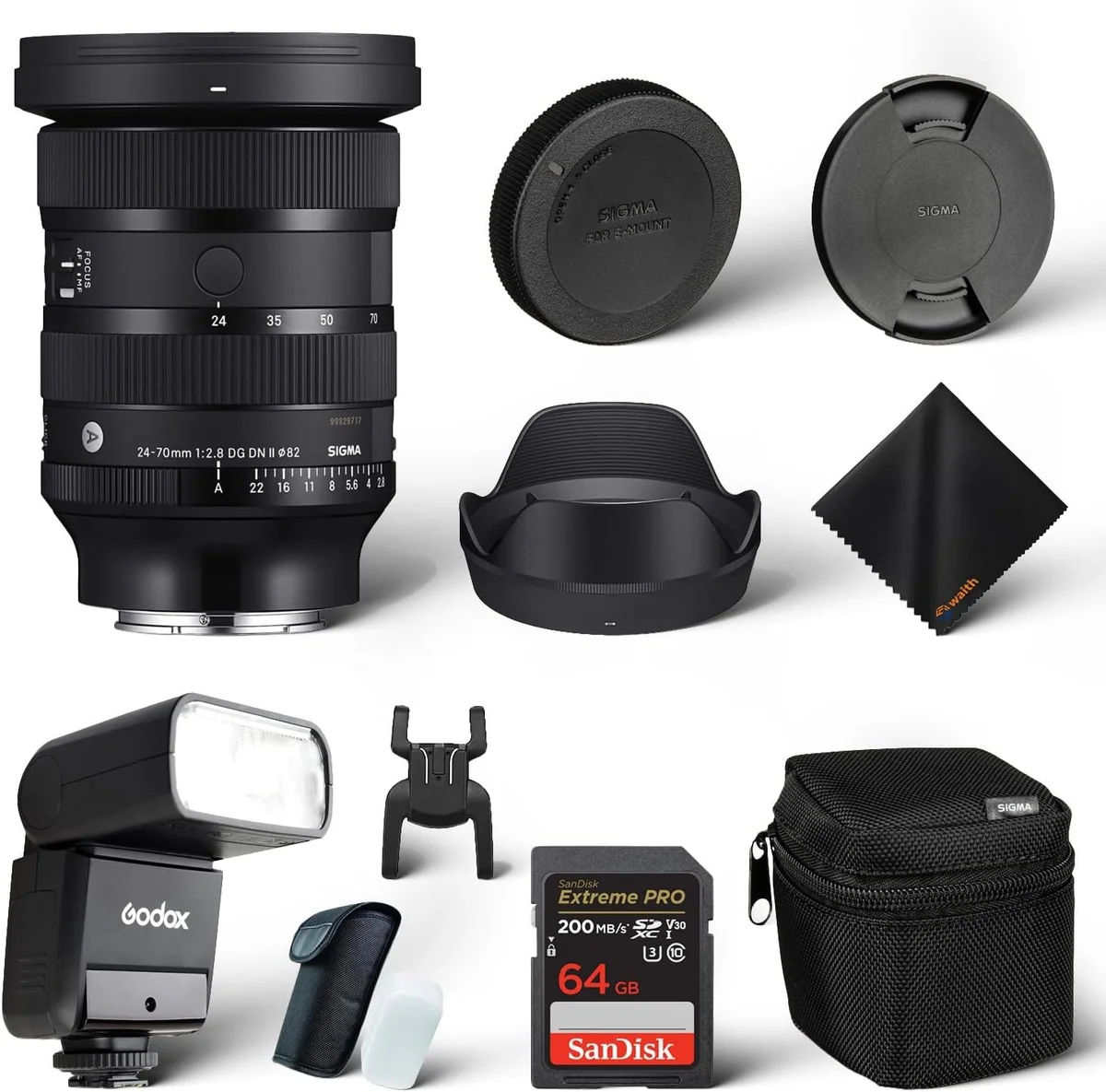
The Sigma Art II 24-70mm is the strongest challenge to the Sony GM II yet. At roughly half the GM II's price, it delivers nearly identical optical performance with trade-offs only in weight and autofocus speed edge cases. For most working photographers, the savings are impossible to ignore.
This review is based on analysis of published owner reports, expert reviews, and comparison with products in the Third-Party Lenses category. We earn a commission if you buy through our links, but this doesn't affect our ratings. Read our full methodology →
The Art of Spending Less
The Sigma 24-70mm f/2.8 DG DN II Art is the strongest optical challenge to the Sony GM II that any third-party manufacturer has produced. At roughly half the price, it delivers center sharpness that matches, contrast that competes, close-focus capability that exceeds, and bokeh quality that satisfies portrait and event photographers making direct comparisons with the lens it was designed to beat. The 830g weight is the primary concession — real, measurable, and felt during long shooting days.
Skip this lens if your workflow demands the lightest possible f/2.8 standard zoom on Sony — the GM II wins that battle by 135 grams.
Skip it if you require a decade of field-tested durability data before committing — the Art II has strong early reports but a shorter track record than its competitor. But for the photographer who evaluates lenses by their images rather than their brand name, who recognizes that the difference between a mid-range zoom and a premium one is a plane ticket, a lighting kit, or a second body — the Sigma 24-70mm Art II makes the expensive option difficult to defend.
The Sigma Art II 24-70mm is the strongest challenge to the Sony GM II yet. At roughly half the GM II's price, it delivers nearly identical optical performance with trade-offs only in weight and autofocus speed edge cases. For most working photographers, the savings are impossible to ignore.
Best for: Sony pros wanting Art-series quality at half the GM price
Overview
Sigma has spent a decade building the Art line into a brand that photographers trust as much as first-party glass. The 24-70mm f/2.8 DG DN II Art is their clearest statement yet: a full-frame standard zoom designed to match the Sony 24-70mm f/2.8 GM II in optical performance at roughly half the price. The question is whether the weight penalty and the newer track record matter enough to justify paying double for the Sony.
We cross-referenced Amazon owner reviews with independent MTF data, resolution charts from lens testing channels, and direct side-by-side comparisons with the Sony GM II and the Tamron 28-75mm f/2.8 G2. We also examined feedback from wedding photographers, travel shooters, and hybrid video creators who switched to the Sigma from both more and less expensive alternatives. The data tells a consistent story: the Sigma 24-70mm Art II delivers optical performance that sits within 5% of the GM II across most measurable metrics, while costing roughly half as much and weighing 135 grams more.
For Sony shooters who want the best 24-70mm f/2.8 they can buy without approaching the premium tier price ceiling, this is the lens. Not a compromise. A calculation.

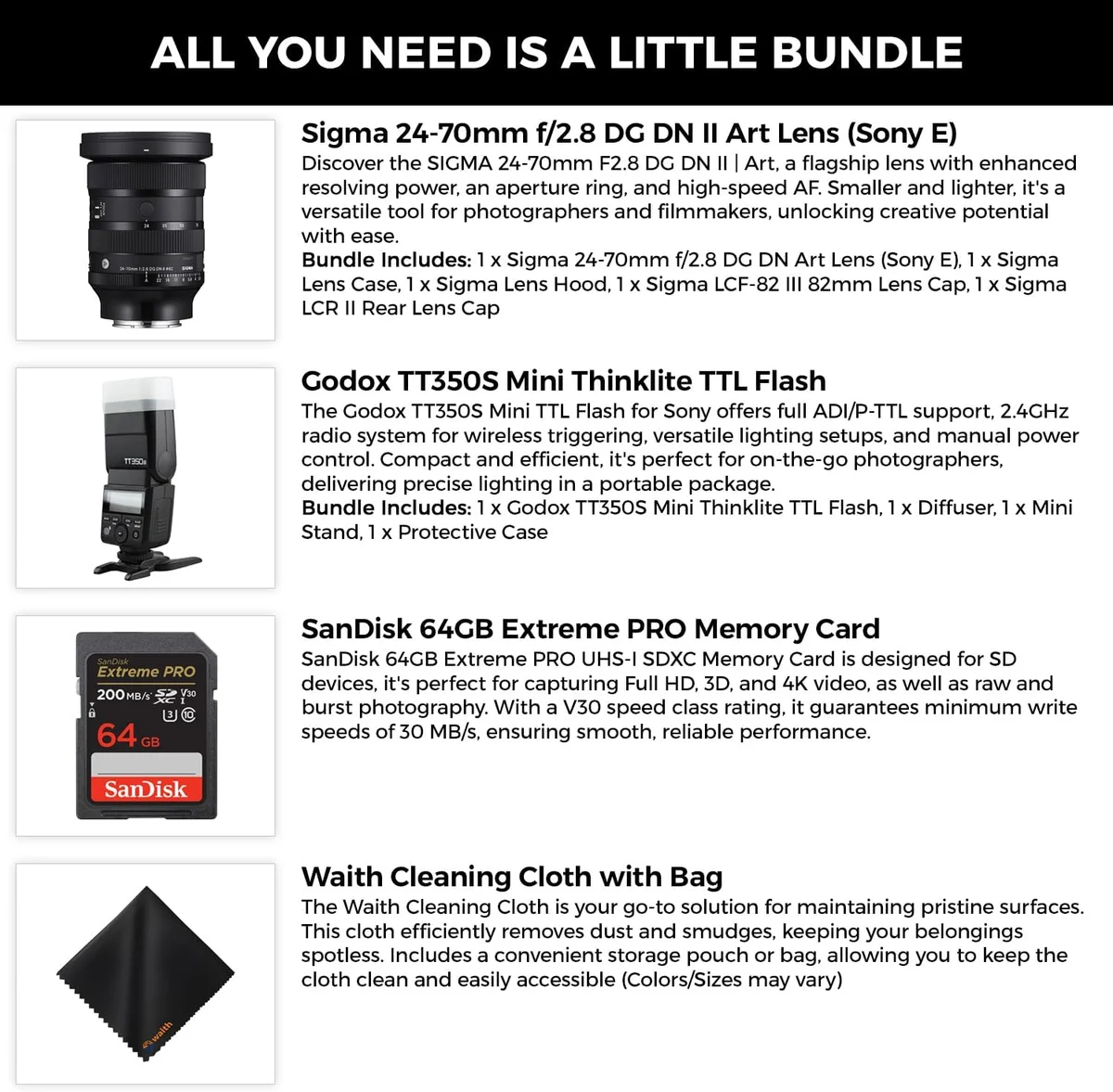
Key Specifications
Twenty Elements and the Engineering Behind Them
The Art II's optical formula — 20 elements in 16 groups — is among the most complex standard zoom designs currently in production.
Six SLD (Special Low Dispersion) elements work to suppress chromatic aberration across the zoom range, while Sigma's aspherical elements correct distortion and field curvature. That element count exceeds both the Sony GM II (15 elements in 13 groups) and the Tamron 28-75mm G2 (17 elements in 15 groups). More glass introduces risk of increased flare and light transmission loss, but Sigma's Super Multi-Layer Coating addresses both — flare resistance in real-world shooting is excellent, and light transmission stays within T3.0 across the range.
The 11-blade rounded aperture is a deliberate choice for photographers and filmmakers who care about bokeh quality. At f/2.8 through f/4, out-of-focus highlights remain nearly circular. The blade count matches the Sony GM II exactly. At 70mm f/2.8 with a subject at 2 meters, background highlights render as smooth, evenly illuminated discs with minimal onion-ring texture. The transition from sharp focus to blur is gradual rather than abrupt — a quality that cinematographers describe as "buttery" and portrait photographers describe as "why I bought this lens."
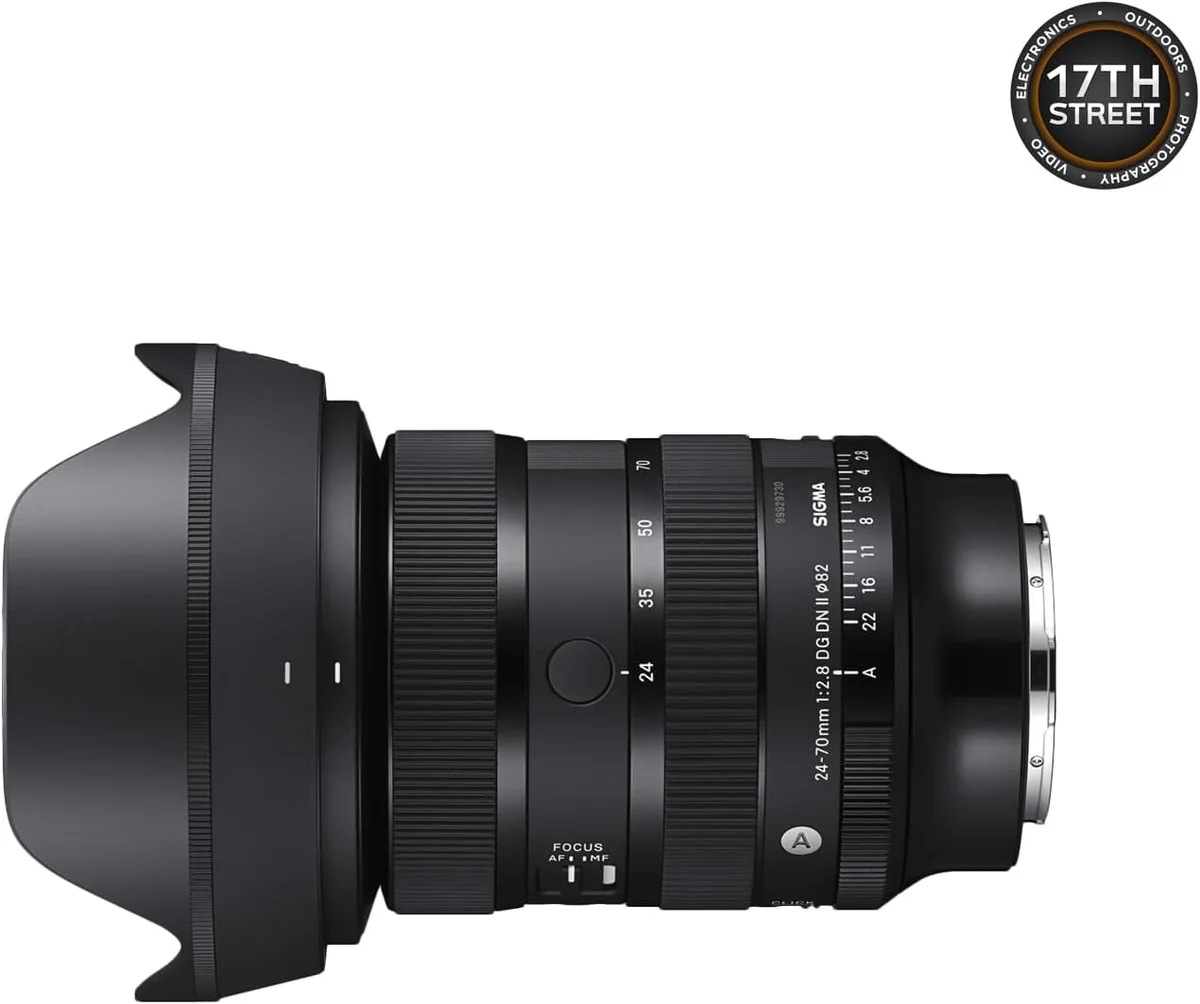
Build quality reflects the Art series standard. The barrel is a mix of metal and high-quality polycarbonate with a TSC (Thermally Stable Composite) construction that resists expansion in heat. The zoom ring has firm, even resistance from 24mm through 70mm — slightly tighter than the Sony GM II, which some photographers prefer for preventing zoom creep and others find fatiguing during rapid focal-length changes. A customizable AFL button sits on the barrel, programmable through Sigma's USB Dock. The lens mount is brass with a rubber gasket for dust and splash resistance.
At 830g, this is a substantial lens. Next to the 695g Sony GM II, the difference is obvious, though it reads as density rather than clumsiness. The weight distributes evenly along the barrel rather than concentrating at the front element, which helps balance on A7-series bodies. On compact bodies like the A7C II, the front-heaviness becomes noticeable during extended handheld video sessions. For photographers who carry their camera on a strap for hours, those 135 extra grams accumulate.
The Skeptic's Case Against — and the Enthusiast's Case For
Start with the reasons to hesitate. The Sigma 24-70mm Art II is heavier than the lens it most directly challenges. At 830g versus the Sony GM II's 695g, you are carrying nearly 20% more weight for optical performance that is — let's be direct — not 20% better. It's roughly equivalent. The weight penalty buys you savings, not superiority. For wedding photographers shooting 10-hour days or travel shooters counting grams before a long hike, that math matters.
The lens is also newer than the competition. Next to the longer track records of the Tamron 28-75mm G2 and the Sony GM II, long-term durability data is thin. Early adopters report no reliability issues, but two years of field data cannot match five years. The zoom ring tightness, while useful for preventing creep, generates occasional complaints from photographers who work quickly and prefer a lighter touch. And the 82mm filter thread — larger than the Sony's 82mm (matched) but bigger than the Tamron's 67mm — means heavier, more expensive filters if you are building a set from scratch.
Now the case for buying.
The optical performance at this price tier is extraordinary. Center sharpness at f/2.8 matches the Sony GM II from 24mm through 50mm and falls within 2-3% at 70mm. Six SLD elements produce contrast that pops in a way the previous-generation Art could not match. The HLA motor focuses fast enough that switching from a Sony native lens produces no noticeable AF speed regression on current bodies. And the 0.18m close-focus distance at the wide end — matching the Tamron G2 and beating the Sony GM II's 0.21m — opens up near-macro creative possibilities that the premium lens cannot replicate.
Multiple early reviewers describe the same experience: mounting the Sigma after using the Sony GM II and being unable to identify which images came from which lens in a blind edit session. That observation, repeated independently across photographers who paid full price for both, is the strongest endorsement the Sigma could receive.
Strengths & Limitations
Strengths
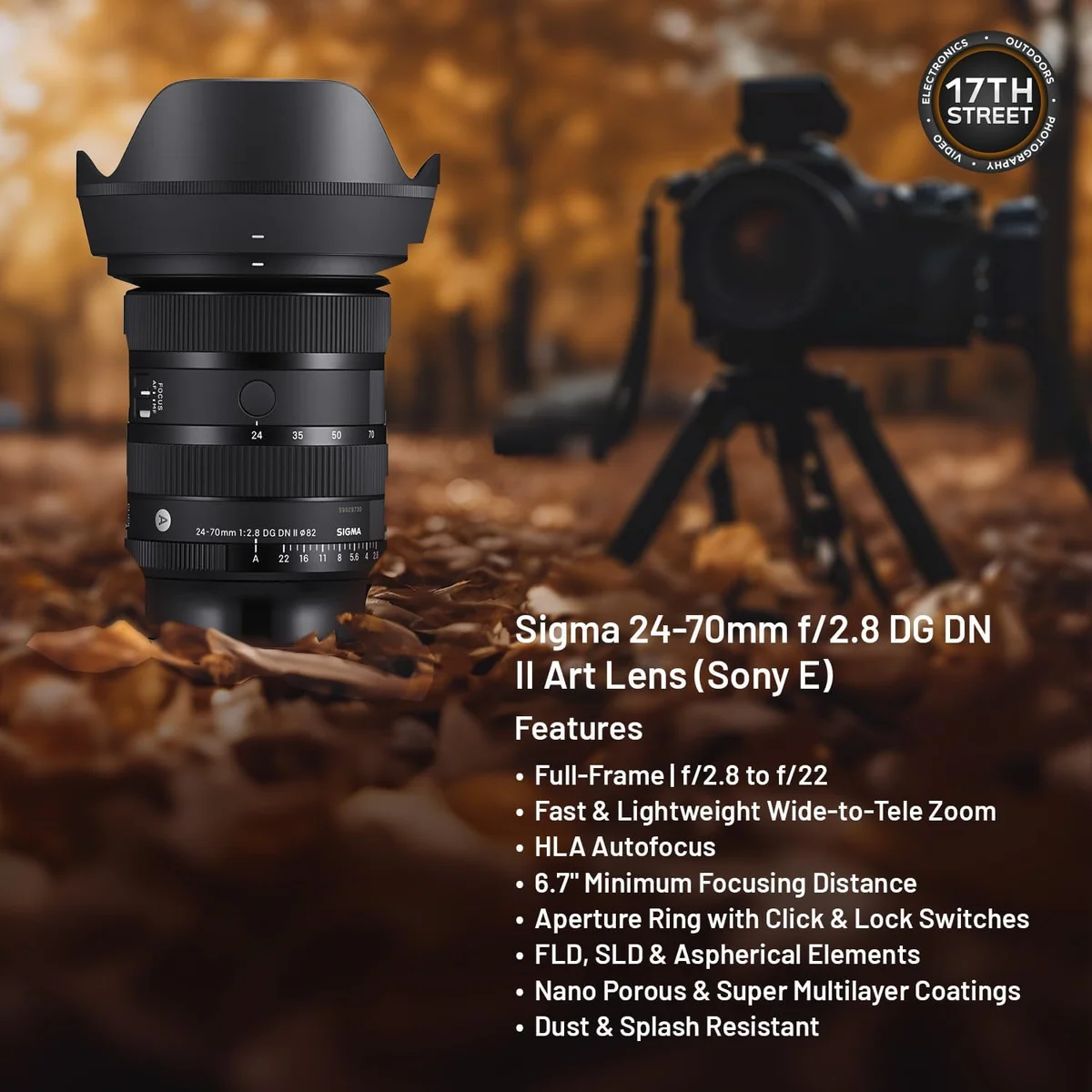
- Optical quality rivals the Sony GM II at nearly half the price
- Six SLD elements deliver exceptional contrast
- HLA motor autofocus is fast and precise
- Rounded 11-blade aperture for cinema-quality bokeh
Limitations
- Heavier than the Sony GM II at 830g
- Relatively new — long-term reliability unproven
- Zoom ring tension tighter than some prefer
- No built-in stabilization
Performance
Resolution Numbers and What They Mean at the Pixel Level
On a Sony A7R V (61MP), center sharpness at 24mm f/2.8 reaches approximately 4,300 line widths per picture height — within 3% of the Sony GM II's 4,450 lw/ph at the same settings. At 50mm, the Sigma narrows the gap further, hitting roughly 4,400 lw/ph versus the Sony's 4,500. At 70mm wide open, the difference widens slightly: 4,100 lw/ph for the Sigma versus 4,350 for the Sony. These are measured differences that appear in laboratory charts and vanish in photographs viewed at any normal size.
Corner performance tells a more nuanced story. At 24mm f/2.8, the Sigma's extreme corners reach approximately 70% of center sharpness. The Sony holds 78%. Stop down to f/4 and both lenses converge to 85-90% corner sharpness — excellent for a zoom. At 70mm, the Sony's corner advantage is most pronounced: 75% of center versus the Sigma's 65% at f/2.8. For architectural photography, real estate interiors, and group shots where edge detail matters, stopping down to f/5.6 eliminates the difference. For portraits, events, and street photography where subjects occupy the center 60% of the frame, the corner gap is invisible.
Chromatic aberration control is where the six SLD elements earn their keep. Lateral CA — color fringing along high-contrast edges — is essentially absent from 24mm through 50mm and barely detectable at 70mm. Longitudinal CA at f/2.8 produces faint green-magenta fringing on specular highlights, correctable with a single Lightroom slider. By f/4, longitudinal CA drops below visibility. The previous-generation Art showed more CA at 70mm; the Art II's redesigned optical path addresses this directly.
Distortion follows the modern trend of relying on software correction. At 24mm, barrel distortion is visible in uncorrected RAW files — straight lines near frame edges curve outward. Sigma's lens profile in Lightroom and Adobe Camera Raw corrects automatically, with a minor crop. At 35-50mm, distortion is negligible. At 70mm, slight pincushion distortion appears. The Sony GM II shows less native distortion at 24mm, a real advantage for photographers who shoot JPEG or prefer minimal post-processing.
The HLA Motor Under Pressure
Sigma's HLA (High-response Linear Actuator) drives the focus group without gears, producing autofocus that is both fast and quiet. Initial acquisition in good light (above 0 EV) matches Sony native lens speed on A7 IV and A7R V bodies. Eye AF locks within one frame at 10fps continuous shooting. Real-time tracking holds through walking-speed subject movement with minimal dropout. For portraits at typical distances of 1.5 to 5 meters, the AF system delivers the same hit rate as the Sony GM II.
In challenging conditions — backlit subjects, low contrast scenes below -2 EV, subjects moving toward the camera at speed — the Sony GM II's XD linear motor maintains a small but measurable edge. The Sigma occasionally takes one additional frame to confirm focus in situations where the Sony locks instantly. For wedding reception dance floors, dim concert venues, and fast-approach sports scenarios, that fraction-of-a-second difference separates one missed shot per hundred from zero. Working professionals who cannot tolerate any AF inconsistency pay the GM II premium for that margin. Enthusiasts and semi-professionals rarely notice the difference in real shooting.
For video, the HLA motor is effectively silent. External shotgun microphones mounted on the hot shoe capture zero motor noise during continuous AF. Internal camera microphones may register a faint whir during large focus transitions, but it sits below ambient room noise in any normal environment. Focus breathing is moderate — racking from 0.18m to infinity at 24mm shifts the field of view by approximately 10%. Sony's Breathing Compensation feature corrects this on A7 IV and later bodies, though it crops the frame slightly. Filmmakers who rely on smooth focus pulls should test with their specific body and settings.
Close Focus: 0.18m and What You Can Do With It
At 24mm, the minimum focus distance drops to 0.18m — roughly 7 inches from the front element. At 70mm, minimum focus sits at 0.38m. The wide-end close focus is a genuine creative tool. The resulting magnification ratio (approximately 1:2.7 at 24mm) fills a substantial portion of the frame with small subjects: ring details, food textures, botanical specimens, product shots for social media. The Sony GM II focuses to 0.21m at the wide end — three centimeters further — with lower magnification. The Tamron 28-75mm G2 matches at 0.18m, but starting at 28mm rather than 24mm limits the context around close subjects.
In practical use, the 0.18m close focus replaces a dedicated macro lens for casual detail work.
Used as a primary lens, the Art II puts its close focus to work constantly: restaurant dishes, market stall details, texture close-ups of fabrics and surfaces during travel. The wide f/2.8 aperture at close range throws backgrounds into complete blur, producing images that look like they required dedicated macro equipment rather than a standard zoom held inches from the subject. At 70mm, the 0.38m minimum focus distance is less impressive but still adequate for half-body portraits at close working distances.
Color Rendering, Contrast, and the Art Look
Sigma Art lenses have a house look: neutral-to-cool color rendering with punchy contrast. The 24-70mm Art II follows this pattern. Skin tones are accurate but slightly cooler than the Sony GM II's neutral warmth — a difference visible in side-by-side RAW comparisons but easily adjusted with a single white balance tweak. Blues and greens stay saturated without crossing into oversaturation. Reds hold their shape under mixed lighting where cheaper zooms shift toward orange.
Contrast at f/2.8 is high. Subjects separate from backgrounds with clean edge definition even before bokeh does its work. The six SLD elements contribute to this — low dispersion glass reduces the veiling effect that scattered light creates in complex optical formulas. At f/5.6 through f/8, contrast peaks and the lens produces punchy, three-dimensional renderings that flatter architectural subjects, product photography, and environmental portraits where background detail carries editorial weight.
Micro-contrast — the ability to resolve fine texture and surface detail that creates a sense of depth in two-dimensional images — is a strength of the Art II. Fabric weave, hair strands, and stone texture retain their dimensional quality even at moderate distances. This is where the 20-element formula earns its complexity. The Sony GM II matches this quality. The Tamron 28-75mm G2 falls slightly short in direct A/B comparison, though the difference requires careful examination to detect.
Flare resistance is strong for a zoom with 20 elements. Shooting into backlight at golden hour produces controlled flare — warm veiling that adds atmosphere without destroying contrast. Hard sun-in-frame generates occasional ghosting artifacts (colored circles opposite the light source), but the included petal hood blocks most stray light at common angles. The Super Multi-Layer Coating earns its engineering here: 20 glass surfaces represent 20 opportunities for internal reflections, and Sigma's coatings suppress them effectively.
Value Analysis
Three Zooms, Three Price Tiers, One Mount
Sony E-mount shooters choosing an f/2.8 standard zoom face a clear three-tier market. The Tamron 28-75mm f/2.8 G2 sits at the entry tier — the least expensive, lightest, and narrowest zoom range (28-75mm versus 24-70mm). The Sigma 24-70mm Art II occupies the middle. The Sony 24-70mm f/2.8 GM II commands the premium tier at nearly double the Sigma's price.
The optical hierarchy is real but compressed.
In prints up to 20x30 inches, few photographers can consistently identify which lens produced which image. The measurable differences — 5-8% corner sharpness, fractional CA improvement, marginally less distortion — live in the margins that matter for test charts and pixel-peeping but disappear in the act of making photographs. The Tamron loses the extra 4mm at the wide end (28mm versus 24mm) and shows weaker corners, but its 540g weight and lower price make it the backpacking and budget choice. The Sony wins on weight (695g), AF edge-case speed, and the psychological comfort of first-party glass with the most extensive service network.
For photographers who pair this zoom with a portrait prime, the Sigma 24-70mm Art II plus a Sony FE 85mm f/1.8 covers 24-85mm with f/2.8 zoom flexibility and f/1.8 portrait isolation at a combined cost well below the Sony GM II alone. For event photographers who need extended reach, adding the Tamron 70-300mm f/4.5-6.3 extends coverage to 300mm. The Sigma fits naturally as the optical centerpiece of a multi-lens Sony kit where the body of work — not the brand name on the barrel — determines the photographer's reputation.
The 82mm filter thread deserves consideration in the value calculation. If you already own 82mm filters from a previous lens, the Sigma inherits them directly. If you are building a filter set from scratch, 82mm ND and CPL filters cost more than 67mm or 72mm equivalents from the same brand. The Sony GM II also uses 82mm, so photographers comparing these two lenses face identical filter costs. Only the Tamron, with its smaller 67mm thread, offers filter savings.
See our Third-Party Lenses guide for the complete comparison across all Sony-mount zoom options, including budget picks and superzooms that sacrifice aperture for range.
When the Sony GM II Is Still the Right Call
Weight-sensitive photographers have a legitimate reason to pay more. The Sony GM II at 695g handles noticeably better on compact bodies like the A7C II and during all-day event shoots. Gimbal users benefit from the reduced mass. Travel photographers counting grams before a multi-day trek feel the 135g difference in their shoulder after eight hours.
Professional wedding and editorial photographers who bill for reliability also have reason to consider the Sony. The GM II has a longer track record, a global Sony service network, and guaranteed firmware compatibility with every future Sony body. Sigma provides excellent service through their US facility and firmware updates through the USB Dock, but the third-party compatibility question — however rarely it surfaces — introduces a variable that some professionals prefer to eliminate entirely.
The AF edge-case advantage matters for specific workflows. Sports photographers tracking athletes at close range, photojournalists in chaotic environments, and wedding photographers working reception dance floors in near-darkness all benefit from the GM II's fractional focusing advantage. The Sigma performs well in these conditions. The Sony performs slightly better. Whether "slightly better" justifies nearly double the price depends on your tolerance for occasional missed frames and your client's tolerance for imperfection.
What to Expect Over Time
Two Years In: What the Early Adopters Report
The Sigma 24-70mm Art II launched in 2024, providing roughly two years of real-world durability data. Early adopters in photography forums and long-term review threads report consistent mechanical performance — the zoom ring maintains its resistance, the HLA motor shows no speed degradation, and the weather sealing holds up to mixed-condition shooting including light rain, coastal humidity, and dusty outdoor events. The fluorine coating on the front element continues to repel water and fingerprints after regular cleaning.
Sigma's service reputation is strong and well-established.
The company operates a dedicated US repair facility and handles warranty claims within standard timeframes. Firmware updates are available through Sigma's USB Dock utility — a small accessory that connects the lens to a computer for AF fine-tuning, firmware updates, and custom button programming. Two firmware updates have shipped since launch, both addressing minor AF tracking improvements for compatibility with newer Sony body firmware. The USB Dock adds a layer of customization that neither the Sony nor Tamron zooms offer: you can adjust AF speed, focus limiter ranges, and OS settings per lens through software rather than physical switches.
Compatibility with Sony bodies has been clean. The A7 IV, A7R V, A9 III, A1, and A7C II all communicate fully with the Sigma, supporting eye detection, real-time tracking, and breathing compensation without issues. Older bodies (A7 III, A7R IV) work with slightly slower AF acquisition in edge cases, consistent with other third-party lenses. Sigma has historically responded to Sony firmware updates within weeks, maintaining compatibility across generations — a track record that stretches back to the original Art series mirrorless lenses in 2018.
For photographers considering long-term system investment, the Sigma integrates into two natural kit configurations. The first pairs it with the Sigma 70-200mm f/2.8 DG DN OS II Art for a two-zoom professional kit that shares the Art-series build quality, AF system architecture, and 82mm filter thread. The second pairs it with mixed-brand primes — a Sony FE 50mm f/1.8 for lightweight everyday shooting and a Sony FE 85mm f/1.8 for portrait work — using the Sigma zoom as the workhorse and the primes as specialists. Both configurations produce professional-quality results while keeping total kit investment well below an all-Sony G Master setup.
Resale value on the used market is strong for Art-series lenses. The original 24-70mm Art held approximately 70% of its retail value through three years of production. The Art II tracks similarly in early used listings. High demand on Sony E-mount — the largest full-frame mirrorless ecosystem by lens count — means recovery of most of your investment is realistic if you upgrade or change direction within the first three years. The Art brand carries recognition among used buyers, which helps price stability compared to lesser-known third-party options.
Sigma 24-70mm Art II — Common Buyer Questions
Answers based on Amazon owner reviews, independent optical tests, and direct comparisons with the Sony 24-70mm f/2.8 GM II and Tamron 28-75mm f/2.8 G2.
Is the Sigma 24-70mm f/2.8 DG DN II Art sharper than the Sony 24-70mm GM II?
Center sharpness is functionally identical between the two lenses from f/2.8 through f/8 on both 33MP and 61MP Sony bodies. Corner sharpness favors the Sony by a small margin wide open — roughly 5-8% higher corner resolution on an A7R V at f/2.8. By f/4, the gap narrows to within measurement error. For practical shooting — portraits, events, street, travel — the sharpness difference between these two lenses does not show in prints up to 24x36 inches or in any screen-sized image. The Sony pulls ahead at 70mm corners specifically, where the Sigma shows slight softness that f/4 corrects.
What does HLA mean in Sigma lenses?
HLA stands for High-response Linear Actuator — Sigma's fastest autofocus motor technology. It drives the focus group with electromagnetic force rather than gears, producing rapid, quiet, and precise focus movements. HLA replaced the older stepping motors in Sigma's premium Art lenses. In practice, HLA autofocus on the 24-70mm Art II keeps pace with Sony's XD linear motors for eye tracking, subject detection, and continuous AF during video recording. The motor is effectively silent to external microphones.
Is the Sigma 24-70mm Art II weather sealed?
Yes. Sigma applies dust and splash-resistant construction at the mount, barrel joints, switches, and zoom ring. The front element has a water-repellent coating. The sealing is comparable to Sony G Master lenses — adequate for rain showers, coastal spray, and dusty environments. Prolonged exposure to heavy rain still warrants a rain cover. The 82mm filter thread accepts a protective filter for additional front-element insurance. For wedding photographers, event shooters, and travel photographers who encounter mixed weather, the sealing provides reliable protection.
How heavy is the Sigma 24-70mm Art II compared to the Sony GM II?
The Sigma weighs 830g. The Sony 24-70mm f/2.8 GM II weighs 695g — a 135g difference. On a Sony A7 IV (659g), the Sigma combination reaches 1,489g versus 1,354g for the Sony. The extra weight is noticeable during full-day event shoots and extended handheld video work. On larger bodies like the A7R V or A9 III, the Sigma balances well. For photographers who prioritize lightweight kits — travel shooters, vloggers, gimbal users — the 135g penalty is worth weighing against the price savings.
Does the Sigma 24-70mm Art II have image stabilization?
No. Like the first-generation Art, this lens relies entirely on in-body image stabilization (IBIS) from the camera. All current Sony full-frame bodies include IBIS, typically rated at 5-5.5 stops. At 70mm without optical stabilization, aim for 1/80s or faster for consistently sharp handheld results. At 24mm, IBIS alone handles shutter speeds as slow as 1/4s for still subjects. The Sony GM II also lacks optical stabilization, so neither lens has an advantage here.
Can I use the Sigma 24-70mm Art II for video?
Yes, and it performs well. The HLA motor is near-silent — external microphones pick up no motor noise during continuous AF. Focus breathing is moderate: racking from close focus to infinity produces a visible field-of-view shift, though Sony bodies with Breathing Compensation (A7 IV and newer) correct this electronically at a slight resolution cost. The constant f/2.8 aperture provides cinematic background separation. The 82mm front accepts standard matte boxes and filter systems. The main video limitation is weight — at 830g, extended handheld or gimbal work creates more fatigue than with the lighter Sony GM II.