Best Third-Party Lenses 2026: Tamron, Viltrox, and Meike Picks

Third-party lenses have changed the economics of mirrorless photography. Five years ago, buying outside the native ecosystem meant accepting slower autofocus, inconsistent firmware compatibility, and optical quality that trailed the originals by a visible margin. That gap has narrowed to the point where several third-party options now match or exceed native glass in specific performance categories — and do it at 30-60% less.
Tamron dominates this space with a lineup spanning super-telephoto zooms, fast standard zooms, and APS-C all-in-one lenses. Viltrox has emerged as a serious contender in fast primes, and Meike is carving a niche in the ultra-budget segment where native brands don't bother to compete. Sigma makes strong third-party glass too, but their current mirrorless lineup focuses on adapted designs — the lenses here are built native for Sony E, Nikon Z, and Canon RF mounts from the ground up.
We read Amazon owner reviews, cross-referenced optical test data from independent reviewers, and compared real-world autofocus performance reports to rank these 10 lenses. The ranking weighs optical quality, AF reliability, build quality, value relative to native alternatives, and long-term firmware support. A lens that's sharp but unsupported after one year scores lower than a slightly softer optic backed by a proven update track record.


Quick Picks at a Glance
| Feature | Editor's Pick Tamron 150-500mm f/5-6.7 Di III VC VXD (Sony E) | Tamron 70-180mm f/2.8 Di III VC VXD G2 (Sony E) | Tamron 28-75mm f/2.8 Di III VXD G2 (Nikon Z) | VILTROX AF 50mm F1.4 Pro FE (Sony E) | Tamron 17-70mm f/2.8 Di III-A VC RXD (Sony E) | Tamron 50-300mm f/4.5-6.3 Di III VC VXD (Sony E) | Tamron 150-500mm f/5-6.7 Di III VC VXD (Nikon Z) | Tamron 18-300mm f/3.5-6.3 Di III-A VC VXD (Sony E) | Tamron 18-300mm f/3.5-6.3 Di III-A VC VXD (Canon RF) | Meike 85mm f/1.8 SE II STM AF (Sony E) |
|---|---|---|---|---|---|---|---|---|---|---|
| Price Band | Flagship | Step-up | Step-up | Entry | Step-up | Step-up | Flagship | Entry | Entry | Entry |
| Focal Length | 150-500mm | 70-180mm | 28-75mm | 50mm | 17-70mm | 50-300mm | 150-500mm | 18-300mm | 18-300mm | 85mm |
| Max Aperture | f/5-6.7 | f/2.8 | f/2.8 | f/1.4 | f/2.8 | f/4.5-6.3 | f/5-6.7 | f/3.5-6.3 | f/3.5-6.3 | f/1.8 |
| Mount | Sony E | Sony E | Nikon Z | Sony E | Sony E | Sony E | Nikon Z | Sony E | Canon RF | Sony E |
| Check Price | Check Price | Check Price | Check Price | Check Price | Check Price | Check Price | Check Price | Check Price | Check Price |
The 10 Best Third-Party Lenses, Ranked
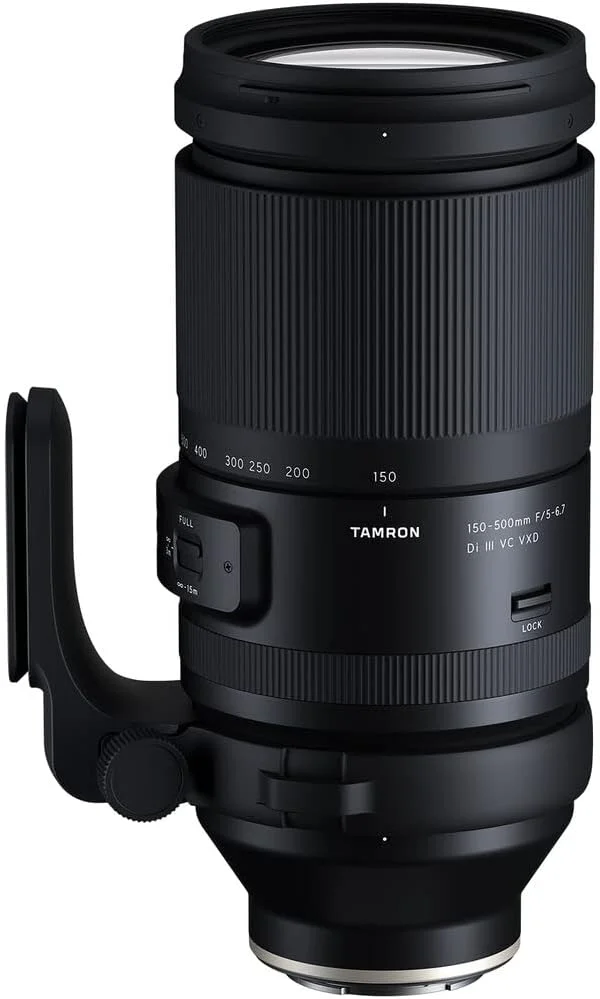
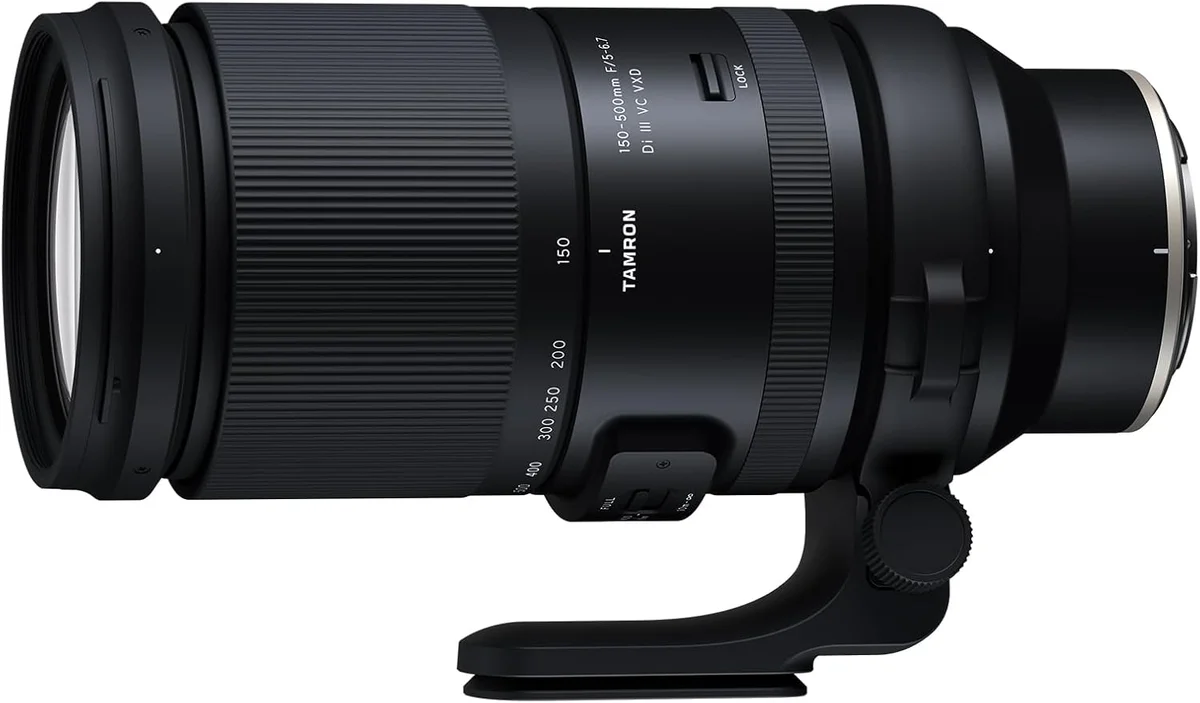
1. Tamron 150-500mm f/5-6.7 Di III VC VXD (Sony E) — Best Super-Telephoto Value
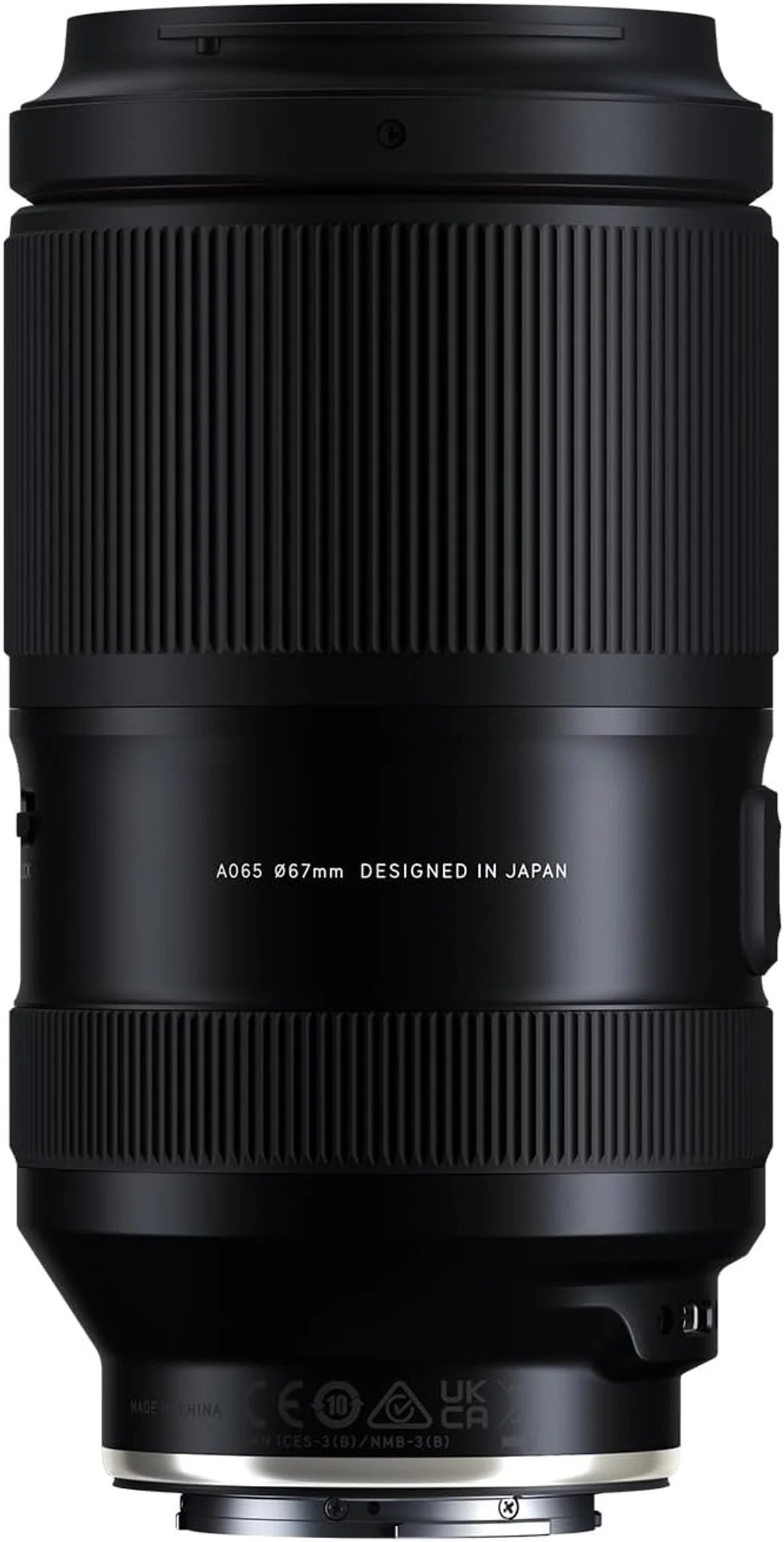
The Tamron 150-500mm for Sony E is the best value in super-telephoto photography today, delivering 500mm of reach at a price that undercuts every native alternative by a wide margin. Before this lens existed, reaching 500mm on Sony required either the native 200-600mm at a higher price or adapted A-mount glass with compromised autofocus. Tamron filled that gap with a lens that delivers sharp images from 150mm through 400mm, with usable results at 500mm when stopped down half a stop.
VXD autofocus tracks birds in flight with enough speed for 8-10 frames-per-second burst shooting on the A7R V and A1. The built-in VC stabilization cooperates with Sony body IBIS, giving handheld shooters a practical advantage at the long end where shake is most punishing. At 1725g, this is not a lightweight lens — but it's lighter than the Sony 200-600mm by nearly 400g, which adds up over a four-hour birding session.
Even at the Flagship price point, it puts 500mm reach within range for serious hobbyists who previously considered it unaffordable. Center sharpness at 300-400mm rivals lenses that cost twice as much. The 82mm filter thread is large but standardized, and the included tripod collar handles gimbal mounting without wobble. For wildlife and birding photographers shooting Sony, this is where the list starts and where many shopping journeys end.
Price band: Flagship Check Price | Read Full Review
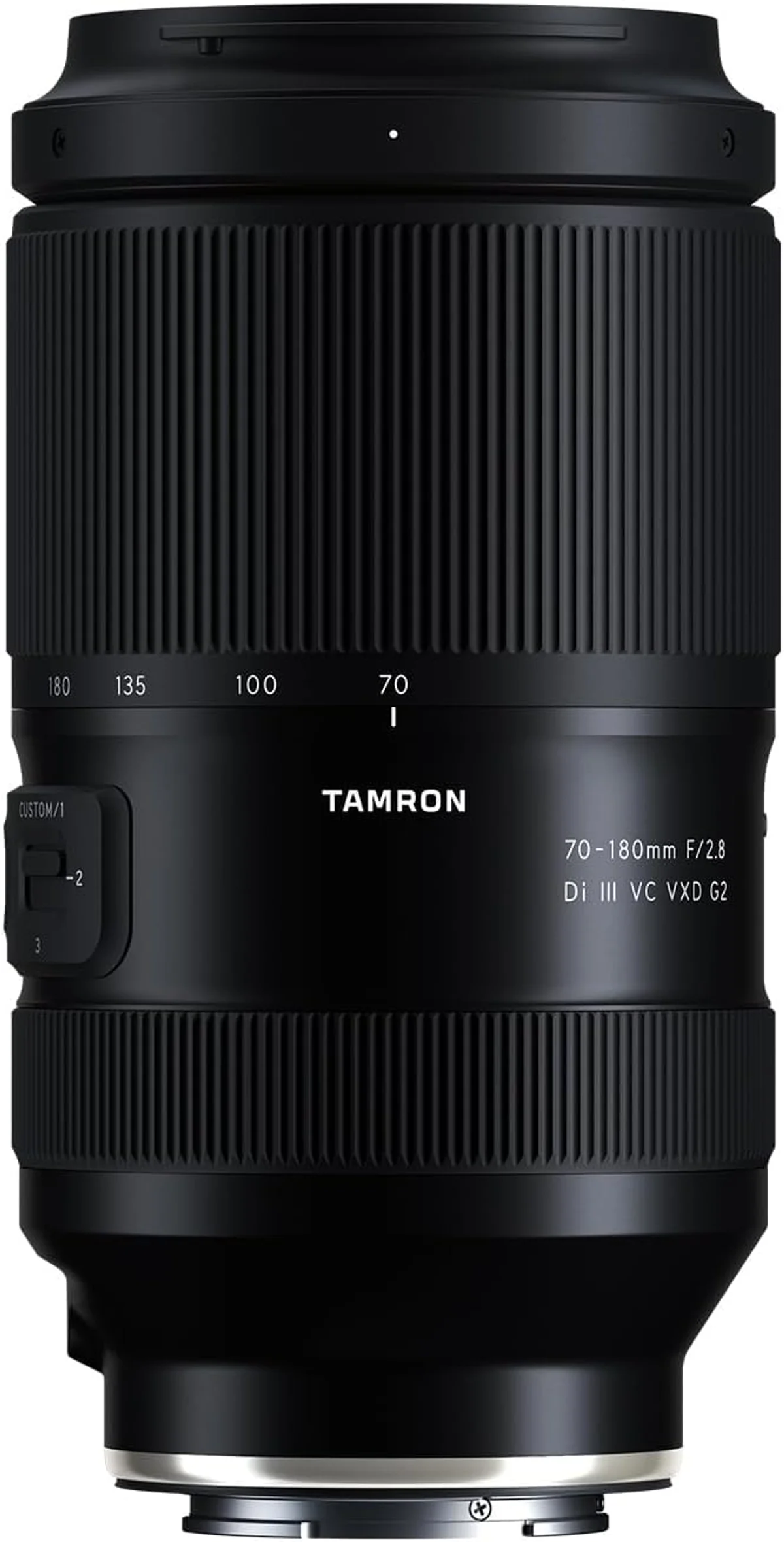
2. Tamron 70-180mm f/2.8 Di III VC VXD G2 (Sony E) — Best Portrait and Event Zoom
The Tamron 70-180mm f/2.8 G2 is the best third-party portrait zoom available, matching much of the Sony 70-200mm GM II's optical quality at roughly half the investment. The G2 fixed the one complaint everyone had with the original: no optical stabilization. With VC now onboard, the 70-180mm f/2.8 becomes a viable handheld lens for event photography in dim venues where the original struggled below 1/100s. Sharpness at 85-135mm is where this lens earns its ranking — those focal lengths produce portrait-quality results that challenge the Sony 70-200mm f/2.8 GM II in blind comparisons.
At 855g, it's nearly 200g lighter than Sony's GM equivalent. That weight difference matters across a six-hour wedding or a full day of event coverage. The 9-blade aperture produces smooth bokeh circles at f/2.8, and the VXD motor locks focus fast enough for first-dance shots in mixed lighting. You lose 20mm at the long end compared to a 70-200mm, and some photographers feel that gap at tight indoor venues. For most work, 180mm is enough.
The practical compromises against native glass come down to three things: that 20mm of missing reach, slightly more focus breathing at close distances, and a 0.85m minimum focus distance that limits tight headshot framing. If those limitations don't affect your shooting style, the savings at the Step-up tier frees up enough budget to add a second lens to the bag. See our full Tamron 70-180mm f/2.8 G2 review for sample images and detailed AF performance data.
Price band: Step-up Check Price | Read Full Review
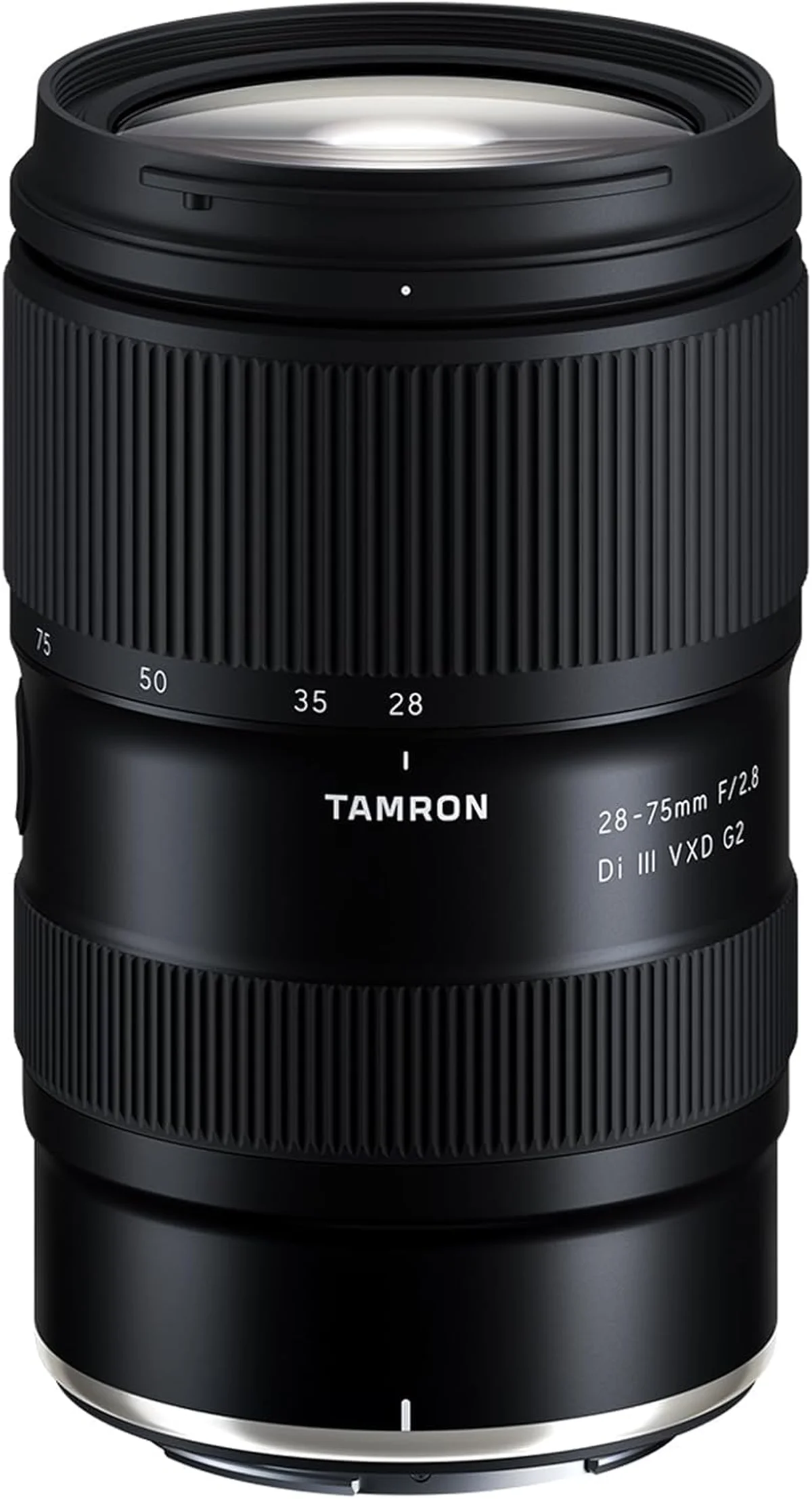
3. Tamron 28-75mm f/2.8 Di III VXD G2 (Nikon Z) — Best Standard Zoom for Nikon Z
Nikon Z shooters wanting constant f/2.8 in a standard zoom faced a steep choice before this lens arrived: pay Flagship money for the Nikkor Z 24-70mm f/2.8 S or go without. The Tamron 28-75mm G2 introduced a native Z-mount alternative at less than half the S-line price, opening f/2.8 capability to a much wider audience.
The G2 optics are a genuine step up from the first generation. Center sharpness at 35-50mm wide open approaches Nikon S-line territory, and the 9-blade diaphragm renders backgrounds with smooth, circular bokeh. At 540g, it's one of the lightest f/2.8 standard zooms available for any full-frame system. VXD autofocus pairs well with Nikon Z5, Z6 III, and Z8 bodies — tracking reliability has improved with each lens firmware cycle.
The 28mm wide end is narrower than the Nikon native's 24mm, and that 4mm difference shows in tight interior spaces and group shots. Weather sealing is absent on this version, which matters if you shoot in rain or dusty conditions regularly. Edge sharpness can vary between copies — a known characteristic of the design that's worth testing within the return window. Despite those caveats, the value proposition for Nikon Z is strong. See how the focal length and price compare in our Nikon Z 24-70mm vs Tamron 28-75mm breakdown.
Price band: Step-up Check Price | Read Full Review
4. VILTROX AF 50mm F1.4 Pro FE (Sony E) — Best Fast Prime Bargain
Viltrox has been building lenses for several years, but the 50mm f/1.4 Pro represents something different: a direct challenge to the Sony 50mm f/1.4 GM. The optical formula uses 14 elements in 10 groups with an 11-blade aperture that produces bokeh Sony GM owners will recognize. Wide open at f/1.4, center sharpness sits about 10-15% below the GM — a gap that closes to near parity by f/2.
Autofocus uses an STM motor that handles portraits and casual shooting well. Fast-moving subjects in low light occasionally cause the AF to search, which is the most visible performance gap between this lens and native alternatives. Sony's Real-Time Eye AF works through the lens without issue, and tracking in good light is reliable for street and event work.
Build quality surprised early reviewers. The metal barrel, weather sealing, and tactile focus ring feel like a more expensive lens. At 420g, it balances well on the A7C II and A7 IV. The Entry price means you're spending roughly 40% of what the Sony 50mm f/1.4 GM commands — leaving budget for a second prime or a quality filter. Firmware updates require a USB connection to a computer, which is less convenient than Tamron's Lens Utility but functional. For a deeper look at how this prime compares to other budget options, see our Viltrox 50mm f/1.4 vs Meike 85mm f/1.8 comparison.
Price band: Entry Check Price | Read Full Review
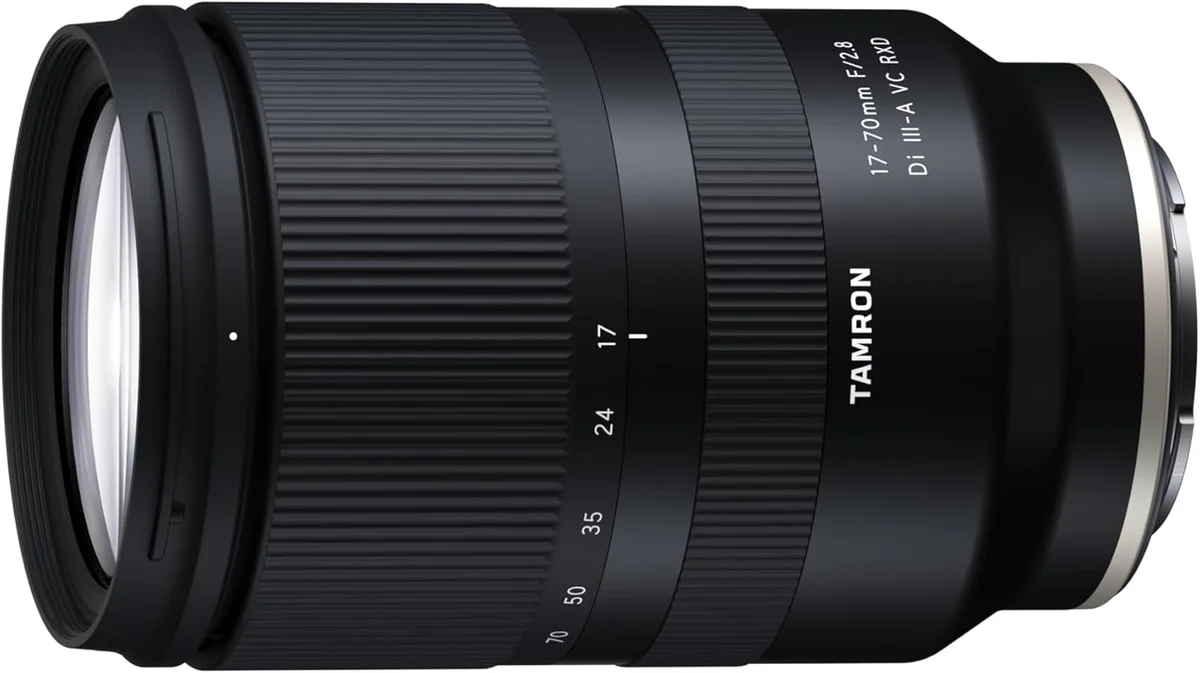
5. Tamron 17-70mm f/2.8 Di III-A VC RXD (Sony E) — Best APS-C All-Around Zoom
No other APS-C zoom gives you constant f/2.8 from 17mm to 70mm. That 4.1x range translates to a 26-105mm equivalent on Sony's APS-C bodies — wide enough for interiors and long enough for candid portraits. Sony's own APS-C zoom lineup doesn't include a constant-aperture option with this reach, which makes the Tamron the default recommendation for Sony A6700 and ZV-E10 II owners who want one lens to cover most situations.
Built-in VC stabilization coordinates with Sony body IBIS on newer cameras, and works independently on older bodies that lack sensor-shift stabilization. At 525g, the lens balances well on compact APS-C bodies without the front-heavy tilt that plagues larger zooms on small cameras. Center sharpness across the 24-50mm equivalent range is where the optics perform best. Corners soften at 17mm wide open — stopping down to f/4 tightens things up for group shots and architecture.
The RXD autofocus motor is a generation behind Tamron's VXD system. In practice, this means slightly slower focus acquisition in burst shooting compared to the newer Tamron zooms, though single-shot AF is fast and accurate. For video shooters, the f/2.8 constant aperture eliminates the exposure shifts that variable-aperture zooms produce during zoom pulls. This single advantage makes it a popular B-camera lens for content creators who pair an A7 IV with an A6700 as a second angle.
Price band: Step-up Check Price | Read Full Review
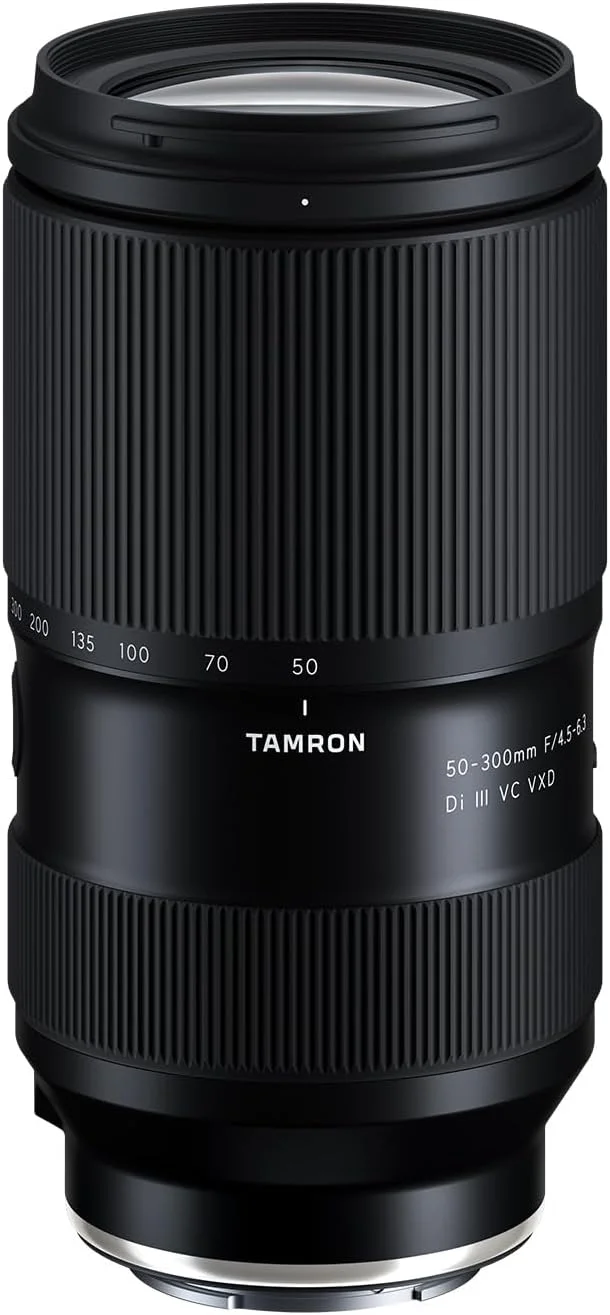
6. Tamron 50-300mm f/4.5-6.3 Di III VC VXD (Sony E) — Most Creative Zoom Range
The 50-300mm fills a zoom range that no one else makes. Starting at 50mm and reaching 300mm means this single lens replaces both a standard zoom's telephoto end and a dedicated telephoto. For travel photographers who refuse to carry two zoom lenses, the concept is immediately appealing. The 6x zoom ratio delivers what no 70-300mm can: standard focal length coverage starting at the classic 50mm perspective.
At 665g, it's compact enough to justify its place in a travel bag alongside a wide-angle prime. The 0.22m minimum focus distance at 50mm allows pseudo-macro shooting that most telephoto zooms can't touch — flowers, food, and detail shots don't require a lens swap. VC stabilization makes handheld telephoto work at 200-300mm practical in moderate light, and the VXD motor focuses fast enough for casual wildlife encounters during hikes.
The variable aperture is the primary limitation. At 300mm, f/6.3 demands good lighting or high ISO tolerance. Pixel-level sharpness at the long end doesn't match dedicated telephoto zooms, which is expected given the zoom ratio. This lens is built for range, not maximum optical performance at any single focal length. Photographers who value convenience over clinical perfection — travel shooters, hiking photographers, and parents at outdoor sporting events — are the target audience, and for that group the Tamron 50-300mm delivers exactly what it promises.
Price band: Step-up Check Price | Read Full Review
7. Tamron 150-500mm f/5-6.7 Di III VC VXD (Nikon Z) — Affordable Super-Telephoto for Nikon
This is optically the same lens as the #1-ranked Sony version, rehoused for Nikon Z mount. The native Z mount eliminates the need for an FTZ adapter, which means proper electronic communication, faster AF response, and access to Nikon's subject detection features without the adapter's added length and weight. The Flagship price actually comes in below the Sony version, making it the most affordable 500mm option for Nikon Z.
AF compatibility has been a concern with early third-party Nikon Z lenses, but Tamron's firmware updates have addressed most initial issues. On the Z8 and Z9 with current firmware, bird detection tracks through the viewfinder with minimal hunting in good light. Lower-contrast scenes — birds against overcast skies, for example — can still cause brief AF hesitation. The Z5 and Z6 series show slightly less consistent tracking than the higher-end bodies.
The lens ranks below its Sony sibling for two reasons: the Nikon Z version has fewer user reviews and a shorter track record, and the Sony E-mount ecosystem offers more companion lenses from Tamron if you're building a multi-lens kit. For Nikon Z wildlife shooters, the ranking within this list matters less than the practical reality — this is the best super-telephoto value available for the Z mount today. For a direct comparison between the two mount versions, see our Tamron 150-500mm Sony E vs Nikon Z breakdown.
Price band: Flagship Check Price | Read Full Review
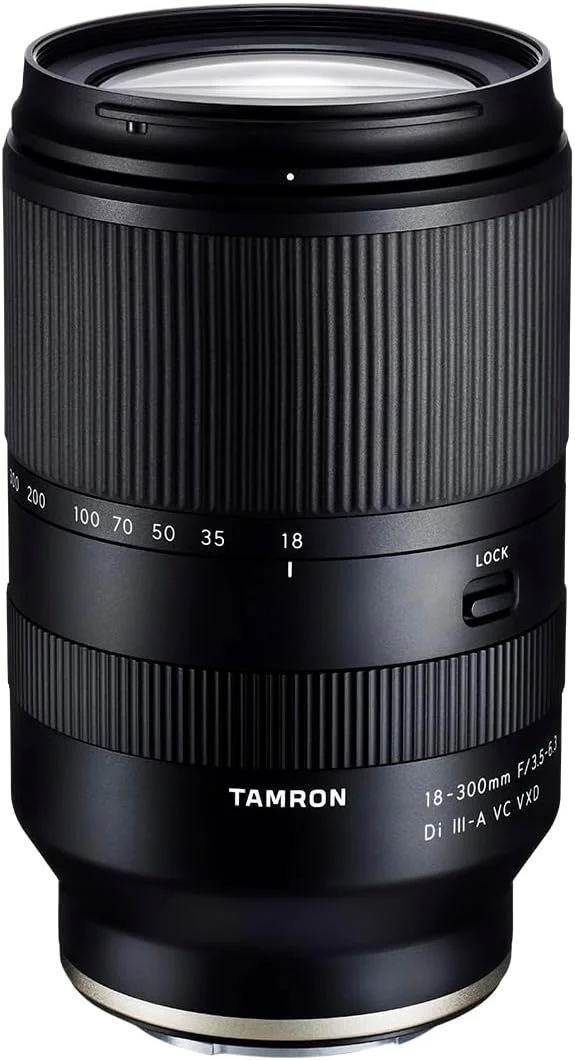
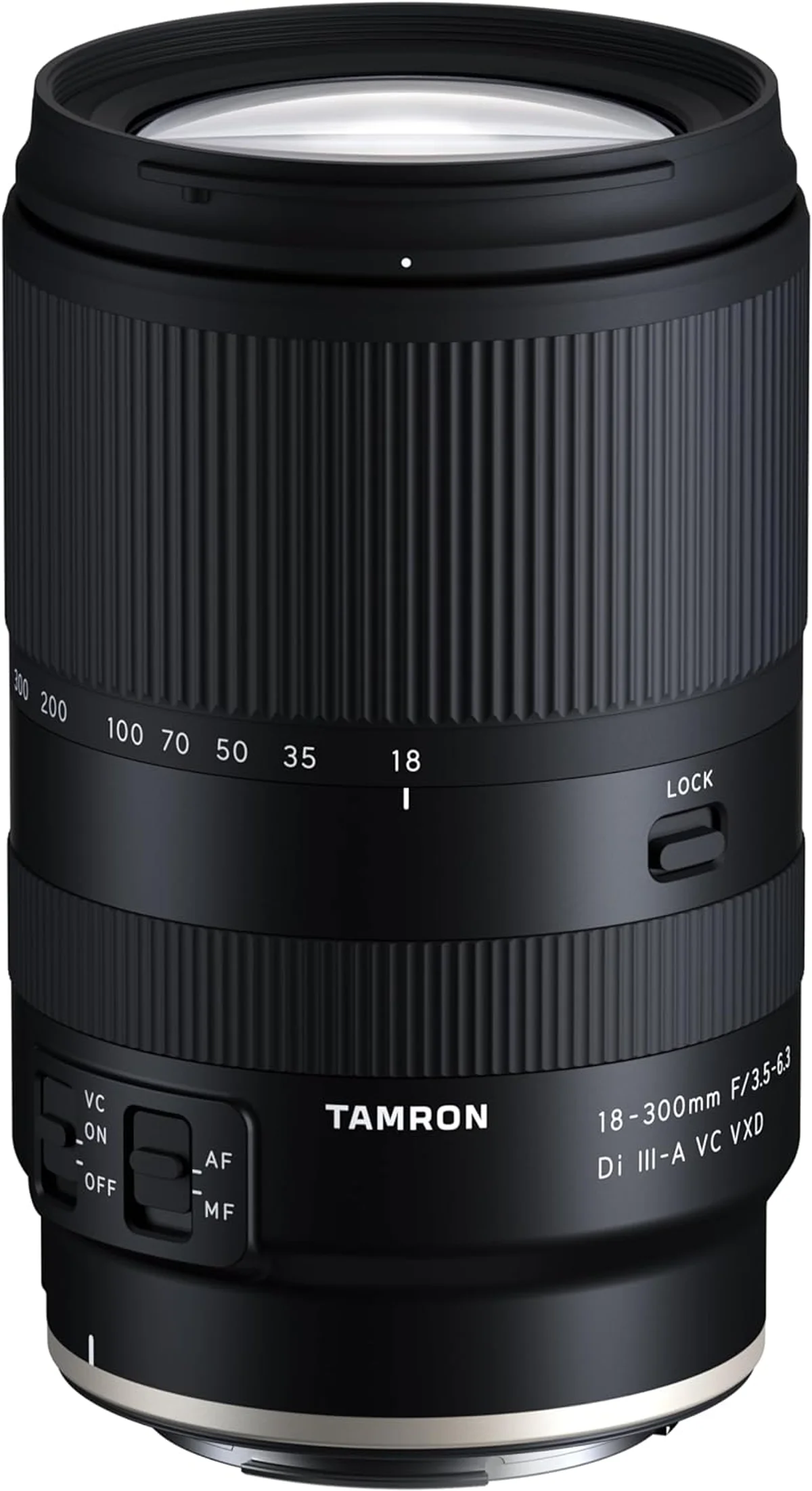
8. Tamron 18-300mm f/3.5-6.3 Di III-A VC VXD (Sony E) — The Ultimate APS-C Travel Lens
A 16.7x zoom ratio in a single lens. The Tamron 18-300mm covers a 27-450mm equivalent range on Sony APS-C, which means you can shoot wide-angle street scenes and then zoom in to photograph a bird on a distant branch without touching your lens bag.
VXD autofocus keeps pace with the camera's tracking algorithms across the zoom range, and VC stabilization helps at the 200-300mm end where handholding gets difficult. The 0.15m minimum focus distance produces 0.5x magnification — genuine close-up capability that turns the lens into a macro tool for insects, plants, and product shots without dedicated macro glass.
Image quality follows the expected superzoom curve: strong at wide and mid-range focal lengths, progressively softer past 200mm, and visibly compromised at the 300mm extreme. Corner sharpness at 18mm suffers from barrel distortion that in-camera profiles correct but don't fully eliminate. These are the physics of a 16.7x zoom in a 620g package. Photographers who need maximum quality at every focal length should buy two or three dedicated lenses. Photographers who need one lens for a three-week backpacking trip should buy this one.
Price band: Entry Check Price | Read Full Review
9. Tamron 18-300mm f/3.5-6.3 Di III-A VC VXD (Canon RF) — Canon's Missing APS-C Superzoom
Canon's RF-S lens lineup has gaps, and the superzoom category is one of the largest. Canon doesn't make an RF-mount equivalent to this zoom range, which left R7 and R10 owners without an all-in-one option until Tamron released this native RF version. The optical design mirrors the proven Sony version — same element count, same zoom ratio, same 0.5x close-focus capability.
Native RF mount communication means VC stabilization works with Canon's in-body IS on compatible cameras, and autofocus uses Canon's Dual Pixel AF system directly without adapter translation delays. The 29-480mm equivalent range on Canon's 1.6x crop bodies stretches even wider than the Sony APS-C equivalent, giving Canon shooters slightly more telephoto reach from the same glass.
The lens launched more recently than the Sony version, so there is less owner feedback to draw on. Early adopter feedback mirrors the Sony experience: good mid-range performance, acceptable telephoto quality, and the same corner softness at the wide end. Weather sealing is absent on the Canon version, a point worth noting for outdoor photographers. Canon APS-C users who want a single travel lens now have a real option — this is the only superzoom in the Canon RF ecosystem with 300mm reach on APS-C. For a direct feature comparison, see our Tamron 18-300mm Sony E vs Canon RF breakdown.
Price band: Entry Check Price | Read Full Review
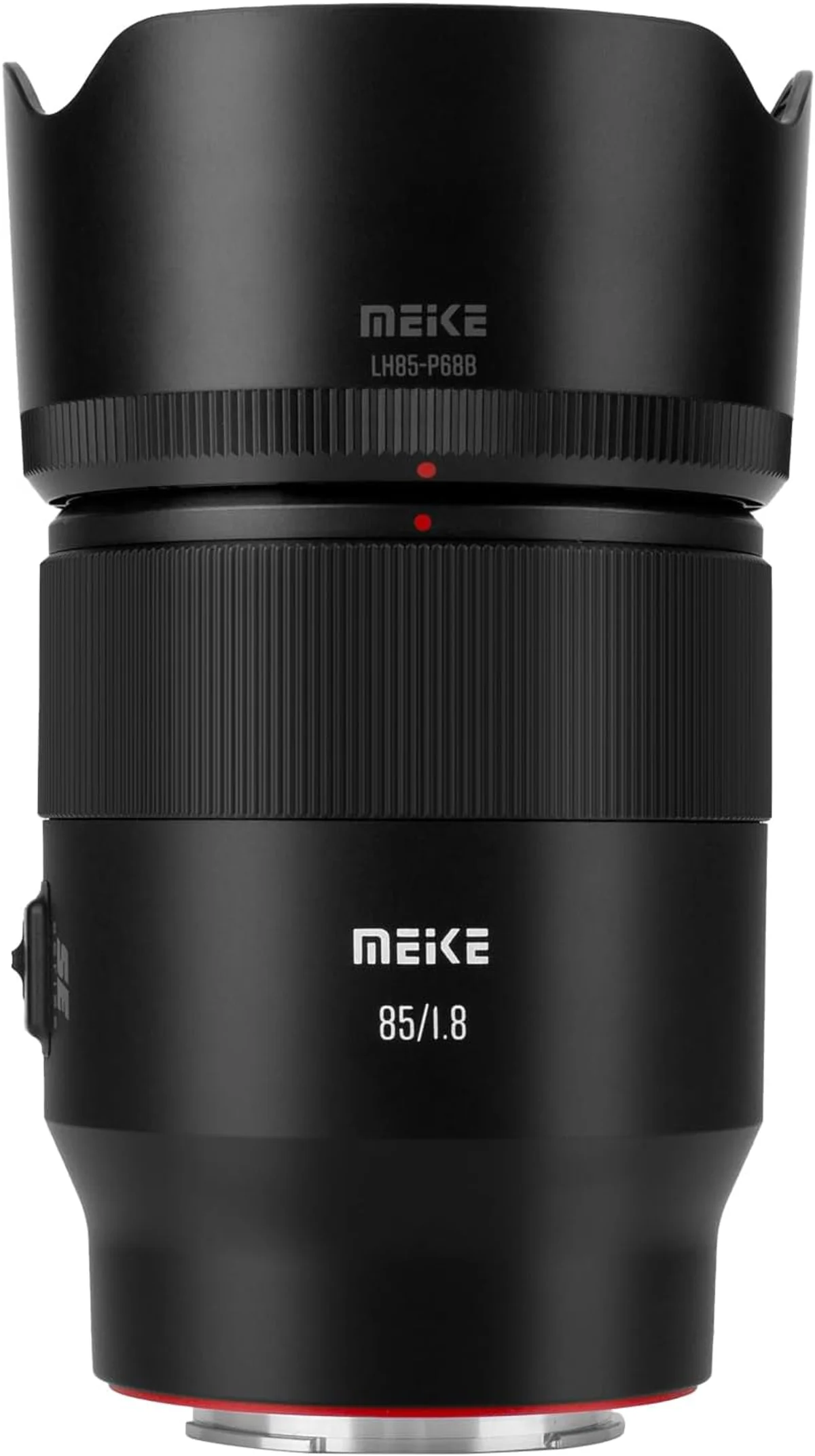
10. Meike 85mm f/1.8 SE II STM AF (Sony E) — Best Budget Portrait Prime
An Entry price for an autofocus 85mm prime. The Meike 85mm f/1.8 SE II exists in a price bracket where the only alternatives are manual-focus options or adapted vintage glass. By adding STM autofocus — even imperfect autofocus — Meike created a portrait lens that beginners and budget-conscious photographers can actually use for moving subjects, children, and event work where manual focus is impractical.
The STM motor is slower than Tamron's VXD or Sony's native linear motors. Expect occasional hunting when transitioning between near and far subjects, especially in dim environments. For portraits with a cooperating subject, AF locks on eyes within a reasonable timeframe. Sony's Eye AF works through the lens, which is the feature that makes this usable for portrait sessions rather than just static subjects.
Optical performance at f/1.8 shows the characteristic glow that budget fast lenses exhibit — a softness that's flattering for portraits but less suited to high-contrast commercial work. Stopping down to f/2.2 snaps the image into sharper territory, and by f/2.8 the lens produces crisp results suitable for printing. Build quality is plastic and lightweight at 320g, which some users appreciate for all-day carrying and others find insubstantial. The 9-blade aperture creates pleasing bokeh discs without the harsh edges that cheaper 7-blade designs can produce.
For photographers exploring portrait focal lengths before committing to a premium prime, the Meike 85mm removes the financial barrier to entry. It won't replace a Sony 85mm f/1.4 GM for working professionals, but it puts the 85mm perspective — compression, subject isolation, background separation — into hands that might otherwise never experience it.
Price band: Entry Check Price | Read Full Review
How We Chose
Our selection process started with the full third-party lens catalog available for Sony E, Nikon Z, and Canon RF mirrorless mounts. We excluded adapted lenses (those requiring mount adapters), discontinued models, and lenses without autofocus. The remaining pool of current-production, native-mount, AF-capable lenses was evaluated on five weighted criteria.
Optical quality (30% weight) — We aggregated MTF data from manufacturer publications, cross-referenced with independent resolution tests from optical testing sites. Center and corner sharpness at key apertures, chromatic aberration control, and distortion levels all factored in. Real-world sample images from user reviews supplemented the lab data.
Autofocus reliability (25% weight) — AF speed matters, but AF consistency matters more. We tracked user reports of focus hunting, missed shots during tracking, and compatibility issues across camera bodies. Lenses that required frequent firmware updates to maintain basic AF function scored lower than those that worked reliably from initial release.
Value vs native alternative (20% weight) — Every third-party lens is implicitly compared to the native equivalent it replaces. We calculated the price-to-performance ratio by measuring optical quality per dollar spent, using the native lens as the benchmark. A lens that delivers 90% of native quality at 50% of the price scores higher than one delivering 95% at 80%.
Build quality and support (15% weight) — Weather sealing, mount material, focus ring feel, and physical durability were assessed. Warranty terms and firmware update track record factored heavily here. Tamron's 6-year warranty and regular firmware updates set the standard that other brands were measured against.
User satisfaction (10% weight) — Amazon owner reviews provided a crowd-sourced quality signal. Specific complaint patterns (AF issues, sample variation, durability failures) were flagged and factored into individual lens assessments.
Buying Guide: What to Look For
Mount Compatibility Is Non-Negotiable
Third-party lenses are designed for specific mounts. A Tamron lens built for Sony E will not work on Nikon Z or Canon RF, and vice versa. Unlike the DSLR era where adapters were common and functional, mirrorless third-party lenses rely on electronic protocols that are mount-specific. Before purchasing, confirm the exact mount version matches your camera body. Several lenses in this roundup come in multiple mount variants — the Tamron 150-500mm is available for both Sony E and Nikon Z, and the 18-300mm comes in Sony E and Canon RF versions.
Autofocus Motor Generation Affects Performance
Tamron uses two motor types across their mirrorless lineup: VXD (Voice-coil eXtreme-torque Drive) and RXD (Rapid eXtra-silent stepping Drive). VXD is the newer, faster motor found in their premium and recent lenses. RXD is found in earlier designs like the 17-70mm f/2.8. Both deliver usable autofocus, but VXD handles continuous tracking and burst shooting more effectively. Viltrox uses STM motors, and Meike uses a basic STM variant. For action or wildlife, prioritize lenses with VXD.
Firmware Updates Are Part of Ownership
Camera manufacturers update their body firmware regularly, and these updates can affect third-party lens compatibility. Tamron releases lens firmware updates through their Tamron Lens Utility desktop app — connecting the lens via USB-C to a computer. Viltrox uses a similar process. Budget brands like Meike may offer less frequent updates. Consider firmware support infrastructure as part of the purchase decision, not an afterthought. A lens that loses AF compatibility after a camera firmware update is a lens you can't use until the manufacturer responds.
Full Frame vs APS-C Coverage
Several lenses in this roundup are APS-C only (the Tamron 17-70mm and both 18-300mm variants). These lenses project a smaller image circle that doesn't cover a full-frame sensor. Using them on a full-frame body triggers automatic crop mode, which reduces resolution. If you plan to upgrade from an APS-C body to full-frame in the future, full-frame compatible lenses (marked "Di III" by Tamron) will make the transition without needing replacement. APS-C-only lenses (marked "Di III-A") will become crop-only tools on the new body.
Stabilization Stacking With Body IBIS
Most current mirrorless bodies include in-body image stabilization (IBIS). Third-party lenses with their own optical stabilization (Tamron's VC system) can coordinate with body IBIS for multi-axis stabilization — the lens handles pitch and yaw while the body handles roll and translation. This stacking produces better handheld results than either system alone, particularly at telephoto focal lengths where shake is amplified. Lenses without optical stabilization (like the Viltrox 50mm f/1.4 Pro) rely entirely on body IBIS, which is less effective at longer focal lengths but adequate for a 50mm prime.
Price Tier Expectations
Third-party lenses span a wide price range. At the cheapest end, expect functional optics with basic build quality — the Meike 85mm f/1.8 SE II lives here. One step up, APS-C zooms and fast primes offer strong value with weather sealing and advanced AF motors. Higher still, fast full-frame zooms compete directly with native glass. At the top, super-telephoto zooms deliver reach that would cost substantially more from native brands. Set expectations by tier: budget glass gets you the focal length, mid-range glass adds AF speed and build quality, and premium third-party glass approaches native optical performance at a clear discount.

Third-Party Lens Questions Answered
These questions come from the most common concerns we see in lens forums, camera subreddits, and Amazon review discussions about third-party glass. Each answer reflects the current state of compatibility and performance as of early 2026.
Are third-party lenses as sharp as native lenses from Canon, Nikon, or Sony?
Many third-party lenses match or come close to native glass at their respective price points. The Tamron 70-180mm f/2.8 G2, for example, delivers center sharpness within 5-10% of the Sony 70-200mm f/2.8 GM II at roughly half the price. The gap narrows further when you stop down to f/4 or f/5.6. Where native lenses tend to maintain an edge is in corner-to-corner consistency wide open and autofocus accuracy in challenging conditions like low contrast or rapid tracking.
Will third-party lenses work with my camera autofocus features like eye detection?
Most current-generation third-party lenses support eye AF and subject tracking on compatible bodies. Tamron lenses with VXD motors work reliably with Sony Real-Time Eye AF and Nikon Z animal detection. Viltrox primes support Sony eye AF as well. The caveat: firmware updates from the camera manufacturer occasionally break compatibility, requiring a corresponding lens firmware update from the third-party maker. Keep your lens firmware current, and check compatibility notes before major camera firmware updates.
Do third-party lens warranties cover the same things as native brands?
Tamron offers a 6-year warranty in the US when you register the lens within 60 days of purchase — longer than most native lens warranties. Viltrox provides a standard 1-year warranty. Meike typically offers 1 year as well. The key difference is service infrastructure: Canon, Nikon, and Sony have authorized repair centers in most major cities, while third-party brands may require shipping the lens to a central facility, which can mean longer turnaround times for repairs.
Can I use Tamron Sony E-mount lenses on other camera brands with an adapter?
Tamron Sony E-mount lenses are designed specifically for Sony bodies and are not recommended for adapter use on Canon or Nikon. AF performance degrades through adapters, and electronic features like stabilization coordination and lens corrections may not function. If you shoot Canon RF or Nikon Z, look for native-mount versions — Tamron now makes the 150-500mm and 28-75mm G2 for Nikon Z, and the 18-300mm for Canon RF.
How often do third-party lenses need firmware updates?
Expect 1-3 firmware updates per year for actively supported lenses, typically following major camera body firmware releases. Tamron provides updates through their Tamron Lens Utility software (USB connection required). Viltrox updates via a similar USB utility. These updates address AF compatibility, add support for new camera bodies, and occasionally improve optical corrections. Buying from authorized dealers is important — gray market lenses sometimes have region-locked firmware that complicates the update process.
Is the Tamron 150-500mm better than the Sony 200-600mm for wildlife?
Each lens wins in different scenarios. The Tamron 150-500mm is lighter (1725g vs 2115g), costs less, and offers a wider starting focal length at 150mm. The Sony 200-600mm reaches 100mm farther at the telephoto end and maintains a constant physical length thanks to its internal zoom design, which matters for balance on gimbals. For birders who prioritize reach above all else, the Sony wins. For photographers who want a wider zoom range, lighter weight, and a lower entry price, the Tamron is the stronger pick.
What is the best budget third-party lens for beginners?
The Meike 85mm f/1.8 SE II, at an Entry price, is the most affordable autofocus third-party lens worth buying. It introduces beginners to portrait photography with shallow depth of field, autofocus convenience, and enough image quality to produce print-worthy results when stopped down to f/2.2. For a more flexible starting point, the Tamron 18-300mm covers nearly every situation in a single lens, which keeps costs down and eliminates the complexity of choosing between multiple focal lengths early on.
Do third-party lenses affect resale value?
Third-party lenses generally depreciate faster than native equivalents in percentage terms, but the lower initial cost means you lose fewer actual dollars. A Tamron 70-180mm f/2.8 G2 purchased in the mid-range tier typically retains 60-70% of its value after two years, while a Sony 70-200mm f/2.8 GM II retains 70-80% — but the Sony owner has more capital tied up. For photographers who upgrade frequently, third-party glass reduces the financial risk of each transition.
Our Top Pick
The Tamron 150-500mm (Sony) is our #1 recommendation — wildlife, birding, and aviation photography on sony.
Check Price: Tamron 150-500mm (Sony)