SIRUI Night Walker 24mm T1.2 Review: Cinema Glass Without the Cinema Budget
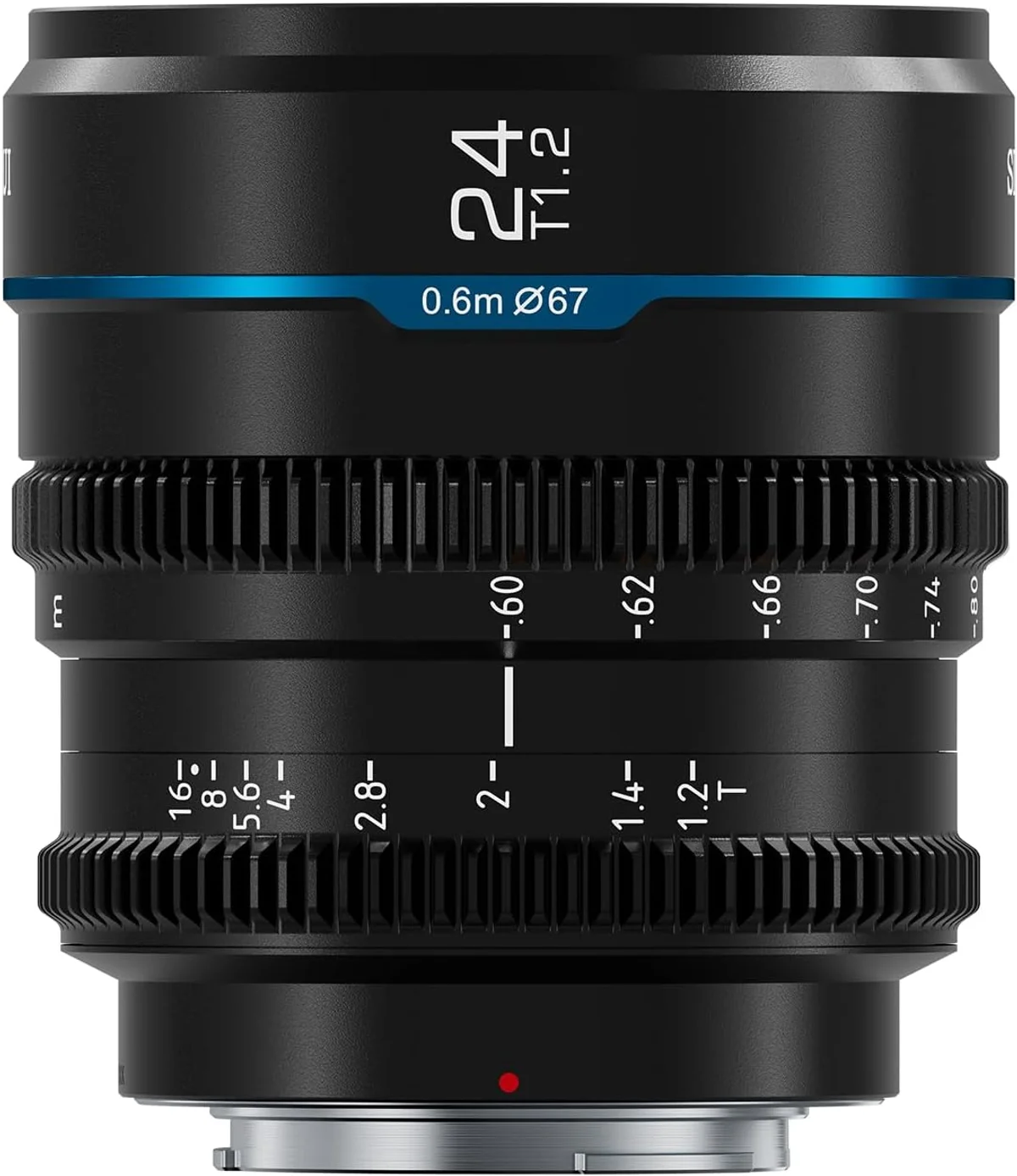
The Night Walker line changed what's possible for indie filmmakers. T1.2 at an Entry price seemed impossible two years ago. Manual focus is expected in cinema, and the optical character has a vintage warmth that many shooters prefer over clinical modern glass.
This review is based on analysis of published owner reports, expert reviews, and comparison with products in the Cinema & Video Lenses category. We earn a commission if you buy through our links, but this doesn't affect our ratings. Read our full methodology →
The Indie Filmmaker's Secret Weapon
The Night Walker 24mm belongs in the kit of any Canon RF filmmaker shooting on Super 35mm sensors who needs speed without the price tag of traditional cinema glass. At T1.2, it gathers more light than most primes twice its cost, while the geared focus and de-clicked iris make it functional on professional rigs with follow focus systems and wireless lens controllers. The warm optical character and gentle vignetting wide open add a filmic quality that clinical modern glass cannot replicate without heavy post-processing.
Skip this lens if you need full-frame coverage — the S35 image circle is a hard limitation, and no firmware update or technique will fix vignetting on a full-frame sensor.
Skip it if you need autofocus for hybrid shooting — this is manual focus only, with no electronic communication to the camera body for AF assistance. And skip it if chromatic aberration at wide apertures is a dealbreaker — the purple and green fringing at T1.2 requires attention in the grade. But if you are an indie filmmaker who can pull focus by hand, who shoots on S35 sensors, and who wants T1.2 light-gathering for a price that used to buy a decent tripod, the Night Walker 24mm is the lens that makes the project possible.
The Night Walker line changed what's possible for indie filmmakers. T1.2 at an Entry price seemed impossible two years ago. Manual focus is expected in cinema, and the optical character has a vintage warmth that many shooters prefer over clinical modern glass.
Best for: Independent filmmakers and budget cinema production
Overview
A T1.2 cinema prime at an Entry price. Two years ago, that sentence would have sounded like a misprint. Cinema lenses with T-stops below T1.5 came from Zeiss, Cooke, and Arri — brands where a single prime costs more than most indie filmmakers spend on their entire camera package. SIRUI changed the math. The Night Walker 24mm T1.2 S35 delivers a massive aperture, geared manual focus, a de-clicked iris ring, and optical rendering that favors character over clinical precision, all at a price that puts it within reach of student filmmakers and first-time narrative shooters.
We read Amazon owner reviews, cross-referenced reviews from cinema-focused channels including Gerald Undone, Media Division, and Potato Jet, and compared the Night Walker against adapted photography primes and entry-level cinema glass from Meike, 7Artisans, and Viltrox. For a broader look at what separates cinema glass from adapted stills lenses, see our guide to lenses for video and YouTube. The question we wanted to answer: does SIRUI's budget cinema lens behave like a real cinema lens on set, or is it a photography prime with cinema markings painted on the barrel?
The SIRUI Night Walker 24mm is a genuine cinema lens at a price that defies the category — our budget cinema lenses guide covers every affordable option worth considering.
The 0.8 mod geared focus ring, de-clicked aperture, 270-degree focus throw, and minimal breathing are not cosmetic touches. They are the functional requirements that separate cinema glass from adapted stills lenses — and SIRUI nailed every one. The compromises are real: Super 35mm coverage only, visible chromatic aberration wide open, and the warm optical character that some shooters will love and others will want to grade out. But for indie filmmakers working on Canon RF-mount cameras with APS-C or S35 sensors, nothing else at this price comes close.
The 24mm focal length on a Super 35mm sensor gives approximately a 36mm full-frame equivalent field of view. Wide enough for two-shots, environmental work, and establishing interiors. Narrow enough to avoid the barrel distortion that plagues ultra-wide cinema options. For documentary and narrative work, this is the workhorse focal length that lives on the camera more than any other prime in the set.
Key Specifications
What Makes a Cinema Lens Different From a Photography Prime
Price tags on cinema lenses look absurd until you understand what the money buys. A Zeiss CP.3 25mm T2.1 costs over fifteen times more than the Night Walker 24mm. Both focus manually. Both produce images. The difference is in the mechanical and optical engineering decisions that matter on a film set but are irrelevant for still photography.
Cinema lenses need three things that photography primes do not provide — our lens specs explainer breaks down each one. First: geared focus and aperture rings with standardized pitch (0.8 mod) for follow focus systems. Without this, an assistant camera operator cannot make repeatable, smooth focus pulls. Second: de-clicked aperture for stepless iris transitions during recording. Clicked aperture rings produce visible exposure jumps between stops. Third: minimal focus breathing, so the field of view stays constant when racking focus between subjects. Photography primes breathe freely because the effect is invisible in still images — in video, it looks like the frame is zooming.
The Night Walker 24mm delivers all three. The 0.8 mod geared rings mesh with industry-standard follow focus hardware. The aperture ring rotates smoothly through the full T1.2 to T16 range without clicks. And the breathing control, which keeps the field-of-view shift barely perceptible across the full focus throw, matches cinema lenses at five and ten times the price. These are not marketing features. They are the difference between a lens that works on a narrative set and one that frustrates every crew member who touches it.
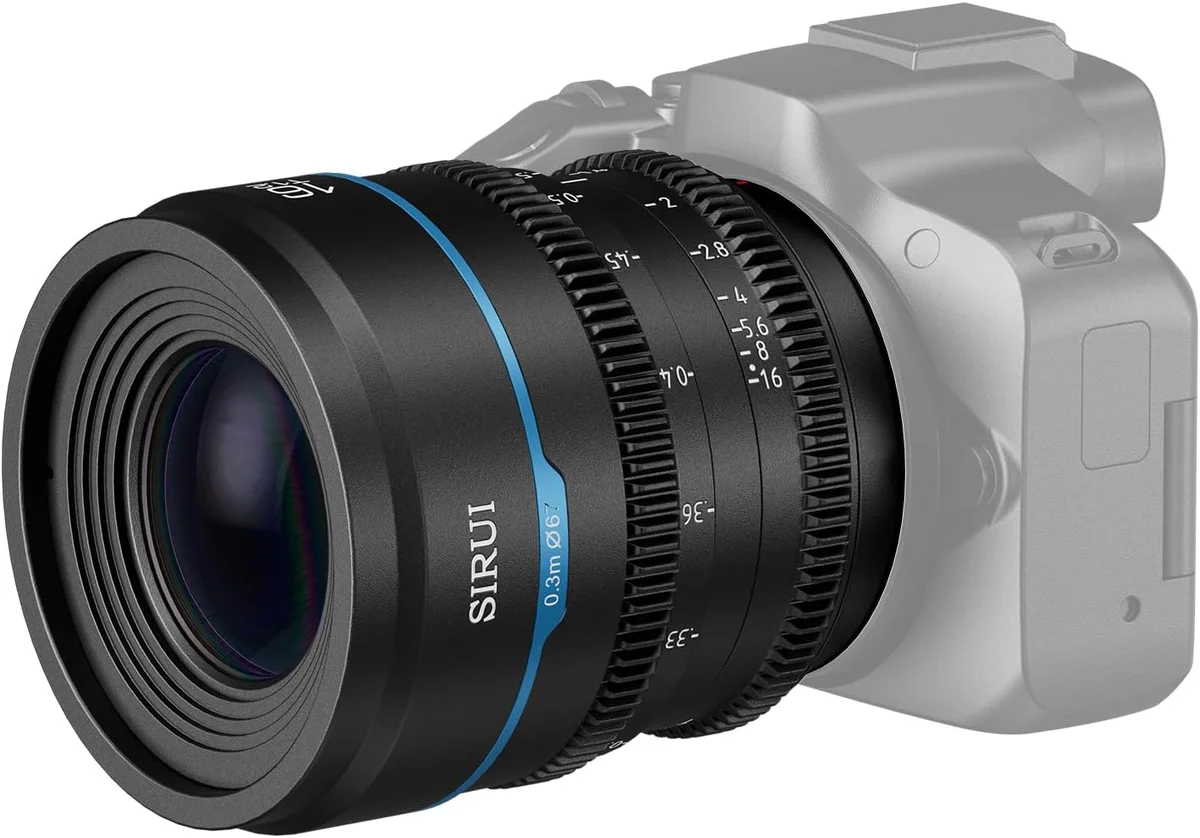
Where the Night Walker shows its price point is in the barrel construction. The housing is aluminum alloy rather than the brass and stainless steel found on Zeiss, Cooke, or Arri glass. The focus ring, while geared and smooth, does not have the weighted, damped feel of a CP.3 or a Cooke S7. The aperture markings are painted rather than engraved. None of these shortcuts affect the image — they affect the tactile experience of using the lens over a twelve-hour shoot day. For indie productions where the director is also pulling focus, the lighter 535g weight is actually an advantage over two-kilogram professional cinema primes.
Where the Night Walker 24mm Excels and Where It Struggles
Across Amazon owner reviews and cinema-specific reviews, buyer satisfaction clusters around two themes: the aperture speed relative to cost, and the optical character that sits closer to vintage than modern. The most frequent phrases in five-star reviews: "can't believe the price," "beautiful bokeh for the money," and "finally affordable cinema glass." Criticism concentrates on the S35 limitation, chromatic aberration, and the occasional unit with a stiff aperture ring out of the box.
The strengths are optical and mechanical.
T1.2 at this price tier is the headline, and the lens delivers on that promise. Wide open, the Night Walker gathers enough light to shoot in candlelit interiors without pushing ISO beyond usable ranges on modern APS-C sensors. Bokeh rendering at T1.2 favors smooth, rounded highlights with minimal onion-ring patterning — the 10-blade aperture produces nearly circular out-of-focus discs through the top half of the T-stop range. Focus throw at 270 degrees gives precise control for slow rack focuses, and the minimal breathing means those racks look professional in the final cut. At 535g, the lens balances well on lightweight rigs and gimbals without triggering motor strain.
The weaknesses are tied to cost reduction and sensor coverage.
Manual focus only means no AF assist, no eye detection, and no snapping to subjects during documentary-style run-and-gun shooting. Every focus decision is on you. S35 coverage means full-frame bodies — the Canon R5, R6 II, R3 — cannot use this lens without a crop mode that discards resolution. Vignetting at T1.2, even within the S35 image circle, darkens the corners by roughly 1.5 stops. Most shooters embrace this as part of the vintage character; those who want clean, even illumination need to stop down to T2.0. Chromatic aberration at T1.2 produces purple and green fringing on high-contrast edges — backlit hair, window frames against bright sky, specular highlights on metal surfaces. A single CA correction node in DaVinci Resolve or Premiere handles it, but the time adds up across a feature-length edit.
Strengths & Limitations
Strengths
- T1.2 aperture at a fraction of cine lens prices
- Minimal focus breathing — rare at this price
- Smooth, de-clicked aperture ring with geared focus
- Pleasing cinematic bokeh character
Limitations
- Manual focus only — no autofocus
- S35 coverage — doesn't cover full-frame sensors
- Visible vignetting wide open
- Chromatic aberration at T1.2 needs grading

Performance
Optical Performance: Sharpness, Rendering, and Character
Center sharpness at T1.2 on a Canon R7 (32.5 MP APS-C) is good but not exceptional. Fine detail resolves clearly in the center two-thirds of the frame, with a gentle softness at the extreme edges that cleans up by T2.0. This wide-open softness is not a defect — many cinematographers deliberately choose lenses with gentle falloff at maximum aperture because razor-sharp T1.2 rendering looks clinical and unflattering on human skin. Stop down to T2.0 and sharpness across the S35 frame becomes uniform and very good. By T2.8, the Night Walker resolves detail at the limit of what APS-C sensors can capture.
Bokeh is the lens's calling card. The 10 iris blades produce smooth, round out-of-focus highlights from T1.2 through T2.8. At closer focus distances — head-and-shoulders framing at 0.5 to 1 meter — the background dissolves into a creamy wash that separates the subject from the environment without the busy, nervous bokeh that cheaper lenses produce. The rendering has a warmth that pushes slightly toward amber, giving skin tones a flattering base even before color grading. Cat's-eye bokeh appears in the outer third of the frame at T1.2 — the mechanically vignetted highlights elongate into ovals — but this effect diminishes quickly by T1.6 and disappears entirely by T2.0.
Chromatic aberration at T1.2 is the lens's most visible optical flaw. Purple fringing appears on high-contrast edges: tree branches against overcast sky, hair backlit by window light, chrome and metallic surfaces in mixed lighting. The fringing is strongest in the outer half of the frame and decreases toward the center. By T2.0, CA drops to barely detectable levels. In the context of cinema, CA correction is a standard step in the color grading pipeline — DaVinci Resolve's built-in CA tool removes the fringing in seconds per shot. Photographers adapted to shooting stills, where CA correction is often automatic and invisible, may find the manual grading step annoying.
Distortion is barrel-type at approximately 2.3% — moderate for a 24mm lens on S35. In-camera correction on Canon RF bodies reduces this to near-zero. For cinema shooters working in post, a single lens profile correction in Resolve or Premiere eliminates distortion without visible quality loss. The distortion is optically consistent — no mustache or wave pattern — which makes automated correction effective.
The color rendition leans warm. Side-by-side with a Canon RF 24mm f/1.8 STM (a photography prime), the Night Walker renders neutral tones with a subtle amber shift that flatters skin and adds depth to interior scenes lit by practical fixtures. This warmth is consistent across the Night Walker line — the 35mm and 55mm produce the same color cast, allowing filmmakers to cut between focal lengths without grading each lens independently. For shooters who prefer neutral glass, the warmth is easy to correct with a global white balance adjustment, but it is a conscious design choice by SIRUI, not a flaw.
Mechanical Feel and On-Set Handling
The focus ring rotates through approximately 270 degrees from minimum focus (0.25m) to infinity. This long throw gives operators fine control over precise focus pulls — a 180-degree throw on a fast photography prime covers the same distance range in half the rotation, making subtle adjustments near infinity feel twitchy and imprecise. At 270 degrees, the Night Walker allows smooth, slow racks between subjects standing two and five meters away with enough ring travel to hit marks consistently.
Ring damping is adequate but not exceptional. The focus ring has consistent resistance throughout its travel — no dead spots, no sudden friction changes — but the damping is lighter than what you find on Zeiss CP.3 or Canon CN-E glass. On a follow focus with a properly tensioned motor, the lighter damping is a non-issue because the motor controls the feel. For hand-pulling focus directly on the barrel, the lighter resistance means accidental bumps during handheld shooting can shift focus. A follow focus or a cine handle with a focus wheel solves this.
The aperture ring is identically smooth, with stepless de-clicked rotation from T1.2 through T16. The ring tension is slightly higher than the focus ring, which reduces accidental exposure shifts when gripping the lens barrel. T-stop markings are clearly printed on the barrel in white against the matte black housing. The markings are small enough that checking precise values from behind the camera requires a monitor or loupe — standard for cinema lenses of this size class.
At 535g, the Night Walker 24mm is light for a cinema prime. For comparison, a Zeiss CP.3 25mm weighs 980g. A Canon CN-E 24mm T1.5 weighs 1,170g. The weight saving makes the Night Walker practical on lightweight gimbals like the DJI RS 3 and Zhiyun Crane 3S without counterweight accessories. It also reduces fatigue during extended handheld shooting — a real factor on documentary and indie productions where operators hold the rig for hours without a Steadicam vest.
Value Analysis
Price Context: What You Get and What You Give Up
The Night Walker 24mm sits in the budget cinema tier, priced below most photography primes from Canon and Sony's first-party lines. To understand the value, compare it against both cinema alternatives and adapted photography options in the same price range.
Against cinema alternatives: the Meike cinema prime series costs roughly 20% less per lens and opens to T2.2 — nearly a full stop slower than the Night Walker's T1.2.
That stop costs light-gathering capability in every dim interior. The Viltrox 20mm T2.0 offers wider coverage but loses a full stop of aperture and uses a different focal length. The 7Artisans 25mm T1.05 opens wider but has reports of inconsistent quality control and heavier vignetting. None of these budget alternatives match the Night Walker's combination of T1.2 speed, breathing control, and build consistency. Moving up in price, the Sigma 24mm T1.5 FF Classic Art costs roughly five times more and covers full-frame — a different class entirely. The DZOFilm Arles prime kit sits between budget and professional tiers, offering full-frame T1.4 coverage at a significant premium per lens.
Against adapted photography primes: the Canon RF 24mm f/1.8 IS STM costs roughly the same and includes autofocus, image stabilization, and full-frame coverage. On paper, the Canon wins on features. In cinema practice, it loses on every mechanical criterion that matters on a film set. The Canon has a clicked aperture ring (or no ring at all — iris control through the camera body only). No geared focus ring. Pronounced focus breathing. Short focus throw that makes precise pulls impossible. Adapting a photography prime for cinema work requires aftermarket gear rings, de-click modifications, and acceptance of breathing artifacts in finished footage. The Night Walker eliminates all of those compromises for the same price.
The matched set argument strengthens the value further. SIRUI sells the Night Walker in 24mm, 35mm, and 55mm. All three share identical filter diameter (67mm), matched color rendition, consistent ring positions, and the same T1.2 maximum aperture. Building a matched three-lens cinema set for the price of a single mid-range cinema zoom lens is a proposition that did not exist before SIRUI entered the market. For indie features, short films, and music video productions operating on tight equipment budgets, a three-lens matched set changes what is possible.
What to Expect Over Time
Durability, System Fit, and Long-Term Ownership
The Night Walker 24mm has been in production since late 2023, giving roughly two and a half years of real-world reliability data from working filmmakers. The aluminum alloy barrel holds up well to regular use — scuffs and cosmetic marks accumulate on the anodized surface, but structural integrity and mechanical precision remain consistent. The most common long-term complaint is dust ingress: the lens is not weather sealed, and shooting in dusty outdoor locations (desert, construction sites, gravel roads) introduces particles into the barrel over time. A UV or clear filter on the 67mm front thread protects the front element at minimal cost.
Focus ring damping remains consistent over extended use. The internal grease on the helicoid does not thin or stiffen across the temperature range most indie productions encounter (5-40 degrees Celsius). Users shooting in extreme cold below freezing report slight stiffening of the focus ring, which resolves as the lens acclimates. The aperture ring maintains its smooth, stepless rotation — no reports of de-click mechanisms failing or developing clicks after extended use.
The Canon RF mount version communicates no electronic data with the camera body. There is no firmware to update, no electronic contacts to corrode, and no compatibility concerns with future Canon RF camera bodies. The lens is purely mechanical and optical — a simplicity that favors long-term reliability. Mount it on any current or future Canon RF body and it functions identically, with manual focus, manual aperture, and no electronic stabilization.
For filmmakers building a kit over time, the Night Walker 24mm serves as either an entry point into SIRUI's cinema ecosystem or a permanent wide-option in a mixed-brand prime set.
Our best cinema and video lenses roundup covers the full range from budget to professional. The consistent 67mm filter diameter and 0.8 mod gear pitch mean matte boxes, follow focus systems, and filters purchased for the Night Walker transfer directly to other cinema lenses in the same specification class. If you later upgrade to Sigma Classic Art or Zeiss CP.3 primes, the Night Walker remains a viable B-camera or crash-cam lens — its low replacement cost makes it practical for risky shots where expensive glass stays in the case.
Resale value on budget cinema primes is modest but stable. The Night Walker line holds roughly 70-80% of its original price on the used market, reflecting steady demand from student filmmakers and first-time indie productions. The low initial cost means the absolute dollar loss on resale is small — a factor that reduces the financial risk of trying cinema lenses for the first time.
Night Walker 24mm — Filmmaker Questions
Common questions about the SIRUI Night Walker 24mm T1.2 S35, drawn from Amazon owner reviews and cinema-focused community discussions.
Does the SIRUI Night Walker 24mm work on full-frame Canon RF cameras?
The Night Walker 24mm is designed for Super 35mm (APS-C equivalent) sensor coverage. Mounting it on a full-frame Canon RF body like the R5 or R6 will produce heavy vignetting and darkened corners across the outer third of the frame. Canon RF cameras with APS-C sensors — the R7 and R10 — use the lens without any coverage issues. Some filmmakers intentionally shoot S35 lenses on full-frame bodies with a 1.6x crop applied in-camera, which eliminates vignetting at the cost of reduced resolution. For full-frame coverage at a similar focal length and price, consider a photography prime with an adapter rather than forcing this cinema lens beyond its intended image circle.
How does T1.2 compare to f/1.2 in practical terms?
T-stops measure actual light transmission through the lens, while f-stops measure the geometric ratio of the aperture to focal length. A T1.2 lens transmits slightly less light than a theoretical f/1.2 because glass elements absorb and reflect some light. The SIRUI Night Walker 24mm has a geometric aperture of approximately f/1.1, but after light loss through 12 elements in 9 groups, the measured transmission is T1.2. For filmmakers, T-stops matter more than f-stops because they provide consistent exposure when swapping between lenses — two T1.2 lenses from different manufacturers will produce the same brightness on the sensor, while two f/1.2 lenses may not.
Can I use a follow focus system with the Night Walker 24mm?
Yes. The Night Walker 24mm uses industry-standard 0.8 mod gear pitch on the focus ring, which is compatible with virtually every follow focus system on the market — from budget Tilta Nucleus units to professional Arri and Chrosziel systems. The focus throw spans approximately 270 degrees, giving fine control over focus pulls. The geared ring meshes cleanly with follow focus gears without slipping or backlash, based on user reports across multiple follow focus brands. This is a feature that separates purpose-built cinema lenses from adapted photography primes, where follow focus compatibility requires aftermarket gear rings that add bulk and introduce mechanical play.
Is the aperture ring de-clicked on the SIRUI Night Walker 24mm?
Yes. The aperture ring is fully de-clicked from the factory, meaning it rotates smoothly without click stops between T-stop markings. This allows stepless iris pulls during recording — a standard requirement for cinema work where abrupt exposure jumps between clicked stops would be visible on screen. The ring tension is consistent across the rotation range, with enough resistance to prevent accidental bumps from changing your exposure mid-shot. Photography lenses with clicked aperture rings can be de-clicked by third-party modification services, but factory de-click on the Night Walker means no modification cost, no warranty voiding, and no risk of uneven ring tension.
What cameras pair best with the SIRUI Night Walker 24mm T1.2?
The strongest pairings are Canon RF-mount cameras with APS-C sensors: the Canon R7 for run-and-gun documentary work and the Canon R10 for budget setups. The Blackmagic Pocket Cinema Camera 6K (Canon RF version) is another popular match — its Super 35mm sensor uses the full image circle, and the BMPCC raw recording maximizes the lens's optical character. For the Canon R5 C and R5, shooting in Super 35mm crop mode avoids vignetting while retaining strong resolution. The 24mm focal length on a Super 35mm sensor gives roughly a 36mm full-frame equivalent field of view — wide enough for establishing shots and environmental portraits without the distortion of ultra-wide options.
How does the Night Walker 24mm handle flare and ghosting?
The Night Walker 24mm produces visible flare artifacts when shooting directly into strong point light sources — streetlights, practicals, and direct sunlight all create multi-element ghosting and veiling flare. For many indie filmmakers, this is a feature rather than a flaw. The flare character has a warm, vintage quality that adds visual texture to night scenes and backlit compositions. Modern multi-coated cinema lenses from Zeiss, Canon, and Arri are engineered to eliminate flare almost entirely, producing a clinical look that some shooters find sterile. The Night Walker sits between vintage and modern — more flare than a coated CP.3, less than an uncoated Super Speed. If you want flare-free images, the lens hood helps, but direct point sources will always produce artifacts.
Does the SIRUI Night Walker 24mm exhibit focus breathing?
Focus breathing on the Night Walker 24mm is minimal — one of its strongest engineering achievements at this price. Racking focus from minimum distance (0.25m) to infinity produces a barely perceptible field-of-view shift. Most viewers will not detect the breathing in finished footage. By comparison, many photography primes adapted for video show obvious breathing, where the frame visibly zooms in or out during focus pulls. Purpose-built cinema lenses are engineered to minimize breathing because it breaks the illusion of a smooth focus transition. The Night Walker achieves breathing control comparable to cinema lenses costing three to five times more.
Can I build a matched set with other Night Walker focal lengths?
Yes. SIRUI sells the Night Walker series in 24mm, 35mm, and 55mm — all T1.2, all available in Canon RF mount (plus Sony E, M43, and Fuji X). The three lenses share identical front filter diameter (67mm), consistent color rendition, matched focus and aperture ring positions, and the same warm optical character. This means you can swap between focal lengths on set without adjusting matte boxes, follow focus positions, or color grading. SIRUI also offers a three-lens kit at a lower per-lens price. A matched prime set at the combined cost of a single mid-range cinema zoom is a strong argument for indie productions working within tight equipment budgets.
What is the difference between T-stops and f-stops on cinema lenses?
F-stops measure the geometric ratio of a lens's focal length to its aperture diameter — a mathematical value that ignores how much light the glass elements actually absorb and reflect. T-stops measure real light transmission through the entire optical assembly, accounting for every surface reflection and absorption loss across all elements. A lens rated at f/1.1 might transmit only T1.2 worth of light after passing through 12 elements. For filmmakers, T-stops matter because they guarantee consistent exposure between different lenses: two T1.2 primes from different manufacturers will produce identical brightness on the sensor, while two f/1.2 primes may differ by a third of a stop or more. The SIRUI Night Walker uses T-stop markings on the barrel specifically so cinematographers can swap lenses mid-scene without re-metering.
Are budget cinema primes worth it compared to adapted photography lenses?
Budget cinema primes like the Night Walker solve three mechanical problems that adapted photography lenses cannot: geared focus rings with 0.8 mod pitch for follow focus systems, de-clicked aperture for smooth iris pulls during recording, and controlled focus breathing that keeps the field of view stable during rack focuses. Adapting a photography prime for cinema work requires aftermarket gear rings that add bulk and introduce play, third-party de-click modifications that void the warranty, and acceptance of visible breathing artifacts in finished footage. The total cost of a photography prime plus all the cinema modifications often matches or exceeds a purpose-built budget cinema lens. The trade-off is autofocus — photography primes keep AF capability, while most budget cinema primes are manual focus only. For narrative and controlled shooting, the cinema prime wins on every functional criterion that matters on set.
How does the SIRUI Night Walker 24mm compare to the DZOFilm Arles primes?
The DZOFilm Arles series operates in a higher price tier — roughly three to four times the cost per lens — and covers full-frame sensors with a faster T1.4 aperture. The Arles primes use metal construction with engraved markings, offer wider sensor coverage, and include interchangeable mount systems. The Night Walker counters with a faster T1.2 aperture on a smaller S35 image circle, lighter weight at 535g per lens, and a price that allows buying all three focal lengths for less than a single Arles prime. For filmmakers shooting on APS-C or S35 sensors, the Night Walker's faster aperture and lower cost make it the stronger value proposition. Full-frame shooters or those building a long-term kit for larger-format cameras will benefit from the Arles's broader coverage and premium mechanical feel.
Can I use the SIRUI Night Walker 24mm for still photography?
The Night Walker 24mm mounts and focuses on any Canon RF camera body, so it physically works for stills. The manual-focus-only operation with no electronic communication means no EXIF data, no autofocus, no in-body stabilization integration, and no automatic lens corrections. Exposure is controlled entirely through the T-stop ring on the barrel and the camera's shutter speed and ISO settings. For deliberate portrait and street photography where manual focus is part of the creative process, the T1.2 aperture produces shallow depth of field and smooth bokeh that many photographers find appealing. The warm color rendition and gentle vignetting wide open add optical character that clinical modern photography primes lack. The limitation is speed: without autofocus, capturing fast-moving subjects or shooting events becomes impractical compared to a native Canon RF photography prime.