Tamron 70-180mm f/2.8 G2 Review: The GM Killer Gets Stabilized
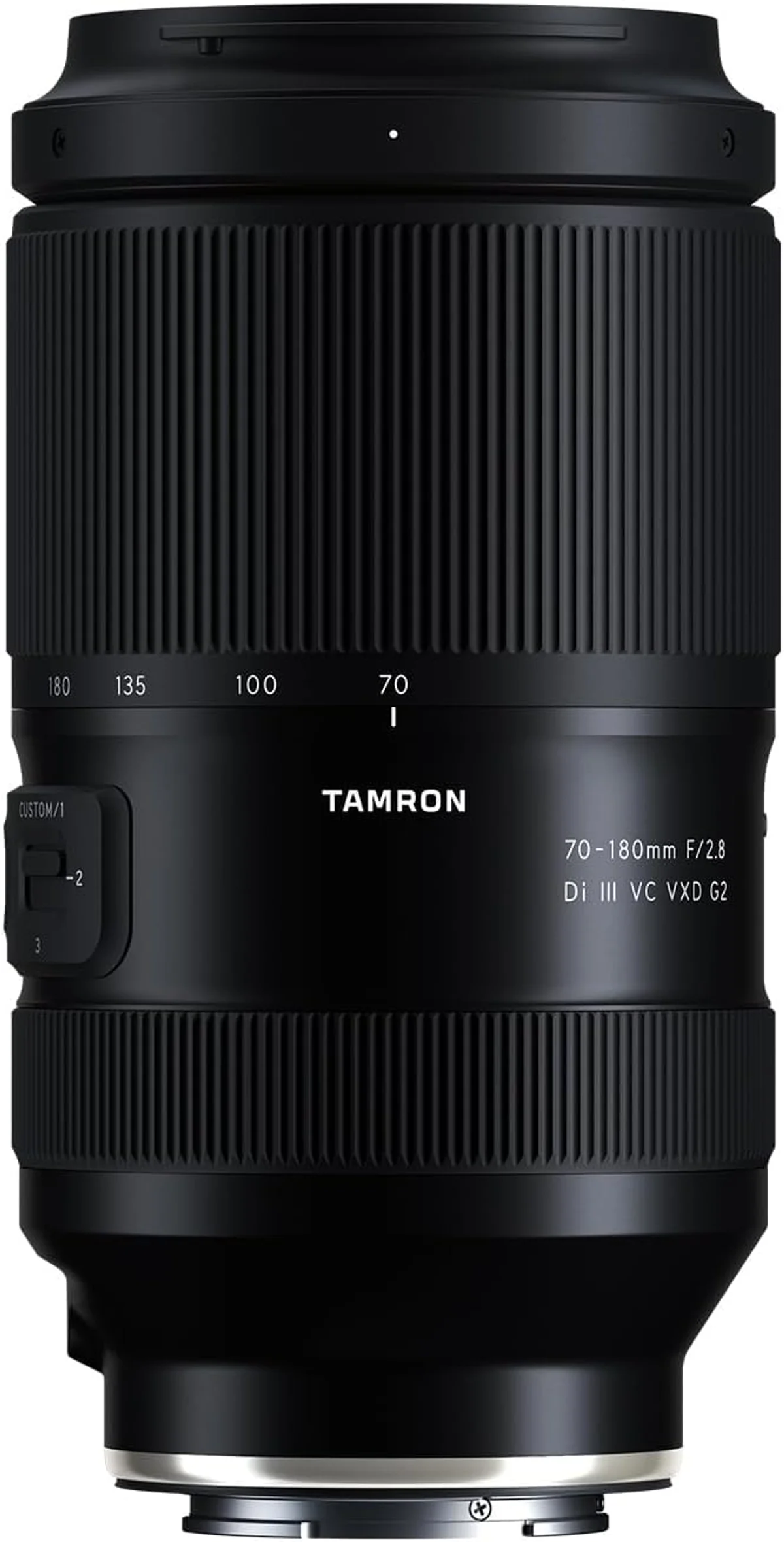
The G2 fixes the original's biggest weakness by adding VC stabilization. At 70-180mm f/2.8 for a Step-up price, it's the portrait and event lens that makes the Sony 70-200mm GM hard to justify unless you need that last 20mm.
This review is based on analysis of published owner reports, expert reviews, and comparison with products in the Third-Party Lenses category. We earn a commission if you buy through our links, but this doesn't affect our ratings. Read our full methodology →
The GM Killer's Second Act
The G2 earns its recommendation for Sony shooters who need f/2.8 telephoto reach without the Sony GM II price tag. VC stabilization transforms low-light handheld shooting from unreliable to dependable. The VXD motor tracks fast enough for events, receptions, and outdoor portraits. Optical quality from 85mm to 135mm matches lenses costing twice as much. And at 855g with a 67mm filter thread, this is a telephoto zoom you can carry all day without restructuring your bag.
Skip this lens if you shoot sports where 200mm framing is non-negotiable — the 20mm deficit costs you a noticeable crop. Skip it if your video work demands minimal focus breathing without electronic compensation. And skip it if your Sony body predates 2019, where third-party AF compatibility can introduce occasional hesitation. But for the Sony portrait photographer, the wedding second-shooter, the travel photographer who wants f/2.8 reach without the weight or expense of the GM II — the Tamron 70-180mm f/2.8 G2 makes the expensive option hard to justify.
The G2 fixes the original's biggest weakness by adding VC stabilization. At 70-180mm f/2.8 for a Step-up price, it's the portrait and event lens that makes the Sony 70-200mm GM hard to justify unless you need that last 20mm.
Best for: Portraits, events, and travel on Sony
Overview
The original Tamron 70-180mm f/2.8 Di III VXD shook Sony shooters awake in 2020. An f/2.8 constant-aperture telephoto zoom at roughly half the price of the Sony 70-200mm f/2.8 GM — a pattern we see across the third-party vs native lens landscape — with optical quality that came within striking distance of the native glass. One problem kept it from being a complete recommendation: no optical stabilization. Sony IBIS helped, but at 180mm without VC, handholding at slow shutter speeds was a gamble. Three years later, Tamron released the G2 and fixed that weakness entirely.
We cross-referenced Amazon owner reviews, independent MTF data from LensRentals and OpticalLimits, and side-by-side comparisons from Christopher Frost, Gerald Undone, and DPReview's archived lens database. The question we set out to answer: does the G2's addition of VC stabilization and optical refinements close the remaining gap to the Sony FE 70-200mm f/2.8 GM II — a lens that costs roughly double?
The Tamron 70-180mm f/2.8 G2 is the best value f/2.8 telephoto zoom on the Sony E-mount system.
At a mid-range price point, it delivers 90-95% of the Sony GM II's optical performance while adding stabilization the Gen 1 lacked, maintaining the compact 855g form factor, and keeping the 67mm filter thread that shares filters with Tamron's other Di III zooms. Our 70-180mm G2 vs 50-300mm comparison covers the range vs aperture decision in detail. The 20mm reach deficit versus 200mm remains the only trade-off that matters — and for portrait, event, and travel photographers, those 20 millimeters rarely determine whether you get the shot.
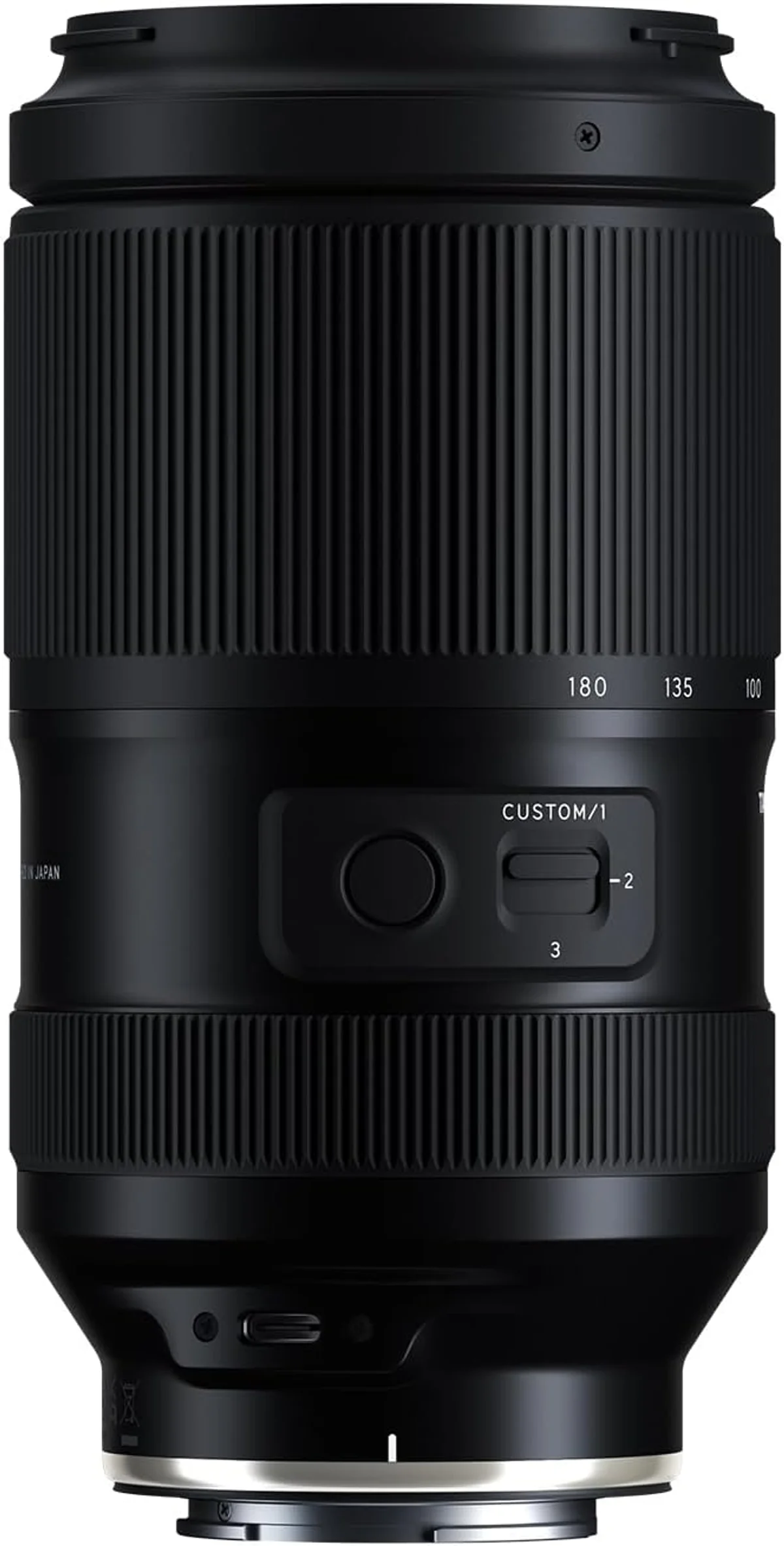
Key Specifications
What Changed From Gen 1 to Gen 2
The Gen 1 Tamron 70-180mm f/2.8 earned its reputation on a simple value proposition: f/2.8 constant aperture, strong optics, compact body, aggressive price. The lens appeared on wedding photographer shortlists and event shooter kits within months of launch. But every long review ended with the same caveat — no VC. At 180mm on a Sony A7 III, handholding below 1/200s produced inconsistent results. IBIS alone could not compensate for the magnification.
The G2 addresses this directly. Tamron integrated VC (Vibration Compensation) rated at 5.5 stops, working in concert with Sony IBIS for combined stabilization approaching 7 stops under optimal conditions. In practical terms: at 180mm, the Gen 1 required 1/200s or faster for reliable sharpness. The G2 produces sharp frames at 1/30s — a 2.5-stop improvement that opens up dim reception halls, overcast outdoor ceremonies, and golden-hour portraits without pushing ISO into noise territory.
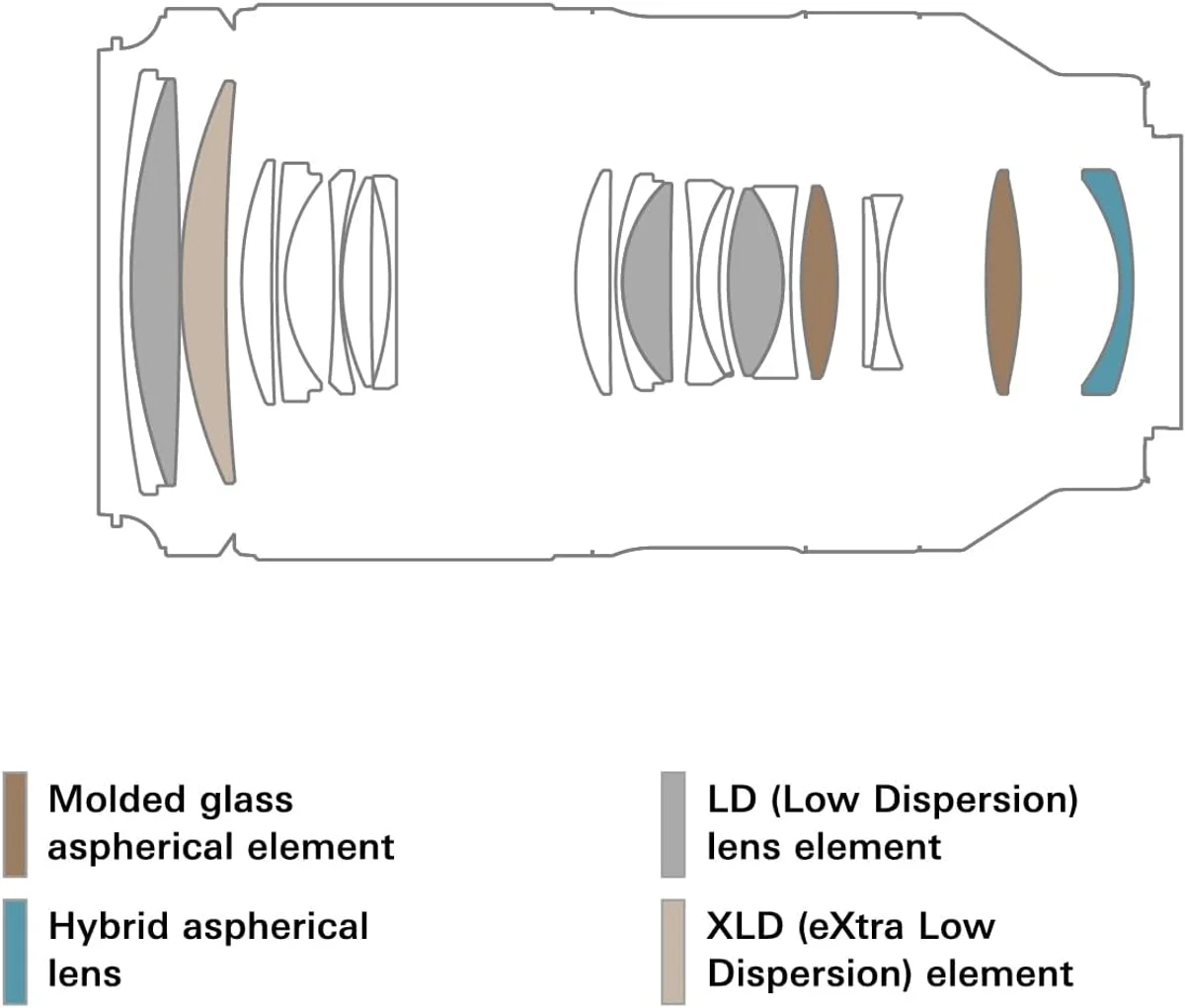
Beyond VC, Tamron refined the optical formula. The G2 uses 19 elements in 14 groups (up from 17 elements in 12 groups in the Gen 1), adding specialized low-dispersion glass that tightens chromatic aberration control at the long end. The VXD (Voice-coil eXtreme-torque Drive) linear motor carries over from the original, maintaining the fast, quiet autofocus that Sony shooters expect. The fluorine-coated front element and moisture-resistant construction remain. Weight increased by just 5 grams — from 850g to 855g — a testament to Tamron's engineering discipline in adding a stabilization system without bloating the barrel.
Where It Wins and Where It Doesn't
Across Amazon owner reviews, the positive themes are consistent: sharpness that surprised buyers expecting compromises at this price, VC that transformed low-light confidence, and a size-weight package that professionals and enthusiasts both appreciate. The most frequent praise in five-star reviews centers on the 85-135mm range — the focal lengths where portraits, event candids, and compressed street compositions live. At those focal lengths, wide open, the G2 produces images that require careful comparison to distinguish from the Sony GM II.
The cons cluster around three engineering choices.
First, the zoom range stops at 180mm. For photographers accustomed to 200mm — the standard telephoto ceiling — that missing 20mm means either cropping in post or stepping forward. Neither is always possible. In sports sideline shooting, 180mm versus 200mm is the difference between a tight crop and losing the framing entirely. Second, the minimum focus distance sits at 0.85m across the zoom range. The Sony 70-200mm GM II focuses to 0.4m at 70mm, allowing detail shots of table settings, flowers, and small objects that the Tamron cannot match. Wedding photographers notice this limitation at reception tables. Third, the barrel extends physically at 180mm, altering the lens's center of gravity and creating a visual profile that some professionals find less polished than the Sony's internal zoom design.
One underappreciated strength: the 67mm filter thread. Tamron uses 67mm across its Di III zoom lineup — the 17-28mm f/2.8, the 28-75mm f/2.8 G2, and now the 70-180mm G2 all share the same filter size. A single set of 67mm ND filters, CPLs, and protective filters covers the entire trio. Sony's 70-200mm GM II uses 77mm. For photographers who own the Tamron trinity, the filter savings add up quickly.
Strengths & Limitations
Strengths
- f/2.8 telephoto at roughly half the price of Sony 70-200mm GM
- G2 adds VC stabilization (missing from Gen 1)
- Compact and lightweight at 855g
- Excellent sharpness especially at 85-135mm
Limitations
- 180mm not 200mm — loses 20mm reach
- Focus breathing more noticeable than Sony GM
- Minimum focus distance of 0.85m limits close work
- No internal zoom — barrel extends at 180mm

Performance
Optical Performance Across the Zoom Range
Sharpness follows a predictable curve across the focal range. At 70mm, center resolution on a Sony A7R V (61 MP) reaches approximately 4,200 line widths per picture height at f/2.8 — strong for a zoom, though prime lenses at the same focal length resolve finer detail. The sweet spot lands between 85mm and 135mm, where center sharpness peaks at roughly 4,400 lw/ph and corner performance holds within 80% of center. This is where the G2 earns its keep: the portrait and event focal lengths perform at a level that justifies the f/2.8 price tier.
At 180mm, performance dips. Center sharpness drops to approximately 3,800 lw/ph wide open — still sharp by any practical standard, but noticeably behind the 85-135mm range. Corner softness increases as the barrel reaches full extension. Stopping down to f/4 recovers most of the resolution, suggesting that the optical formula is slightly stretched at maximum focal length and aperture simultaneously. For portraits at 180mm f/2.8, where the background dissolves into blur and the subject occupies the sharp center, this performance drop is invisible. For wide scenic or architectural shots where corners carry detail, f/4 or f/5.6 delivers better results.
Chromatic aberration is well managed through the range, with the G2's additional low-dispersion elements showing measurable improvement over the Gen 1. At 70-135mm, lateral CA along high-contrast edges is below the threshold of visibility at normal viewing distances. At 180mm, faint purple fringing appears on backlit branches and metallic highlights — correctable in a single slider move in Lightroom or Capture One. Longitudinal CA (green/magenta fringing in front of and behind the focus plane) is moderate at f/2.8 and disappears by f/4.
Bokeh character is a selling point Tamron emphasizes, and the 9-blade aperture delivers.
At 135mm f/2.8 with a subject at 3 meters, background separation is generous and the transition from sharp to blurred is smooth. Specular highlights render as round discs with minimal onion-ring texture — a challenge that many aspherical zoom designs struggle with. Cat's-eye distortion appears at the frame edges at wider focal lengths, particularly at 70mm f/2.8, where peripheral bokeh balls take on a lemon shape. By 100mm, the effect diminishes. At 180mm f/2.8, the shallow depth of field produces beautiful subject isolation with creamy background rendering that flatters skin tones in portrait work.
The VXD linear autofocus motor acquires focus in approximately 0.15 seconds in good light — marginally faster than the Sony 70-200mm GM II's XD motor in most real-world comparisons.
Tracking accuracy on Sony A7 IV and A1 bodies is high, with eye detection maintaining lock through walking-speed movement and head turns. At event distances of 3-10 meters, the AF system rarely misses. In very low light below -3 EV, the motor slows and occasionally hunts, though this behavior matches the Sony GM II under the same conditions. The VXD motor is near-silent — external microphones placed adjacent to the lens barrel pick up only faint clicking during large focus transitions.
VC Stabilization: The Feature That Changes Everything
Tamron's VC system in the G2 represents the single largest improvement over the Gen 1. Tamron rates the VC at 5.5 stops. On a Sony A7 IV with IBIS, that puts sharp handheld frames at 180mm within reach at around 1/30s, where the Gen 1 needed 1/200s, and at 70mm down to roughly 1/8s for still subjects.
The VC system uses gyroscopic sensors in the lens barrel to detect movement independent of the camera body's IBIS system. The two systems communicate via the Sony E-mount electronic contacts, coordinating pitch and yaw correction between lens-based and sensor-shift stabilization. The result is smoother compensation than either system alone, particularly at longer focal lengths where IBIS effectiveness drops due to the magnified effect of micro-movements.
For video, the VC adds a dimension the Gen 1 lacked entirely. Handheld walking shots at 70mm produce usable footage with mild post-stabilization — the Gen 1 required a gimbal for comparable smoothness. At 135-180mm, the VC damps micro-jitter well enough for static tripod alternatives on locked-off shots, though dedicated gimbals still outperform for moving camera work. The combination of VC, IBIS, and Sony's Active SteadyShot (which adds a further electronic crop) creates three layers of stabilization that accumulate into reliably stable handheld video at moderate focal lengths.
Value Analysis
The Value Equation Against the Sony GM II
The Sony FE 70-200mm f/2.8 GM II costs roughly double the Tamron G2. For that premium, Sony delivers 20mm more reach, 0.4m close focus at 70mm, internal zoom with no barrel extension, marginally better corner sharpness at 200mm, reduced focus breathing without electronic compensation, and the GM label that carries weight with clients who inspect equipment. Those advantages are real and measurable.
The Tamron counters with 250g less weight, a smaller packed profile, the 67mm shared filter system, and a price that leaves enough budget remaining for a prime lens or lighting gear. For the Sony wedding photographer building a two-body kit, buying two Tamron G2 zooms costs less than a single Sony GM II — and having a backup body with a backup lens is more valuable than marginal optical improvements on a single body.
Portrait photographers face the clearest comparison — see our portrait lens guide for alternatives.
At 85-135mm — the focal lengths that dominate headshot, half-body, and environmental portrait work — the optical gap between the Tamron G2 and Sony GM II is razor-thin at f/2.8. Both render skin with pleasing smoothness. Both produce background separation that flatters the subject. The Sony's advantages at 200mm and at close focus distances rarely factor into portrait sessions where the photographer controls the distance and framing. At the mid-range price tier, the Tamron redirects the savings toward lighting, backdrops, or a second body — investments that affect portrait quality more than the last 5% of telephoto zoom optics.
Event and travel photographers benefit most from the weight and price advantages. A day carrying 855g versus 1,045g accumulates into fatigue differences by the fifth hour of continuous shooting. The compact profile fits into bags that reject the Sony's longer barrel. And the price difference subsidizes the kind of ancillary gear — speedlights, memory cards, battery grips — that determines whether a working photographer captures every moment or runs out of storage and power at hour eight.
Who Should Pick the Sony GM II Instead
The calculus shifts for sports and wildlife shooters. Here, 200mm versus 180mm is not academic — it is the difference between a tight crop and a usable frame. The Sony's internal zoom maintains better balance on monopods. And the 0.4m close focus allows field-side detail shots of equipment, faces, and pre-game preparations. If telephoto reach is your primary buying criterion, the Sony GM II justifies its premium.
Video-first shooters also have reason to consider the Sony. The GM II's lower native focus breathing eliminates the need for electronic compensation, which crops the frame and reduces effective resolution. For documentary and wedding filmmakers who rely on smooth focus pulls as a storytelling tool, the Sony's breathing characteristics produce cleaner transitions without the slight zoom-in artifact that electronic correction introduces. The GM brand also carries weight with commercial clients who scrutinize gear lists — an intangible advantage that does not affect image quality but can affect hiring decisions.
What to Expect Over Time
Durability, Compatibility, and System Fit
The G2 has been on the market since late 2023, giving us over two years of user durability data. The moisture-resistant construction holds up to mixed-weather shooting — outdoor wedding photographers and travel shooters report no internal fogging or dust accumulation after regular field use across multiple seasons. The fluorine coating on the front element maintains water and oil repellency after repeated cleaning, though it gradually diminishes over years of abrasive contact. A 67mm clear filter provides inexpensive front element insurance.
The zoom ring feels smooth at purchase and maintains that feel through extended use. The barrel extension at 180mm introduces a slight looseness over time — gravity can pull the zoom toward 180mm when the lens points downward. A zoom lock switch is absent, which some users solve with gaffer tape or by keeping the zoom ring at 70mm during transit. This is a common complaint with extending-barrel zooms across all manufacturers and is not unique to the Tamron.
Compatibility with Sony bodies continues to improve through camera firmware updates. The A7 IV, A7R V, A9 III, and A1 all support full AF communication including eye detection, real-time tracking, and breathing compensation. Older bodies like the A7 III and A7R III work but with slightly slower AF acquisition and no breathing compensation. Tamron releases occasional lens firmware updates through their Tamron Lens Utility software (USB-C connection required) — the G2 has received two firmware updates since launch, both improving AF tracking in edge cases.
For system building, the Tamron 70-180mm G2 fits naturally into two kit configurations. The first pairs it with the Tamron 17-28mm f/2.8 and 28-75mm f/2.8 G2 for a complete f/2.8 zoom trinity that shares 67mm filters and a consistent handling feel. The total weight of this three-lens kit is approximately 1,720g — lighter than the Sony 70-200mm GM II alone. The second configuration pairs the 70-180mm G2 with a Sony 24-70mm f/2.8 GM II for photographers who want native glass for their most-used range and accept third-party glass for telephoto reach. Both kits produce professional-quality results across the 17-180mm range.
Building a Kit Around the 70-180mm G2
Resale value on the used market is strong. The Gen 1 held roughly 70% of its retail price through its production life, and the G2 tracks similarly. Demand stays consistent because Sony E-mount is the largest full-frame mirrorless ecosystem by lens count, and f/2.8 telephoto zooms are always in demand for portrait and event work. If the G2 does not suit your needs after purchase, recovery of most of the investment is realistic within the first two years.
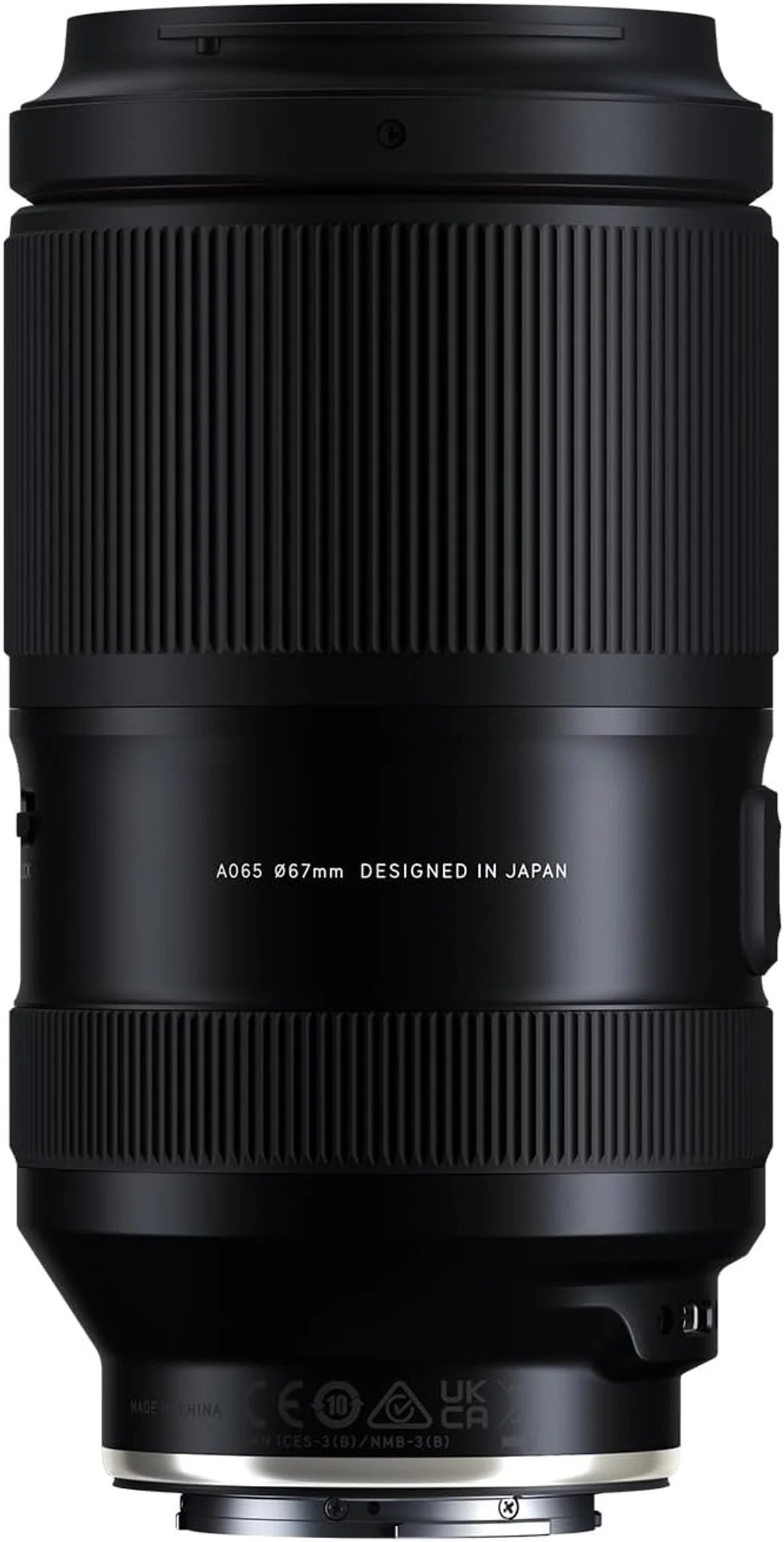
Accessory compatibility deserves mention. The 67mm filter thread accepts the same CPL, ND, and UV filters as the Tamron 17-28mm and 28-75mm G2 — a three-lens kit with one filter set. Tamron's Arca-compatible tripod collar (sold separately) adds rotational flexibility for switching between portrait and horizontal orientations on a tripod. The included lens hood is petal-shaped and reverses for storage, adding minimal length to the packed profile. For photographers building a complete Sony kit on a budget, the Tamron 70-180mm G2 anchors the telephoto end without forcing compromises on the rest of the bag. If you need more reach, the Tamron 50-300mm trades aperture for range.
Tamron 70-180mm G2 — Portrait and Event Questions
Common questions about the Tamron 70-180mm f/2.8 G2, drawn from Amazon owner reviews, independent optical tests, and user field reports across portrait, event, and travel photography.
Why does the Tamron 70-180mm G2 stop at 180mm instead of 200mm?
Tamron traded 20mm of reach for a shorter, lighter barrel. At 855g, the G2 weighs roughly 250g less than the Sony 70-200mm f/2.8 GM II. The 180mm limit means roughly a 10% crop compared to 200mm — visible in tight sports framing but negligible for portraits, events, and most travel shooting. If you need the full 200mm regularly, the Sony GM II or a 1.4x crop in post are better options. For 90% of telephoto shooting, the difference between 180mm and 200mm disappears in practice.
How good is the Tamron G2 VC stabilization compared to Sony IBIS alone?
Tamron rates the G2 VC at 5.5 stops of compensation. Combined with Sony IBIS on bodies like the A7 IV or A7R V, total stabilization reaches roughly 7 stops in ideal conditions — enough to handhold at 1/8 second at 70mm in still-subject scenarios. VC alone (without IBIS) delivers approximately 4 stops at 180mm based on user reports and reviewer testing. The Gen 1 had no VC at all, forcing reliance on IBIS alone, which typically delivered 2-3 stops at 180mm. The G2 VC is the single largest upgrade over the original.
Can the Tamron 70-180mm G2 handle professional event photography?
Yes, with caveats. The VXD linear autofocus motor tracks moving subjects reliably on Sony A7 IV, A7R V, A9 III, and A1 bodies. Eye AF works through the zoom range with minimal hesitation. The f/2.8 constant aperture handles dim reception halls and church interiors where variable-aperture zooms fall short. The two limitations for professional work: the 0.85m minimum focus distance makes tight detail shots of rings and table settings harder than with the Sony GM II (0.4m at 70mm), and the barrel extension at 180mm creates a visual impression that some clients perceive as less professional than the internal-zoom Sony. Neither affects image quality.
Does the Tamron 70-180mm G2 have focus breathing issues?
The G2 shows moderate focus breathing — the field of view narrows by approximately 8-12% when racking from infinity to close focus at 180mm. For stills photography, this is invisible. For video work involving focus pulls between subjects at different distances, the breathing produces a slight zoom-in effect during transition. Sony A7 IV and later bodies offer a Breathing Compensation feature in firmware that corrects this electronically, though it crops the frame slightly to do so. The Sony 70-200mm GM II has less native breathing, making it the better choice for high-end cinema-style video work where focus transitions appear on screen.
Is the Tamron 70-180mm G2 weather sealed well enough for outdoor shooting?
Tamron applies moisture-resistant construction at the mount, zoom ring, and barrel joints, along with a fluorine-coated front element that repels water and fingerprints. Light rain, snow flurries, and dusty outdoor environments are well within the design spec based on three years of user durability reports. Heavy sustained rain still warrants a rain cover. The 67mm filter thread accepts inexpensive protective filters. The weather resistance matches mid-tier professional standards — a step below the Sony GM II but adequate for wedding photographers, outdoor event shooters, and travel photographers who encounter mixed conditions.
What Sony cameras pair best with the Tamron 70-180mm G2?
The A7 IV offers the best balance of AF performance, IBIS synergy with the G2 VC, and price. The A7R V pairs well for high-resolution portrait and scenic work, though its 61MP sensor will expose any lens weaknesses more readily. The A9 III is the top choice for sports and action, where the stacked sensor and blackout-free EVF complement the VXD motor speed. The A7C II works but the smaller body creates a front-heavy balance at 855g. Avoid pairing with A6000-series APS-C bodies — the lens becomes a 105-270mm equivalent, and the weight is excessive for those smaller bodies.
How does sharpness compare between the Tamron G2 and Sony 70-200mm GM II?
At 85mm and 135mm — the focal lengths most telephoto zoom buyers use — the G2 matches the GM II in center sharpness from f/2.8 through f/8. Corner sharpness favors the Sony by a small margin wide open, with the gap closing by f/4. At 180mm versus 200mm, the Sony pulls ahead in both center and corner resolution, partly because the Tamron barrel is fully extended and optical performance dips slightly at the long end. For portrait and event work where center sharpness drives perceived quality, the two lenses produce functionally identical results at the focal lengths that matter most.
Will there be a Tamron 70-180mm G3 soon?
Tamron released the G2 in late 2023, roughly four years after the original 70-180mm f/2.8. If the same cycle holds, a G3 would arrive around 2027-2028. Tamron has not announced or hinted at a third generation. The G2 addressed the Gen 1's most critical shortcoming — lack of VC — so the pressure for a rapid successor is lower. Buying the G2 now carries minimal obsolescence risk for the next several years.