Nikon Z 24-70mm f/2.8 S vs Tamron 28-75mm G2: Is the Nikon Tax Worth It?
The Tamron 28-75mm G2 delivers 85-90% of the Nikon's optical performance at less than half the price. The Nikon Z 24-70mm f/2.8 S earns its premium through superior AF tracking, build quality, and wider zoom range.
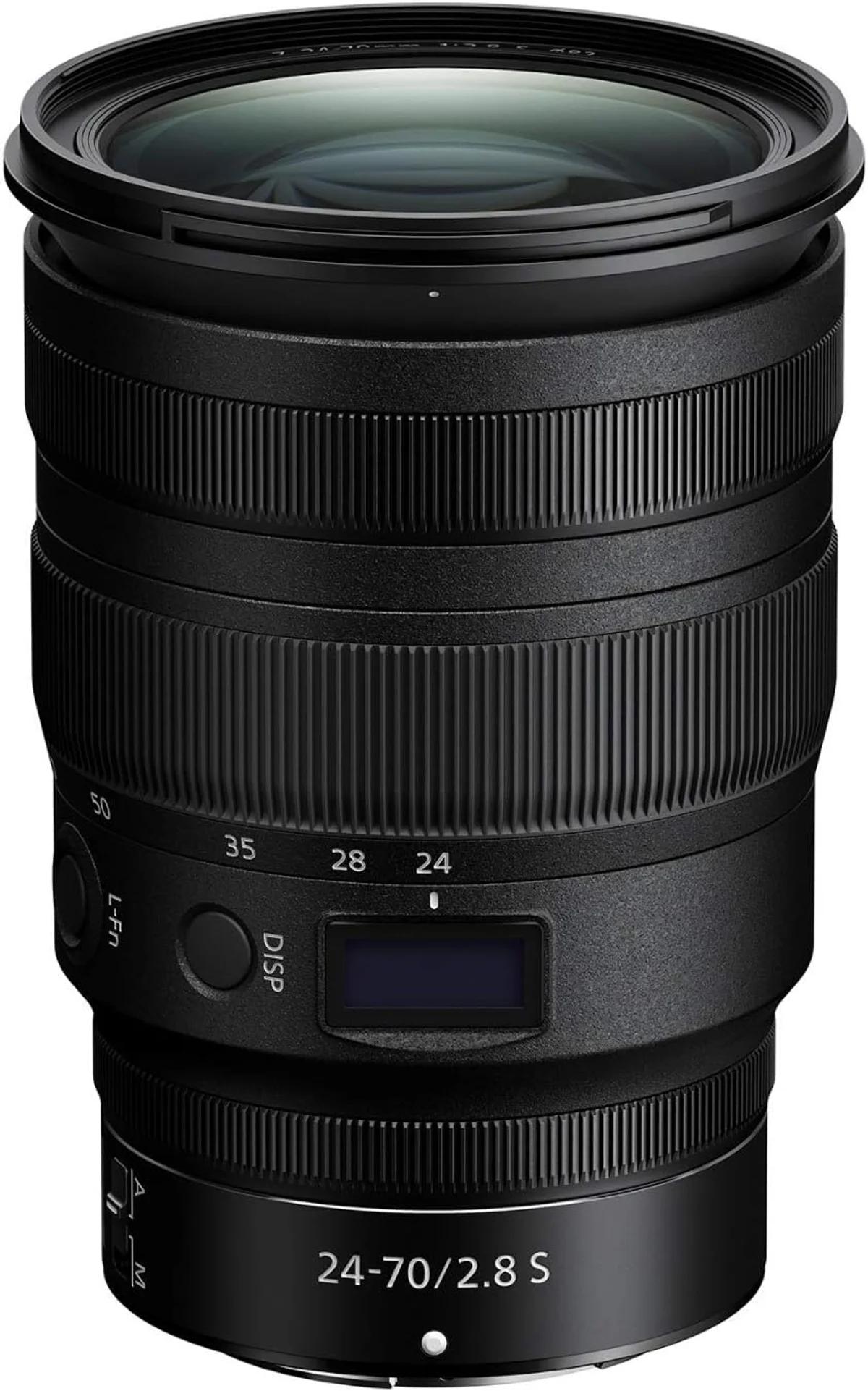
Nikon Z 24-70mm f/2.8 S
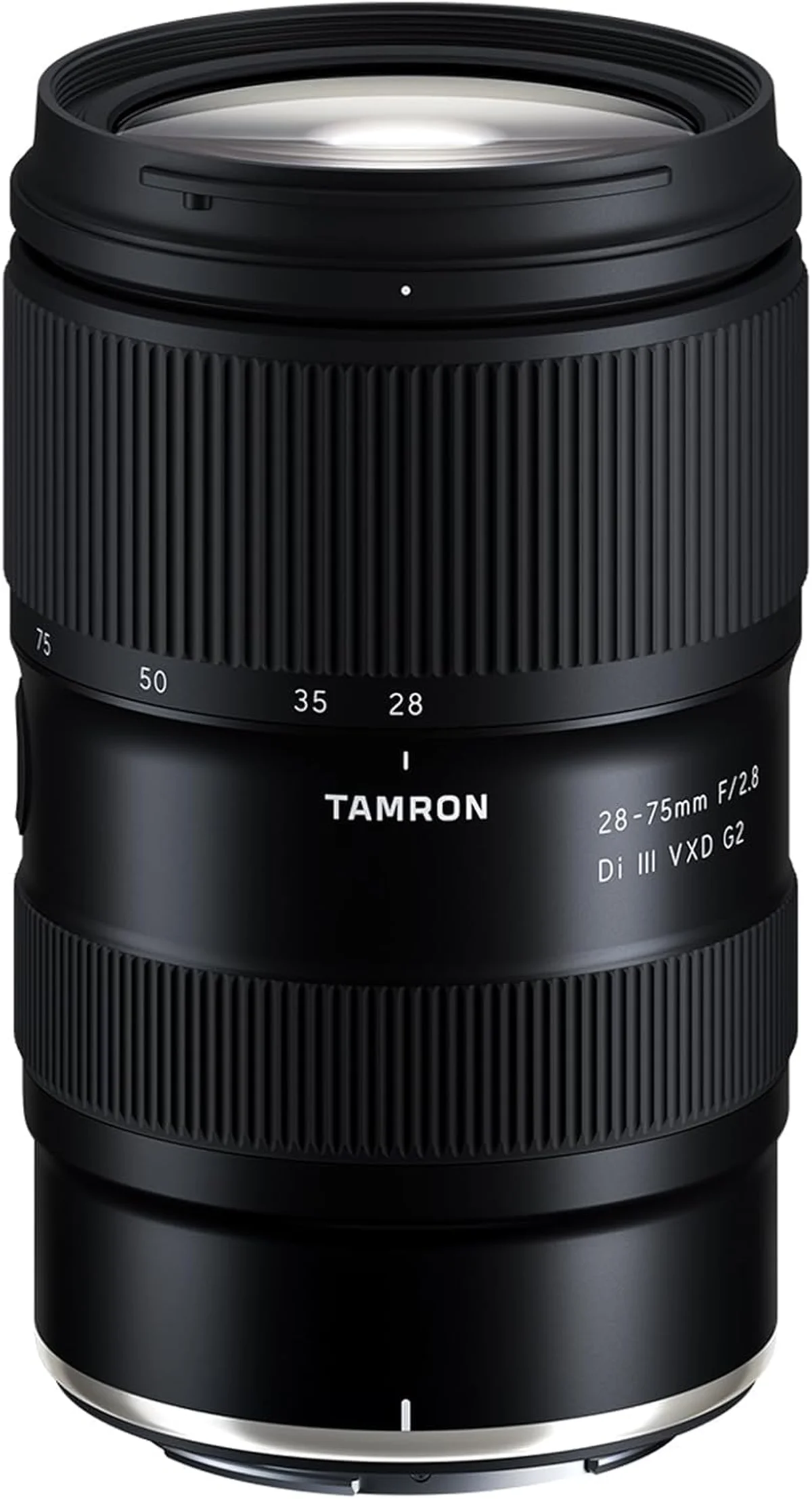
Tamron 28-75mm f/2.8 G2
The Nikon Z 24-70mm f/2.8 S is the benchmark standard zoom for Nikon's mirrorless system. S-line optics, magnesium alloy construction, and autofocus tuned specifically for Nikon bodies make it the safe, professional choice. The Tamron 28-75mm f/2.8 Di III VXD G2 challenges that position at roughly half the cost, offering strong optics, lighter weight, and the same f/2.8 aperture across a slightly narrower zoom range.
This is the defining third-party vs native debate for Nikon Z shooters. Tamron's Z-mount lenses have matured rapidly since the mount opened to third parties, and the 28-75mm G2 represents the strongest value play in the f/2.8 standard zoom category. But value and performance are not always the same thing — especially when reliability under pressure separates a keeper from a missed moment.
We cross-referenced Amazon owner reviews, independent optical bench tests, and field reports from working photographers who switched between these lenses on Z6 III, Z7 II, Z8, and Z9 bodies. The conclusion is clear: both are excellent, but they serve different buyers with different tolerances for price and performance. The Nikon wins every optical and mechanical comparison by a margin. The Tamron wins the only comparison many photographers care about most: value per dollar spent.


Nikon Z 24-70mm f/2.8 S
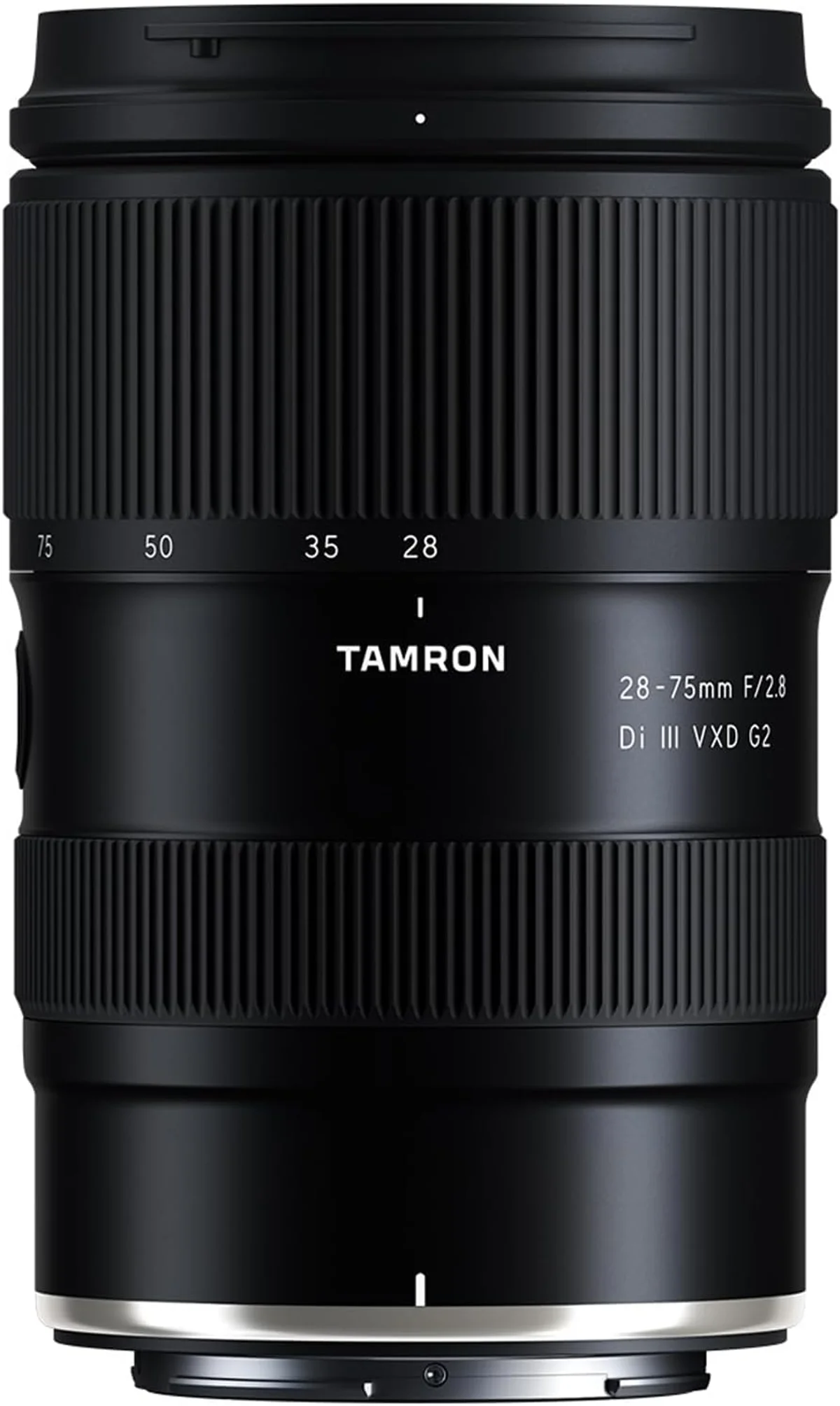
Tamron 28-75mm f/2.8 G2
At a Glance
| Feature | Nikon NIKKOR Z 24-70mm f/2.8 S | Tamron 28-75mm f/2.8 Di III VXD G2 (Nikon Z) |
|---|---|---|
| Price Band | Flagship | Step-up |
| Focal Length | 24-70mm | 28-75mm |
| Max Aperture | f/2.8 | f/2.8 |
| Mount | Nikon Z | Nikon Z |
| Format | Full Frame | Full Frame |
| Filter Size | 82mm | 67mm |
| Weight | 805g | 540g |
| Stabilization | No (body IBIS) | No (body IBIS) |
| Check Price | Check Price |
Optical Sharpness Across the Frame
The Nikon Z 24-70mm f/2.8 S sets a reference standard for zoom lens sharpness. Center resolution wide open at f/2.8 rivals many prime lenses, and corner performance stays unusually consistent from 24mm through 70mm. Independent MTF testing consistently places this lens among the top three f/2.8 standard zooms ever made — alongside the Sony GM II and Sigma Art. Stopping down to f/4 or f/5.6 produces edge-to-edge sharpness suitable for reproduction-quality work.
The Tamron 28-75mm G2 delivers strong center sharpness that approaches the Nikon at most focal lengths. At 35mm and 50mm, the difference is minimal in real-world shots — both produce clean, detailed images with excellent micro-contrast. The gap appears at the edges: the Nikon holds sharpness deeper into the corners, particularly at 24mm (which the Tamron doesn't reach) and at 70-75mm wide open. At f/4, the Tamron's corners tighten up and the visible difference narrows to a level that rarely matters outside of lab testing.
For practical photography — portraits, events, editorial work — both lenses produce professional-quality images. The Nikon's advantage shows in flat-field subjects where corner-to-corner uniformity matters: product photography, art reproduction, architectural detail shots. The Tamron handles subject-centric photography (where corners are blurred anyway) with aplomb.
Autofocus Speed and Tracking Accuracy
The Nikon Z 24-70mm f/2.8 S uses a dual-motor multi-focus system that drives two internal focus groups simultaneously. On Nikon Z8 and Z9 bodies, this translates to near-instantaneous focus acquisition and reliable continuous tracking through complex scenes. The AF system was developed alongside the Z-mount camera firmware, and the integration shows — subject detection, eye AF, and animal tracking work with zero hesitation.
The Tamron 28-75mm G2 uses a VXD (Voice-coil eXtreme-torque Drive) linear motor. In adequate light, it locks focus quickly and tracks smoothly. The difference emerges in challenging conditions: dim reception halls, backlit subjects, and fast-approaching motion. User reports consistently note that the Tamron hunts more than the Nikon in these situations — sometimes one or two extra cycles of focus searching before locking. Tamron has released firmware updates that improved this behavior on newer Z bodies, but the fundamental advantage of native calibration remains with the Nikon lens.
For video shooters, the Tamron's VXD motor produces slightly more audible operation than the Nikon's multi-focus system when using the camera's internal microphone. With an external mic, both are effectively silent. Focus transition smoothness is comparable — neither lens produces the jarring snap some older AF systems exhibit during rack focusing.
Build Quality and Professional Durability
The Nikon Z 24-70mm f/2.8 S is built to the S-line standard: magnesium alloy barrel, full gasket weather sealing at every joint, fluorine-coated front element, and precisely damped zoom and focus rings. It feels like a professional tool in hand. The lens has survived years of rental abuse and working professional use with a strong reliability record. The 82mm filter thread is larger than most competitors but accepts widely available filters.
The Tamron 28-75mm G2 uses a high-quality polycarbonate exterior with moisture-resistant construction. It is sealed at the mount and key barrel joints, but not to the depth of the Nikon S-line. The zoom ring has slightly less dampening — functional but not as refined. Tamron includes a USB-C port for firmware updates, which is a practical advantage the Nikon lacks (Nikon firmware updates go through the camera body). The 67mm filter thread saves money on filters compared to the Nikon's 82mm.
For photographers who work in rain, heavy dust, or extreme temperatures regularly, the Nikon's sealing provides more confidence. For studio, indoor events, and casual outdoor work, the Tamron's build is entirely adequate. Cosmetically, the polycarbonate shows wear faster than magnesium, but functionally both lenses hold up to steady use.
Stabilization and Handheld Performance
Neither lens includes optical image stabilization — both rely entirely on the camera body's in-body image stabilization (IBIS). On Nikon Z bodies with IBIS (Z5, Z6 series, Z7 series, Z8, Z9), both lenses deliver 4-5 effective stops of stabilization for stills and smooth handheld video. The lack of optical IS means performance is identical between the two lenses on any given body.
One consideration: the Nikon Z 24-70mm f/2.8 S starts at 24mm, where IBIS is most effective (wider focal lengths benefit more from sensor-shift stabilization). The Tamron at 28mm gets slightly less effective stabilization at its widest. The difference is small — perhaps half a stop at the wide end — but it contributes to the Nikon's slight advantage in handheld low-light shooting at the wide end of the zoom range.
Bokeh Character and Subject Isolation
Both lenses share f/2.8 maximum aperture, so depth of field is comparable at equivalent focal lengths and subject distances. The rendering character differs subtly. The Nikon produces slightly smoother bokeh highlights with more uniform intensity from center to edge. Specular highlights maintain their circular shape even at moderate focus distances. The Tamron's bokeh is pleasant but shows slightly more onion-ring structure in point light sources — a result of aspherical element design. This is visible in lab tests and occasionally in city-light night portraits, but it rarely impacts the visual quality of typical portrait and event photography.
At 70mm f/2.8, both lenses produce strong subject isolation for portraits. The Nikon's extra 5mm (75mm vs 70mm nominal on the Tamron) provides marginally more compression and background separation. For dedicated portrait work, the difference is negligible — focal length choice matters more than the lens itself at this point.
Chromatic Aberration and Distortion Control
The Nikon Z 24-70mm f/2.8 S controls lateral chromatic aberration almost perfectly across the zoom range — a hallmark of S-line optical engineering. Purple and green fringing at high-contrast edges is essentially invisible in normal shooting and requires extreme pixel-peeping in RAW files to detect. Longitudinal CA (color fringing in out-of-focus areas) is minimal, contributing to the clean rendering of specular highlights in both focused and defocused areas.
The Tamron 28-75mm G2 shows slightly more lateral CA, particularly at 28mm and 75mm. In-camera corrections handle most of it automatically in JPEG output, and RAW processors like Lightroom and Capture One apply Tamron's correction profiles cleanly. The difference is visible only when examining uncorrected RAW files at 200% magnification. For social media, prints up to 20x30, and web publication, both lenses produce indistinguishable chromatic performance.
Barrel distortion at the wide end is present in both lenses but handled differently. The Nikon relies on in-camera correction enabled by default — the raw optical distortion is moderate but the corrected output is nearly perfect. Tamron takes a similar approach, embedding correction data that cameras and software apply automatically. Neither lens produces visible distortion in corrected output. Pincushion distortion at the long end is negligible in both.
Real-World Shooting Performance
Wedding ceremony in a dim church. The Nikon Z 24-70mm at 24mm captures the full altar from the back row. Its AF locks confidently on faces in mixed candlelight and stained-glass window illumination. The Tamron at 28mm misses four millimeters of width — sometimes requiring a step backward that isn't available in a packed pew. AF is reliable but cycles once more than the Nikon in the worst-lit moments. Both produce clean, publishable images at ISO 3200-6400.
Corporate headshot session in a conference room. Both lenses at 50-70mm f/2.8 produce identical results. The Tamron's lighter weight makes it easier to handle during rapid-fire sessions with dozens of subjects. AF performance is indistinguishable in controlled, well-lit environments. Neither lens has an advantage here — the price difference is pure savings with zero quality loss.
Street photography in a foreign city. The Tamron's smaller size and lighter weight make it less conspicuous and more comfortable for hours of walking. The Nikon's extra reach to 24mm captures tighter alleys and wider market scenes. AF speed for candid street shots is similar between both — the split-second advantage of native calibration matters less when subjects aren't approaching at high speed. Weight-sensitive travelers will prefer the Tamron. Range-sensitive shooters lean Nikon.
Indoor sports or dance recital. The Nikon's AF tracking handles erratic subject movement with more consistency — fewer back-focus errors during rapid direction changes. The Tamron keeps up in straight-line motion but occasionally drops focus during lateral movements across the frame. For professional sports coverage, the Nikon's tracking reliability earns its cost. For parent-level recital footage, the Tamron captures the moment just fine.
Vignetting and Light Falloff
Both lenses show measurable vignetting wide open, which is normal for f/2.8 zooms. The Nikon Z 24-70mm shows approximately 1.5 stops of corner darkening at 24mm f/2.8, which reduces to under 0.5 stops by f/4. The Tamron at 28mm f/2.8 shows slightly less vignetting due to its narrower field of view. By f/4, both lenses are essentially uniform across the frame.
For portrait photographers, wide-open vignetting can be a creative asset — it naturally draws the eye toward the center of the frame. For flat-field and product work, in-camera correction or post-processing profiles eliminate vignetting completely. Neither lens has a practical advantage here — the difference in falloff between the two is smaller than typical shot-to-shot variation in natural lighting conditions.
Price Gap and Value Calculation
The Nikon Z 24-70mm f/2.8 S sits in the Flagship price band, while the Tamron 28-75mm G2 is less than half the price — a substantial gap that represents the core decision for most buyers. The Tamron delivers approximately 85-90% of the Nikon's optical performance, 80% of the AF consistency, and 70% of the build quality at a fraction of the investment.
For photographers who bill clients and depend on zero-miss reliability in unpredictable conditions, the Nikon's premium buys peace of mind. For enthusiasts, semi-professionals, and budget-conscious professionals who shoot in controlled conditions, the Tamron's value proposition is among the strongest in the zoom lens market. The money saved on the Tamron could fund a dedicated portrait prime or a backup body — both of which might add more to your photography than the marginal gains of the native lens.
Resale values favor the Nikon — S-line lenses hold their price well on the used market. The Tamron depreciates faster but starts from a much lower initial investment, so the net cost of ownership over three to five years may be closer than the retail prices suggest. Our Nikon Z lens rankings show where both place across the full system.
Another way to frame the value: the price difference between these two lenses could fund a Nikon Z 50mm f/1.8 S prime, giving you a dedicated portrait lens alongside the Tamron zoom. That two-lens kit — the Tamron for general coverage plus a native prime for critical low-light work — may outperform a solo Nikon 24-70mm in total photographic capability. The Nikon zoom on its own is a stronger single lens, but the Tamron plus a prime creates a more capable system for the same total investment.
For photographers entering the Nikon Z system and building their first professional kit, the Tamron frees budget for other needs: a faster memory card, a backup body, quality lighting, or essential software subscriptions. The total kit matters more than any individual lens, and the Tamron's savings compound across the rest of your gear decisions. Over a five-year ownership period, the lower entry cost combined with the Tamron's strong optical quality means the cost-per-usable-image is a fraction of what the Nikon delivers — a metric that matters to anyone watching their return on equipment investment.
Native or Third-Party: Which Fits Your Budget?
Get the Nikon Z 24-70mm f/2.8 S If:
- You shoot professionally in unpredictable conditions where AF reliability cannot be compromised
- Weather sealing and professional build quality are non-negotiable for your shooting environment
- You need 24mm — the four extra millimeters over 28mm matter for interiors and group compositions
- Corner-to-corner sharpness matters for your subjects (flat-field, architecture, products)
- You pair with a Nikon Z8 or Z9 and want the tightest possible AF integration
Get the Tamron 28-75mm f/2.8 G2 If:
- Budget matters — the price difference funds other gear that may improve your work more
- Weight is a priority — the Tamron saves 265g, noticeable on full-day shoots and travel
- You shoot primarily in controlled or semi-controlled conditions where AF hunts less
- 67mm filter thread saves you money across your filter collection
- USB-C firmware updates appeal more than routing updates through the camera body
Consider Both If:
Some photographers buy the Tamron as a lightweight daily carry and reserve the Nikon for paid work. The two lenses share the same mount and aperture, so switching between them during a shoot is practical. The Tamron covers casual outings, personal projects, and travel. The Nikon comes out for client sessions, weddings, and editorial assignments where the AF advantage and weather sealing earn their keep. Over time, the Tamron may pay for itself by reducing wear on the Nikon during lower-stakes shooting.
Lens Compatibility and Future-Proofing
The Nikon Z 24-70mm f/2.8 S will always receive day-one compatibility with new Nikon Z bodies — it is a first-party lens designed in lockstep with the camera system. The Tamron 28-75mm G2 relies on reverse-engineered mount communication, which means occasional compatibility delays when Nikon releases new bodies or firmware. Tamron's track record for addressing these gaps is strong, usually within weeks, but the possibility of a brief incompatibility window exists with each new body launch.
For photographers who upgrade camera bodies frequently or adopt new models at launch, the Nikon lens offers guaranteed compatibility. For those who keep bodies for two to three years and update lens firmware during that time, the Tamron's compatibility track record is excellent and the risk is minimal.
Our Assessment
The Nikon Z 24-70mm f/2.8 S is the better lens by every technical measure. But "better" and "better value" are different things entirely. The Tamron 28-75mm G2 gets you into f/2.8 standard zoom territory at a price that makes the jump from kit glass financially painless. For most Nikon Z shooters — especially those building a system and watching their budget — the Tamron is the smarter purchase. Invest the savings in a fast prime or additional lighting, and the total kit outperforms a single expensive zoom.
If your income depends on capturing moments that don't repeat — weddings, live events, journalism — the Nikon's AF consistency and professional durability justify every dollar of the premium. It is the lens that will not let you down at the worst possible moment. That confidence has real financial value for working photographers who cannot reshoot a missed first kiss or a keynote speaker's reaction.
Nikon vs Tamron Standard Zoom Questions
These are the most common questions from Nikon Z shooters deciding between native and third-party glass for their standard zoom.
Does the Tamron 28-75mm G2 autofocus as fast as the Nikon Z 24-70mm f/2.8 S?
In good light, the difference is minimal — both lock focus within a fraction of a second. In dim conditions or with fast-moving subjects, the Nikon S-line pulls ahead. Its multi-focus STM system drives two focus groups independently, giving it faster and more confident tracking. The Tamron G2 hunts slightly more in low contrast scenes, but firmware updates have improved its performance since launch.
Will Tamron release firmware updates for the 28-75mm G2 on Nikon Z?
Tamron has released several firmware updates for the G2 since launch, improving AF speed and adding compatibility with newer Nikon Z bodies. Updates are applied through the Tamron Lens Utility software via USB-C. Tamron has a strong track record of ongoing firmware support for Z-mount lenses, and the G2 is one of their flagship products for the system.
Is the Nikon Z 24-70mm f/2.8 S weather sealed?
Yes. The Nikon Z 24-70mm f/2.8 S features full gasket sealing at every barrel joint, the mount, switches, and focus ring. It is rated for professional use in rain, dust, and cold. The Tamron 28-75mm G2 also includes moisture-resistant construction, but its sealing is less extensive — sealed at the mount and key joints, but not to the same depth as the Nikon S-line standard.
Can I use the Tamron 28-75mm G2 for professional wedding photography?
Many wedding photographers use the Tamron 28-75mm G2 as their primary lens and produce exceptional results. The optical quality is strong enough for professional delivery. Where the Nikon 24-70mm pulls ahead is in AF consistency during unpredictable moments — first dances, processionals, reception candids in poor light. If your work demands zero-miss AF reliability, the Nikon is the safer choice. For controlled and semi-controlled shooting, the Tamron delivers professional-grade images.
How much lighter is the Tamron compared to the Nikon?
The Tamron 28-75mm G2 weighs approximately 540g versus the Nikon Z 24-70mm f/2.8 S at 805g. That 265g difference — roughly the weight of a smartphone — is noticeable on full-day shoots. The Tamron is also shorter and narrower in diameter, making it easier to fit in smaller camera bags. For travel and street shooting where weight matters, the size advantage is genuine.
Does the 4mm difference between 24mm and 28mm matter in practice?
More than most people expect. At 24mm, you capture roughly 84 degrees horizontal field of view. At 28mm, that drops to about 75 degrees. In tight spaces — hotel rooms, small restaurants, cramped venues — those 9 degrees determine whether you get the whole scene or cut off the edges. For interiors, real estate, and group shots in confined areas, the Nikon 24mm starting point is a practical advantage.