Best Sony E-Mount Zoom Lenses 2026
Sony E-mount has the deepest zoom lens selection of any mirrorless system. Between Sony's own G and G Master lines, Sigma's Art series, and Tamron's expanding DG DN catalog, E-mount shooters can choose from more than forty autofocus zoom options spanning 17mm to 500mm. That breadth means strong competition at every focal length — and real savings for buyers willing to compare across brands.
We ranked 12 zoom lenses across four categories: standard zooms (24-70mm class), telephoto zooms (70-200mm class and beyond), travel superzooms, and APS-C options. Every lens here mounts directly to any Sony mirrorless body with full electronic communication, autofocus, and EXIF data. Rankings reflect a weighted analysis of optical sharpness (35%), autofocus performance (20%), build quality and stabilization (20%), and value at each price tier (25%).
The biggest shift in Sony E-mount zooms over the past two years has been third-party quality. Tamron's VXD-equipped zooms now track eye AF within 5-10% of Sony's native linear motors, and Sigma's second-generation Art zooms like the Sigma 24-70mm Art II match or exceed Sony G-series optics at focal lengths between 35mm and 70mm. Native Sony glass still leads in absolute corner sharpness and firmware integration, but the gap has narrowed enough that price-to-performance ratio now drives most buying decisions.
One distinction matters before you start comparing: full-frame (FE) zooms versus APS-C zooms. Full-frame lenses work on every Sony E-mount body at full resolution. APS-C lenses trigger a crop on full-frame bodies, reducing your megapixel count by roughly 60%. If you plan to upgrade from APS-C to full-frame, invest in FE glass now. If you are committed to APS-C, the dedicated crop-sensor zooms from Tamron like the 17-70mm f/2.8 and 18-300mm superzoom offer better size and weight ratios.

Quick Picks at a Glance
| Feature | Editor's Pick Sony FE 24-70mm f/2.8 GM II | Sigma 24-70mm f/2.8 DG DN II Art (Sony E) | Tamron 70-180mm f/2.8 Di III VC VXD G2 (Sony E) | Sony FE 24-105mm f/4 G OSS | Tamron 28-75mm f/2.8 Di III VXD G2 (Sony E) | Tamron 150-500mm f/5-6.7 Di III VC VXD (Sony E) | Tamron 28-200mm f/2.8-5.6 Di III RXD (Sony E) | Tamron 50-300mm f/4.5-6.3 Di III VC VXD (Sony E) | Tamron 70-300mm f/4.5-6.3 Di III RXD (Sony E) | Tamron 17-70mm f/2.8 Di III-A VC RXD (Sony E) | Tamron 18-300mm f/3.5-6.3 Di III-A VC VXD (Sony E) | Sony E 55-210mm f/4.5-6.3 OSS |
|---|---|---|---|---|---|---|---|---|---|---|---|---|
| Price Band | Flagship | Flagship | Step-up | Flagship | Step-up | Flagship | Step-up | Step-up | Entry | Step-up | Entry | Entry |
| Focal Length | 24-70mm | 24-70mm | 70-180mm | 24-105mm | 28-75mm | 150-500mm | 28-200mm | 50-300mm | 70-300mm | 17-70mm | 18-300mm | 55-210mm |
| Max Aperture | f/2.8 | f/2.8 | f/2.8 | f/4 | f/2.8 | f/5-6.7 | f/2.8-5.6 | f/4.5-6.3 | f/4.5-6.3 | f/2.8 | f/3.5-6.3 | f/4.5-6.3 |
| Mount | Sony E | Sony E | Sony E | Sony E | Sony E | Sony E | Sony E | Sony E | Sony E | Sony E | Sony E | Sony E |
| Check Price | Check Price | Check Price | Check Price | Check Price | Check Price | Check Price | Check Price | Check Price | Check Price | Check Price | Check Price |
All 12 Sony E-Mount Zoom Lenses, Ranked
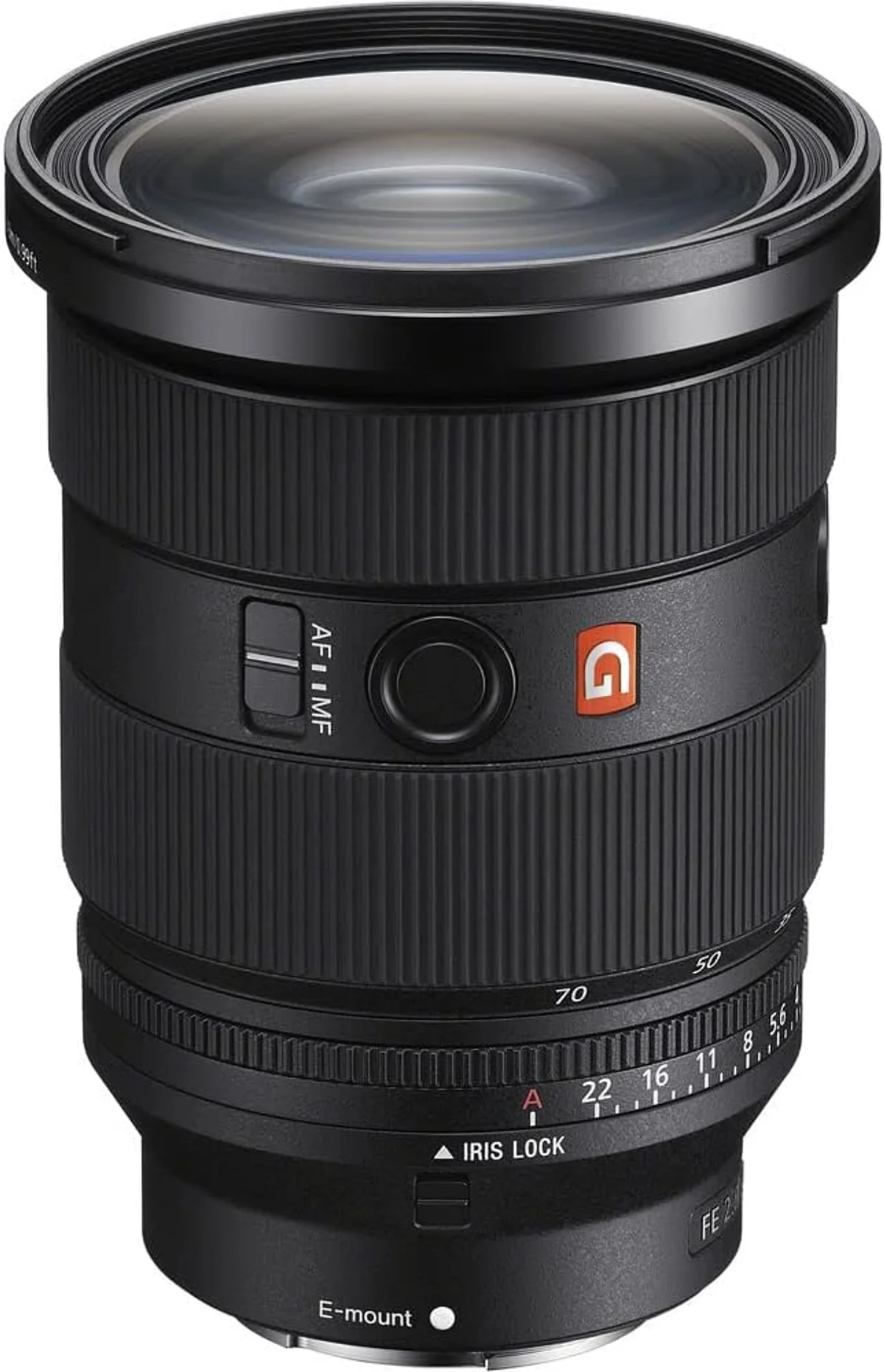
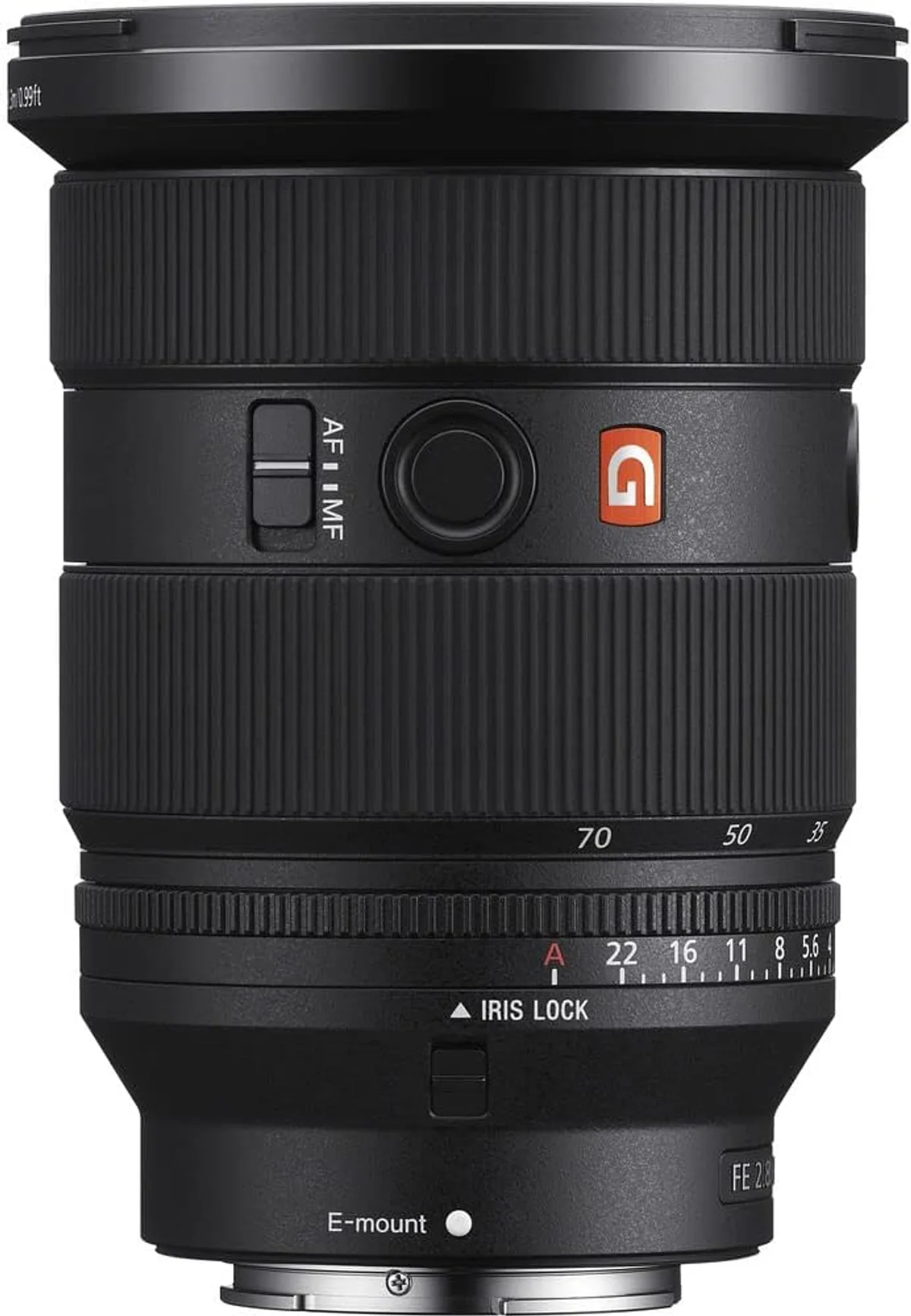
1. Sony FE 24-70mm f/2.8 GM II — Top-Tier Standard Zoom
The GM II replaced one of Sony's most respected zoom lenses and managed to improve it in every measurable dimension.
Weight dropped from 886g to 695g — a 21% reduction that makes this the lightest f/2.8 standard zoom from any major manufacturer. The four XD Linear Motor groups deliver autofocus that locks onto subjects with zero hunting, even in low-contrast scenes where older lenses hesitate. Resolution at 24mm wide open matches what the original GM achieved stopped down to f/4, and the 70mm end maintains corner-to-corner sharpness that satisfies studio and commercial demands.
Nano AR Coating II handles flare with a confidence the first generation lacked. Point this lens into strong backlight and you get controlled, cinematic flare rather than the contrast-robbing wash that plagued the GM I at certain angles. The close minimum focus distance of 0.30m at 24mm enables product and food photography without switching to a dedicated macro, and the 11-blade circular aperture produces highlight circles with minimal outlining — a detail portrait and wedding photographers notice immediately.
The GM II sits in the premium tier for a reason.
Sony's lens correction profiles, native firmware compatibility with every current Alpha body, and the tightest manufacturing tolerances in the E-mount ecosystem all factor into the price. For working professionals who bill clients and need glass that eliminates variables, the GM II is the standard zoom that removes excuses. For enthusiasts who shoot primarily outdoors in good light, the Sigma 24-70mm Art II delivers 90% of the performance at a meaningfully lower investment.
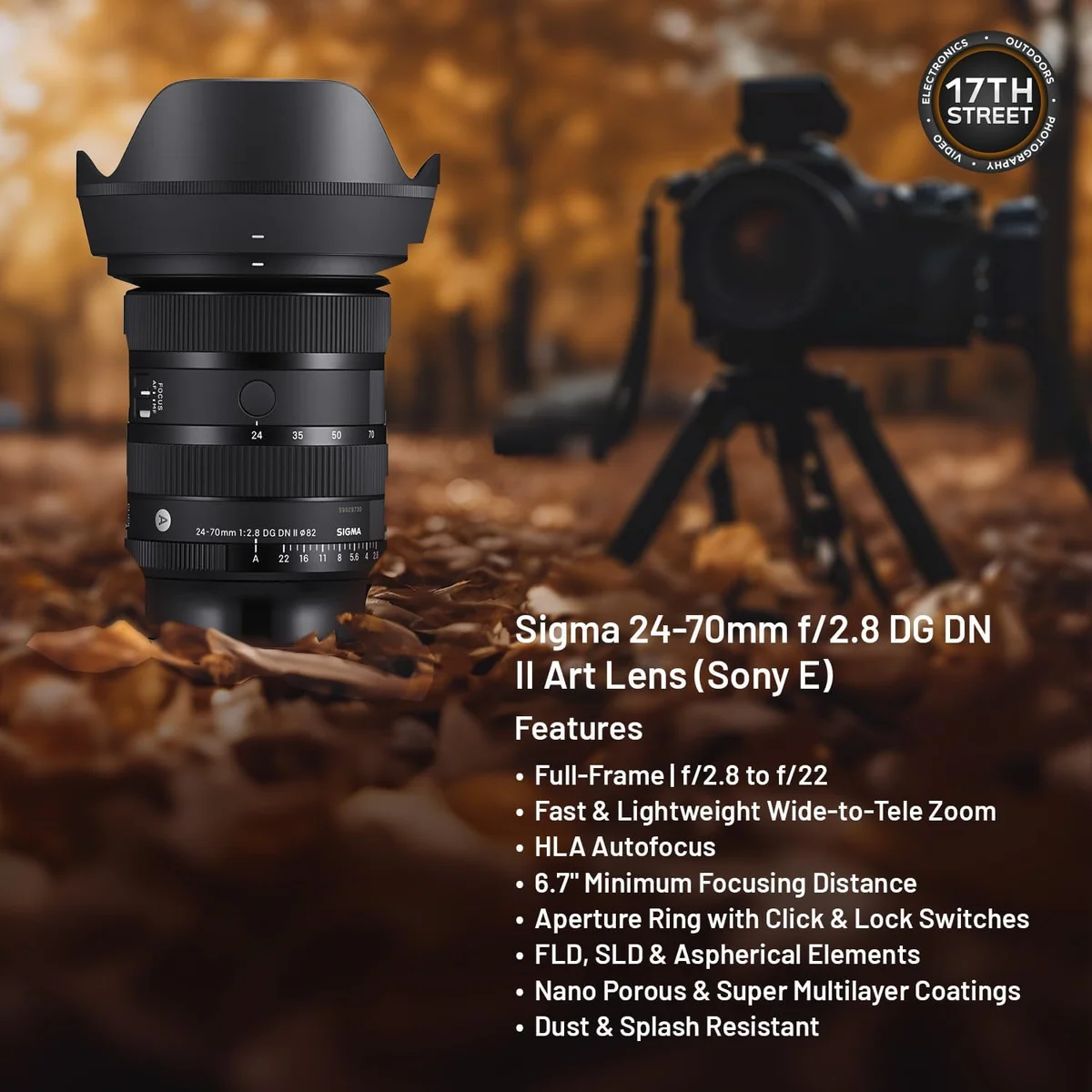
Price band: Flagship Check Price2. Sigma 24-70mm f/2.8 DG DN II Art (Sony E) — Best Value Standard Zoom
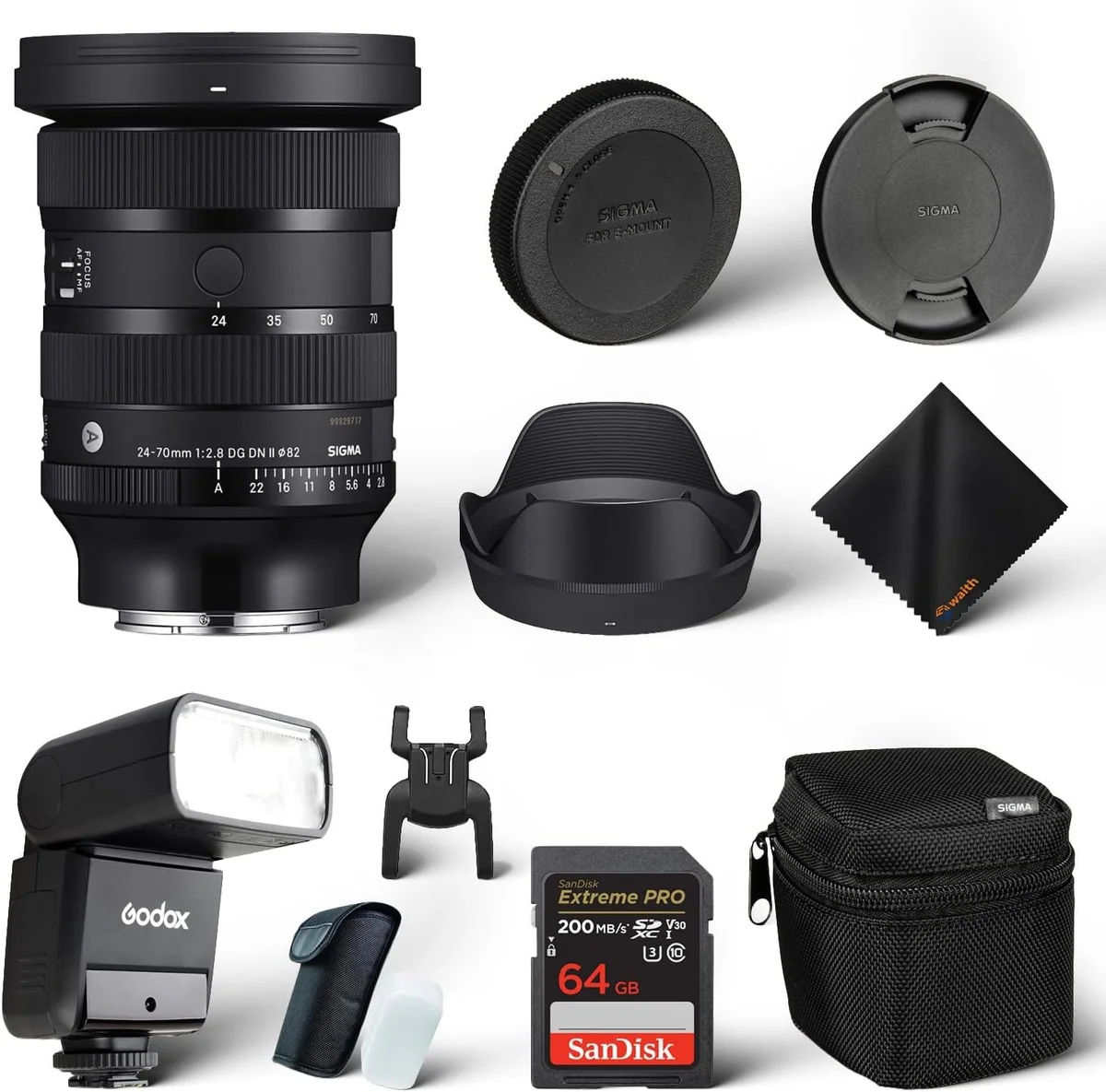
Sigma's second-generation 24-70mm Art addresses every criticism leveled at the original. The HLA (High-response Linear Actuator) autofocus motor replaces the older stepping motor with a system fast enough to track athletes and erratic animals — a capability the Gen 1 simply could not deliver. At 740g it weighs 45g more than the Sony GM II, but the feel in hand is balanced, with a zoom ring action that photographers describe as having just the right amount of resistance for precise one-handed framing.
Center sharpness from 35mm through 50mm matches or exceeds the Sony GM II in controlled tests. The Sony takes the lead at 24mm wide open in the corners and at 70mm under extreme magnification, but those differences vanish at apertures of f/4 and smaller — the range where most outdoor and event shooting happens. Chromatic aberration control is strong, with minimal color fringing even at maximum aperture against high-contrast edges. The 11-blade aperture produces round bokeh that rivals the GM II's rendering.
Where the Sigma falls short is in two specific areas.
First, the weather sealing is present but less extensive than Sony's L-series treatment — users report the Sigma tolerates light rain but not sustained exposure.
Second, Sigma's firmware updates require the optional USB dock rather than over-the-air delivery, which means new body compatibility sometimes lags by weeks after a camera launch. For the 40% price difference against the GM II, those concessions feel proportionate. This is the standard zoom most Sony shooters should buy unless they have a specific professional reason to choose the Sony.
Price band: Flagship Check Price3. Tamron 70-180mm f/2.8 Di III VC VXD G2 (Sony E) — Best Portrait and Event Telephoto
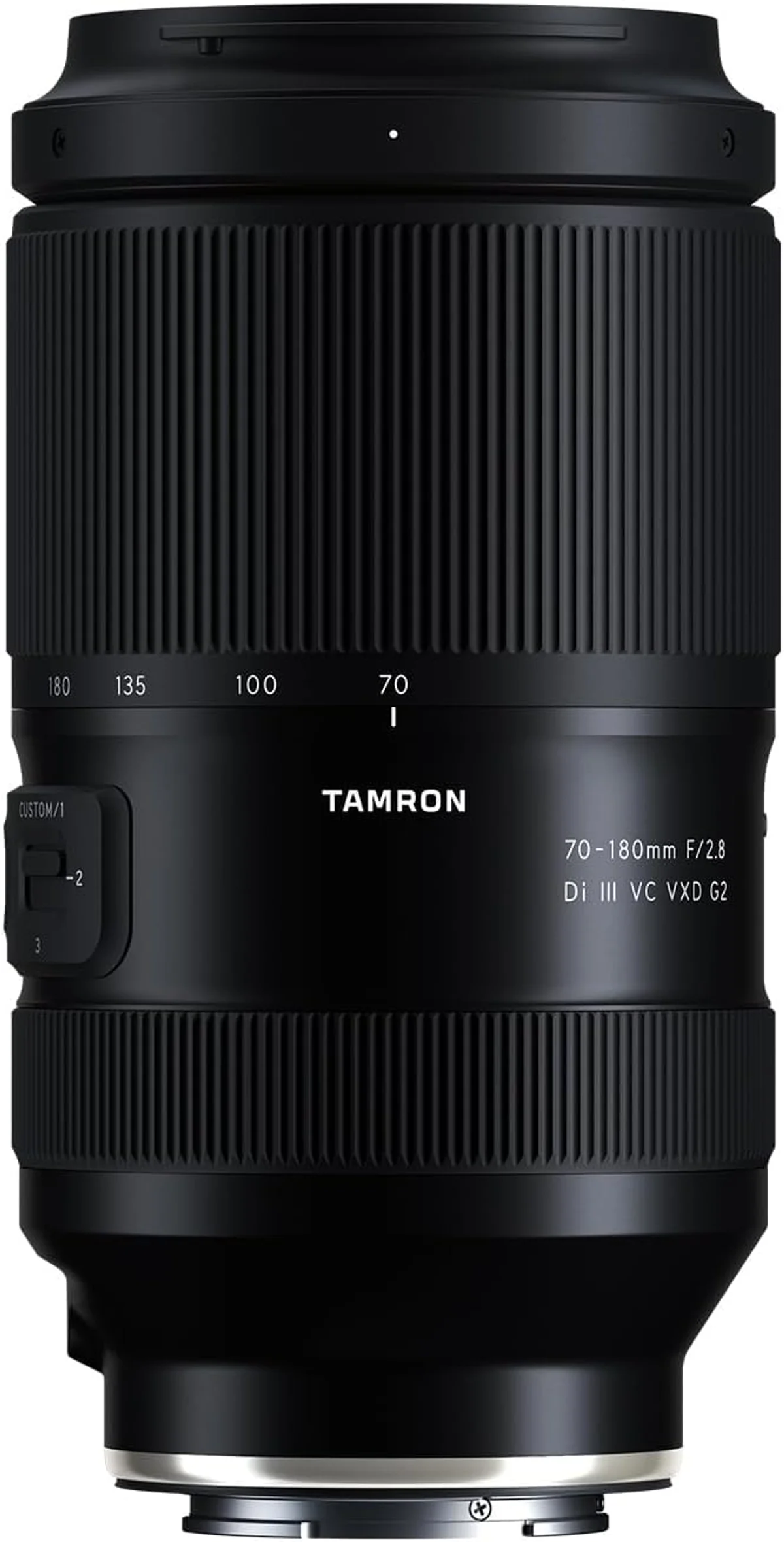
The second-generation 70-180mm f/2.8 added the feature every reviewer requested: built-in VC stabilization. The original relied entirely on body IBIS, which worked on full-frame Alphas but left APS-C shooters on older bodies without stabilization at 180mm — a recipe for soft handheld images. With VC onboard, the G2 delivers 5 stops of lens-based correction that combines with IBIS for roughly 6.5 stops on compatible bodies. That changes the calculus for event photographers who need handheld shooting at 1/30s or slower.
Sharpness peaks between 85mm and 135mm, precisely where portrait photographers spend the most time. At f/2.8 and 135mm, the 70-180mm G2 produces background blur that competes with 70-200mm f/2.8 lenses costing twice as much. The 20mm shorter reach compared to a traditional 70-200mm is the primary optical compromise — at 180mm you frame slightly wider than at 200mm, which matters for compressed headshots and sideline sports. For 95% of portrait, wedding, and event work, that 20mm gap never shows in the delivered images.
At 855g, this is one of the lighter f/2.8 telephoto zooms available on any mirrorless system.
The VXD motor tracks Sony Eye AF with speed that users consistently describe as indistinguishable from the Sony 70-200mm GM II in wedding and event conditions. Where the Sony still wins: at 200mm maximum reach, marginally faster AF in the dimmest conditions, and a build quality that tolerates professional abuse over multiple years. For the roughly half the price, the Tamron G2 is the telephoto zoom that makes financial sense for most Sony shooters.
Price band: Step-up Check Price4. Sony FE 24-105mm f/4 G OSS — Best All-Purpose Single Zoom
Range wins convenience, and the 24-105mm f/4 G OSS covers more useful focal lengths than any other single lens in Sony's native zoom lineup. At 24mm you capture full interior scenes. At 50mm you shoot environmental portraits. At 105mm you frame tight headshots with flattering compression. The 4.4x zoom ratio eliminates lens changes for travel, events, and documentary work where speed of framing matters more than maximum aperture.
The constant f/4 aperture is one stop slower than the f/2.8 standard zooms above, which means higher ISO settings in dim environments and less background separation.
That trade-off buys you 35mm of additional telephoto reach (70mm vs 105mm) and roughly 200g of weight savings. Sony's OSS pairs with body IBIS for combined stabilization that reaches 6 stops on current bodies — enough to handhold this lens at 105mm at 1/8s for static subjects. The autofocus uses a single Direct Drive SSM motor that is fast but not as precise for continuous tracking as the GM II's quad-linear setup.
Build quality sits between the budget G-series and the flagship GM tier.
The moisture and dust resistance handles light rain and dusty trails without issue. The zoom ring is smooth with consistent torque, and the focus ring has a linear response that video shooters find predictable. At the midrange price tier, the 24-105mm f/4 competes against the Tamron 28-200mm for the "one lens to carry" crown — the Sony wins on image quality and weather sealing, while the Tamron wins on zoom range and aperture speed at the wide end.
Price band: Flagship Check Price5. Tamron 28-75mm f/2.8 Di III VXD G2 (Sony E) — Best Budget Standard Zoom
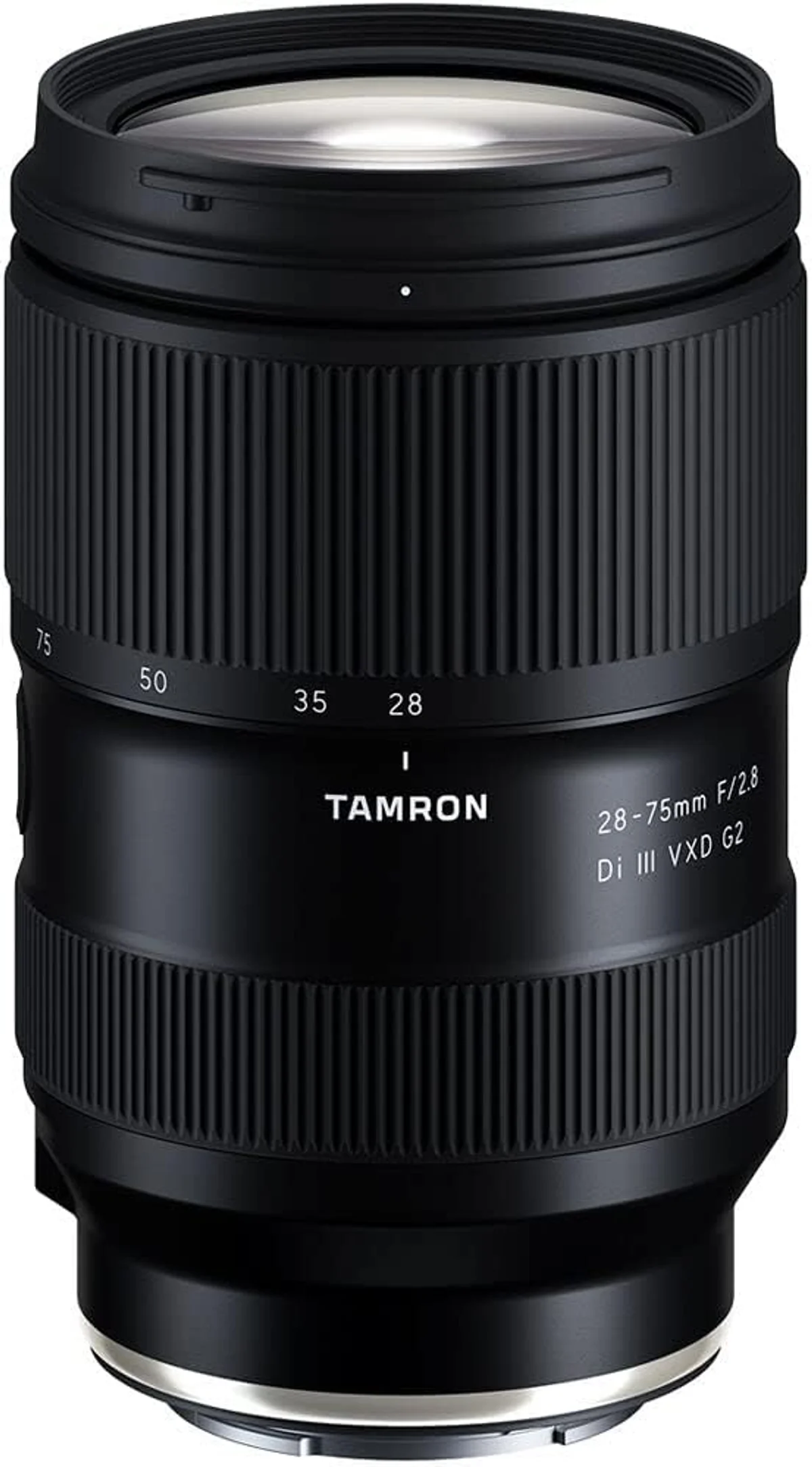
The Tamron 28-75mm f/2.8 G2 is the lens that made f/2.8 standard zooms accessible on Sony E-mount. Before Tamron entered this segment, a constant f/2.8 zoom meant buying the Sony 24-70mm GM at more than double the current Tamron price. The G2 delivers sharpness that sits within 10% of the Sigma Art II across the shared focal range, with VXD autofocus that tracks confidently and VC stabilization that smooths handheld video.
The 28mm starting point is the lens's most debated specification. Four millimeters narrower than 24mm translates to a visibly tighter field of view in real-estate interiors, group shots in tight spaces, and landscape compositions where foreground inclusion matters. For street photography, event coverage, and general outdoor shooting, 28mm feels wide enough — and the shorter optical path at the wide end contributes to the lens's compact 540g weight and relatively short barrel.
Minimum focus distance of 0.18m at the wide end enables close-up work that most standard zooms cannot match. Food bloggers, product photographers, and content creators use this as an impromptu macro for flat-lay shots and tabletop details. The 67mm filter size is standard and affordable, and the lens balances well on compact bodies like the A7C II. For Sony shooters whose budget accommodates one f/2.8 zoom and nothing more, the Tamron 28-75mm G2 is the rational default choice.
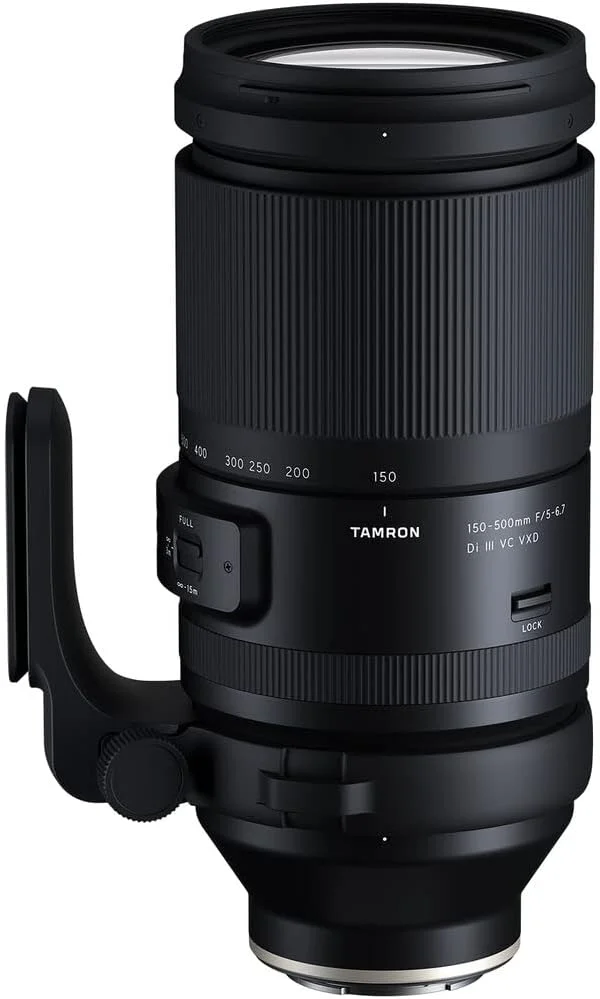
Price band: Step-up Check Price6. Tamron 150-500mm f/5-6.7 Di III VC VXD (Sony E) — Best Super-Telephoto
Super-telephoto reach on Sony E-mount used to mean one option: the Sony 200-600mm G at a price that excluded casual wildlife shooters. The Tamron 150-500mm rewrote the value equation. At roughly 40% less than the Sony, it delivers 500mm of reach with VXD linear motor autofocus that tracks birds in flight, VC stabilization for handheld use, and a 1,725g weight that stays manageable for two-hour shooting sessions without a monopod.
Sharpness from 150mm through 400mm is where this lens earns its reputation among birders and wildlife photographers. Fine feather detail, texture in mammal fur, and insect wing structure all resolve cleanly at apertures between f/5.6 and f/8. At 500mm the corners soften — expected behavior for any zoom at its maximum reach. Center resolution remains strong enough for web, social media, and moderate crops that bring subjects closer in post.
The 150mm starting point is a genuine advantage over the Sony 200-600mm. At 150mm you can shoot subjects at closer distances — a deer at 15 meters, a hawk perched in a nearby tree — without needing a second shorter zoom. The Tamron starts wider and weighs 300g less, advantages that matter for photographers who hike to their subjects rather than shooting from a car window. On APS-C Sony bodies, the effective 225-750mm range reaches into territory that previously required five-figure exotic primes.
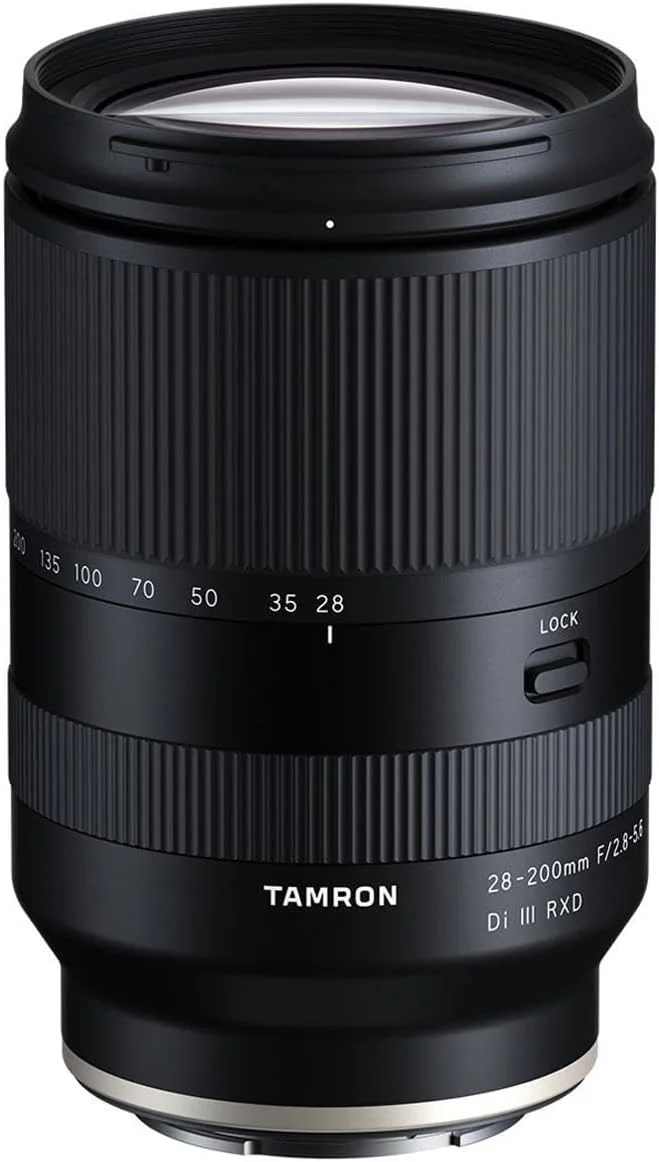
Price band: Flagship Check Price7. Tamron 28-200mm f/2.8-5.6 Di III RXD (Sony E) — Best Premium Travel Zoom
A 7.1x zoom ratio starting at f/2.8 on the wide end — no other full-frame E-mount zoom combines this kind of range with a fast maximum aperture. The Tamron 28-200mm replaces two or three lenses in a single 575g barrel: a standard zoom for daily shooting, a short telephoto for portraits, and a moderate telephoto for distant subjects. Travelers, documentary shooters, and photographers who refuse to carry a multi-lens kit gravitate toward this lens for a reason.
At 28-75mm, the optical quality approaches what the Tamron 28-75mm f/2.8 G2 delivers — strong center sharpness, controlled aberrations, and smooth bokeh at the wider apertures. Past 100mm, the lens remains sharp in the center but corners soften progressively, and by 200mm you are working with the center half of the frame for best results. The variable f/2.8-5.6 aperture means you start fast and lose speed as you zoom in — at 200mm, f/5.6 demands good light or higher ISO settings.
The RXD stepping motor autofocus is quiet and smooth for video but not as fast for continuous tracking as the VXD motors in Tamron's premium zooms. For portraits, landscapes, travel, and street work, the AF speed is perfectly adequate. For fast action — birds, sports, running children — the tracking lag becomes noticeable compared to the 70-180mm G2 or 150-500mm. This is a convenience lens, and it delivers on that promise better than any competing option on Sony E-mount.
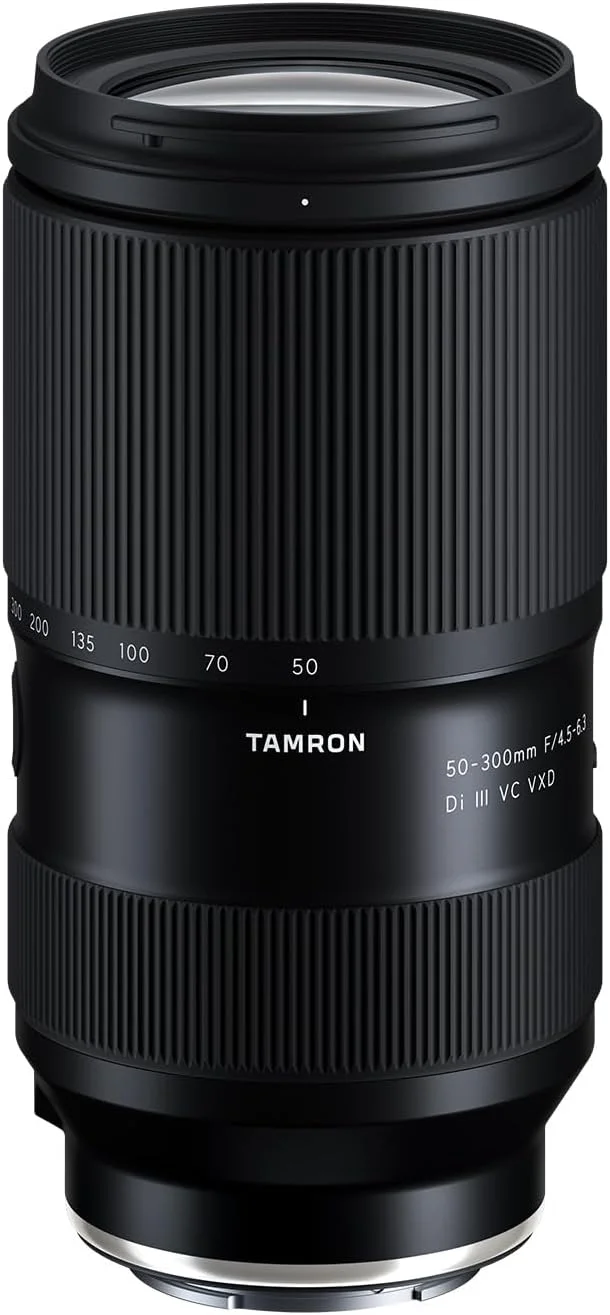
Price band: Step-up Check Price8. Tamron 50-300mm f/4.5-6.3 Di III VC VXD (Sony E) — Best One-Lens Telephoto
The Tamron 50-300mm occupies a zoom range no other Sony E-mount lens covers. Starting at 50mm — wide enough for environmental portraits — and reaching 300mm for distant subjects, it eliminates the lens change between a standard zoom and a telephoto. At 665g, it weighs less than the 70-180mm f/2.8 G2 while reaching 120mm further, a size-to-reach ratio that appeals to photographers who prioritize bag space above all else.
The 0.22m minimum focus distance at 50mm enables close-up work approaching half-life-size magnification. Food photography, flower details, product shots — the wide end doubles as an impromptu close-up lens that adds a capability most telephoto zooms lack entirely. At 300mm, the minimum focus distance extends to 1.5m, which still allows frame-filling shots of birds and insects at moderate distances without the extreme reach a dedicated super-telephoto provides.
Optical compromises are concentrated at the extremes.
At 50mm, corner sharpness softens compared to a dedicated 50mm prime or a standard zoom. At 300mm, the edges lose resolution and benefit from stopping down to f/8 or f/9. Between 85mm and 200mm — the most commonly used range — the lens delivers strong results that hold up in prints and high-resolution web galleries. For travel photographers and event shooters who trade peak sharpness for carrying one lens instead of two, the 50-300mm makes the math work.
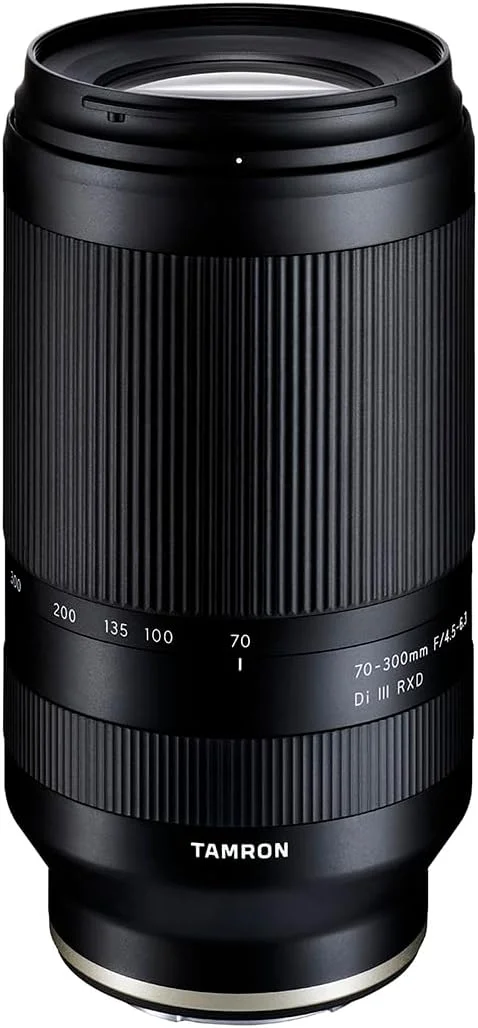
Price band: Step-up Check Price9. Tamron 70-300mm f/4.5-6.3 Di III RXD (Sony E) — Best Budget Telephoto Zoom
The Tamron 70-300mm delivers traditional telephoto range at an entry-level price point. At 545g and with a compact collapsed profile, it is the lightest full-frame telephoto zoom for Sony E-mount. The RXD autofocus motor handles portraits, outdoor sports in good light, and wildlife at moderate distances — not with the snap of a VXD motor, but with enough speed for subjects that move predictably.
Center sharpness from 70mm through 200mm competes with lenses at double the price. The 70-200mm range is where this lens performs above its weight class. Past 200mm, resolution drops — at 300mm, fine detail requires f/8 or smaller to sharpen up, and corners show pronounced softness that limits landscape and architectural use. For subjects in the center two-thirds of the frame — wildlife, sports action, candid portraits — the 300mm performance delivers usable results after moderate sharpening.
No image stabilization is the most conspicuous omission. At 300mm, handheld shooting on an unstabilized APS-C body demands shutter speeds of 1/500s or faster to freeze both subject and camera motion. Full-frame bodies with IBIS recover some margin, but the combination of IBIS-only stabilization at 300mm is noticeably less effective than Tamron's VC-equipped telephotos. For outdoor daytime shooting where fast shutter speeds come naturally, the omission is acceptable. For indoor sports or evening wildlife, the lack of stabilization limits what you can capture.
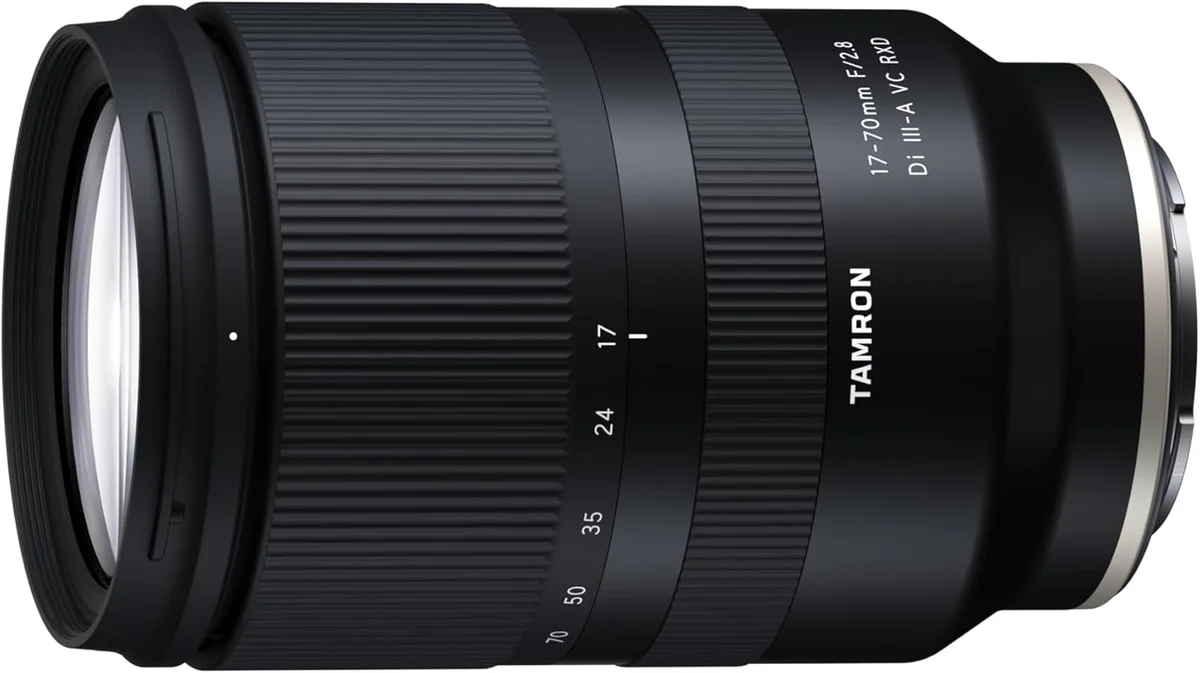
Price band: Entry Check Price10. Tamron 17-70mm f/2.8 Di III-A VC RXD (Sony E) — Best APS-C Standard Zoom
No other APS-C zoom on Sony E-mount delivers a constant f/2.8 aperture across 17-70mm. That specification alone explains the lens's popularity — 26-105mm equivalent coverage at an aperture two stops faster than any Sony APS-C kit zoom. The Tamron 17-70mm f/2.8 transforms indoor shooting, event coverage, and low-light photography on the A6700, A6400, and ZV-E10 II without adding bulk. At 525g with VC stabilization and weather sealing, it functions as the only lens many APS-C Sony shooters need to own.
The VC stabilization matters more on APS-C than on full-frame because the 1.5x crop factor amplifies camera shake proportionally. At 70mm (105mm equivalent), unstabilized handheld shooting requires 1/100s or faster for consistent results. VC extends that threshold to approximately 1/15s for static subjects — a range that opens up handheld indoor photography without flash. Center sharpness is strong across the zoom range; corners at 17mm wide open are the weakest point, tightening by f/4.
The RXD motor provides smooth, quiet autofocus suitable for video but tracks slower than Tamron's VXD motors in full-frame zooms. For portraits, street, travel, and general event work, the RXD performs well. For continuous AF tracking on fast sports or erratic wildlife, the speed difference against VXD-equipped lenses becomes visible in hit rate. As the default recommendation for APS-C Sony owners who want one zoom that handles most situations, the 17-70mm f/2.8 has no direct competitor.
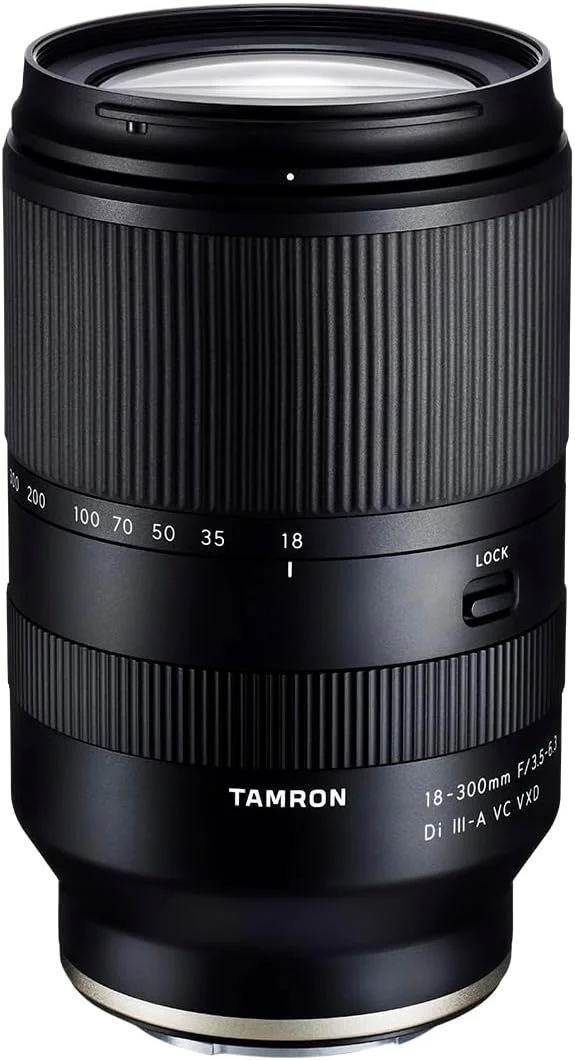
Price band: Step-up Check Price11. Tamron 18-300mm f/3.5-6.3 Di III-A VC VXD (Sony E) — Best APS-C Superzoom
A 16.7x zoom ratio on APS-C produces an equivalent range of 27-450mm — wide enough for restaurant interiors and long enough for distant birds. The Tamron 18-300mm is the ultimate single-lens solution for Sony APS-C owners who travel light. Its promise is simple: go anywhere, shoot anything, change nothing.
The engineering math of a 16.7x zoom ratio means optical compromises at every focal length compared to shorter-range zooms. At 18-70mm, the quality matches or approaches APS-C kit zooms — strong enough that most users cannot see a difference. From 100-200mm, resolution holds for web, social media, and standard-size prints. Past 200mm, softness increases and fine detail requires post-processing sharpening. At 300mm (450mm equivalent), the lens performs best for center-framed subjects at moderate display sizes.
VXD linear motor autofocus gives this superzoom a tracking capability that older superzooms lacked entirely.
Combined with VC stabilization and a 0.15m minimum close-focus distance at the wide end (0.5x magnification), the 18-300mm covers macro-like work, standard photography, and distant telephoto in one package. The variable f/3.5-6.3 aperture narrows to f/6.3 at 300mm, which requires good light or elevated ISO for sharp handhelds. For travel photographers who accept those optical compromises in exchange for never changing lenses, this is the single most flexible optic available.
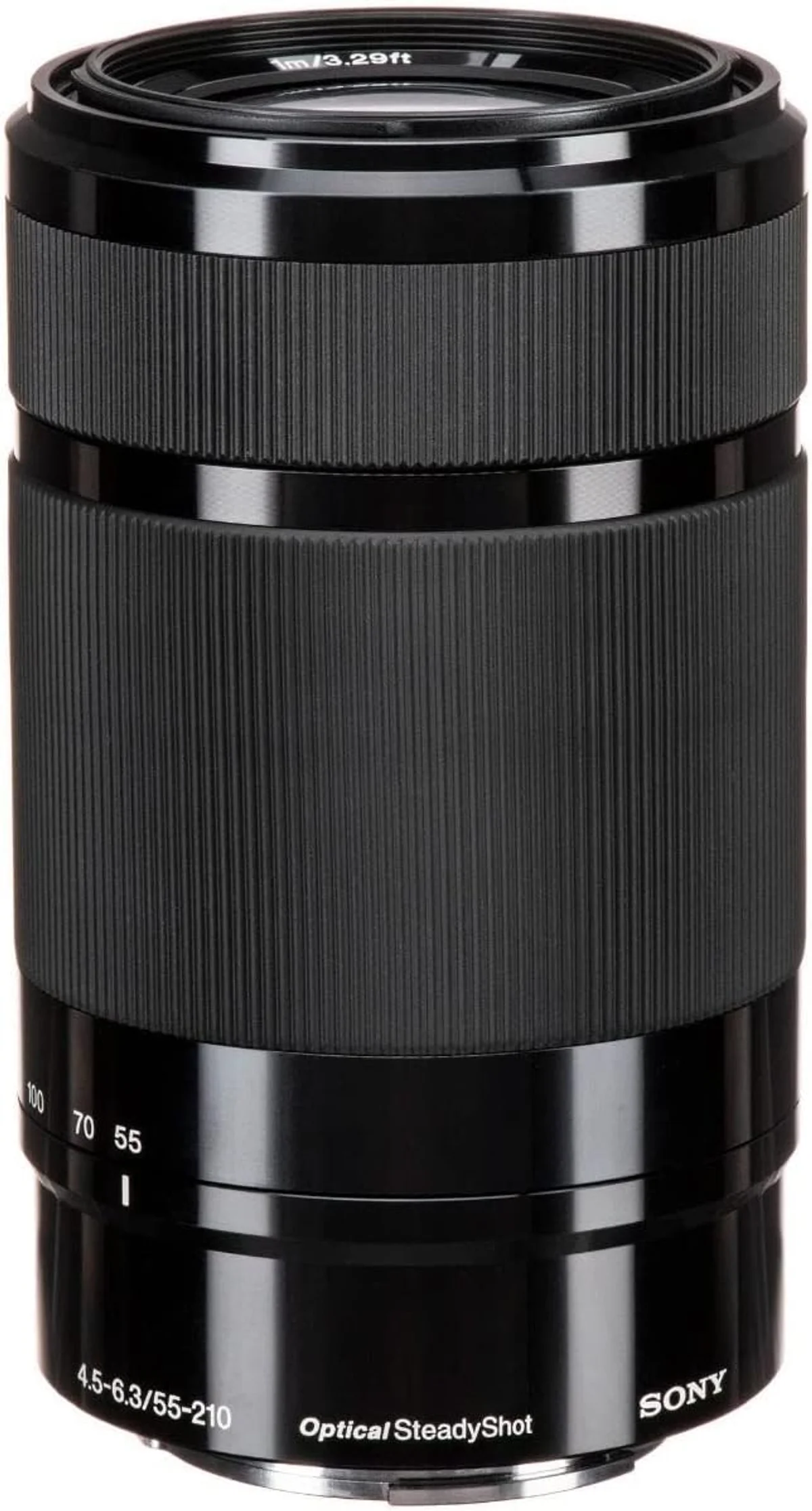
Price band: Entry Check Price12. Sony E 55-210mm f/4.5-6.3 OSS — Most Affordable Telephoto
The Sony E 55-210mm OSS exists for one purpose: giving APS-C Sony owners their first experience with telephoto reach at the lowest possible cost. At 345g and with a price in the budget tier, it delivers 82.5-315mm equivalent coverage that introduces beginners to wildlife, sports, and distant landscape photography.
Center sharpness from 55mm through 135mm is adequate for social media, web galleries, and 8x10 prints. Past 150mm, resolution drops measurably, and at 210mm the lens benefits from careful sharpening in post. OSS provides roughly 3 stops of correction — better than no stabilization but behind the 4-5 stop performance of current Tamron VC systems. The autofocus motor is the lens's most dated component: audible, slower to acquire, and less confident in low light than modern linear motor designs.
This lens makes sense as a kit addition for photographers who want to try telephoto shooting before committing to a more expensive option. The low cost of entry means discovering that you enjoy wildlife or sports photography does not require a major financial commitment. Once your skills outgrow the 55-210mm, the Tamron 18-300mm and Tamron 70-300mm are the natural next steps — each offering substantially better optics, autofocus, and build quality at proportionally higher price points.
Price band: Entry Check PriceHow We Chose
Our evaluation process for Sony E-mount zoom lenses draws on three primary data sources.
First, aggregated user reviews from Amazon — we analyzed ratings and written feedback across all 12 lenses, weighting reviews from 2024-2026 more heavily to account for firmware updates and manufacturing consistency improvements. Second, optical bench test data from LensTip, OpticalLimits, DxOMark, and The Digital Picture, which provides resolution, distortion, and chromatic aberration measurements at multiple apertures and focal lengths. Third, field reports from photography communities including the Sony Alpha subreddit, Fred Miranda forums, and DPReview archives.
Each zoom was evaluated against lenses in its specific class rather than against the entire field. Standard zooms compete against standard zooms, super-telephotos against super-telephotos, and APS-C options against APS-C alternatives. This approach prevents price and aperture differences from distorting the rankings — a budget telephoto can rank highly within its class even though it cannot match the absolute performance of a premium standard zoom.
Autofocus compatibility receives particular attention for third-party lenses. We tracked firmware update history, known body-compatibility issues for recent Sony releases, and user reports of Eye AF and real-time tracking performance. A zoom with strong optics but unreliable AF tracking on popular bodies receives a lower ranking than one with slightly less resolution but consistent focus behavior across the current Sony lineup.
Rankings are updated when new lenses launch or when firmware updates alter AF behavior on popular bodies. The Sony E-mount zoom market moves faster than any other mirrorless system, and recommendations that were accurate six months ago may not hold today.
Buying Guide: What to Look For
Standard Zoom vs Telephoto: Where to Start
Most photographers should buy a standard zoom first (24-70mm or 28-75mm class) because it covers the widest range of everyday situations.
A telephoto zoom is the second lens — it adds reach for sports, wildlife, and distant subjects but rarely serves as a primary walk-around optic. The exception: if your primary interest is wildlife or birding, start with the Tamron 150-500mm and add a standard zoom later. You can crop a telephoto for wider framing, but you cannot zoom a standard lens to 500mm.
Constant vs Variable Aperture: When It Matters
Constant aperture zooms (f/2.8 across the range) maintain exposure and depth of field as you zoom. Variable aperture zooms (f/3.5-6.3, f/4.5-6.3) lose light as you zoom in. The practical impact is largest at the telephoto end — at 300mm f/6.3, you need ISO 3200 where an f/2.8 lens at 180mm needs ISO 800 for the same shutter speed. For outdoor daylight shooting, variable aperture is rarely limiting. For indoor events, evening wildlife, and any low-light scenario, constant f/2.8 produces cleaner files.
Image Stabilization: Lens-Based, Body-Based, or Combined
Sony full-frame bodies (A7 IV, A7R V, A7C II) and the APS-C A6700 include IBIS that works with any mounted lens. Lenses with built-in stabilization (Tamron VC, Sony OSS) combine with IBIS for enhanced correction — typically 5-6 stops versus 3-4 from IBIS alone. At telephoto focal lengths above 100mm, the combined system provides a visible improvement in handheld keeper rates. At wide angles below 35mm, body IBIS alone is usually sufficient.
Weight and Travel Considerations
Zoom lenses span from 345g (Sony 55-210mm) to 1,725g (Tamron 150-500mm). For travel photography where weight constraints matter, a two-lens kit of the Tamron 28-200mm plus one telephoto covers nearly every scenario at under 2.3kg combined. For ultralight travel, the Tamron 18-300mm on APS-C is the single lightest complete solution. Pair your zoom weight with your body weight — a 1.7kg lens on a 650g A7C II creates front-heavy handling that a heavier body like the A7 IV balances better.
Upgrading from a Kit Zoom
Sony's kit zooms (16-50mm, 28-60mm) cover basic focal lengths but limit your photography with slow apertures, modest sharpness, and basic autofocus.
The single biggest upgrade for most Sony owners is replacing the kit zoom with a constant f/2.8 option. APS-C shooters gain the most from the Tamron 17-70mm f/2.8 — it covers the same range as the 16-50mm kit zoom but at an aperture two stops faster. Full-frame shooters should look at the Tamron 28-75mm f/2.8 G2 or the Sigma 24-70mm Art II depending on budget.
Two-Lens Kit Recommendations by Shooting Style
Wedding and events: Sigma 24-70mm Art II plus Tamron 70-180mm f/2.8 G2. Wildlife and birding: standard zoom of choice plus Tamron 150-500mm. Travel: Tamron 28-200mm alone, or Tamron 28-75mm G2 plus Tamron 70-300mm. APS-C travel: Tamron 18-300mm as a single lens. Budget full-frame: Tamron 28-75mm G2 plus Tamron 70-300mm. Premium full-frame: Sony 24-70mm GM II plus Tamron 70-180mm G2. Each combination covers a distinct shooting style with minimal overlap and no focal length gaps.
Sony E-Mount Zoom Lens Questions
Sony E-mount's open ecosystem and deep third-party support generate more zoom lens questions than any other system. These answers address the compatibility, performance, and selection concerns that appear most frequently in photography communities, camera retail Q&A sections, and Reddit threads where Sony shooters compare options.
What is the best all-around zoom lens for Sony E-mount?
The Sony FE 24-105mm f/4 G OSS covers the widest useful range in a single lens — wide enough for interiors at 24mm, long enough for portraits at 105mm. The constant f/4 aperture keeps exposure predictable while zooming, and built-in OSS pairs with body IBIS for up to 6 stops of combined stabilization. For photographers who want one zoom that handles 80% of situations, the 24-105mm is the safest choice on any Sony full-frame body.
Is the Sigma 24-70mm f/2.8 Art II as sharp as the Sony GM II?
At matched apertures from f/4 through f/8, the Sigma 24-70mm f/2.8 DG DN II Art and the Sony FE 24-70mm f/2.8 GM II produce nearly identical center sharpness. The Sony pulls ahead in corner resolution at 24mm wide open and shows less vignetting at the extreme ends of the zoom range. In practical shooting — anything below a controlled studio resolution test — the difference between these two lenses rarely shows in final images. The Sigma costs roughly 40% less.
Do Tamron zoom lenses work with Sony Eye AF tracking?
Current Tamron E-mount zooms with VXD or RXD motors support Sony Real-Time Eye AF for humans, animals, and birds on compatible bodies including the A7 IV, A7R V, A9 III, A7C II, and A6700. VXD-equipped lenses (70-180mm G2, 150-500mm, 50-300mm, 28-200mm) track slightly faster than RXD models. Keeping both camera body and lens firmware updated is the single most effective step for maintaining reliable AF compatibility.
Which Sony E-mount zoom is best for video?
The Tamron 28-75mm f/2.8 G2 combines constant f/2.8 aperture, quiet VXD autofocus, built-in VC stabilization, and minimal focus breathing — the four features video creators need most. For run-and-gun documentary work, the Tamron 28-200mm f/2.8-5.6 covers more range in one barrel, eliminating lens changes during continuous shooting. Avoid the Sony E 55-210mm for serious video — its autofocus motor is audible and its stabilization is dated.
What is the difference between VXD and RXD in Tamron lenses?
VXD (Voice-coil eXtreme-torque Drive) is Tamron's linear motor autofocus technology, found in their premium lenses. It drives the focus group directly with electromagnetic force for fast, precise, and quiet operation. RXD is a stepping motor design used in Tamron's more affordable lenses — it provides smooth, quiet focus suitable for video but with slower acquisition speed for tracking fast subjects. For stills with continuous AF tracking, VXD is noticeably more responsive.
Should I buy a full-frame or APS-C zoom for my Sony camera?
If you own or plan to upgrade to a full-frame Sony body, buy full-frame (FE) zoom lenses. They work at full resolution on every Sony E-mount camera. APS-C zooms (Tamron Di III-A, Sony E-series) trigger a resolution-reducing crop on full-frame bodies. APS-C-only shooters benefit from the smaller size and lighter weight of dedicated APS-C lenses — the Tamron 17-70mm f/2.8 and 18-300mm are both smaller and lighter than their full-frame counterparts at equivalent focal lengths.
Is the Tamron 150-500mm or Sony 200-600mm better for wildlife on E-mount?
The Tamron 150-500mm weighs 300g less, starts wider at 150mm, and costs roughly 40% less. The Sony 200-600mm reaches 100mm farther, maintains a narrower aperture advantage at the long end (f/6.3 vs f/6.7), and benefits from native mount optimization for marginally faster AF tracking. For birders who need maximum reach and track small, fast subjects, the Sony edges ahead. For shooters who also use their telephoto for travel, sports, and general outdoor work, the Tamron offers better all-around value.
Our Top Pick
The Sony 24-70mm GM II is our #1 recommendation — professional sony shooters wanting the best standard zoom.
Check Price: Sony 24-70mm GM II