Best Sony E-Mount Wide Angle Lenses 2026
Wide-angle lenses do something no other focal length can: they place the viewer inside the scene. A 20mm prime in a narrow alley captures both walls and the sky above. A 35mm on a crowded street includes the vendor, the customer, and the stack of goods between them. A 24mm zoom at a wedding ceremony shows the couple, the officiant, and the rows of guests behind. That immersive perspective is why wide-angle glass anchors the kit of landscape photographers, street shooters, astrophotographers, and real estate professionals.
Sony E-mount wide-angle options split into two camps: dedicated wide primes that maximize aperture and corner sharpness at a single focal length, and wide-end zooms that start at 24mm or wider and trade peak optical performance for framing flexibility. This roundup covers four primes and three zooms — every lens in our catalog that delivers meaningful wide-angle coverage on Sony E-mount. Rankings prioritize wide-angle-specific performance: corner sharpness at maximum aperture, distortion control, coma correction for astrophotography, and flare resistance in backlit conditions.
APS-C Sony shooters face a particular challenge with wide-angle glass. The 1.5x crop factor turns a 24mm lens into a 36mm equivalent — barely wide at all. Getting true wide-angle coverage on the A6700, A6400, or ZV-E10 requires lenses starting at 16mm or shorter. Only two lenses in this roundup are designed for APS-C: the Sigma 16mm f/1.4 DC DN (24mm equivalent) and the Tamron 17-70mm f/2.8 (26mm equivalent). Full-frame wide primes work on APS-C bodies but with a cropped, narrower field of view that reduces their wide-angle advantage.
The wide-angle lens market on Sony E-mount extends beyond what we cover here. Sony's FE 14mm f/1.8 GM, Sigma's 14-24mm f/2.8 Art, and Tamron's 11-20mm f/2.8 all serve ultra-wide needs below 20mm. This roundup focuses on the lenses in our reviewed catalog — if your primary need is extreme ultra-wide coverage below 20mm, those options are worth researching alongside the recommendations below.
One practical consideration that separates wide-angle lens shopping from other focal lengths: filter compatibility. Wide primes and wide-end zooms below 24mm frequently use large front elements with bulbous shapes that cannot accept standard screw-on filters. Every lens in this roundup accepts standard screw-on filters — a feature that matters for landscape photographers who use circular polarizers and ND filters regularly. This was a deliberate selection criterion, since filter compatibility affects shooting workflow more than specifications suggest.
Quick Picks at a Glance
| Feature | Editor's Pick Sony FE 20mm f/1.8 G | Sigma 16mm f/1.4 DC DN Contemporary (Sony E) | Sigma 35mm f/1.4 DG DN Art (Sony E) | Sony FE 35mm f/1.8 | Sony FE 24-70mm f/2.8 GM II | Sigma 24-70mm f/2.8 DG DN II Art (Sony E) | Tamron 17-70mm f/2.8 Di III-A VC RXD (Sony E) |
|---|---|---|---|---|---|---|---|
| Price Band | Flagship | Entry | Step-up | Step-up | Flagship | Flagship | Step-up |
| Focal Length | 20mm | 16mm | 35mm | 35mm | 24-70mm | 24-70mm | 17-70mm |
| Max Aperture | f/1.8 | f/1.4 | f/1.4 | f/1.8 | f/2.8 | f/2.8 | f/2.8 |
| Mount | Sony E | Sony E | Sony E | Sony E | Sony E | Sony E | Sony E |
| Check Price | Check Price | Check Price | Check Price | Check Price | Check Price | Check Price |
Sony E-Mount Wide-Angle Lenses, Ranked
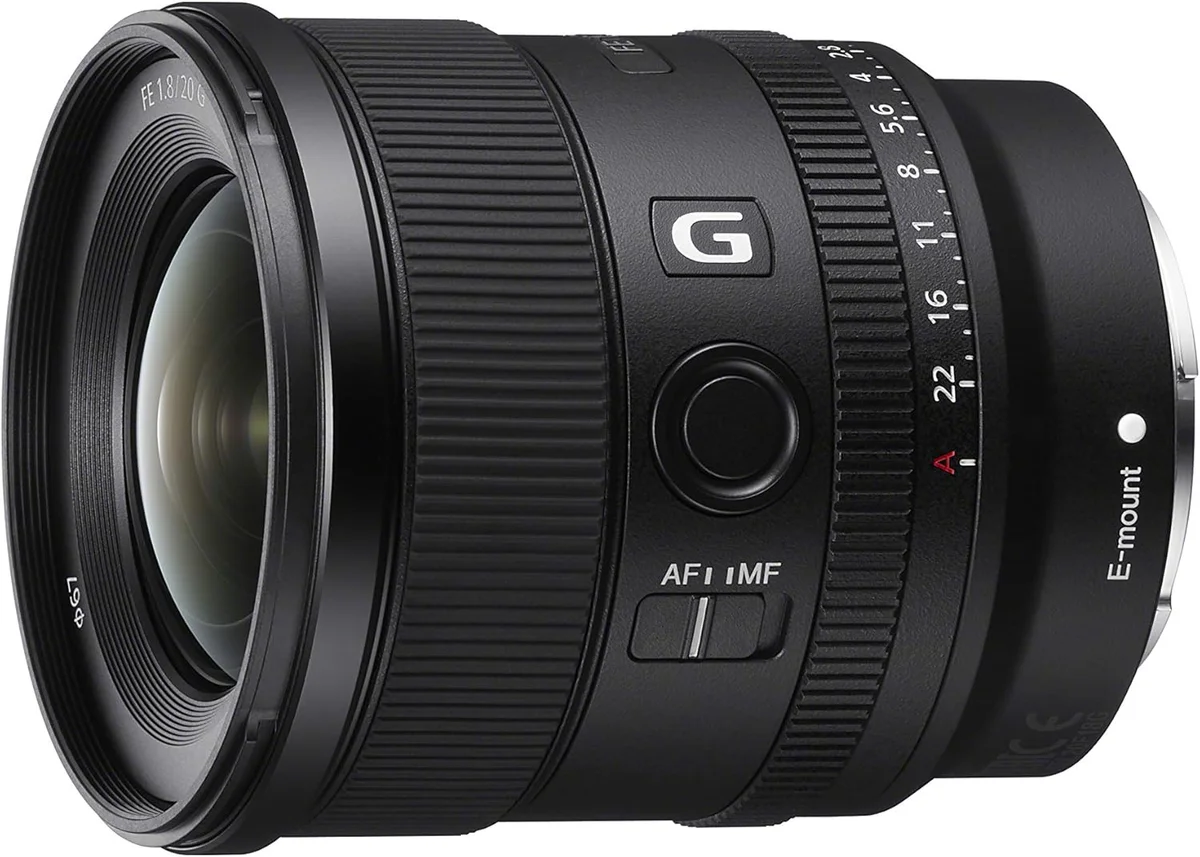
1. Sony FE 20mm f/1.8 G — Best Wide-Angle Prime
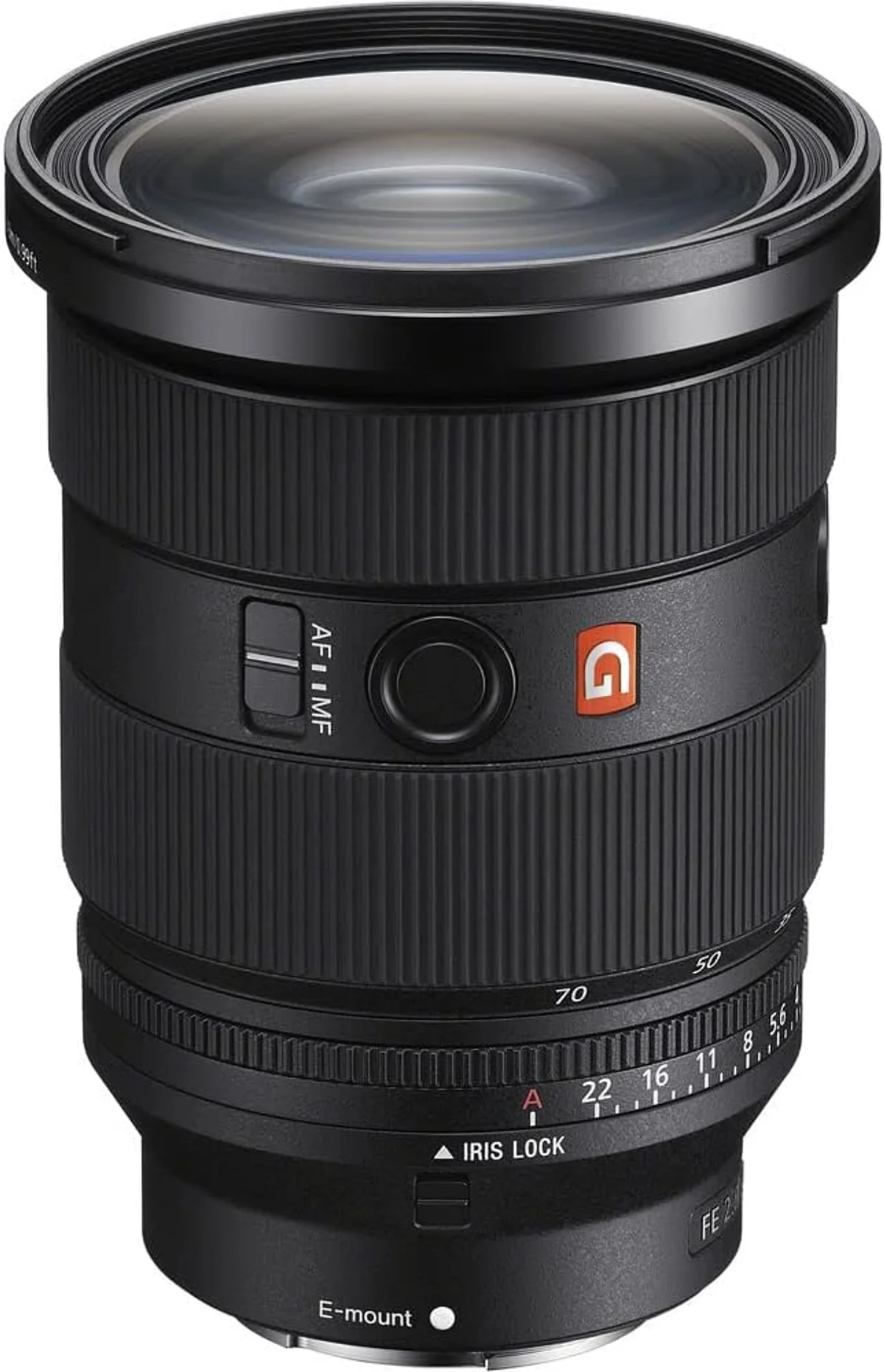
The Sony FE 20mm f/1.8 G is the widest fast prime in Sony's native lens lineup, and it excels at the three tasks that define wide-angle prime photography: astrophotography, landscape, and environmental portrait work. At f/1.8, coma correction holds star points tight across the frame — a specification that matters to astrophotographers and that many competing 20mm lenses from other manufacturers fail to deliver. Corner-to-corner sharpness at f/2.8 is strong enough for large-format landscape prints, and by f/5.6 the entire frame resolves at a level that satisfies the most demanding pixel-peeping tests.
At 373g with full weather sealing, this lens transforms an A7C II or A7 IV into a compact wide-angle kit that handles weather conditions from desert dust to coastal spray.
The dual XD Linear Motor autofocus is the fastest AF system in any wide-angle prime we have evaluated on Sony E-mount — it locks instantly in daylight and hunts less in dim conditions than the Sigma 35mm Art or the older Sony 28mm f/2. For video, the AF transitions smoothly without the snap-to-focus jitter that ruins rack focus pulls on slower AF designs.
The 20mm field of view on full frame captures 94 degrees diagonally — wide enough to include sweeping foregrounds in landscape compositions while keeping distant mountain ridges in the frame. On APS-C, the effective 30mm equivalent narrows the perspective to a moderate wide-angle, which limits the ultra-wide utility for crop-sensor users. For full-frame Sony shooters who need one wide-angle prime that handles landscapes, astrophotography, real estate, and environmental portraits, the 20mm f/1.8 G is the strongest single choice on E-mount.
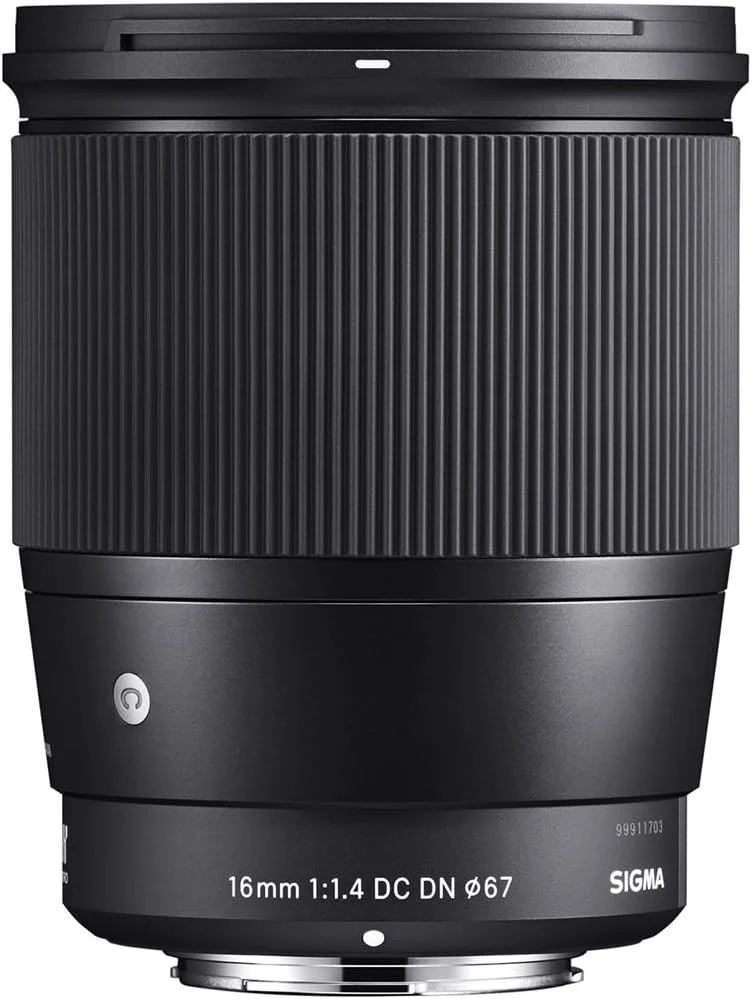
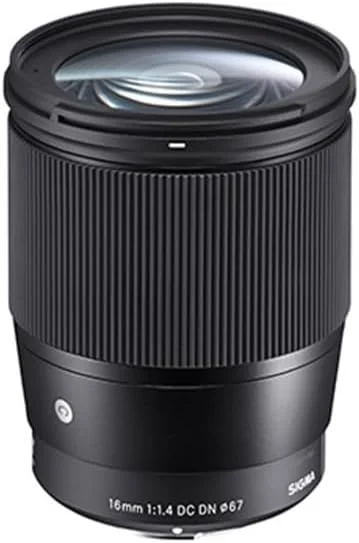
Price band: Flagship Check Price2. Sigma 16mm f/1.4 DC DN Contemporary (Sony E) — Best APS-C Wide-Angle Prime
The Sigma 16mm f/1.4 DC DN is the fastest wide-angle prime designed specifically for Sony APS-C cameras. At f/1.4, it gathers a full stop more light than the Sony FE 20mm f/1.8, which offsets the APS-C sensor's smaller pixel pitch in low-light situations. The 24mm equivalent field of view on crop bodies delivers the classic wide-angle perspective — wide enough for street scenes, interiors, and environmental portraits, but not so extreme that perspective distortion becomes distracting in compositions with people.
Center sharpness at f/1.4 is strong — visibly better than most kit zooms at any aperture. Corners at f/1.4 show the expected softness from a fast wide prime, tightening by f/2 and reaching peak performance at f/2.8-4. For street photography and event shooting where center-subject sharpness matters more than edge resolution, the f/1.4 aperture delivers a look that no APS-C zoom can replicate: shallow depth of field at a wide focal length, with foreground subjects separated from bustling backgrounds.
At 405g without weather sealing, this is a compact prime that balances well on the A6700 and ZV-E10 II.
The stepping motor autofocus is quiet enough for video but slower than the linear motors in Sony's native primes — a difference that shows in continuous AF tracking of fast-moving subjects. For APS-C Sony shooters who want the widest fast prime available without adapting full-frame glass, the Sigma 16mm f/1.4 fills a gap that Sony itself has not addressed with a native lens. Pair it with the Tamron 17-70mm f/2.8 for a two-lens APS-C kit that covers 24mm through 105mm equivalent at fast apertures.
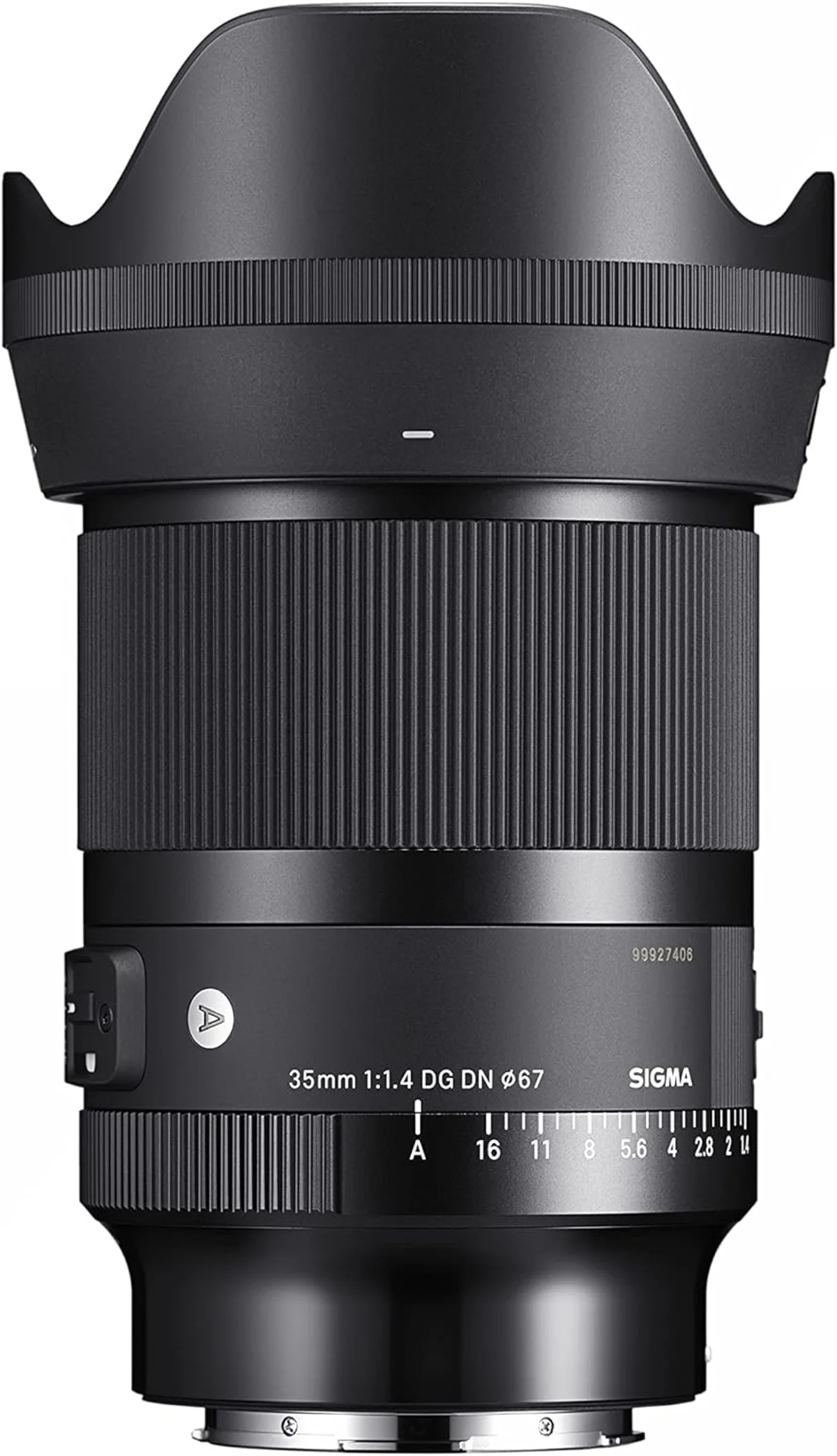
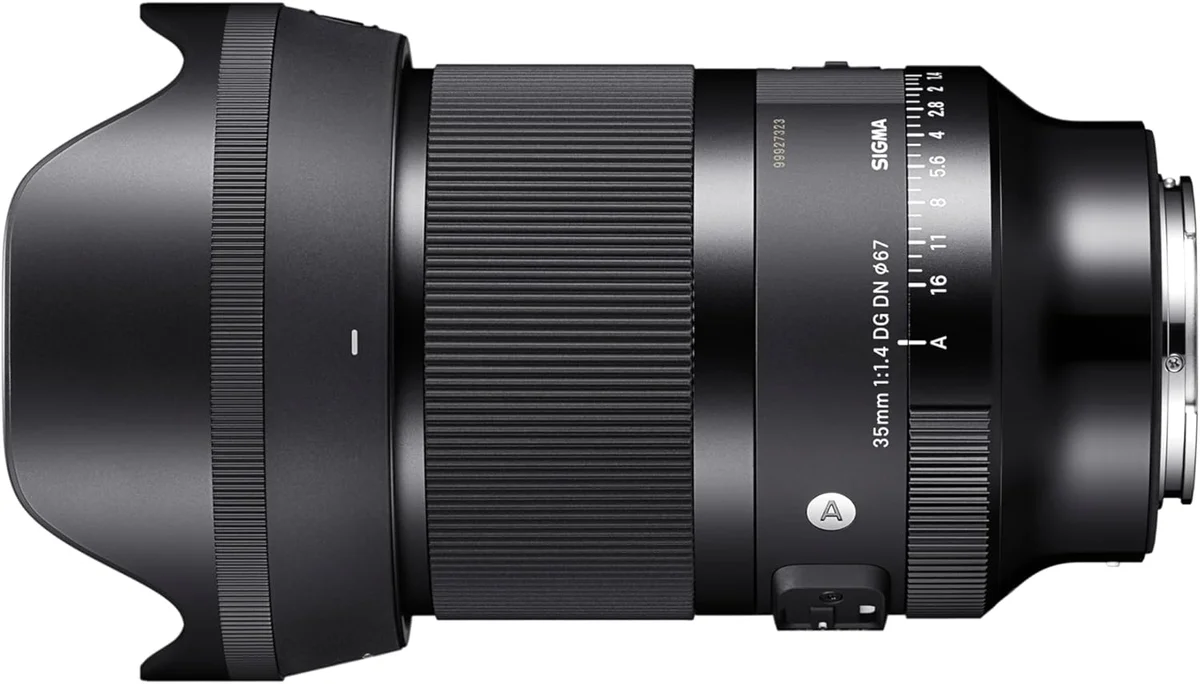
Price band: Entry Check Price3. Sigma 35mm f/1.4 DG DN Art (Sony E) — Best Wide Normal Prime
The Sigma 35mm f/1.4 DG DN Art represents the widest focal length that most photographers use as a daily carry lens. At 35mm on full frame, the field of view includes enough context for street photography and environmental portraits while maintaining a natural perspective that avoids the stretching distortion of wider lenses. The f/1.4 aperture at 35mm creates background separation that surprises photographers accustomed to thinking wide-angle lenses produce "everything in focus" images. At minimum focus distance and f/1.4, only a narrow slice of the frame stays sharp.
Sigma's Art-series optical formula delivers resolution across the frame that matches or exceeds Sony's own FE 35mm f/1.4 GM at a fraction of the cost. The HLA autofocus motor provides fast, confident tracking for street candids and event coverage — a clear improvement over the stepping motor in the older Contemporary version. Flare resistance under streetlights and neon is controlled, with minimal ghosting in real-world backlit shooting conditions. The 11-blade aperture produces round bokeh circles even at f/2, which matters for portrait and street shooters who work wide open frequently.
At 645g, the Sigma is noticeably heavier than the Sony FE 35mm f/1.8 (280g), and that weight difference factors into all-day street and travel shooting. The half-stop aperture advantage (f/1.4 vs f/1.8) adds low-light capability and depth-of-field control at the cost of size and weight. For photographers who prioritize absolute optical quality and maximum aperture in a 35mm, the Sigma Art delivers. For those who value portability and "good enough" optics, the lighter Sony f/1.8 is the rational alternative.
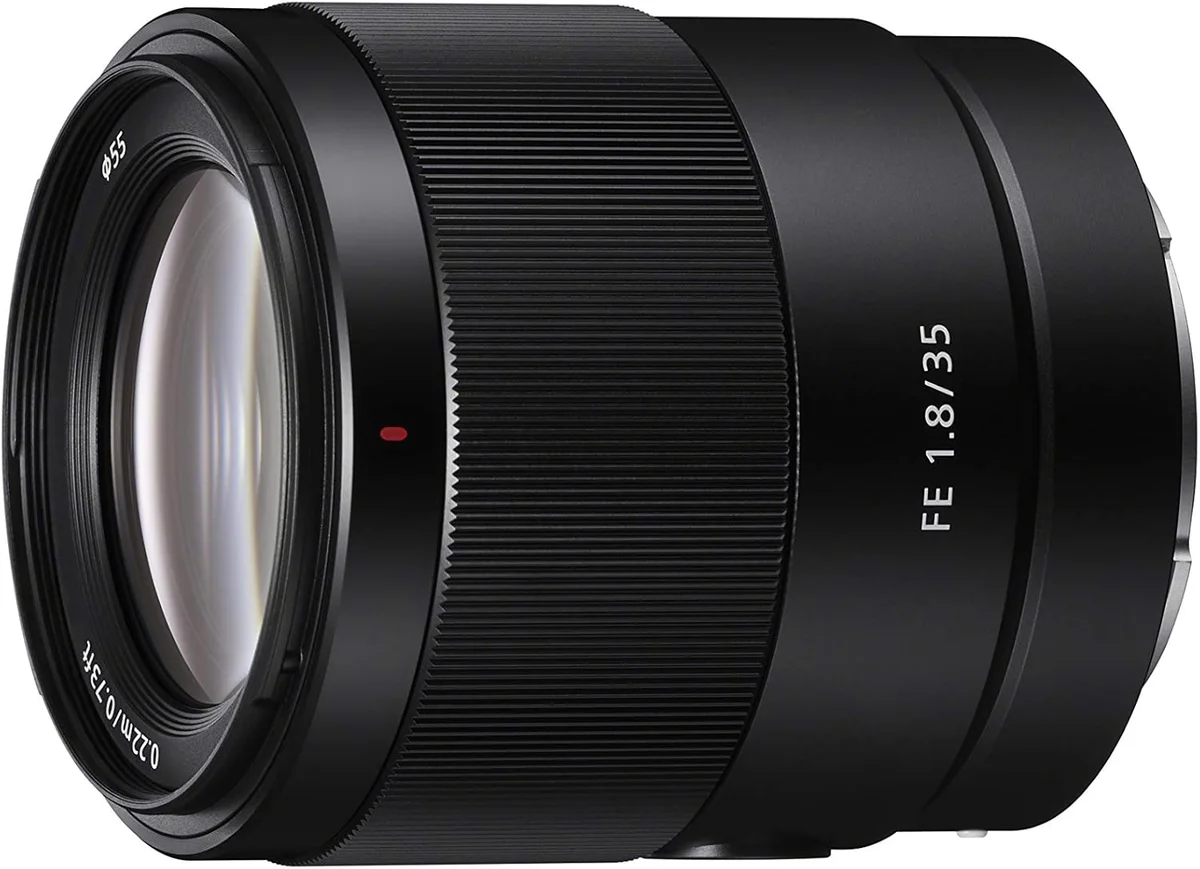
Price band: Step-up Check Price4. Sony FE 35mm f/1.8 — Best Compact Wide Normal
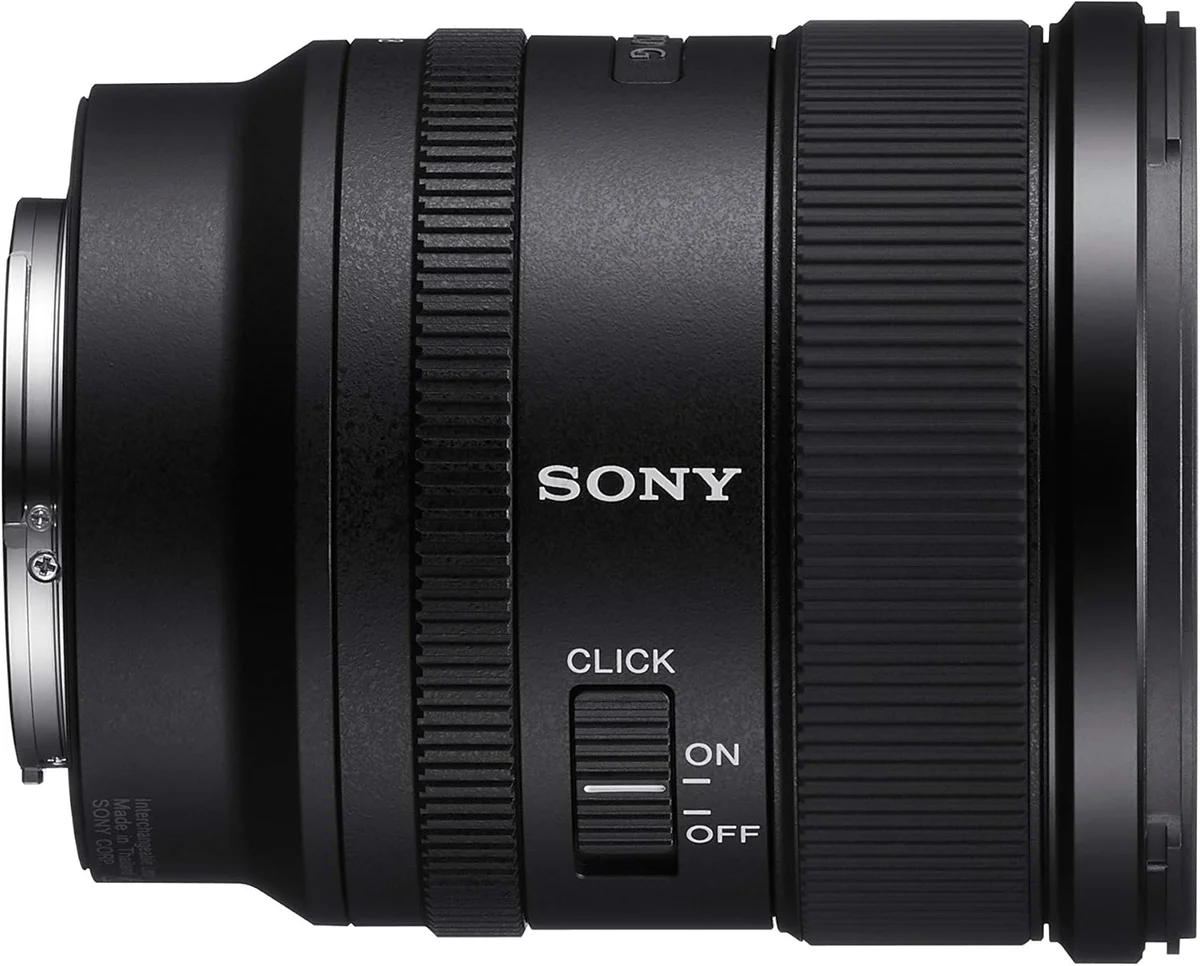
The Sony FE 35mm f/1.8 weighs 280g and measures 65.6mm in length — compact enough to disappear on a Sony A7C II or slide into a jacket pocket with a body cap. That size makes it the default 35mm recommendation for photographers who want wide-angle perspective in a package that does not announce itself. Street photographers, travel shooters, and everyday documentarians gravitate toward this lens because it removes the physical barrier between wanting to bring a camera and actually doing so.
Optically, the Sony delivers center sharpness at f/1.8 that satisfies demanding shooters, with corners tightening by f/2.8 to a level suitable for landscape and architectural work. The rendering character leans clinical rather than artistic — sharp, controlled, and neutral, without the slightly warmer microcontrast signature of the Sigma Art. The linear response AF motor is quiet, fast, and integrated with every Sony body feature including Eye AF, face detection, and real-time tracking. Close-focus capability reaches 0.22m, adding a close-up photography dimension that the Sigma 35mm Art (0.30m minimum focus) cannot match.
The Sony FE 35mm f/1.8 sits in the value zone of Sony's prime lineup — above the budget tier of the 50mm f/1.8, below the premium tier of the G Master 35mm f/1.4 GM. Build quality includes moisture and dust resistance but not full weather sealing. The lens produces excellent images for its price, weight, and size class. For photographers who own one prime lens and want it to handle streets, cafes, house interiors, and casual portraits, the 35mm f/1.8 covers more situations than any other focal length at this weight.
Price band: Step-up Check Price5. Sony FE 24-70mm f/2.8 GM II — Best Wide-Angle Zoom Performance
The Sony FE 24-70mm f/2.8 GM II delivers the sharpest 24mm wide-angle corner performance of any zoom lens on Sony E-mount. At f/2.8 and 24mm, the corners resolve detail that approaches the Sony FE 20mm f/1.8 G stopped down to f/4 — a level of wide-angle quality that justifies the GM II's premium positioning. For event photographers who frame wide at 24mm to capture ceremony spaces, reception halls, and group shots, this zoom eliminates the need for a separate wide prime in most lighting conditions.
The 24mm starting point covers the majority of wide-angle use cases: architectural interiors, landscape foregrounds, group photography, and environmental portraits with context. Where it falls short is ultra-wide work below 24mm — real estate interiors that need 16-20mm coverage, astrophotography compositions that demand the widest possible field of view, and creative forced-perspective effects that require extreme angles. For those applications, pair the GM II with the Sony FE 20mm f/1.8 G for a two-lens setup that covers 20mm through 70mm without a gap.
At 695g, the GM II is the lightest f/2.8 standard zoom from any manufacturer.
The constant f/2.8 aperture maintains exposure and depth-of-field control while zooming — an advantage for video shooters who need consistent exposure without iris ramping artifacts. The quad XD Linear Motor autofocus is the fastest in any zoom we have evaluated on Sony E-mount. For photographers who want the best possible wide-angle quality in a zoom format, the GM II's 24mm performance stands in a class of its own. Read the complete zoom roundup for how it compares against other standard zooms across the full focal range.
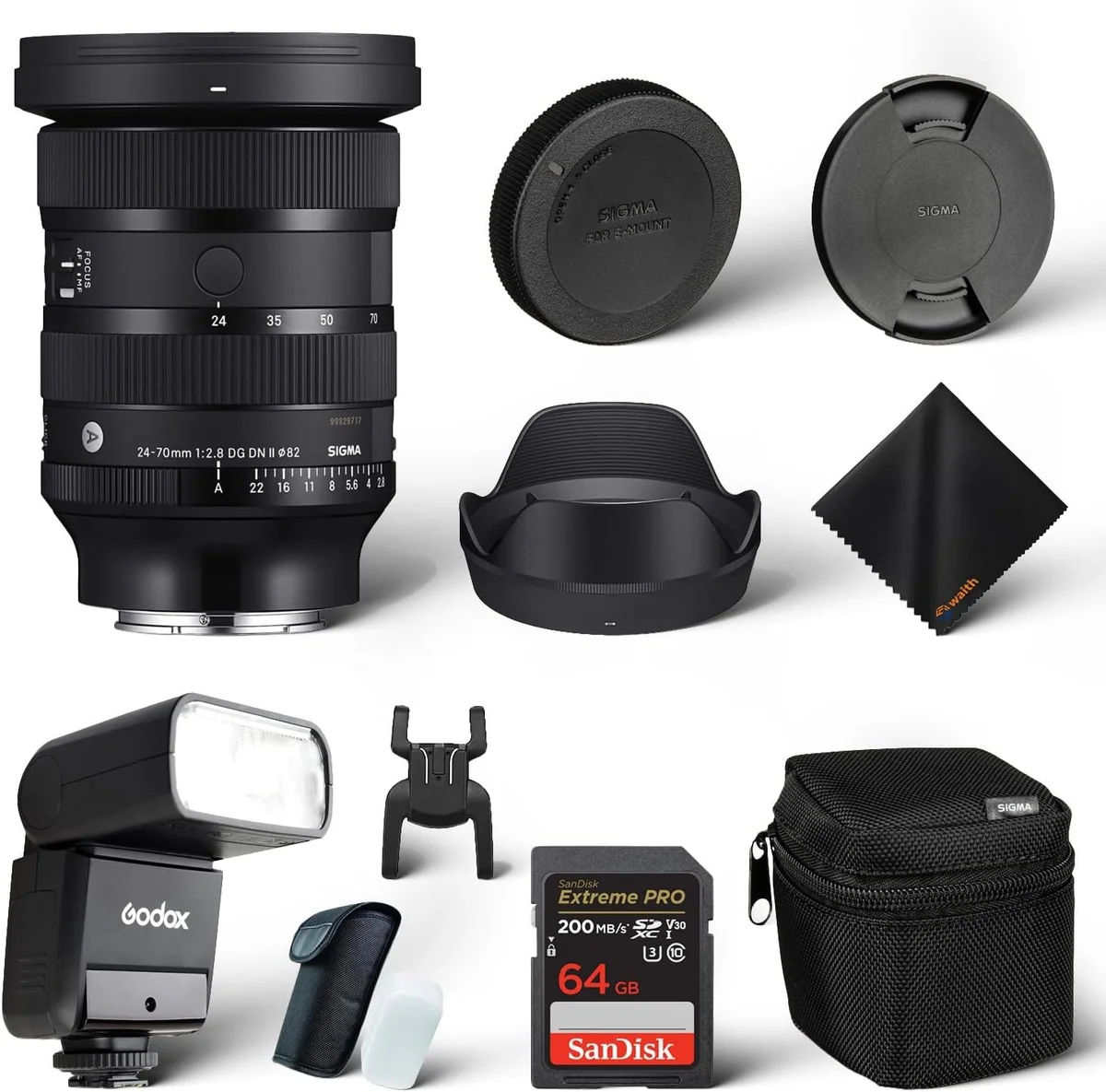
Price band: Flagship Check Price6. Sigma 24-70mm f/2.8 DG DN II Art (Sony E) — Best Value Wide Zoom
The Sigma 24-70mm f/2.8 DG DN II Art delivers 24mm wide-angle performance that approaches the Sony GM II for roughly 40% less. Center sharpness at 24mm matches the Sony at all apertures. Corner resolution at f/2.8 sits about 10-15% behind the GM II at 24mm — a gap that narrows to insignificance by f/4 and vanishes completely by f/5.6. For photographers who shoot wide-angle work at f/4 or smaller (landscapes, architecture, real estate), the optical difference between these two zooms does not show in final images.
The HLA autofocus motor is fast enough for event photography and wedding coverage at the 24mm wide end. Architectural photographers who need precise focus on near-far compositions report reliable AF behavior with single-shot mode, and the manual focus ring provides a smooth override for fine-tuning. Distortion at 24mm is well-controlled — less barrel distortion than many competing standard zooms, which reduces the post-processing correction needed for straight lines in interior and architectural work.
The Sigma earns its position as the value choice for wide-angle zoom work on Sony E-mount. Photographers who need the absolute best 24mm corner performance at f/2.8 — and know they need it from testing their own output — should invest in the GM II. Everyone else gets 90% of the performance for significantly less outlay with the Sigma Art II. Pair it with either 35mm prime above for a kit that covers wide-angle primes and zoom flexibility under one brand's ecosystem.
Price band: Flagship Check Price7. Tamron 17-70mm f/2.8 Di III-A VC RXD (Sony E) — Best APS-C Wide Zoom
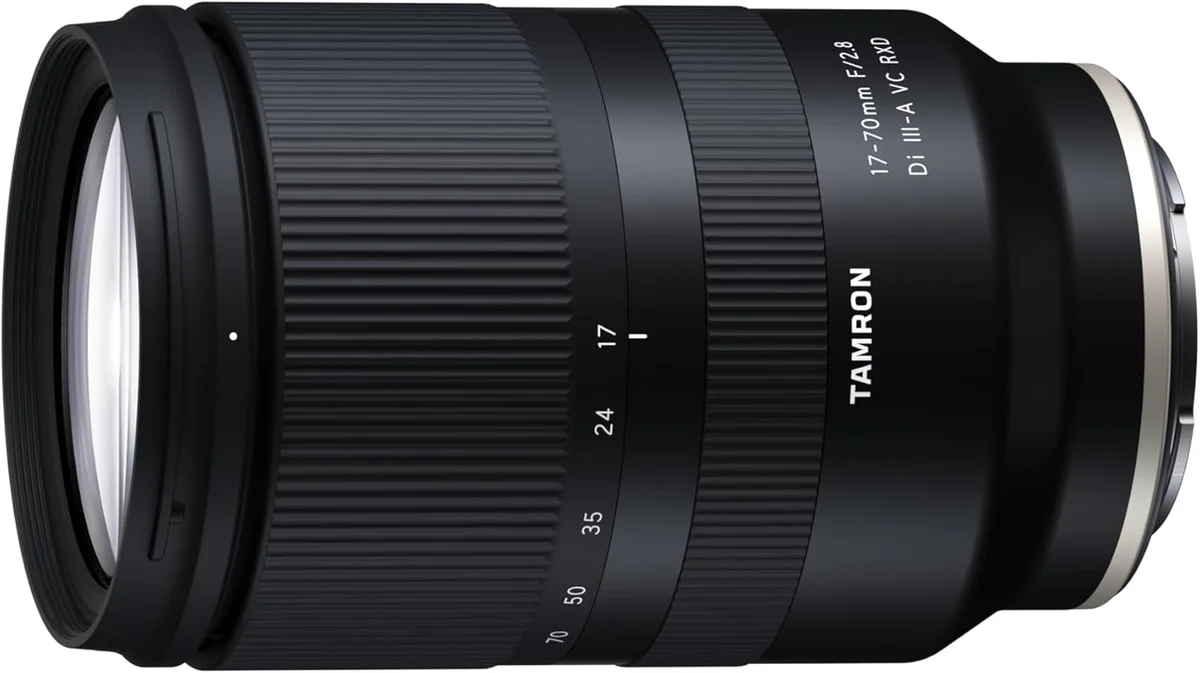
The Tamron 17-70mm f/2.8 starts at 17mm on APS-C — a 26mm equivalent field of view that covers group shots, interior spaces, and outdoor scenes without feeling restrictively tight. The constant f/2.8 aperture is the headline specification: no other APS-C zoom on Sony E-mount matches this combination of wide starting point and fast, constant aperture. For A6700 and ZV-E10 II owners who want one zoom that handles wide-angle through portrait, this lens eliminates the need for a separate wide prime in most situations.
At 17mm and f/2.8, corner sharpness is the lens's weakest point — expected behavior from a fast wide-angle zoom on APS-C. By f/4, the corners tighten enough for architectural and landscape work at web and moderate print sizes. Center sharpness across the zoom range is consistently strong, and the VC stabilization extends handheld shooting into dim interiors where wide-angle kit zooms require either flash or a tripod. For APS-C shooters, this is the wide-angle zoom that most closely replicates the experience of a full-frame 24-105mm at a constant fast aperture.
The 26mm equivalent starting point is wide but not ultra-wide. APS-C photographers who need wider coverage for real estate, tight interiors, or creative ultra-wide perspectives will find 17mm (26mm equivalent) limiting. Tamron's 11-20mm f/2.8 Di III-A (not in our reviewed catalog) fills the ultra-wide gap for those specific needs. For general photography including travel, events, and street shooting, the 17-70mm f/2.8 covers the wide-angle need as part of its broader zoom range rather than as a specialized wide-angle tool.
Price band: Step-up Check PriceHow We Chose
Wide-angle lens evaluation requires different priorities than standard or telephoto testing. Corner sharpness matters more at wide angles because wide compositions typically include foreground-to-horizon depth, where soft corners draw the eye and weaken the image. We weighted corner performance at maximum aperture more heavily than center performance, since center sharpness on modern lenses is uniformly strong and rarely the differentiating factor.
Distortion and flare resistance received elevated attention. Barrel distortion at 20-24mm affects architectural and interior photography directly — lines that should be straight appear curved without correction. Flare resistance matters for landscape and street work where backlit compositions are common. We evaluated each lens for ghosting patterns, veiling flare, and contrast retention in backlit conditions.
For lenses used in astrophotography (primarily the Sony FE 20mm f/1.8 G and the Sigma 16mm f/1.4), we evaluated coma and sagittal astigmatism in the corners at maximum aperture. Stars rendered as comet-like smears in the corners indicate optical aberrations that ruin night-sky images and cannot be corrected in post-processing. Lenses with well-corrected coma earn higher rankings for wide-angle use because astrophotography demands the most from wide-angle corner performance.
Price-to-performance weighting reflects the competitive reality of Sony E-mount wide-angle glass. Third-party manufacturers from Sigma and Tamron deliver optical quality that approaches native Sony glass at lower price points. Rankings reward lenses that deliver the strongest wide-angle performance relative to their cost, not simply the highest absolute resolution regardless of price.
Autofocus speed received lower weighting for wide-angle primes than for telephoto lenses, because wide-angle depth of field is inherently deep — at 20mm and f/5.6, everything from 1 meter to infinity is in focus, making precise AF less critical than at 200mm where a centimeter of focus error blurs the subject.
Where wide-angle AF speed matters: street photography at f/1.4-2 where depth of field is shallow, and event photography where subjects move unpredictably. We weighed AF acquisition speed and tracking reliability at each lens's widest aperture and flagged any prone to hunting in real-world wide-angle shooting.
Buying Guide: What to Look For
Choosing a Focal Length for Your Wide-Angle Work
The widest is not always the best. Ultra-wide lenses (14-20mm) exaggerate perspective — near objects appear disproportionately large relative to the background. This effect suits dramatic landscape compositions, astrophotography, and creative content, but distorts faces and body proportions in people photography. Moderate wide-angle lenses (28-35mm) maintain a natural perspective while still including more of the scene than the human eye's comfortable focus area. Match the focal length to your subject: 14-20mm for landscapes and architecture, 24-28mm for events and interiors, 35mm for street and environmental portraits.
Aperture Needs by Wide-Angle Application
Astrophotography demands f/1.8 or faster — slower apertures require longer exposures that introduce star trailing.
Landscape photography works well at f/5.6-f/11, where depth of field spans foreground to infinity and diffraction has not yet softened the image. Street and event photography benefits from f/1.4-f/2.8 for subject isolation and low-light capability. Real estate and architectural photography uses f/5.6-f/8 for maximum depth of field with tripod support. If your primary wide-angle use is landscapes and architecture, aperture speed matters less than corner sharpness — a cheap lens at f/8 can outperform one costing five times as much at f/1.4 for that specific application.
Wide-Angle Kit Recommendations
Full-frame landscape and astro: Sony FE 20mm f/1.8 G as the primary wide prime, plus a standard zoom for mid-range work. Full-frame events and weddings: Sony 24-70mm GM II or Sigma 24-70mm Art II as the primary zoom, with the Sony FE 35mm f/1.8 as a compact backup. Full-frame street and travel: Sigma 35mm f/1.4 Art or Sony FE 35mm f/1.8 as a single prime. APS-C all-purpose: Sigma 16mm f/1.4 paired with the Tamron 17-70mm f/2.8 for complete wide-to-telephoto coverage at fast apertures.
Wide-Angle Lens Questions for Sony Shooters
Wide-angle photography on Sony E-mount raises questions about crop factors, corner performance, and how to match focal lengths to specific shooting disciplines.
These answers address the concerns that appear most frequently when Sony shooters evaluate wide-angle glass — from choosing between APS-C and full-frame options to understanding why corner sharpness matters more at wide angles than at telephoto focal lengths. If your question involves lenses wider than 20mm (ultra-wide territory below the focal lengths covered here), check Sony's FE 14mm f/1.8 GM, the Sigma 14-24mm f/2.8 Art, or the Tamron 11-20mm f/2.8 for APS-C bodies.
What focal length counts as wide angle on Sony E-mount?
On full-frame Sony bodies, any lens wider than 35mm is considered wide angle. The 24mm range is standard wide, 20mm is ultra-wide, and anything below 16mm enters fisheye or extreme ultra-wide territory. On APS-C bodies, apply the 1.5x crop factor: a 16mm lens on APS-C produces a 24mm equivalent field of view, making it effectively a standard wide-angle. A 10-11mm lens on APS-C equals 15-16.5mm equivalent — true ultra-wide. The same physical lens produces a different "wide angle" experience depending on your sensor size.
Is the Sony FE 20mm f/1.8 G good for astrophotography?
The Sony FE 20mm f/1.8 G is one of the strongest astrophotography lenses for Sony E-mount. The f/1.8 aperture gathers enough light to capture the Milky Way core with exposures of 15-20 seconds at ISO 3200-6400. Coma correction is strong — star points remain tight in the corners rather than stretching into comet-like smears, a flaw common in wide-angle primes not designed for astro use. The 20mm field of view captures a wide swath of sky while keeping foreground elements in frame for landscape astrophotography compositions.
Should I buy a wide-angle prime or a wide zoom for Sony?
Wide-angle primes (20mm, 35mm) deliver faster apertures, lighter weight, and sharper corners at wide apertures — advantages that matter for astrophotography, low-light street shooting, and creative depth-of-field work. Wide zooms (24-70mm, 17-70mm) offer framing flexibility and reduce lens changes during events and travel. If you photograph architecture, real estate, or astro where corner sharpness at f/1.8-2.8 is critical, a prime wins. If you photograph events, travel, or documentary work where reframing quickly matters more than maximum aperture, a zoom makes more practical sense.
Does the 1.5x crop factor matter for wide-angle on APS-C Sony cameras?
The crop factor is the single biggest consideration for wide-angle shooters on APS-C. A 24mm lens on APS-C produces a 36mm equivalent — barely wide at all. Getting genuine wide-angle coverage on APS-C requires lenses starting at 16mm (24mm equivalent) or wider. The Sigma 16mm f/1.4 DC DN is the widest fast prime designed for APS-C Sony, delivering a 24mm equivalent field of view. The Tamron 17-70mm f/2.8 starts at 26mm equivalent — wide enough for interiors and group shots, but not truly ultra-wide.
Can I use a full-frame wide-angle lens on an APS-C Sony body?
Full-frame (FE) wide-angle lenses work on APS-C Sony bodies at full resolution, but the 1.5x crop factor narrows their field of view. The Sony FE 20mm f/1.8 G becomes a 30mm equivalent on APS-C — a moderate wide-angle rather than an ultra-wide. The Sigma 35mm f/1.4 Art becomes a 52.5mm equivalent — effectively a standard lens. If wide-angle coverage is your goal on APS-C, dedicated APS-C wide lenses deliver wider fields of view in smaller, lighter packages. If you plan to upgrade to full-frame later, buying FE glass now preserves your investment.
What is the best wide-angle lens for real estate photography on Sony?
Real estate photographers need the widest possible field of view with controlled distortion and strong corner-to-corner sharpness. The Sony FE 20mm f/1.8 G delivers the widest prime perspective in this roundup with clean corners by f/4. For zoom flexibility, the Sony FE 24-70mm GM II at 24mm or the Sigma 24-70mm Art II provide wider compositions when paired with a dedicated ultra-wide like the Sony FE 14mm GM or Sigma 14-24mm Art (not in our current coverage). Most real estate professionals use a 14-16mm lens as their primary and a 24mm zoom for detail shots.
Our Top Pick
The Sony FE 20mm f/1.8 G is our #1 recommendation — astrophotography, landscape, and vlog shooters wanting ultra-wide.
Check Price: Sony FE 20mm f/1.8 G