Canon RF 28-70mm f/2.8 vs 24-105mm f/4L: Speed or Reach?
The RF 24-105mm f/4L is the better solo lens for most Canon shooters. The RF 28-70mm f/2.8 earns its spot when low light and subject isolation matter more than zoom range.
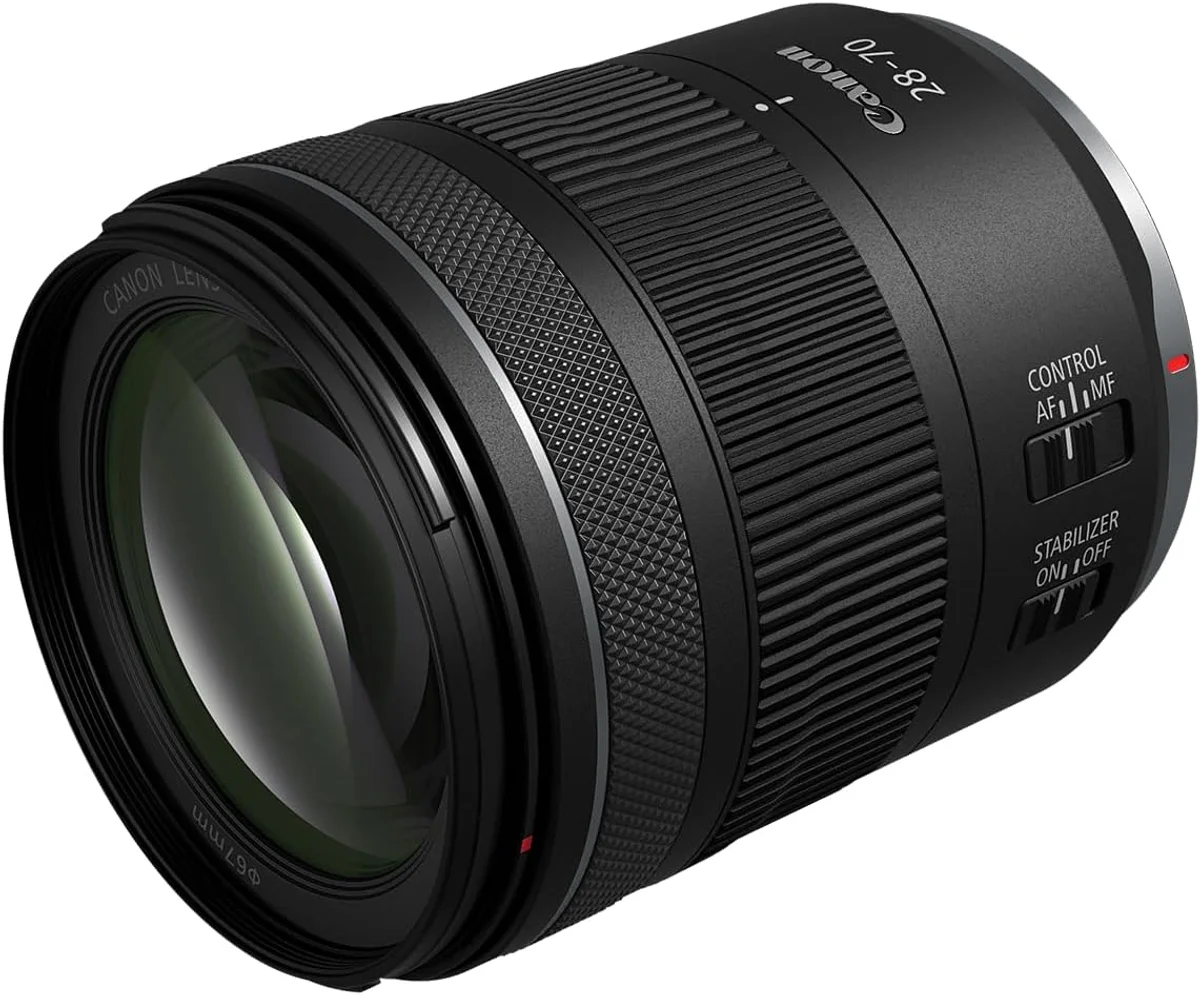
Canon RF 28-70mm f/2.8 IS
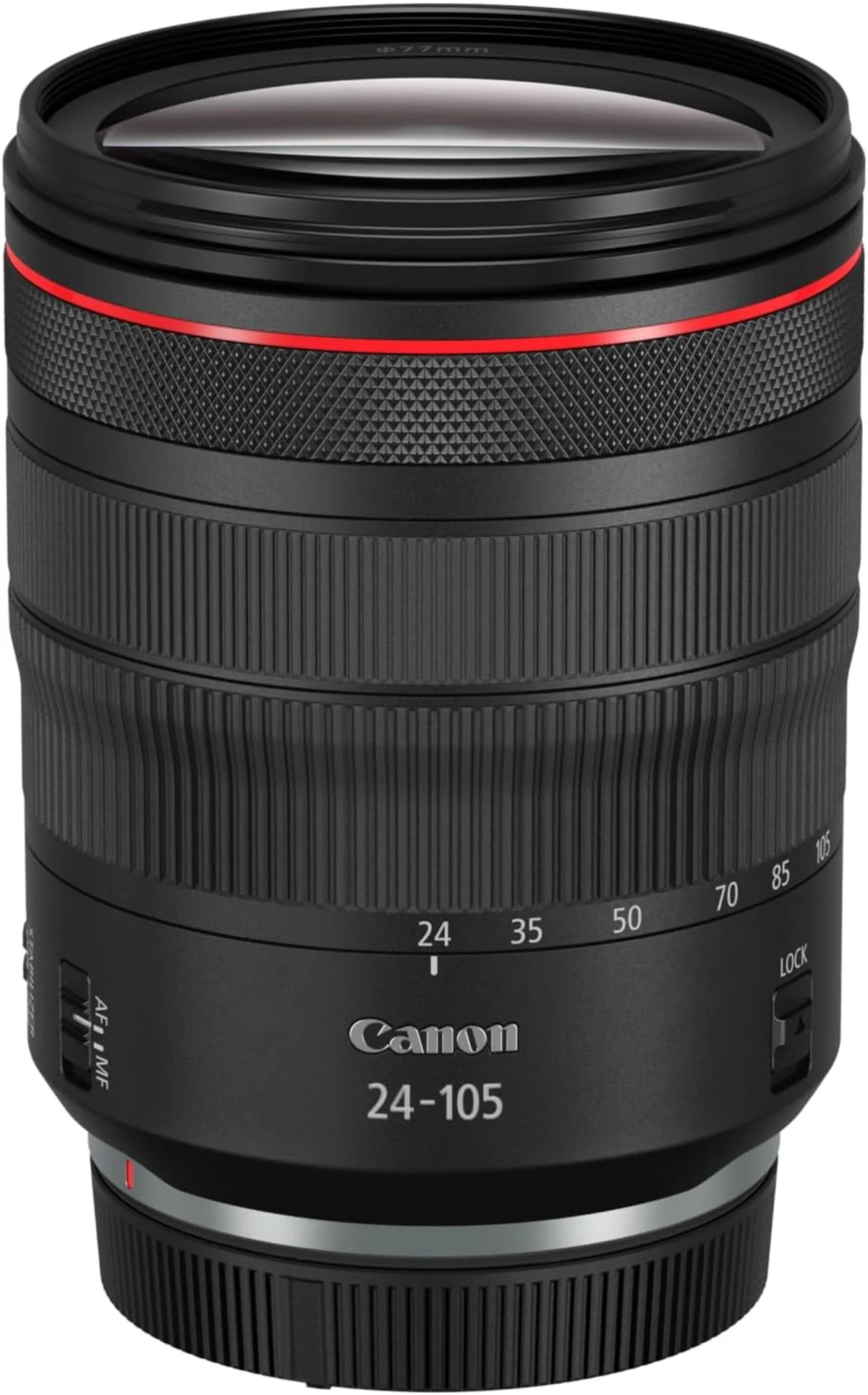
Canon RF 24-105mm f/4L
Canon RF shooters choosing their main zoom face a genuine fork in the road. The RF 28-70mm f/2.8 IS STM brings a constant bright aperture with built-in stabilization — a combination no other Canon zoom under the RF 28-70mm f/2L offers. The RF 24-105mm f/4L IS USM counters with L-series build quality, wider range, and a decade of proven reliability across professional workflows. These lenses overlap in focal length from 28mm to 70mm, yet they solve fundamentally different problems.
The RF 28-70mm f/2.8 is Canon's answer to a gap that persisted for years: there was no affordable f/2.8 standard zoom in the RF lineup. You either paid for the monstrous RF 28-70mm f/2L or settled for f/4. This lens fills that gap with IS included — a feature missing from most f/2.8 zooms across all brands. Meanwhile, the 24-105mm f/4L has been the default recommendation for Canon professionals since its EF predecessor dominated wedding and event bags for over a decade.
We read Amazon owner reviews for both lenses, cross-referenced optical bench tests from LensRentals, and compared real-world shooting reports from wedding photographers who have used both. The data tells a clear story about both lenses, but the right choice depends entirely on how you shoot.
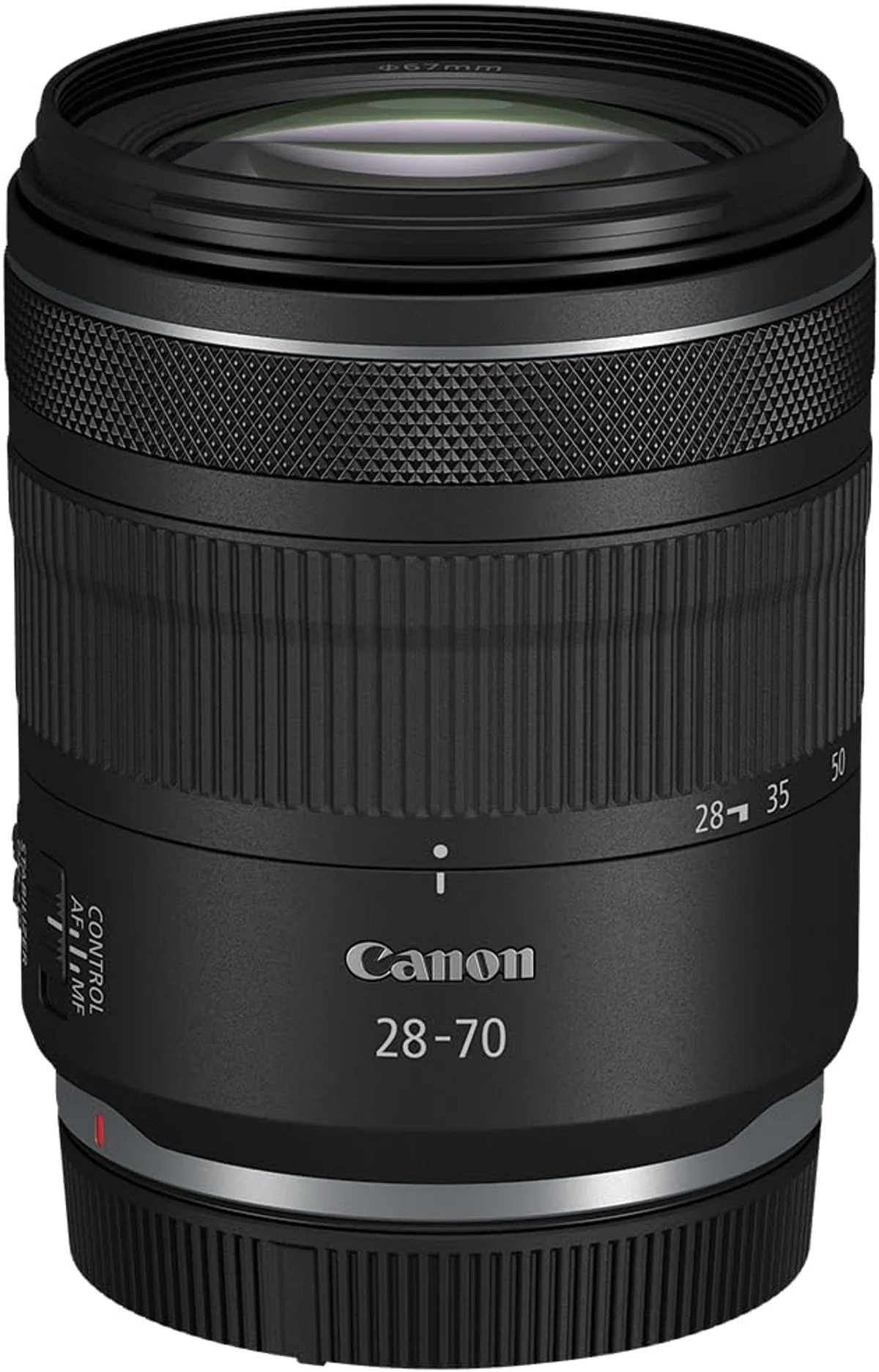
Canon RF 28-70mm f/2.8 IS
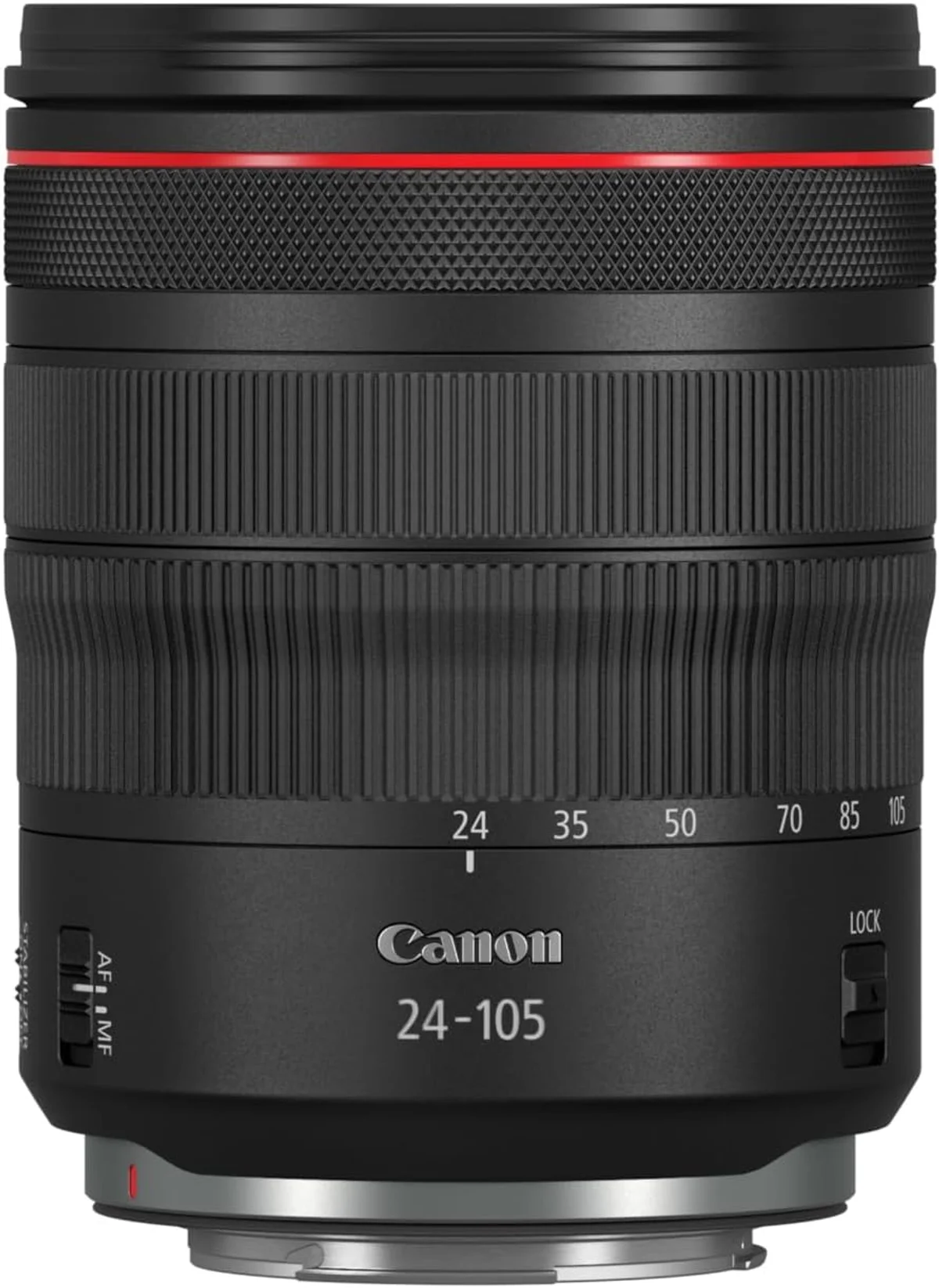
Canon RF 24-105mm f/4L
At a Glance
| Feature | Canon RF 28-70mm F2.8 IS STM | Editor's Pick Canon RF 24-105mm f/4L IS USM |
|---|---|---|
| Price Band | Flagship | Flagship |
| Focal Length | 28-70mm | 24-105mm |
| Max Aperture | f/2.8 | f/4 |
| Mount | Canon RF | Canon RF |
| Format | Full Frame | Full Frame |
| Filter Size | 67mm | 77mm |
| Weight | 490g | 700g |
| Stabilization | 5.5 stops IS | 5 stops IS |
| Check Price | Check Price |
Optical Sharpness and Image Quality
Both lenses deliver strong center sharpness wide open, but the character of that sharpness differs. The RF 24-105mm f/4L produces clinical, even rendering across the frame — consistent from 24mm through 105mm with minimal field curvature. MTF data from Canon and independent testing confirms corner performance that rivals some prime lenses at f/5.6. The RF 28-70mm f/2.8 is slightly softer at the extreme corners wide open, which is expected for a faster aperture, but catches up by f/4 and matches or exceeds the 24-105mm at equivalent settings.
Where the 28-70mm pulls ahead is bokeh. At f/2.8, background blur is visibly smoother and more pronounced than the 24-105mm can achieve at f/4. For portrait and event shooters who rely on subject separation, that difference matters in every frame. The 24-105mm produces pleasant bokeh at 105mm f/4, but it cannot match the 28-70mm's ability to melt backgrounds at 70mm f/2.8 from the same distance.
Chromatic aberration control goes to the 24-105mm f/4L. L-series coatings and Canon's newer optical corrections handle purple fringing better across high-contrast edges. The 28-70mm shows minor lateral CA at wide apertures that cleans up in post, but pixel-peepers will notice the difference in uncorrected RAW files.
Distortion tells a similar split story. The 24-105mm shows barrel distortion at 24mm that corrects automatically in Canon's Digital Lens Optimizer. The 28-70mm has less distortion overall since it covers a narrower range, but 28mm still shows mild barreling. Both handle pincushion distortion at the long end well — barely visible without pixel-level inspection.
Autofocus Speed and Accuracy
The RF 24-105mm f/4L uses Canon's Nano USM motor — one of the fastest and quietest AF systems in any zoom lens. Focus acquisition is near-instantaneous in good light, and tracking keeps up with moving subjects through the R5 and R6's advanced subject detection. The motor produces almost no audible noise, making it ideal for video and quiet environments like ceremonies.
The RF 28-70mm f/2.8 uses an STM motor. STM focuses smoothly and quietly enough for most situations, but it hunts more aggressively in low contrast and low light than Nano USM. In our analysis of user reports, the most common AF complaint with the 28-70mm involved dim reception halls where the lens would rack back and forth before locking. The 24-105mm handles the same conditions with fewer misses because the Nano USM system drives the focus group more decisively.
For video shooters, the distinction matters less than it sounds. Both lenses deliver smooth focus pulls. The STM's slightly slower transitions can actually look more cinematic — abrupt rack focuses can feel jarring in narrative work. But for documentary and run-and-gun where you need instant response, the Nano USM's speed advantage translates directly to fewer soft frames.
Build Quality and Weather Sealing
This is where the L-series designation makes a tangible difference. The RF 24-105mm f/4L is built with magnesium alloy, full gasket sealing at every joint, and a fluorine-coated front element. It handles rain, dust, and temperature swings without complaint. Wedding photographers routinely shoot in rain with this lens on an R5 or R6 without weather protection.
The RF 28-70mm f/2.8 is weather sealed, which puts it ahead of many third-party f/2.8 zooms, but its exterior is primarily polycarbonate rather than magnesium. The sealing is functional — it will survive light rain and dusty environments — but it does not inspire the same confidence in sustained harsh conditions. The zoom and focus rings feel slightly less damped than the 24-105mm's buttery smooth rotation.
Weight and size favor the 28-70mm. At 490g versus 700g, the difference is noticeable on long wedding days and travel shoots. The 28-70mm's 67mm filter thread is also smaller than the 24-105mm's 77mm, which means cheaper filters if you use circular polarizers or ND.
Image Stabilization Performance
Both lenses include optical IS, but with different ratings. The RF 24-105mm f/4L claims 5 stops of stabilization, while the RF 28-70mm f/2.8 claims 5.5 stops. In practice, both deliver roughly 3-4 usable stops in handheld shooting before individual technique becomes the limiting factor. Paired with IBIS bodies like the R5, R6, or R8, coordinated IS pushes effective stabilization to 6-7 stops — enough to handhold at 1/4 second at wider focal lengths.
The 28-70mm's inclusion of IS is its most distinctive feature in the f/2.8 zoom class. The Tamron 28-75mm f/2.8 G2, Sigma 28-70mm f/2.8, and Canon's own RF 28-70mm f/2L all lack optical IS. For handheld video and low-shutter-speed stills, this gives the Canon 28-70mm f/2.8 IS a genuine edge over every competitor in its aperture class.
For photographers who shoot handheld in dim environments — think museum interiors, evening street markets, indoor ceremonies without flash — the IS on the 28-70mm extends the usable shutter speed range enough to avoid bumping ISO into noisy territory. The 24-105mm's IS provides the same practical benefit at f/4, but since f/4 already needs a slower shutter speed or higher ISO to match f/2.8 exposure, the net gain tilts toward the faster lens in truly challenging light.
Focal Length Range and Flexibility
The 24-105mm's zoom range is its defining advantage. At 24mm, you capture entire rooms, group shots, and architectural context. At 105mm, you isolate subjects from across a venue, compress backgrounds for flattering portraits, and reach into scenes you physically cannot approach. That 4.4x zoom ratio means fewer lens changes and fewer missed moments. Working wedding photographers frequently shoot entire ceremonies with just this lens.
The 28-70mm trades range for speed. Starting at 28mm instead of 24mm sounds minor — four millimeters — but the difference between 24mm and 28mm full-frame is roughly 10 degrees of horizontal field of view. In tight spaces like restaurant tables, small hotel rooms, or between church pews, those degrees matter. At the long end, 70mm versus 105mm is a more dramatic gap. The 24-105mm reaches into candid territory where the 28-70mm forces you to crop or physically move closer.
For travel photography, the 24-105mm covers a wide spectrum: sweeping wide-angle vistas at 24mm, street scenes at 35-50mm, and architectural details or distant subjects at 105mm. The 28-70mm demands a companion lens — a 70-200mm or 100-400mm for reach, or a 16mm prime for ultra-wide. As a sole travel lens, the 24-105mm wins decisively. See our full Canon RF lens rankings for where both zooms place in the lineup.
Real-World Shooting Scenarios
Wedding reception, dimly lit ballroom. The DJ kills the house lights for the first dance. Your flash would ruin the mood lighting. The RF 28-70mm f/2.8 at ISO 3200, 1/125s gives you clean, sharp frames with just the DJ lights and candles. The 24-105mm at f/4 in the same scene needs ISO 6400 for the same shutter speed — visible noise on most Canon R-series sensors, even the R5. The f/2.8 wins here, full stop.
Outdoor ceremony in afternoon sun. Both lenses perform identically at f/5.6 or f/8 in bright daylight. The 24-105mm's extra range lets you frame the altar from the back row at 105mm, then flip to 24mm for the exit shot without changing glass. The 28-70mm would need you to swap or crop — risky during fast-moving moments. The 24-105mm wins on range flexibility.
Indoor conference or corporate event. Fluorescent lighting, mixed color temperatures, speakers behind podiums. The 28-70mm f/2.8 handles the dim stage lighting better, and its constant aperture avoids the shift when zooming between the speaker (70mm) and the audience (28mm). The 24-105mm offers the same coverage at the cost of one stop — a manageable trade-off when you can push ISO higher.
Travel photography on foot. Walking through a European city, you want one lens that covers everything from cathedral interiors to distant hilltop views. The 24-105mm handles both ends. The 28-70mm covers the middle but leaves you stranded at both extremes — no wide enough for interiors, no long enough for compression shots.
Flare Resistance and Lens Coatings
Shooting into bright light sources — stage lights at events, afternoon sun during golden hour — reveals a clear gap in coating technology. The RF 24-105mm f/4L benefits from Canon's Air Sphere Coating (ASC), an L-series exclusive that dramatically reduces ghosting and internal reflections. Backlit portraits maintain contrast and color saturation even when the sun sits just outside the frame. The coating handles strong point sources without the veiling flare that robs images of punch.
The RF 28-70mm f/2.8 uses Canon's Super Spectra coating, which performs well in normal conditions but shows more ghosting than ASC when a direct light source hits the front element at steep angles. For concert and event shooters dealing with moving stage lights, this translates to occasional hexagonal ghosts in the worst-case scenarios. A lens hood helps, and both lenses ship with one. But the L-series coating advantage is visible in demanding backlit situations — one of those "you notice when it's missing" differences.
Long-Term Reliability and Durability
The RF 24-105mm f/4L has existed in the Canon RF lineup since launch. That means years of field data from professionals who mount this lens daily and put it through extreme conditions. Rental companies — the harshest durability testers — report consistent performance and minimal service issues. The magnesium barrel resists minor impacts, and the rubber sealing gaskets hold up across temperature swings from sub-zero outdoor shoots to tropical humidity.
The RF 28-70mm f/2.8 IS is a newer addition with less long-term data. Early adopters report no unusual issues, and Canon's quality control on sealed lenses has been strong across the RF lineup. The polycarbonate construction is lighter but scratches more visibly than magnesium alloy — a cosmetic concern rather than a functional one. The STM motor has fewer moving parts than Nano USM, which theoretically means fewer points of failure over time, though both motor types have proven durable in Canon's lens lineup.
For photographers buying a lens they expect to use daily for three to five years, the 24-105mm f/4L offers more confidence through proven track record. The 28-70mm is unlikely to disappoint, but the L-series has earned its reputation through sustained professional use across hundreds of thousands of units.
Price and Value Assessment
The RF 24-105mm f/4L sits in the Flagship price band, while the RF 28-70mm f/2.8 is modestly cheaper. The 24-105mm is the more expensive lens, but its L-series build, wider zoom range, and proven track record justify the premium for professionals who need a dependable all-rounder. Canon frequently bundles the 24-105mm with R5 and R6 kits, which softens the effective price if you buy as a package.
The RF 28-70mm f/2.8 represents strong value in the f/2.8 zoom market. Before this lens existed, Canon RF shooters who wanted f/2.8 had three choices: the far pricier RF 28-70mm f/2L, a Tamron or Sigma third-party option, or an adapted EF 24-70mm f/2.8L. This lens delivers native RF f/2.8 performance with IS at a price point that undercuts every alternative except third-party options — and none of those include optical IS.
For working professionals who bill clients, the 24-105mm f/4L pays for itself faster through sheer range coverage — fewer lens changes means fewer missed moments. For enthusiasts and semi-professionals who prioritize image style over coverage, the 28-70mm f/2.8's shallow depth of field and low-light advantage justify the purchase even at a similar price. Our lens buying framework walks through matching specs to shooting style if you are still weighing these priorities.
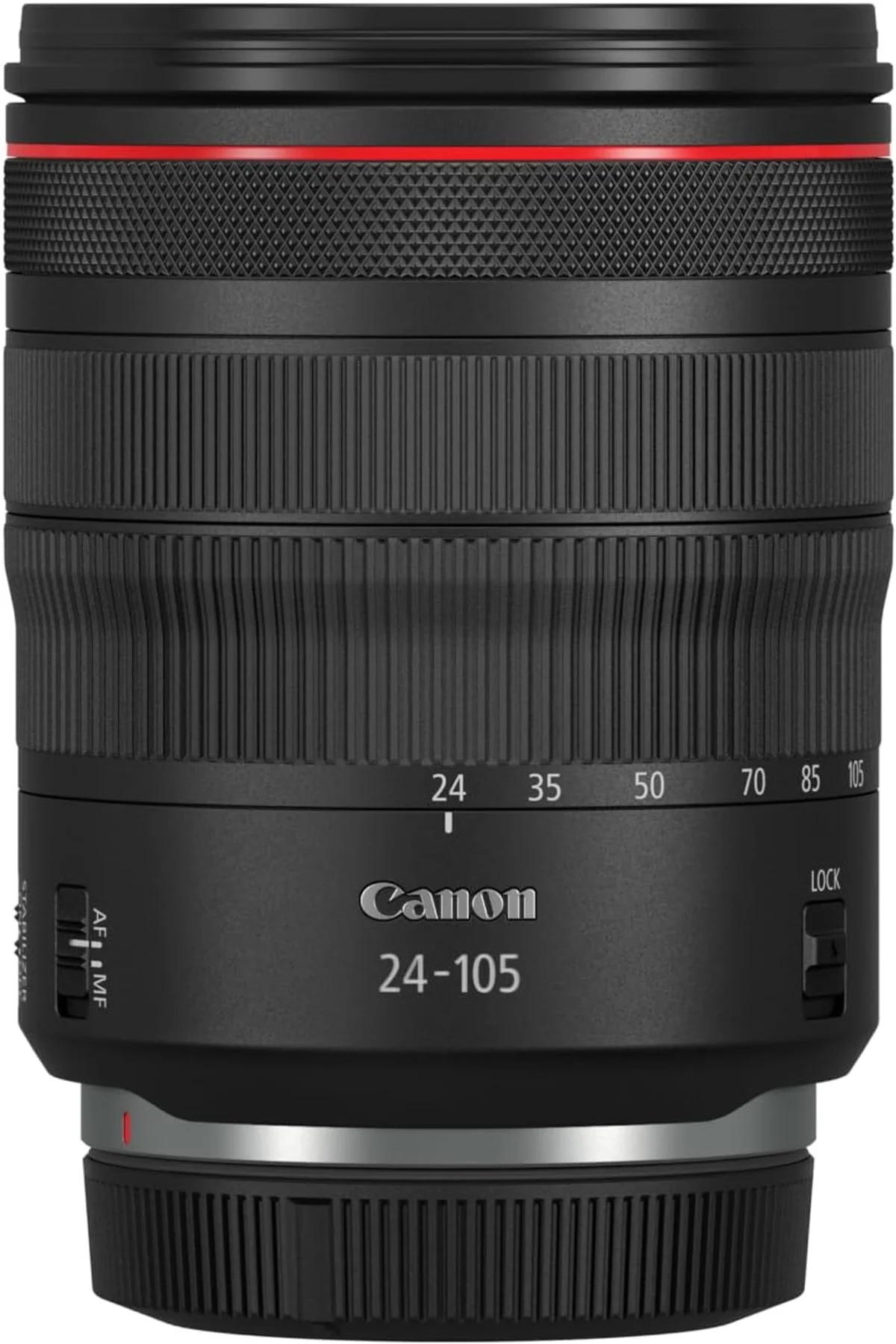
Which Zoom Fits Your Shooting?
Get the RF 28-70mm f/2.8 IS If:
- You shoot events, receptions, or indoor venues where light is limited and flash is impractical
- Subject separation and bokeh quality are central to your creative style
- You want f/2.8 with IS — a combination unavailable in any other Canon zoom at this price
- Video work is a priority and you value constant aperture during zoom transitions
- Weight matters — the 28-70mm saves 210g versus the 24-105mm
Get the RF 24-105mm f/4L If:
- You need one lens to cover the widest range of daily situations — 24mm to 105mm handles almost everything
- Professional build quality and weather sealing are non-negotiable for your work conditions
- You shoot weddings, journalism, or travel where lens changes cost you moments
- Your Canon body has IBIS — the f/4 aperture limitation matters less when you can shoot at lower shutter speeds
- You plan to pair this with a dedicated fast prime (50mm f/1.8, 85mm f/2) for low-light situations
Consider Both If:
Serious Canon shooters who cover events and documentary work often end up owning both. The 24-105mm lives on the camera for daytime and general coverage. The 28-70mm f/2.8 comes out when the lights go down or when the shot demands shallow depth of field. Together, they cover the same range as a three-lens prime kit with less bulk and fewer lens changes.
Our Recommendation
The RF 24-105mm f/4L IS USM is the better first Canon RF zoom for the majority of photographers. Its 4.4x zoom range handles more real-world situations without a lens swap, its L-series build survives professional abuse, and its Nano USM autofocus is Canon's best in any zoom. If you need a single lens to cover weddings, travel, street work, and corporate events, the 24-105mm is the rational choice. But rational isn't always right. If your portfolio depends on shallow depth of field, if you shoot primarily in dim environments, or if you've already accepted carrying a second lens for telephoto reach, the RF 28-70mm f/2.8 IS delivers something no other Canon zoom under the f/2L can: bright, stabilized standard zoom coverage that makes low light feel easy.
Many experienced Canon shooters find the ideal setup is both lenses working in tandem — the 24-105mm for daylight coverage and the 28-70mm for evening and creative work. That two-lens kit covers 24mm to 105mm across two different aperture classes, giving you the right tool for every lighting condition without the bulk of a prime lens collection.
Common Questions About These Canon Zooms
These questions come from the most common decision points we see among Canon RF shooters debating between these two zooms.
Can the Canon RF 28-70mm f/2.8 replace the 24-105mm f/4L as a kit lens?
For most shooters, no. The RF 28-70mm starts at 28mm instead of 24mm and tops out at 70mm versus 105mm. That narrower range means you lose both the ultra-wide perspective for interiors and architecture and the short telephoto reach for candids and portraits. The f/2.8 aperture compensates with stronger subject separation and better low-light performance, but the 24-105mm covers more daily situations without a lens change. If you primarily shoot events in dim venues, the 28-70mm makes sense. For all-around daily use, the 24-105mm remains the better solo lens.
Which lens is better for video on Canon RF bodies?
Both lenses have strong video credentials, but they serve different production styles. The RF 28-70mm f/2.8 offers shallower depth of field for cinematic talking-head and interview work, and its constant f/2.8 aperture means no exposure shifts while zooming. The RF 24-105mm f/4L counters with wider framing at 24mm for run-and-gun documentary work and the 105mm end for B-roll compression. Its Nano USM motor is quieter than the 28-70mm STM. For controlled studio and event video, the 28-70mm wins. For solo documentary or vlogging, the 24-105mm is more practical.
Is the extra stop of aperture on the f/2.8 worth the price difference?
One stop doubles your light-gathering ability. In practical terms, that means shooting at ISO 3200 instead of ISO 6400 in the same conditions, or using a shutter speed of 1/125s instead of 1/60s. For event photographers working in reception halls, churches, and dimly lit venues, that stop is the difference between clean and noisy files. For outdoor daylight shooters, the f/2.8 advantage shrinks to background blur — pleasant but not mission-critical. Consider your typical shooting environment before paying the premium.
Do either of these lenses work on Canon APS-C bodies like the R7?
Both mount natively on any Canon RF body, including APS-C models like the R7 and R10. The 1.6x crop factor shifts the effective range: the 28-70mm becomes roughly 45-112mm equivalent, and the 24-105mm becomes 38-168mm equivalent. On APS-C, the 24-105mm becomes an even stronger option since 168mm equivalent gives genuine telephoto reach. The 28-70mm loses its wide-angle utility on APS-C — 45mm equivalent is a normal perspective, not wide at all.
Which lens holds its resale value better?
The RF 24-105mm f/4L holds value well because it is Canon's most recommended standard zoom and a frequent kit pairing with the R5 and R6 series. Demand stays consistently high on the used market. The RF 28-70mm f/2.8 IS is newer with less pricing history, but f/2.8 zooms typically hold value well due to persistent demand from working professionals. Neither lens is likely to depreciate sharply unless Canon releases a direct replacement.