T-Stop vs F-Stop: What's the Difference and When Does It Matter?
Every camera lens has an aperture rating, but not all aperture ratings measure the same thing. Photography lenses use f-stops. Cinema lenses use T-stops. The difference comes down to a simple question: are you measuring how wide the opening is, or how much light actually gets through?
For photographers, this distinction rarely matters — your camera's meter compensates automatically. For videographers matching exposure across multiple lenses in a single scene, it's the difference between matched cuts and visible brightness shifts that cost hours in color grading.
F-Stops: The Geometric Measurement
An f-stop is a ratio — focal length divided by the diameter of the entrance pupil (the apparent size of the aperture as seen from the front of the lens). An 85mm lens with a 60.7mm entrance pupil diameter is an f/1.4 lens. The math is clean: 85 ÷ 60.7 ≈ 1.4.
This ratio tells you two things with precision. First, depth of field — how much of the scene appears sharp at a given distance. Second, the theoretical maximum light-gathering ability of the design. Each full f-stop (f/1.4, f/2, f/2.8, f/4) halves or doubles the light entering the lens.
But f-stops say nothing about what happens to light after it enters. Glass absorbs photons. Every element the light passes through takes a small percentage. Coatings reduce the loss, but they can't eliminate it. A 14-element zoom absorbs more light than a 7-element prime, even at identical f-stop ratings.
T-Stops: Measuring What Actually Reaches the Sensor
A T-stop (transmission stop) measures the actual light transmitted through the lens, not just the size of the opening. It accounts for every absorption loss, every reflection, every coating imperfection between the front element and the sensor.
Manufacturers measure T-stops using an integrating sphere — a device that captures all light exiting the rear of the lens and compares it to the light entering the front. The result is always a higher number than the f-stop, because some light is always lost.
A lens rated at f/1.4 might measure T1.5, T1.6, or even T1.8 depending on its optical design. The more elements, the more light lost. A simple 50mm prime with 7 elements might lose 1/3 of a stop. A complex 24-70mm zoom with 18 elements might lose 2/3 of a stop or more.
Why Cinema Uses T-Stops
Film sets demand exposure consistency across lens changes. A director of photography shooting a dialogue scene might use a 35mm for wide shots and an 85mm for close-ups. If both lenses are set to the same T-stop, the exposure matches — cut to cut, shot to shot, without touching the lights or adjusting the iris.
With f-stops, this breaks down. A 35mm f/1.4 prime with 11 elements and an 85mm f/1.4 prime with 14 elements will transmit different amounts of light at the same f-stop setting. The brightness difference might be 1/3 to 1/2 a stop — enough to notice on screen, especially in carefully lit interior scenes.
This is why cinema lens sets — covered in our cinema and video lens roundup — are designed as matched sets. Every lens in the set is calibrated so that T2.1 on the 24mm delivers identical exposure to T2.1 on the 135mm. Gears are standardized so follow-focus motors don't need recalibration. Front diameters are matched so matte boxes and filters swap without adjustment.
The Practical Gap Between F and T
For most photo lenses, the gap between the f-stop and T-stop rating is between 1/3 and 2/3 of a stop. Here's what that looks like in real lenses:
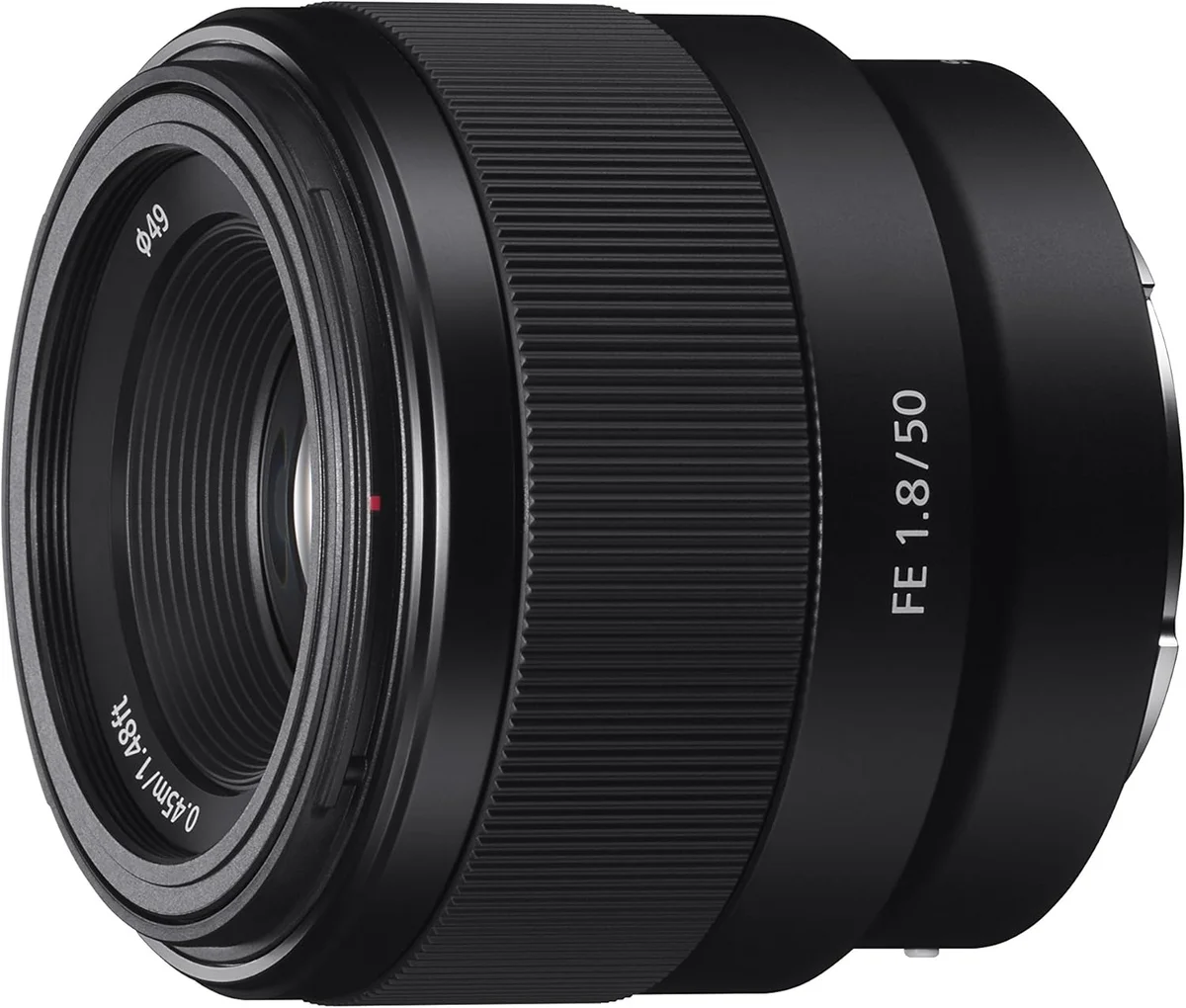
- Simple primes (5-8 elements): Typically T is about 1/3 stop higher than f. An f/1.8 lens might measure around T2.0.
- Standard zooms (12-16 elements): Usually 1/2 stop loss. An f/2.8 zoom might measure T3.2.
- Complex superzooms (18-22 elements): Can lose 2/3 to a full stop. An f/2.8 superzoom might hit T3.5.
- Teleconverters: Add their own transmission loss on top of the aperture penalty. A 1.4x TC on an f/2.8 lens gives f/4 geometrically, but the actual T-stop might be T4.5 or higher.
Modern multi-coating technology has narrowed this gap. Nikon's Nano Crystal Coat, Canon's ASC (Air Sphere Coating), and Sony's Nano AR Coating II all reduce internal reflections that would otherwise absorb light. Premium lenses with advanced coatings typically fall at the low end of the loss range.
When Photographers Should Care About T-Stops
Three scenarios where T-stop awareness matters for still shooters:
Low-light threshold shooting. If you're shooting at ISO 6400 and f/1.4 and still underexposing, knowing your lens actually transmits T1.6 worth of light explains the 1/3 stop shortfall. You might think your camera has a metering problem when it's actually correct — the lens just isn't as fast as the f-stop implies.
Comparing lenses from different systems. When Canon claims f/1.2 on the RF 50mm and Nikon claims f/1.2 on a potential Z-mount equivalent, the T-stop tells you which actually delivers more light to the sensor. DxOMark and other testing labs publish measured T-stops for popular lenses, making cross-system comparisons more honest.
Hybrid photo/video work. If you shoot both stills and video with the same lenses, understanding the T-stop gap helps you plan exposure when switching between modes. Your camera's meter handles it for photos, but manual video exposure doesn't have that safety net.
Why Photography Sticks with F-Stops
The f-stop system persists in photography for good reasons — not just tradition.
Depth of field depends on the geometric aperture, not transmission. An f/1.4 lens and a T1.4 cinema lens at the same focal length produce identical depth of field, even if their exposure differs. Photographers controlling background blur need the f-stop value.
Through-the-lens (TTL) metering solves the transmission problem automatically. When your camera meters through the actual lens, it measures the light that made it through — transmission losses are already factored in. The camera doesn't need to know the T-stop because it's measuring the result, not the specification.
Flash systems use f-stops for guide number calculations. The entire flash exposure ecosystem — guide numbers, TTL algorithms, manual flash calculations — is built on the f-stop system. Introducing T-stops would break backward compatibility with decades of flash equipment.
Cinema Lens Pricing and the T-Stop Tax
Calibrating lenses to precise T-stop ratings is expensive. Each lens in a cinema set must be individually measured and adjusted so the iris markings reflect actual transmission, not just geometry. This is one reason a set of cinema primes costs 5x to 50x more than equivalent photo primes with similar optical formulas.
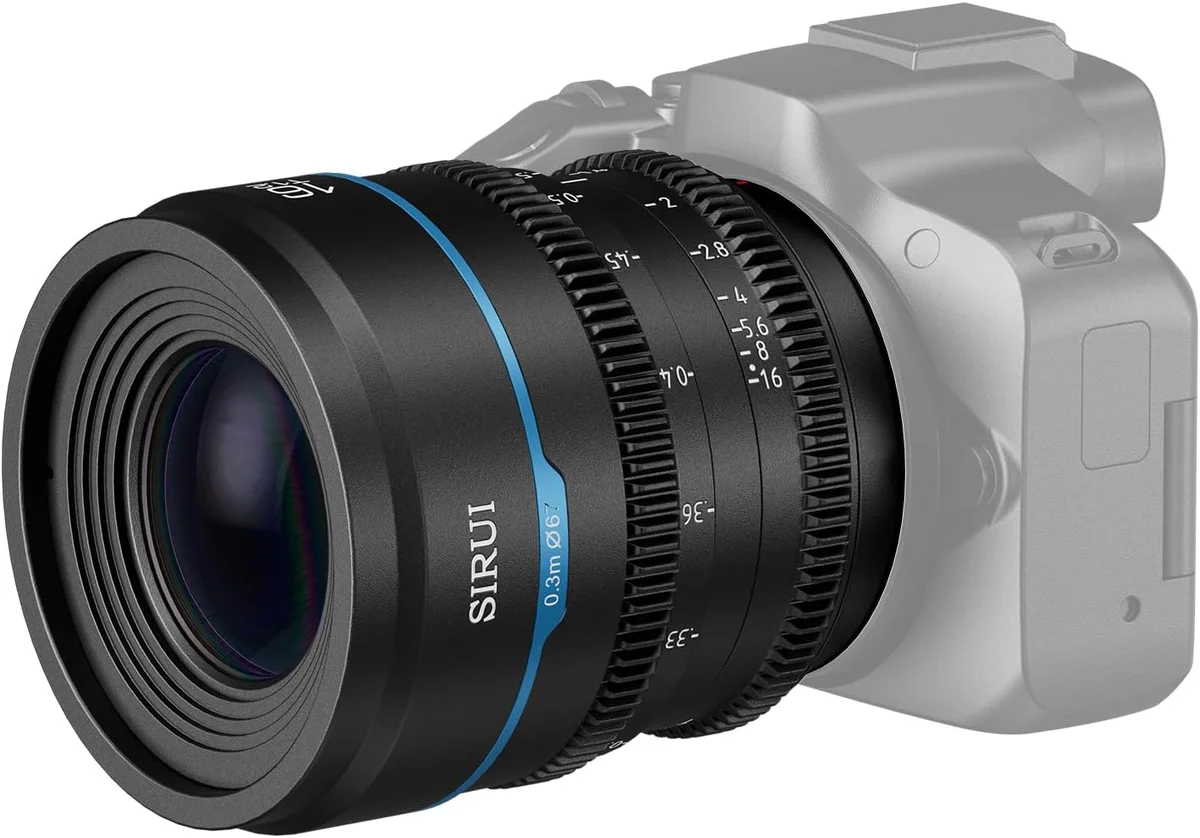
The SIRUI 24mm f/1.8 1.33x Anamorphic — one of the more affordable cinema-style lenses — lists both its f-stop (f/1.8) and T-stop (T2.8). That 1.2-stop gap is partly due to the anamorphic element, which absorbs more light than a standard spherical design. Budget cinema lenses tend to have larger f-to-T gaps than premium sets, where exotic coatings minimize transmission loss.
For hybrid shooters on a budget — our budget cinema lens guide covers affordable options in depth — "cine-modded" photo lenses offer a middle ground. Companies like Duclos Lenses and Zero Optik rehouse photo lenses with cinema-style housings, clickless aperture rings, and T-stop markings measured on each individual lens. The optical design stays the same — you're paying for the mechanical and calibration work.
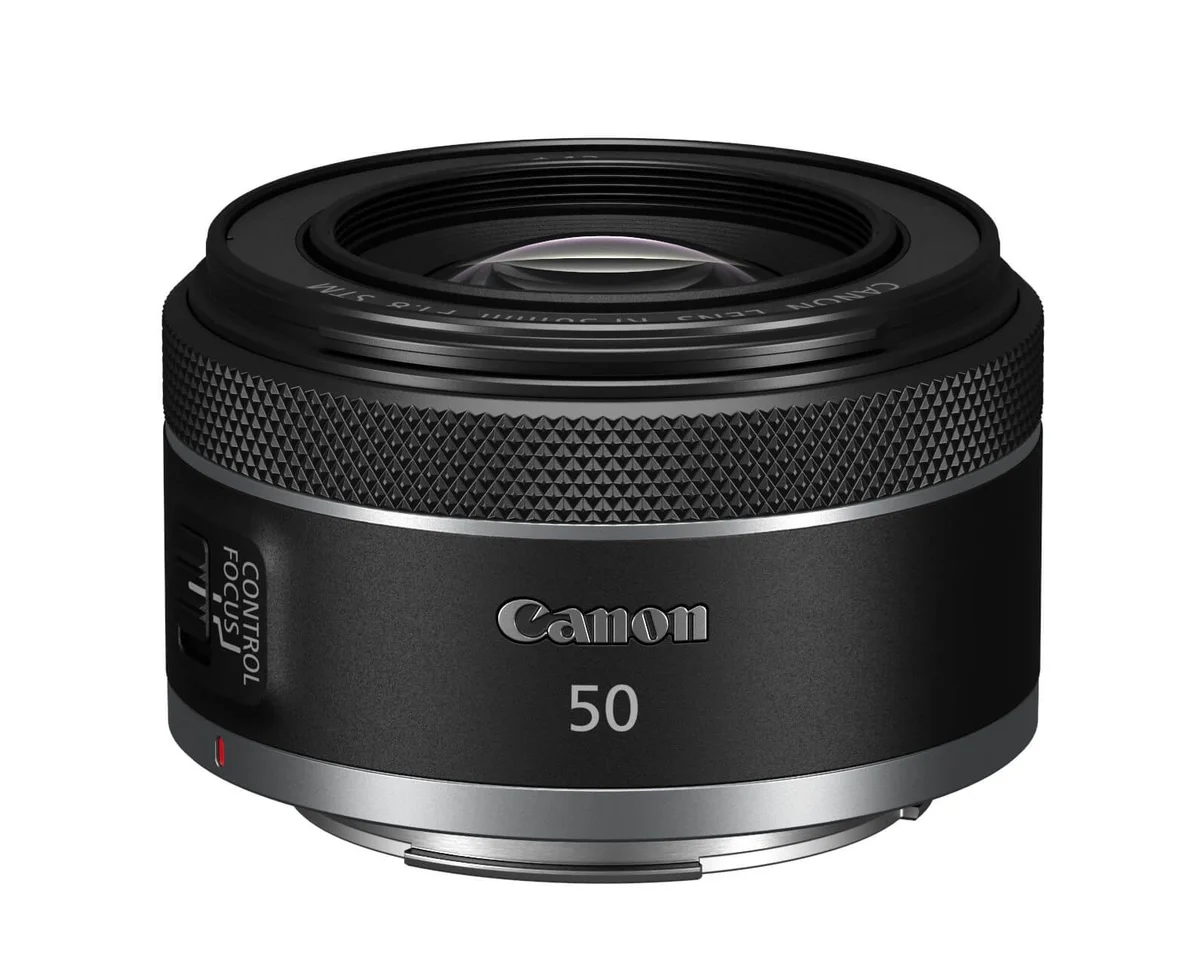
How Coatings Affect Transmission
Uncoated glass reflects about 4% of light at each air-to-glass surface. A lens with 14 elements and 10 air-to-glass surfaces would lose nearly 34% of incoming light without coatings — over a full stop.
Single-layer coatings cut reflection to about 1.5% per surface. Multi-coatings drop it below 0.5%. The latest nano-structure coatings (Canon's ASC, Nikon's ARNEO) approach 0.1% per surface by using microscopic structures that grade the refractive index transition between air and glass.
This means a modern 18-element zoom with advanced coatings can transmit more light than an older 10-element zoom with basic multi-coating. Coating technology has been the single biggest factor in narrowing the f-stop-to-T-stop gap over the past two decades.
Dirty or damaged coatings increase transmission loss. A fingerprint on a front element doesn't just cause flare — it adds measurable light loss. UV filters add two more air-to-glass surfaces, each with their own (small) transmission penalty. This is why cinematographers almost never use UV filters, and why high-end photo shooters increasingly skip them too.
Measuring T-Stops: How Labs Test Transmission
The standard method uses an integrating sphere — a hollow sphere coated inside with highly reflective barium sulfate paint. Light enters the sphere through the lens, bounces off the interior walls thousands of times until it's perfectly diffused, then hits a sensor mounted on the sphere wall. Comparing the measured light to a reference reading (taken without the lens) gives the exact transmission percentage.
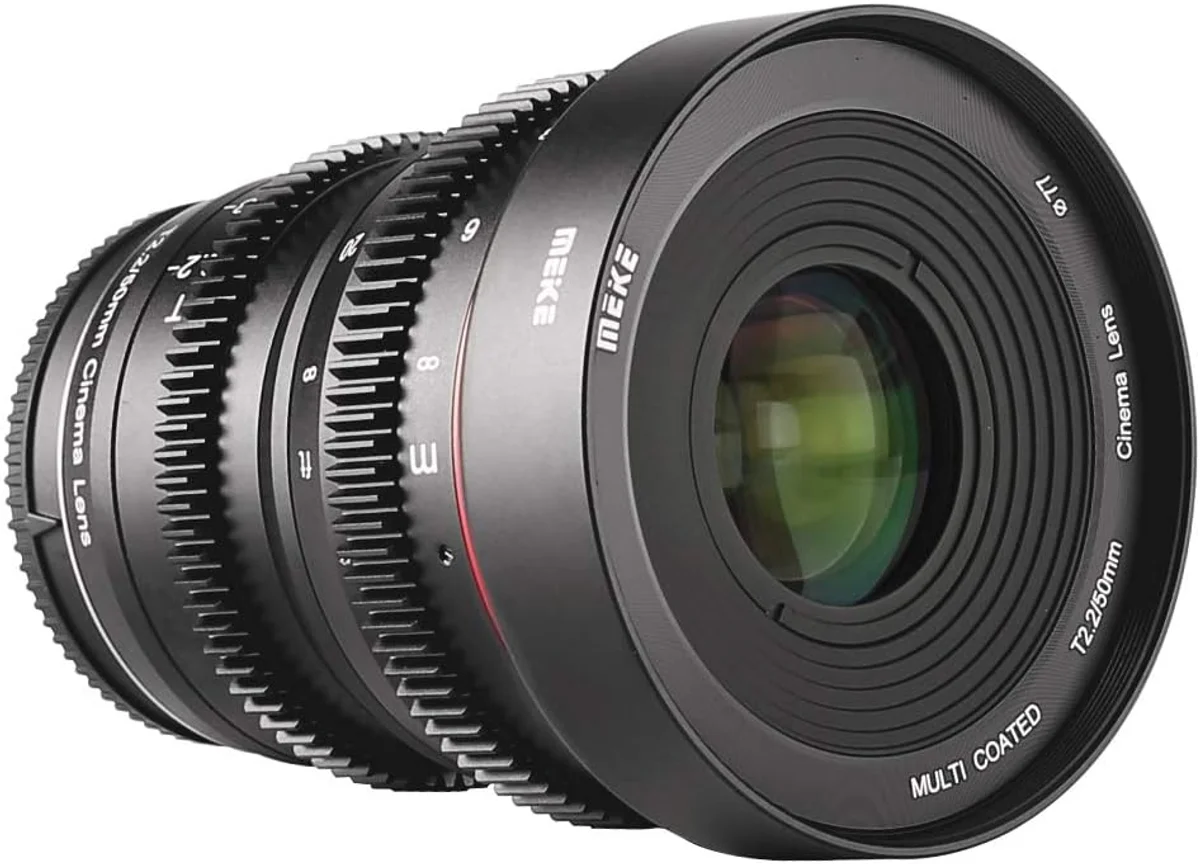
DxOMark publishes measured T-stops for hundreds of photo lenses. Their data shows consistent patterns: Canon's L-series lenses with ASC coating typically measure within 1/3 stop of their rated f-stop. Nikon's Z-mount S-line primes fall in a similar range thanks to ARNEO and Nano Crystal coatings. Budget third-party lenses without advanced coatings tend toward the higher end — the Meike 50mm T2.2 for MFT is refreshingly transparent about its transmission, marking the actual T-stop rather than the geometric f/2.0.
You can approximate T-stop differences at home, though without lab precision. Set two lenses to the same f-stop on the same camera body. Shoot the same evenly-lit target in full manual mode with locked ISO and shutter speed. Compare the resulting exposure values in Lightroom or Capture One. A 1/3 stop difference in histogram position indicates roughly that much T-stop gap. This won't give you an absolute T-stop number, but it reveals relative transmission differences between lenses in your own kit.
T-Stops in the Hybrid Shooting Era
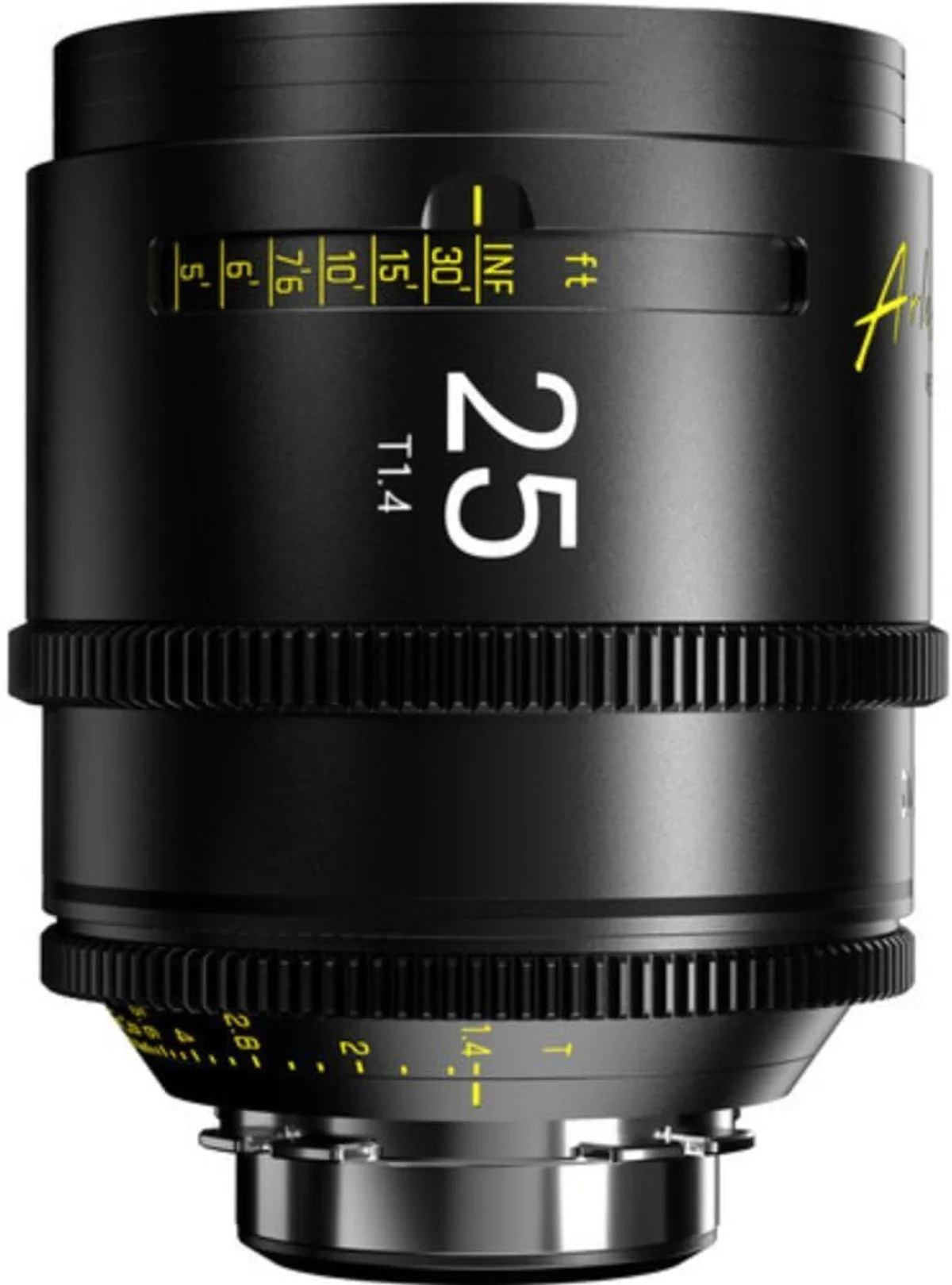
The DZOFilm Arles prime set shown above maintains a matched T1.4 across all five focal lengths — the kind of consistency that eliminates exposure shifts between cuts. The line between photo and video gear has blurred since mirrorless cameras made video a first-class feature. Sony's A7S line, Canon's R5 and R5 C, and Nikon's Z8 all shoot professional video through photo lenses. This hybrid reality means more photographers are encountering T-stop considerations for the first time.
When you switch from photo mode to video mode on the same camera, your metering changes fundamentally. In photo mode, the camera adjusts ISO and shutter speed exposure-by-exposure — TTL metering absorbs any T-stop variation. In video mode with a fixed ISO and shutter angle (the 180-degree rule dictates shutter speed), you control exposure primarily through aperture. And if you swap lenses mid-shoot without changing settings, T-stop differences become visible as brightness jumps between clips.
Practical workaround for hybrid shooters: test your lens kit before a shoot. Set each lens to f/2.8 (or your working aperture), lock ISO and shutter speed, and photograph a gray card. Note the exposure difference. If your 24mm runs 1/3 stop darker than your 70-200mm at the same f-stop, you now know to bump ISO by one-third when switching to the wide lens — or adjust in post with a saved color correction preset.
The most transmission-consistent photo lenses for hybrid work tend to be primes from the same manufacturer's lineup. Sony G Master primes, Canon RF L primes, and Nikon Z S-line primes each use similar coating stacks within their respective families, minimizing T-stop variation between lenses in the same tier.
How Coating Technology Affects T-Stop Performance
Modern multi-layer coatings are the primary reason T-stop values have converged toward f-stop values over the past two decades. Each air-to-glass surface in a lens reflects roughly 4-5% of incoming light without coatings. A 15-element zoom lens has 20+ air-to-glass surfaces — without coatings, cumulative transmission loss could exceed 50%. Multi-layer anti-reflective coatings reduce per-surface reflection to 0.1-0.3%, bringing total transmission loss to under 5% for most modern designs.
Nano-coatings — Sony's Nano AR Coating II, Canon's ASC (Air Sphere Coating), and Nikon's ARNEO — push even further, virtually eliminating internal reflections at steep angles where traditional coatings struggle. The practical effect: a lens marked f/1.4 with premium nano-coatings might measure T1.45, while the same optical formula with standard multi-coatings measures T1.6. That quarter-stop difference matters in cinema because it compounds across a lens set.
Aspherical elements introduce another variable. Large molded aspherical elements — common in fast primes and wide-angle designs — are harder to coat uniformly across their curved surfaces. Some manufacturers apply different coating processes to aspherical vs spherical elements, creating slight transmission inconsistencies within the same lens at different apertures. This is one reason f/1.2 primes from different manufacturers can show markedly different T-stop measurements despite identical f-stop ratings.
For photographers, coating quality primarily affects flare resistance and contrast rather than exposure. Your camera's TTL meter reads light after it passes through the lens, automatically compensating for any transmission loss. For videographers intercutting between multiple lenses, coating consistency within a lens family matters as much as raw transmission — a consistent T1.5 across five primes is more useful than one T1.42 outlier paired with four T1.6 lenses.
Practical Scenarios: When to Care About T-Stops
Documentary and event videographers switching between two or three lenses during continuous shooting benefit most from T-stop awareness. Matching exposure across cuts without color-grading each clip saves hours in post. Wedding videographers, in particular, often switch between a 35mm and an 85mm during ceremony coverage — if both are T1.5-rated cinema primes, exposure stays locked. With photo lenses at the same f-stop, expect 1/3 to 1/2 stop exposure shifts between cuts.
Studio photographers comparing lenses for low-light performance should check T-stop ratings when the decision is close. Two f/1.4 primes with a 1/3-stop T-stop difference produce visibly different noise levels at matching settings, especially on high-resolution sensors where shadow noise is amplified in post.
Adapting Photo Lenses for Cinema: T-Stop Implications
De-clicked photo lenses and cine-modded DSLR glass have become popular among independent filmmakers looking for cinematic optics without cinema-lens prices. When adapting photo lenses for video, T-stop awareness becomes critical. A de-clicked Canon RF 50mm f/1.2L and a de-clicked Sony FE 50mm f/1.2 GM will deliver different actual exposures despite identical f-stop markings. Without T-stop data, matching exposure between these lenses requires test shots and manual correction on set — exactly the workflow T-stop markings were designed to eliminate. Companies like Duclos Lenses and GL Optics offer cine-modification services that include measured T-stop markings etched onto the lens barrel, bridging the gap between photo convenience and cinema precision. The modification typically includes a de-click, focus gear ring, and measured T-stop engravings — a fraction of the cost of purpose-built cinema glass with equivalent optical quality.
Quick Reference: F-Stop vs T-Stop
- F-stop: Geometric ratio. Determines depth of field. Used by all photography lenses. Your camera meter compensates for any transmission loss.
- T-stop: Measured transmission value. Determines actual exposure. Used by cinema lenses. Guarantees matching exposure across a lens set.
- The gap: Typically 1/3 to 2/3 stop for modern photo lenses. Wider for complex designs, narrower for simple primes with premium coatings.
- When it matters: Multi-lens video shoots, extreme low light, cross-system lens comparisons, and cine-modded photo lenses.
T-Stop and F-Stop Questions
Common questions about T-stops, f-stops, and when the difference between them actually affects your images.
The biggest difference between these two lenses shows up in real-world shooting, not spec sheets.
We recommend the winner for most shooters, though the runner-up earns its place for specific use cases.
Can I convert f-stops to T-stops?
Not precisely without testing the specific lens. Two lenses rated at f/1.4 can have different T-stop values depending on their optical design, number of elements, and coatings. Manufacturers measure T-stops using an integrating sphere — there is no simple formula to derive one from the other.
Why don't photography lenses use T-stops?
Photography lenses prioritize depth of field control, which depends on the geometric f-stop, not light transmission. Since photographers use through-the-lens metering that compensates for transmission loss automatically, T-stops add complexity without practical benefit for still shooting.
Is a lower T-stop always better for video?
A lower T-stop means more light reaches the sensor, which helps in dim conditions. But wider apertures also reduce depth of field and can introduce optical aberrations. Many cinematographers shoot at T2.8 or T4 for a balance of light gathering and image quality, even when faster stops are available.
Do cinema lenses with the same T-stop produce identical exposure?
Yes — that is the entire point of the T-stop system. A T2.0 lens transmits the same amount of light regardless of brand, focal length, or optical design. This consistency lets cinematographers swap lenses mid-scene without adjusting exposure settings.
How much light do typical photo lenses lose to transmission?
Most modern photo lenses lose between 1/3 and 2/3 of a stop to transmission. A lens rated at f/1.4 typically transmits light equivalent to roughly T1.5 to T1.8. Lenses with more elements (like superzooms) tend to lose more light than simpler designs (like 50mm primes).
Are there any photography lenses that list T-stops?
A few crossover lenses marketed to hybrid shooters list both values. The Sigma Cine line and some Samyang/Rokinon lenses publish T-stop ratings. Some third-party review sites also measure T-stops for popular photo lenses, giving buyers a way to compare real-world light transmission.