First Lens Upgrade: What to Buy After Your Kit Lens

You bought a camera with the kit lens. You've been shooting for a few months. The images are decent, but something feels limited — indoor shots are noisy from high ISO, backgrounds are busy instead of blurred, and the autofocus misses fast-moving subjects. These are signs your kit lens has reached its limits, not your skills.
The right first upgrade depends on what you shoot and what frustrates you most about your current gear. This guide matches common frustrations to specific lens categories, with picks for every major mount system and realistic budget expectations.
What Your Kit Lens Can't Do
Kit lenses — the 18-55mm f/3.5-5.6 or 24-70mm f/4 that shipped with your camera — are engineering compromises designed to cover the widest shooting range at the lowest cost. They do many things adequately and nothing exceptionally. Understanding their specific limitations tells you where to invest.
Aperture. Most kit zooms max out at f/3.5 on the wide end and f/5.6 at the telephoto end. This means limited light gathering (you need higher ISO in dim conditions) and limited background blur (busy backgrounds stay busy). A lens that opens to f/1.8 or f/2.8 gathers 4-8 times more light and produces visibly shallower depth of field.
Sharpness at the edges. Kit lenses are typically sharp in the center but softer toward the corners, especially at wider apertures. For web-sized images, this rarely matters. For prints above 11x14 or detailed subjects that fill the frame, corner softness becomes visible.
Autofocus speed. Budget AF motors in kit lenses track moving subjects less reliably than the linear or ultrasonic motors in mid-range lenses. If you shoot kids, pets, or sports and find the AF lagging behind the action, the lens motor is likely the bottleneck — not the camera body.
Build quality. Plastic mounts, no weather sealing, creaky zoom rings. Kit lenses are built to a price point. They function fine in normal conditions but won't survive rain, dust, or the mechanical wear of daily professional use.
The Four Upgrade Paths
Every first lens upgrade falls into one of four categories. Pick based on which limitation bothers you most.
Path 1: The Fast 50mm Prime (Cheapest)
If you want better low-light performance and background blur, this is where to start. A 50mm f/1.8 prime lets in roughly 4 stops more light than your kit lens at the telephoto end — the difference between ISO 6400 and ISO 400, or between a noisy image and a clean one.
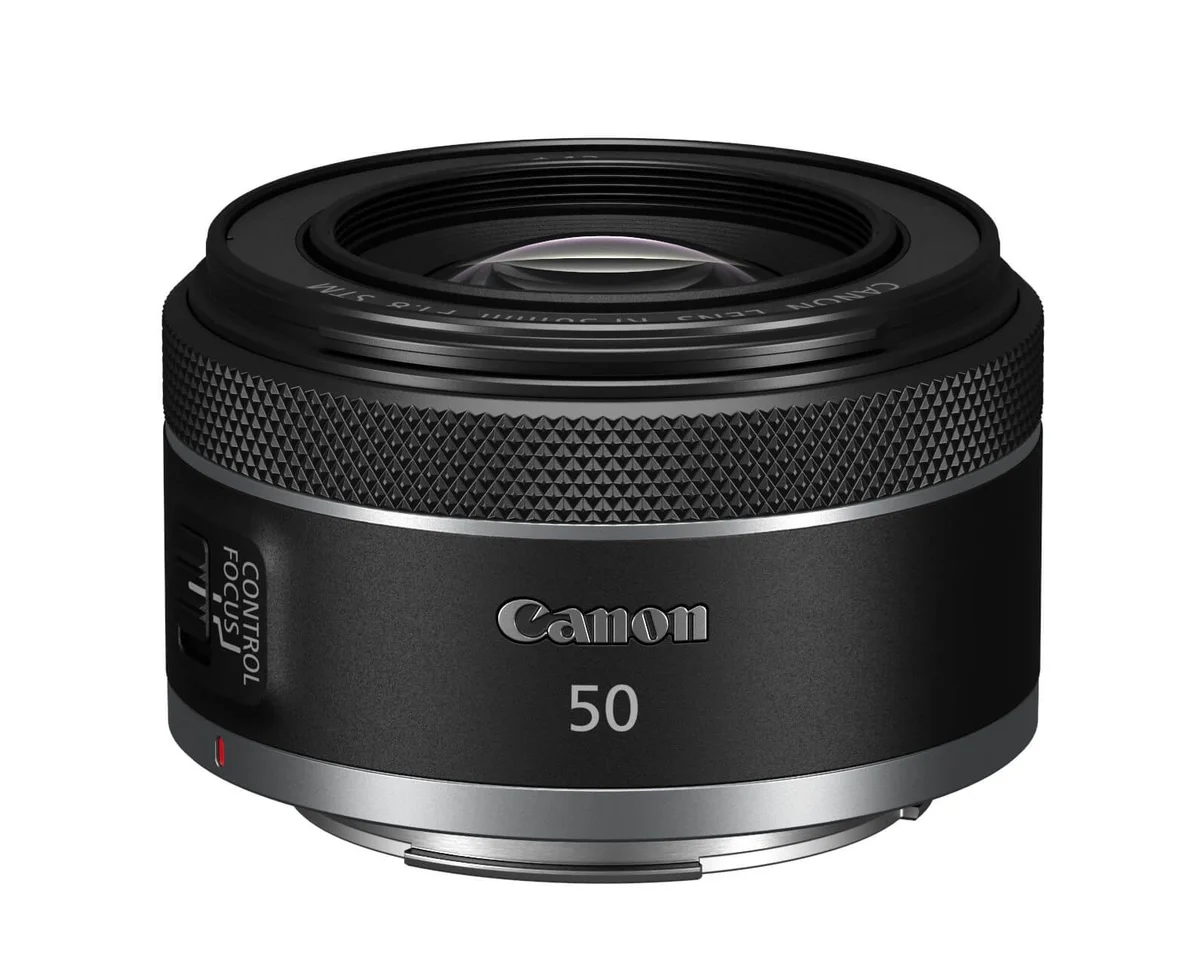
Canon RF 50mm f/1.8 STM: Surprisingly sharp for the price, with STM motor for smooth video autofocus. Mild focus breathing and light build are the only real downsides. Best value on the RF system.
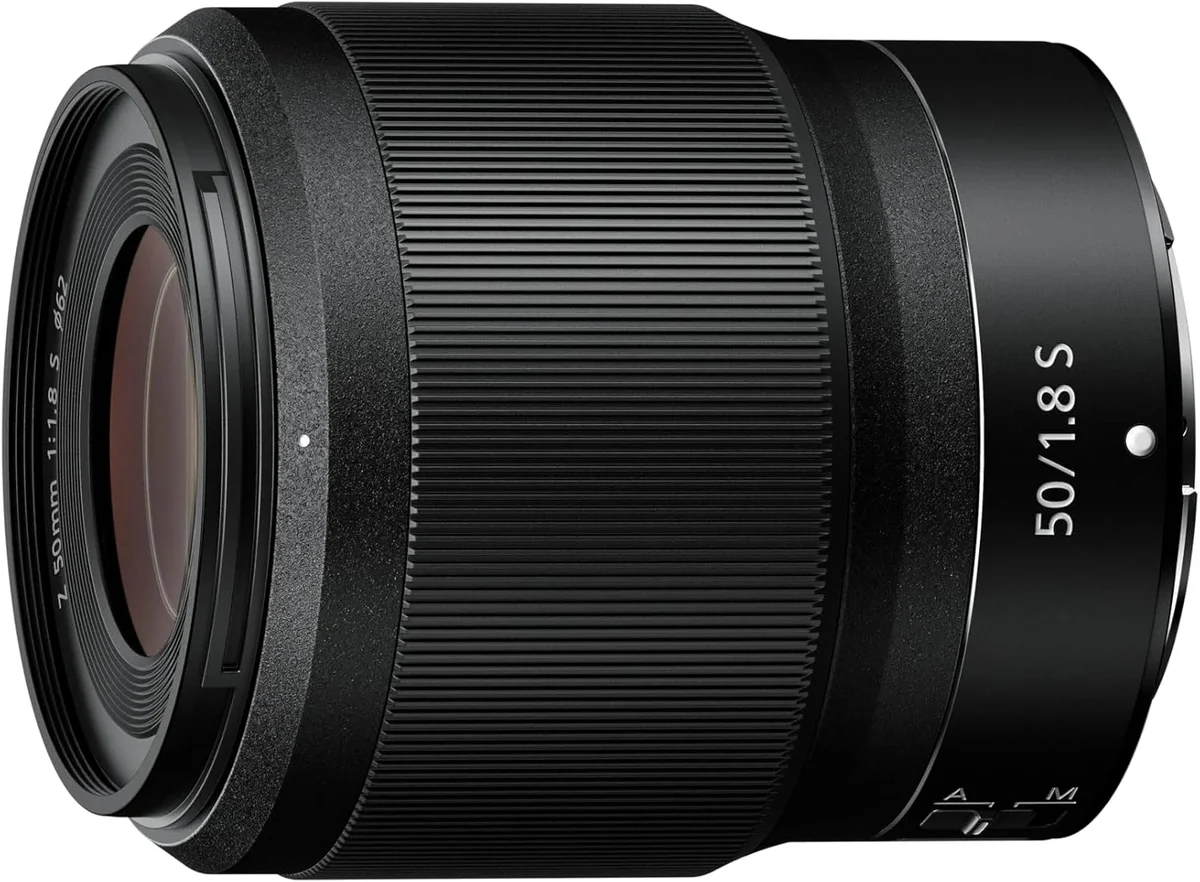
Nikon Z 50mm f/1.8 S: S-line optics in a compact body. Sharper than the Canon equivalent and built to a higher standard. The best 50mm f/1.8 on any mirrorless system right now.
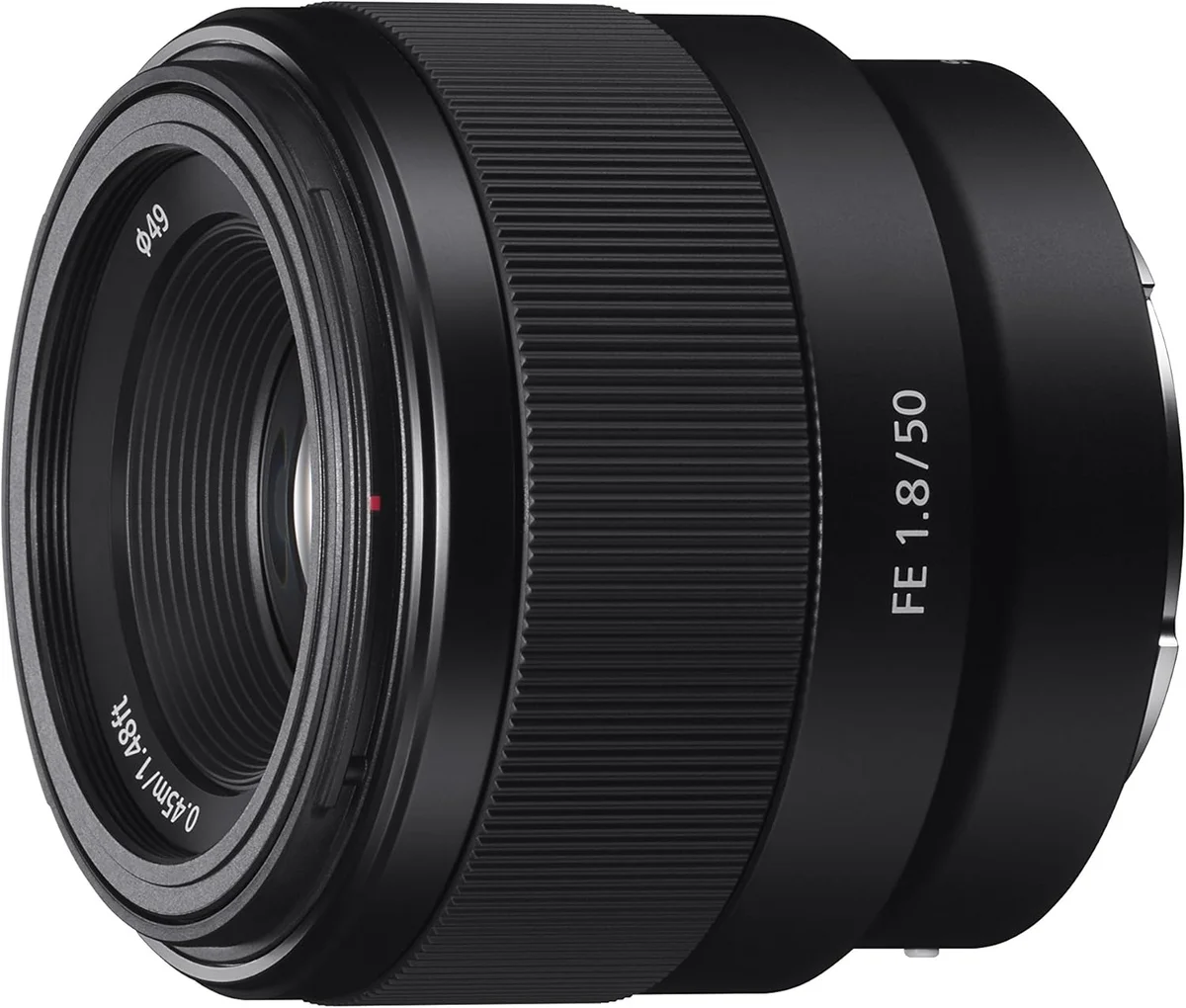
Sony FE 50mm f/1.8: Functional and affordable, though AF speed lags behind the Canon and Nikon equivalents. The Viltrox AF 50mm f/1.8 is worth considering as an even more affordable alternative with faster AF.
The 50mm field of view is narrower than a kit zoom at 24-35mm, which takes adjustment. You'll need to move your feet to compose. This constraint is actually the point — it teaches you to previsualize compositions and work the scene instead of standing still and zooming.
Path 2: The Fast Standard Zoom (Priciest)
If you want a direct upgrade from your kit zoom — same zoom range, better performance in every measurable way — a fast standard zoom delivers. The key improvement: constant f/2.8 aperture across the zoom range, compared to your kit lens's variable f/3.5-5.6.
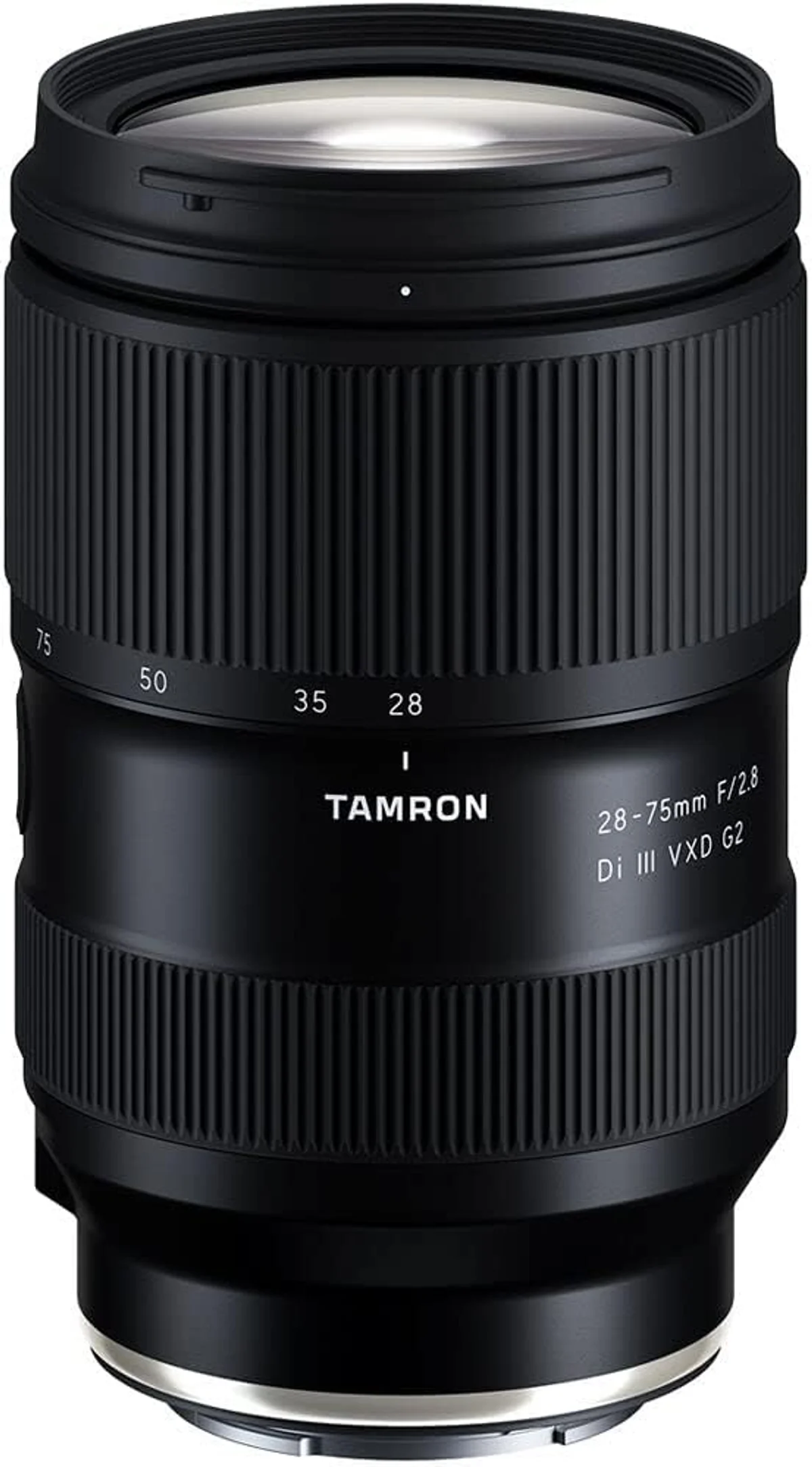
Tamron 28-75mm f/2.8 G2: Available for Sony E and Nikon Z. The benchmark for value in fast standard zooms. Sharp, fast AF, well-built. Slightly shorter range than a 24-70mm, but the 28mm wide end is close enough for most uses.
Canon RF 28-70mm f/2.8 IS STM: Canon's answer to the Tamron — stabilized, compact, and optically strong. A direct upgrade from the RF 24-105mm f/4 kit lens for shooters who want better low-light capability.
Sigma 28-70mm f/2.8 DG DN Contemporary: Available for Sony E. Compact and lightweight for an f/2.8 zoom. Slightly less sharp in the corners than the Tamron, but smaller and lighter — an appealing balance for travel and street shooters.
Path 3: The Portrait Prime (Mid-Priced)
If you shoot people — headshots, family sessions, social media content — an 85mm f/1.8 prime produces the look that separates professional-looking portraits from snapshots. The longer focal length compresses features (noses look smaller, faces more proportional) and the f/1.8 aperture melts backgrounds into smooth color fields.
Meike 85mm f/1.8 SE II (Sony E): Budget option with solid optics. Manual focus aids make it usable for deliberate portrait work. Eye detection on Sony bodies partially compensates for the lack of AF.
Viltrox AF 85mm f/1.8 (Sony E / Nikon Z): Fast autofocus at a fraction of native pricing. Optically competitive with lenses costing twice as much. One of the best value propositions in the portrait prime category.
Canon RF 85mm f/2 Macro IS STM: Doubles as a half-macro lens for product and detail shots. The IS helps in lower light where the f/2 aperture doesn't quite compensate. Useful for Canon shooters who want portraits and close-up capability.
Path 4: The Budget Telephoto (Mid-Priced)
If your kit lens stops at 55mm or 70mm and you're frustrated by how distant your subjects look — kids on a soccer field, birds in the backyard, performers on a stage — you need more reach.
Canon RF 75-300mm f/4-5.6: Canon's most affordable telephoto for RF mount. Optically adequate for outdoor sports and casual wildlife. Not weather-sealed, and AF speed is a step behind pricier options.
Tamron 70-300mm f/4.5-6.3 Di III RXD (Sony E): Lighter and sharper than many budget telephotos. Quick AF with Sony's tracking system. Good starting point for aspiring wildlife and sports shooters.
Nikon Z DX 50-250mm f/4.5-6.3 VR: Budget DX zoom with VR stabilization. The 250mm on APS-C gives 375mm equivalent reach. Light enough for all-day carry. A sensible upgrade path for Nikon crop-sensor users. If you want a single DX zoom that replaces your kit lens and adds telephoto reach in one package, the Nikon Z DX 18-140mm f/3.5-6.3 VR covers wide through moderate telephoto without a lens swap.
The Upgrade Order That Saves Money
Based on patterns across thousands of photographer upgrade stories, the most cost-effective sequence for building a lens kit:
- Keep the kit lens. It remains your most flexible single lens for casual shooting, travel packing, and situations where you're not sure what you'll encounter.
- Add a fast prime (50mm or 85mm). This gives you a capability your kit zoom physically cannot provide. It is the cheapest real upgrade on this list.
- Add a telephoto if needed. Only if your subjects demand reach your current lenses don't cover. Expect to spend roughly twice what the prime cost.
- Replace the kit zoom with a fast zoom. This is typically the most expensive upgrade and provides the least dramatic improvement relative to cost — which is why it should come after primes and telephotos, not before them.
Many photographers skip step 4 entirely and find that a fast prime + kit zoom covers everything they need. The money saved on not buying a fast zoom can fund a trip, a lighting setup, or a workshop that improves your photography more than any lens could.
Mount-Specific Considerations
Each camera system has quirks that affect your upgrade strategy. Here's what to factor in for the three major mirrorless mounts:
Canon RF: Canon's native RF prime lineup is excellent but pricey. The RF 50mm f/1.8 and RF 85mm f/2 are the value standouts. Third-party options from Viltrox and Tamron have expanded recently — the Viltrox RF primes offer near-native AF quality at budget prices. APS-C Canon shooters (R7, R10, R50) should consider the Canon RF-S 10-18mm f/4.5-6.3 IS STM as a compact ultra-wide that adds a capability no kit zoom covers. If you already own Canon EF lenses, adapting them with the EF-EOS R adapter is a zero-cost way to "upgrade" — that EF 50mm f/1.8 STM you already own might be your best first step.
Nikon Z: The Z 50mm f/1.8 S is arguably the best 50mm f/1.8 on any current mirrorless system — S-line optics at a budget price. Nikon's Z-mount third-party ecosystem has grown quickly, with Tamron and Viltrox offering strong alternatives. If you're coming from F-mount, the FTZ II adapter gives full AF with AF-S lenses, so your existing glass works immediately. The Nikon Z DX 16-50mm kit zoom is actually quite competent — some DX shooters find they don't need to replace it as urgently as they expected.
Sony E-mount: The deepest third-party lens selection of any system. Tamron's E-mount zooms (17-28mm, 28-75mm, 70-180mm f/2.8 trinity) offer professional quality at reasonable prices. Viltrox and Samyang make affordable E-mount primes. The Sony FE 50mm f/1.8 is the weakest of the three major brand 50mm options — consider the Viltrox AF 50mm f/1.8 FE as a smarter buy with faster AF and similar optics. Sony's own G Master primes are outstanding but aimed at a higher budget tier; they're second or third purchases, not firsts.
What to Sell (and What to Keep)
A common question: should you sell your kit lens to fund the upgrade? Usually no. Kit lenses have minimal resale value — not enough to noticeably offset a new purchase. And they serve a purpose that primes can't: covering a zoom range in a single, lightweight package. Many photographers keep their kit lens as a travel backup or family-event lens even after building a collection of faster glass.
The exception: if you're replacing your kit zoom with a better zoom of the same range (upgrading the RF 24-105mm f/4-7.1 kit lens to the RF 24-105mm f/4L IS USM, for example), selling the kit version makes sense since the replacement covers the same focal range with better performance at every aperture. In that specific scenario, the kit lens becomes fully redundant.
For selling, MPB and KEH offer the most consistent trade-in values for used lenses. eBay and Facebook Marketplace can net slightly higher prices if you're willing to handle shipping and buyer communication. Amazon Trade-In credits are convenient but typically below market value.
Signs You're Not Ready to Upgrade
Not every frustration with image quality is a lens problem. Before spending money on glass, check whether these simpler fixes address your issues:
Blurry photos in good light. If images are soft even outdoors at moderate ISO, the cause is likely technique (camera shake, missed focus point, shooting wide open when stopped down would help) rather than lens quality. Practice before purchasing.
Unsatisfying composition. If your images feel "boring" regardless of settings, a new lens won't help. Study composition principles — rule of thirds, leading lines, framing, negative space. These transform images more than any equipment change.
Color or exposure issues. If colors look flat or exposures are inconsistent, the problem is in shooting or post-processing technique, not optics. Learn your camera's metering modes and spend time with editing software before concluding that the lens is the bottleneck.
The honest test: if you can look at a photo you took and explain specifically what you'd want different that a new lens would provide ("I need f/1.8 background blur for this portrait" or "I need 200mm reach for this bird"), you're ready. If the frustration is vague ("my photos just don't look professional"), the answer is usually practice and education, not equipment.
The Rental Test: Try Before You Commit
Before spending real money on any lens, consider renting it for a weekend. LensRentals, BorrowLenses, and local camera shops offer 3-day to 1-week rentals for a small fraction of the purchase price. Shoot your actual subjects, in your actual conditions, and evaluate whether the lens addresses the specific limitations you identified.
A rental also reveals ergonomic factors specs can't convey. How does the lens balance on your body? Is the focus ring smooth enough for video? Does the AF motor sound acceptable when recording with the on-camera mic? Can you shoot for two hours without arm fatigue? These practical questions have practical answers — you just need the lens in your hands to discover them.
Many rental companies apply a portion of the rental fee toward a purchase if you decide to buy. Even without that credit, paying a small fraction of the lens price to confirm the decision is one of the best risk-reduction investments in photography. The only lens purchase you'll regret is one that solves a problem you didn't actually have.
First Upgrade Questions
Answers to the most common questions about upgrading from a kit lens setup.
What is the single best first lens upgrade?
A 50mm f/1.8 prime. Every camera system offers one at an Entry price. It opens up low-light shooting, creates background blur your kit zoom can't match, and forces you to learn composition with a fixed focal length. Canon RF 50mm f/1.8, Nikon Z 50mm f/1.8 S, or Sony FE 50mm f/1.8 — all are excellent starting points.
Should I upgrade my kit lens or buy a second lens?
Buy a second lens first. Your kit zoom (typically 18-55mm or 24-70mm f/4) covers the widest range of situations adequately. Adding a fast prime (50mm f/1.8 or 85mm f/1.8) gives you capabilities the kit zoom physically cannot provide — wider apertures, better low light, shallower focus. Replacing the kit zoom with a better zoom should be your third or fourth purchase, not your second.
How much should I spend on my first lens upgrade?
The best first-upgrade options sit in the Entry and Step-up bands. A 50mm f/1.8 prime is the cheapest way in. Fast zooms like the Tamron 28-75mm f/2.8 G2, quality 85mm primes and budget telephoto zooms cost more. Spending at the Flagship level on a first upgrade usually means buying more lens than your current skills demand.
Is a 35mm or 50mm prime better as a first prime?
On a full-frame camera, 50mm is the traditional choice — it matches roughly what your eye sees. On APS-C crop-sensor bodies, 35mm gives a similar effective field of view (52.5mm equivalent). If you shoot indoors a lot or in tight spaces, 35mm gives more breathing room. If you shoot portraits or want more background compression, 50mm pulls ahead.
Should I buy a used lens for my first upgrade?
Absolutely. A used 50mm f/1.8 prime typically costs 30-40% less than new. Camera lenses have no moving parts that wear out quickly (unlike camera shutters). Check for clean glass, smooth focus ring, and functional AF — if those check out, used performs identically to new. KEH.com and MPB are the most reliable used lens retailers.
Why do people say "invest in glass, not bodies"?
Camera bodies depreciate by 40-50% within 3-4 years as new models release. Lenses hold their value — a Canon RF 50mm f/1.8 bought today will still be worth 70-80% of its price in five years, and it works on every Canon RF body made during that time. Quality glass outlasts multiple body generations and produces better images regardless of which body it is mounted on.
Our Top Recommendation
Based on our research, the Nikon Z 50mm f/1.8 S is our top pick — portraits, street photography, and everyday shooting.