Nikon Z 24-120mm f/4 S vs 24-200mm f/4-6.3: Optical Precision or All-in-One Range?
The Nikon Z 24-120mm f/4 S wins for photographers who prioritize optical quality and consistent performance. The 24-200mm wins when carrying one lens for everything matters more than peak sharpness.
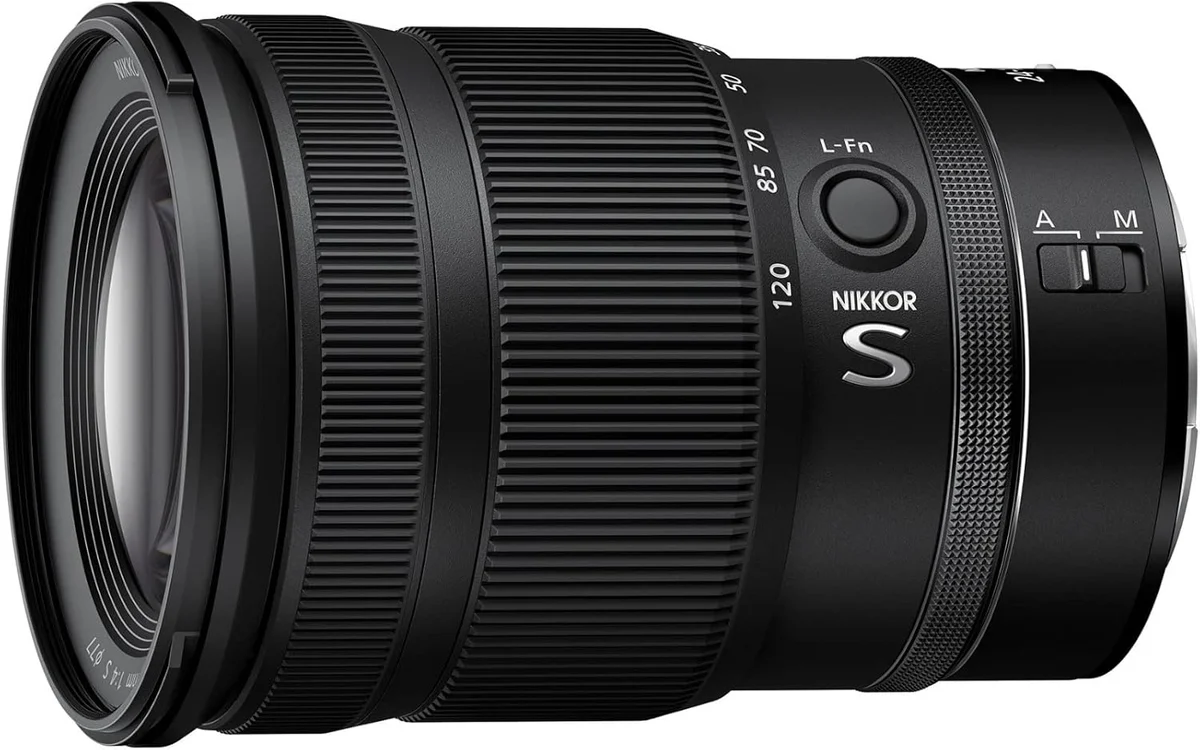
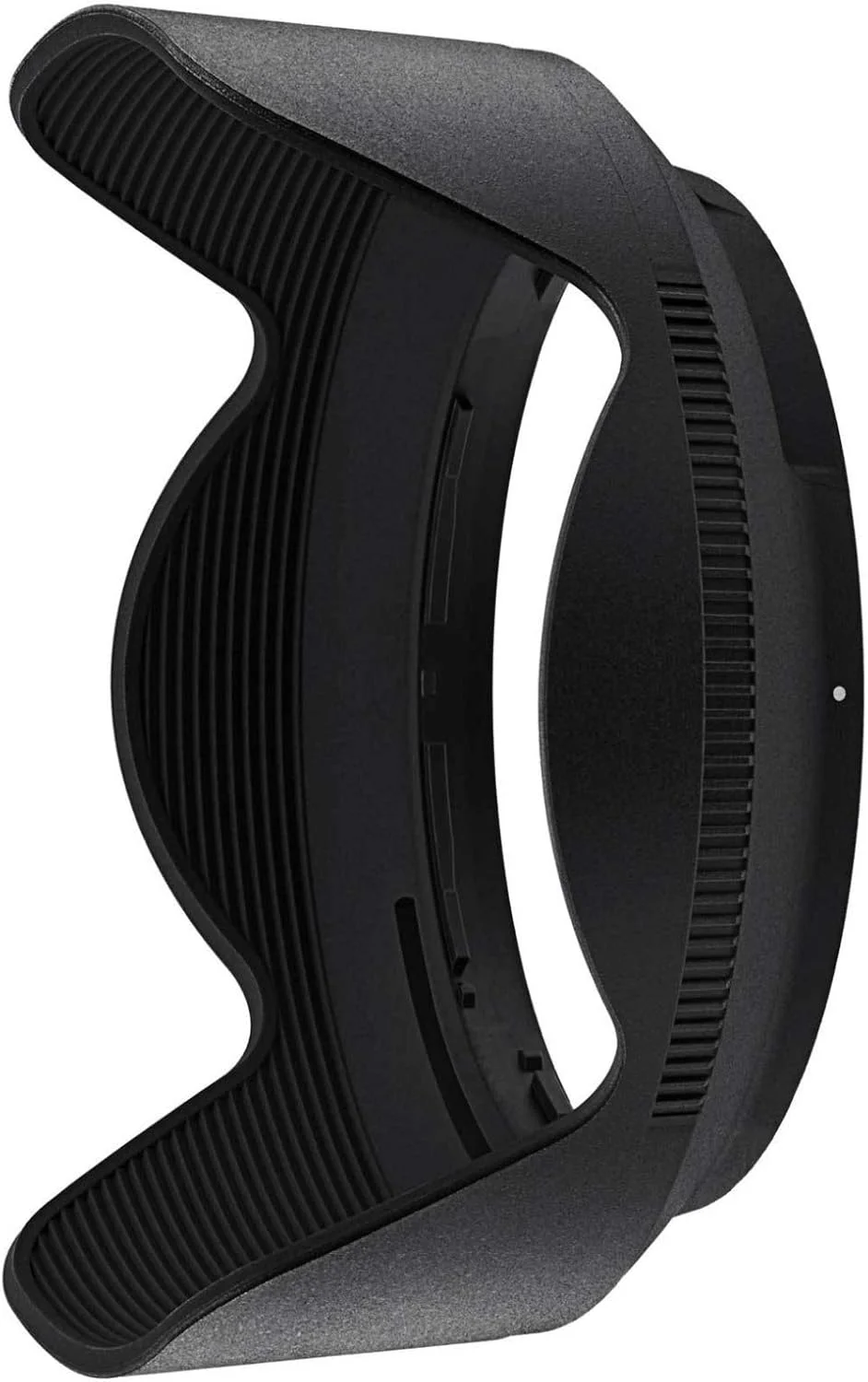
Nikon Z 24-120mm f/4 S
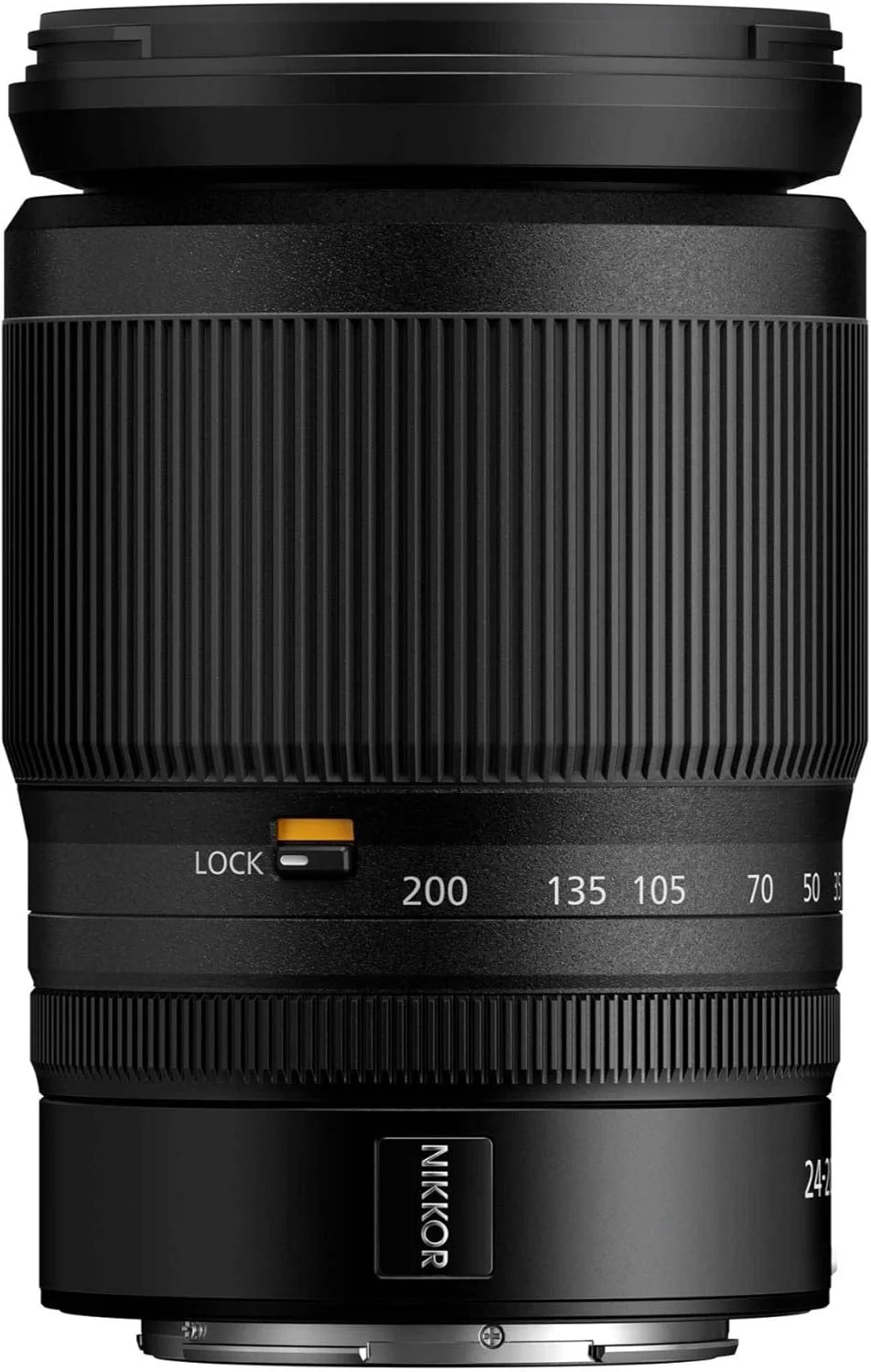
Nikon Z 24-200mm f/4-6.3
Nikon Z shooters building a travel kit hit this crossroads sooner or later: the S-line 24-120mm f/4 with its constant aperture and premium optics, or the 24-200mm f/4-6.3 VR with its extraordinary 8.3x zoom range and built-in stabilization. Both lenses cover the standard zoom range and share the same 24mm starting point. From there, they diverge sharply in optical philosophy, mechanical design, and the shooting problems they solve.
The Z 24-120mm f/4 S belongs to Nikon's premium S-line — a designation reserved for lenses meeting stricter MTF, build, and optical standards. It delivers constant f/4 brightness from wide to telephoto, which means no exposure shifts while zooming and predictable depth of field at every focal length. The Z 24-200mm f/4-6.3 VR answers a different question entirely: how much range can Nikon pack into a single lens without making it too heavy or too large to carry all day? The answer is an 8.3x zoom ratio that stretches from wide-angle vistas to genuine telephoto reach at 200mm.
We read Amazon owner reviews for both lenses, cross-referenced optical bench data from independent reviewers, and compared field reports from travel and nature photographers who have shot with both lenses across multiple Nikon Z bodies. The performance gap between these lenses is real, but whether it matters depends entirely on what you shoot and how you shoot it.

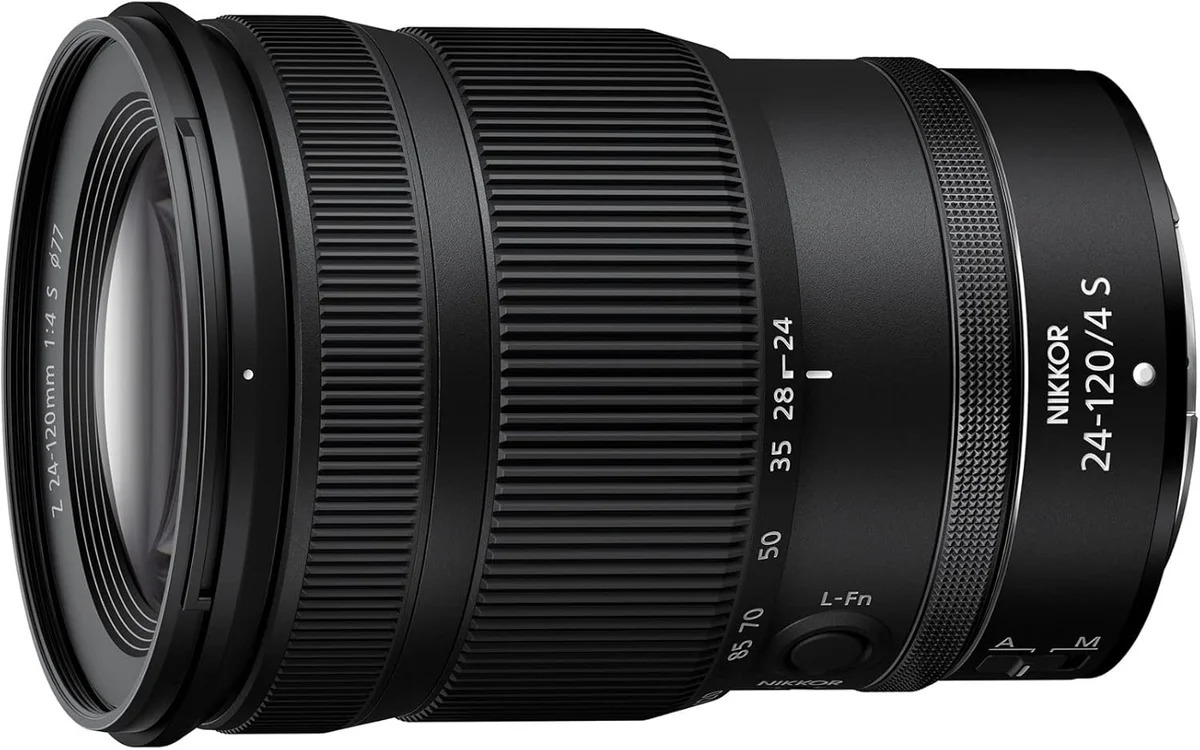
Nikon Z 24-120mm f/4 S
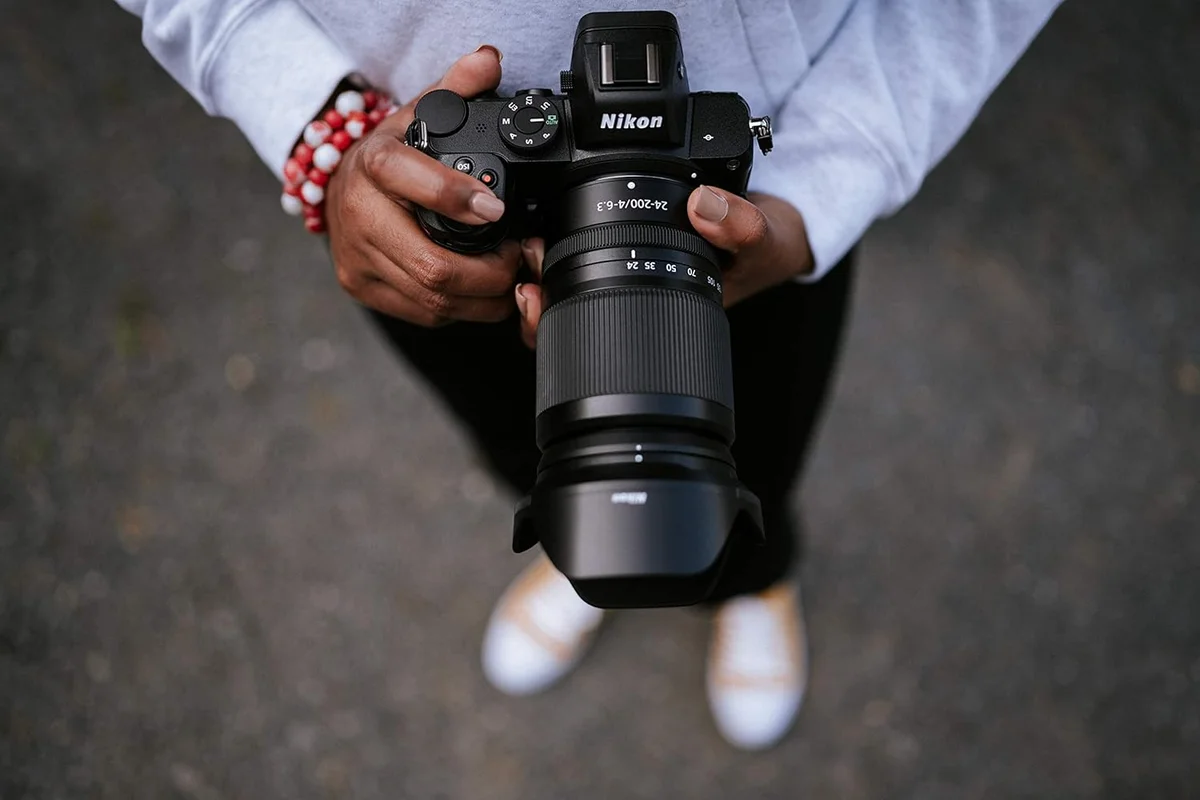
Nikon Z 24-200mm f/4-6.3
At a Glance
| Feature | Editor's Pick Nikon NIKKOR Z 24-120mm f/4 S | Nikon NIKKOR Z 24-200mm f/4-6.3 VR |
|---|---|---|
| Price Band | Flagship | Step-up |
| Focal Length | 24-120mm | 24-200mm |
| Max Aperture | f/4 | f/4-6.3 |
| Mount | Nikon Z | Nikon Z |
| Format | Full Frame | Full Frame |
| Filter Size | 77mm | 67mm |
| Weight | 630g | 570g |
| Stabilization | No (body IBIS) | 4.5 stops VR |
| Check Price | Check Price |
Optical Sharpness and Resolving Power
The 24-120mm f/4 S is the sharper lens. That is not a close call. S-line designation comes with measurably higher MTF figures, and the difference is visible in real-world images — not just lab charts. Center sharpness wide open at f/4 matches or exceeds many prime lenses across the 24-120mm range. Corner performance stays strong even at the widest aperture, with only minor softening at 120mm that disappears by f/5.6. Nikon engineered this lens to satisfy photographers who pixel-peep 45-megapixel Z7 files.
The 24-200mm is a good lens optically — for a superzoom. That qualifier matters. At 24mm through roughly 70mm, sharpness is strong and approaches the 24-120mm's performance in the center of the frame. Beyond 100mm, the optical compromises of an 8.3x zoom ratio become apparent. Corner softness increases, and fine detail rendering drops. At 200mm wide open at f/6.3, the image is noticeably softer than what the 24-120mm produces at 120mm f/4. Stopping down to f/8 at 200mm helps, but you cannot recover the resolving power that the optical design gives up for range.
Chromatic aberration tells a similar story. The 24-120mm S controls lateral and longitudinal CA with the precision expected from S-line glass — purple and green fringing is nearly absent even in high-contrast backlit scenes. The 24-200mm shows more visible fringing at the edges of the frame, particularly at the wide and telephoto extremes. In-camera correction handles most of it, but RAW shooters who want maximum flexibility will see the difference in uncorrected files.
The Nikon Z 24-120mm f/4 S is the best standard zoom Nikon has ever produced for the Z system. That statement holds across resolution, contrast, and color rendition. If optical quality drives your purchase decision, the 24-120mm is the only answer.
Zoom Range: Where 80mm of Extra Reach Changes Everything
The 24-200mm's defining feature is its 200mm telephoto reach — 80mm beyond where the 24-120mm stops. Those extra millimeters transform what you can capture without changing lenses. At 200mm, you isolate distant architectural details, compress layered mountain ranges, and frame wildlife that would be a speck at 120mm. For travel photographers who refuse to carry two zoom lenses, that 200mm end provides genuine telephoto capability that eliminates the need for a second lens in most daylight situations.
At the wide end, both lenses start at 24mm — wide enough for interior architecture, group photos, and sweeping scenic compositions. This shared starting point means neither lens sacrifices wide-angle capability, which puts the comparison squarely on what happens beyond 120mm.
The practical difference between 120mm and 200mm is roughly 1.7x magnification. Standing in the same spot, a subject that fills half the frame at 120mm fills nearly the entire frame at 200mm. For street photography from a distance, isolating a vendor in a busy market, or capturing a bird on a nearby branch, that magnification gap is the difference between a usable image and one that requires heavy cropping. Cropping a 45-megapixel Z7 file from 120mm to match 200mm framing drops your resolution to roughly 15 megapixels — still usable, but a noticeable loss in print quality and editing flexibility.
The 24-120mm's range covers the vast majority of daily shooting scenarios. For working photographers who also carry a 70-200mm f/2.8 or a telephoto prime, the 120mm endpoint is not limiting. But for one-lens travelers, that 120-200mm gap is exactly where the most interesting compositions often live — compressed perspectives, tight environmental portraits, and distant subjects pulled close.
Aperture Behavior and Low-Light Shooting
Constant f/4 versus variable f/4-6.3 is one of the most consequential differences between these lenses. The 24-120mm f/4 S delivers the same maximum brightness at every focal length. Zoom from 24mm to 120mm during a dimly lit museum walkthrough, and your exposure settings stay locked. No compensation needed. No sudden ISO jumps. For video, this is even more critical — variable aperture causes visible brightness shifts during zoom transitions that ruin footage.
The 24-200mm opens at f/4 at 24mm but narrows to f/5.6 by 70mm and reaches f/6.3 at 200mm. That progression means losing roughly one full stop of light between 24mm and 200mm. In bright daylight, the difference is invisible — both lenses perform identically at f/8 outdoors. In dim interiors, evening street scenes, and overcast conditions, the 24-120mm's constant f/4 lets you keep ISO one stop lower across the entire zoom range.
One stop sounds abstract. In practice, it means ISO 3200 instead of ISO 6400 on a Z6 III at 100mm. On Nikon's Z-series sensors, that jump produces visible noise differences — cleaner shadows, better color accuracy, and more editing headroom. For a single handheld evening shot, the gap is manageable. Over hundreds of frames during a day of travel photography in variable light, the 24-120mm accumulates a consistent quality advantage.
Depth of field control also favors the constant aperture. At f/4 and 120mm, the 24-120mm creates pleasant subject separation for environmental portraits and detail shots. The 24-200mm at equivalent framing needs to be at roughly 150mm to match that separation — and at 150mm it is already at f/6.3, producing deeper depth of field than f/4. Photographers who enjoy shallow focus in their travel and street work will notice this gap repeatedly.
Construction, Weather Sealing, and Handling
Both lenses carry weather sealing and dust resistance, but the degree of protection differs. The 24-120mm f/4 S uses the full S-line sealing specification — gaskets at every joint, barrel junction, and switch. Nikon designed it for professional use in rain, dust, and temperature extremes alongside the Z8 and Z9 bodies. The fluorine-coated front element repels water droplets, fingerprints, and smudges. Photographers shooting in tropical humidity, mountain snowstorms, and Middle Eastern sand report no ingress issues across extended field use.
The 24-200mm is sealed but to a lighter standard. It handles light rain and moderate dust without trouble, and its barrel construction prevents the worst environmental hazards from reaching the optics. For typical travel conditions — a sudden drizzle in London, dusty trails in Morocco — the sealing is adequate. Sustained downpours or sandstorm conditions push beyond its comfort zone. The barrel feels less dense than the 24-120mm, reflecting the lighter-duty construction materials used to keep the weight manageable across that extended zoom range.
Weight is where the 24-200mm earns back points. At 570g versus 630g, the difference between these lenses is modest — only 60g. Both feel balanced on mid-size Z bodies like the Z6 III and Z5. On the larger Z8, either lens feels compact. The 24-200mm's slightly longer barrel when extended to 200mm changes the physical profile more than the weight difference, but it retracts to a compact form at 24mm that fits neatly into a small camera bag.
The 24-120mm's zoom ring has a tighter, more controlled feel — part of the S-line mechanical refinement. The 24-200mm's ring covers more rotational distance to accommodate its wider range, which some shooters find less precise when making quick focal length adjustments. Neither lens exhibits zoom creep when pointed downward, thanks to Nikon's internal barrel design on both.
Travel Photography: One Lens or Two?
This is the core tension between these lenses. The 24-200mm is one of the best single-lens travel solutions available for any mirrorless system. From wide-angle architecture shots at 24mm to compressed telephoto compositions at 200mm, it covers a range that previously required two or three separate lenses. For a two-week trip through Southeast Asia or a weekend in Rome, mounting the 24-200mm and leaving the rest of your glass at home is liberating. Less gear means faster movement, less fatigue, and more time shooting rather than managing equipment.
The 24-120mm demands a decision. Its 120mm ceiling handles most travel scenes — street photography, food, architecture, wide vistas, and environmental portraits. But the moment you spot a colorful bird at a distance, a building detail on a far rooftop, or a street performer across a crowded plaza, you will feel the absence of 200mm. The rational response is carrying a second lens — a 70-300mm or even a compact 50-250mm DX lens for reach. That second lens adds weight, bag space, and the friction of lens changes in dusty or rainy conditions.
For photographers who treat travel photography as a serious pursuit — printing large, submitting to publications, building a portfolio — the 24-120mm's optical advantage compounds across hundreds of images. Sharper files crop better, hold more detail in prints, and give editors more confidence. The 24-200mm's convenience advantage compounds in a different dimension: more compositions attempted, more spontaneous moments captured, and more time spent experiencing the destination rather than managing kit.
A practical middle ground exists. Some Nikon travel shooters carry the 24-120mm as their primary and add a lightweight Nikon Z 50mm f/1.8 S for low light and a teleconverter-compatible telephoto for dedicated wildlife days. Others pack only the 24-200mm and accept the optical concession for the freedom of a single-lens kit. Both approaches work — the question is whether you optimize for image quality per frame or images captured per trip.
Pricing and Long-Term Value
The 24-120mm f/4 S sits in the Flagship price band, while the 24-200mm is modestly cheaper. The price gap reflects the optical and build quality difference — S-line glass costs more to design and manufacture, and the constant f/4 aperture demands larger, more precisely ground elements.
For the 24-120mm's price, you get a lens that competes with primes in sharpness, handles professional abuse, and maintains its value on the used market because working photographers consistently seek it out. Nikon Z shooters upgrading from kit lenses routinely describe the 24-120mm as the single most impactful upgrade in their system. Resale values reflect this demand — used copies sell quickly and hold roughly 80% of their retail price after two years.
The 24-200mm offers extraordinary value measured in focal length per dollar. No other Nikon Z lens covers this range in a single barrel at this price. For photographers on a budget who need maximum flexibility without buying multiple lenses, the 24-200mm replaces what would otherwise require a 24-70mm and a 70-200mm — a combination costing three to four times as much. The optical compromises at the telephoto end are the direct cost of that savings, and for many shooters, the math works in the 24-200mm's favor.
Long-term, the 24-120mm is the lens most Nikon Z photographers eventually buy. It tends to become the permanent standard zoom once shooters experience S-line sharpness and constant aperture. The 24-200mm often serves as an excellent first zoom or dedicated travel lens, frequently staying in the bag alongside the 24-120mm rather than being replaced by it. Many photographers report that the 24-200mm became their "grab and go" option for casual outings, while the 24-120mm stays mounted for any assignment where output quality is non-negotiable. That coexistence speaks to how well each lens fills its intended role without fully overlapping the other.
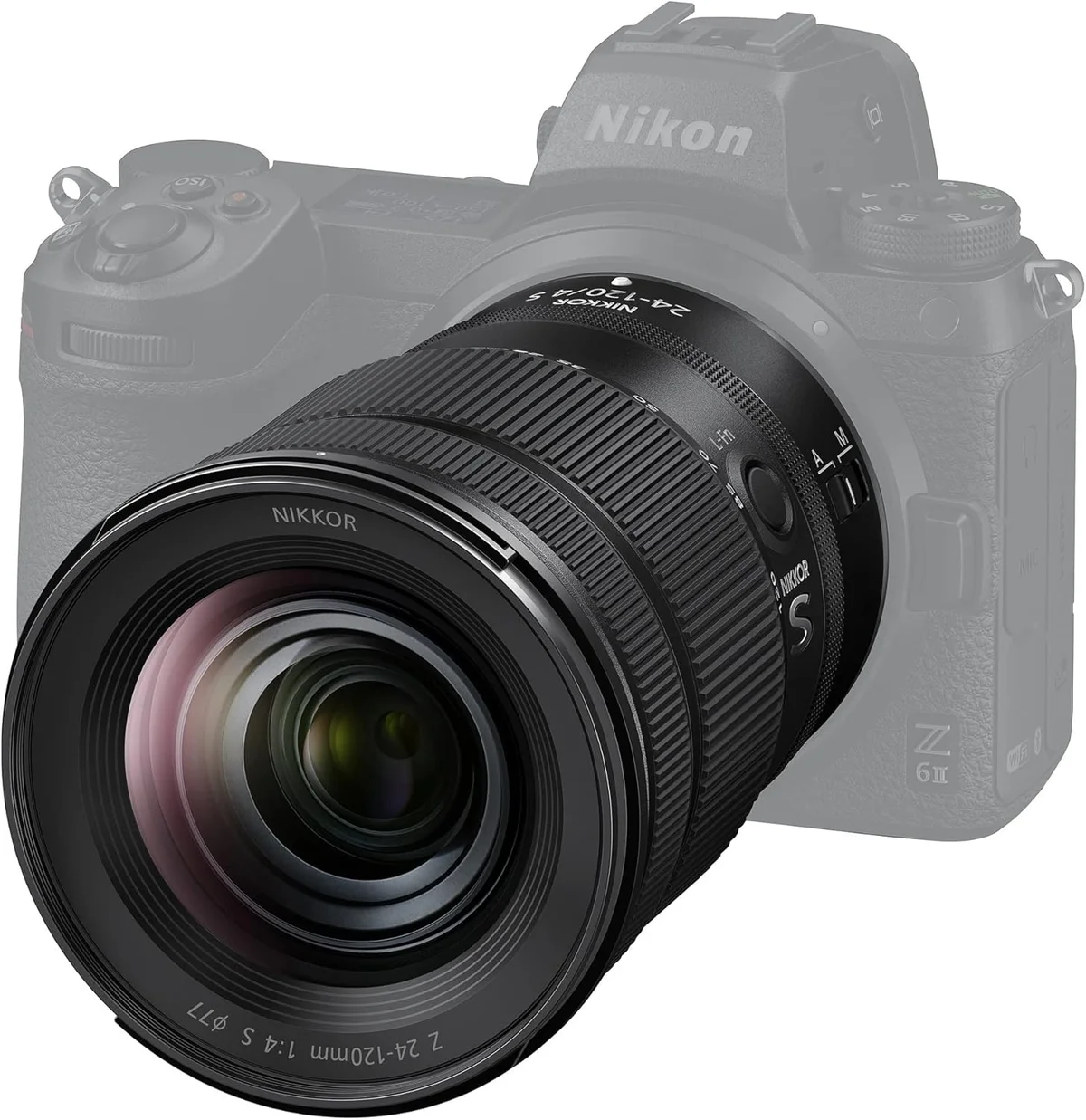
Nikon Z 24-120mm f/4 S
Nikon Z 24-200mm f/4-6.3
Picking the Right Nikon Travel Zoom for Your Kit
Choose the Nikon Z 24-120mm f/4 S If:
- Optical quality is your top priority — S-line sharpness across the entire zoom range produces files that hold up to heavy cropping and large prints
- You shoot in variable lighting and need consistent f/4 exposure without ISO penalties at the telephoto end
- Video is part of your workflow — constant aperture prevents brightness shifts during zoom transitions
- You already own or plan to add a dedicated telephoto (70-200mm or 70-300mm) for situations demanding longer reach
- Professional weather sealing matters because you shoot in rain, dust, or extreme temperatures regularly
Choose the Nikon Z 24-200mm f/4-6.3 VR If:
- You want one lens for everything — 24mm to 200mm covers wide-angle through telephoto without a lens change
- Travel weight and simplicity drive your gear decisions, and you prefer exploring over managing equipment
- You shoot primarily in daylight or well-lit conditions where the variable aperture is not a limiting factor
- Built-in optical VR matters for your handheld telephoto shooting, especially on Z bodies without IBIS like the Z50
- Budget is a factor — the 24-200mm delivers an enormous focal range at a lower investment than the 24-120mm plus a telephoto
The Two-Lens Approach
Many experienced Nikon Z photographers own both lenses and deploy them differently. The 24-120mm lives on the camera for daily shooting, paid work, and any situation where image quality cannot be compromised. The 24-200mm goes in the bag for vacations, casual weekend walks, and lightweight travel days when carrying a second lens feels like a burden. This pairing costs less than a single 24-70mm f/2.8 S and covers far more range — a practical combination that plays to each lens's strengths.
Our Verdict
The Nikon Z 24-120mm f/4 S is the stronger lens. It resolves finer detail at every shared focal length, maintains constant brightness across its range, and meets S-line build standards that instill confidence in demanding conditions. For photographers who measure their gear by output quality — sharp prints, clean files in mixed light, and consistent color rendition — the 24-120mm is the rational investment, even at the higher price.
But the 24-200mm f/4-6.3 VR answers a question the 24-120mm cannot: what if you want one lens and nothing else? Its 200mm reach opens compositions that 120mm simply cannot access. Its optical VR provides stabilization independent of the camera body. And its ability to handle everything from a cathedral interior to a distant mountain temple in a single twist makes it the most practical travel zoom Nikon has built. The optical gap is real, but for many photographers, the images you capture because you had enough reach outweigh the images that would have been marginally sharper at a shorter focal length. Speed of composition matters too — by the time you swap lenses to get from 120mm to 200mm, the moment may have passed. The 24-200mm keeps you shooting while others are digging through their bags.
Answering the Most Common Nikon Travel Zoom Questions
These are the questions Nikon Z shooters ask most often when deciding between the S-line standard zoom and the all-in-one superzoom.
The biggest difference between these two lenses shows up in real-world shooting, not spec sheets.
Can the Nikon Z 24-200mm replace a dedicated 70-200mm telephoto?
Not for professional telephoto work. The 24-200mm reaches 200mm but at f/6.3, which limits subject separation and low-light shooting compared to a 70-200mm f/2.8. Image quality also drops at the long end — corner softness increases beyond 150mm, and chromatic aberration becomes more visible. For casual travel and daylight telephoto shots, the 24-200mm handles the range well. For paid portrait, sports, or event work requiring consistent 200mm sharpness and fast aperture, a dedicated telephoto remains necessary.
Does the 24-120mm f/4 S work well on APS-C Nikon Z bodies like the Z50?
Yes, with caveats. On DX bodies, the 1.5x crop shifts the effective range to 36-180mm equivalent, which eliminates the wide-angle capability at 24mm. You gain extra telephoto reach at the long end — useful for wildlife and sports. The S-line optical quality translates well to APS-C sensors, and autofocus performance remains identical. Weight becomes more noticeable on the lighter Z50 body, though. If wide-angle matters on DX, consider the Z DX 16-50mm as a companion.
Which lens has better autofocus for tracking moving subjects?
The 24-120mm f/4 S uses a stepping motor with faster acquisition and more confident tracking in challenging light. Its constant f/4 aperture gives the phase-detect AF system more light across the entire zoom range. The 24-200mm focuses accurately in good light but slows at the 200mm end where the aperture narrows to f/6.3 — less light means the AF sensor works harder. For sports, wildlife, and active children, the 24-120mm locks focus more reliably.
Is the VR in the 24-200mm better than relying on IBIS with the 24-120mm?
The 24-200mm has optical VR that works together with IBIS on bodies like the Z5, Z6, and Z8. This dual-stabilization system provides roughly 5 stops of effective compensation at 200mm. The 24-120mm relies solely on in-body stabilization since it lacks optical VR, which provides 3-4 effective stops at 120mm. At longer focal lengths where shake is amplified, the 24-200mm has a stabilization advantage — an important factor for handheld shooting at slow shutter speeds.
Are third-party alternatives worth considering instead of these two Nikon options?
The Tamron 28-200mm f/2.8-5.6 for Nikon Z offers a faster maximum aperture than the Nikon 24-200mm but starts at 28mm instead of 24mm. No third-party lens directly competes with the 24-120mm f/4 S in the Nikon Z mount — its combination of S-line optics and constant f/4 is unique. For shooters prioritizing value, the Tamron is worth evaluating. For those who want Nikon-native quality assurance and full weather sealing, the native options remain the safer choice.
How much does barrel distortion differ between these two lenses?
Both lenses show barrel distortion at their widest setting, but the 24-200mm produces more pronounced distortion at 24mm due to the optical compromises required for its 8.3x zoom ratio. The 24-120mm controls distortion better across its range, with mild barreling at 24mm that corrects cleanly in-camera or in Lightroom. At mid-range focal lengths around 50mm, both lenses are nearly distortion-free. Pincushion distortion at the telephoto end is minimal on both and corrects automatically in Nikon bodies.