Understanding MTF Charts: How to Read Lens Sharpness Data

Every lens manufacturer publishes MTF charts for their optics. Canon, Nikon, Sony, Tamron, Sigma — they all use the same basic format. And nearly every photographer glances at these charts, sees a tangle of lines, and moves on without extracting any useful information.
MTF (Modulation Transfer Function) measures one specific thing: how well a lens reproduces contrast at different levels of detail across the image frame. It doesn't capture everything about a lens — it says nothing about color rendering, bokeh character, autofocus speed, or build quality. But for the question "how sharp is this lens, and where in the frame does sharpness fall off?" MTF is the most objective measurement available.

What MTF Actually Measures
Imagine projecting a pattern of alternating black and white lines through a lens onto a sensor. A perfect lens would reproduce the pattern exactly — pure black lines separated by pure white gaps. A real lens blurs the lines slightly, reducing the contrast between the black and white bands. The darkest areas get a little lighter, the brightest areas get a little darker.
MTF measures this contrast reduction as a value between 0 and 1 (or 0% to 100%). An MTF of 1.0 means perfect reproduction — the lens maintains full contrast. An MTF of 0.5 means the contrast between the light and dark bands has dropped to half. An MTF of 0 means the lens has blurred the pattern into uniform gray.
The key variable is spatial frequency — how many line pairs fit into a millimeter (lp/mm). Coarse patterns (10 lp/mm) test overall contrast. Fine patterns (30 lp/mm or higher) test resolving power — the lens's ability to render small details. A lens might score 0.95 at 10 lp/mm (excellent contrast) but only 0.65 at 30 lp/mm (good but not exceptional resolution). Both numbers matter for different reasons.
Reading the Standard MTF Chart
Most manufacturer MTF charts follow the same layout. The horizontal axis shows distance from the center of the image to the corner, measured in millimeters. For a full-frame sensor, the center is 0mm and the corner is about 21.6mm. The vertical axis shows the MTF value from 0 to 1.
Two sets of lines appear on the chart, each tested at two spatial frequencies:
- Thick lines = 10 lp/mm — measuring contrast reproduction. These should be as high and flat as possible. A thick line at 0.9 across the frame means excellent, even contrast.
- Thin lines = 30 lp/mm — measuring fine detail resolution. These are always lower than the thick lines and typically drop more toward the edges. A thin line above 0.6 across most of the frame indicates good resolving power.
Each spatial frequency gets two lines:
- Solid line (S) = sagittal — measuring contrast along lines radiating outward from the center (like spokes of a wheel).
- Dashed line (M) = meridional (tangential) — measuring contrast along lines running perpendicular to the sagittal direction (like concentric circles).
A well-corrected lens shows S and M lines that track close together. When they diverge, the lens has astigmatism — it focuses sagittal and meridional details at slightly different distances, causing directional blur. This is most visible in out-of-focus highlights, which become oval or cat-eye shaped instead of round.
What Good, Average, and Poor MTF Looks Like
These benchmarks apply to wide-open MTF charts at 30 lp/mm, which is the most revealing test for comparing lenses:
- Excellent (0.8+ center, 0.6+ corners): Top-tier primes and professional zooms. The Canon RF 50mm f/1.2L, Nikon Z 50mm f/1.2 S, and Sony FE 50mm f/1.4 GM all hit these marks. These lenses render fine detail with authority across most of the frame.
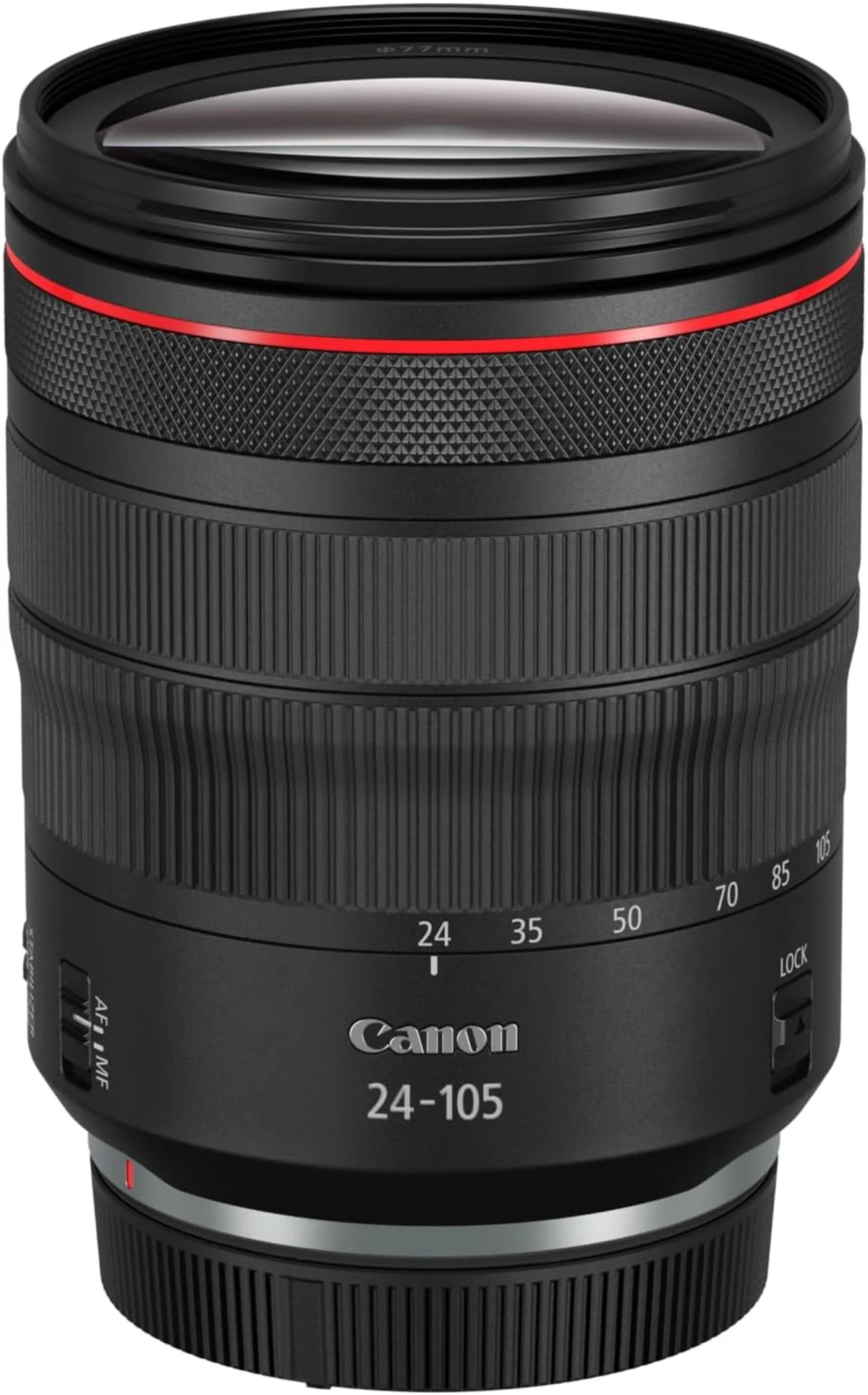
- Good (0.7+ center, 0.4+ corners): Most mid-range primes and competent zooms. The Tamron 28-75mm f/2.8 G2, Nikon Z 24-70mm f/4, and Canon RF 24-105mm f/4L IS USM fall here. Sharp enough for professional work, with visible but acceptable corner softness.
- Average (0.5-0.7 center, 0.3-0.4 corners): Budget lenses and some kit zooms. Usable for web and moderate-size prints. Visible softness in detailed subjects.
- Poor (below 0.5 center): Serious optical issues or tested at a challenging aperture/focal length combination. Some superzooms at their telephoto extreme fall here.
Why Wide-Open Charts Matter Most
Manufacturers sometimes publish MTF data at f/8, where most lenses perform at or near their peak. This makes every lens look good. It's technically accurate but practically misleading — you didn't buy an f/1.4 prime to shoot at f/8.
Wide-open MTF (maximum aperture) reveals the differences between lenses. It shows which fast primes deliver on their speed promise and which lose sharpness rapidly at wide apertures. An f/1.4 lens that's sharp at f/1.4 is a very different optical instrument from an f/1.4 lens that needs f/2.8 to look good — even though both carry the same aperture rating.
When evaluating a lens, look at wide-open MTF first. If wide-open performance is acceptable, stopped-down performance will be better. If wide-open performance is poor, buying that lens only makes sense if you plan to shoot primarily at smaller apertures — in which case, a slower, cheaper lens might give identical results.
The Limits of Manufacturer MTF Data
Manufacturer MTF charts are calculated from the optical design — they represent the theoretical performance of a perfect production sample. Real-world lenses introduce manufacturing tolerances: slightly decentered elements, minor spacing variations, inconsistent coatings. These tolerances mean your copy of a lens might perform slightly better or worse than the published chart suggests.
LensRentals' Roger Cicala has published extensive data on lens-to-lens variation, testing dozens of copies of popular lenses. His findings show that copy variation ranges from negligible (tight manufacturing tolerances in premium lenses like the Sony 24-70mm f/2.8 GM II) to considerable (some budget lenses where corner sharpness varies by 20-30% between copies). This is why a single copy tested by a review site might not match your experience — or the manufacturer's chart.
Third-party testing labs — LensRentals, DxOMark, Optical Limits — test actual production lenses on optical benches. Their data reflects real-world performance including manufacturing variation. When manufacturer charts and third-party data disagree, the third-party measurements are usually more representative of what buyers can expect.
How Sensor Resolution Interacts with MTF
A lens's MTF performance matters more on high-resolution sensors. A 12-megapixel sensor can't resolve fine enough detail to expose weaknesses that show at 30+ lp/mm. A 45-megapixel sensor demands lens performance at 50+ lp/mm before its pixels can capture all available detail. This is why lenses that were "sharp enough" on older cameras sometimes disappoint on modern high-resolution bodies — the sensor outresolved the glass.
As a rule, your sensor's pixel density determines which MTF spatial frequency matters most. Cameras like the Canon R5 (45MP), Nikon Z7 II (45.7MP), and Sony A7R V (61MP) benefit from lenses with high MTF scores at 40+ lp/mm. Lower-resolution bodies (24MP full-frame, 20MP APS-C) are well served by lenses that score high at 20-30 lp/mm. Paying for premium optics on a lower-resolution body yields diminishing returns for sharpness, though other qualities like bokeh and build quality may still justify the cost.
DxOMark's "perceptual megapixel" metric attempts to combine lens MTF data with sensor resolution to estimate how many effective megapixels a lens-camera combination delivers. A 50-megapixel camera paired with a soft kit lens might yield only 25 perceptual megapixels — half the sensor's potential. The same sensor paired with a premium prime might hit 40+ perceptual megapixels. This metric has limitations (it weights center performance heavily), but it illustrates how lens quality bottlenecks total system resolution.
Using MTF Data When Shopping for Lenses
A practical approach to MTF-informed lens shopping follows three steps.
Step 1: Identify your priority zone. If you shoot portraits, center sharpness matters most — your subject's eyes should be tack-sharp, and background performance is irrelevant since it's out of focus. For architecture and group photos, corner-to-corner sharpness is critical. For product photography on a flat surface, center and mid-frame matter equally. Match the MTF zone to your primary use case.
Step 2: Compare at the same aperture and frequency. Comparing a prime wide-open at f/1.4 against a zoom wide-open at f/2.8 tells you little. The zoom has a two-stop advantage in aberration control. Instead, compare both at f/2.8 or at their respective wide-open settings with the aperture difference noted. Similarly, compare at the same spatial frequency — 30 lp/mm to 30 lp/mm, not mixed frequencies.
Step 3: Weight the data appropriately. A 0.05 difference in MTF between two lenses (say, 0.78 vs 0.73 at 30 lp/mm center) is invisible in real photos. Don't choose a lens based on a 5% MTF advantage — it won't be detectable in your images. Focus on larger differences (0.15+) and on the pattern of performance across the frame. A lens that's uniformly 0.7 across the frame often produces better-looking images than one that's 0.85 center but 0.4 corners.
Preferred data sources for buyers: LensRentals (tests multiple copies, reveals sample variation), DxOMark (standardized methodology, good for cross-brand comparison), Optical Limits (detailed per-aperture analysis), and the manufacturer's own charts (useful for models not yet tested by independent labs).
MTF in Context: What Charts Can't Tell You
Relying solely on MTF data leads to suboptimal lens choices. Several critical qualities fall outside MTF measurement:
Bokeh character. Two lenses with identical MTF scores can produce strikingly different out-of-focus rendering. One might create smooth, creamy backgrounds while the other shows nervous, double-lined bokeh. The Nikon Z 85mm f/1.2 S and Sony FE 85mm f/1.4 GM both have excellent MTF, but their bokeh character differs. MTF doesn't capture this at all.
Color and contrast rendering. MTF measures luminance contrast (black-to-white), not color accuracy. Some lenses render warmer or cooler than others. Some preserve microcontrast (the sense of "3D pop" in an image) better than peers with similar MTF scores. These qualities are real but require subjective evaluation — no chart captures them.
Distortion and vignetting. A lens with perfect MTF but heavy barrel distortion needs software correction, which can reduce effective resolution at the frame edges. Vignetting (corner darkening) is also absent from MTF data. Both are correctable in post-processing, but they affect real-world image quality.
Focus accuracy and speed. The sharpest lens in the world produces soft images if it hunts in autofocus or consistently front-focuses. MTF assumes perfect focus — your camera's AF system may not deliver that, especially in low light or with fast-moving subjects.
The best approach: use MTF charts as a first filter, eliminating optically weak candidates from your shortlist. Then evaluate the remaining lenses on the qualities MTF cannot measure — bokeh, color rendering, autofocus behavior, ergonomics, and build quality. Sample images shot by other photographers, detailed video reviews from channels that test real-world scenarios, and hands-on rental testing fill the gaps that laboratory charts leave open. No single metric captures the full character of a lens.
MTF at Different Apertures: What Stopping Down Reveals
Most manufacturer MTF charts show wide-open performance only, but the stopped-down behavior tells a separate story. Nearly every lens improves from wide open to around f/5.6-f/8, where residual aberrations are minimized by the smaller aperture. Beyond f/8, diffraction begins limiting resolution — the physical wave nature of light softens the image regardless of optical quality. On a 45-megapixel sensor, diffraction becomes visible at f/11 and noticeably degrades fine detail by f/16.
Independent testing sites like LensRentals publish MTF data at multiple apertures, letting you see exactly where a lens peaks. A fast f/1.4 prime that scores 0.65 at 30 lp/mm wide open might hit 0.85 at f/2.8 and 0.90 at f/4. Knowing the peak aperture helps you decide whether the extra cost of f/1.4 over f/1.8 is justified — if both lenses reach the same MTF ceiling by f/2.8, the speed advantage only applies to the narrow range of shooting situations where you actually need f/1.4. For shooters who primarily work at f/4-f/8, the stopped-down MTF comparison often matters more than the headline wide-open numbers.
MTF Chart Questions
Common questions about reading and interpreting MTF data from manufacturers and independent testing labs.
Do higher MTF values always mean a better lens?
Higher values indicate better contrast and resolution at the tested spatial frequency. But MTF charts don't show chromatic aberration, distortion, bokeh quality, autofocus speed, or build quality. A lens with slightly lower MTF but smoother bokeh might be preferred for portraits. MTF is one metric, not the whole picture.
Why do some manufacturers show MTF at f/8 instead of wide open?
MTF at f/8 shows the lens near its optical peak (where most aberrations are minimized by the smaller aperture). This is useful for comparing intrinsic optical designs between lenses. However, most photographers care about wide-open performance because that is where lenses differ most and where you need the data to make purchasing decisions.
Can I compare MTF charts between Canon, Nikon, and Sony?
With caution. Each manufacturer uses slightly different testing methodologies, spatial frequencies, and chart generation methods. Canon publishes charts at 10 and 30 lp/mm. Nikon uses 10 and 30 as well but may weight differently. Third-party testing labs like LensRentals and DxOMark provide cross-brand comparable data using standardized equipment.
What does it mean when sagittal and meridional lines diverge?
A large gap between sagittal (S) and meridional (M) readings indicates astigmatism — the lens focuses horizontal and vertical detail at slightly different distances. This creates directionally blurred points of light, which shows up as elongated or streaked bokeh highlights toward the frame edges. A small S-M gap means more even performance.
How do I read MTF numbers from testing sites like LensRentals?
LensRentals reports MTF as a percentage at specific spatial frequencies (typically 10, 20, 30, and 50 lp/mm) measured at the center and various distances from center. Above 0.9 (90%) at 30 lp/mm center is excellent. Above 0.7 at corners is good. Below 0.5 at corners indicates visible softness. Their data comes from optical bench testing of multiple copies, so it accounts for sample variation.
Do zoom lenses have different MTF charts at different focal lengths?
Yes. Zoom lenses should ideally be tested at multiple focal lengths — at minimum the wide end, middle, and telephoto end. Manufacturers often show only the best-performing focal length. Independent labs publish data at multiple settings, which reveals where in the zoom range performance drops. Many zooms are sharpest at mid-range and softest at the telephoto extreme.