Tamron 28-75mm f/2.8 G2 Review: The Budget Zoom That Embarrasses Premium Glass
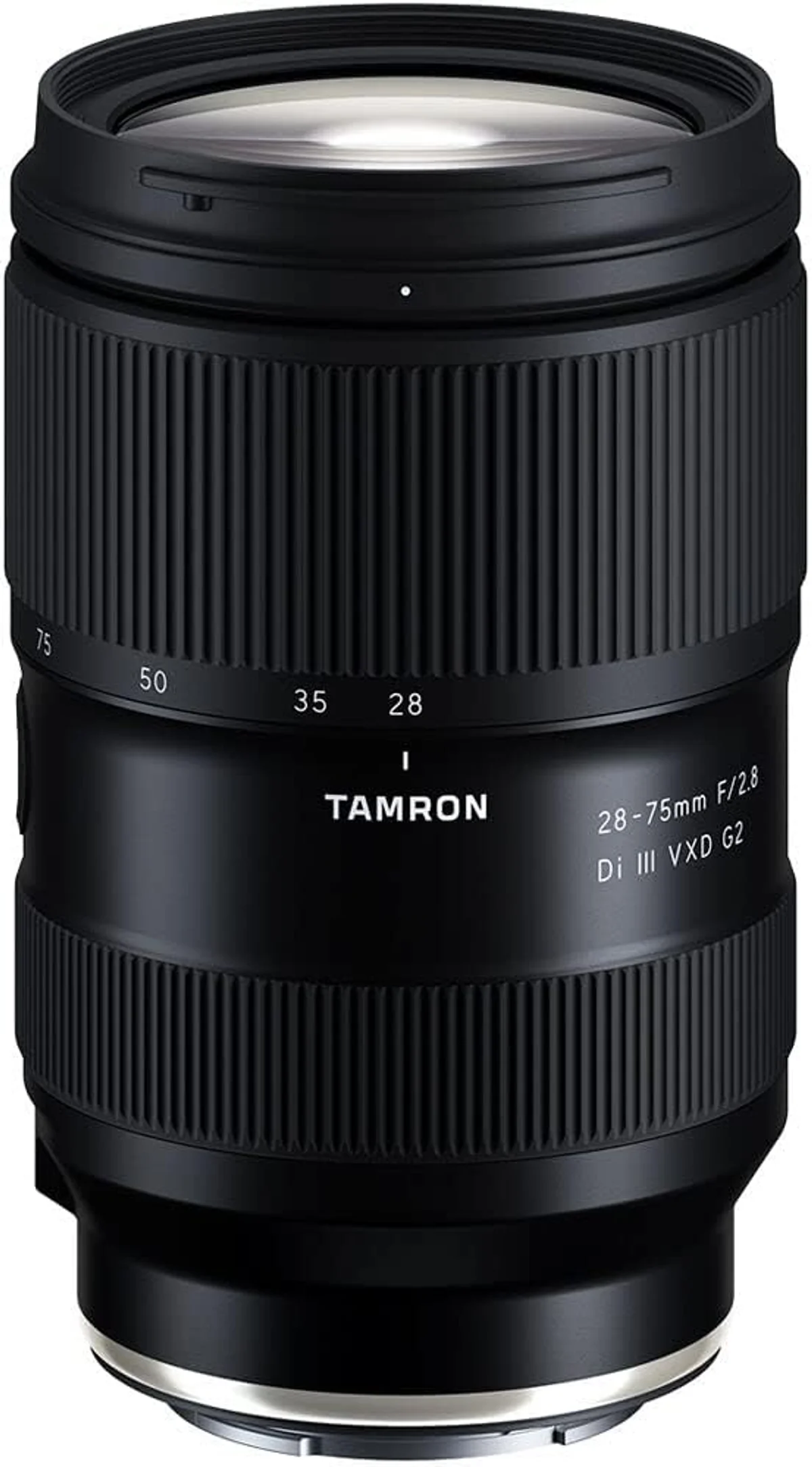
The Tamron 28-75mm G2 is the smart money for Sony shooters who need f/2.8 standard zoom range. It costs a third of the Sony GM II and gives up remarkably little in optical quality. The close-focus capability is a genuine advantage the GM lacks.
This review is based on analysis of published owner reports, expert reviews, and comparison with products in the Third-Party Lenses category. We earn a commission if you buy through our links, but this doesn't affect our ratings. Read our full methodology →
Who Should Buy the Tamron 28-75mm G2?
The Tamron 28-75mm f/2.8 G2 is the smartest zoom purchase in the Sony system for anyone not chasing the absolute optical ceiling. Sharp, fast, weather-resistant, and blessed with a 0.18m close-focus that premium zooms can't match — all at a third of the GM II price. The 28mm starting point (not 24mm) and corner softness at f/2.8 are real but livable compromises. For travel, events, portraits, and everyday shooting, this lens removes the need to justify its price. It justifies itself.
The Tamron 28-75mm G2 is the smart money for Sony shooters who need f/2.8 standard zoom range. It costs a third of the Sony GM II and gives up remarkably little in optical quality. The close-focus capability is a genuine advantage the GM lacks.
Best for: Sony shooters wanting f/2.8 standard zoom without GM pricing
Overview
The Tamron 28-75mm f/2.8 G2 exists to answer a question every Sony shooter asks: do I really need to spend triple for the Sony GM II? For most photographers, the answer is no. The Tamron delivers f/2.8 zoom performance — fast autofocus, strong sharpness, smooth bokeh — at a price that leaves room in the budget for a second lens. Across Amazon owner reviews, the consensus is consistent: the image quality gap between this lens and the Sony GM II is far smaller than the price gap.
We read those owner reviews alongside independent optical benchmarks, direct comparisons with the Sigma 24-70mm f/2.8 DG DN II Art and Sony's own GM II, and real-world feedback from event, travel, and wedding photographers. The Tamron 28-75mm G2 wins on value and close-focus capability. It loses on zoom range (28mm vs 24mm), corner sharpness, and flare control. For the majority of shooting scenarios, those differences vanish.
This is the zoom lens for Sony shooters who'd rather spend their money on experiences than equipment.
The G2 designation marks the second generation. Compared to the original Tamron 28-75mm f/2.8 Di III RXD, the G2 improves autofocus speed with the VXD linear motor (replacing the slower RXD stepping motor), adds moisture-resistant construction, refines the optical formula from 15 to 17 elements, and improves close-focus from 0.19m to 0.18m. If you spot the original version at a steep discount, the G2 is still worth the premium for the AF upgrade alone — especially for eye tracking and video work.
Key Specifications
540 Grams of Go-Anywhere Zoom
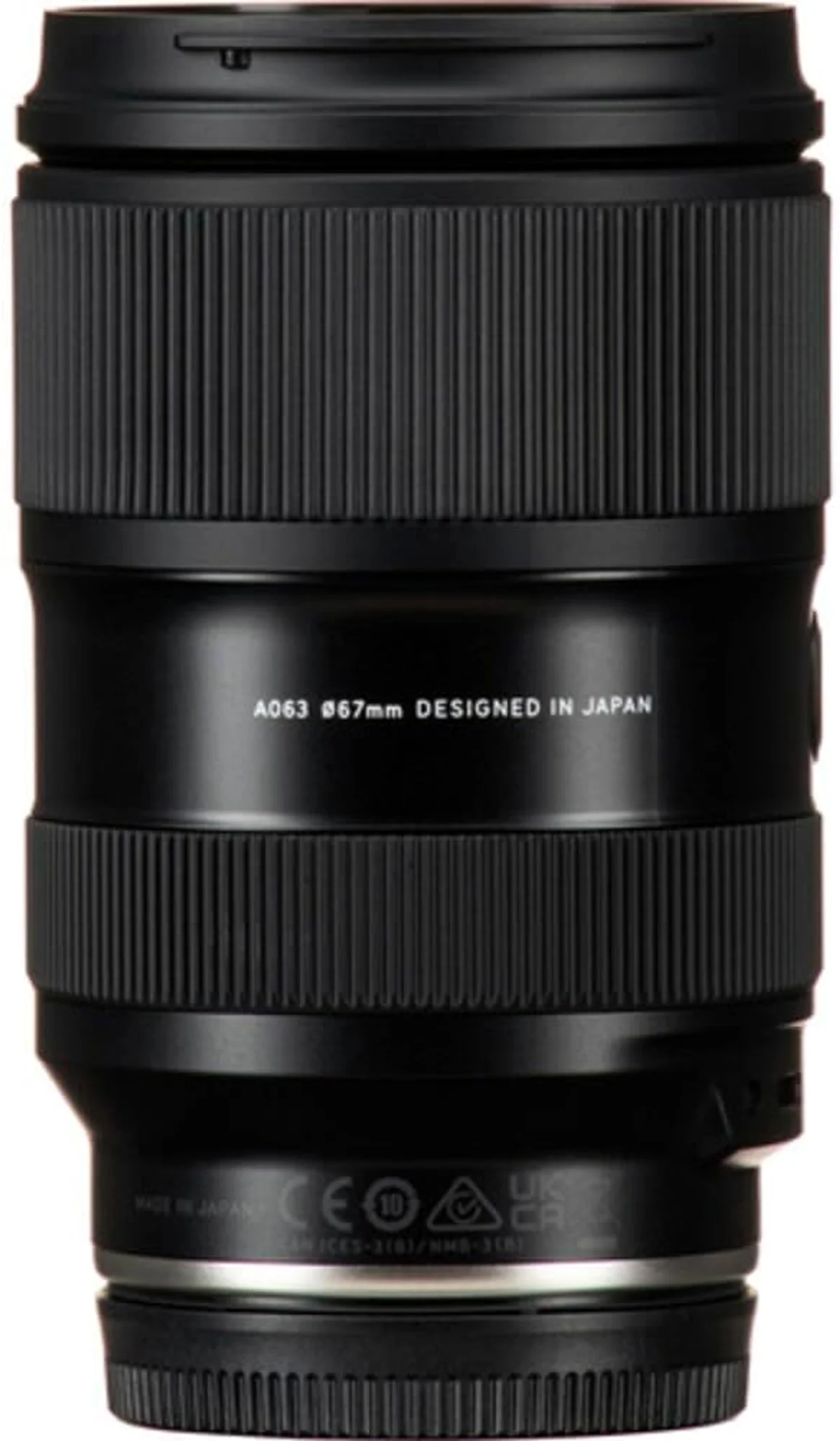
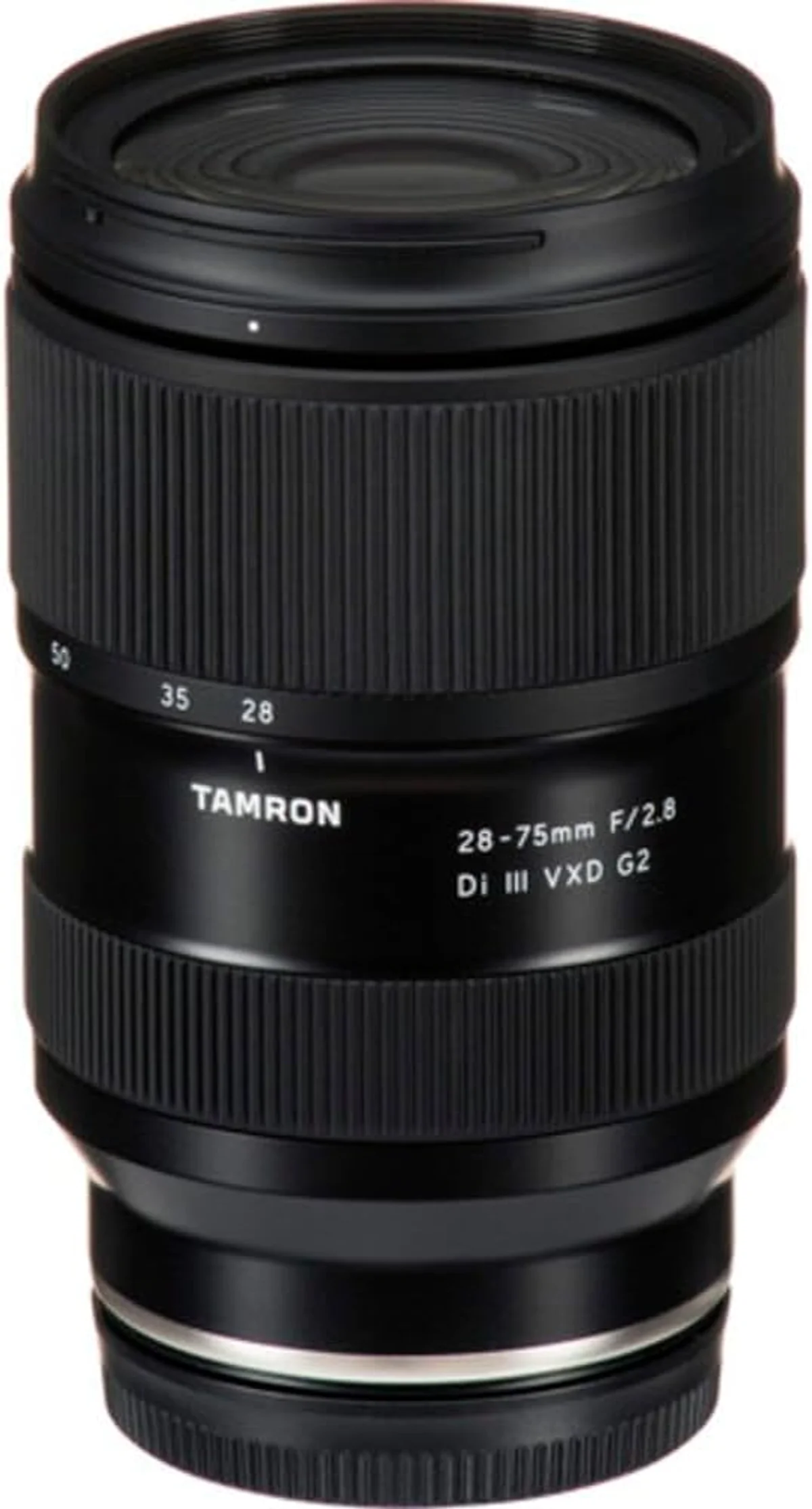
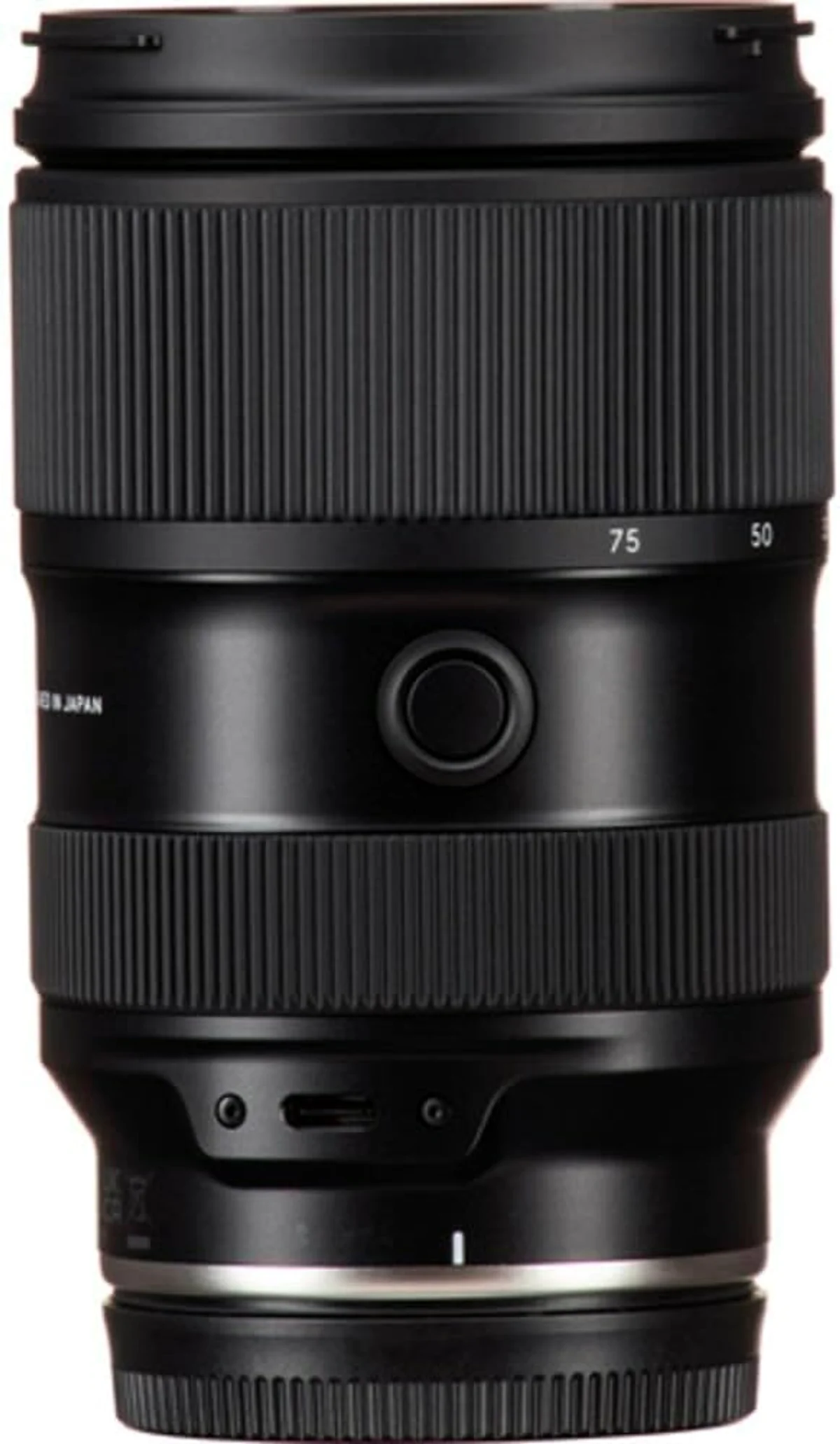
At 540g and 117.6mm long, the Tamron 28-75mm G2 is compact for an f/2.8 standard zoom. It fits comfortably on A7 IV, A7C II, and A7 III bodies without feeling front-heavy. The zoom ring is smooth with consistent torque across the range — no stiff spots, no looseness. The focus ring is thin but functional for manual focus override.
Moisture-resistant construction is a genuine upgrade from the original Tamron 28-75mm. Gaskets at the mount, switches, and barrel joints keep light rain and dust out. It won't survive a tropical downpour, but shooting in drizzle or dusty outdoor events is within its tolerance. The 67mm filter thread matches many other Sony-mount lenses, keeping filter costs shared across your kit.
One design choice that divides opinion: the zoom ring rotates in the opposite direction from Sony native lenses. If you switch between Tamron and Sony zooms during a shoot, muscle memory trips you up. Use it exclusively for a week and the rotation becomes natural. But dual-system shooters who mix brands within a single event find it a persistent annoyance.
The Smart-Money Argument — and Its Limits
The enthusiast's case is built on value. "Sharp and detailed images even at wide open," writes one reviewer. "Rapid and quiet autofocus," confirms another. The VXD motor tracks eyes reliably on Sony bodies. Close-focus at 0.18m (just over 7 inches) at the wide end enables near-macro shots that the Sony GM II cannot match — product detail shots, food close-ups, and flower photography without switching to a macro lens. Multiple travel photographers describe it as the one-lens solution for trips where packing light matters.
The skeptic's case: barrel distortion at 28mm is noticeable — straight lines near frame edges curve outward visibly in architectural shots. Software correction fixes it, but it crops the image slightly and introduces mild corner softness. Focus breathing is more pronounced than on the Sony GM II — visible during video focus racks. The plastic mount ring looks and feels budget despite having no mechanical consequence. And starting at 28mm instead of 24mm means you lose the extra-wide perspective that the Sony 24-70mm and Sigma 24-70mm provide — four millimeters that matter for interior, landscape, and group shots.
Strengths & Limitations
Strengths
- Sharp across the frame — matches much pricier zooms
- VXD motor delivers fast, quiet autofocus
- Compact and light for an f/2.8 standard zoom
- Excellent close-focus at 0.18m for near-macro shots
Limitations
- Some barrel distortion at 28mm needs correction
- Focus breathing more noticeable than Sony GM
- Plastic mount ring — cosmetic concern only
- Zoom ring direction opposite to Sony native lenses
Performance
Optical Performance Across the Range
Center sharpness at f/2.8 is excellent across the entire zoom range. At 28mm, 50mm, and 75mm, the center of the frame resolves fine detail at levels that match the Sigma 24-70mm Art II and fall just short of the Sony GM II. Stop down to f/4 and the entire frame sharpens — corner performance at f/4 through f/8 is strong enough for landscape and architecture work.
Corner performance at f/2.8 is the lens's weakest optical metric. At 28mm wide open, the extreme corners show softness on high-resolution bodies like the A7R V (61MP). On the 33MP A7 IV, corners are acceptable but not crisp. This matters for landscape photographers who need edge-to-edge sharpness; it's invisible for portrait, event, and street work where subjects occupy the center 70% of the frame.
Chromatic aberration is well-controlled. The 17-element design with multiple low-dispersion elements suppresses purple fringing on high-contrast edges. CA that does appear corrects with a single click in Lightroom's lens profile. By f/4, aberrations drop to negligible levels.
Bokeh at f/2.8 is smooth and pleasing. The 9-blade circular aperture renders background highlights as round circles from f/2.8 through f/4. At 75mm f/2.8, the background blur matches the subject-isolation feel of many f/4 telephoto zooms at longer focal lengths — strong enough for portrait work when an 85mm prime isn't available.
The 0.18m Close-Focus Advantage
This is the Tamron's hidden weapon. At 28mm, the minimum focus distance drops to just 0.18m — roughly 7 inches from the front element. The resulting magnification (1:2.7) fills a significant portion of the frame with small subjects: watch faces, jewelry, food textures, flower petals. The Sony GM II focuses to 0.21m with lower magnification. The Sigma 24-70mm Art II focuses to 0.18m at 24mm with similar magnification.
For travel photographers, this close-focus capability replaces a dedicated macro lens for casual close-up work. Restaurant meals, market details, museum artifacts — subjects that deserve more than an arm's-length zoom shot. The wide f/2.8 aperture at close range throws backgrounds into complete blur, creating images that look like they required a macro lens and tripod rather than a standard zoom at arm's length.
Autofocus: VXD Delivers
The VXD linear motor focuses quickly and quietly. Initial lock-on is fast in good light — competitive with Sony native lenses. Eye AF tracking works reliably on modern Sony bodies. For video, the motor noise is effectively inaudible to external microphones. Internal camera mics may pick up a faint whirr during continuous AF, but it's below the threshold of most ambient environments.
Focus breathing is the video-specific weakness. Racking focus from near to far produces a visible field-of-view shift — the image appears to zoom slightly. For documentary, vlogging, and talking-head content, this is manageable or invisible. For cinematic narrative work with deliberate focus pulls, the breathing may require workaround techniques or a different lens.
Color, Contrast, and the Tamron Rendering Style
Tamron lenses tend toward neutral-to-warm color rendering, and the 28-75mm G2 follows that pattern. Skin tones flatter without post-processing. Blues stay deep without oversaturating. Greens maintain natural vibrancy. Side-by-side with the Sony GM II, the Tamron produces slightly warmer midtones — a minor difference that disappears with a single white balance adjustment but pleases photographers who prefer a warmer starting point.
Contrast at f/2.8 is high. Subjects pop against blurred backgrounds with clean edge separation. Stop down to f/5.6-f/8 and contrast increases further — the sweet spot for landscape and architectural work where punchy color separation matters. Micro-contrast — the ability to render fine texture and three-dimensionality — falls slightly short of the Sony GM II and Sigma Art II, but the difference requires direct A/B comparison to detect.
Flare control is adequate but not exceptional. Shooting with the sun just outside the frame produces occasional veiling flare that reduces overall contrast. The included petal hood blocks most stray light. Direct sun-in-frame shots show ghosting artifacts — colored circles or streaks opposite the light source. For golden-hour portraits where backlight is deliberate, some flare can add atmosphere. For controlled lighting scenarios, flare is a non-issue.
Vignetting at f/2.8 darkens corners by roughly 1.5-2 stops depending on focal length — heaviest at 28mm, lightest at 75mm. Tamron's lens profile in Lightroom corrects it automatically. Many portrait shooters leave vignetting partially intact, using it as a natural framing device.
Value Analysis
The Three-Way f/2.8 Zoom Comparison
Sony shooters choosing an f/2.8 standard zoom face three options: this Tamron at the budget tier, the Sigma 24-70mm DG DN II Art at the mid tier, and the Sony 24-70mm f/2.8 GM II at the premium tier. The Tamron costs roughly a third of the Sony, the Sigma roughly half.
Optically, the hierarchy is real but narrow. Corner sharpness: Sony beats Sigma beats Tamron. Distortion control follows the same order. Close focus: Tamron and Sigma tie, both ahead of Sony. AF speed: Sony leads, Tamron and Sigma are close. Weight: Tamron (540g), Sony (695g), Sigma (830g). The performance gaps between adjacent tiers are small; the price gaps are not.
For photographers pairing this zoom with a fast prime, the combination of the Tamron 28-75mm G2 and a Sony FE 85mm f/1.8 covers 28-85mm with f/2.8 zoom flexibility and f/1.8 portrait capability — at a combined cost lower than the Sony GM II alone. For event photographers who need range, adding the Tamron 70-300mm f/4.5-6.3 extends coverage to 300mm for a three-lens kit under the price of one premium zoom.
See our third-party lens roundup for the full Sony zoom comparison, and our travel lens guide for one-lens kit recommendations.
What to Expect Over Time
Reliability on the Road
Travel photographers report strong reliability after extended use. The moisture-resistant construction survives coastal humidity, light rain, and dusty markets. The zoom mechanism maintains consistent torque — no loosening after months of daily rotation. The VXD motor shows no degradation in focus speed or accuracy over time.
Tamron's service reputation is solid. The company operates a US service center and responds to warranty claims within industry-standard timeframes. Firmware updates are available through Tamron's Lens Utility software — though updates for this lens have been infrequent, limited to AF compatibility improvements for newer Sony bodies.
The plastic mount ring is the most common aesthetic complaint after extended use. It develops minor scratches from lens swaps faster than metal mounts. Functionally, it performs identically — the bayonet mechanism holds firm with no play. But photographers who care about the tactile feel of their equipment notice the plastic every time they mount the lens. The rubber zoom grip holds up well to sweat and friction — no peeling or degradation reported even after years of heavy event use. The overall picture: the lens works harder than it looks, and it looks better than its price suggests.
The upgrade path leads to the Sigma 24-70mm f/2.8 DG DN II Art (better corners, heavier, more expensive) or the Sony 24-70mm f/2.8 GM II (best-in-class, triple the price). Most Tamron 28-75mm G2 owners who upgrade do so for the extra 4mm at the wide end (24mm vs 28mm) rather than for optical quality differences.
For Sony shooters already invested in Tamron glass, the G2 pairs well with Tamron's telephoto options. The Tamron 70-300mm f/4.5-6.3 continues the range beyond 75mm at a budget-friendly price. Together, the two lenses cover 28-300mm — a complete kit for travel, events, and everyday shooting. The zoom ring direction matches across both Tamron lenses, so muscle memory stays consistent.
On APS-C bodies, this lens provides a 42-112.5mm equivalent range — an effective portrait zoom that covers headshots through environmental compositions. The f/2.8 aperture gives enough background separation for subject isolation on crop sensors, and the VXD motor tracks subjects with the same speed as on full-frame bodies.
Tamron 28-75mm G2: Your Questions
Answers based on Amazon owner reviews, independent optical tests, and direct comparisons with the Sony 24-70mm GM II and Sigma 24-70mm Art II.
Is Tamron 28-75 G2 good?
Yes — it is widely considered the best value f/2.8 standard zoom for Sony full-frame. At roughly a third the price of the Sony 24-70mm f/2.8 GM II, it delivers comparable center sharpness, fast VXD autofocus, and a close-focus capability (0.18m at 28mm) that the Sony cannot match. The main compromises: barrel distortion at 28mm requires software correction, and the zoom ring rotates opposite to Sony native lenses.
What does G2 mean on Tamron lenses?
G2 stands for "Generation 2" — it is the updated version of the original Tamron 28-75mm f/2.8 Di III RXD. The G2 improves optical design (17 elements vs 15), switches from the RXD stepping motor to the faster VXD linear motor, adds moisture-resistant construction, and improves close-focus capability. If you see the original version for sale at a discount, the G2 is worth the extra cost for the AF speed improvement alone.
What does VXD mean in Tamron?
VXD stands for Voice-coil eXtreme-torque Drive — Tamron's linear autofocus motor. It drives the focus group directly with electromagnetic force rather than gears, producing fast, quiet, and precise focusing. VXD replaced the older RXD (Rapid eXtra-silent stepping Drive) in Tamron's premium lenses. In practice, VXD autofocus keeps up with Sony's own linear motors for eye tracking, subject detection, and video use.
Is the Tamron 28-75 G2 full-frame?
Yes. The Di III designation means it is designed for mirrorless full-frame cameras with Sony E-mount. It projects a full-frame image circle and works on all Sony full-frame bodies (A7 series, A9 series, A1) as well as APS-C bodies like the A6700, where it provides a 42-112.5mm equivalent field of view.
Tamron 28-75 G2 vs Sony 24-70 GM II — which should I buy?
The Sony 24-70mm f/2.8 GM II is the better lens: wider at 24mm, slightly sharper corners, less distortion, better flare control, and lighter at 695g vs 540g for the Tamron (though the Sony weighs more). It also costs roughly three times as much. The Tamron matches the Sony on center sharpness, beats it on close focus (0.18m vs 0.21m), and costs dramatically less. For professionals who need the absolute best, the GM II justifies its price. For everyone else — enthusiasts, travel shooters, event backup — the Tamron delivers 90% of the result at 33% of the cost.
Does the Tamron 28-75 G2 have image stabilization?
No. Like most Sony-mount third-party lenses, it relies on the camera body's in-body image stabilization (IBIS). All Sony full-frame bodies from the A7 III onward include IBIS, which compensates for camera shake at 4-5 stops depending on the body. On older bodies without IBIS, you rely on shutter speed. At 75mm, aim for 1/80s minimum without stabilization.