Best Canon RF Lenses 2026: Every RF Lens Worth Buying

Canon's RF mount launched in 2018, and the lens lineup has grown from four options to more than fifty. That range brings a problem: picking the right glass means sorting through L-series primes, budget STM zooms, RF-S crop lenses, and legacy EF glass that still works with an adapter. The most expensive cost more than ten times as much as the cheapest.
We analyzed specifications, read Amazon owner reviews, cross-referenced professional optical test data, and compared real-world image samples across all ten lenses in this roundup. Every recommendation below reflects a specific shooting scenario — because the best lens is the one that matches what you actually photograph, not the one with the highest price tag.
Canon RF shooters fall into predictable camps. Some need one lens that handles everything from wide compositions to tight portraits. Others want the sharpest prime at the lowest price. A few chase macro magnification or wildlife reach on a budget. This list is organized by how broadly useful each lens is, weighted toward optical quality and build, with price context for every pick.
Three of these ten lenses carry the L-series designation — Canon's mark for professional-grade construction, weather sealing, and premium optics. The rest trade build quality for affordability or compactness. Both tiers produce strong images. The gap shows up in ergonomics, durability, and how the lens performs in the worst conditions rather than the best.
Quick Picks at a Glance
| Feature | Editor's Pick Canon RF 24-105mm f/4L IS USM | Canon RF 50mm f/1.8 STM | Canon RF 28-70mm F2.8 IS STM | Canon RF 35mm F1.8 IS Macro STM | Canon RF 100mm F2.8 L Macro IS USM | Canon RF 100-400mm f/5.6-8 IS USM | Canon RF 16mm F2.8 STM | Canon RF-S 10-18mm F4.5-6.3 IS STM | Canon RF 75-300mm F4-5.6 | Canon EF 50mm f/1.8 STM |
|---|---|---|---|---|---|---|---|---|---|---|
| Price Band | Flagship | Entry | Flagship | Entry | Flagship | Step-up | Entry | Entry | Entry | Entry |
| Focal Length | 24-105mm | 50mm | 28-70mm | 35mm | 100mm | 100-400mm | 16mm | 10-18mm | 75-300mm | 50mm |
| Max Aperture | f/4 | f/1.8 | f/2.8 | f/1.8 | f/2.8 | f/5.6-8 | f/2.8 | f/4.5-6.3 | f/4-5.6 | f/1.8 |
| Mount | Canon RF | Canon RF | Canon RF | Canon RF | Canon RF | Canon RF | Canon RF | Canon RF | Canon RF | Canon EF |
| Check Price | Check Price | Check Price | Check Price | Check Price | Check Price | Check Price | Check Price | Check Price | Check Price |
The Full Canon RF Lineup, Ranked
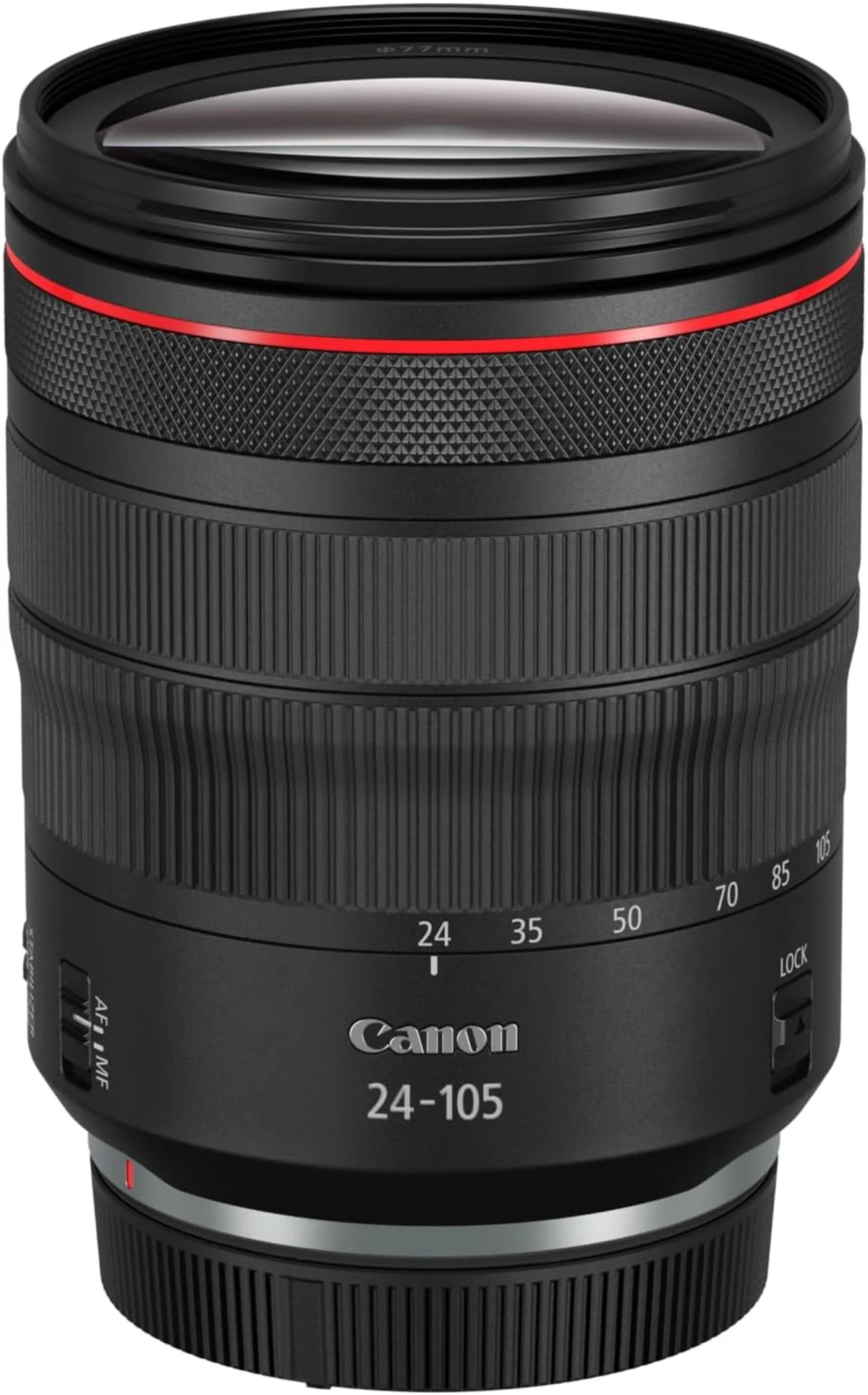
1. Canon RF 24-105mm f/4L IS USM — Best All-Around RF Lens
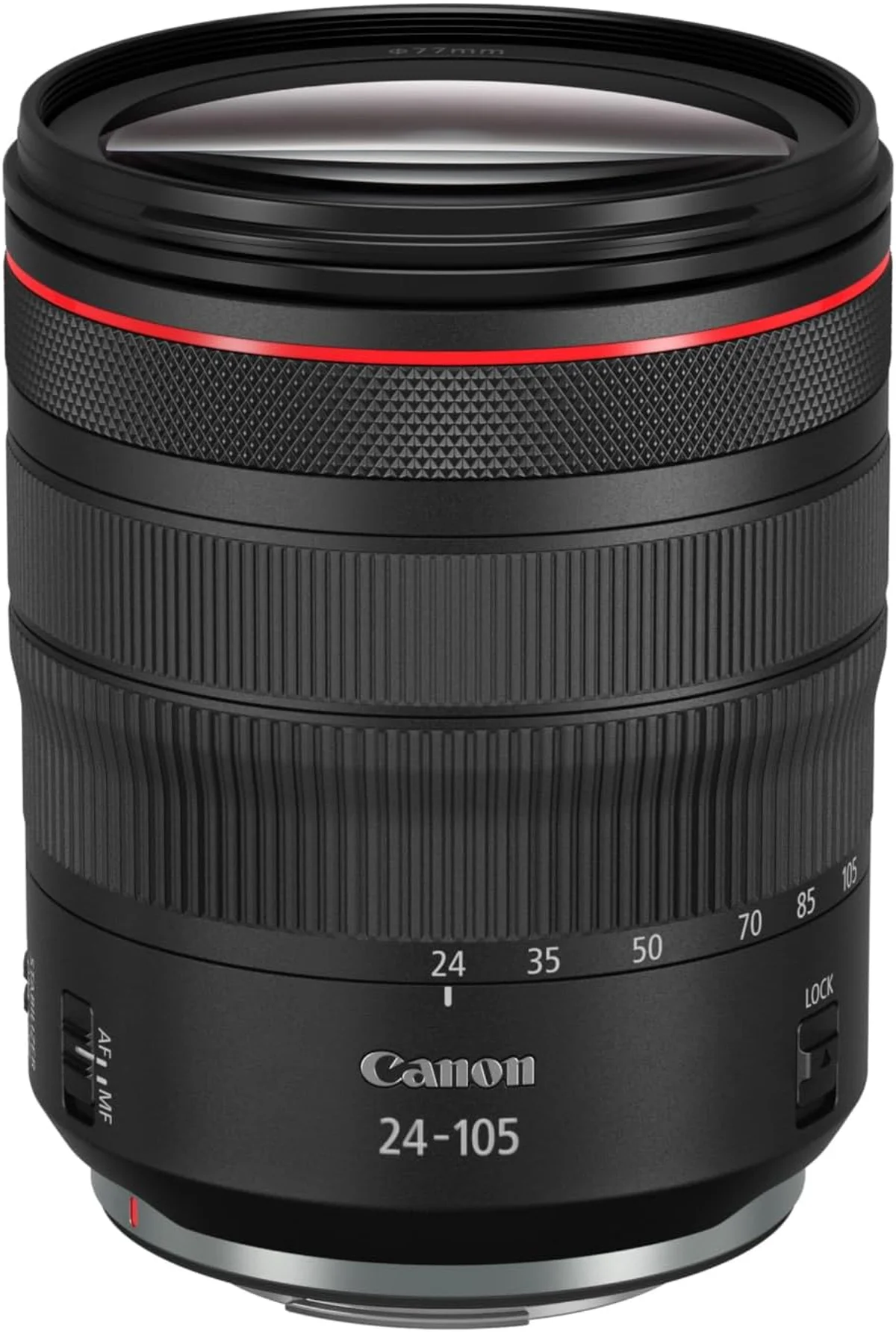
The RF 24-105mm f/4L IS USM is the lens most Canon RF owners should buy first and sell last. Its 4.3x zoom ratio covers everything from interior architecture at 24mm to compressed portraits at 105mm, and the Nano USM autofocus motor locks on targets with near-zero hunting. Corner-to-corner sharpness sits in a different class from the EF version it replaced — Canon clearly optimized the optical formula for the shorter RF flange distance.
L-series build quality means full weather sealing at every joint, a metal mount ring, and a control ring that can be assigned to aperture, ISO, or exposure compensation. At 700g it is not a lightweight lens, but that mass reflects the 18-element optical path and the physical IS unit that delivers 5 stops of stabilization on its own and up to 8 stops coordinated with R5/R6 IBIS. In the Flagship bracket, you pay a premium for an f/4 zoom, but the optical returns justify it.
Working wedding photographers describe this as the one piece of gear they would replace immediately if lost.
It handles ceremonies wide at 24mm, couples' portraits at 70-105mm, and ring detail shots in the 50-80mm range. The only real limitation is aperture — at f/4 you will not separate backgrounds the way an f/2.8 or f/1.8 lens does, and indoor events in dim venues push ISO higher than most shooters prefer. For everything outdoors, travel, documentary, or studio work with controlled lighting, this lens rarely gives you a reason to swap.
Price band: Flagship Check Price: Canon RF 24-105mm f/4L2. Canon RF 50mm f/1.8 STM — Best Budget Prime
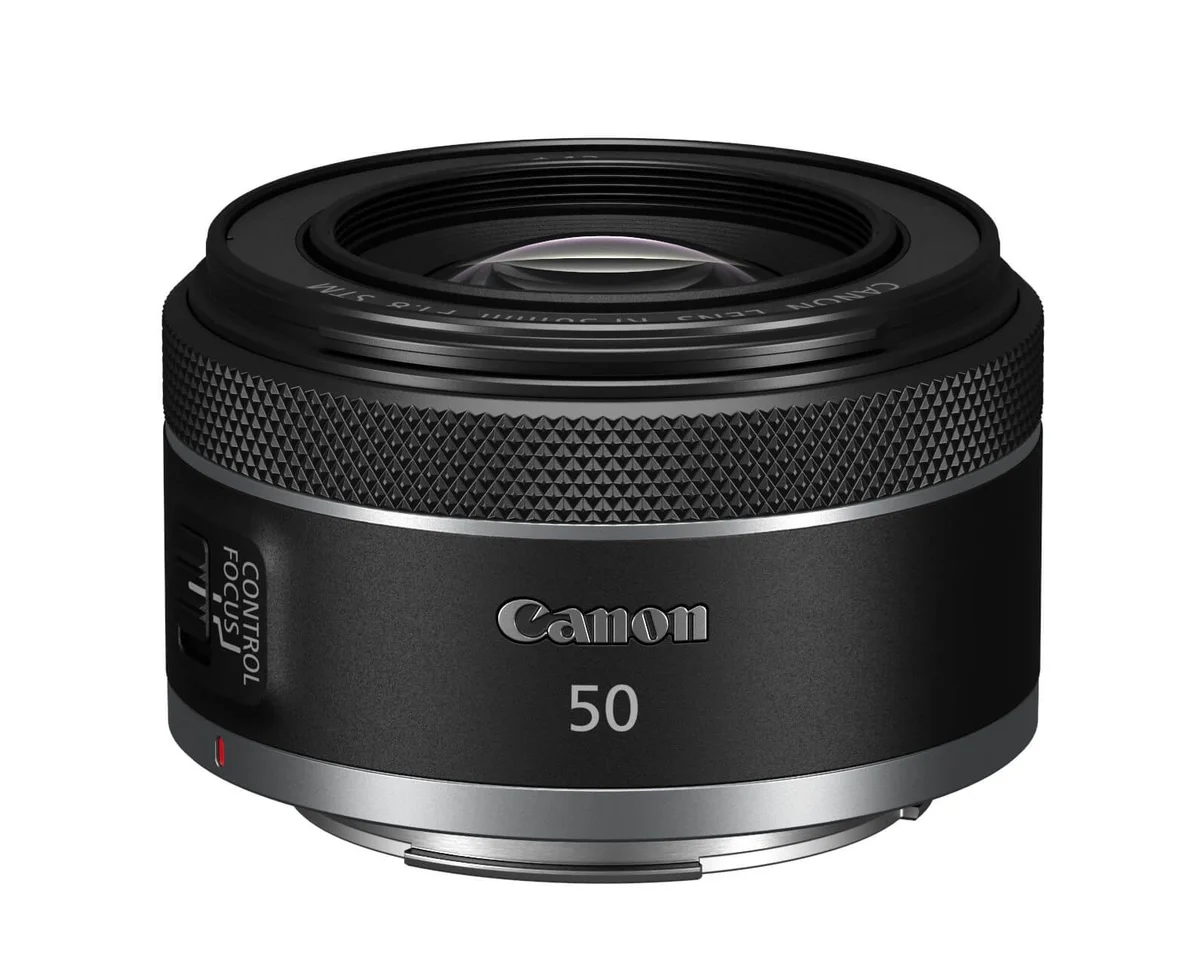
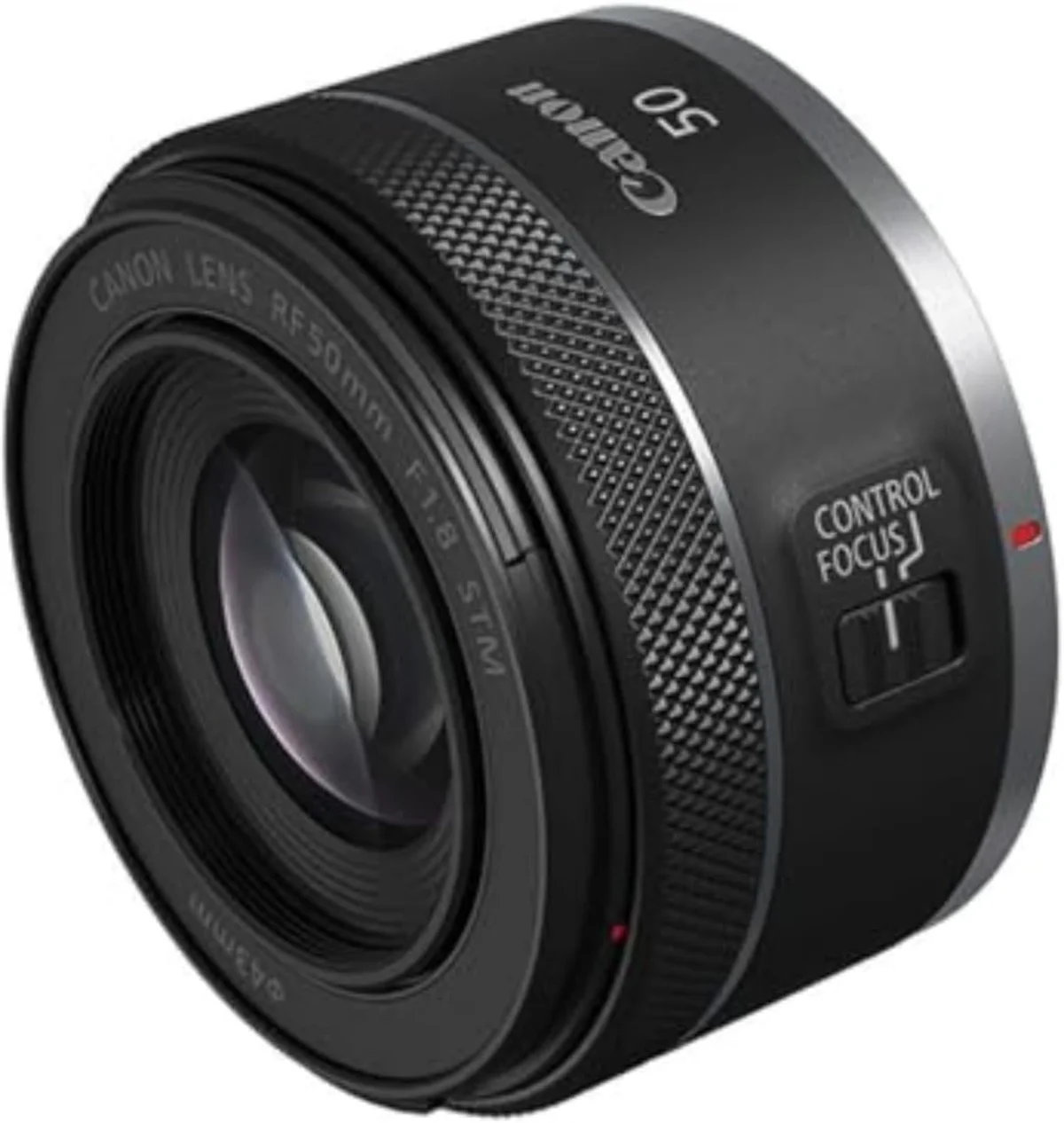
Canon's "nifty fifty" tradition continues with the RF 50mm f/1.8 STM, and this version is optically the best budget 50mm Canon has produced. Center sharpness wide open matches or beats several lenses costing three times as much, and by f/2.8 the entire frame tightens up. The 7-blade aperture produces reasonably smooth bokeh circles — not the buttery rendering of an f/1.2, but far more pleasant than the old EF version's pentagonal highlights.
At 160g this lens barely registers on the camera body. The control ring — absent from the EF predecessor — adds a physical dial for aperture, ISO, or EV adjustment, giving RF shooters a tactile control that used to require L-series glass. Pair it with an R6 or R8 body and you have a portrait and street kit that weighs under 600g total.
Build quality is the main compromise. The plastic mount ring flexes visibly under pressure, and there is zero weather sealing. The STM motor, while smooth for video, hunts in very low light and produces faint audible noise in quiet rooms. At the Entry tier, those concessions are expected. No other RF lens matches the impact-per-dollar of this 50mm — it is the lens that makes beginners say "so that's what a real camera can do."
Price band: Entry Check Price: Canon RF 50mm f/1.83. Canon RF 28-70mm F2.8 IS STM — Best Midrange Standard Zoom
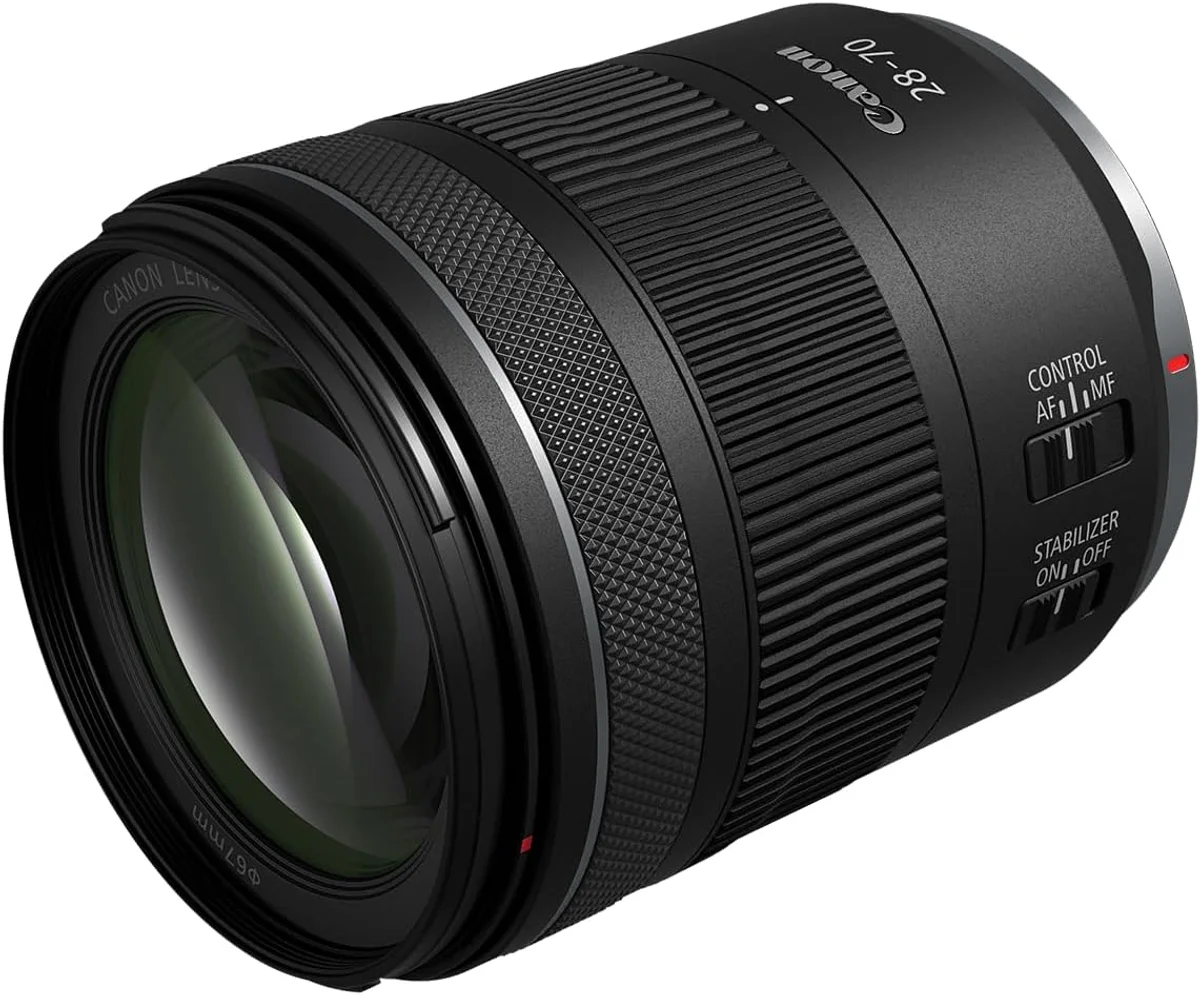
Canon introduced the RF 28-70mm f/2.8 IS STM to fill the gap between the budget RF 24-105mm f/4-7.1 kit zoom and the massive RF 28-70mm f/2L USM. Built-in optical stabilization is the headline feature — most f/2.8 standard zooms at any price point omit IS entirely, leaving handheld video shooters dependent on body-only IBIS. Canon's 5.5-stop IS here pairs with IBIS on the R5 and R6 series for combined stability that makes gimbal-free B-roll practical.
Sharpness is strong across the entire 28-70mm range, with peak performance between 35mm and 50mm. The STM focus motor is quieter than ring-type USM in video recording, though it occasionally hunts in low-contrast scenes. At 490g the lens is noticeably lighter than L-series f/2.8 zooms, making it a comfortable option for all-day event coverage or travel shooting where weight matters.
The 28mm wide end is the biggest optical compromise. Competing f/2.8 zooms from Sigma and Tamron start at 24mm, and that 4mm difference matters for interiors and group photos. The exterior is plastic rather than magnesium alloy, which may concern buyers spending in the Flagship range. For hybrid photo-video shooters who need constant f/2.8 with stabilization, no other Canon option checks both boxes at a comparable price.
Price band: Flagship Check Price: Canon RF 28-70mm f/2.8 IS4. Canon RF 35mm F1.8 IS Macro STM — Best Walk-Around Prime
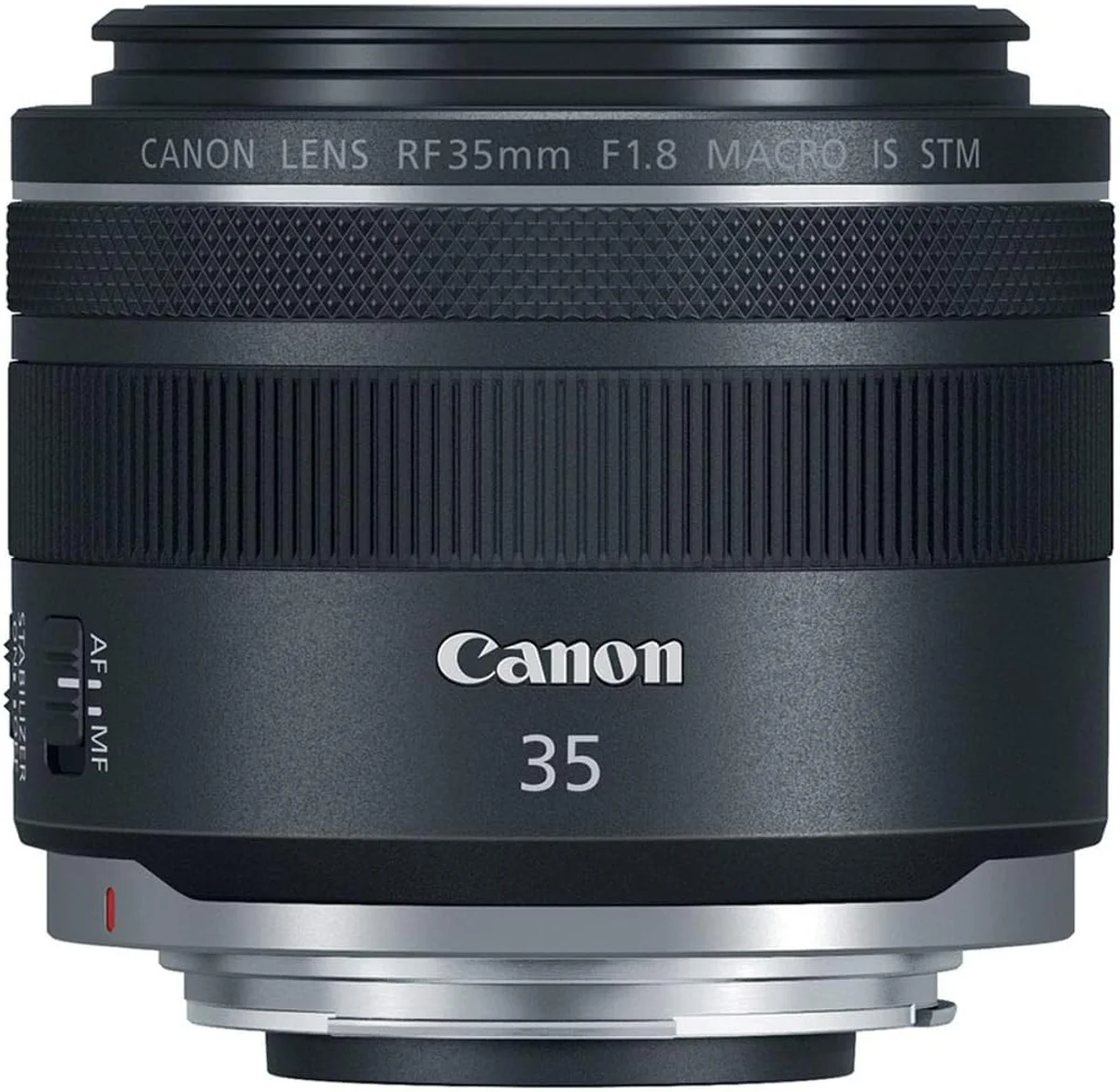
The RF 35mm f/1.8 IS Macro STM was one of the original four RF-mount lenses Canon launched in 2018, and it remains one of the most practical. At 305g with built-in image stabilization, it functions as a compact street lens that also handles close-up tabletop work at 0.5x magnification. That half-macro capability sits between a standard lens and a dedicated macro — not enough for insect photography, but more than enough for food shots, product details, or flower close-ups without swapping glass.
Wide-open sharpness at f/1.8 is good in the center but shows chromatic aberration at high-contrast edges. Stopping down to f/2.8 cleans that up and brings the corners into line. The STM motor focuses smoothly for video, and 5 stops of optical IS make this one of the easier primes to shoot handheld in dim restaurants or evening street scenes. After years on the market, its long-term track record is well established.
The "Macro" in the name oversells the capability slightly — 0.5x magnification is technically "half-macro," and working distance at maximum magnification is very short. The focus ring has no physical stops, which some manual focus shooters find disorienting. At the Entry tier, it competes with third-party 35mm primes that offer larger apertures but lack IS and Canon's native lens correction profiles.
Price band: Entry Check Price: Canon RF 35mm f/1.8 Macro5. Canon RF 100mm F2.8 L Macro IS USM — Best Specialized Prime
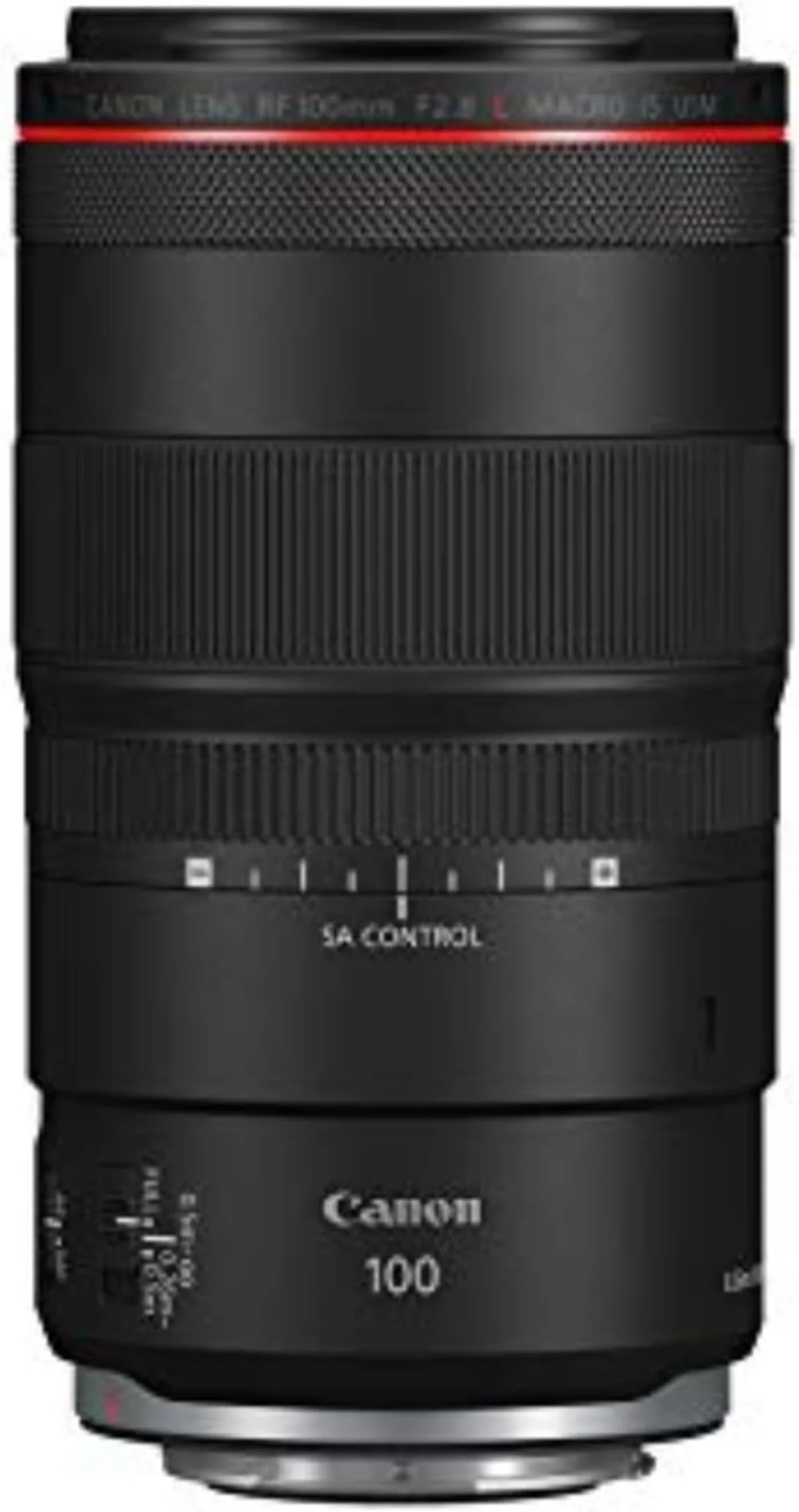
Canon's RF 100mm f/2.8L Macro introduces a feature no other production macro lens offers: an SA (Spherical Aberration) control ring that physically adjusts bokeh character from smooth to "swirly" in real time. For portrait photographers who want to control background rendering without post-processing, this is a genuine differentiator. The 1.4x maximum magnification exceeds the standard 1:1 macro ratio, meaning you can fill the frame with subjects smaller than what traditional macro lenses can capture.
L-series construction is immediately apparent.
Full weather sealing, a solid metal mount, and a heft of 730g give the lens a confidence-inspiring feel on an R5 or R3 body. The Hybrid IS system uses both shift-type and angular vibration compensation for up to 5 stops of stabilization — critical for handheld macro work where even minor movement shifts the focal plane by millimeters. Nano USM autofocus is fast in portrait range but slows predictably at extreme close-focus distances, which is standard behavior for every macro lens in this class.
The SA ring's effect is subtle in most scenarios. Between the two extremes of the ring's travel, the visible difference in background rendering requires an attentive eye and specific conditions — busy backgrounds, f/2.8-4, medium subject distance. At close macro distances, depth of field is so shallow that the SA effect disappears into general blur. Sitting in the Flagship bracket, this lens competes with Sony's 90mm G Macro and Nikon's Z MC 105mm — both excellent, but neither offers Canon's SA control or 1.4x magnification.
Price band: Flagship Check Price: Canon RF 100mm f/2.8L Macro6. Canon RF 100-400mm f/5.6-8 IS USM — Best Budget Telephoto
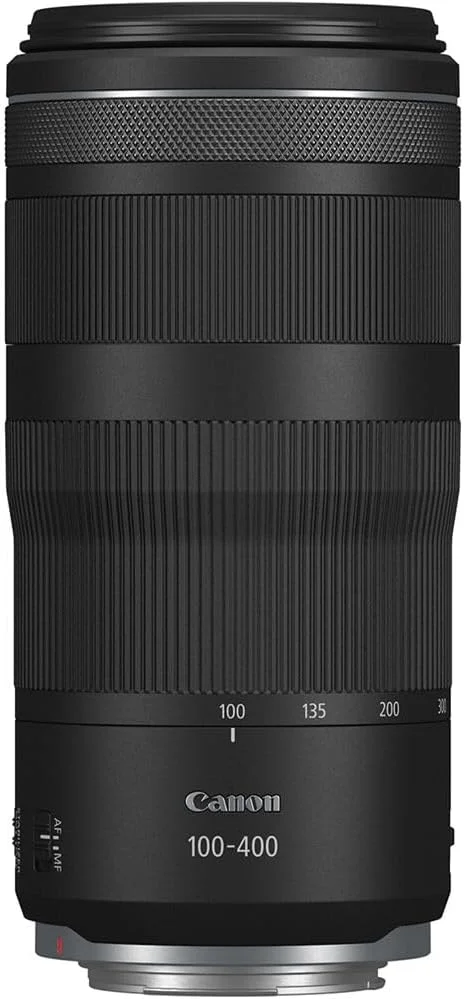
The RF 100-400mm f/5.6-8 IS USM packs 400mm of reach into a package that weighs 635g and measures just 164mm collapsed. For context, Canon's professional RF 100-500mm f/4.5-7.1L weighs nearly twice as much and costs roughly four times the price. The size-to-reach ratio is what makes this lens distinctive — it fits in a standard camera bag alongside a body and a standard zoom without requiring a dedicated telephoto compartment.
Center sharpness from 100mm through about 300mm is strong enough for detailed wildlife and sports captures. Beyond 300mm, resolution drops measurably at the edges, and at 400mm the overall rendering softens to a level that benefits from post-processing sharpening. The 5.5-stop IS compensates well for the slow aperture, and the lens pairs with Canon's RF 1.4x extender to reach 560mm — though image quality takes a visible hit with the teleconverter attached.
The f/8 maximum aperture at 400mm is the defining constraint. In bright sunlight this is a non-issue, but shade, overcast skies, or golden hour push ISO into noisy territory. Autofocus speed also suffers at f/8, particularly on bodies with fewer cross-type AF points. At the Step-up tier, no other native RF telephoto delivers this focal range. Birders on a budget pair it with the R7's APS-C crop for 640mm equivalent reach — a combination that punches well above its price class.
Price band: Step-up Check Price: Canon RF 100-400mm7. Canon RF 16mm F2.8 STM — Best Compact Wide-Angle
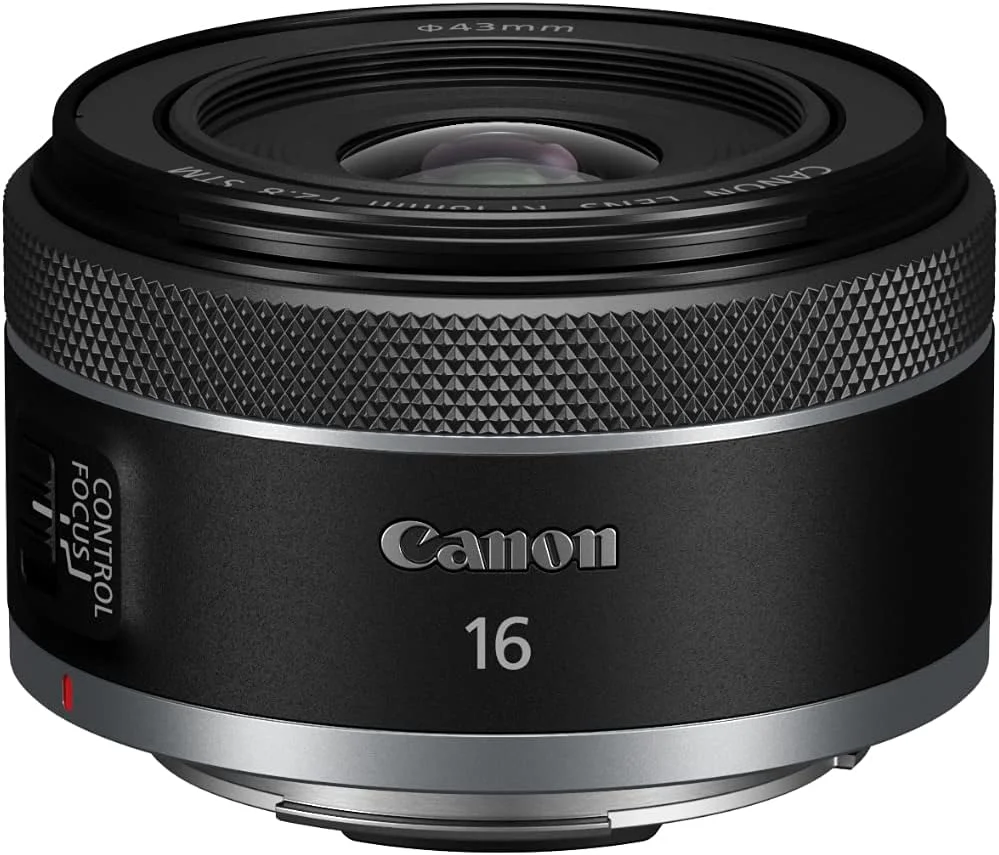
At 165g and just 40.1mm long, the RF 16mm f/2.8 is closer to a pancake lens than a traditional ultra-wide prime. It mounts on an EOS R body and barely changes the camera's profile, making it the smallest way to access 16mm on Canon's mirrorless system. The f/2.8 aperture is fast enough for astrophotography experiments and low-light vlogging, and the close minimum focus distance of 0.13m creates exaggerated perspective effects that suit creative content work.
Center sharpness at f/2.8 is respectable — sharp enough for social media, vlogging, and casual photography. Stopping down to f/5.6 or f/8 brings the midframe into good territory, but corners remain the lens's weakness throughout the aperture range. Barrel distortion is pronounced at 16mm and requires in-camera or software correction, which Canon bodies handle automatically. For real estate and interior photography, the corrected files produce usable results without manual lens correction work.
The absence of weather sealing and the plastic mount ring communicate exactly where this lens sits in Canon's hierarchy: it is a fun, affordable creative tool rather than a professional wide-angle solution. In the Entry bracket, it costs less than half of most ultra-wide primes. Shooters who need corner-to-corner sharpness for serious wide-angle work should look at the RF 14-35mm f/4L IS instead, but that lens costs roughly four times as much and weighs three times more.
Price band: Entry Check Price: Canon RF 16mm f/2.88. Canon RF-S 10-18mm F4.5-6.3 IS STM — Best Ultra-Wide for APS-C
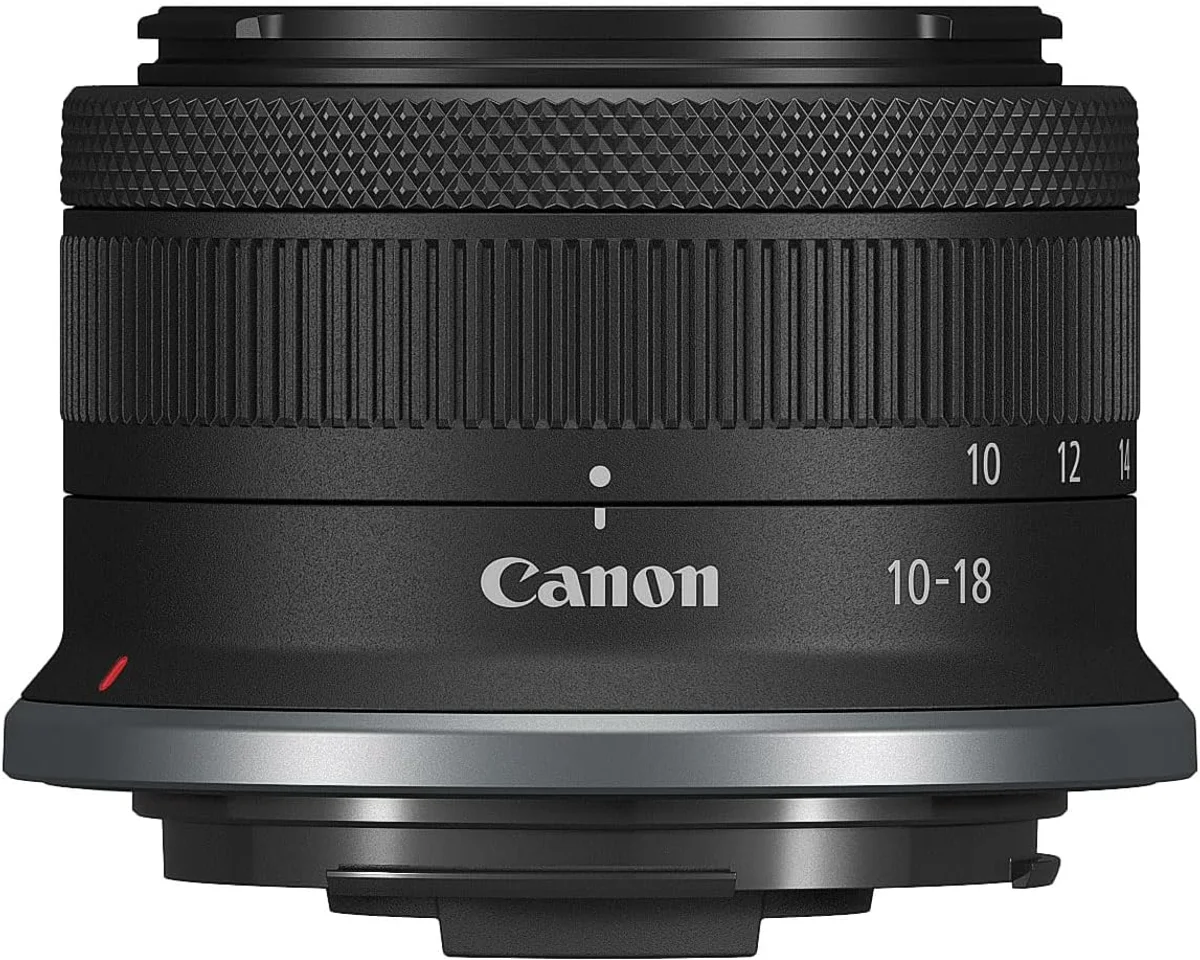
Canon's APS-C RF-mount bodies — the R7, R10, R50, and R100 — have limited native ultra-wide options. The RF-S 10-18mm f/4.5-6.3 IS STM is the primary choice, offering a 16-29mm equivalent field of view with built-in stabilization. At 150g it is featherweight, and the compact barrel barely extends past the camera grip. For vloggers and content creators using an R50 or R10, this lens and a body form a setup light enough for one-handed operation all day.
Image quality meets the standard expected from a slow-aperture ultra-wide zoom at this price point.
The center resolves fine detail at every focal length, but corners show visible softness wide open and improve only marginally stopped down. Barrel distortion at 10mm is aggressive — Canon's automatic correction profiles mask it in JPEGs, but RAW shooters will see warping at the edges that requires manual correction. The built-in IS provides roughly 4 stops of stabilization, which helps with video panning shots and handheld stills in dim interiors.
This lens has no full-frame equivalent in the RF-S line, which means APS-C shooters who upgrade to a full-frame body will leave it behind. For photographers committed to Canon's APS-C system, it fills the ultra-wide gap at a price point in the Entry range that does not demand much financial commitment. On the telephoto end, APS-C Canon shooters should also look at the Tamron 18-300mm f/3.5-6.3 for Canon RF, which covers wide-to-super-telephoto in a single all-in-one zoom. Manage expectations: this is practical glass for content work and casual shooting, not a precision tool for large prints or gallery-quality output.
Price band: Entry Check Price: Canon RF-S 10-18mm9. Canon RF 75-300mm F4-5.6 — Most Affordable Telephoto
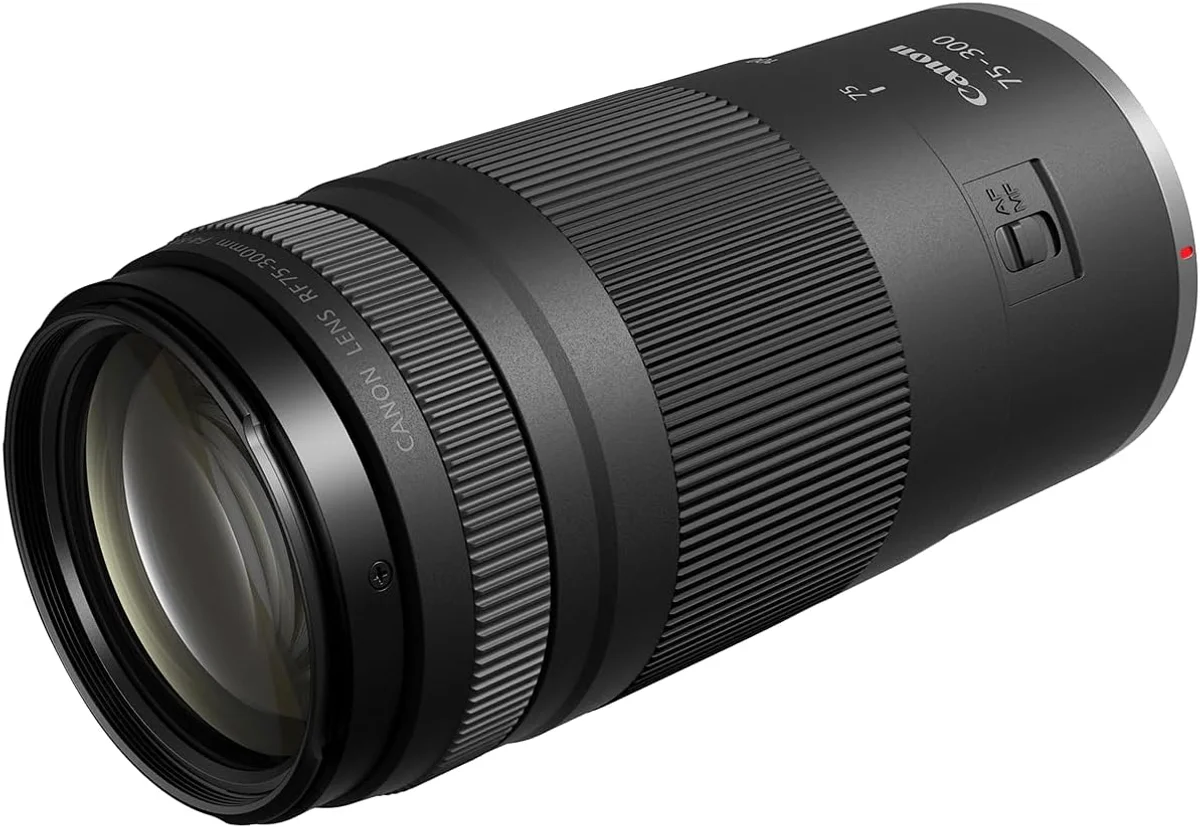
The RF 75-300mm f/4-5.6 exists for one purpose: giving RF-mount beginners access to telephoto reach at the lowest possible cost. It is Canon's cheapest native RF telephoto, sitting well below the RF 100-400mm in both price and optical capability. At 390g, it handles comfortably on smaller bodies like the R10 or R50, and the STM motor focuses quietly enough for casual video. The focal range covers kids' sports, backyard wildlife, and travel telephoto shots where composition matters more than pixel-level sharpness.
Sharpness peaks at mid-range focal lengths around 100-200mm and drops off at 300mm, where corner resolution softens enough to notice in prints larger than 8x10 inches. The variable f/4-5.6 aperture is slower than the RF 100-400mm's f/5.6-8 at the wide end but faster at the long end — a comparison that slightly favors this lens in mixed lighting at 300mm. There is no image stabilization, so handheld shooting at 300mm requires fast shutter speeds (1/500s minimum) to avoid motion blur.
With a street price in the Entry bracket, this is the newest and least proven lens in our roundup. Early user reports are consistent: good enough for daylight telephoto, underwhelming for anything demanding. If the RF 100-400mm fits your budget, it is the better long-term investment by a wide margin. But if you need native RF telephoto reach today and cost is the primary factor, the 75-300mm gets you into the game.
Price band: Entry Check Price: Canon RF 75-300mm10. Canon EF 50mm f/1.8 STM — Best Legacy Option
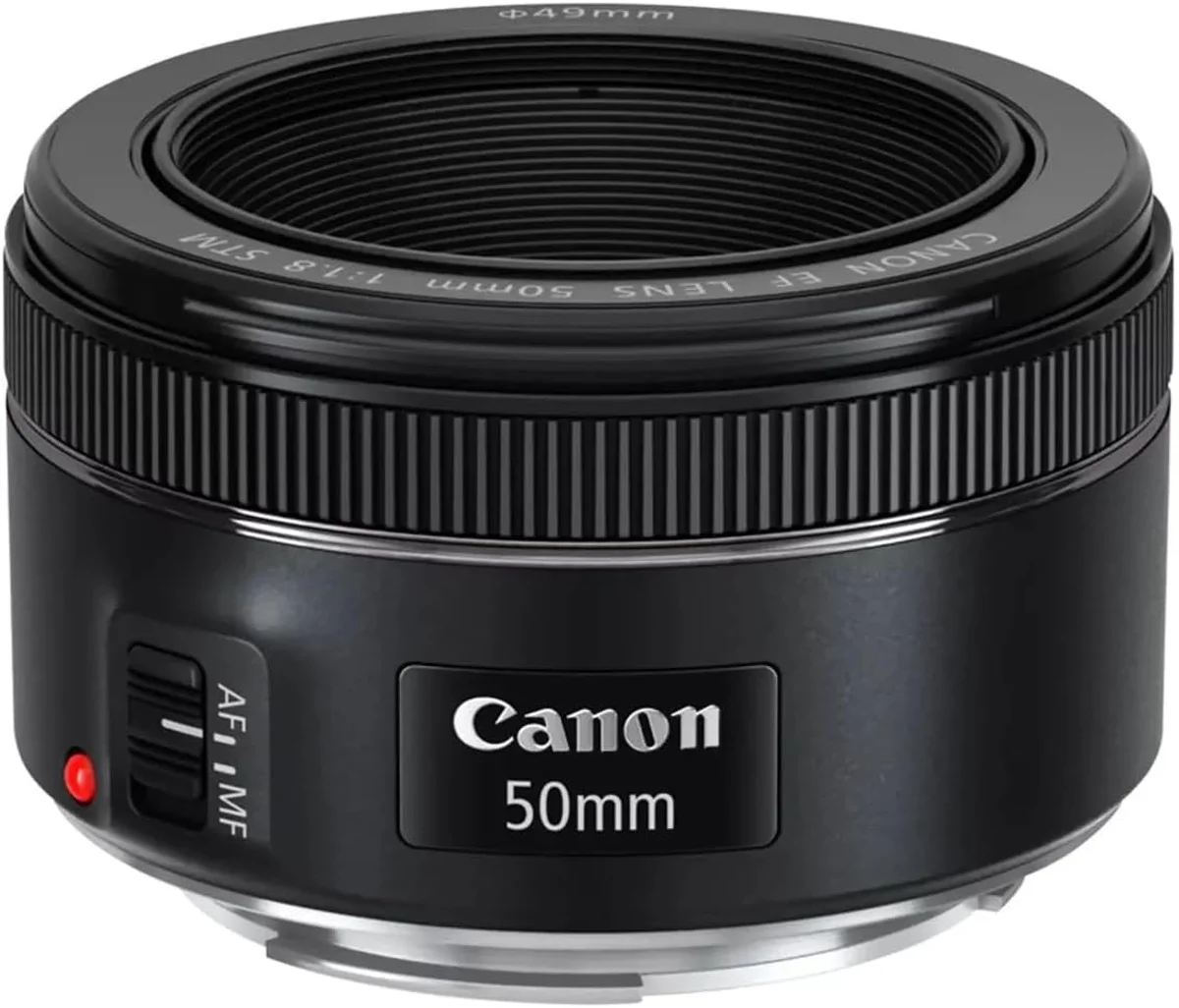
The EF 50mm f/1.8 STM continues a line of Canon 50mm f/1.8 designs that has served photographers for decades across EOS film bodies, DSLRs, and now mirrorless cameras via the EF-RF adapter. It is the lens that taught a generation of photographers what aperture control looks like in practice, and at the lowest price point in Canon's entire current lens catalog, it still serves that role today.
Optically, it delivers about 90% of the RF 50mm f/1.8's sharpness for roughly half the price.
Center resolution at f/2.8 and smaller apertures is very good, and bokeh from the 7-blade aperture produces circular highlights that photograph attractively. The STM motor focuses quietly enough for casual video, though it lacks the RF version's control ring. On a mirrorless body, the required EF-RF adapter adds roughly 25mm of length and 110g, which changes the handling balance noticeably — the compact size advantage of the EF lens disappears once the adapter is mounted.
This lens makes sense for two groups: photographers who already own the EF-RF adapter for other EF glass, and beginners who want the absolute cheapest fast prime regardless of form factor. If you are building a Canon RF kit from scratch with no EF legacy glass, the RF 50mm f/1.8 is the smarter purchase — native mount, control ring, and better optics without adapter bulk. At the Entry tier, the EF version remains a valid entry point for shooters who prioritize price above everything else.
Price band: Entry Check Price: Canon EF 50mm f/1.8Best Canon RF Prime Lenses
Prime lenses — fixed focal length, no zoom — force you to move your feet but reward you with wider apertures, lighter weight, and sharper optics per dollar. Canon's RF prime lineup spans from ultra-wide to macro, with the budget end starting at an Entry price.
The RF 50mm f/1.8 STM is the entry point most Canon shooters discover first. At 160g and f/1.8, it delivers background separation and low-light performance that no zoom at this price can match. The RF 35mm f/1.8 IS Macro STM adds built-in stabilization and 0.5x close-focus — a walk-around prime that handles street scenes and tabletop details in the same outing. The RF 16mm f/2.8 STM is the compact creative option: ultra-wide perspective in a pancake-sized body for vlogging, astrophotography experiments, and dramatic environmental shots.
For shooters with EF glass, the EF 50mm f/1.8 STM remains viable through the EF-RF adapter — see our RF vs EF 50mm comparison for the optical differences. Canon's L-series primes (RF 50mm f/1.2, RF 85mm f/1.2) sit above this roundup's price range but represent the optical ceiling of what the RF mount can deliver.
Best Canon RF Telephoto Lenses
Telephoto reach on the Canon RF system comes in two tiers: the affordable variable-aperture zooms reviewed here, and the professional L-series glass that costs several times more. For most wildlife, sports, and travel photographers, the budget tier covers the job.
The RF 100-400mm f/5.6-8 IS USM delivers 400mm of reach in a 635g package — lighter than many 70-200mm zooms. Built-in IS and compatibility with Canon's RF 1.4x extender push effective reach to 560mm. The RF 75-300mm f/4-5.6 costs less and weighs less, but lacks stabilization and tops out 100mm shorter. Our RF 75-300mm vs RF 100-400mm comparison breaks down exactly where the extra investment pays off.
Pair either telephoto with an R7 body for APS-C crop factor advantage: the 100-400mm becomes a 160-640mm equivalent, reaching deep into birding and wildlife territory without the weight penalty of L-series super-telephoto glass.
Best Canon RF Wide-Angle Lenses
Wide-angle shooting on Canon RF splits between full-frame and APS-C options. The RF 16mm f/2.8 STM is the most affordable ultra-wide prime in Canon's native lineup — 165g, pancake-sized, and fast enough for astrophotography at f/2.8. Corner sharpness is its weakness, but for vlogging, real estate walk-throughs, and social content, it delivers.
APS-C shooters on the R7, R10, or R50 have the RF-S 10-18mm f/4.5-6.3 IS STM — a 16-29mm equivalent with built-in stabilization at just 150g. It won't match L-series wide-angle zooms optically, but for content creators who need ultra-wide coverage on a crop-sensor body, nothing else exists in native RF-S mount.
Best Canon RF Macro Lenses
Canon's RF macro options target different budgets and magnification needs. The RF 100mm f/2.8L Macro IS USM is the professional choice — L-series build, 1.4x maximum magnification (beyond standard 1:1), and the unique SA control ring that adjusts bokeh character in real time. It doubles as a portrait lens with beautiful rendering at f/2.8. See how it stacks up in our macro lens head-to-head comparison.
For casual close-up work without the L-series investment, the RF 35mm f/1.8 IS Macro STM reaches 0.5x magnification — half life-size, enough for food photography, product flat-lays, and flower close-ups. It lacks the working distance that a 100mm macro provides (you need to get very close at 35mm), but it weighs less than half as much and costs a fraction of the L-series option.

How We Chose
Our selection process started with Canon's complete RF-mount lens catalog as of early 2026, which includes over fifty optical designs spanning primes, zooms, L-series professional glass, and budget STM lenses. We narrowed to the ten lenses most commonly purchased and recommended, while keeping representation across focal lengths.
For each lens, we aggregated data from three sources. First, Amazon user reviews — we read hundreds of detailed reviews per lens, weighting recent reviews (2024-2026) more heavily to account for manufacturing consistency changes and firmware updates. Second, professional optical test results from published MTF charts, resolution measurements, and distortion profiles. Third, specification cross-referencing against competing lenses in the same focal length and price category from Canon, Nikon, Sony, Sigma, and Tamron.
Ranking priority follows a weighted framework: optical quality (35%), value relative to price tier (25%), build quality and weather sealing (15%), autofocus performance (15%), and unique features like IS or macro capability (10%). A lens can rank high despite a lower optical score if its price-to-performance ratio is exceptional — the RF 50mm f/1.8 at position two reflects this weighting. Conversely, the RF 100mm f/2.8L Macro scores well on optics and features but sits at position five because its specialized nature limits general-purpose appeal.
We deliberately included one EF-mount lens (the EF 50mm f/1.8 STM) and one RF-S crop lens (the 10-18mm) because Canon's RF ecosystem includes adapter users and APS-C body owners who need guidance within their sub-system. Excluding them would create a gap that sends readers elsewhere for answers. Rankings are updated when new Canon RF lenses launch or when firmware updates change AF behavior.
Buying Guide: What to Look For
Focal Length and What You Photograph
Lens selection starts with focal length, not brand prestige or aperture speed. Wide-angle lenses (16-35mm) suit architecture, interiors, and vlogging. Standard range (35-70mm) covers street photography, casual portraits, and everyday shooting. Short telephoto (85-135mm) excels at portraits and product photography. Long telephoto (200mm+) targets wildlife, sports, and distant subjects. If you photograph multiple genres, a zoom like the 24-105mm covers the most ground in a single lens.
Aperture: Speed vs. Size vs. Cost
Wider maximum apertures (f/1.2, f/1.4, f/1.8) let in more light and blur backgrounds more aggressively.
They also add weight, cost, and optical complexity. An f/1.8 prime weighs 160-300g and sits in the budget-to-midrange tier. An f/2.8 zoom weighs 500-800g and reaches into the premium bracket. An f/1.2 prime weighs over a kilogram and costs more than most camera bodies. Match aperture to your actual low-light needs rather than aspirational ones — many photographers buy f/1.4 glass and shoot at f/2.8 or smaller 90% of the time.
Image Stabilization: Lens IS vs. Body IBIS
Canon's R5, R6, R8, and R3 bodies include in-body image stabilization (IBIS). When paired with a lens that has its own optical IS, the two systems coordinate for up to 8 stops of combined stabilization. Lenses without IS still benefit from IBIS alone — typically 4-5 stops depending on focal length. For video, optical IS in the lens generally produces smoother footage than body-only IBIS, particularly at focal lengths above 50mm. If you shoot handheld video frequently, prioritize lenses with built-in IS.
L-Series vs. Non-L: When Build Quality Matters
Canon's L-series designation signals weather sealing, metal construction, premium optical glass (fluorite, UD elements), and tighter manufacturing tolerances. Non-L lenses use more plastic, skip weather sealing, and may use simpler optical formulas. The optical quality gap between L and non-L has narrowed in the RF era — the RF 50mm f/1.8 (non-L) is sharper than the EF 50mm f/1.4 (also non-L) was. Where L-series still dominates: professional durability, consistent focus calibration, and confidence shooting in rain or dust without protective gear.
STM vs. USM vs. Nano USM Autofocus
Canon uses three main autofocus motor types in RF lenses. STM (Stepping Motor) is the quietest and smoothest for video but can hunt in low light. USM (Ultrasonic Motor) focuses faster and with more authority, suited to fast action and sports. Nano USM combines the speed of USM with the smooth, quiet operation needed for video — it appears in Canon's higher-end RF lenses like the 24-105mm f/4L. For still photography only, any motor type works well. For hybrid photo-video, Nano USM or STM are preferable.
Full-Frame RF vs. APS-C RF-S Compatibility
RF lenses work on every Canon mirrorless body — full-frame and APS-C alike. RF-S lenses cover only the smaller APS-C image circle. Mounting an RF-S lens on a full-frame body triggers an automatic crop, reducing resolution by roughly 60%. If there is any chance you will upgrade to full-frame in the future, investing in RF glass now protects that investment. RF-S lenses make sense only when the equivalent RF lens does not exist or when budget is the dominant constraint.
Building a Canon RF Lens Kit on a Budget
A complete Canon RF kit does not mean buying every lens.
Three lenses cover 90% of photographic situations: a standard zoom for daily use, a fast prime for low light and portraits, and a telephoto for reach. The RF 24-105mm f/4L plus the RF 50mm f/1.8 plus the RF 100-400mm is a three-lens kit that handles weddings, travel, wildlife, and street photography with a total weight under 1.5kg. Start with the 50mm if budget is the constraint — add the zoom and telephoto as your shooting evolves.

Canon RF Lens Questions — Answered
These are the questions Canon RF shooters ask most often, based on recurring themes across camera forums, Reddit threads, and Amazon review discussions. Each answer draws on the specification data and research from our evaluation process.
Do I need an adapter to use EF lenses on Canon RF cameras?
Yes. Canon makes three EF-RF adapters: the standard mount adapter, the control ring adapter (adds a customizable ring), and the drop-in filter adapter. All three maintain full autofocus, IS, and aperture control. The standard adapter adds about 25mm of length and 110g of weight. Optical quality is unaffected because the adapter has no glass elements — it simply bridges the flange distance difference between EF (44mm) and RF (20mm) mounts.
What is the best first lens for a Canon R5 or R6?
The RF 24-105mm f/4L IS USM covers the widest range of shooting situations in a single lens. Its 24mm wide end handles interiors and group shots, while 105mm reaches into portrait and mild telephoto territory. The L-series build withstands professional use, and the 5-stop IS pairs with R5/R6 IBIS for up to 8 stops of combined stabilization. If budget is tight, the RF 50mm f/1.8 STM at under half the price teaches composition through a fixed focal length.
What is the difference between RF and RF-S lenses?
RF lenses project an image circle large enough for full-frame sensors (36x24mm). RF-S lenses cover only the smaller APS-C sensor (22.3x14.9mm). You can mount RF-S lenses on full-frame RF bodies, but the camera will automatically crop to APS-C mode, reducing resolution. RF lenses work on APS-C bodies without restriction, giving you full sensor coverage with a 1.6x crop factor applied to the focal length. For long-term flexibility, RF glass holds more resale value.
Is the Canon RF 100-400mm sharp enough for bird photography?
At 100-200mm the RF 100-400mm delivers strong center sharpness that satisfies most birding shooters. From 200-400mm, center quality remains good in daylight but corners soften. The real limiting factor is the f/8 maximum aperture at 400mm, which requires ISO 1600+ in anything less than bright sun and slows autofocus on non-R3/R5 bodies. Pair it with an R7 for 640mm equivalent reach on a budget.
Which Canon RF lens is best for video?
The RF 28-70mm f/2.8 IS STM was designed with hybrid shooters in mind. Its built-in optical IS smooths handheld footage, the STM motor focuses quietly without audible whine, and the constant f/2.8 aperture holds exposure across the zoom range. For vlogging at arm's length, the RF 16mm f/2.8 STM captures a wide field of view without visible distortion in the center frame. Both pair well with Canon's Dual Pixel AF for face tracking.
Are Canon RF lenses weather sealed?
Only L-series RF lenses carry full weather sealing with gaskets at every joint, the mount, and all switch panels. This includes the RF 24-105mm f/4L, RF 100mm f/2.8L Macro, and other L-designated glass. Non-L lenses like the RF 50mm f/1.8, RF 16mm f/2.8, and RF 100-400mm lack sealing. Shooting non-L glass in rain or dust requires extra caution — a lens cover or UV filter on the front element adds basic protection.
Should I buy Canon RF lenses or third-party alternatives from Sigma or Tamron?
Canon has not licensed the RF mount protocol to third-party manufacturers the way Nikon and Sony have for their mounts. Sigma and Tamron RF-mount options are limited and arrived later than their Sony or Nikon equivalents. Native Canon RF lenses integrate better with features like in-camera lens correction profiles and coordinated IS control. If a specific third-party lens exists for RF and fits your budget, check firmware compatibility with your body first.
Our Top Pick
The Canon RF 24-105mm f/4L is our #1 recommendation — professional all-purpose shooting, travel, and events.
Check Price: Canon RF 24-105mm f/4L