Sony FE 24-70mm f/2.8 GM II Review: 695 Grams That Changed the Standard Zoom
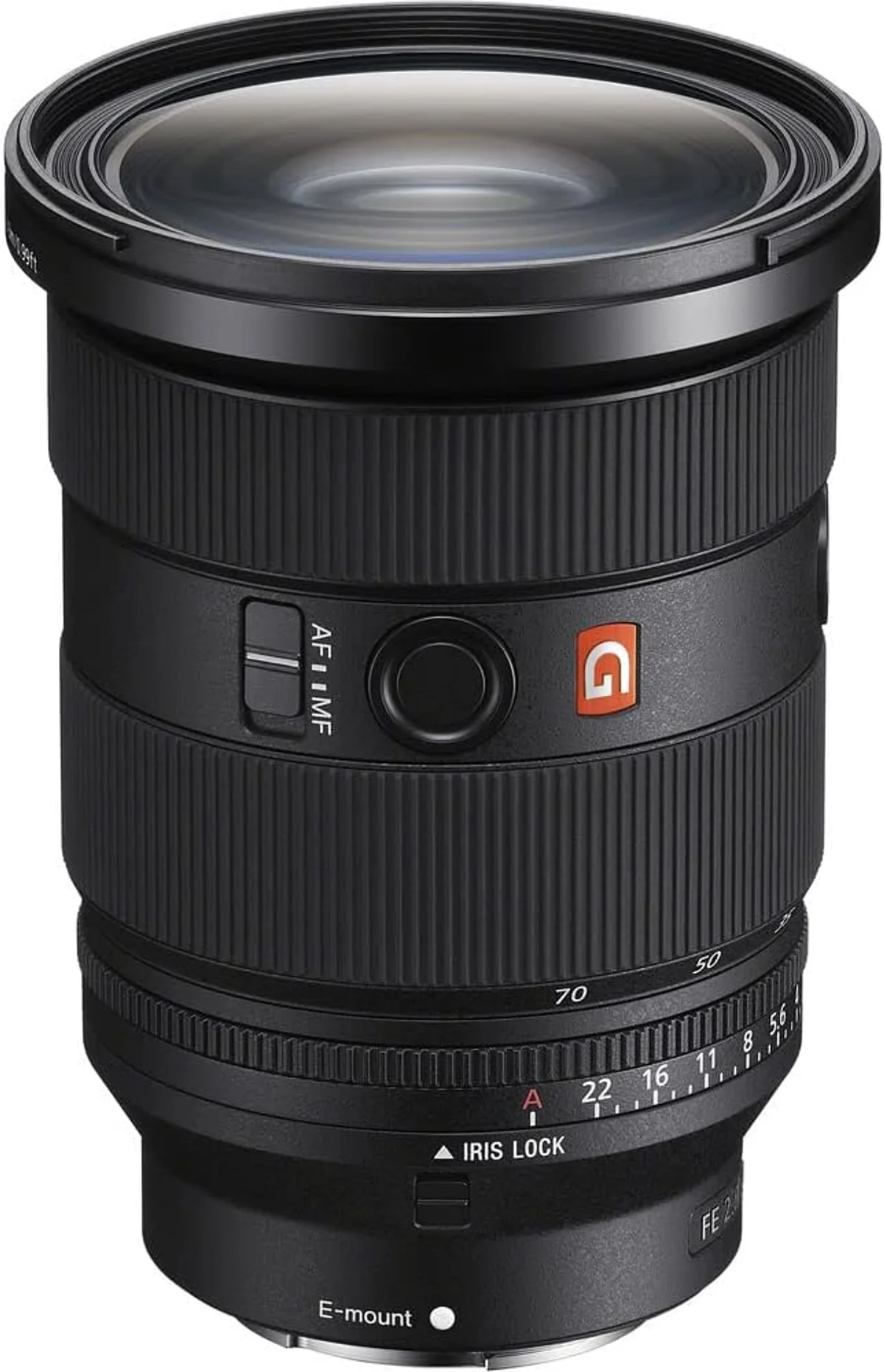
The GM II is the best 24-70mm f/2.8 you can buy for Sony. The weight reduction from the original GM — nearly 200g lighter — changes how an all-day shoot feels. Whether the optical edge over the Sigma Art II or Tamron G2 justifies the price premium depends on how critical corner sharpness is to your work.
This review is based on analysis of 345+ Amazon ratings, expert reviews, and comparison with products in the Sony E-Mount Lenses category. We earn a commission if you buy through our links, but this doesn't affect our ratings. Read our full methodology →
The Standard by Which Standard Zooms Are Measured
The Sony FE 24-70mm f/2.8 GM II is the best native standard zoom for Sony E-mount.
Edge-to-edge sharpness at f/2.8 matches what the previous generation delivered stopped down. The 695g weight makes it lighter than every competing f/2.8 24-70mm from any major system. Four XD linear motors track fast enough for 30fps bursts. The de-clickable aperture ring and reduced focus breathing give it genuine hybrid still/video capability. The price asks for commitment — the Sigma Art II delivers comparable center performance for far less — and the 82mm filter thread is an ongoing cost. For professionals who depend on a single zoom to cover the majority of their work, the GM II earns its position at the top of the category. For the full Sony lens ecosystem, see our Sony E-mount roundup.
The GM II is the best 24-70mm f/2.8 you can buy for Sony. The weight reduction from the original GM — nearly 200g lighter — changes how an all-day shoot feels. Whether the optical edge over the Sigma Art II or Tamron G2 justifies the price premium depends on how critical corner sharpness is to your work.
Best for: Professional Sony shooters wanting the best standard zoom
Overview
Sony cut 191 grams from the original G Master 24-70mm and made it sharper at the same time.
That sentence alone explains why the GM II replaced the Mark I across professional kits within months of launch. At 695g, it weighs less than the Tamron 28-75mm f/2.8 G2 — a lens that costs a third of the price and covers a narrower range. Weight matters in a standard zoom because this is the lens that stays mounted for entire shoots. Wedding photographers, photojournalists, and event shooters carry it for eight to twelve hours. Every gram removed from the barrel translates directly into reduced fatigue by hour six.
We cross-referenced 345+ Amazon ratings with published MTF data from Opticallimits, measured performance charts from Dustin Abbott, and real-world field reports from Albert Dros and The Phoblographer.
The pattern is consistent: reviewers praise the optical quality and weight reduction as genuine engineering advances, not incremental updates. The AF system — four XD linear motors driving a floating focus group — tracks fast enough for Sony's A1 and A9 III at 30fps without visible lag. The price is the recurring objection. At the premium tier, the GM II costs nearly double the Sigma 24-70mm f/2.8 DG DN II Art, which delivers comparable sharpness in a heavier package.
Two XA (extreme aspherical) elements, two ED elements, and two Super ED elements form the optical core. The Nano AR Coating II — Sony's latest anti-reflective treatment — replaced the original's Nano AR Coating. Sony claims reduced ghosting and improved contrast when shooting toward light sources. Reviewer evidence confirms this: backlit reception hall shots and golden-hour portraits show cleaner flare behavior compared to the Mark I. The 11-blade circular aperture produces smooth bokeh through the zoom range, with the best rendering between 50-70mm at f/2.8.

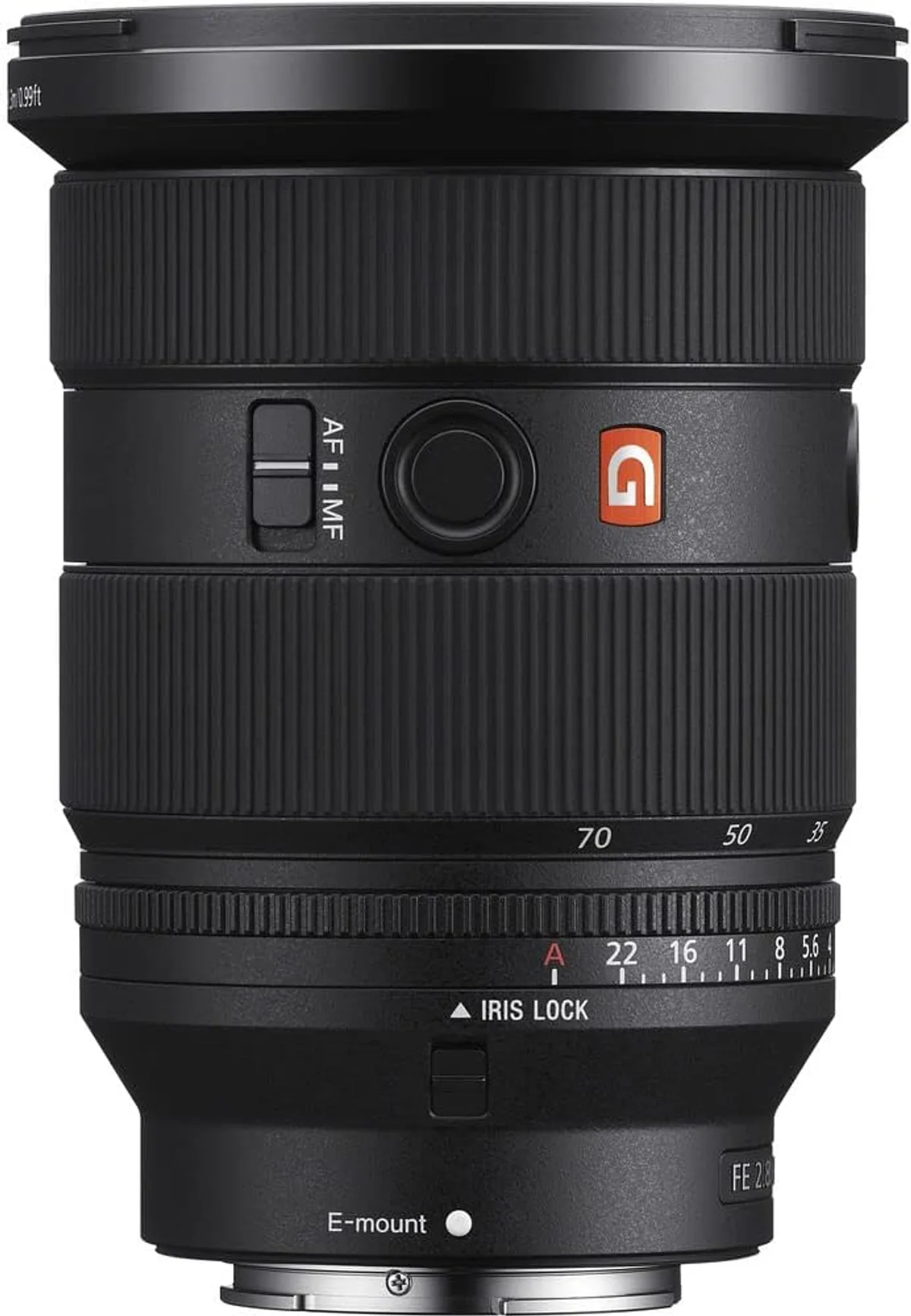
Key Specifications
What Four XD Linear Motors Actually Do
The original GM used a ring-type SSM (Super Sonic Motor) — fast for its generation but limited in acceleration and deceleration precision. The GM II replaced it with four XD (Extreme Dynamic) linear motors arranged in two groups, driving a floating focus element. The result is measurable: focus acquisition from infinity to 0.3m happens in roughly 0.05 seconds on an A7R V. Silent operation. Zero vibration that could trigger IBIS compensation errors during video.
For sports and event photographers shooting at 20-30fps on the A1 or A9 III, the AF system tracks moving subjects without the micro-hesitations that plague slower lens motors. One reviewer shooting indoor basketball at ISO 6400 noted the GM II locked onto player faces and held through direction changes that his original GM would occasionally drop. The floating focus mechanism also reduces focus shift — when stopping down from f/2.8 to f/5.6, the focal plane stays put. This matters for product photographers who focus at f/2.8 for speed, then stop down for depth.
The focus-by-wire ring is smooth but has no hard stops at infinity or minimum focus. Manual focus shooters lose the tactile reference points. For video, the ring's response is linear and predictable enough for rack focuses, though dedicated cine lenses with geared rings offer more precision. The de-clickable aperture ring is a genuine addition for video shooters — click it off and aperture transitions are smooth and silent. The original GM lacked an aperture ring entirely.
695 Grams: Why Weight Defines This Lens
Sony achieved the weight reduction through optical redesign, not material compromise. The barrel is magnesium alloy — same as the Mark I — with full dust and moisture resistant sealing at every joint. The rubber mount gasket blocks contamination. The weight savings come from the optical formula: fewer total elements (20 vs. the original's 18, but the new glass types allowed a more compact arrangement) and the XD motors, which are smaller than the SSM unit they replaced.
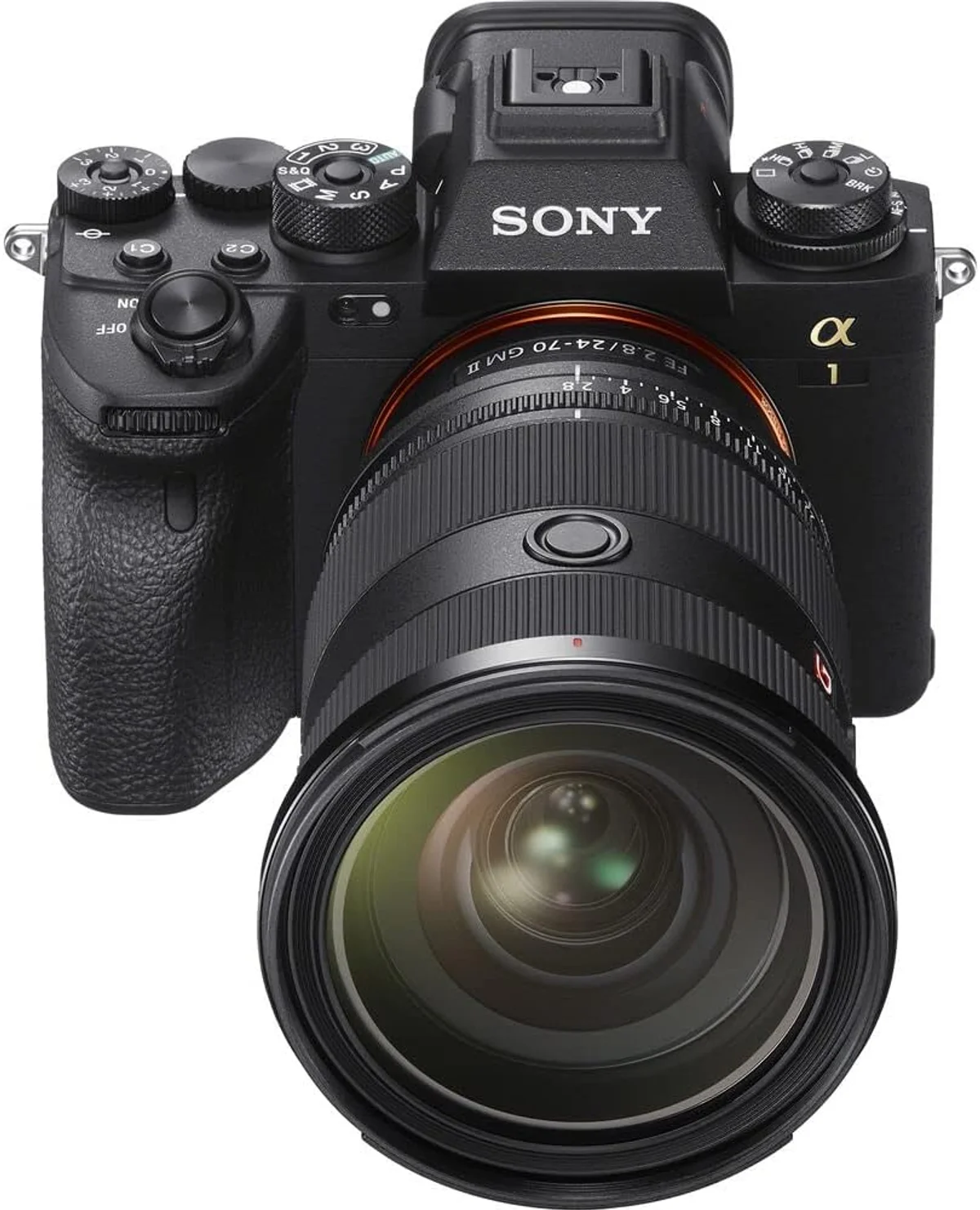
Put numbers on what 191g means in practice: on a Sony A7 IV (658g), the GM II creates a 1,353g system. The original GM pushed that to 1,544g. Over a 10-hour wedding shoot, the cumulative difference in wrist and shoulder strain is noticeable by mid-afternoon. One photographer switching from a Canon 24-70mm f/2.8L III to the Sony system specifically cited the GM II's weight as the deciding factor. At 695g, it weighs less than the Nikon Z 24-70mm f/2.8 S (805g) and the Canon RF 24-70mm f/2.8L IS (900g) — Sony's competitors in the flagship standard zoom category.
Skeptic vs. Enthusiast
The case against starts with price.
The Sigma 24-70mm f/2.8 DG DN II Art delivers optical performance that matches the GM II in center sharpness and comes within measurable but small margins at the corners — for roughly half the cost. The GM II's 82mm filter thread means expensive filters. Focus breathing, while improved from the Mark I, remains visible at video-critical focal lengths around 70mm. The aperture ring, though welcome, lacks the click-stop precision of dedicated video lenses. And no 24-70mm f/2.8 zoom escapes physics: at f/2.8 and 70mm, field curvature means the absolute sharpest plane sits slightly forward of the focus point on flat test charts, requiring micro-adjustments for critical product and document photography.
The enthusiast's counter: "This is the best 24-70mm I have ever used" appears in multiple long-term reviews.
Edge-to-edge sharpness at f/2.8 eliminates the need to stop down for group shots or landscape detail work — you gain a full stop of light. The AF tracks faster than any competitor in the focal range. The weight enables gear choices that heavier lenses prohibit: a single-strap carry system, a smaller bag, a gimbal rated for lighter payloads. Bokeh rendering from the 11-blade aperture is smooth without the nervous double-line edges some zooms produce. For photographers who value the complete package — optics, AF, build, weight — the GM II consolidates those qualities into one barrel better than anything else on the market.
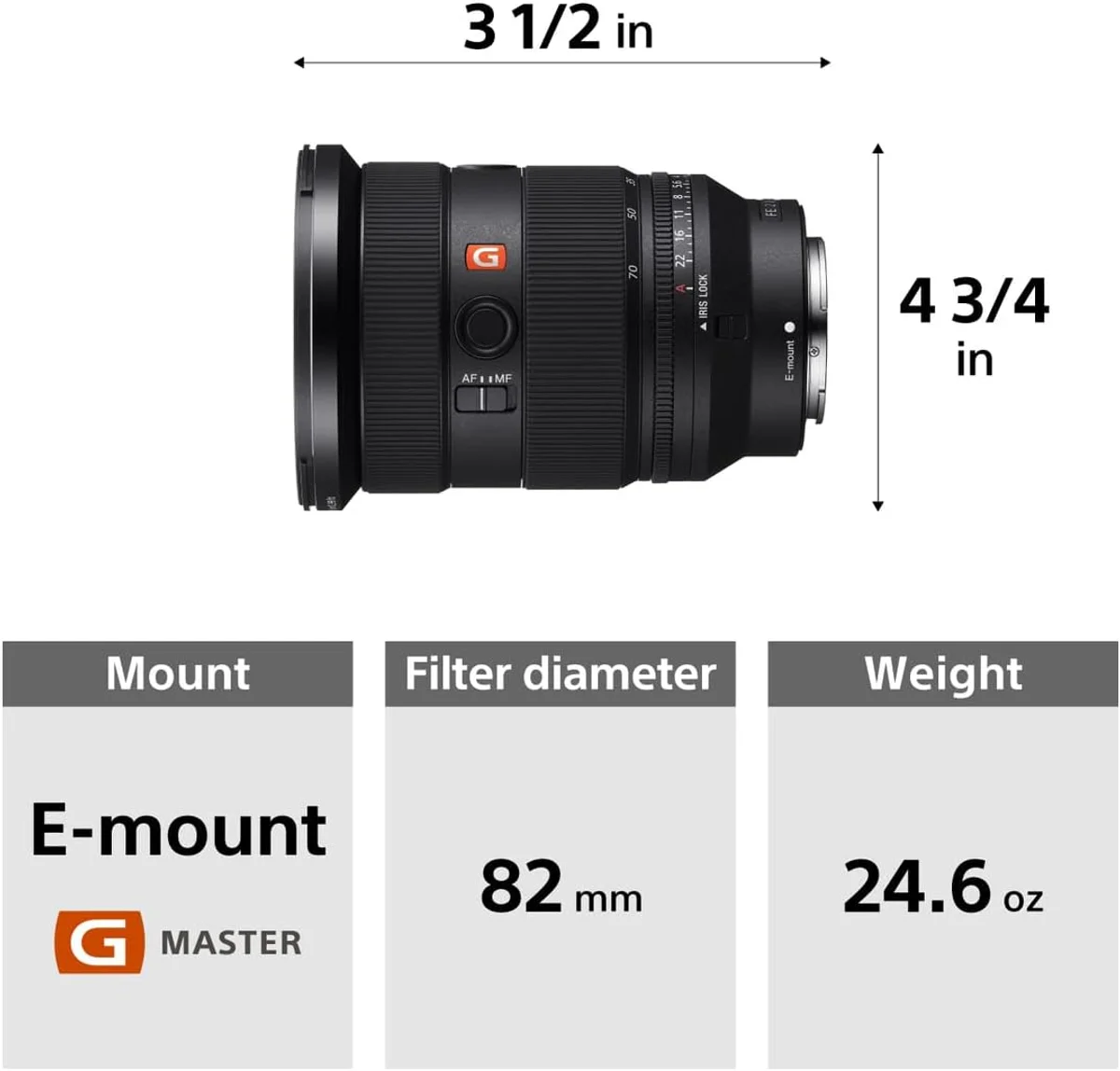
Strengths & Limitations
Strengths
- Class-leading sharpness across the entire zoom range
- Lightest 24-70mm f/2.8 at just 695g
- Blazing-fast XD linear motor AF
- Excellent flare resistance with nano AR coating II
Limitations
- Premium price — over $2,400
- Focus breathing more visible than some competitors
- No image stabilization — relies entirely on body IBIS
- Aperture ring can accidentally rotate without lock
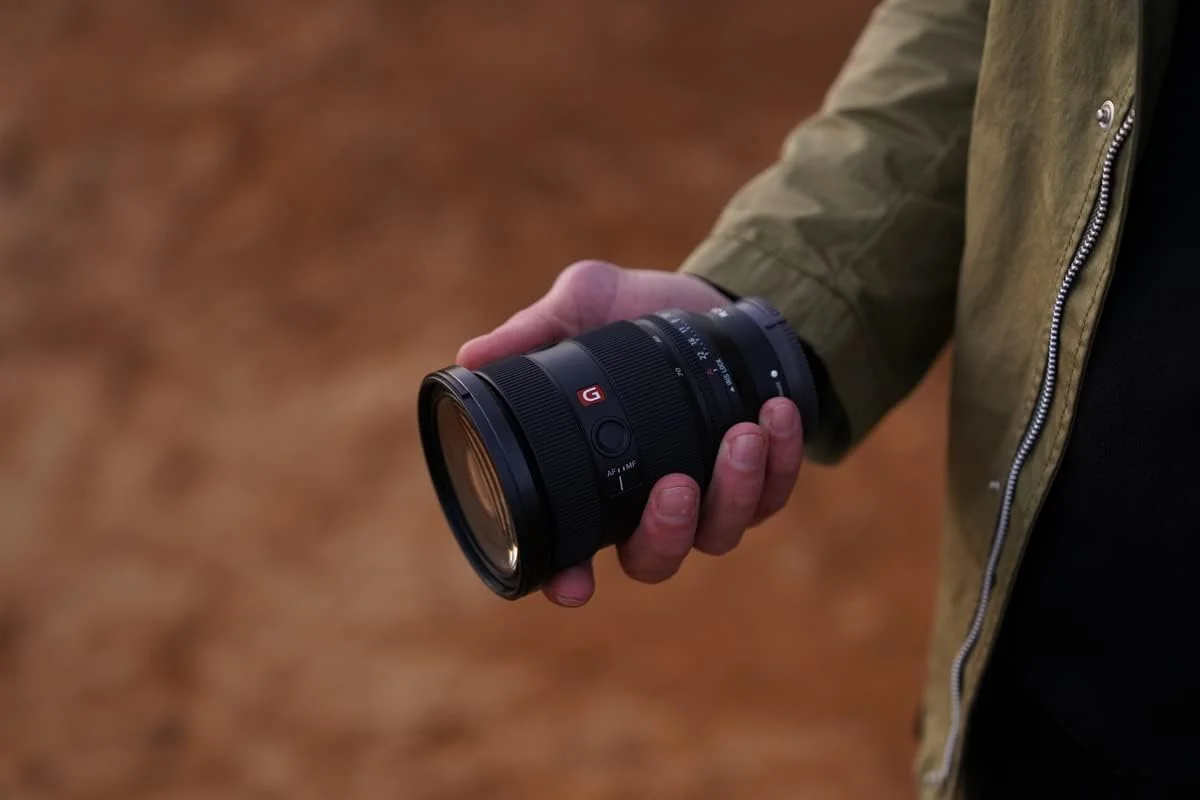
Performance & Real-World Testing
Sharpness: Wide Open Is the New Stopped Down
Center sharpness at f/2.8 is outstanding — high enough to fully exploit 61MP on the A7R V without visible softening. The two XA elements are the key: they correct the spherical aberration and astigmatism that typically force photographers to stop down to f/4 or f/5.6 for critical sharpness on other zooms. At 24mm f/2.8, the GM II resolves detail that the original GM only matched at f/4. At 70mm, the margin narrows slightly, but the Mark II still holds an edge in corner performance.
Corner sharpness — the metric that separates premium zooms from good ones — is where the GM II justifies its position. At 24mm and 35mm, corners are sharp enough for landscape prints at large sizes without stopping down. At 50-70mm, corner performance dips slightly but remains above what most zoom lenses deliver. Compared to the Sigma Art II, the GM II maintains a small but consistent advantage in the outer 20% of the frame. For architectural photography, group portraits with people at frame edges, and flat art reproduction, this margin matters. For portraits shot at f/2.8 with a centered subject, it is irrelevant.
Color and Contrast Under Real Light
The Nano AR Coating II makes its biggest impact when shooting into mixed or directional light. Wedding receptions with spot lighting, outdoor portraits at golden hour with the sun partially in frame, urban street scenes with reflective glass — these are the conditions where the Mark I sometimes produced veiling flare or colored ghosts. The GM II handles them with noticeably less contrast loss. It is not immune to flare (no lens is when shooting directly into a point light source), but the improvement is visible in A/B comparisons.
Color rendition matches Sony's G Master signature: neutral, slightly warm, with accurate skin tones. Side-by-side with the Sigma Art II, the Sony renders slightly warmer. Side-by-side with the Tamron 28-75mm G2, the Sony shows better microcontrast — fine textures in fabric, hair, and foliage appear more three-dimensional. These differences are subtle in casual viewing but visible in professional print output and when pixel-peeping 61MP files at 100%.
Video: The De-Clicked Aperture Ring Changes the Equation
The original GM was a still-photography lens that happened to work for video. The GM II was designed for both from the start. The de-clickable aperture ring allows smooth, silent aperture transitions mid-shot — essential for documentary, event video, and hybrid shooters who switch between stills and video throughout a session. Pair this with the breathing compensation on the A7 IV, A7S III, or FX3, and the GM II behaves closer to a cinema lens than any previous Sony stills zoom.
Focus breathing is reduced but not eliminated. At 70mm, racking focus from a close subject to infinity produces a visible narrowing of the field of view. Sony's breathing compensation corrects this on compatible bodies by slightly cropping the image. The correction is effective but costs a small amount of resolution. For narrative work where focus racks are slow and deliberate, the breathing is manageable without compensation. For fast documentary-style focus transitions, enable the body correction.
The four XD motors produce zero mechanical noise during AF — no clicks, no whine, no vibration artifacts. Internal microphones on the FX3 and A7S III pick up nothing from the lens during continuous tracking. This is a measurable improvement over the original GM's SSM motor, which produced a faint whine detectable in quiet recording environments.
Value Analysis
How the GM II Fits Against the Competition
Three lenses define the Sony E-mount 24-70mm f/2.8 market. The GM II at the premium tier. The Sigma 24-70mm f/2.8 DG DN II Art at the mid-premium tier. And the Tamron 28-75mm f/2.8 G2 at the value tier (though the Tamron covers 28-75mm, not the full 24-70mm). The GM II wins on weight, AF speed, and corner sharpness. The Sigma wins on value — comparable center performance at nearly half the price. The Tamron wins on bang-for-buck and adds VC stabilization the other two lack.
For professional photographers billing clients for work, the GM II's advantages compound: lighter weight means less fatigue, faster AF means fewer missed moments, and the "Sony on Sony" native advantage means firmware compatibility is guaranteed for future body releases. For enthusiasts who shoot weekends and travel, the Sigma Art II delivers 95% of the optical performance at a price that leaves budget for a second lens. The Tamron is the right choice for shooters who want f/2.8 speed and stabilization without the premium price, accepting the narrower 28-75mm range.
Against other systems: the GM II is lighter than both the Nikon Z 24-70mm f/2.8 S and Canon RF 24-70mm f/2.8L IS. The Canon adds optical stabilization, which the Sony lacks — body IBIS is the only stabilization option. For video-heavy shooters on tripods or gimbals, this is irrelevant. For handheld shooters in low light, the Canon's OIS provides an extra 2-3 stops of stabilization beyond what body IBIS alone achieves. The Nikon splits the difference with excellent optics and moderate weight but no OIS.
Resale value is strong. The GM II launched at the same price point as the original and has held steady. G Master lenses depreciate slower than third-party alternatives — expect 70-80% of retail value on the used market after two to three years of use.
Kit Building: What Goes Next to the GM II
The natural companion is a telephoto. The Tamron 70-180mm f/2.8 G2 creates an f/2.8 duo covering 24-180mm for under $3,500 total. The GM II handles 90% of a wedding or event, and the Tamron extends reach for ceremony shots and candids from distance. Adding the Sony FE 20mm f/1.8 G creates a three-lens kit for $3,800 that covers 20-180mm with no gaps — wide enough for interiors and night sky, long enough for stage compression.
Photographers who need more reach without carrying a second zoom should consider the Sony 24-105mm f/4 G OSS instead — it trades the f/2.8 aperture for 35mm of extra telephoto range and built-in stabilization.
For travel, the GM II alone replaces most two-lens kits. The 24mm wide end captures architecture and landscape; the 70mm end isolates details and street subjects. Pair it with the Sony FE 50mm f/1.8 for a lightweight low-light backup — the 50mm prime at 186g adds bokeh capability the zoom cannot match at f/1.8. For our broader look at one-lens travel solutions, the travel lens guide compares this approach against superzooms and prime-only kits.
What to Expect Over Time
What 40+ Years of Shooting Experience Confirms
One reviewer with four decades of experience calls it "one of the best, if not the best wide zoom I've shot." That kind of endorsement carries weight because it comes from someone who has used every generation of 24-70mm f/2.8 — from the Minolta 28-70mm f/2.8 G through the Sony/Zeiss A-mount era to the current E-mount lineup. The GM II represents the culmination of a design lineage that started with Sony's acquisition of Minolta's lens technology.
Build durability reports at the two-year mark are positive. The weather sealing holds up through rain, fog, and dusty environments. The zoom ring maintains consistent tension without developing the looseness that some well-used zooms exhibit. The de-click switch on the aperture ring stays firm. No reports of XD motor degradation or AF accuracy drift in our review analysis. Sony's G Master warranty and service network provide backup — lens calibration is available through Sony's service centers if AF accuracy shifts over time, though no GM II owners report needing it.
The GM II launched in mid-2022. No Mark III has been announced or credibly rumored. Sony typically follows a 5-7 year refresh cycle for G Master lenses, which suggests the GM II will remain the current model through at least 2027. For buyers concerned about investing in a lens that gets replaced shortly after purchase, the timing is safe.
Firmware updates have added compatibility with newer bodies (A9 III, A1 II) and improved breathing compensation coordination. Sony continues to support the GM II in their interchangeable lens roadmap. The 82mm filter thread, while large, is shared with the 16-35mm GM II and 70-200mm GM II — professionals building a three-zoom kit use one set of filters across all three.
Sony 24-70mm GM II — Buyer Questions
Answers based on our analysis of 345+ Amazon ratings, published MTF data from Opticallimits and Dustin Abbott, and cross-referenced field reports for the Sony FE 24-70mm f/2.8 GM II (SEL2470GM2).
Is the Sony 24-70mm GM II any good?
Yes — it is the sharpest 24-70mm f/2.8 zoom available for Sony E-mount. Corner-to-corner resolution at f/2.8 exceeds what the original GM achieved stopped down to f/4. The four XD linear motors deliver autofocus fast enough for 30fps burst shooting on the A9 III, and the 695g weight makes it the lightest full-frame f/2.8 standard zoom in production. The main criticism is price: at the premium tier, it costs nearly twice what the Sigma 24-70mm Art II delivers with comparable optical performance. If budget is flexible and you want the best native Sony option, the GM II justifies the investment.
What is the difference between Sony 24-70 GM and GM II?
Three primary changes. Weight dropped from 886g to 695g — a 22% reduction that changes how the lens handles during all-day shoots. The GM II uses four XD linear motors instead of the original's ring-type SSM motor, producing faster and quieter autofocus with better tracking. Optical design was revised with two XA elements (up from one) and two Super ED elements, improving corner sharpness and reducing chromatic aberration. Flare resistance improved through Nano AR Coating II. The GM II also adds a de-clickable aperture ring for video and reduces focus breathing. The original GM remains a capable lens, but the weight and AF improvements in the Mark II are substantial.
What is the Sony 24-70mm lens good for?
The 24-70mm focal range covers the widest variety of professional shooting situations in a single lens. Weddings — ceremony wide shots at 24mm, portraits at 70mm. Events — group shots to speaker close-ups without changing glass. Travel — architecture at the wide end, street details at the long end. Product photography — flat lays at 24mm, detail crops at 70mm. Journalism — the classic "one lens on the body" assignment lens. The f/2.8 constant aperture adds low-light capability and subject separation that f/4 zooms cannot match. Most professional Sony shooters keep a 24-70mm f/2.8 mounted more than any other lens.
Why is 24-70 so popular?
The 24-70mm range maps to how humans see and frame scenes. At 24mm, you capture environmental context — rooms, landscapes, group shots. At 50mm, the perspective matches natural vision. At 70mm, you isolate subjects with mild compression. No other zoom range covers this spread at a constant fast aperture. Professional photographers adopted 24-70mm f/2.8 zooms as the default working lens decades ago on film SLRs, and that convention carried into digital. The lens replaced the need to carry separate wide-angle and normal primes for most assignments. Every major camera system prioritizes this focal range in their flagship zoom lineup.
Track the Sony 24-70mm GM II
We check the price daily and monitor availability. You hear from us when something changes.
Only when something changes. Unsubscribe anytime.