Lenses for Street Photography: Fast Glass, Small Bodies
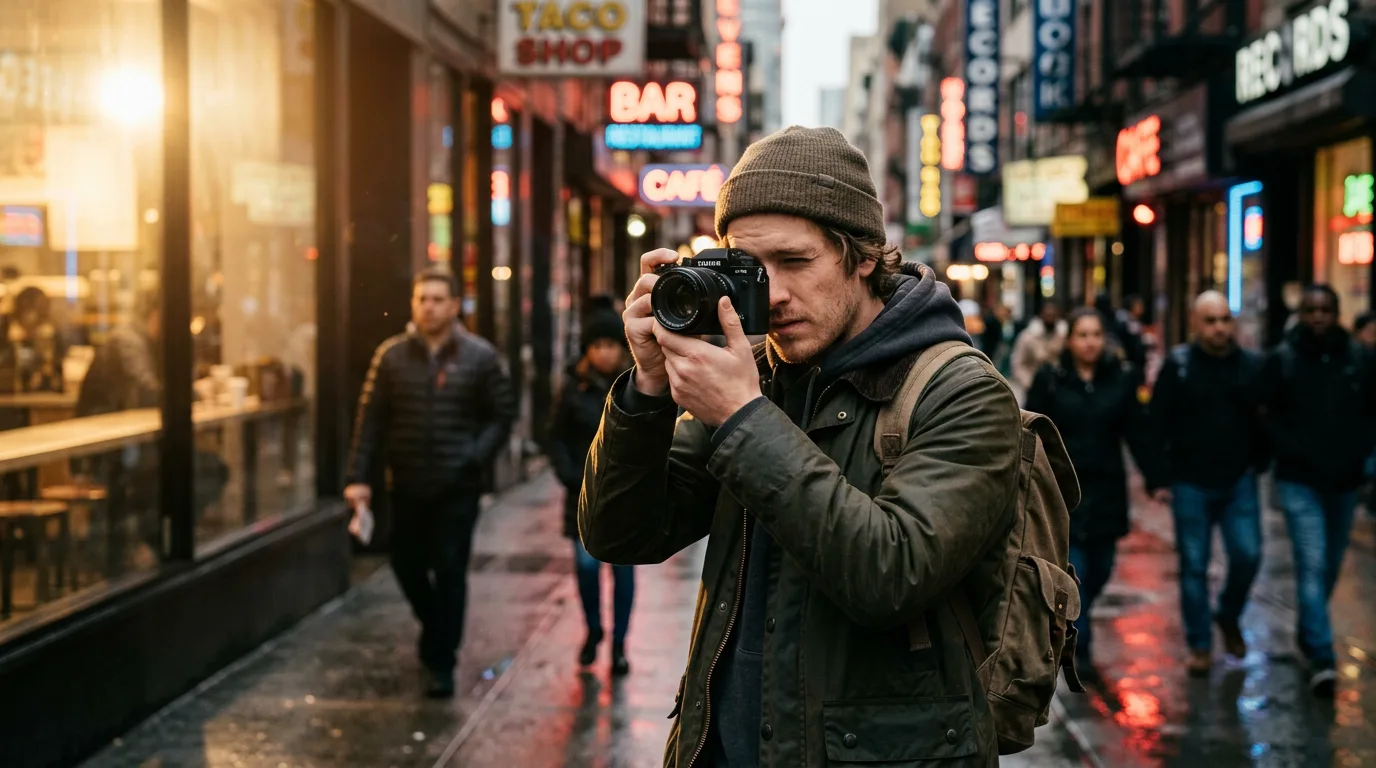
The best street photograph you will ever take happens in less than half a second. A gesture, a shadow, a collision of strangers in a crosswalk — and then it is gone. Your lens either caught it or it did not. No second take. No repositioning. No chimping the LCD and trying again. Street photography punishes slow gear, heavy gear, and conspicuous gear equally. The lens that works is the one you forget you are holding.
This guide starts from how working street photographers, from Magnum shooters to independent zine publishers, choose their glass. The patterns cut across brands, budgets, and decades. Small beats large. Fast beats slow. A fixed focal length you know by instinct beats a zoom you fiddle with. And the single most debated question in the genre — 35mm or 50mm? — has no universal answer, only a personal one that depends on how close you are willing to stand to a stranger.
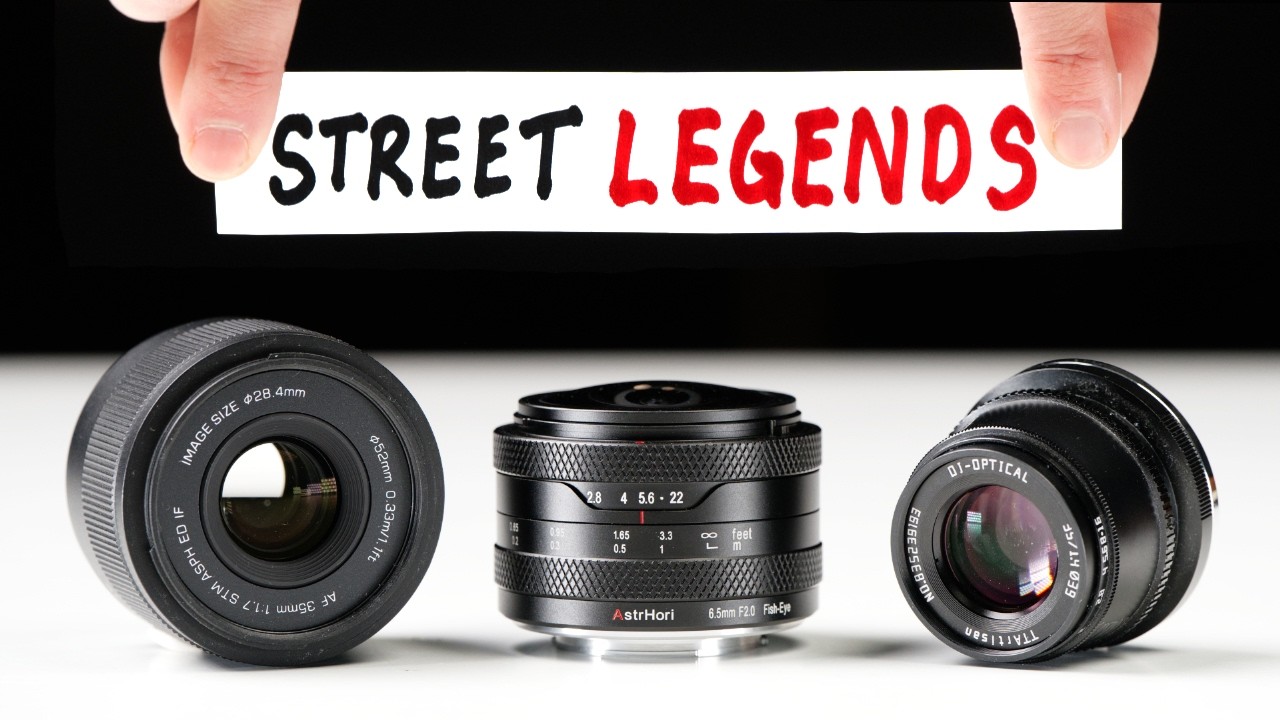
The Focal Length Debate: 28mm, 35mm, and 50mm
Three focal lengths dominate street photography, and each one produces a fundamentally different kind of image. This is not a minor aesthetic preference. The millimeters on your lens barrel determine your working distance from subjects, the amount of environmental context in every frame, and how much of the city crowds into the background. Picking a focal length is picking a philosophy.
28mm puts you inside the scene. At arm's length from a subject, a 28mm captures their face, their hands, the wall behind them, and the person walking past on the left. William Klein and Garry Winogrand used 28mm to create images that feel chaotic, energetic, and invasive. The perspective distortion at close range stretches faces and exaggerates hand gestures. Buildings lean. Sidewalks seem to rush past. If your street work is about energy and immersion, 28mm rewards aggression.
35mm is the consensus modern choice.
It captures a natural field of view — close to what one eye sees without the peripheral blur — and places you at a comfortable 1.5 to 3 meter distance from subjects. Close enough to read expressions, far enough to avoid confrontation. The 35mm focal length balances context and subject emphasis better than either neighbor: less distortion than 28mm, more environment than 50mm. Joel Meyerowitz, Alex Webb, and most contemporary street photographers work at 35mm. If you have never shot street before, start here.
50mm is the legacy pick.
Henri Cartier-Bresson, the photographer most credited with defining street photography as an art form, shot almost exclusively with a 50mm Leica. His argument was geometric: the 50mm frame forced precise composition because there was no room for excess. Every element had to earn its place. A 50mm on a full-frame camera requires you to stand 3-5 meters from a subject for a full-body shot, which keeps you outside the personal-space boundary that triggers awareness. The downside is lost context. Backgrounds compress. Side streets and peripheral action vanish from the frame. You get the subject, not the city around them.
The modern shift from 50mm to 35mm happened for practical reasons. Cartier-Bresson worked in mid-century Paris and Delhi, where wide boulevards and open markets gave him room. Contemporary cities are denser. Narrow Tokyo alleys, packed Hong Kong escalators, and shoulder-to-shoulder New York sidewalks push subjects closer regardless of the photographer's preference. A 50mm in a Tokyo subway car captures a chin and a shoulder. A 35mm captures the person, the strap they are holding, and the commuter pressed against them. Density favors wider lenses.
Size and Discretion: Why Small Lenses Win
Street photography is the only genre where a smaller, cheaper lens often outperforms a larger, more expensive one. Not optically — but functionally. A photographer holding a compact mirrorless body with a pancake prime looks like a tourist. A photographer aiming a 70-200mm f/2.8 at a stranger looks like a threat. The social dynamics of public spaces punish conspicuous equipment.
Lens size affects three things that matter on the street.
First, reaction time. A small, light lens lets you raise the camera and shoot in one smooth motion. A heavy lens requires two hands, deliberate positioning, and visible aiming — all of which alert subjects. Second, stamina. Street photographers walk for hours. A 130g pancake prime on a 400g body weighs less than a water bottle. A 900g f/1.4 prime on a 700g body becomes a noticeable burden by hour three. Third, subject behavior. People act differently when they see a camera. A large lens extending toward their face triggers self-consciousness, avoidance, or hostility. A small lens barely registers.
This is why the Ricoh GR series — a fixed 28mm f/2.8 lens in a body the size of a deck of cards — has become the default street camera for an entire generation of photographers. It fits in a jacket pocket. It draws zero attention. And it fires from standby in under a second.
The One-Lens Challenge
Pick one focal length. Shoot with it for three months. Do not switch. This exercise, popularized by photography educators and Magnum workshop leaders, is the fastest path to street photography fluency. The goal is not restriction for its own sake. The goal is to internalize a focal length so deeply that you see compositions before you raise the camera.
After a few weeks with one lens, something shifts. You stop thinking about framing and start thinking about timing. You know — without looking through the viewfinder — that the person walking toward you will fill the left third of the frame when they reach the lamppost. You know that stepping two paces left will place the red awning behind their head. The focal length becomes a language you think in, not a tool you operate.
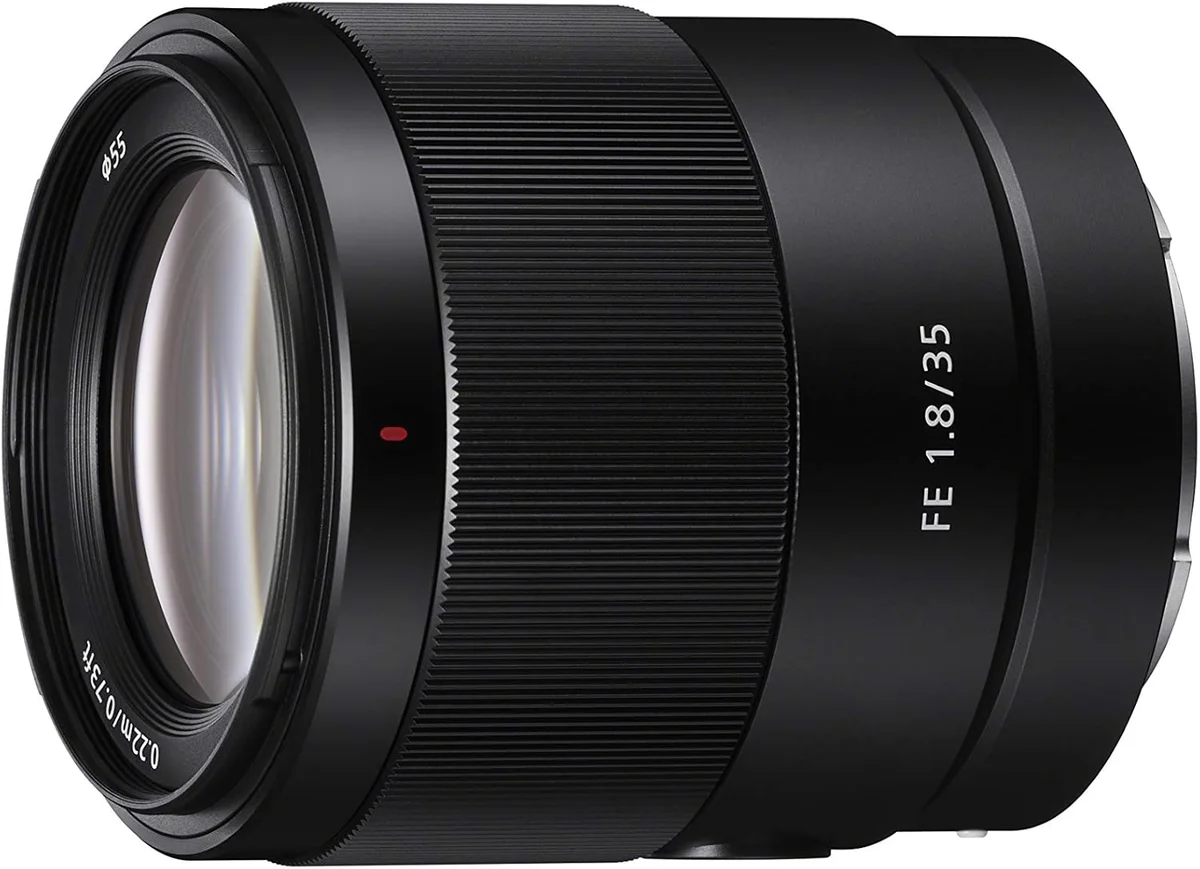
We recommend 35mm for the one-lens challenge if you have not done it before. It forgives mistakes that 50mm punishes (too tight, missed context) while still demanding more composition discipline than 28mm (which captures so much that strong framing requires deliberate exclusion). A fast 35mm prime — f/1.8 or f/2 — covers daylight, golden hour, and early night shooting without requiring extreme ISO values.
Zone Focusing and Hyperfocal Distance
Autofocus is fast. Zone focusing is faster. The difference matters when a shot lasts 300 milliseconds and the subject is a stranger who does not know they are being photographed.
Zone focusing works by pre-setting your lens to a fixed distance and stopping down to an aperture where depth of field covers a useful range. At 35mm, f/8, focused at 3 meters, everything from roughly 1.8 meters to 8 meters falls within acceptable sharpness. That zone covers the working distance for most street encounters. You walk with the camera ready, the focus locked, and fire the instant a subject enters the zone. No half-press. No hunting. No delay.
Hyperfocal distance extends this principle to maximum depth. At 35mm f/11, the hyperfocal distance is approximately 3.5 meters on a full-frame sensor. Focus there, and everything from 1.7 meters to infinity is acceptably sharp. This is the setting for deep environmental shots where foreground subjects and distant buildings both need to read clearly. The cost is light: f/11 requires bright conditions or high ISO values to maintain fast shutter speeds.
Older manual-focus lenses with engraved distance scales make zone focusing intuitive — you glance at the barrel and see the depth of field range between two aperture marks. Modern autofocus lenses often lack these scales, which forces you to memorize distances or apply gaffer tape marks at your preferred settings. Some photographers dedicate one lens body to zone focusing with manual focus locked on, using a second body with autofocus for different conditions.
Autofocus Speed for Candids
When zone focusing is not practical — low light, wide apertures, unpredictable subject distances — autofocus takes over. And for street candids, AF speed is the single most important lens specification after focal length.
Modern mirrorless cameras with phase-detection AF can acquire focus in 0.02-0.05 seconds, but only if the lens motor can keep up. Linear stepper motors and ultrasonic ring motors respond near-instantaneously. Older screw-drive and micro-motor designs add visible lag — 0.1 to 0.3 seconds — which is the difference between catching a glance and catching a blur.
Eye-detection AF has changed street photography in ways that were unimaginable five years ago. Aim the camera at a crowd, half-press, and the system finds the nearest face and locks onto the eye within a single frame. On a Sony A7C II or Canon R6 III, this works reliably even when the subject is turning, partially obscured, or wearing sunglasses. The photographer's job shrinks from "focus and compose" to "compose and fire."
For hip shooting — holding the camera at waist level and firing without looking through the viewfinder — eye-detection AF is especially valuable because you cannot manually confirm focus through the EVF. The camera handles focus autonomously while you handle timing and positioning. Pair this with a tilting rear screen for subtle composition checks, and hip shooting becomes a reliable technique rather than a spray-and-pray gamble.
Shooting from the Hip
Hip shooting is the art of photographing without raising the camera to your eye. The camera hangs at waist or chest level, you frame by instinct, and you fire with a thumb or finger on the shutter button while looking at the subject with your bare eyes. No viewfinder. No LCD review. Pure spatial awareness.
The technique exists because raising a camera to your face announces your intention. The moment your arm lifts, a subject's expression changes. They stiffen, look away, smile artificially, or scowl. Hip shooting bypasses this reaction entirely. The subject sees a person with a camera hanging around their neck — common enough to ignore.
Wider lenses make hip shooting more forgiving. A 28mm at waist level captures a broad scene that can be cropped to a strong composition. A 50mm from the hip requires spatial precision that borders on luck. Most hip shooters work at 28mm or 35mm, stopped down to f/8 with zone focus set to 2-3 meters.
A tilting screen changes the math. With the LCD angled upward 45 degrees, you can hold the camera at stomach level and still see a live preview without raising it to your face. This is not true hip shooting — purists would call it "waist-level shooting" — but it achieves the same social invisibility with far better framing accuracy. Many modern mirrorless cameras offer fully articulating screens that make this posture natural.
Primes vs. Compact Zooms on the Street
The prime lens dominates street photography for reasons of size, speed, and philosophy. But compact zooms have closed the practical gap enough to deserve serious consideration, especially for photographers who are still finding their preferred focal length.
A 28-75mm f/2.8 zoom covers the entire street photography focal range — from wide environmental shots to moderate subject isolation — in a single lens. It eliminates the "wrong lens" problem: you never miss a 50mm composition because you mounted a 28mm prime. Tamron's 28-75mm f/2.8 for Sony E-mount weighs 550g, roughly double a fast 35mm prime, but still manageable for full-day walking.
The case against zooms is threefold.
Weight is the obvious factor. More subtle is the decision overhead: a zoom introduces a rotation axis that requires a conscious choice at every shot. "Should I be at 35mm or 50mm here?" is a question that does not exist with a prime, and answering it costs fractions of a second that accumulate into missed shots. The third argument is discipline. A fixed focal length teaches framing. A zoom teaches adjustment. Over years, the prime shooter develops a spatial instinct that the zoom shooter may never acquire.
Our recommendation: start with a prime. Use the one-lens challenge to build your instinct at a single focal length. Once you know your preferred working distance by feel, a zoom becomes a useful tool rather than a crutch. A photographer who has spent six months at 35mm and then picks up a 28-75mm will naturally gravitate to 35mm on the zoom ring and only deviate when the scene demands it.
Black vs. Silver: Lens Aesthetics on the Street
This sounds like vanity. It is not. The color of your camera and lens directly affects how people react to you in public spaces, and street photography depends on those reactions being neutral or nonexistent.
A black camera body with a black lens absorbs light. It does not glint in sunlight, does not catch reflections in shop windows, and does not attract peripheral attention. Against dark clothing — which street photographers overwhelmingly wear for exactly this reason — a black camera almost disappears. Subjects do not notice it. Security guards do not notice it. Shop owners do not notice it.
A silver or chrome lens — common on Fujifilm X-series bodies and Leica rangefinders — catches every beam of sunlight and throws it into the eyes of the person across the street. Chrome finishes are beautiful in a display case. On a crowded sidewalk at golden hour, they are a beacon. Some Leica street photographers have wrapped their chrome lenses in black gaffer tape for decades, sacrificing aesthetics for invisibility.
The exception is tourist-heavy areas where cameras are ubiquitous. In Times Square, the Shibuya crossing, or the Piazza San Marco, nobody notices any camera regardless of color. Your Leica M with a chrome 50mm Summicron looks like another tourist's point-and-shoot. But in residential neighborhoods, local markets, and off-the-beaten-path streets — where the best candid photography happens — discretion still matters, and black gear provides it.
Weather Sealing for Urban Rain
Rain transforms cities. Reflections double the neon. Umbrellas create geometry. Puddles become mirrors. The best street photography conditions arrive when most photographers put their cameras away — and weather-sealed gear is what separates the photographer who shoots the rain from the one who watches it through a coffee shop window.
Weather sealing on a lens means rubber gaskets at the mount junction, around the focus ring, and on any external switches or AF/MF toggles. These gaskets block water droplets from entering the lens barrel through capillary action. Sealed lenses paired with sealed camera bodies create a system that handles steady rain, splashing puddles, and wet hands without internal damage.
Not all street lenses are sealed.
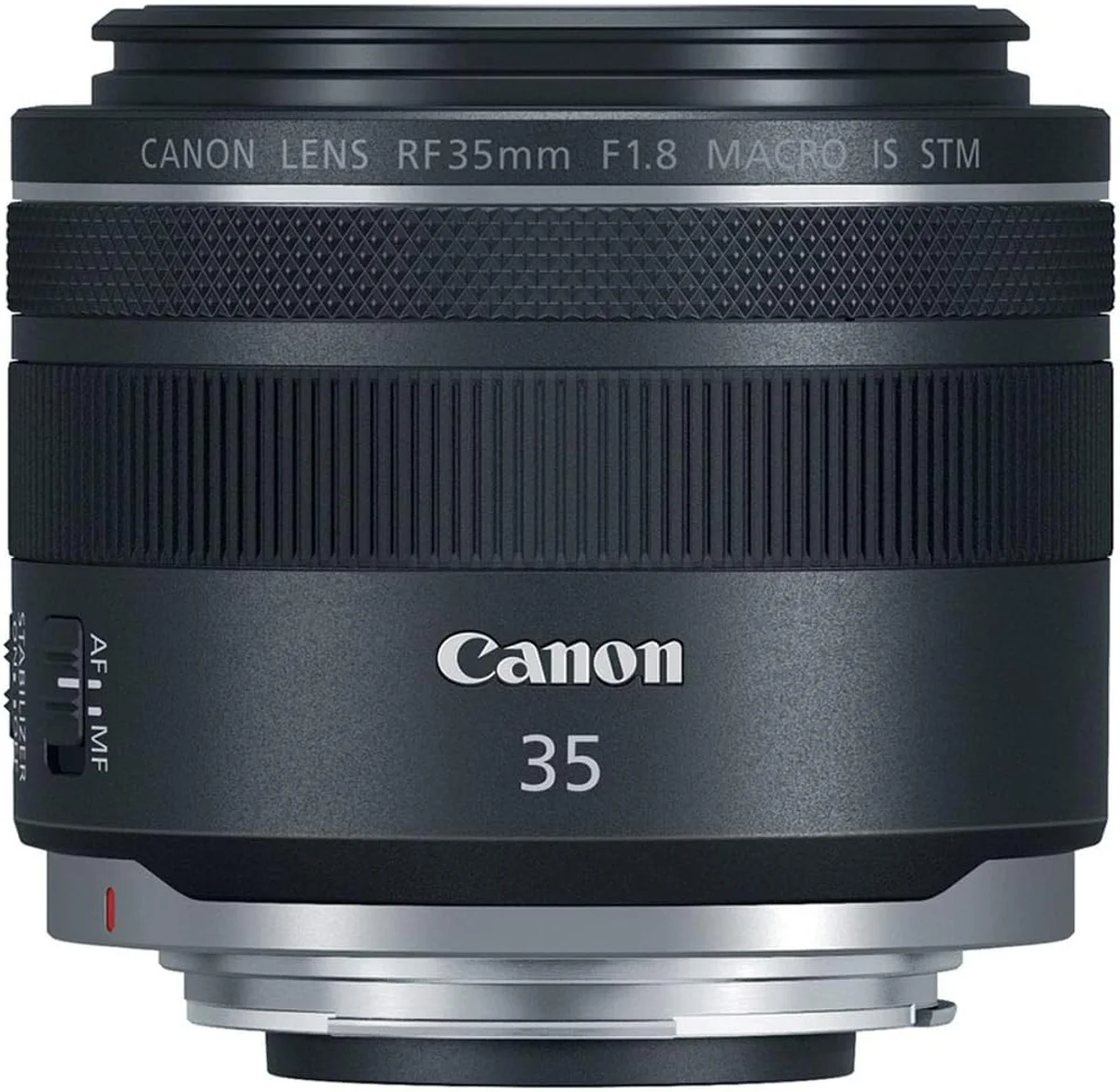
Budget primes and pancake lenses frequently omit weather protection to reduce cost and size. Canon's RF 35mm f/1.8 IS Macro STM includes sealing — unusual for a lens at its price tier — which makes it an especially strong street pick for photographers in rainy climates like London, Seattle, or Tokyo during tsuyu season. If your prime is unsealed, a small zip-lock bag with a hole cut for the front element provides field-expedient protection that costs nothing and works well enough for a 30-minute rain shower.
Pancake Lenses: Maximum Discretion
A pancake lens is any lens thin enough that the camera body's depth exceeds the lens barrel. Typical pancake primes measure 20-25mm from mount to front element, weigh 100-160g, and make the camera look like a large compact rather than an interchangeable-lens system. For street photography, this form factor is a tactical advantage.
Canon's RF 28mm f/2.8 STM pancake is 24.7mm thin and weighs 120g. Mounted on an EOS R8 body, the total package is barely larger than a smartphone in a thick case. It slips into a jacket pocket. It hangs from a wrist strap without tugging. Passersby glance at it and process "tourist with small camera," not "photographer with professional equipment aimed at me."
The optical compromises in pancake designs are real but narrow. Wide open at f/2.8, expect visible vignetting in the corners — roughly 1.5 to 2 stops of light falloff. Corner sharpness lags center sharpness until f/4. Chromatic aberration around high-contrast edges appears at wider apertures. All of these artifacts decrease as you stop down, and by f/5.6 most pancake lenses produce images nearly indistinguishable from full-size primes.
For daytime street photography — which is the majority of the genre — a pancake lens at f/5.6 to f/8 with zone focus is functionally perfect. The size advantage swamps the optical disadvantage. You shoot more because the camera is always accessible. You get closer because people do not react. You walk longer because nothing weighs you down. The pancake is not the best optical instrument for street photography. It is often the best practical one.

Night Street Photography and Aperture Needs
Daylight street photography works at f/8. Night street photography works at f/1.4. That four-stop difference is the entire argument for fast glass.
Under a bright neon sign in Shinjuku or the Las Vegas Strip, ambient light is generous.
An f/2.8 lens at ISO 1600 delivers shutter speeds around 1/125 second — fast enough to freeze a walking pedestrian. Step one block off the main strip into a side alley, and light drops by two to three stops. Now f/2.8 at ISO 1600 gives you 1/30 second — too slow to freeze motion without intentional blur. An f/1.4 lens recovers those two stops: 1/125 second at ISO 1600 in the same alley.
Sensor technology has narrowed this gap. A camera that produces clean images at ISO 6400 can compensate for two stops of aperture, making an f/2.8 lens viable in conditions that previously demanded f/1.4. But high ISO is not free. Noise reduction smears fine detail. Dynamic range compresses. Shadow areas lose texture. An f/1.4 lens at ISO 1600 will always produce a cleaner, more detailed image than an f/2.8 lens at ISO 6400 in the same light.
The weight and cost penalty of f/1.4 is real. A 35mm f/1.4 typically weighs 300-500g and costs two to three times as much as its f/1.8 sibling. An f/1.8 prime, at half the weight and a third of the cost, covers 90% of night street scenarios. The remaining 10% — true darkness, fast-moving subjects, creative ultra-shallow depth of field — is where f/1.4 earns its premium. Most photographers who are honest about their shooting conditions find f/1.8 is the better value.
Cartier-Bresson's 50mm Legacy vs. the Modern 35mm
Henri Cartier-Bresson did not just use a 50mm lens. He defined the visual grammar of street photography through it. His concept of the "decisive moment" — that fraction of a second when composition and meaning align — was built on the 50mm frame. The tight crop forced him to find order in chaos, to wait until the cyclist and the puddle and the staircase arranged themselves into geometry. A 28mm would have captured everything. A 50mm captured only what mattered.
But Cartier-Bresson also worked in a different physical world. Mid-century Paris had wide sidewalks, open plazas, and pedestrians who moved at walking pace without earbuds or smartphones. He could stand 4-5 meters from a subject and compose a full-body portrait with architectural context. Try that distance in a modern subway car, a crowded Tokyo intersection, or a packed Mumbai market. Physical space has shrunk. Streets are narrower, crowds are denser, and the 50mm frame that once captured a complete scene now captures a fragment.
The 35mm lens emerged as the modern street standard partly because cities changed and partly because photographers changed. The new wave of street photography — Daido Moriyama, Martin Parr, the Flickr and Instagram generations — favors wider, messier, more immersive frames. Environmental chaos is not a problem to be solved by tighter framing; it is the subject itself. A 35mm lens includes the chaos. A 28mm embraces it. A 50mm excludes it.
Neither approach is superior. The 50mm produces cleaner, more graphically composed images. The 35mm produces richer, more contextual images. The choice reveals what kind of street photographer you are: a poet editing the world into minimal statements, or a journalist capturing the world in its full, unedited density. Cartier-Bresson was the former. Winogrand was the latter. Both changed the medium.
Building Your Street Kit
The ideal street photography kit is the smallest one that covers your needs. For most photographers, that is a single prime lens on the lightest available body. No lens hood (adds length and draws attention). No external flash (destroys the candid moment). No battery grip (adds weight and bulk for marginal benefit). Minimalism is not an aesthetic — it is a performance strategy.
The starter kit: One 35mm f/1.8 prime, one mirrorless body, one spare battery in your pocket, one 64GB card in the camera. Total weight under 700g. This covers daylight, golden hour, and early evening shooting. Walk out the door and shoot. No bag required.
The all-conditions kit: One 35mm f/1.4 prime (for night work), one 28mm f/2.8 pancake (for daytime discretion), one mirrorless body. Swap lenses once — pancake during the day, fast prime after dark. Total weight under 900g. A small belt pouch or jacket pocket holds the inactive lens.
The rangefinder kit: A Leica M-series or equivalent with a 35mm Summicron f/2. Manual focus only, zone focusing by default, mechanical shutter that fires silently without electronic noise. This is the heritage configuration — expensive, deliberate, and rewarding for photographers who find that the manual process slows them down in the right way.
Whatever kit you choose, carry it every day. The best street photography lens is the one that is with you when the light is right and the moment appears. A 50mm prime left on the shelf because it was too heavy to carry today produces zero images. A mediocre 28mm pancake in your coat pocket produces the shot of a lifetime.
Street Photography Lens Questions
These questions come up repeatedly in our reader emails and forum threads. For broader lens selection guidance, our lens buying framework covers all categories and use cases.
Is 35mm or 50mm better for street photography?
A 35mm lens is the stronger all-around choice for street photography. It captures more environmental context — sidewalks, storefronts, passing crowds — without requiring you to stand uncomfortably close to strangers. The wider field of view also makes zone focusing easier because depth of field is deeper at any given aperture. A 50mm works well if you prefer tighter compositions that isolate a single subject from the scene, but it demands more precise framing and puts you farther from the action. Most working street photographers today shoot 28mm or 35mm as their primary focal length.
Do I need autofocus for street photography?
No, but it helps in specific situations. Zone focusing — pre-setting your lens to a fixed distance and aperture so everything within a depth range stays sharp — is faster than any autofocus system for subjects at predictable distances (2-5 meters). Autofocus becomes valuable when light drops and you need wider apertures where depth of field shrinks, or when subjects appear at unpredictable distances. Modern mirrorless eye-tracking AF can lock onto a face in a crowd within 50 milliseconds, which matters for fleeting expressions. Many street photographers use both methods depending on conditions.
What aperture do I need for street photography at night?
An f/1.4 or f/1.8 lens paired with a camera that handles ISO 3200-6400 cleanly covers most night street scenarios. Under bright urban neon and storefront lighting, f/2.8 works at ISO 1600 with shutter speeds around 1/60 second. In darker alleys and side streets, you need f/1.4 to maintain shutter speeds fast enough to freeze walking pedestrians (1/125 second minimum). An f/2.8 zoom will struggle in these conditions unless you accept motion blur as a creative choice — which many night street photographers do intentionally.
Can I shoot street photography with a zoom lens?
Yes, and compact zooms like a 24-70mm f/4 or 28-75mm f/2.8 work well. The advantage is compositional flexibility without moving your feet, which matters when a barrier — traffic, a fence, a crowd — prevents you from reaching the ideal distance. The disadvantage is size. A zoom is larger, heavier, and more conspicuous than a pancake prime, which changes how people react to you on the street. If discretion matters, a small prime will always draw less attention than a zoom barrel extending toward a stranger.
Why do street photographers prefer black lenses over silver?
Black camera bodies and lenses reflect less light, making them less visible in peripheral vision. A silver or chrome lens catches sunlight and glints, which draws the eye of passersby and subjects — exactly what a street photographer wants to avoid. Black gear also looks less expensive to casual observers, reducing theft risk in crowded urban environments. Some photographers wrap silver lenses with black gaffer tape for the same effect. The functional difference is purely about visibility; optically, black and silver versions of the same lens are identical.
What is zone focusing and how do I set it up?
Zone focusing means pre-setting your focus distance and aperture so that everything within a predictable depth range appears sharp — no autofocus needed. Set your lens to manual focus, choose f/8 or f/11, and focus to approximately 3 meters (10 feet). At 35mm f/8 focused at 3 meters, everything from about 1.8 to 8 meters will be acceptably sharp. This covers the working distance for most street situations. You fire the shutter the instant a subject enters your zone, with zero AF delay. Practice estimating distances by eye until 2, 3, and 5 meters become second nature.
Are pancake lenses good for street photography?
Pancake lenses are among the best options for street photography. Their ultra-thin profile — typically 20-25mm deep — makes the camera look like a point-and-shoot to passersby, which dramatically reduces self-consciousness in subjects. Canon's RF 28mm f/2.8 STM pancake weighs just 120g and barely protrudes from the camera body. The optical concession is modest: pancake designs sometimes show more vignetting wide open and slightly softer corners compared to full-size primes. At f/4-f/5.6, these differences vanish. For daytime street work, a pancake prime is nearly ideal.
Our Top Recommendation
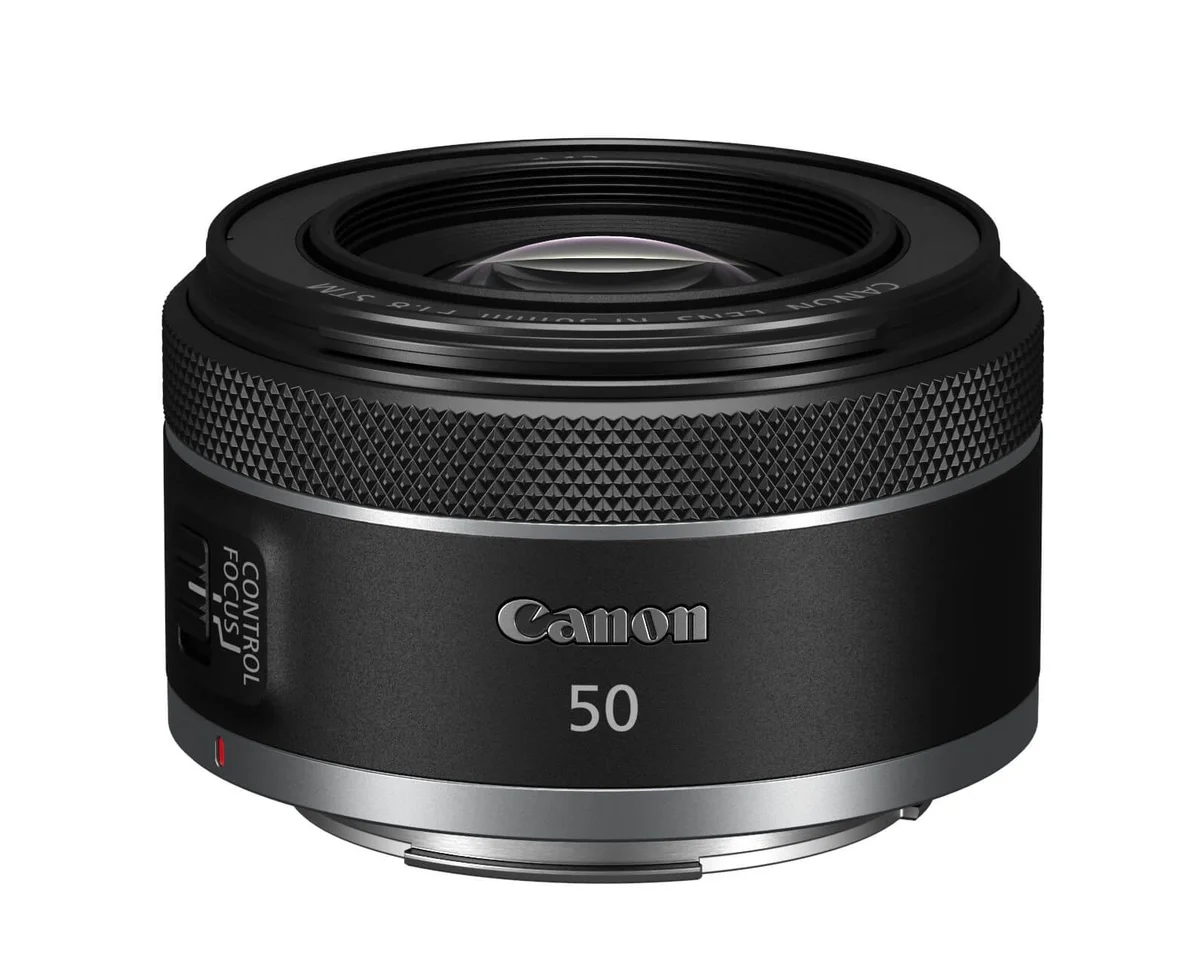
Based on our research, the Canon RF 35mm f/1.8 Macro is our top pick — street photography, casual portraits, and close-up work.