Best Sony E-Mount Macro Lenses 2026
Macro photography on Sony E-mount starts with a reality check: Sony does not make a modern native E-mount macro lens. The company's FE 90mm f/2.8 Macro G OSS has been in production since 2015 and remains available, but it predates Sony's modern linear motor autofocus designs and relies on the older Direct Drive SSM system. Third-party manufacturers have filled the gap, and the Sigma 105mm f/2.8 DG DN Macro Art stands as the strongest dedicated macro option for E-mount shooters in 2026.
Not every photographer who needs close-up capability needs a dedicated macro lens. Food photographers, content creators, and product shooters often work at magnifications between 0.2x and 0.5x — a range that several standard primes and zooms reach with their native close-focus capability. This roundup covers the full spectrum: one true 1:1 macro lens at the top, followed by five lenses that deliver strong close-up results as a secondary function alongside their primary shooting roles.
We evaluated each lens on three macro-relevant criteria: minimum focus distance and maximum magnification (how close and how large), optical quality at close distances (many lenses optimized for portrait or landscape distances soften at their closest focus), and autofocus behavior in the close-focus range (where most AF systems slow down or hunt). The ranking reflects a balance between dedicated macro performance and practical flexibility for photographers who want close-up capability without carrying a single-purpose lens.
The distinction between "macro" and "close-up" matters for setting expectations.
True macro means 1:1 reproduction — a subject measuring 36mm wide fills the entire width of a full-frame sensor. Close-up photography works at lower magnifications, from 0.1x to about 0.5x, where subjects the size of a fist or larger fill the frame. Both produce compelling images. The difference lies in subject size: if you photograph insects, stamps, or watch movements, you need 1:1. If you photograph food plates, flowers, or small products, close-up capability on a standard lens often delivers results that viewers cannot distinguish from dedicated macro shots.
Sony E-mount's open third-party ecosystem means more options exist beyond what we cover here.
Manual-focus macro lenses from Laowa, Venus Optics, and 7Artisans offer magnifications up to 2:1 and 5:1 at very low prices, sacrificing autofocus entirely. Those lenses serve a specific niche — extreme magnification for scientific, entomological, and artistic abstract work. This roundup focuses on autofocus lenses that integrate with Sony's Eye AF, face detection, and real-time tracking systems, because most photographers need their macro lens to also function as a reliable general-purpose optic when macro subjects are not in front of the camera.
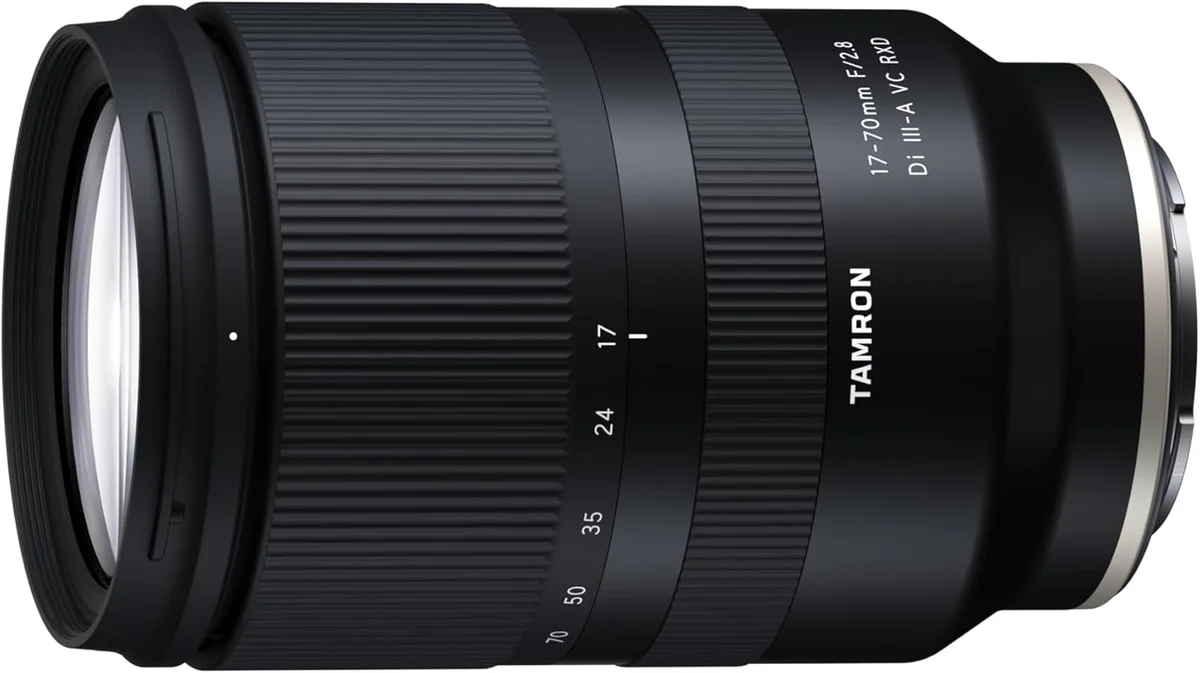
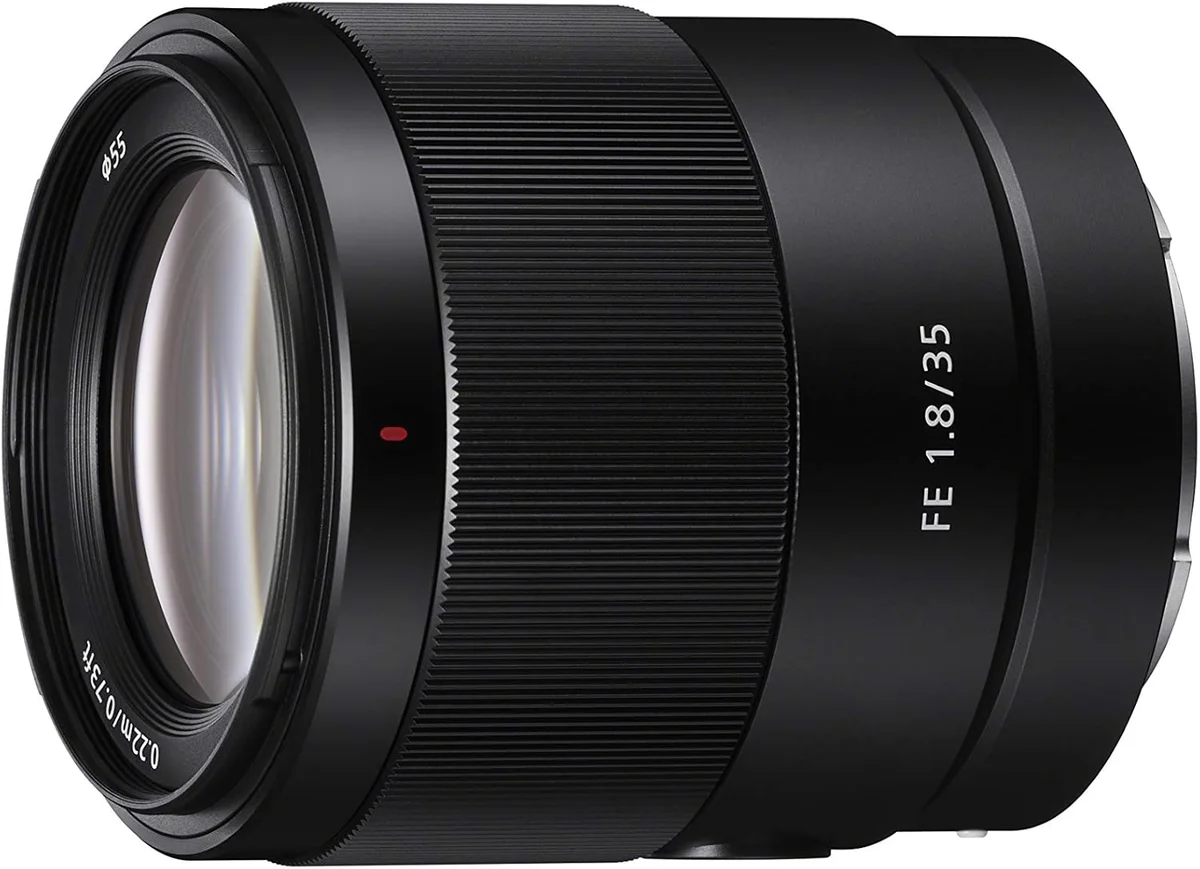
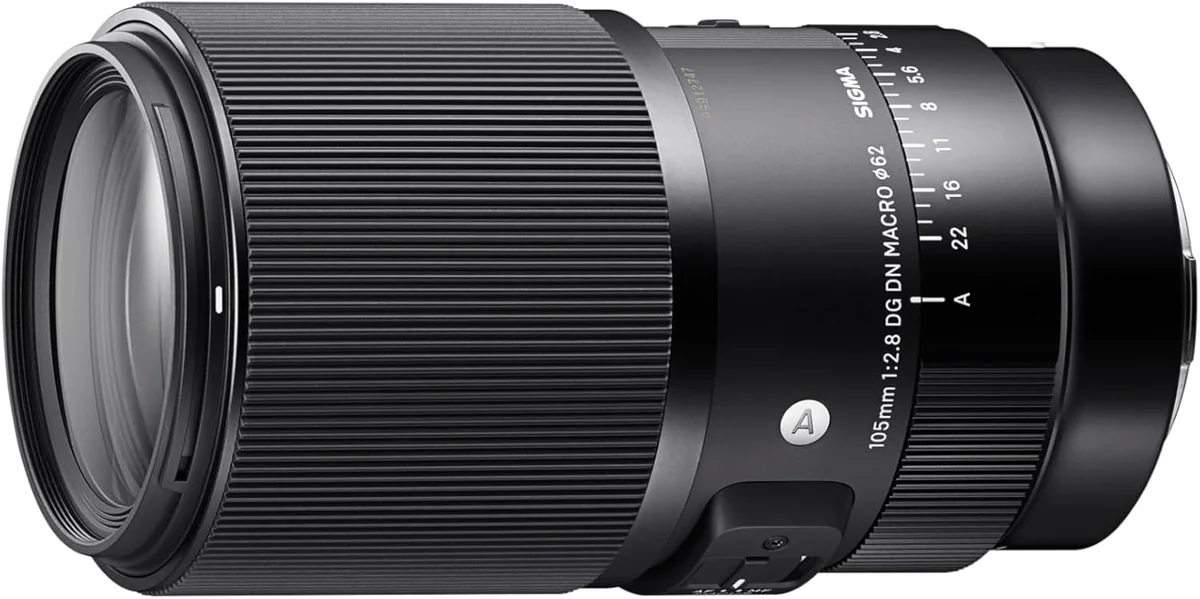
Quick Picks at a Glance
| Feature | Editor's Pick Sigma 105mm f/2.8 DG DN Macro Art (Sony E) | Sony FE 50mm f/1.8 | Tamron 28-75mm f/2.8 Di III VXD G2 (Sony E) | Tamron 50-300mm f/4.5-6.3 Di III VC VXD (Sony E) | Tamron 17-70mm f/2.8 Di III-A VC RXD (Sony E) | Sony FE 35mm f/1.8 |
|---|---|---|---|---|---|---|
| Price Band | Step-up | Entry | Step-up | Step-up | Step-up | Step-up |
| Focal Length | 105mm | 50mm | 28-75mm | 50-300mm | 17-70mm | 35mm |
| Max Aperture | f/2.8 | f/1.8 | f/2.8 | f/4.5-6.3 | f/2.8 | f/1.8 |
| Mount | Sony E | Sony E | Sony E | Sony E | Sony E | Sony E |
| Format | Full-frame | Full-frame | Full-frame | Full Frame | APS-C | Full-frame |
| Filter Size | 62mm | 49mm | 67mm | 67mm | 67mm | 55mm |
| Check Price | Check Price | Check Price | Check Price | Check Price | Check Price |
Sony E-Mount Macro and Close-Focus Lenses, Ranked
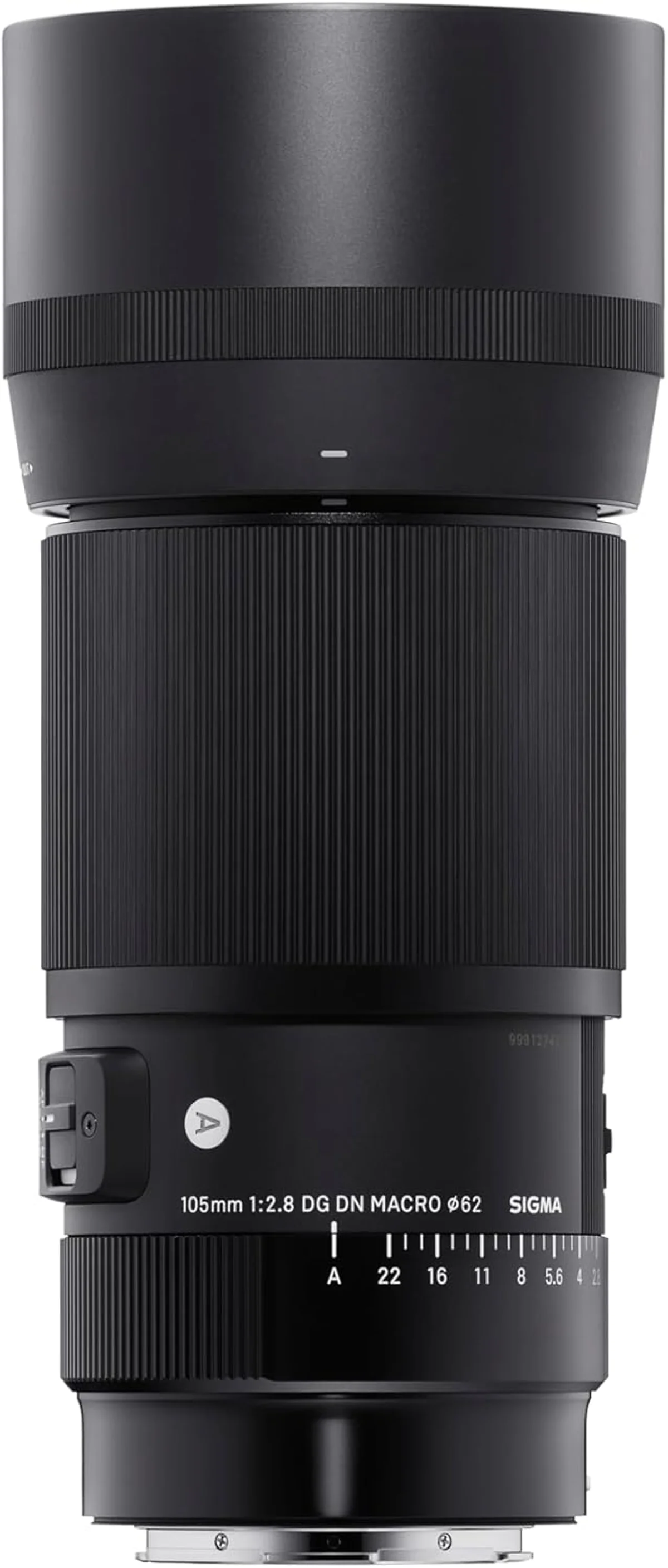
1. Sigma 105mm f/2.8 DG DN Macro Art (Sony E) — The Dedicated Macro Standard
The Sigma 105mm f/2.8 DG DN Macro Art is the only lens in this roundup that reaches true 1:1 magnification with autofocus. At minimum focus distance, a subject measuring 36mm wide fills the entire width of a full-frame sensor. That magnification opens insect photography, jewelry close-ups, circuit board documentation, and botanical detail work — subjects that no other lens here can capture at the same scale. The stepping motor autofocus works at macro distances, though it slows predictably as magnification increases past 0.5x.
Sigma's Art-series optics deliver sharpness at close distances that matches the lens's performance at portrait and landscape range. Many macro lenses sacrifice resolution at their closest focus to optimize for longer distances — the Sigma maintains edge-to-edge clarity from 0.295m to infinity. At f/2.8, the rendering transitions smoothly between focused and defocused areas, producing a bokeh character that portrait photographers describe as buttery without losing structure in out-of-focus highlights.
At 710g with full weather sealing, this is a professional-grade tool that balances well on A7-series bodies. The 105mm focal length provides a working distance of roughly 15cm at 1:1 — enough space between lens and subject to avoid casting shadows or startling live insects. The 62mm filter thread accepts standard circular polarizers for controlling reflections on metallic and glass subjects — a common macro requirement that many photographers overlook until they encounter hot spots on jewelry or watch crystals.
For photographers who shoot macro regularly, this is the only Sony E-mount lens that delivers dedicated macro performance without compromise. For those who shoot macro occasionally, the dual-use capability as a sharp portrait lens at 105mm makes the investment easier to justify. Compare it to the Canon RF 100mm L Macro or Nikon Z MC 105mm on other systems, and the Sigma holds its own optically while working across all three major mirrorless mounts.
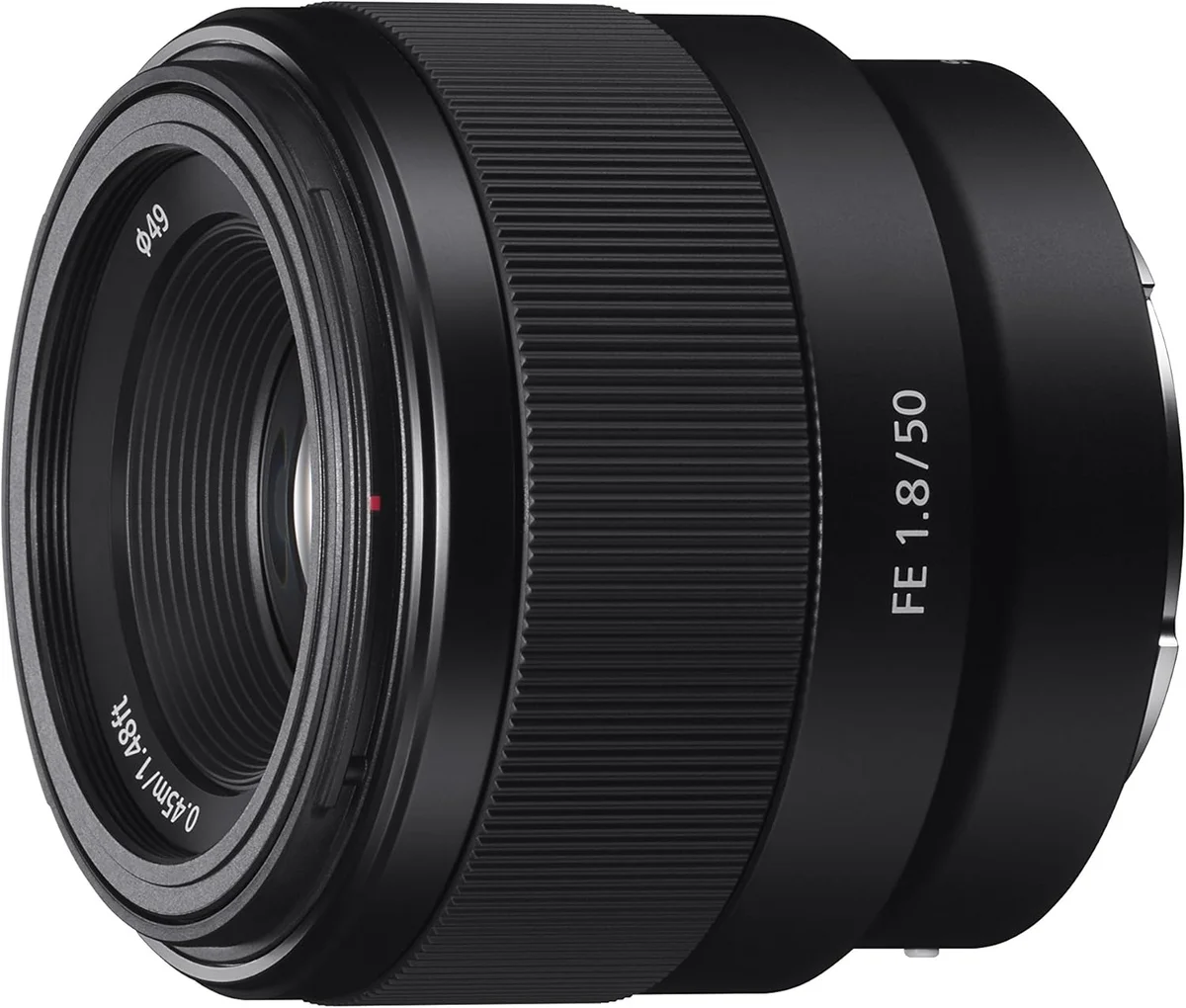
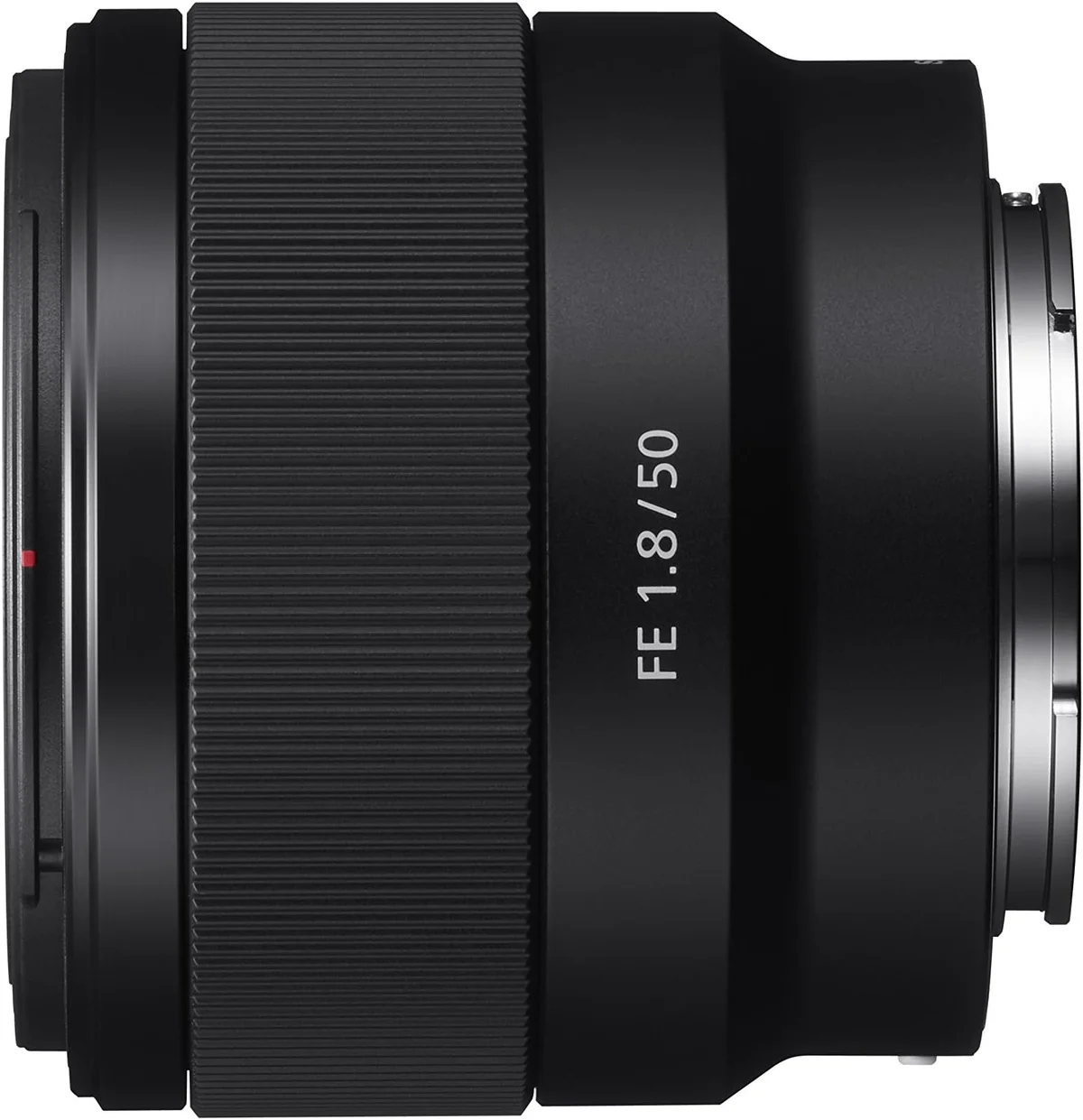
Price band: Step-up Check Price2. Sony FE 50mm f/1.8 — Best Close-Focus Prime on a Budget
The Sony FE 50mm f/1.8 reaches a minimum focus distance of 0.45m, which at 50mm yields approximately 0.14x magnification. That is not macro by any technical definition, but it fills the frame with subjects about 250mm wide — a dinner plate, a stack of books, a coffee cup arrangement. Add a 10mm extension tube and the magnification jumps to roughly 0.35x with autofocus maintained, bringing the useful subject size down to approximately 100mm.
The optical quality at close distances is strong in the center, with mild softness at the edges that improves by f/2.8. At f/1.8 and minimum focus, the depth of field measures approximately 15mm — enough to keep a flat-lay food arrangement sharp but not enough for three-dimensional subjects with depth. The 7-blade aperture produces smooth bokeh circles that make backgrounds in close-up food and product shots appear clean and undistracting.
At 186g and in the budget price tier, the Sony 50mm f/1.8 is the lightest and most affordable close-up option for full-frame Sony shooters. Paired with inexpensive extension tubes, it becomes a capable macro-adjacent tool that handles food photography, flat-lay product shots, and floral work. The primary limitation is working distance — at 0.45m you are very close to the subject, which restricts lighting options for tabletop setups.
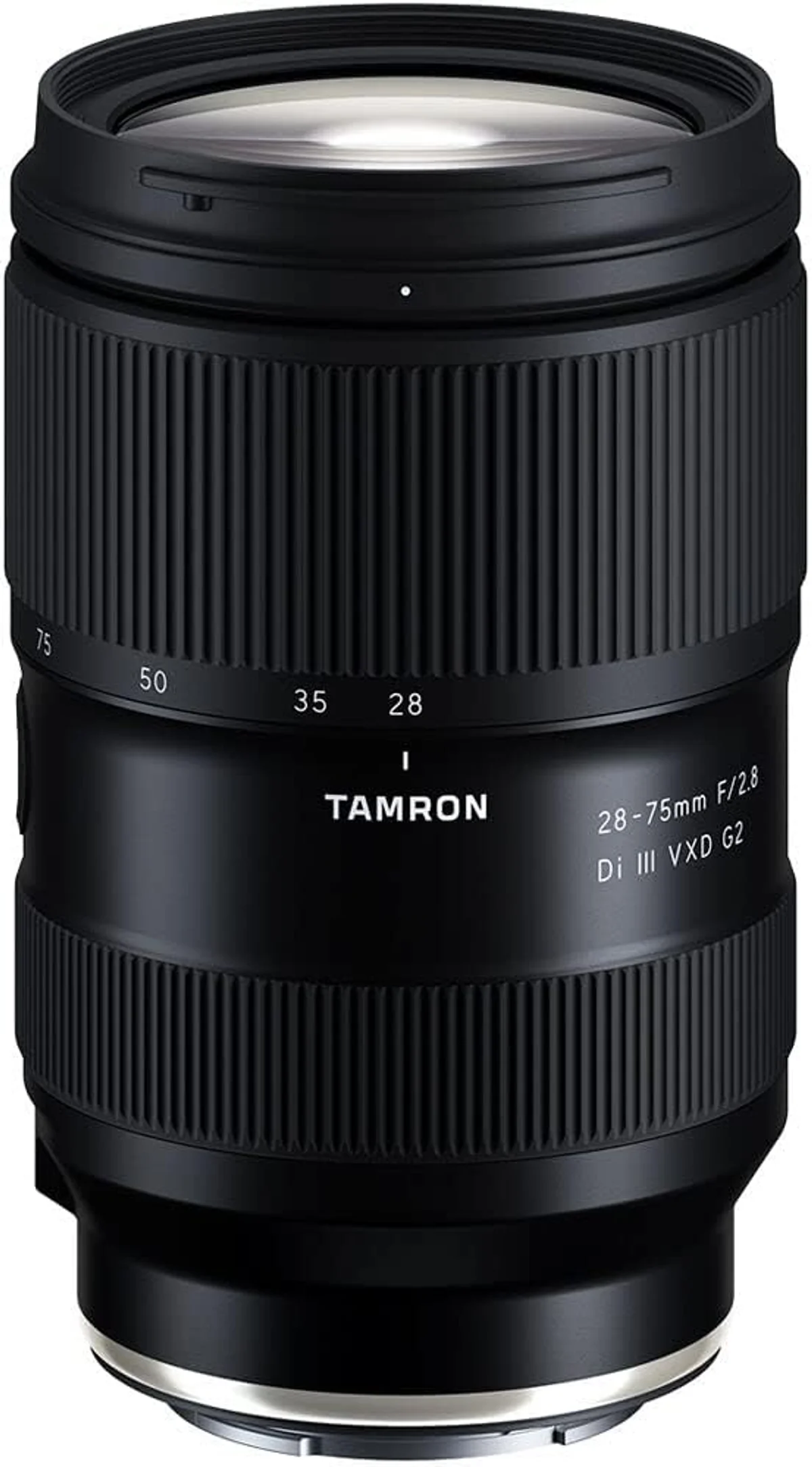
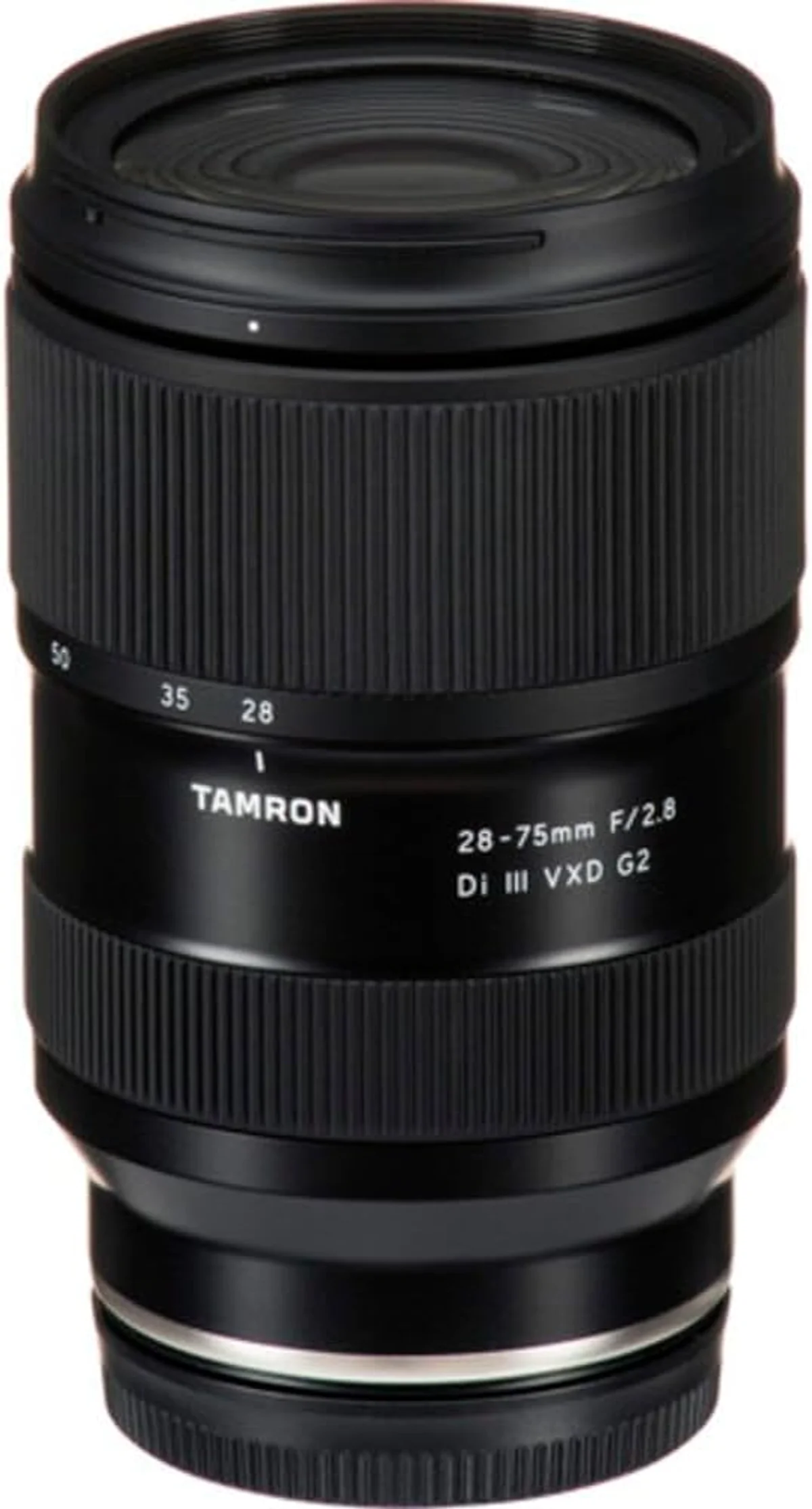
Price band: Entry Check Price3. Tamron 28-75mm f/2.8 Di III VXD G2 (Sony E) — Best Zoom for Close-Up Capability
The Tamron 28-75mm f/2.8 G2 reaches a minimum focus distance of 0.18m at the wide end — a number that puts it closer to its subject than many lenses marketed as having "macro capability." At 28mm and 0.18m, the magnification reaches approximately 0.37x. Flat-lay food shots, jewelry on a tabletop, small product details, and flower close-ups all fit within this lens's working range without switching glass.
Close-focus performance at 28mm is strongest in the center two-thirds of the frame. The extreme corners show softness at f/2.8 when focused at minimum distance, tightening by f/4. At 75mm, the minimum focus distance extends to 0.38m with roughly 0.24x magnification — still close enough for medium-sized product shots. The VXD autofocus works reliably at close range, hunting less than the lens it replaced (the original 28-75mm G1) thanks to the improved motor precision.
This lens earns its position because it combines strong standard zoom performance with close-focus capability that eliminates a separate macro lens for many content creators. Food bloggers and social media photographers who shoot both wide environmental shots and tight close-ups within the same session can do both with this one lens. The 0.18m close focus at 28mm is a spec most competing standard zooms cannot match.
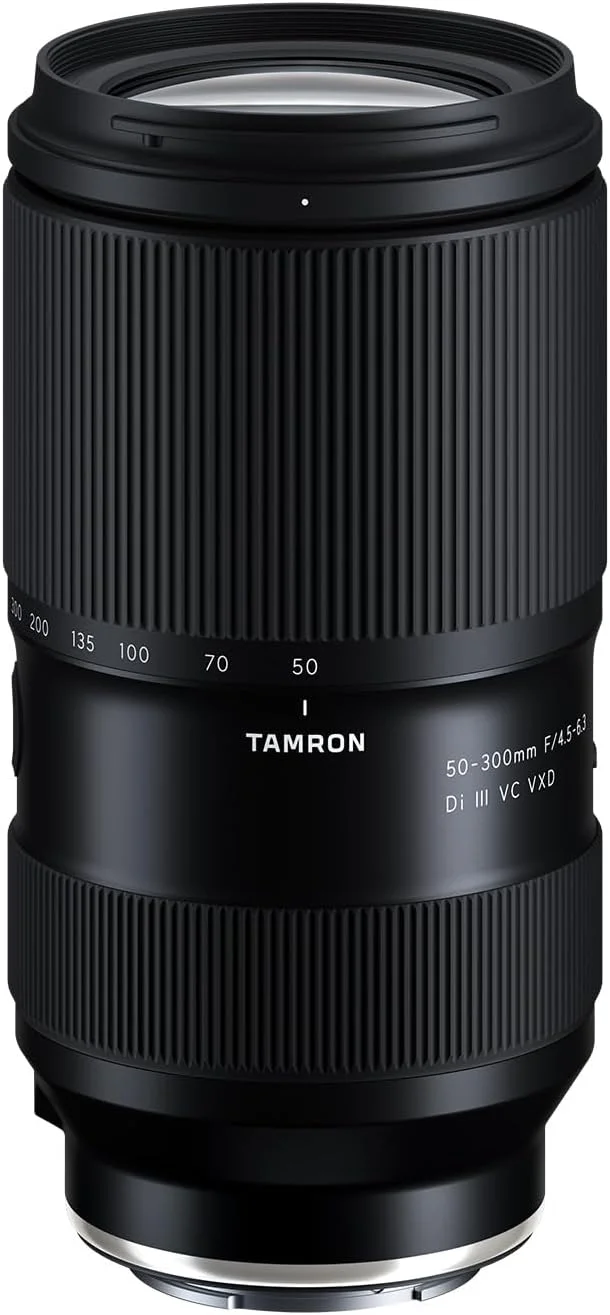
Price band: Step-up Check Price4. Tamron 50-300mm f/4.5-6.3 Di III VC VXD (Sony E) — Telephoto Reach with Close-Focus Bonus
The Tamron 50-300mm reaches a minimum focus distance of 0.22m at 50mm, producing approximately 0.32x magnification. That close-focus capability is unusual for a telephoto zoom and opens a category of work that most telephoto lenses simply cannot access: close-up details at the wide end combined with distant subject reach at the long end, all in one barrel.
At 300mm, the minimum focus distance extends to 1.5m with roughly 0.18x magnification. This "macro at a distance" perspective is valuable for photographing butterflies, dragonflies, and skittish insects that flee when approached closer than a meter. The 300mm compression at close focus also creates a distinctive look — tight framing with strongly blurred backgrounds that dedicated macro lenses at 100-105mm cannot replicate. Nature photographers use this for environmental macro shots where context and background blur matter more than maximum magnification.
Optical quality at close distances is strong in the center across the zoom range, with the expected corner softness from any high-ratio zoom. At 50mm close-focus, sharpness matches the Tamron 28-75mm G2 for center subjects. At 300mm close-focus, the lens performs best with subjects centered in the frame. For photographers who want a single lens that covers telephoto reach, standard shooting, and close-up work, the 50-300mm's close-focus ability adds a dimension that justifies its place in a minimal travel kit.
Price band: Step-up Check Price5. Tamron 17-70mm f/2.8 Di III-A VC RXD (Sony E) — Best APS-C Close-Focus Option
The Tamron 17-70mm f/2.8 on APS-C bodies focuses down to 0.19m at the wide end, yielding approximately 0.23x magnification at a 26mm equivalent field of view. For content creators using the A6700, ZV-E10 II, or A6400, this is the closest-focusing standard zoom available — and the constant f/2.8 aperture means close-up shots in dim environments remain practical without pushing ISO to uncomfortable levels.
The 1.5x crop factor works in the macro photographer's favor here. At 70mm (105mm equivalent), the effective magnification on the APS-C sensor makes subjects appear 1.5x larger in the viewfinder compared to the same lens on full frame. A flower that fills half the frame on a full-frame body fills three-quarters on APS-C. This "built-in magnification boost" makes the 17-70mm a stronger close-up tool on crop bodies than its raw specifications suggest.
For APS-C Sony shooters who want a do-everything zoom that also handles food photography, product shots, and floral close-ups, the 17-70mm f/2.8 covers the need without a second lens. Dedicated macro shooters on APS-C should still consider the Sigma 105mm Art — it works at full resolution on crop bodies and produces life-size magnification at any sensor format.
Price band: Step-up Check Price6. Sony FE 35mm f/1.8 — Widest Perspective for Close Subjects
The Sony FE 35mm f/1.8 focuses to 0.22m and reaches approximately 0.24x magnification. At 35mm, that close-focus distance places the front element roughly 8cm from the subject — close enough that the wide field of view captures environmental context around the close-up subject. Food photographers who want a plate in the foreground with the restaurant environment softly visible behind use this focal length and perspective deliberately.
The 35mm focal length at close distances introduces visible perspective distortion — near objects appear larger relative to background elements than they would at 85mm or 105mm. This exaggerated perspective is an artistic choice that suits editorial food photography, flat-lay compositions, and environmental product shots where context contributes to the story. For clinical product documentation or insect photography where accurate proportions matter, a longer focal length produces more faithful rendering.
At 280g with image stabilization, the FE 35mm f/1.8 is a compact walk-around prime that adds close-focus capability to a kit without weight or bulk. The built-in optical stabilization provides 4 stops of correction, extending handheld close-up shooting into dimmer environments where a tripod would otherwise be necessary. The f/1.8 aperture at 0.22m produces extremely shallow depth of field — measured in single-digit millimeters — which creates a distinctive look where the in-focus subject element pops against a completely dissolved background.
Pair it with the Sigma 105mm Macro for a two-lens setup that covers wide-angle close-ups and dedicated 1:1 macro work. The 35mm handles the environmental context shots; the 105mm handles the tight detail frames. Together they cover the full range of macro and close-up photography scenarios while also serving as a complete portrait and general-purpose prime kit.
Price band: Step-up Check PriceHow We Chose
Our evaluation of macro and close-focus lenses for Sony E-mount combines three approaches.
First, we assessed each lens's optical performance at its minimum focus distance, a condition many lens reviews ignore because most lenses are optimized for portrait or landscape distances. Resolution at close focus, field curvature, and chromatic aberration at high magnification all factor into our assessment. Second, we assessed practical autofocus behavior at close range: acquisition speed, hunting frequency, and reliability of Eye AF when transitioning from portrait to macro distances on the same lens.
Third, we weighted the macro-specific value each lens adds to a photographer's kit. The Sigma 105mm earns the top position because it is the only lens that delivers true 1:1 macro — an irreplaceable capability. The remaining five lenses are ranked by how effectively their close-focus performance serves as a secondary function: can a standard zoom or prime deliver close-up results good enough to skip buying a dedicated macro? For four of these five lenses, the answer is yes for most non-specialist macro work.
We deliberately excluded manual-focus macro lenses (Laowa, 7Artisans, Venus Optics), extension tubes as standalone products, and close-up filter attachments from this roundup. Each of those solutions works, but they sacrifice autofocus, convenience, or optical quality in ways that create a different buying decision. This roundup focuses on autofocus lenses that shoot macro or close-up work without giving up modern AF integration with Sony bodies.
Price-to-performance weighting reflects the dual-use reality of macro on Sony E-mount.
The Sigma 105mm Art costs more than any other lens on this list, but it is the only option delivering 1:1 magnification and doubles as a portrait lens — amortizing the investment across two shooting disciplines. The remaining five lenses earn their positions by adding meaningful close-focus capability to their primary roles as standard zooms, telephoto zooms, or walk-around primes. A photographer who buys any of these lenses for macro alone would be overspending. A photographer who buys them for their primary purpose and discovers the close-focus bonus gets genuine additional value.
Buying Guide: What to Look For
Dedicated Macro vs Close-Focus: Match the Tool to the Job
If your subjects are smaller than a coin and you need frame-filling detail — insects, jewelry, watch mechanisms, circuit boards — a dedicated 1:1 macro lens is the only option that delivers. The Sigma 105mm Art reaches true 1:1 on Sony E-mount. If your subjects are the size of a dessert plate or larger — food, flowers, small products, flat-lays — a lens with 0.2x-0.4x magnification produces results that look indistinguishable from macro in final images. Most content creators fall into this second category.
Extension Tubes: The Budget Macro Path
Electronic extension tubes (10mm, 16mm, or stacked) add magnification to any Sony E-mount lens. A 10mm tube on the Sony FE 50mm f/1.8 adds roughly 0.2x magnification with autofocus and electronic aperture retained. The optical penalty is mild — center sharpness stays strong, corners soften. At the cost of a single UV filter, extension tubes let you test macro photography before committing to a dedicated lens. They also stack: a 10mm plus 16mm tube on a 50mm lens reaches approximately 0.5x magnification.
Working Distance and Lighting
Minimum focus distance measures from the sensor plane to the subject, not from the front element. At the Tamron 28-75mm G2's minimum of 0.18m, the front element sits roughly 3cm from the subject. At the Sigma 105mm's minimum of 0.295m, the front element is approximately 15cm away. Longer working distance means more room for lighting — ring lights, LED panels, or reflectors fit between lens and subject more easily. Food and product photographers who use controlled lighting should factor working distance into their lens choice.
Focus Stacking for Sharp Macro Images
At 1:1 magnification and f/2.8, depth of field on a full-frame sensor is roughly 0.8mm. Most three-dimensional subjects require focus stacking — capturing multiple frames at slightly different focus points and merging them in software — to achieve full sharpness. Sony's A7R V and A9 III include built-in focus bracketing that automates capture. Third-party stacking software (Helicon Focus, Zerene Stacker) handles the merge. If you plan to shoot 1:1 macro regularly, a camera body with focus bracketing saves hours of manual focus adjustment.
Lighting for Macro and Close-Up Photography
At macro distances, the lens itself blocks ambient light from reaching the subject.
A ring light or twin-flash system mounted around the lens barrel provides even, shadowless illumination for insect and product macro. For food photography and larger close-up subjects, an off-camera LED panel or a small reflector bouncing window light produces softer, more directional light. The Sigma 105mm Art has enough working distance (15cm at 1:1) to fit most ring light setups between the front element and the subject. Shorter-focus lenses like the Tamron 28-75mm G2 at 0.18m leave almost no space for external lighting — rely on overhead or side-mounted LED panels instead.
Tripod vs Handheld for Macro Work
At magnifications above 0.5x, even stabilized lenses benefit from tripod support. The razor-thin depth of field means that body sway measured in millimeters shifts the focus plane off the intended subject. For tabletop product shots, food photography, and any controlled studio setup, a tripod with a focusing rail produces the most consistent results. Handheld macro works best below 0.3x magnification and with image-stabilized lenses — the Tamron 50-300mm and Tamron 17-70mm f/2.8 both include VC stabilization that extends handheld capability into the close-focus range.
Choosing Between APS-C and Full-Frame for Macro
APS-C Sony bodies provide a built-in 1.5x magnification advantage for macro photography.
A lens that achieves 0.3x on full frame effectively reaches 0.45x on APS-C because the smaller sensor captures a tighter crop of the image circle. This means the Sony FE 50mm f/1.8 with its 0.14x native magnification behaves more like 0.21x on the A6700 or A6400. The Sigma 105mm Art at 1:1 on APS-C produces images equivalent to 1.5:1 on full frame — a magnification that most photographers never need. For budget-conscious macro shooters, an APS-C body extends the effective magnification of every lens in this roundup by 50% without any additional optical cost.
Macro Lens Questions for Sony E-Mount
Macro photography on Sony E-mount generates questions about magnification, compatibility, and whether a dedicated macro lens justifies the cost. These answers draw on optical specifications, user feedback from macro-focused photography communities, and our evaluation of close-focus performance across the Sony E-mount lens ecosystem. Whether you are deciding between a dedicated macro lens and extension tubes, comparing focal lengths for different macro subjects, or trying to determine the minimum gear needed for food and product photography, the answers below address the concerns that Sony shooters ask most frequently.
Do I need a dedicated macro lens or can I use close-focus on a regular lens?
A dedicated macro lens like the Sigma 105mm f/2.8 Art reaches 1:1 magnification — the subject appears life-size on the sensor. Lenses with good close-focus capability typically reach 0.2x to 0.5x, which fills the frame with subjects roughly the size of a credit card or larger. For insects, jewelry, and small product details where the subject needs to fill the entire frame, a dedicated macro is necessary. For food photography, flowers, and product shots where some context is acceptable, a lens with strong close-focus often delivers results that are indistinguishable from a dedicated macro.
What magnification ratio do I need for macro photography?
At 1:1 (life-size), a 24mm-wide subject fills the full width of a full-frame sensor. At 0.5x (half life-size), you need a 48mm-wide subject to fill the frame. At 0.25x, an object about 96mm wide fills the frame. Insect and jewelry photographers typically need 1:1 or higher. Food photographers work comfortably at 0.3x-0.5x. Product photographers for web and social media rarely need more than 0.25x. Matching the magnification to your actual subject size prevents buying more lens than your work requires.
Is the Sigma 105mm f/2.8 DG DN Macro Art good for portraits too?
The Sigma 105mm f/2.8 doubles as an excellent portrait lens. The 105mm focal length provides flattering compression for headshots and half-body portraits, and the f/2.8 aperture creates smooth background separation. The Art-series optics deliver corner-to-corner sharpness that makes skin texture and eye detail pop. Many photographers buy this lens for macro and discover it becomes their primary portrait lens — the dual-use capability makes the investment easier to justify.
Can I use extension tubes instead of a macro lens on Sony E-mount?
Extension tubes add magnification to any lens by increasing the distance between the rear element and the sensor. On Sony E-mount, third-party electronic extension tubes from Meike, Viltrox, and others maintain autofocus and aperture control for about the cost of a filter. A 10mm tube on a 50mm lens adds roughly 0.2x magnification. The downside: you lose infinity focus (the lens can only focus at close distances), and optical quality degrades at the edges because the lens was not designed for that extension. For occasional macro work, tubes are a cost-effective entry point. For regular macro shooting, a dedicated lens produces consistently sharper results.
Why does autofocus slow down at close macro distances?
At macro distances, the focus group inside the lens must travel a much larger physical distance to shift between near and far focus points. This extended travel takes more time for the autofocus motor to traverse. The depth of field at 1:1 magnification on a full-frame sensor is measured in fractions of a millimeter at f/2.8, which means the AF system must be precise within extremely tight tolerances. Most photographers switch to manual focus for critical macro work at high magnification, using focus peaking and a focus rail to fine-tune position.
What is the best budget macro solution for Sony E-mount?
The most affordable path to macro on Sony E-mount is adding a set of electronic extension tubes (roughly the price of two coffee shop visits) to a lens you already own. Pairing a 10mm + 16mm tube set with the Sony FE 50mm f/1.8 gives you approximately 0.5x magnification with autofocus. For a dedicated lens, the Sigma 105mm f/2.8 Art is the only autofocus macro on Sony E-mount that reaches 1:1 — it sits in the midrange price tier but doubles as a portrait lens, making the per-use cost more reasonable.
Our Top Pick
The Sigma 105mm Macro Art (Sony) is our #1 recommendation — macro photographers and product shooters on sony.
Check Price: Sigma 105mm Macro Art (Sony)