Canon Lenses on Sony: The Complete Adapter Guide
Canon EF lenses can be used on Sony E-mount mirrorless cameras through electronic adapters from Sigma, Metabones, and Viltrox. Canon RF lenses cannot. The distinction matters because Canon's two lens systems use completely different communication protocols, and only the older EF system has been successfully reverse-engineered by adapter manufacturers.
This guide covers every practical aspect of running Canon glass on a Sony body: which adapters perform best, which EF lenses translate well (and which ones don't), what happens to autofocus and video AF, and the honest math on when adapting makes sense versus buying native Sony E-mount lenses.

Why Adapt Canon Lenses to Sony in the First Place?
Three situations put photographers in this position. The most common: switching from Canon DSLR to Sony mirrorless while holding a sizable investment in Canon EF glass. Selling an entire lens kit at used prices and rebuying everything in E-mount creates a painful gap. Adapting lets you move to Sony bodies immediately and replace lenses one at a time as budget allows.
The second reason is access to specific glass. Canon produced the EF mount for 31 years (1987-2018), building one of the deepest lens catalogs in photography. Some EF lenses — the 100mm f/2.8L Macro IS, the TS-E tilt-shift series, the 200mm f/2L IS — have no direct Sony-native equivalent at any price. Adapting is the only way to get those optics on a Sony sensor.
Third: budget shooters hunting the used market. The Canon EF used market is enormous. Pro-grade L-series zooms and primes that cost a great deal new regularly appear for a fraction of that price on the secondary market. Pairing a used Canon EF 85mm f/1.4L IS with a mid-range adapter can cost less than a new native Sony prime of similar quality.
Canon EF vs Canon RF: A Critical Distinction
Canon's RF mount, introduced in 2018 with the EOS R, uses encrypted digital communication between lens and body.
No third-party manufacturer has cracked this protocol. You cannot adapt a Canon RF lens to Sony E-mount with any electronic functionality — no autofocus, no aperture control, no image stabilization. A mechanical-only adapter would technically allow physical mounting, but with a fully electronic lens like the RF 50mm f/1.8 STM, you'd have no way to set the aperture or focus the lens. RF-to-Sony adaptation is a dead end.
Canon EF lenses use an older protocol that Sigma, Metabones, and others reverse-engineered years ago. Electronic adapters translate EF communication to Sony E-mount commands, preserving autofocus, aperture control, IS activation, and EXIF data transfer. The EF protocol isn't encrypted, and adapter makers have had nearly a decade to refine their translations. This is the only Canon-to-Sony path that works.
If you're evaluating Canon glass specifically to adapt to Sony, focus exclusively on EF-mount lenses. Any listing marked "RF" is incompatible.
Adapter Options: Sigma MC-11, Metabones, and Viltrox
Three adapters dominate the Canon EF-to-Sony E-mount market. Each has different strengths depending on which lenses you own.
Sigma MC-11. Built by Sigma primarily for their own EF-mount Art, Contemporary, and Sports lenses.
AF performance with Sigma glass is excellent — close to native speed and accuracy. With Canon-brand EF lenses, the MC-11 is less consistent. Some Canon lenses work well; others hunt or fail to lock focus entirely. Sigma publishes a compatibility list on their website, and lenses not on it are genuinely unreliable through this adapter. The MC-11 also supports lens firmware updates through Sigma's USB Dock, which keeps compatibility current as Sony releases new camera bodies.
Metabones Smart Adapter V (or VI). The broadest compatibility with Canon-brand EF lenses.
Metabones has invested heavily in reverse-engineering Canon's lens communication, and their latest firmware supports eye-detect AF, Real-Time Tracking, and continuous AF on newer Sony bodies (A7 IV, A7R V, A1, A9 III). L-series lenses — especially the 24-70mm f/2.8L II, 70-200mm f/2.8L IS III, and 85mm f/1.4L IS — perform well through Metabones. The adapter costs more than alternatives but receives regular firmware updates that improve compatibility with new camera bodies.
Viltrox EF-E II. The budget option.
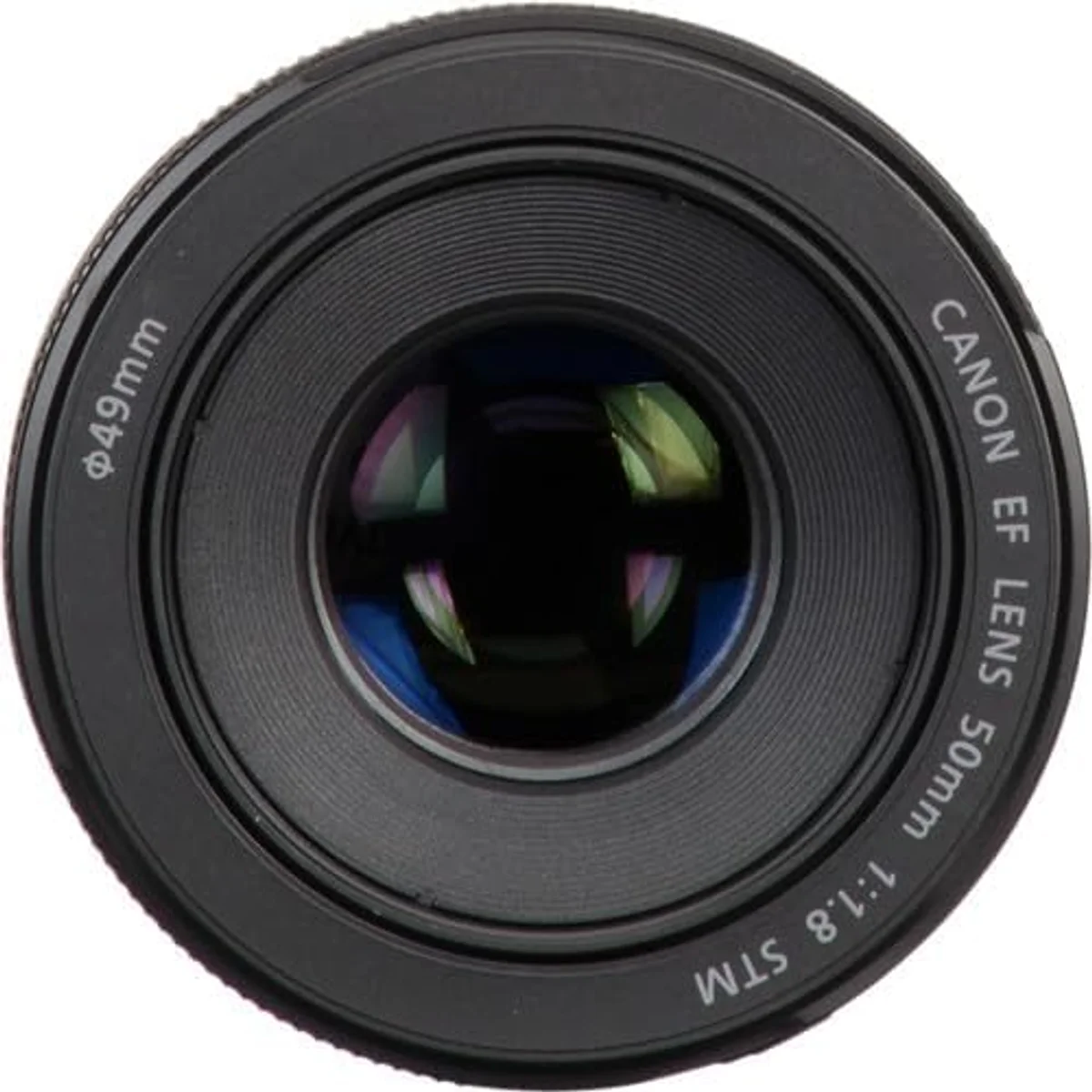
Viltrox adapters cost roughly a third of Metabones pricing and handle newer Canon STM lenses (40mm f/2.8 STM, 50mm f/1.8 STM, 24mm f/2.8 STM pancake) with acceptable AF speed. Performance with older Canon USM designs is inconsistent — some work, some don't. Viltrox also makes a speed booster variant (EF-E II 0.71x) for APS-C Sony bodies that adds a stop of light and reduces the crop factor. For budget builds, Viltrox is the entry point. For professional reliability, Metabones or the MC-11 are safer.
Which Canon EF Lenses Adapt Well to Sony
Lens motor type is the single biggest predictor of adapted AF performance. Canon EF lenses with STM (Stepper Motor) and Nano USM motors adapt best — these newer motor designs respond well to the commands that adapters translate from Sony's AF system. The EF 50mm f/1.8 STM, EF 85mm f/1.4L IS USM (Nano USM), and EF-S 35mm f/2.8 Macro IS STM all deliver responsive AF through any of the three major adapters.
Ring USM lenses from Canon's L-series also adapt well, particularly the newer versions. The EF 70-200mm f/2.8L IS III, EF 100-400mm f/4.5-5.6L IS II, and EF 16-35mm f/2.8L III all produce good AF performance through Metabones. These lenses have faster, more precise USM motors than older generations, and the adapter firmware has been tuned specifically for popular L glass.
Check the full model name and mount before choosing an adapter. Sigma lists the Canon EF version of the 24-70mm f/2.8 DG OS HSM Art in its MC-11 EF-E compatibility updates; check the required lens and adapter firmware. The Sigma 24-70mm f/2.8 DG DN II Art for Sony E-mount fits Sony E-mount cameras directly, without an EF adapter. Sigma lists its mounts on the DG DN II product page. These are different lenses, despite their similar names.
A general rule: any Canon EF lens released after 2012 with USM or STM focus has a reasonable chance of adapting well. Lenses released after 2015 have a good chance. Lenses released before 2010 are unpredictable.
Which Canon EF Lenses Adapt Poorly
Older Canon EF lenses with micro-motor AF (the budget lenses from the 1990s and 2000s, like the original EF 50mm f/1.8 II or the EF 75-300mm f/4-5.6 III) adapt poorly across all adapters. These motors are slow, imprecise, and generate communication timing that confuses the adapter's translation layer. AF may work intermittently or not at all.
Early-generation ring USM lenses can also be problematic. The EF 85mm f/1.2L II USM, despite being a beloved portrait lens, is notoriously slow to focus even on Canon bodies — and that sluggishness compounds through an adapter. The original EF 50mm f/1.2L USM has similar issues. These lenses were designed for Canon's phase-detection AF system and their motor response curves don't translate cleanly to Sony's contrast/phase hybrid AF.
Specialty lenses present mixed results. Canon's TS-E tilt-shift lenses are manual focus by design, so the adapter question is purely about electronic aperture control — which does work through Metabones. The MP-E 65mm 1-5x macro is manual-focus and manual-aperture, making it adapter-agnostic (a simple mechanical tube works). Canon extenders (1.4x III, 2x III) generally work stacked between the lens and adapter, but AF performance degrades further.
Third-party EF-mount lenses from Tokina and older Tamron designs (pre-2015) are frequently incompatible. These manufacturers used their own reverse-engineering of Canon's protocol, which means the adapter is translating an already-imperfect signal. Double translation rarely ends well.
AF Performance: Adapted Canon EF vs Native Sony E-Mount
Native Sony lenses are faster. That's the baseline reality. A Sony FE 50mm f/1.8 on an A7 IV acquires focus in roughly 0.2 seconds in good light. The same camera with a Canon EF 50mm f/1.8 STM through a Metabones adapter takes about 0.35-0.5 seconds — functional, but perceptibly slower. In dim light, the gap widens further.
Continuous AF (AF-C) is where adapted lenses fall behind most visibly. Sony's Real-Time Tracking system is built around tight communication loops between the camera processor and native lens motors. Adapted lenses introduce latency into that loop. During fast action — sports, running children, pets — adapted EF lenses may lose tracking more often than native glass. Eye-detect AF works through Metabones with many Canon L lenses, but the detection-to-correction cycle is slower.
Single-shot AF (AF-S) is the adapter's strength. For portraits, still life, architecture, and deliberate shooting, adapted Canon EF lenses perform well enough that most photographers won't feel limited. The Sony FE 24-70mm f/2.8 GM II is still faster and more precise, but the adapted EF 24-70mm f/2.8L II is entirely usable for the same subjects at a fraction of the cost.
One advantage adapted Canon EF lenses retain: optical quality. The glass doesn't change when you put an adapter behind it. A Canon EF 135mm f/2L USM produces the same image quality on a Sony body as it does on a Canon body. The sensor may differ, the AF may differ, but the optical performance — sharpness, bokeh, chromatic aberration control — carries over completely. Passive adapters add no optical elements.
Video AF and Continuous Focus with Adapted Lenses
Adapted Canon EF lenses are weakest in video continuous AF. Sony's video AF system — among the best in the industry — depends on fast, quiet lens motors responding to constant micro-corrections. Adapted EF lenses introduce enough latency and motor noise to make smooth focus transitions unreliable.
The specific problems: focus breathing (focal length shifts during focus pulls) is more visible because the adapter can't communicate breathing compensation data that Sony uses with native lenses. Motor noise from Canon USM and STM motors may be picked up by on-camera microphones. Focus hunting — the lens searching back and forth before locking — happens more frequently during recording, especially in low contrast scenes.
For controlled video work with manual focus, adapted EF lenses are fine. Many videographers prefer manual focus anyway, using follow focus rigs or focus-by-wire with external controllers. In this workflow, the adapter is invisible — you're just using the optics. Canon's L-series glass produces beautiful footage on Sony sensors regardless of the AF situation.
For run-and-gun video, interviews, or any scenario requiring reliable continuous AF during recording, native Sony lenses are the clear winner.
The Tamron 28-75mm f/2.8 G2 or Sigma 24-70mm f/2.8 DG DN II Art in native E-mount deliver silent, accurate video AF that no adapted EF lens can match. If video is a primary use case, invest in native glass for your workhorse focal lengths and reserve adapted EF lenses for manual-focus cinematic work.
When Adapting Makes Sense vs Buying Native Sony Glass
Adapting Canon EF lenses to Sony makes sense in three situations. First: you already own the glass. If you're sitting on a bag of Canon EF lenses and switching to Sony, adapting costs one adapter purchase and lets you start shooting immediately. Selling EF lenses and rebuying in E-mount loses money on every transaction — used sale prices are lower than used purchase prices for equivalent glass. Adapt first, replace gradually.
Second: the specific lens you want doesn't exist in native E-mount. Canon's TS-E 17mm f/4L tilt-shift, the 200mm f/2L IS, and certain macro options have no Sony-native equivalent. For photographers who need these focal lengths and optical designs, adaptation is the only path. Our best Sony E-mount lenses roundup covers native alternatives for most of these focal lengths.
Third: the used market price gap is large enough to justify the AF compromise. A used Canon EF 70-200mm f/2.8L IS III for noticeably less than a used Sony FE 70-200mm f/2.8 GM II may be worth the AF speed difference — especially for photographers who shoot mostly single-shot AF and don't need tracking performance.
Buying native Sony makes sense when: you're starting fresh with no existing lenses, AF speed and tracking are important to your work, video is a primary use case, or the price difference between adapted EF and native E-mount is small.
The Sony E-mount third-party ecosystem from Tamron, Sigma, and Viltrox has erased most of the price advantage that adapted EF glass once held. A native Viltrox AF 50mm f/1.4 Pro in E-mount costs less than most used Canon EF 50mm f/1.4 USM copies and focuses faster.
The honest assessment: Canon EF adaptation was a more compelling value proposition in 2018-2021, when native Sony E-mount options were expensive and limited. Today, with dozens of affordable native E-mount lenses from third parties, the math favors native glass for new purchases. Adaptation remains valuable for existing EF collections and specialty glass that has no E-mount alternative.

Setting Up Your Adapter: Practical Tips
Update adapter firmware before your first shoot. Every major adapter manufacturer (Sigma, Metabones, Viltrox) releases firmware updates that improve compatibility with new camera bodies and fix AF behavior with specific lenses. The Sigma MC-11 updates through the Sigma USB Dock. Metabones updates via USB connected to a computer. Viltrox updates through their phone app or USB.
Register your specific lenses in the adapter's lens database if the option exists. The Metabones adapter allows you to select lens profiles that optimize AF behavior for individual EF lenses. Using the correct profile versus the generic setting can mean the difference between reliable eye-detect AF and constant hunting.
Disable in-camera lens corrections for adapted lenses. Sony cameras apply distortion, vignetting, and chromatic aberration corrections automatically for native lenses using built-in profiles. These profiles don't exist for Canon EF glass, and the camera may apply incorrect corrections or throw errors. Turn off all automatic lens corrections in the camera menu when shooting adapted glass. Apply corrections in post using the lens-specific profile in Lightroom or Capture One.
Set AF area to a smaller zone (Flexible Spot M or S) rather than Wide for best results with adapted lenses. Wide AF areas ask the adapter to handle rapid focus point changes across the frame, which stresses the translation layer. A smaller AF zone gives the adapter a simpler task and produces more consistent focus lock.
Adapter Build Quality and Weather Sealing
The Metabones adapter has the sturdiest build — machined aluminum body with a tight mount fit and no play between connections. Metabones also includes a rubber gasket on the camera-side mount, which helps (but doesn't guarantee) dust and moisture resistance when paired with weather-sealed Canon L lenses.
The Sigma MC-11 has solid build quality with a matte-finish polycarbonate exterior over a metal chassis. The mount tolerances are tight. No weather sealing gasket, but the fit is snug enough to reduce (not eliminate) dust intrusion.
Viltrox adapters vary by model. The EF-E II is lightweight with acceptable tolerances but can feel slightly loose on some body/lens combinations. For heavy lenses (70-200mm f/2.8 class and above), the Viltrox mounting may not inspire confidence. For lighter primes and mid-range zooms, it's adequate.
Weight and length: all three adapters add roughly 2-3cm of length to the lens-body combination. Weight ranges from about 120g (Viltrox) to 180g (Metabones). Neither addition is significant in real-world handling, though the extra length can affect balance with very short lenses like the Canon EF 40mm f/2.8 STM pancake.
Canon-to-Sony Adapter Questions
Common questions about adapting Canon lenses to Sony mirrorless cameras, covering adapter choice, AF behavior, and compatibility limits.
Do Canon EF lenses autofocus on Sony mirrorless cameras?
Most Canon EF lenses autofocus on Sony E-mount bodies through electronic adapters like the Sigma MC-11, Metabones Smart Adapter V, or Viltrox EF-E II. AF speed depends on the lens motor type — STM and Nano USM lenses focus fastest, while older micro-motor and ring USM designs are noticeably slower. Expect 60-80% of native Sony AF performance with well-supported lenses.
Can I use Canon RF lenses on a Sony camera?
No. Canon RF lenses cannot be adapted to Sony E-mount with autofocus or electronic aperture control. Canon uses a proprietary encrypted communication protocol on the RF mount that no third-party adapter manufacturer has been able to reverse-engineer. A purely mechanical adapter would allow mounting, but the lens would have no aperture control, no autofocus, and no image stabilization — making it functionally unusable.
Which adapter is best for Canon EF lenses on Sony E-mount?
The Sigma MC-11 is the top choice if you own Sigma-brand EF lenses — it was designed specifically for that combination and delivers the best AF performance. For Canon-brand EF lenses, the Metabones Smart Adapter V provides the broadest compatibility and most reliable eye-detect AF. The Viltrox EF-E II is a budget alternative that handles most Canon STM and newer USM lenses well but struggles with older or specialty glass.
Will image stabilization work on adapted Canon EF lenses?
Optical image stabilization (IS) built into Canon EF lenses does work through most electronic adapters. The lens-based IS operates independently of the camera body. On Sony bodies with in-body image stabilization (IBIS), you may get both systems working — but coordinated stabilization (like Sony SteadyShot Active) typically does not function with adapted lenses. You get the lens IS alone, which is still effective for 3-4 stops of correction on most Canon IS lenses.
Do adapted Canon EF lenses work for video on Sony cameras?
Adapted Canon EF lenses can work for video, but continuous AF during recording is often unreliable. AF may hunt visibly, especially during focus pulls or subject transitions. For controlled shots with manual focus or pre-set focus points, adapted EF lenses produce excellent image quality. For run-and-gun video requiring fast continuous AF, native Sony E-mount lenses (or native Sony FE G Master glass) are a better choice.
Is it cheaper to adapt Canon EF lenses than to buy native Sony lenses?
It depends on your starting point. If you already own Canon EF glass and are switching to Sony, adapting saves the cost of replacing your entire lens collection — you only pay for the adapter. If buying from scratch, native Sony E-mount lenses from Tamron, Sigma, and Viltrox often match or beat adapted Canon EF equivalents in both price and AF performance. The used Canon EF market does offer bargains on pro-grade L glass that has no direct budget equivalent in native E-mount.
Do Canon EF-S (APS-C) lenses work on full-frame Sony cameras?
Physically, yes — the Sigma MC-11 and Metabones adapters accept EF-S lenses. The Sony body will need to shoot in APS-C crop mode (1.5x crop), which reduces your sensor resolution by about half. Most Sony cameras can auto-detect the smaller image circle and switch to crop mode automatically. This works but defeats the purpose of a full-frame body. EF-S lenses are better suited to Sony APS-C bodies like the a6700.
Can I use Canon EF lenses with Sony eye-detect autofocus?
Eye-detect AF works with some adapted Canon EF lenses, but performance varies by adapter and lens combination. The Metabones V adapter supports Sony Real-Time Eye AF on newer Sony bodies (A7 IV, A7R V, A9 III) with many Canon L-series lenses. The Sigma MC-11 supports eye-detect reliably with Sigma EF-mount Art lenses. Older Canon EF lenses with micro-motor AF rarely support eye-detect through any adapter.