Tamron 18-300mm Sony E vs Canon RF: Same Glass, Different Experience
Neither version wins outright — both share the same optical formula and deliver identical image quality. The Sony E version benefits from deeper third-party integration, more mature AF tuning, and better stabilization coordination. The Canon RF version gives R7 and R10 shooters superzoom convenience they cannot get from Canon's own APS-C lineup. Your camera system picks your lens.
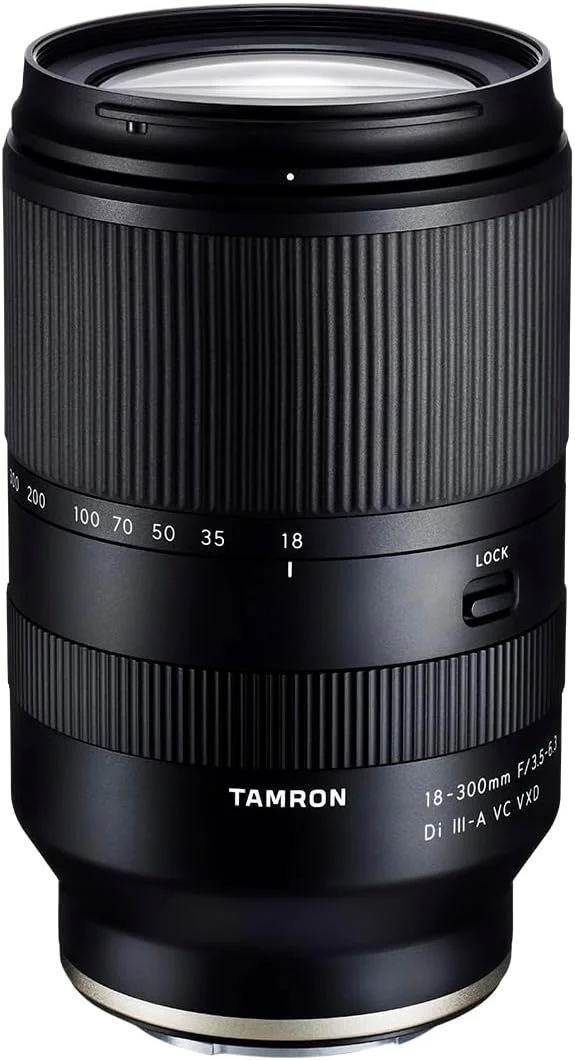
Tamron 18-300mm (Sony)
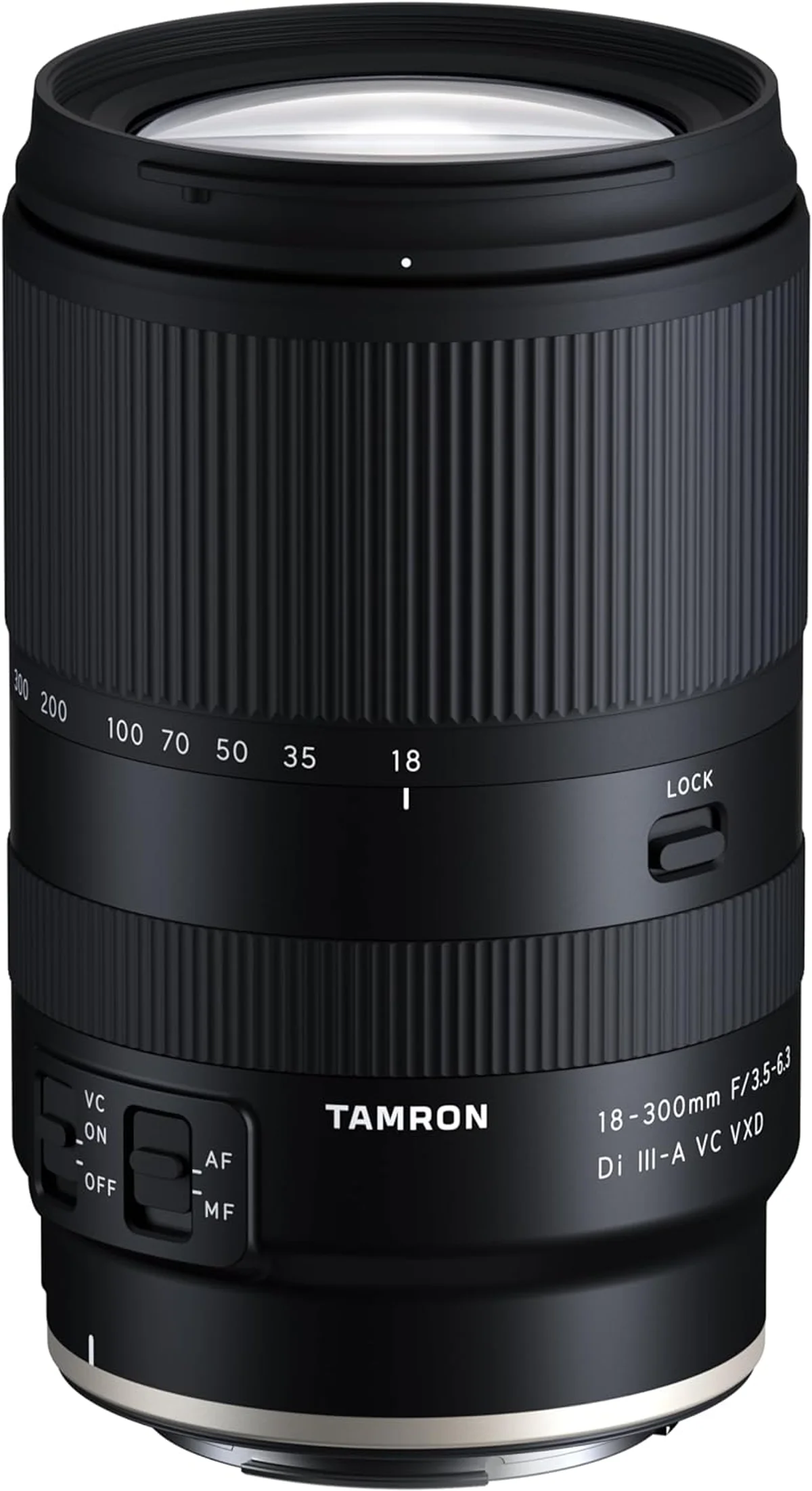
Tamron 18-300mm (Canon)
The Tamron 18-300mm f/3.5-6.3 Di III-A VC VXD is one lens design sold in two boxes. The Sony E-mount version and the Canon RF version share the same optical formula, same 16.6x zoom ratio, same VXD linear focus motor, same VC stabilization — but mounted to two different camera systems that interpret third-party glass in very different ways. Sony E-mount has welcomed Tamron lenses since 2018, building a deep integration layer that treats Tamron glass almost like native optics. Canon RF-mount opened to third-party manufacturers more recently, and the handshake between Tamron's electronics and Canon's communication protocol is still maturing.
This comparison is not about which lens is sharper or which produces better bokeh. Optically, they are the same lens. The comparison that matters is how each camera ecosystem handles mount communication, autofocus coordination, stabilization pairing, firmware updates, and video features. These software and protocol differences create noticeably different shooting experiences from physically identical hardware.
We read Amazon owner reviews for both versions, cross-referenced firmware changelogs from Tamron's support site, and compared AF tracking behavior reported by Sony a6700 and Canon R7 shooters in identical scenarios. The optical story is simple — identical. The integration story is where this comparison gets interesting.

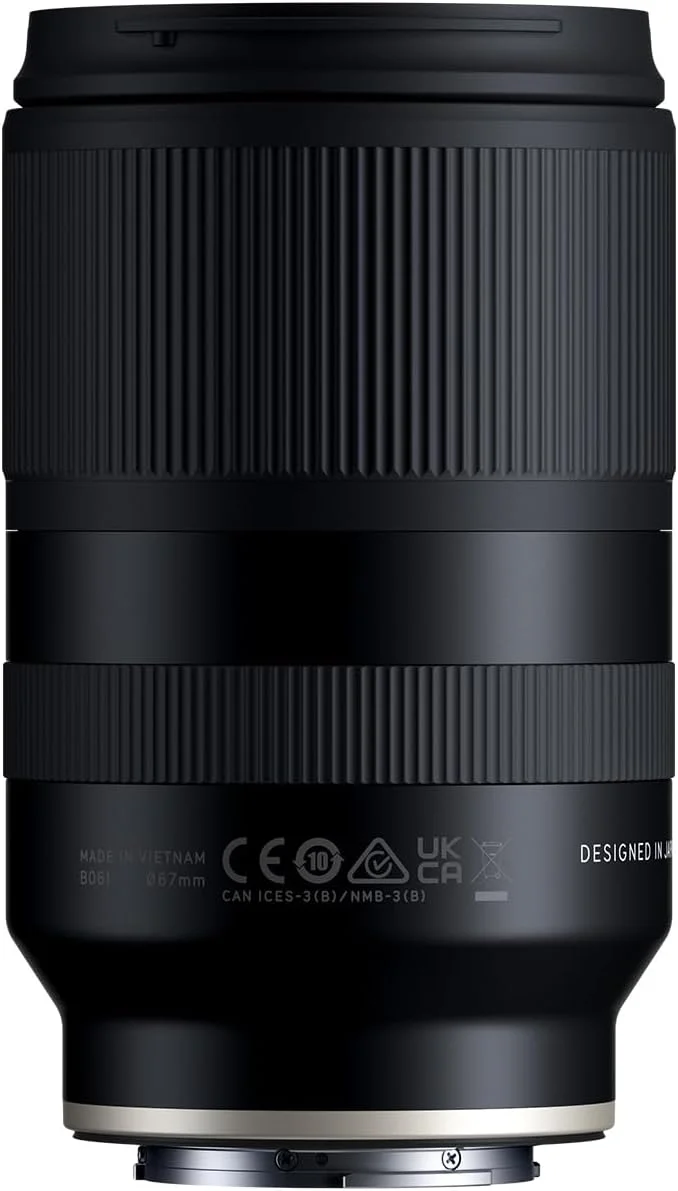
Tamron 18-300mm (Sony)
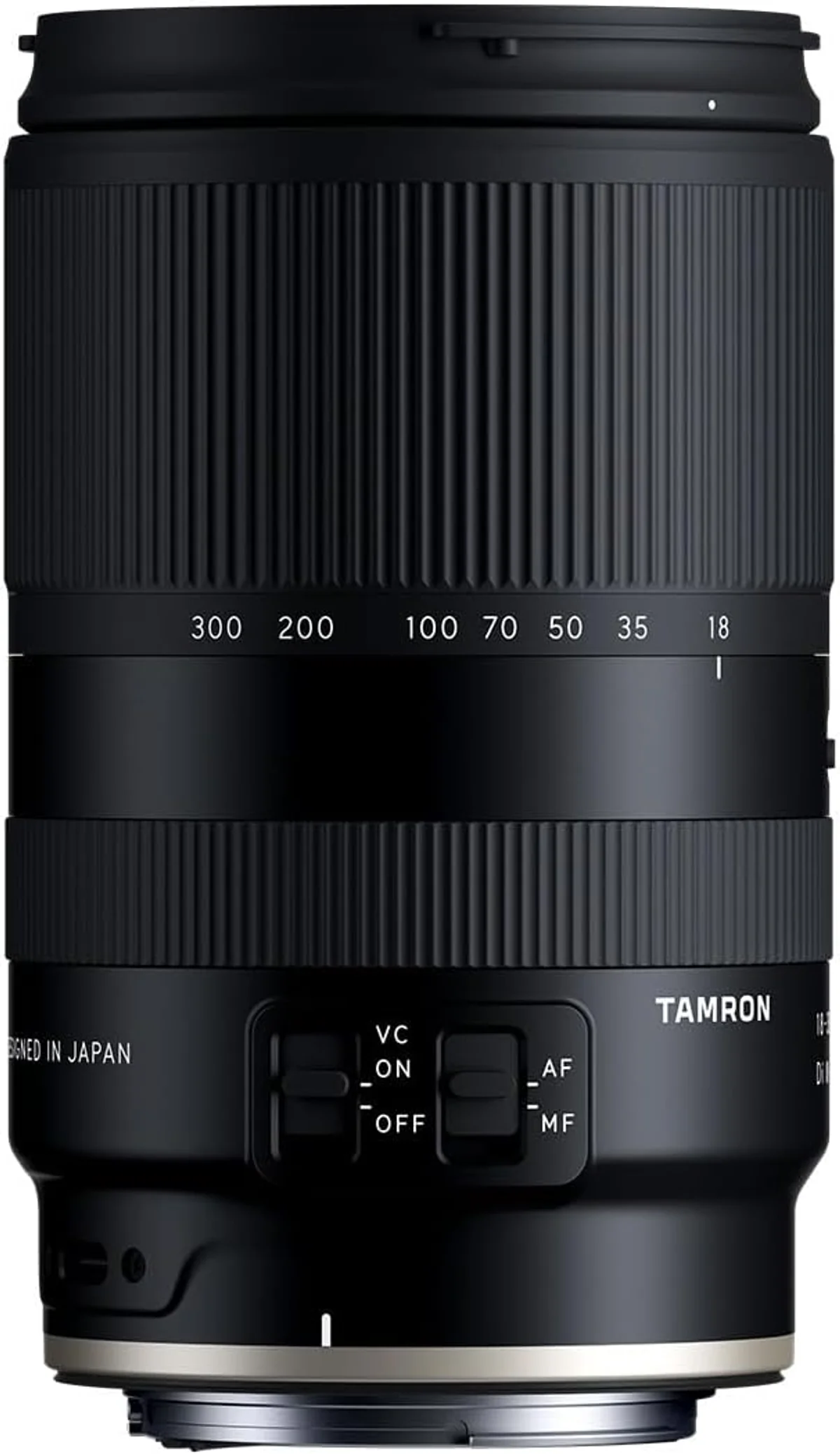
Tamron 18-300mm (Canon)
At a Glance
| Feature | Tamron 18-300mm f/3.5-6.3 Di III-A VC VXD (Sony E) | Tamron 18-300mm f/3.5-6.3 Di III-A VC VXD (Canon RF) |
|---|---|---|
| Price Band | Entry | Entry |
| Focal Length | 18-300mm | 18-300mm |
| Max Aperture | f/3.5-6.3 | f/3.5-6.3 |
| Mount | Sony E | Canon RF |
| Format | APS-C | APS-C |
| Filter Size | 67mm | 67mm |
| Weight | 620g | 620g |
| Stabilization | VC | VC |
| Check Price | Check Price |
Autofocus and Body Communication
Both versions of the Tamron 18-300mm use VXD (Voice-coil eXtreme-torque Drive) linear motors — fast, quiet, and responsive in good light. The motor hardware is identical. What changes is how the camera body talks to that motor, and this is where Sony's longer relationship with Tamron becomes visible.
On Sony bodies like the a6700, Tamron lenses communicate through a well-established protocol that has been refined over six years and dozens of firmware updates. The a6700's Real-time Tracking AF and subject recognition work with the Tamron 18-300mm almost identically to how they work with Sony's own lenses. Eye AF locks reliably at 18mm group shots and tracks through to 300mm wildlife and sports frames. Focus transitions during video are smooth, predictable, and free of the micro-hunting that plagues less integrated third-party glass.
The Canon RF version tells a different story — not a bad one, but a younger one. Canon opened its RF mount protocol to Tamron more recently, and the communication layer is less mature. On the EOS R7, autofocus acquisition is fast in good light and tracks moving subjects competently through Canon's Dual Pixel CMOS AF II system. Where the gap appears is edge cases: low-contrast scenes at 200mm+ where the Canon version occasionally hunts for an extra quarter-second before locking, and rapid subject transitions where Sony's system hands off between subjects more decisively.
Canon R7 shooters also report that Animal Detection AF works less consistently with the Tamron 18-300mm than with Canon's own RF-S lenses. Birds in flight at 300mm sometimes trigger face detection instead of eye detection, causing the focus point to drift to the body rather than the head. Sony's a6700 handles the same scenario with tighter eye-lock accuracy on third-party glass. Tamron firmware updates have improved Canon RF AF behavior since launch, and the gap continues to narrow — but as of early 2026, Sony integration remains a step ahead.
Stabilization: VC Meets Two Different IBIS Systems
Tamron's VC (Vibration Compensation) optical stabilization is built into both versions of the 18-300mm. The mechanism is identical — same floating element, same gyroscope sensors, same rated stabilization performance. On its own, VC delivers roughly 3.5 usable stops of shake reduction at 300mm, enough to handhold at 1/80s in decent light when shooting at the telephoto end. Wide at 18mm, VC alone gets you down to roughly 1/4 second — practical for evening street photography on a crop sensor.
The real stabilization story is how VC coordinates with each body's IBIS (In-Body Image Stabilization). Sony's a6700 uses 5-axis IBIS and communicates stabilization telemetry bidirectionally with compatible third-party lenses. With the Tamron 18-300mm, the Sony body handles roll and X/Y-axis correction while the lens handles pitch and yaw. This coordinated approach delivers approximately 5-6 effective stops at wide angles and 4-5 stops at 300mm — strong performance for a superzoom.
Canon's R7 also has 7-stop rated IBIS, but third-party lens coordination is less optimized. Canon's system was designed primarily for Canon RF and adapted EF lenses, where the stabilization handshake is tightly controlled. With the Tamron 18-300mm, R7 IBIS and Tamron VC both activate, but the coordination between them is less precise. Some users report occasional "jumpy" stabilization at 200mm+ during video recording — a symptom of two stabilization systems making conflicting corrections. Tamron's firmware updates have reduced this behavior, and shooting with VC off (relying on Canon IBIS alone) sometimes produces smoother video than using both systems together.
For stills shooters, the practical difference is roughly half a stop. Sony a6700 plus Tamron VC gives you marginally lower minimum shutter speeds before blur appears. For video, the difference is more noticeable — the Sony pairing produces smoother handheld footage with fewer micro-corrections visible in the frame, particularly during slow walking shots at telephoto focal lengths.
A quick workaround for Canon R7 users experiencing stabilization conflicts at long focal lengths: disable the lens VC and rely solely on the R7's IBIS. Canon's in-body system is strong enough on its own at 200mm and below, and removing the second stabilization layer eliminates the coordination issue entirely. At 300mm, VC provides a genuine benefit that IBIS alone cannot match, so re-enabling it for telephoto stills is worth the minor trade in video smoothness. Sony shooters do not need this workaround — both systems cooperate well enough at every focal length.
Optical Performance: Identical by Design
This section is short because the answer is simple. Both versions of the Tamron 18-300mm use the same 19-element, 15-group optical formula. Two hybrid aspherical elements control distortion and field curvature. Two LD (Low Dispersion) elements suppress chromatic aberration. The BBAR-G2 (Broad-Band Anti-Reflection Generation 2) coating on the front element is identical across both mounts.
Center sharpness peaks between f/5.6 and f/8 across the zoom range on both versions. Wide open at 18mm f/3.5, both lenses deliver strong center resolution with mild corner softness that tightens up by f/5.6. At 300mm f/6.3, diffraction begins softening the image slightly — a physics limitation of the aperture, not a lens quality issue. Stopping down to f/8 at 300mm does not improve sharpness because diffraction offsets the depth-of-field gain. Both versions show this behavior identically.
Chromatic aberration appears at high-contrast edges, especially at 300mm — magenta fringing on backlit branches and architectural lines is visible at 100% crop but corrects easily in Lightroom or Capture One. Sony bodies apply automatic CA correction using Tamron's lens profile, which handles most fringing without user intervention. Canon bodies also apply the Tamron correction profile, but the automatic correction is slightly less aggressive — you may need a manual CA slider adjustment in post for the worst cases.
Distortion follows the typical superzoom pattern: barrel distortion at 18mm, approaching neutral around 35mm, and mild pincushion at 100mm+. Both camera systems correct distortion automatically using the embedded lens profile. With corrections applied, output from either version is virtually indistinguishable.
Firmware, Compatibility, and Future-Proofing
Tamron supports both versions through Tamron Lens Utility, their desktop firmware update application. The Sony E version has received more firmware updates since its 2021 launch — addressing AF speed improvements, stabilization tuning, and compatibility with newer Sony bodies like the a6700 and ZV-E10 II. Each update has made the Sony version work more smoothly with Sony's evolving AF algorithms.
The Canon RF version launched in 2024 and has received fewer updates so far, but each one has targeted the same categories: AF response time, subject detection compatibility, and VC coordination with Canon IBIS. Tamron's track record with Sony lens updates suggests the Canon RF version will continue improving. The company has historically supported their lenses with firmware updates for four to five years after launch.
One practical difference: updating the Sony version is simpler. Connect the lens to your computer through the Sony body's USB-C port, open Tamron Lens Utility, and update. The Canon version requires either a Canon body that supports USB passthrough for third-party lens updates or the Tamron TAP-in Console accessory. Canon's USB protocol does not pass data to the lens as transparently as Sony's, making the update process one extra step for Canon shooters.
Future-proofing is harder to predict. Sony's open approach to third-party lenses suggests continued strong support. Canon's RF mount has become more third-party friendly, but Canon still controls the protocol specifications. If Canon changes the RF communication protocol in a future body, Tamron would need to issue a firmware update — as they have done historically for Sony mount changes. Both versions face the same long-term risk, but Sony's track record provides more reassurance.
Video Performance Across Both Systems
For APS-C video shooters, the Tamron 18-300mm is one of the most practical lenses available — 27-450mm equivalent range means you rarely need to swap glass during a shoot. Both versions perform well for video, but the body-lens interaction creates different experiences.
On the Sony a6700, video AF with the Tamron 18-300mm is smooth and confidence-inspiring. Sony's AF Transition Speed and AF Subject Shift Sensitivity settings work with the Tamron lens, giving you fine control over focus pull behavior. Rack focuses from a foreground subject at 18mm to a background element at 135mm happen without hunting or oscillation. The lens also supports Sony's Breathing Compensation feature on the a6700, which corrects the field-of-view shift that occurs during focus changes — a noticeable improvement for video shooters who pull focus frequently.
On the Canon R7, video AF is competent but less configurable. Canon's Movie Servo AF works with the Tamron 18-300mm, and tracking maintains focus during moderate subject movement. Where it falls short is focus pull smoothness — transitions between subjects occasionally show a brief hesitation that Canon's own RF-S 18-150mm does not exhibit. This is a communication latency issue, not a motor speed issue, and it has improved with firmware updates. Canon's R7 does not offer breathing compensation for third-party lenses, so focus-induced field shifts remain visible during rack focuses.
Audio quality during video recording is worth mentioning. The VXD motor on both versions is nearly silent — internal microphones on either camera system do not pick up focus motor noise during recording. This is consistent across Sony and Canon bodies. Both versions also avoid the aperture chatter that some third-party zooms exhibit when changing focal length during recording.
For content creators shooting with an a6700 or ZV-E10 II, the Sony version delivers a more polished video experience. R7 video shooters get excellent image quality but should expect to work around minor AF behavior differences that Sony users do not encounter.
One area where both versions perform equally: 4K crop behavior. Neither version introduces additional cropping beyond what the camera body applies — the full 18-300mm range is available in 4K on both the a6700 and R7. At 18mm, you still get a usable wide angle for vlogging and establishing shots. At 300mm in 4K, both versions maintain enough resolution to produce sharp footage without visible softness from upscaling artifacts. The 16.6x zoom ratio makes either version a one-lens video kit for travel content, event coverage, and hybrid photo-video workflows where switching glass mid-shoot is impractical.
Pricing and Value
Both versions of the Tamron 18-300mm sit at the same Entry price point — similarly priced. Tamron has priced both mounts identically, which makes the value comparison purely about what each camera ecosystem delivers from the same optical hardware.
For Sony APS-C shooters — see our Sony E-mount lens rankings — the Tamron 18-300mm competes against Sony's own E 18-135mm f/3.5-5.6 OSS (shorter range, slower aperture at the long end, older AF motor) and the Sony E 70-350mm f/4.5-6.3 G OSS (telephoto only, requires a wide zoom companion). The Tamron replaces both with a single lens, making it arguably the strongest value proposition in the Sony APS-C lens lineup. No other single lens covers 18-300mm on Sony E-mount.
For Canon RF APS-C shooters — our Canon RF lens roundup covers the full lineup — the competitive picture is similar. Canon's RF-S 18-150mm f/3.5-6.3 IS STM covers less range and uses a slower STM motor. Canon's RF-S 55-210mm f/5-7.1 IS STM extends telephoto reach but requires carrying a second lens. The Tamron 18-300mm replaces both, and its VXD motor outperforms Canon's STM in both speed and noise. Canon does not offer a native superzoom with this reach for RF-mount APS-C bodies, giving Tamron a unique position.
Value per dollar tilts slightly toward the Sony version — not because the lens is better, but because the body integration is more mature. You get smoother AF, better stabilization coordination, and more firmware support for the same purchase price. Canon RF shooters still get outstanding value from a lens that fills a gap Canon itself has not addressed, but the total experience is slightly less refined at the system level.
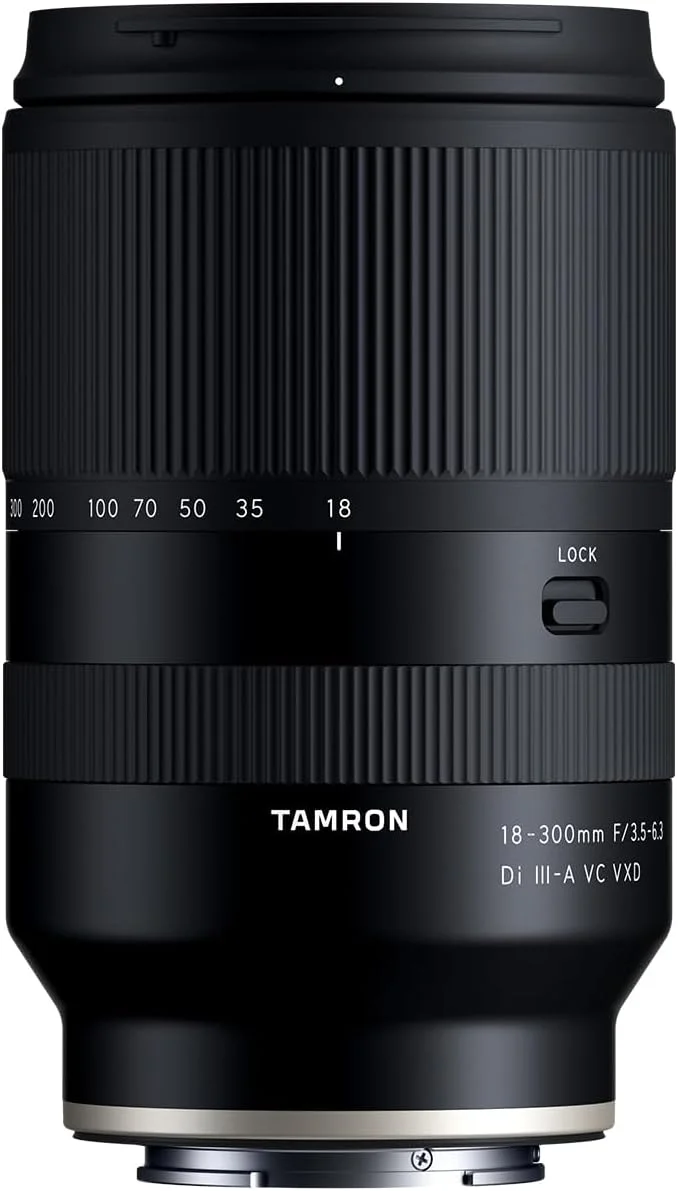
Tamron 18-300mm (Sony)
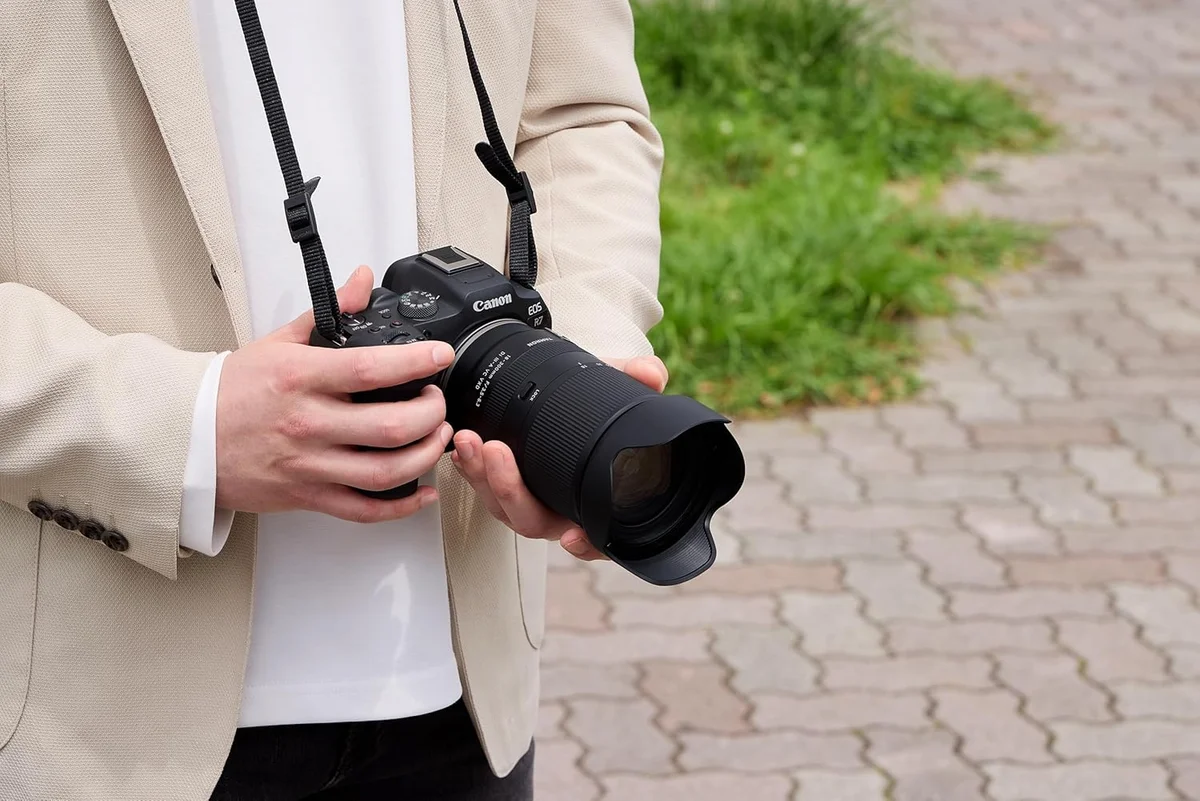
Tamron 18-300mm (Canon)
Which Mount Version Belongs in Your Bag?
Pick the Sony E Version If:
- You shoot Sony APS-C — the a6700, a6400, ZV-E10 II, or any E-mount crop body — and want a single do-everything lens
- Video AF smoothness and breathing compensation matter for your content workflow
- You want the most refined stabilization pairing between Tamron VC and Sony's 5-axis IBIS
- Firmware updates via USB-C through the camera body appeals to you — no extra accessories needed
- Eye AF and subject detection accuracy at 300mm is critical for your wildlife or sports shooting
Pick the Canon RF Version If:
- You shoot Canon APS-C — the R7, R10, or R50 — and need superzoom range that Canon does not offer natively
- You want a single lens covering 18-300mm for travel, events, and everyday shooting without carrying multiple lenses
- You prefer staying within the Canon ecosystem and cannot switch to Sony just for one lens
- Canon's color science and JPEG processing matter to your workflow — the Tamron optics deliver the same light to Canon's processor
- You accept that firmware updates will continue improving the integration over time
Our Recommendation
This is a tie dictated by your camera body, not by the lens itself. The Tamron 18-300mm f/3.5-6.3 is the same optical instrument in both mounts — sharp, capable across a wide range of subjects, and impressively compact for a 16.6x superzoom. The Sony E version edges ahead on AF integration, stabilization coordination, and firmware maturity because Tamron has spent six years optimizing for Sony's mount protocol. The Canon RF version fills a genuine gap in Canon's APS-C lens lineup that no Canon-branded lens currently addresses, making it indispensable for R7 and R10 shooters who need all-in-one range.
If you are choosing between camera systems and this lens is a factor in your decision, the Sony APS-C ecosystem currently offers a more polished third-party lens experience. If you are already committed to Canon RF, the Tamron 18-300mm is the best superzoom option available — full stop — and its integration will continue improving with firmware updates. Neither version is a bad purchase. One is simply further along the optimization curve.
Tamron 18-300mm Mount Comparison Questions
These questions address the most common points of confusion when choosing between the Sony E and Canon RF versions of Tamron's 18-300mm superzoom.
Are the Tamron 18-300mm Sony E and Canon RF versions optically identical?
Yes, both versions share the same optical formula — 19 elements in 15 groups, including two hybrid aspherical and two LD elements. Tamron designed one optical path and adapted the rear mount group for each system. Sharpness, distortion, chromatic aberration, and bokeh character are functionally the same. The only differences are mount-specific: communication protocols, AF tuning, and in-camera correction profiles. A controlled comparison shot from both lenses at the same settings would be indistinguishable.
Does the Canon RF version support Canon lens corrections like Digital Lens Optimizer?
Not fully. Canon reserves Digital Lens Optimizer for its own RF and adapted EF lenses. The Tamron 18-300mm Canon RF version supports basic in-camera distortion and vignetting correction through the lens profile Tamron provides, but DLO processing in Canon Digital Photo Professional is unavailable. Sony bodies apply Tamron distortion and shading corrections automatically since Tamron has deeper third-party integration with Sony. This is one of several areas where the Sony version benefits from a more mature partnership.
How does autofocus speed compare between the Sony E and Canon RF versions?
Both use Tamron VXD (Voice-coil eXtreme-torque Drive) linear motors, and raw focus motor speed is equivalent. The difference comes from body communication. Sony a6700 and a6400 bodies send focus commands that the lens interprets natively — Tamron has optimized this pairing since 2020. Canon RF communication is newer, and some shooters report fractionally slower initial acquisition in low contrast scenes on the R7. Firmware updates from Tamron have narrowed this gap since the Canon RF version launched.
Can I update firmware on both versions using Tamron Lens Utility?
Yes, but with a hardware difference. The Sony E version connects directly to your computer via USB-C through the lens mount using a Sony body or Tamron TAP-in Console. The Canon RF version also supports Tamron Lens Utility, but Canon bodies do not pass USB data through to the lens the same way. You may need the Tamron TAP-in Console for Canon RF or a compatible adapter. Check Tamron support for the latest firmware procedure for each mount.
Which camera bodies pair best with each version of the Tamron 18-300mm?
For the Sony E version, the a6700 is the strongest pairing — its updated Bionz XR processor and AI-based subject detection extract the best AF performance from the lens. The a6400 and ZV-E10 II also pair well. For the Canon RF version, the EOS R7 is the clear match — its 32.5MP APS-C sensor and Dual Pixel CMOS AF II system handle the full zoom range effectively. The R10 works well too, though its smaller buffer limits burst shooting at 300mm.
Is vibration compensation performance identical on both versions?
The VC (Vibration Compensation) hardware is the same — both versions claim the same stabilization rating. Real-world performance differs slightly because each camera system coordinates IBIS and OIS differently. Sony a6700 uses a 5-axis IBIS that communicates stabilization data bidirectionally with compatible lenses. Canon R7 IBIS also coordinates with the Tamron VC unit, but third-party coordination on Canon RF is less refined than on Sony. Expect roughly half a stop less effective stabilization on Canon versus Sony when both IBIS and VC are active.