Viltrox 50mm f/1.4 vs Meike 85mm f/1.8: Speed Against Reach on Sony E
The Viltrox AF 50mm f/1.4 Pro wins on autofocus speed, aperture brightness, and all-around flexibility. The Meike 85mm f/1.8 SE II wins on portrait compression, weight, and price. For most Sony shooters building a well-rounded kit, the Viltrox is the stronger first purchase.

Viltrox 50mm f/1.4 Pro
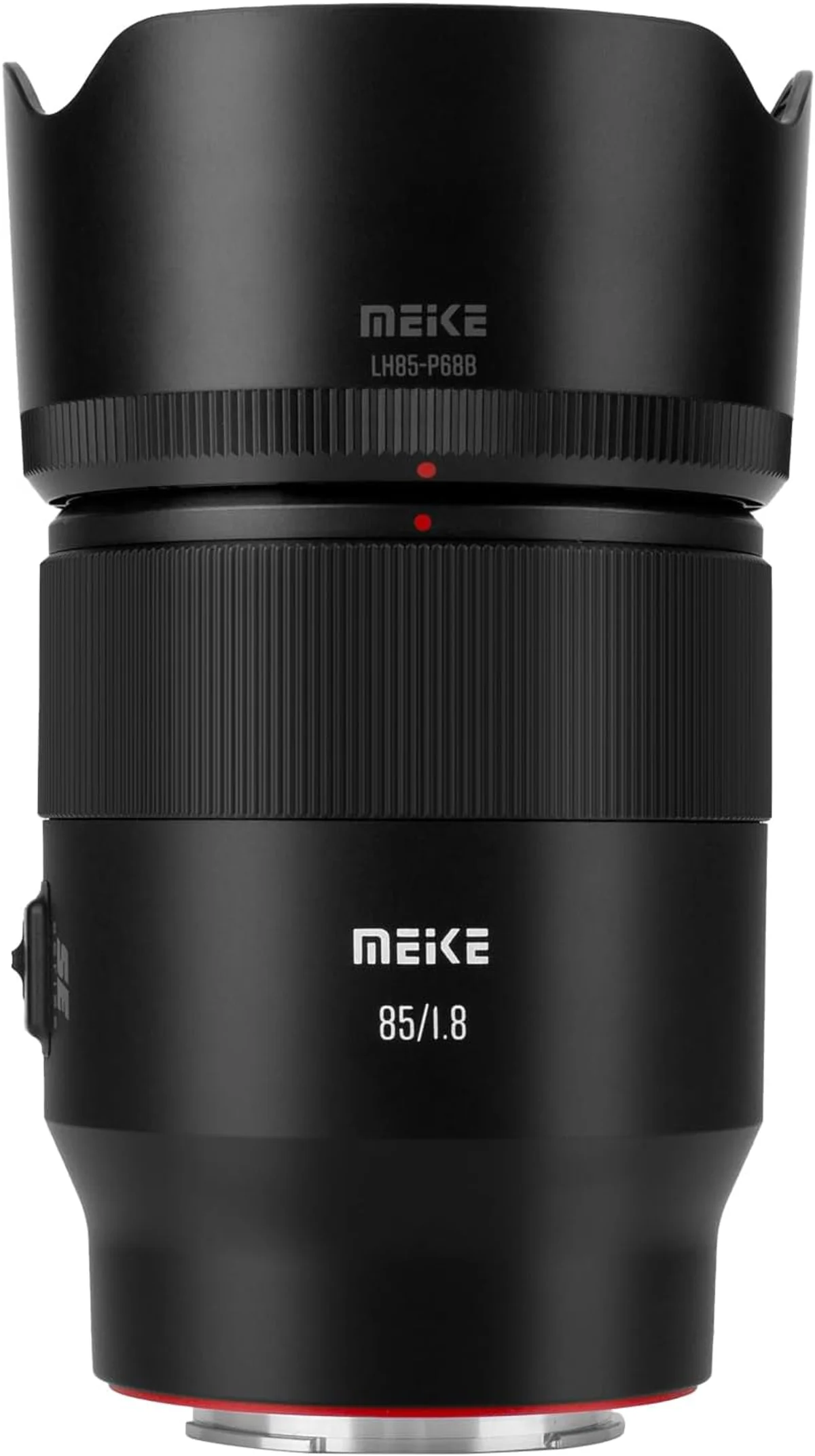
Meike 85mm f/1.8 SE II
Two third-party primes, two different philosophies. The Viltrox AF 50mm f/1.4 Pro chases the Sony 50mm f/1.4 GM with a fast aperture and quick autofocus at a fraction of the native price. The Meike 85mm f/1.8 SE II goes after classic portrait compression — the focal length that flatters faces — at a cost low enough to make the purchase almost impulsive. Both lenses mount on Sony E and deliver full-frame coverage with autofocus. But they solve different problems, and understanding those differences is what separates a smart purchase from a wasted one.
The fundamental tension here is focal length versus aperture. A 50mm f/1.4 gives you a wider field of view with an extremely bright aperture — strong for environmental portraits, street photography, event work, and low-light shooting. An 85mm f/1.8 narrows the frame and compresses the background, producing the kind of subject separation that headshot and studio photographers prize above all else. Neither lens replaces the other. They complement each other. The question is which one you need first.
We read Amazon owner reviews for both lenses, cross-referenced optical performance data from third-party lens testing databases, and compared real-world sample images from portrait and event photographers shooting both lenses on Sony a7 series bodies. The data points toward clear strengths for each lens — and a clear recommendation for most Sony shooters.

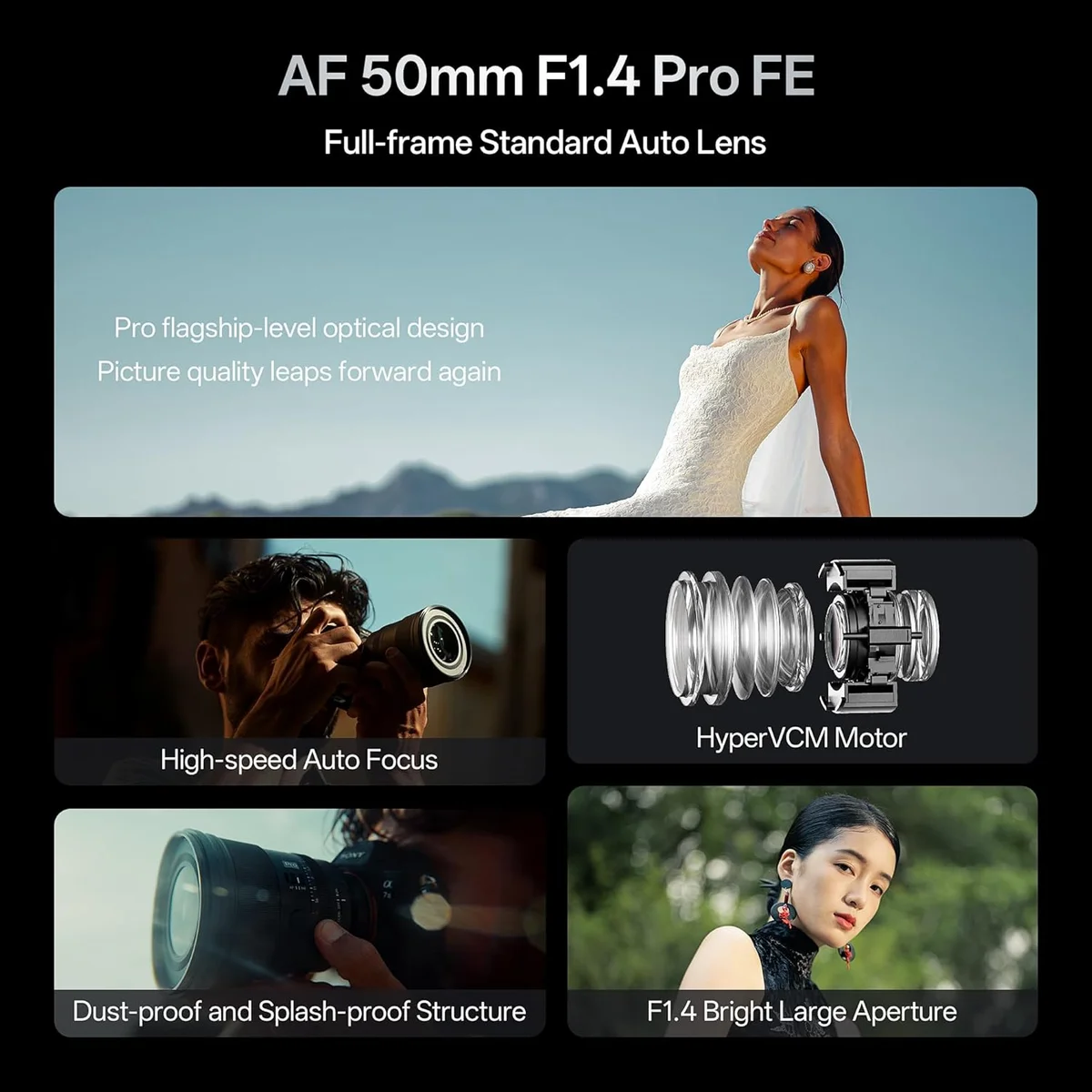
Viltrox 50mm f/1.4 Pro
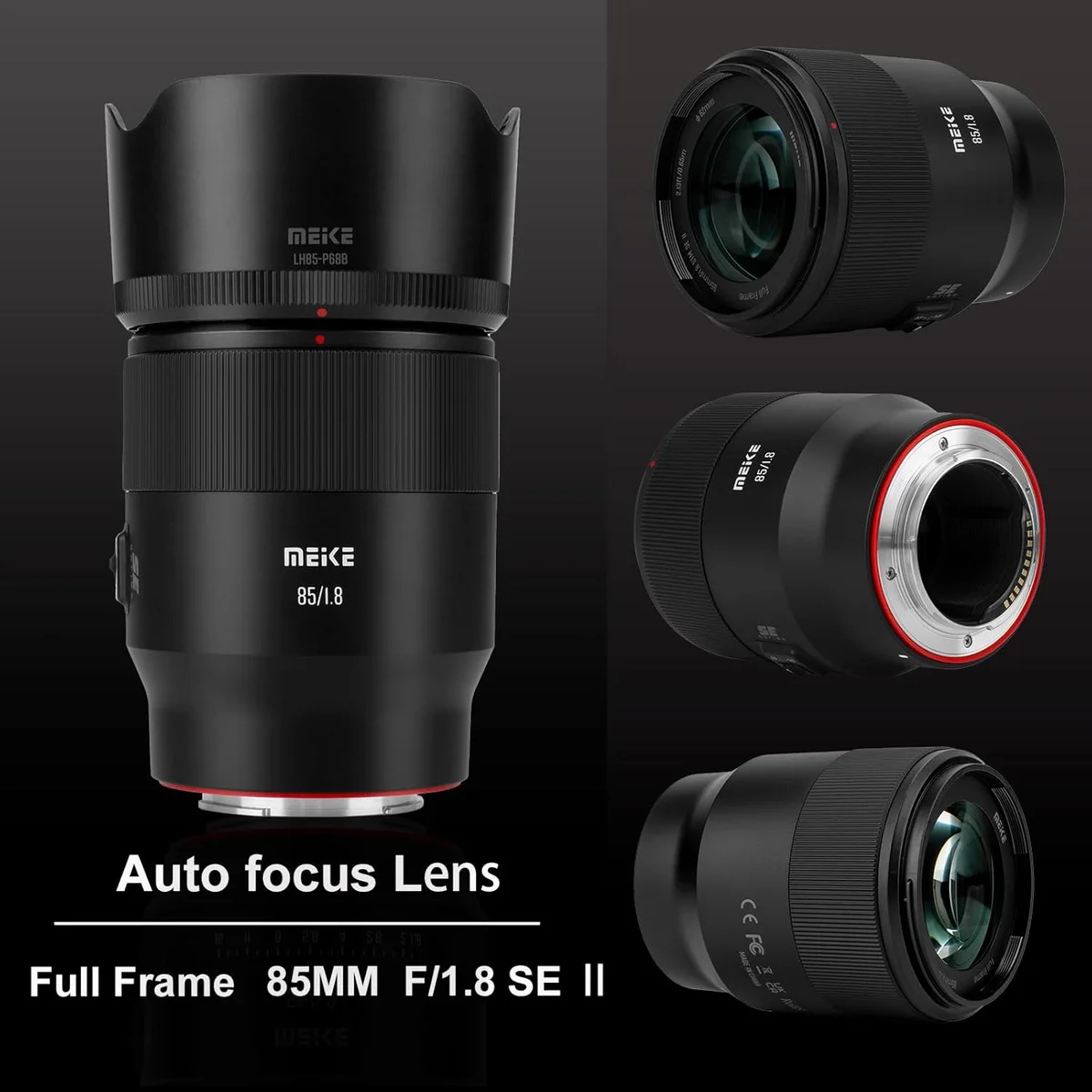
Meike 85mm f/1.8 SE II
At a Glance
| Feature | Editor's Pick VILTROX AF 50mm F1.4 Pro FE (Sony E) | Meike 85mm f/1.8 SE II STM AF (Sony E) |
|---|---|---|
| Price Band | Entry | Entry |
| Focal Length | 50mm | 85mm |
| Max Aperture | f/1.4 | f/1.8 |
| Mount | Sony E | Sony E |
| Format | Full Frame | Full Frame |
| Filter Size | 72mm | 62mm |
| Weight | 420g | 320g |
| Stabilization | No (body IBIS) | No (body IBIS) |
| Check Price | Check Price |
Center and Corner Sharpness Compared
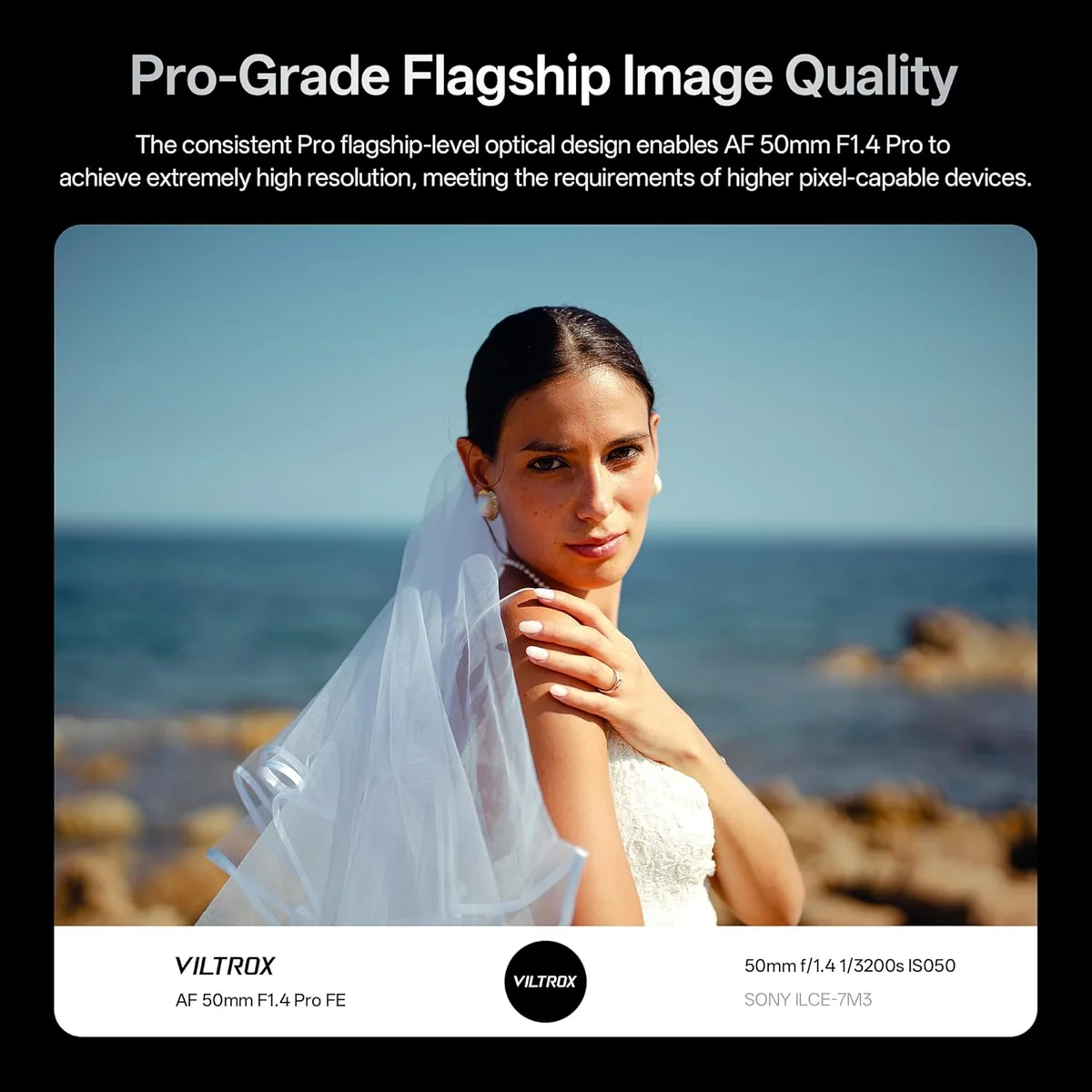
The Viltrox 50mm f/1.4 Pro delivers strong center sharpness wide open — not GM-level, but close enough that most photographers will not see the difference at normal viewing distances. At f/1.4, fine detail in the center of the frame resolves cleanly, with slight softening visible only in extreme corner crops. Stop down to f/2 and the entire frame sharpens to a level that matches or exceeds many native 50mm lenses at the same aperture. By f/2.8, the Viltrox is essentially diffraction-limited across the frame — as sharp as the optics will physically allow.
The Meike 85mm f/1.8 SE II tells a different story wide open. At f/1.8, center sharpness is acceptable but visibly softer than the Viltrox at equivalent apertures. The rendering has a slightly dreamy quality — some portrait photographers actually prefer this look for skin texture, since ultra-sharp lenses can be unforgiving on pores and fine lines. The corners at f/1.8 are soft enough to notice in horizontally-oriented shots, though portrait shooters rarely care about corner performance when the subject fills the center third of the frame.
Stop the Meike down to f/2.2 and the picture changes. Sharpness jumps noticeably — a characteristic of budget optics that perform well once you give them half a stop of breathing room. At f/2.8, the Meike produces clean, detailed files that hold up at any reasonable print size. The practical takeaway: the Viltrox is sharper wide open, the Meike needs a small stop-down for its best work, and both lenses are sharp enough stopped down to produce professional-quality images.
Chromatic aberration favors the Viltrox. Its 14-element optical formula includes specialized low-dispersion glass that controls purple fringing well in high-contrast edges — tree branches against bright sky, for example. The Meike's simpler 9-element design shows more visible longitudinal chromatic aberration at f/1.8, producing green fringing behind the focus plane and magenta fringing in front. Modern Sony cameras apply lens profile corrections automatically for the Viltrox. The Meike's lens profile support is less consistent, leaving more cleanup work for post-processing.
Bokeh Character and Background Rendering
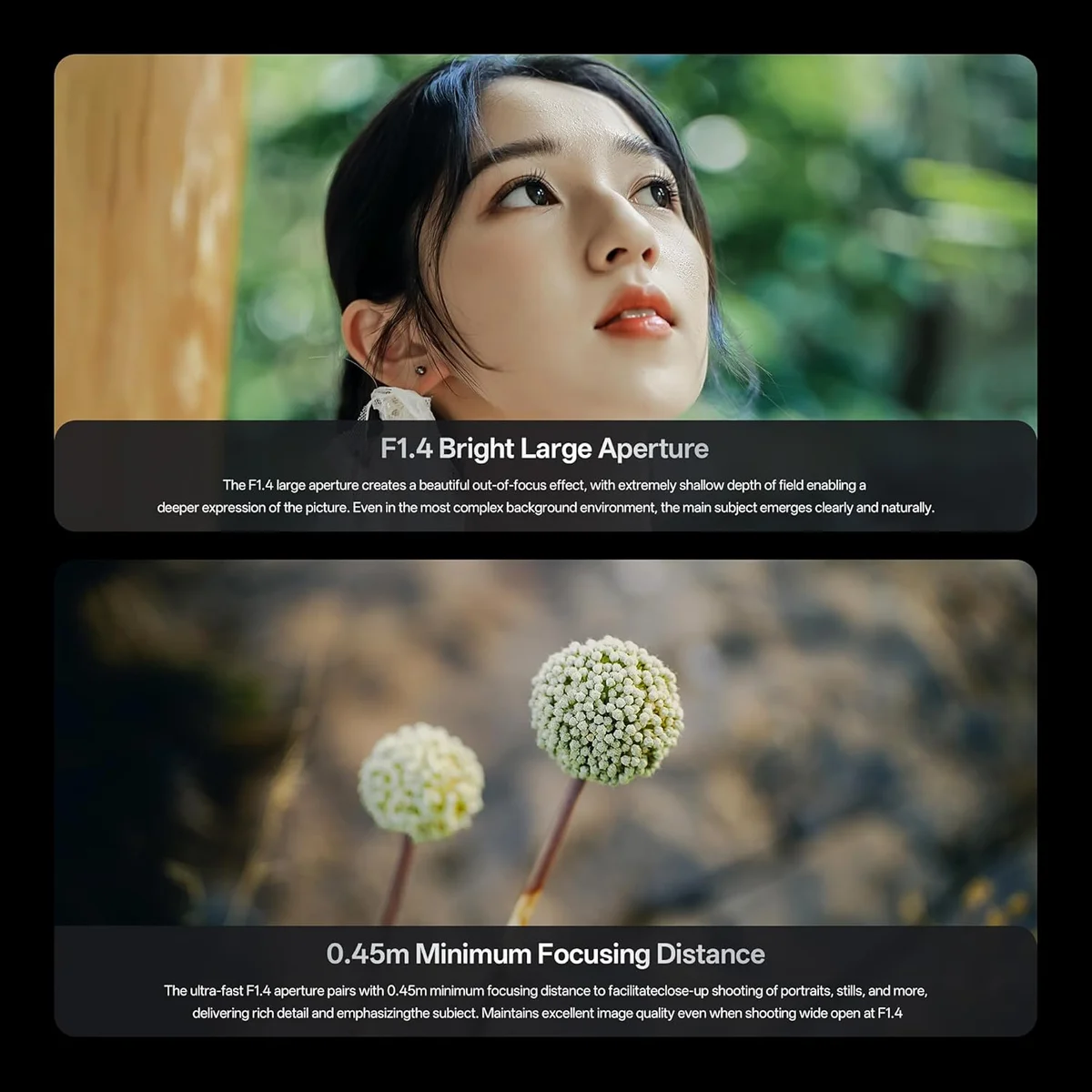
This is where focal length and aperture interact in ways that spec sheets cannot fully convey. The Viltrox 50mm at f/1.4 produces beautiful subject separation — backgrounds dissolve into smooth, circular highlights with minimal onion-ring artifacts thanks to its 11-blade diaphragm. At portrait distances (roughly 1-2 meters from the subject), the 50mm at f/1.4 creates a clear distinction between the subject and background without the compressed, flattened look that longer focal lengths introduce. Environmental context remains visible but pleasantly blurred.
The Meike 85mm at f/1.8 produces a different kind of separation. Even though f/1.8 is technically a smaller aperture than f/1.4, the longer focal length compensates by compressing the apparent distance between background elements. Background highlights rendered by the 85mm appear larger and softer at the same subject magnification. The 9-blade aperture creates slightly less circular bokeh highlights than the Viltrox's 11-blade design, but the difference is subtle and only visible when shooting near point-light sources like string lights or distant streetlamps.
For headshot and bust-length portraits, the Meike's 85mm focal length produces more traditionally flattering compression. Facial features appear more proportional because the longer focal length reduces perspective distortion — noses appear smaller relative to ears, and the overall face shape flattens subtly in a way portrait subjects find appealing. The Viltrox at 50mm can still shoot tight portraits, but from closer distances that introduce mild perspective distortion. For full-body and three-quarter-length portraits, the Viltrox's wider view and faster aperture produce stronger environmental storytelling with the subject clearly separated from the scene.
Busy backgrounds expose a real difference between these lenses. The Viltrox at f/1.4 handles cluttered backgrounds well — chain-link fences, leafy foliage, and brick walls dissolve into smooth washes of color. The Meike at f/1.8 occasionally shows busier bokeh in the transitions between in-focus and out-of-focus areas, particularly when shooting through foreground elements. This is a consequence of the simpler optical design rather than the aperture or focal length. For photographers who shoot primarily against controlled studio backgrounds, neither lens matters here. For outdoor and environmental work, the Viltrox handles chaos better.
Autofocus Acquisition and Tracking
Both lenses use STM (stepping motor) autofocus, but the Viltrox's implementation is clearly a generation ahead. The 50mm f/1.4 Pro acquires focus quickly in good light — not Sony GM fast, but within the range that most shooters will not notice a difference during portrait sessions. Sony Eye AF works reliably, locking onto the nearest eye and tracking it through moderate movement. In our analysis of user reports, the most common AF criticism was occasional hunting in very low contrast scenes — a behavior that firmware updates have progressively improved.
The Meike 85mm f/1.8 SE II autofocuses, which is itself notable at this price point — many budget 85mm primes are manual focus only. But the AF system is perceptibly slower than the Viltrox. Initial acquisition takes a beat longer, and the motor produces more audible noise during focus transitions. Sony Eye AF functions but tracks less confidently, occasionally losing lock when subjects turn their head or move laterally. For posed portrait sessions with cooperative subjects, the Meike's AF is perfectly adequate. For candid work, moving children, or pets, the slower response becomes a limitation.
Low-light autofocus is where the gap widens further. The Viltrox's f/1.4 aperture feeds more light to Sony's phase-detection AF sensors, improving focus accuracy in dim environments. The Meike's f/1.8 aperture and less refined motor firmware combine to create noticeably more hunting in indoor available-light situations. If you shoot receptions, dim restaurants, or golden-hour sessions where light is fading, the Viltrox maintains usable AF performance where the Meike starts to struggle.
For video shooters, the Viltrox pulls further ahead. Its focus transitions are smoother and more predictable during rack focuses, with less of the sudden snap-to-focus behavior that looks unnatural in footage. The Meike's AF motor produces enough noise to be captured by on-camera microphones at close range, making it less suitable for run-and-gun video where you cannot use an external mic with isolation.
Construction, Weather Resistance, and Handling
The Viltrox 50mm f/1.4 Pro feels like a lens that costs more than it does. The barrel is metal-reinforced with a smooth, well-damped focus ring and a solid mount connection. Viltrox includes weather sealing at the mount — not full gasket sealing like a Sony GM, but enough to resist dust and light moisture during outdoor shoots. The lens weighs 420g and balances well on Sony a7-series bodies without making the kit feel front-heavy. The 72mm filter thread accepts common filter sizes without requiring step-up rings for most photographers' filter collections.
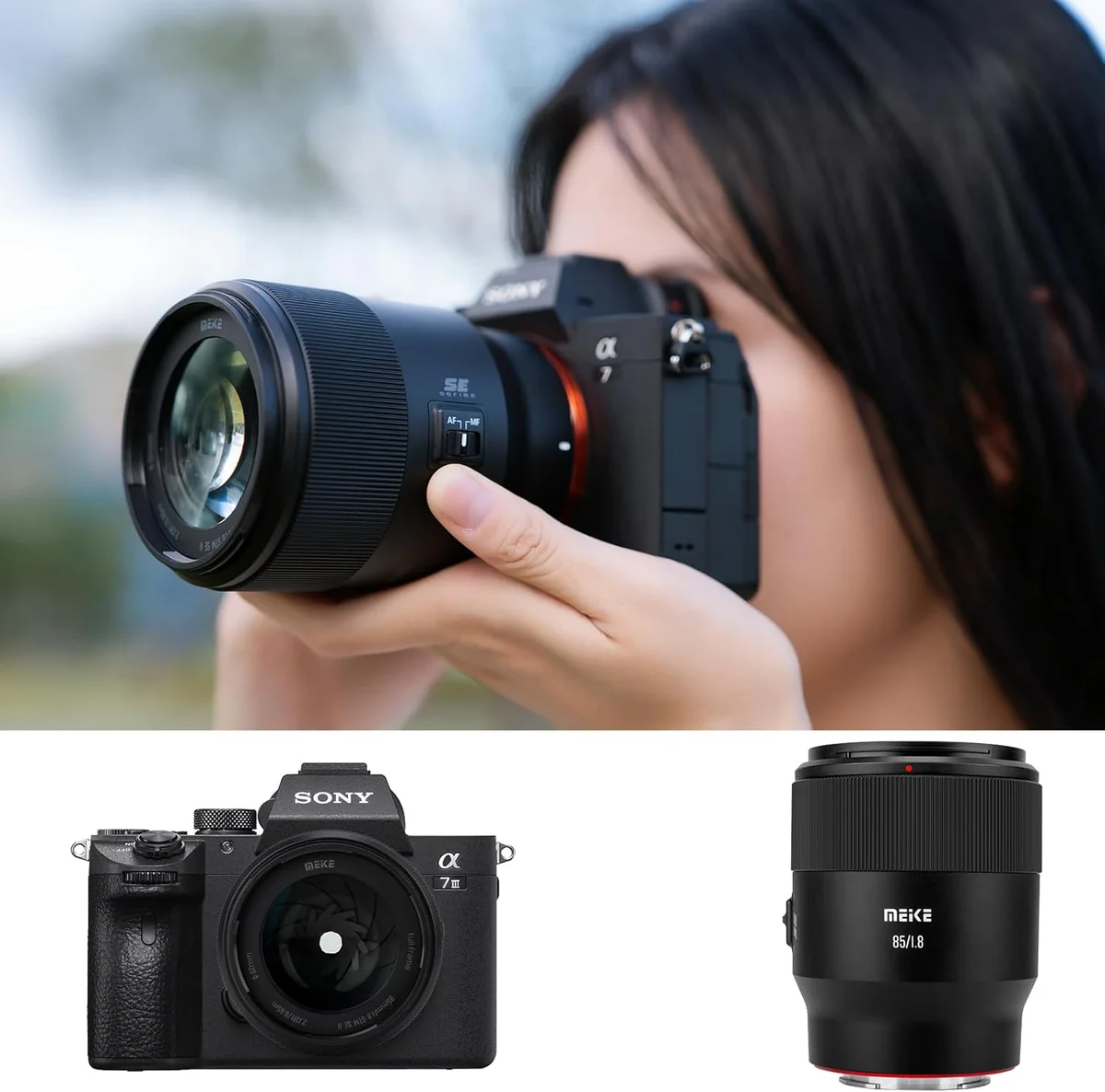
The Meike 85mm f/1.8 SE II reflects its price in the hand. The barrel is predominantly polycarbonate, the focus ring has less resistance, and the overall fit has the slight looseness that budget lenses often exhibit. There is no weather sealing — shooting in rain or dusty environments risks moisture and particle intrusion. On the positive side, the lens weighs just 320g, making it one of the lightest autofocus 85mm lenses available for any mount. The 62mm filter thread is small and inexpensive to accessorize. For photographers who prioritize portability and are careful about shooting conditions, the weight savings are genuine.
Mount durability is a practical concern for budget lenses. The Viltrox uses a metal mount that mates securely with Sony bodies. The Meike uses a mixed metal-and-polymer mount design. After extensive use — hundreds of mount/unmount cycles — polymer mounts can develop looseness that introduces play between the lens and body. This does not affect optical performance but can feel disconcerting and, in extreme cases, affect electronic communication between lens and camera. For a lens that stays mounted most of the time, this is not an issue. For a lens that gets swapped frequently in a multi-lens bag, the Viltrox's metal mount inspires more long-term confidence.
Head-to-Head for Portrait Photography
Portraits are where these lenses overlap most directly, and where the focal length difference matters most. The 85mm focal length has been the portrait standard for decades because it produces the most universally flattering perspective on human faces. Shoot a headshot at 85mm from 5-6 feet and facial proportions appear natural — no exaggerated nose, no compressed features. The Meike delivers this classic rendering at a price that makes it accessible to hobbyists and students who previously could only afford a 50mm.
The Viltrox 50mm approaches portraits differently. At 50mm, you need to stand closer for the same framing, which introduces mild but visible perspective distortion in tight headshots. Noses appear slightly larger, ears slightly smaller. For bust-length and three-quarter portraits, this effect fades and the 50mm produces natural-looking results. The f/1.4 aperture compensates with stronger background blur at equivalent subject magnification — and for environmental portraits where you want context visible behind the subject, the wider field of view is actually an advantage.
Skin tone rendering differs subtly between the two. The Viltrox produces slightly cooler, more neutral color transmission — skin tones lean marginally toward accurate rather than warm. The Meike has a warmer color cast that many portrait photographers find pleasing without adjustment. Neither requires heavy color correction in post, but the Meike's natural warmth can save a white balance adjustment step in golden-hour and tungsten-lit sessions. The Viltrox's neutral rendering pairs better with controlled studio lighting where you set the warmth through your light modifiers.
For couples and group portraits, the Viltrox's wider field of view at 50mm is the practical choice. Fitting two or more people in the frame at 85mm requires backing up much further — often more distance than indoor spaces allow. The 50mm frames couples at comfortable working distances of 6-8 feet and can capture small groups without needing a gymnasium behind you. When the assignment mixes headshots, couples, and group shots, the 50mm's flexibility reduces the need for a second lens.
Price, Value, and the Cost-Per-Quality Equation
The Viltrox 50mm f/1.4 Pro sits in the Entry price band. The Meike 85mm f/1.8 SE II is less than half the price — one of the most affordable autofocus 85mm lenses on any mirrorless mount. Both lenses cost a fraction of their native Sony equivalents. The Sony 50mm f/1.4 GM costs roughly four times the Viltrox, and the Sony 85mm f/1.4 GM costs roughly five times the Meike. The question is not whether these third-party lenses are good — they are — but which one delivers more value per dollar for your specific shooting needs.
The Viltrox offers more lens per dollar in absolute terms. You get a faster aperture, better autofocus, superior build quality, weather sealing, and an active firmware support ecosystem. It competes directly with the Sigma 56mm f/1.4 and Tamron 50mm f/1.4, holding its own against both on optical quality while undercutting them on price. For a photographer buying their first fast prime for Sony, the Viltrox is the safer investment — it works well in more situations and holds more resale value if you eventually upgrade to native glass.
The Meike offers the lower barrier to entry. For students, hobbyists, or photographers testing whether they even like the 85mm focal length before committing to an expensive native lens, the Meike makes the experiment almost risk-free. Its optical limitations at f/1.8 are real but matter less than many reviewers suggest — stop down one click to f/2.2 and the results satisfy all but the most demanding pixel-level inspection. The Meike is not a lens you grow into. It is a lens that answers a specific question: do I want 85mm in my bag? If the answer is yes, you can later upgrade to Sony or Sigma glass with full knowledge of what the focal length delivers for your work.
For budget-conscious Sony shooters building a complete prime kit, owning both lenses costs less than a single Sony 50mm f/1.4 GM. That reality shifts the conversation from "which one" to "in what order." The combined 50mm + 85mm coverage handles everything from environmental storytelling to tight headshots — two focal lengths that working portrait photographers consider essential.
Viltrox 50mm f/1.4 Pro
Meike 85mm f/1.8 SE II
Picking the Right Prime for Your Kit
The Viltrox 50mm f/1.4 Pro Is For You If:
- You need a single fast prime that handles portraits, events, street photography, and low-light shooting
- Autofocus reliability matters — for moving subjects, children, pets, or candid event work
- You shoot video and need smooth, quiet focus transitions with minimal motor noise
- Weather resistance is important for outdoor shoots in unpredictable conditions
- You want the widest aperture available under the mid-range price tier for Sony E-mount
The Meike 85mm f/1.8 SE II Is For You If:
- Portrait photography is your primary focus and you want classic 85mm compression and flattering perspective
- Budget is the deciding factor and you want autofocus 85mm on Sony for the least investment possible
- You already own a 50mm (kit or otherwise) and want a dedicated portrait focal length to complement it
- Weight and compactness matter — the Meike is 100g lighter and more compact than most 85mm alternatives
- You shoot controlled conditions (studio, posed outdoor) where AF speed is less critical than framing and compression
Buy Both If:
The combined cost of both lenses sits well below the price of a single native Sony GM prime. For Sony shooters who want a 50mm + 85mm portrait kit with autofocus, buying both represents one of the best value propositions in mirrorless photography right now. Start with whichever focal length matches your most common shooting scenario, then add the second when budget allows. Together, they cover the two most important prime focal lengths for portrait, event, and creative work.
Our Pick
The Viltrox AF 50mm f/1.4 Pro is the stronger first lens for most Sony shooters. Its faster aperture, better autofocus, and wider field of view make it useful in more situations — portraits, events, street, travel, and low-light work all fall within its reach. The f/1.4 aperture gives you creative options that f/1.8 cannot match, and the build quality inspires confidence over years of use. The Meike 85mm f/1.8 SE II is the better second lens — a focused tool for portrait work that delivers the 85mm look at an almost disposable price. But if you are choosing just one prime to start your Sony kit, the Viltrox covers more ground with fewer compromises.
The Meike still makes an argument no other 85mm can: at its price, it removes every financial barrier to trying the most popular portrait focal length. If you know you need 85mm compression for your work and you are not ready to invest in Sony or Sigma glass, the Meike gets you shooting immediately while you save for an upgrade you may find you never need.
Questions Sony Shooters Ask About These Primes
These are the most common questions from Sony mirrorless shooters comparing budget third-party primes at the 50mm and 85mm focal lengths.
The biggest difference between these two lenses shows up in real-world shooting, not spec sheets.
Can you use the Viltrox 50mm f/1.4 and Meike 85mm f/1.8 together as a two-lens portrait kit?
Yes, and it is one of the strongest budget two-lens combinations for Sony shooters. The 50mm handles environmental portraits, street photography, and general-purpose work. The 85mm takes over for tighter headshots, studio work, and any situation where you want stronger background compression. Combined weight stays under 750g, and both lenses share Sony E-mount autofocus compatibility. The pair covers the two most popular portrait focal lengths for less than the cost of a single Sony GM prime.
Is the Meike 85mm f/1.8 sharp enough for professional portrait work?
At f/1.8, the Meike shows noticeable softness — particularly in the corners and on fine detail like eyelashes. Stop down to f/2.2 or f/2.5 and the rendering tightens up to a level that holds up in professional delivery at standard print and web sizes. For social media, event coverage, and mid-size prints, the Meike produces results most clients cannot distinguish from lenses costing three times more. For billboard-scale commercial work or fashion editorials where pixel-level sharpness matters, the Sony 85mm f/1.4 GM remains the standard.
How does autofocus compare between the Viltrox 50mm and Meike 85mm on Sony bodies?
The Viltrox is noticeably faster. Its STM motor locks focus quickly in good light and tracks moving subjects with reasonable accuracy using Sony Eye AF. The Meike also uses STM, but its AF motor is slower to acquire initial focus and hunts more in dim conditions. For stationary portraits, both lenses work fine. For moving subjects — children, pets, event candids — the Viltrox keeps up better. Neither lens matches native Sony AF speed, but the Viltrox closes the gap more convincingly.
Do either of these lenses work on Sony APS-C cameras like the a6700?
Both mount natively on any Sony E-mount body, including APS-C models. The 1.5x crop factor shifts the effective focal lengths: the Viltrox 50mm becomes 75mm equivalent (a classic portrait length), and the Meike 85mm becomes 127.5mm equivalent (tight headshot territory). On APS-C, the Viltrox actually becomes the more natural portrait lens, while the Meike moves into medium telephoto range better suited for compressed half-body shots or stage photography from a distance.
Which lens is better for video on Sony mirrorless cameras?
The Viltrox 50mm f/1.4 is the stronger video lens. Its wider field of view at 50mm is more practical for talking-head and interview setups without needing excessive camera-to-subject distance. The f/1.4 aperture gives you an extra stop of light and shallower depth of field for cinematic separation. Its autofocus also transitions more smoothly during focus pulls. The Meike 85mm works for video but the tighter framing demands more room, and its slower AF creates occasional hunting during rack focuses that can be visible in footage.
Are firmware updates available for the Viltrox and Meike lenses?
Viltrox maintains an active firmware update program accessible through their ViltroxLink desktop application via USB-C connection. Updates have improved AF speed, eye tracking compatibility, and aberration correction profiles over time. Meike offers more limited firmware support — updates exist but arrive less frequently and require a similar USB connection process. For shooters who want ongoing lens improvements and compatibility patches as Sony releases new camera bodies, Viltrox has the stronger track record.