DZOFILM Arles Prime Kit Review: Five Matched T1.4 Primes From Shenzhen
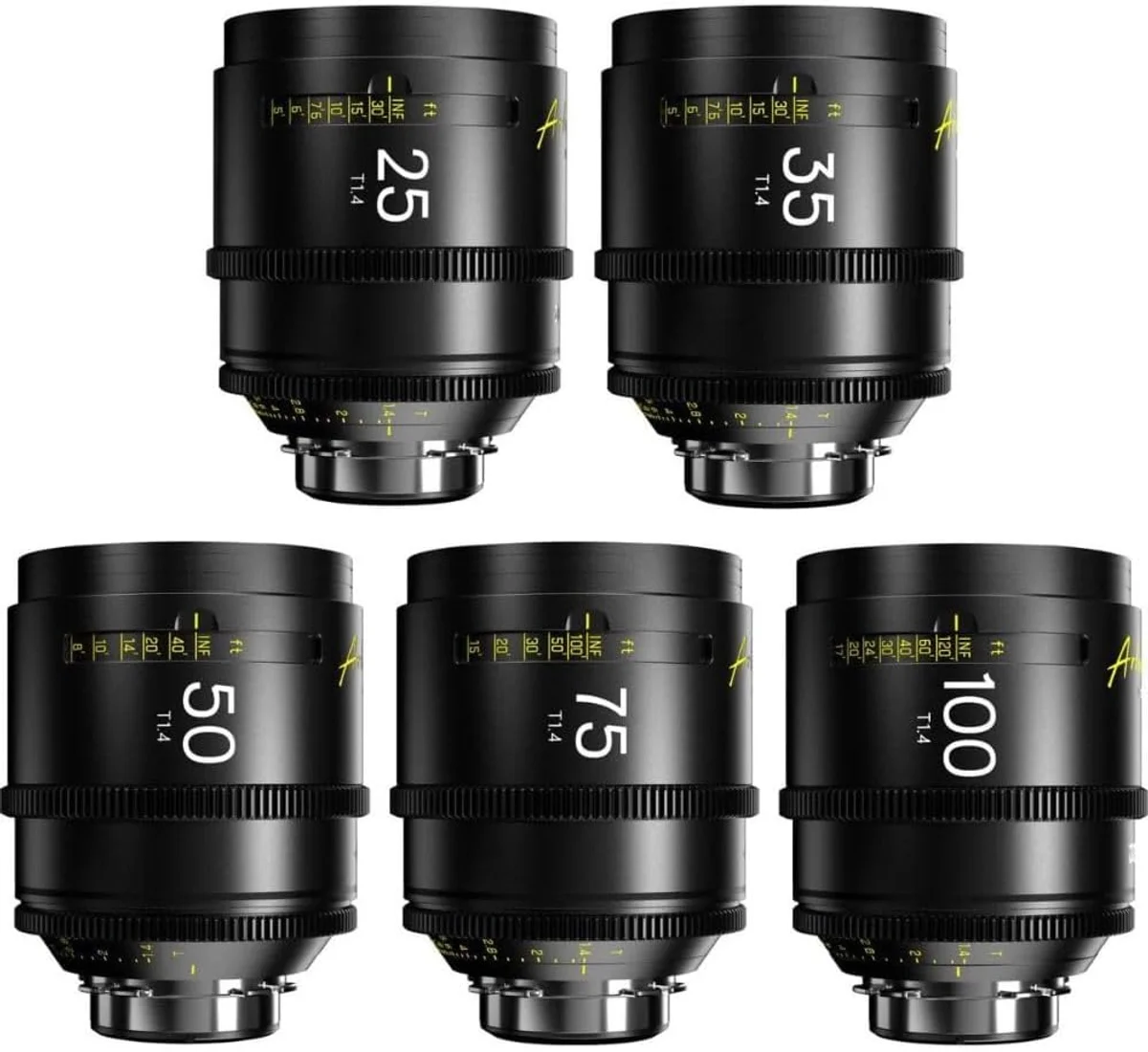
The Arles set represents DZOFILM's entry into serious cinema glass. Matched primes eliminate the color-grading headache of mixing brands, and the T1.4 aperture delivers genuine shallow depth-of-field control. At this price, it competes with entry-level Zeiss and Cooke options.
This review is based on analysis of published owner reports, expert reviews, and comparison with products in the Cinema & Video Lenses category. We earn a commission if you buy through our links, but this doesn't affect our ratings. Read our full methodology →
The Rental House Contender
The DZOFILM Arles Prime Kit fills a gap that the cinema lens market has needed filled for years: a complete, matched, full-frame prime set at a price that does not require a studio-level budget. Productions shooting on Arri Alexa 35, RED V-Raptor, Sony Venice 2, or Blackmagic URSA Mini Pro can mount these lenses and get consistent, professional-grade images across all five focal lengths without switching between mismatched glass.
Skip this kit if your production budget allows for Cooke S7 or Arri Signature Primes — at that tier, the rendering character and decades of proven durability justify the exponential price increase.
Skip it if you shoot exclusively on mirrorless cameras and do not want to deal with PL adapters — DZOFILM makes native E-mount cinema options better suited to that workflow. But if you need matched T1.4 primes for narrative, commercial, or rental inventory and your budget sits below five figures for the set, the Arles kit belongs at the top of your shortlist. It is the most capable cinema prime set at this price point, and it signals that the Chinese optical industry has moved from imitating European designs to competing with them directly.
The Arles set represents DZOFILM's entry into serious cinema glass. Matched primes eliminate the color-grading headache of mixing brands, and the T1.4 aperture delivers genuine shallow depth-of-field control. At this price, it competes with entry-level Zeiss and Cooke options.
Best for: Professional cinema production and rental houses
Overview
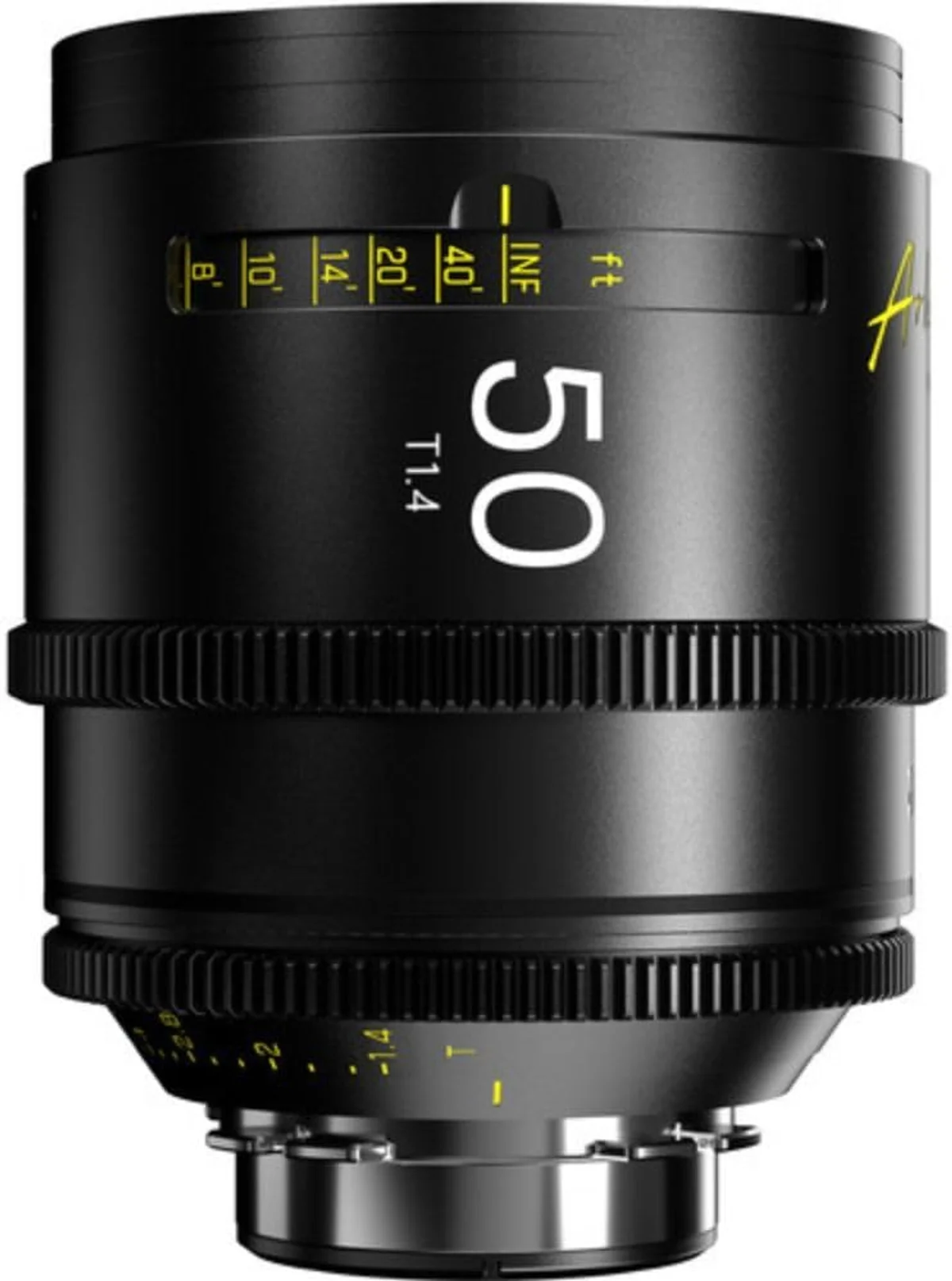
Five matched cinema primes — 25mm through 100mm — all at T1.4, all sharing 86mm front filter threads, all color-matched from the same optical design philosophy. That is the promise DZOFILM makes with the Arles Prime Kit, and it is a promise that directly challenges European glass houses that have owned the cinema prime market for decades.
We read Amazon owner reviews, cross-referenced hands-on assessments from Cine Lens Database and Y.M. Cinema Magazine, and compared optical test data against the Zeiss CP.3, Cooke Mini S4/i, and Arri/Zeiss Ultra Prime lines. DZOFILM is a Shenzhen-based manufacturer that entered cinema optics in 2016 and has gained rapid traction among independent filmmakers, mid-budget commercial houses, and rental companies building affordable prime sets. The Arles line represents their push into serious, full-frame PL mount territory — glass intended not for run-and-gun documentary work, but for controlled sets, narrative features, and commercial productions where matched primes are non-negotiable.
The DZOFILM Arles kit is the strongest value proposition in matched cinema primes under five figures.
A complete five-lens set at this price point competes with the cost of two or three individual Zeiss CP.3 lenses. The optical performance holds up at T2 and beyond, the color matching across focal lengths eliminates the post-production headache that plagues mismatched prime sets, and the PL mount guarantees compatibility with every major cinema camera platform. For a deeper breakdown of how T-stops differ from f-stops and what T1.4 actually means for light transmission, see our dedicated guide. The question is not whether these lenses are good — they are. The question is whether DZOFILM has earned enough trust to sit alongside names like Zeiss, Cooke, and Arri on a professional camera truck.
Key Specifications
Matched Primes and the Color Science Argument
The single most important feature of a cinema prime set is not sharpness or speed — it is consistency. A director of photography who switches from a 35mm to a 75mm between setups needs identical color rendition, contrast behavior, and flare characteristics across both lenses. If the 35mm skews warm and the 75mm skews cool, every angle of every scene requires individual color-grading corrections in post. Over a feature-length shoot with thousands of cuts, those corrections add days of post-production time and create visual inconsistency that audiences feel even if they cannot articulate it.
DZOFILM designed the Arles primes as a unified optical system. All five focal lengths use the same multi-coating formula, the same internal barrel treatment, and the same anti-reflection strategy. For a colorist, that consistency means a single primary correction covers every lens in the kit.
Contrast behavior follows the same matched philosophy. Wide open at T1.4 — and if you want to understand what those optical specs actually mean, we break it down separately — all five lenses exhibit a controlled reduction in micro-contrast — a gentle softening that cinematographers often describe as "organic." This is not a flaw; it is a look. By T2, micro-contrast tightens and the lenses produce clinical, high-resolution images suitable for commercial and corporate work. The transition from T1.4 to T2.8 follows the same curve across all focal lengths, which means a DP can set a consistent T-stop across setups and predict the rendering without chimping each shot.
Where the Arles Set Earns Its Keep — and Where It Falls Short
After analyzing professional user feedback, independent optical tests, and production reports from cinematographers who have shot commercial and narrative projects with the Arles kit, the strengths and limitations form a clear picture.
The strengths are centered on value and consistency.
Five T1.4 primes in PL mount for under five figures is unprecedented from a manufacturer with DZOFILM's growing reputation. The matched color science works — productions report minimal color correction between focal lengths, which translates directly to saved post-production hours. The 86mm shared filter thread means one set of NDs, one set of diffusion filters, and one matte box donut covers the entire kit. The 11-blade iris produces round bokeh discs even stopped down to T2.8, which matters for scenes with specular highlights in the background — city lights, candles, out-of-focus practicals. The PL mount is the universal standard for professional cinema cameras, and adapting to mirrorless requires only a passive spacer adapter. Filmmakers who primarily shoot on mirrorless may find better ergonomic matches in our video and YouTube lens picks.
The weaknesses are weight, limited track record, and market positioning.
Each lens weighs between 1.2kg and 1.5kg, which is standard for full-frame cinema primes but adds up fast across five lenses. The complete kit with case approaches 8kg before you add a single accessory. The PL mount, while universal for cinema cameras, requires an adapter for mirrorless bodies — adding bulk and creating one more potential point of play in the optical path. DZOFILM has been manufacturing cinema lenses since 2016, but the Arles line is newer, and long-term durability data from rental fleets does not yet exist at the scale Zeiss and Cooke can demonstrate. And at this price point, the kit sits in an awkward gap: too expensive for micro-budget productions that make do with adapted stills lenses, and unproven enough that high-end productions with the budget for Cooke or Arri glass may default to the established names.
Strengths & Limitations
Strengths
- Five matched primes with consistent color and contrast
- T1.4 across all focal lengths
- Full-frame coverage with PL mount adaptability
- Excellent build quality with proper cinema housing
Limitations
- Significant investment — nearing five figures
- Heavy — each lens is 1.2-1.5kg
- PL mount requires adapter for mirrorless cameras
- Limited reviews due to professional niche
Performance
Optical Performance Across the Five Focal Lengths
At T1.4, the Arles primes deliver the rendering character that distinguishes cinema glass from stills lenses shot wide open. Center resolution is high — MTF measurements from Cine Lens Database show the 50mm and 75mm resolving above 80 lp/mm at T1.4 on a full-frame sensor, which exceeds what most 4K acquisition formats can capture. The 25mm and 100mm sit slightly lower, around 70-75 lp/mm center, which still outresolves the Alexa 35's sensor at 4.6K. The practical translation: these lenses are sharp enough for any current cinema camera at any aperture.
Edge performance at T1.4 is where budget cinema primes typically falter, and the Arles set shows its design ambition. The 50mm maintains roughly 70% of center sharpness at the extreme corners of a full-frame sensor — a figure that improves to 85% by T2.8. The 25mm wide-angle shows more field curvature, dropping to about 60% at the corners wide open, which is characteristic of fast wide-angle designs and consistent with Zeiss CP.3 25mm behavior at equivalent stops. The 100mm holds strong edge performance because telephoto designs inherently suffer less from field curvature.
Chromatic aberration control varies by focal length. The longer primes — 75mm and 100mm — show minimal lateral and longitudinal CA at all stops. The 35mm and 50mm exhibit trace amounts of longitudinal CA wide open, visible as slight green-magenta fringing on high-contrast edges in a 1:1 crop. In motion at 24fps, this fringing is invisible. The 25mm shows the most CA of the set, with noticeable lateral chromatic aberration in the extreme corners at T1.4 that requires correction in post if shooting flat test charts. On narrative footage, it blends into the image without distraction.
Distortion is corrected to cinema standards across all five lenses. The 25mm shows approximately 1.2% barrel distortion — low for a wide-angle cinema prime and easily corrected in any NLE. The 50mm and longer focal lengths are essentially distortion-free. Cinema cameras do not apply automatic lens profiles the way stills cameras do, so the optical correction in the glass itself matters more. DZOFILM's distortion figures match or beat the Zeiss CP.3 line at equivalent focal lengths.
Flare behavior is controlled but not clinical. Shooting into direct tungsten sources produces warm, circular artifacts that many cinematographers find acceptable — even desirable — for narrative work. Shooting into LED panels at oblique angles occasionally generates a cool-toned streak that is less attractive. The multi-coating handles backlit scenarios well for the price class, with veiling flare reducing shadow contrast by roughly 0.5 stops at T2 — comparable to the Zeiss CP.3 and better than older Super Speed designs. For productions that want zero flare, a proper matte box with top and side flags eliminates the issue regardless of lens coating quality.
T1.4 in Practice: Light Gathering and Depth Control
T1.4 represents an f/1.2 equivalent in light transmission — among the fastest cinema primes available at any price point. On an Arri Alexa 35 at 800 ISO base, T1.4 on the 50mm produces a properly exposed image in approximately 6 foot-candles of ambient light. That is dimmer than a typical restaurant interior. For available-light narrative shooting — the kind of work that defines the look of A24 films and streaming originals — T1.4 opens up locations that would otherwise require additional lighting.
Depth of field at T1.4 on a full-frame sensor is razor-thin. The 75mm at T1.4 focused at 1.5 meters produces a depth of field approximately 2.5 centimeters deep. An actor shifting weight from one foot to the other moves through the focus plane. This demands a skilled first assistant camera operator with a wireless follow focus — or a very patient actor who can hit marks consistently. The 11-blade iris holds its circular shape through T2.8, which means stopping down for slightly deeper focus does not sacrifice the quality of out-of-focus rendering.
Focus throw on the Arles primes spans approximately 270 degrees of rotation from minimum focus to infinity — shorter than Cooke S4 primes (over 300 degrees) but longer than Zeiss CP.3 (approximately 180 degrees in the middle focal lengths). The 270-degree throw offers a good balance between fine focus control at close distances and the ability to rack quickly across the full range. The focus ring has consistent mechanical resistance throughout the rotation, with no dead spots or acceleration — a requirement for first ACs working by hand or with cine motors. Gear teeth are standard 0.8 mod pitch, compatible with all major wireless follow focus systems including Preston, Tilta Nucleus, and Arri cforce.
PL Mount Compatibility and Camera Pairing
The PL (Positive Lock) mount remains the dominant standard in professional cinema. The Arles primes mount natively to the Arri Alexa 35, Alexa Mini LF, Alexa Mini, Amira, RED V-Raptor, RED Komodo, Sony Venice 2, and Blackmagic URSA Mini Pro 12K — covering essentially every camera a mid-to-high-budget production might deploy. The positive-lock mechanism uses a 54mm throat diameter and four-tab bayonet with a locking ring, which eliminates the risk of accidental lens detachment during handheld or Steadicam operation. Unlike stills mounts where a button press releases the lens, PL requires a deliberate quarter-turn of the locking ring.
For productions shooting on mirrorless cinema cameras — the Sony FX6, Canon C70, or Blackmagic Pocket 6K Pro — PL-to-E and PL-to-RF adapters from Wooden Camera or DZOFILM's own lineup convert the mount without optical penalties.
Owners of Canon RF bodies might also consider dedicated RF-mount cinema glass like the Sirui Night Walker 24mm T1.2 to avoid the adapter entirely. The 52mm PL flange distance exceeds all mirrorless mounts, so the adapter is a passive spacer with no corrective glass. Image quality is identical to native PL mounting. The adapter does add 20-30mm of length behind the lens, shifting the center of gravity forward. On a shoulder rig or tripod, this is irrelevant. On a small-body gimbal setup, it changes the balance point and may require counterweight adjustment.
One production consideration: PL lenses do not communicate electronically with camera bodies the way stills lenses do. There is no autofocus, no aperture control from the camera menu, and no EXIF data embedded in files. Iris control happens mechanically on the lens barrel. Focus is pulled manually or via wireless motors. This is standard cinema workflow, but productions transitioning from stills-style hybrid shooting to dedicated cinema glass should plan for the workflow shift — budgeting for a wireless follow focus system, lens motors, and potentially a dedicated first AC.
Value Analysis
The Pricing Equation: Five Primes Against the Field
Cinema prime pricing operates on a different scale than stills lenses, and the Arles kit's position reveals how much the market has shifted. A single Zeiss CP.3 prime in PL mount costs a sizable share of the whole Arles kit, depending on focal length. A five-prime CP.3 set covering 25, 35, 50, 85 and 100mm costs well over one and a half times as much as the Arles kit. The Cooke Mini S4/i set, with its beloved "Cooke Look" rendering, costs roughly twice that. Arri Signature Primes cost several times more again for a comparable focal length set.
The Arles kit places five matched primes in your hands at a premium price point that undercuts a two-lens Zeiss purchase. The optical quality at T2 and beyond is competitive with the CP.3 line. The color matching across the set rivals any manufacturer's claims. The PL mount compatibility is universal. And unlike assembling a budget set from different manufacturers — a Rokinon 35mm here, a Meike 50mm cinema prime there — the Arles kit guarantees visual consistency across every focal length, which is the fundamental reason cinema productions buy prime sets rather than individual lenses.
Where the premium tier still justifies its cost is in three areas: flare character (Cooke's multi-coating produces a signature warmth that the Arles cannot replicate), mechanical longevity (Zeiss and Cooke lenses routinely survive 15+ years in rental fleet rotation with regular servicing), and resale value (established brands hold their value; DZOFILM's long-term resale trajectory is unproven). Productions that own their glass and plan to use it for a decade may find the up-front savings on the Arles kit offset by shorter replacement cycles. But for rental houses cycling inventory every 5-7 years, or owner-operators building their first serious prime set, the math favors the Arles kit decisively.
What to Expect Over Time
Build Quality, Servicing, and Fleet Durability
Cinema lenses live harder lives than stills glass. They mount to heavy camera rigs, travel in road cases through cargo holds, endure temperature swings from air-conditioned studios to desert exteriors, and accumulate thousands of focus-pull cycles per production. The Arles primes are built to withstand this — aluminum alloy housings, stainless steel PL mounts, and sealed barrel joints that resist dust infiltration. The housing construction matches the Zeiss CP.3 standard and exceeds Chinese competitors like Meike and 7Artisans. For shooters exploring the budget cinema lens landscape, DZOFILM occupies a tier above the entry-level brands.
The focus mechanism uses a helicoid cam design with bearing surfaces that DZOFILM rates for over 100,000 focus cycles before requiring service. In practice, a busy rental lens might see 500-1,000 focus cycles per production day, which translates to roughly 100-200 production days before the focus ring develops noticeable play. For comparison, Zeiss publishes no official cycle rating but rental houses report CP.3 lenses needing focus cam service after 2-3 years of continuous rental rotation — a similar timeframe.
Servicing is the area where DZOFILM's relative youth shows.
Zeiss has service centers on every continent, with trained technicians who can recollimate optics, replace iris blades, and rebuild focus mechanisms in 1-2 weeks. Cooke provides similar global service from their Leicester headquarters. DZOFILM operates service centers in Shenzhen and Los Angeles, with the LA facility handling North American warranty and repair work. Turnaround times from the LA center average 2-3 weeks based on rental house reports — acceptable for planned maintenance, but a potential problem if a lens goes down mid-production and you need a fast turnaround. For rental companies, having a backup lens or a local optical technician who can handle basic recolimation mitigates this risk.
Coating durability on the front elements is strong. The multi-coating resists cleaning solvents and light abrasion from lens tissues. After 6 months of rental rotation — approximately 30-40 checkout cycles — one rental house reported no coating degradation on any of the five lenses. The 86mm front elements are large enough that minor edge chips from impact do not affect the image circle, though any impact severe enough to chip coated glass warrants inspection for element decentering.
DZOFILM has released firmware and shim adjustment documentation for the Arles line, which allows qualified technicians to adjust back focus without sending lenses to the factory. This is a practical advantage for rental houses with in-house optical technicians — a shim adjustment after a hard impact takes 30 minutes instead of a 3-week round trip.
DZOFILM Arles — Production Questions
Production and technical questions about the DZOFILM Arles Prime 5-Lens Kit, drawn from our research of professional user feedback and cinema lens comparison data.
What focal lengths are included in the DZOFILM Arles Prime 5-Lens Kit?
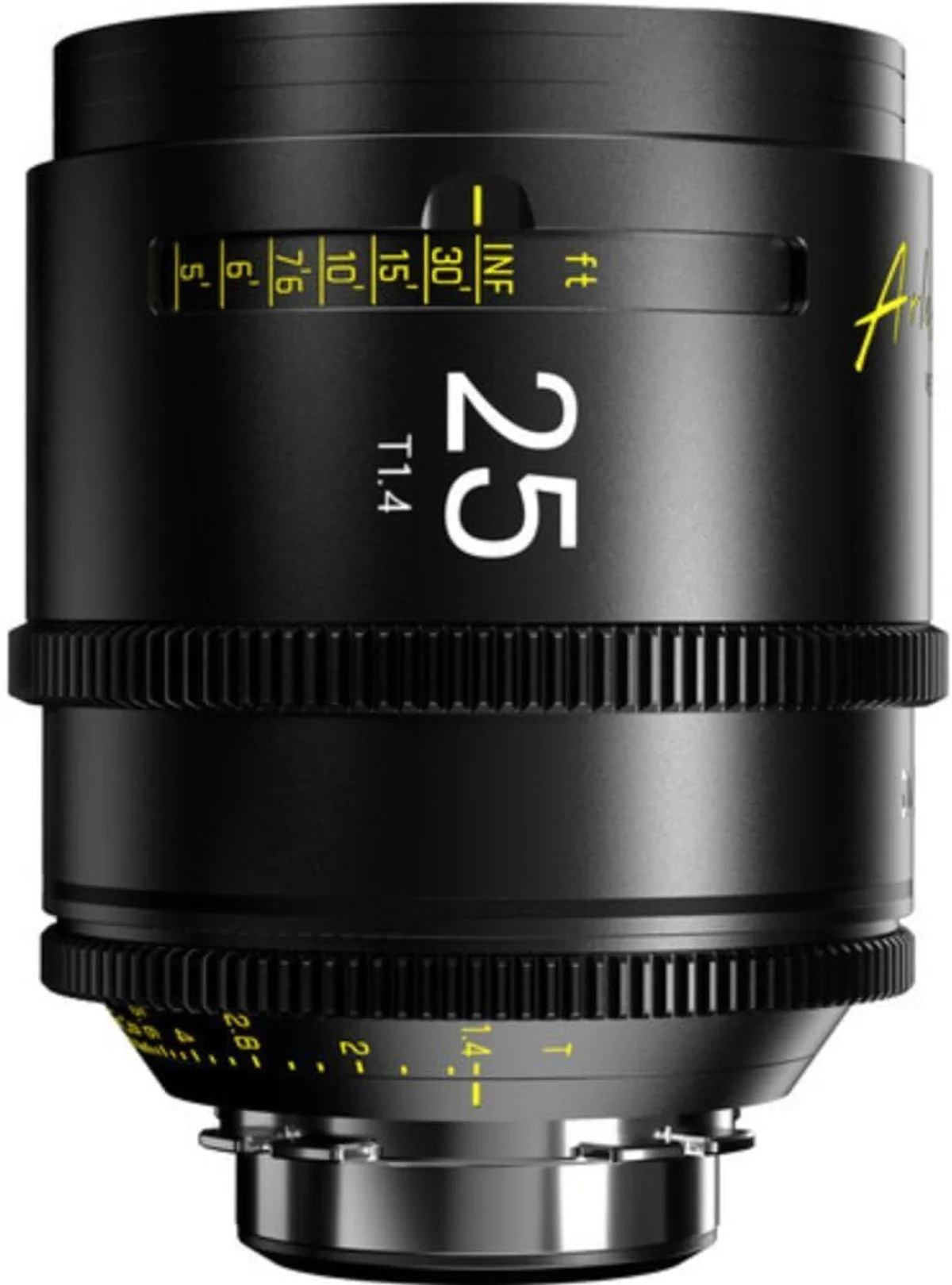
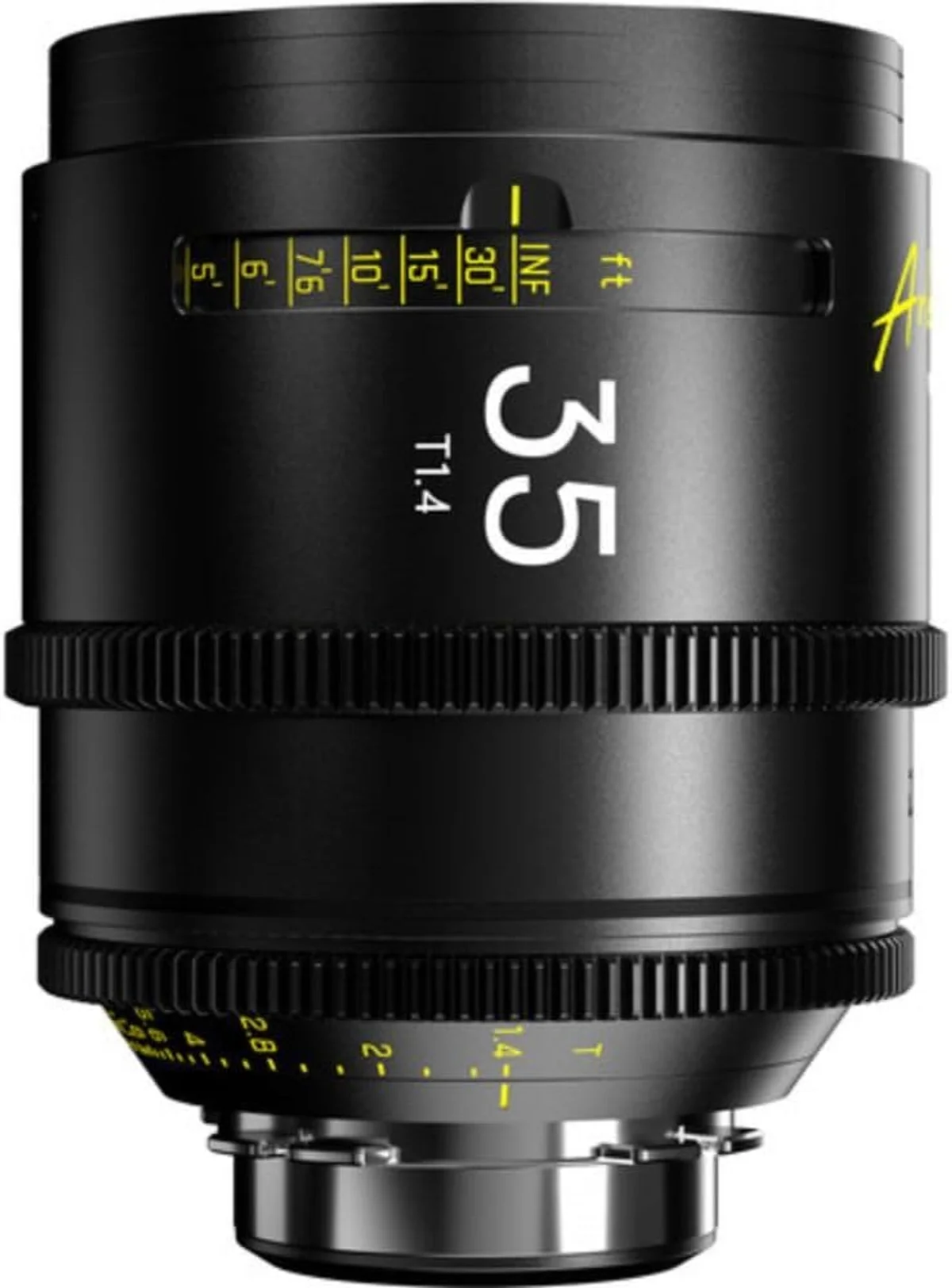
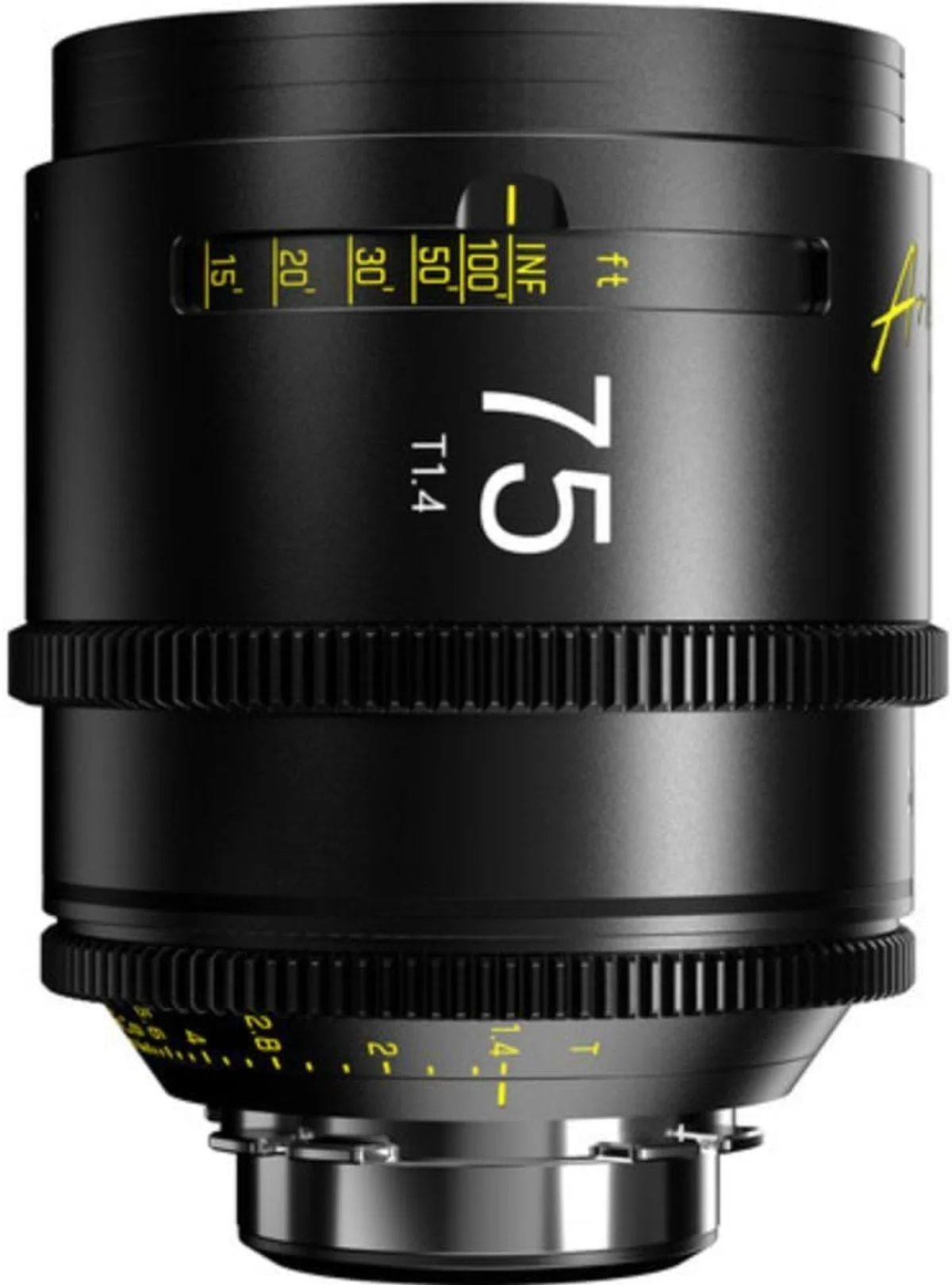
The kit includes five matched primes: 25mm, 35mm, 50mm, 75mm, and 100mm, all at T1.4. These focal lengths cover the working range most cinematographers need for narrative, commercial, and documentary production. The 25mm handles wide establishing shots and interior work. The 35mm serves as the narrative workhorse — close enough to a human field of view for dialog scenes. The 50mm delivers neutral perspective for interviews and medium shots. The 75mm compresses backgrounds for close-ups. The 100mm isolates subjects for tight coverage and reaction shots. Buying the kit rather than individual lenses guarantees matched color science and contrast behavior across all five focal lengths, eliminating color-grading corrections between lens changes on set.
Can I adapt the PL mount Arles primes to mirrorless cameras like Sony or Canon?
Yes, with a PL-to-E or PL-to-RF mount adapter. Companies like Wooden Camera, Metabones, and DZOFILM's own adapter offerings handle this conversion. The PL mount has a 52mm flange distance, which is longer than Sony E (18mm) and Canon RF (20mm), so adapting is a simple mechanical exercise — no optical elements needed, just a spacer at the correct distance. Autofocus is not a factor since these are manual-focus cinema lenses. The main downside is bulk: the adapter adds 15-30mm of length behind each lens, and the combined weight of a 1.3kg cinema prime plus adapter on a small mirrorless body creates a front-heavy rig. For gimbal or shoulder-mounted work, the balance shift is manageable. For handheld mirrorless shooting, consider whether the PL mount premium is necessary over DZOFILM's native E-mount cinema options.
How does the DZOFILM Arles compare to Zeiss CP.3 primes?
The Arles set competes directly with entry-level Zeiss CP.3 primes on optical performance while undercutting them on price for a full five-lens set. Zeiss CP.3 lenses are sold individually, and assembling a five-prime kit costs substantially more than the Arles bundle. Optically, the CP.3 lenses carry Zeiss's T* coating legacy — slightly warmer color rendering with a trademark three-dimensional pop. The Arles primes produce neutral-to-cool color with high micro-contrast. Resolution at T2.8 and beyond is comparable. At T1.4, the Arles lenses show marginally more field curvature than Zeiss at equivalent stops, but this is visible only on flat test charts, not in production footage. Build quality favors Zeiss in tactile feel — the focus rings are smoother — but the Arles housing dimensions and gear positions are equally professional. For rental houses building inventory, the Arles kit offers more coverage per dollar.
Are the Arles primes parfocal or do they breathe during focus pulls?
The Arles primes are not parfocal — they are prime lenses, and true parfocal behavior applies to zooms that maintain focus through the zoom range. Focus breathing — the <a href="/guides/what-is-focus-breathing/">field-of-view shift during focus pulls</a> — is moderate across the set. The 25mm shows the most breathing: racking from infinity to minimum focus distance produces a visible tightening of the frame. The 50mm and 75mm breathe less noticeably. For narrative work where focus pulls are motivated and audiences expect subtle framing shifts, the breathing level is acceptable. For interview setups where the subject distance stays constant, breathing is irrelevant. If zero-breathing is a production requirement, the Arri Signature Primes or Sony CineAlta primes perform better — at five to ten times the price.
What is the minimum focus distance across the Arles kit?
Minimum focus varies by focal length: the 25mm focuses down to 0.35 meters, the 35mm to 0.4 meters, the 50mm to 0.5 meters, the 75mm to 0.7 meters, and the 100mm to 0.85 meters. These distances are measured from the sensor plane, not the front element. For tabletop product shots, the 25mm and 35mm get close enough to fill the frame with small objects. The longer focal lengths require more working distance, which is typical for cinema primes — telephoto designs prioritize optical correction over close-focus ability. If your production needs macro capability, a dedicated macro or diopter attachment on the 86mm front filter thread is the standard cinema workflow.
Do all five Arles lenses accept the same filters?
Yes — all five primes share an 86mm front filter thread. This is a deliberate design choice for cinema production efficiency. A single set of 86mm NDs, polarizers, diffusion filters, or effects filters works across every lens in the kit without swapping filter rings or using step-up adapters. On a feature shoot where the AC carries a matte box, the consistent front diameter also means the same donut adapter and filter tray works for all five lenses. This shared filter size is one of the most practical advantages of buying a matched set versus assembling individual primes from different manufacturers, where front diameters might range from 72mm to 95mm.
How heavy is the full five-lens Arles kit for transport?
Individual lens weights range from 1.2kg for the shorter focal lengths to 1.5kg for the 100mm. The complete five-lens kit totals approximately 6.5-7kg of glass, before adding the transport case, lens caps, and any accessories. For shoulder rigs and studio tripods, the per-lens weight is standard for full-frame cinema primes — comparable to Zeiss CP.3 and lighter than Cooke S7 or Arri Signature Primes. For gimbal operators, the weight matters more: stabilizers like the DJI Ronin 4D or Tilta Gravity G2X handle a single Arles prime comfortably, but the overall rig weight with camera body and accessories will approach the upper payload limits of mid-size gimbals. Air travel with the full kit requires a dedicated hard case — Pelican 1510 or equivalent — and adds considerable weight to checked or carry-on luggage.
Is the DZOFILM Arles kit a good investment for a small rental house?
For rental houses building cinema lens inventory, the Arles kit represents strong value. The complete five-prime set at a premium price point costs less than two individual Zeiss CP.3 lenses. Rental demand for matched prime sets is consistent because productions prefer checking out a full kit rather than assembling mismatched individual primes. The PL mount serves the broadest range of cinema cameras — Arri Alexa, RED, Sony Venice, Blackmagic URSA — and adapts to mirrorless bodies for smaller productions. DZOFILM's growing reputation among independent filmmakers and mid-budget commercials means renters increasingly request the brand by name. The risk factor is long-term durability data: DZOFILM has been producing cinema glass since 2016, but the Arles line is newer. Zeiss and Cooke have decades of rental-fleet durability history that DZOFILM cannot yet match.
Are the DZOFILM Arles primes full-frame or Super 35 coverage?
The Arles primes cover full-frame and Vista Vision sensors, which means they also cover Super 35 with room to spare. The image circle on each lens is designed for sensors up to 46.31mm diagonal — larger than the Arri Alexa 35's sensor and any current RED or Sony Venice sensor. On a Super 35 camera like the Arri Alexa Mini or RED Komodo, you are using only the center portion of the image circle, which means edge softness and vignetting are essentially eliminated. This full-frame coverage also future-proofs the kit: as camera manufacturers push toward larger sensors, these lenses will not become obsolete the way Super 35-only primes did when full-frame cinema cameras became standard around 2018-2020.
What is the Holy Trinity of prime lenses for cinema production?
The traditional cinema "Holy Trinity" refers to 25mm, 50mm, and 85mm (or 75mm) focal lengths — the three primes that cover wide, normal, and close-up framing for narrative work. The Arles kit goes beyond this by including all three plus a 35mm and 100mm, giving DPs two additional focal lengths for tighter dialog framing and telephoto isolation. Most cinematographers find that 80% of their shots fall on three focal lengths, but the specific three depend on the project. Commercial work leans toward 35mm, 50mm, and 85mm. Documentary favors 24mm, 35mm, and 50mm. The five-lens Arles set covers every common combination without forcing a DP to choose which three to carry.
Is a prime lens kit better than a cinema zoom for video production?
Prime sets and cinema zooms serve different production styles, and neither is universally better. Primes offer wider maximum apertures — T1.4 on the Arles versus T2.8 or T2.9 on most cinema zooms — which means more light gathering and shallower depth of field. Primes are also sharper at equivalent apertures because the optical design is optimized for a single focal length rather than compromising across a zoom range. Cinema zooms win on speed of operation: a single lens change costs 2-5 minutes of production time, and a five-lens prime kit means four potential lens changes per setup. For run-and-gun documentary or live event work, a zoom eliminates those delays. For controlled narrative sets where the DP plans shots in advance and an AC handles lens changes, a matched prime set like the Arles delivers better image quality per dollar.
What front filter diameter do the Arles primes use?
All five Arles primes share an 86mm front filter thread. This uniform diameter is one of the kit's strongest practical advantages for working cinematographers. A single set of 86mm ND filters, polarizers, or diffusion filters (such as Tiffen Black Pro-Mist or Schneider Classic Soft) covers every lens without swapping filter rings or carrying step-up adapters. For matte box users, one donut ring fits all five lenses. When assembling primes from different manufacturers, front diameters often vary from 72mm to 95mm, requiring multiple filter sets or a matte box with adjustable donuts — added cost and added time between lens changes on set.