Budget Cinema Lenses: Cine Glass Under $1,000
Cinema lenses used to mean five-figure price tags. ARRI Master Primes cost more than most cars. The idea of "budget cinema" was a contradiction in terms.
That changed around 2018-2020, when manufacturers like SIRUI, Meike, 7Artisans, and DZOFilm proved that cinema-specific features — T-stop calibration, clickless aperture, standard focus gears, controlled breathing — could be built at a fraction of traditional prices. You can now outfit a three-lens cinema kit for a small fraction of what it would have cost a decade ago.
The optical quality won't match a set of Canon CN-E primes or Zeiss Supreme Radiance glass. But for indie narrative work, short films, music videos, and YouTube production, budget cinema glass delivers real cinematic characteristics that no photo lens can replicate regardless of price.

What Makes a Lens "Cinema"
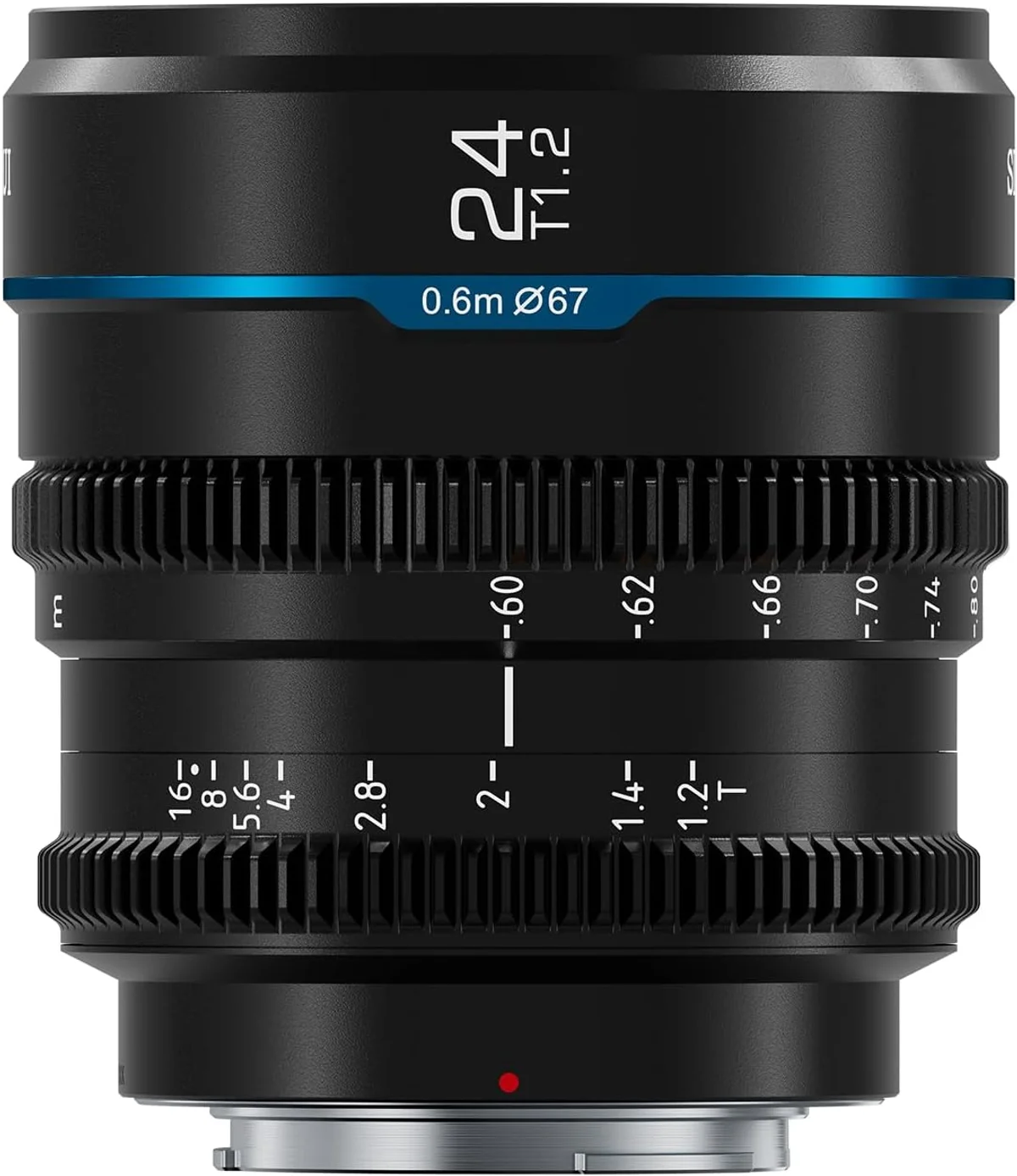
The word "cinema" on a lens isn't marketing decoration (usually). It signals specific design priorities that differ from photo lenses:
- T-stop markings: Aperture marked in actual light transmission, not geometric ratio. Two cinema lenses at T2.0 deliver identical exposure, regardless of focal length or optical design. Photo lenses marked at f/2.0 may transmit different amounts of light.
- Clickless aperture ring: The iris adjusts smoothly without detent clicks. This allows gradual, silent exposure changes during a shot. Photo lens aperture clicks are audible on in-camera audio and create sudden exposure jumps.
- Standard gear positions: The focus and iris rings have teeth cut at a standard pitch (typically 0.8 mod) so follow-focus motors and wireless units fit without custom adapters. Every lens in a cinema set uses the same gear position, meaning you don't re-mount the follow focus when swapping lenses.
- Long focus throw: Cinema lenses offer 270° or more of focus ring rotation compared to 90-120° on most photo lenses. This extended throw gives the focus puller fine control over precise distances — essential for rack focuses between actors at known marks.
- Controlled breathing: The focal length stays consistent as you change focus distance. Background objects don't zoom in or out during focus pulls, maintaining the illusion that the camera is stationary.
- Matched front diameter: All lenses in a cinema set share the same front filter size, so matte boxes and filter trays don't need adjustment between lens swaps.
Budget Cinema Lens Categories
Full Manual Cinema Primes (Half the Budget Per Lens)
These are dedicated cinema designs — manual focus, T-stop markings, cine housing — at prices that compete with mid-range photo primes. They sacrifice autofocus and electronic aperture control entirely. Everything is manual, as cinema tradition demands.
Meike Cinema Prime Series: Available in T2.2 variants for MFT, Super 35, and Full Frame — we reviewed the Meike 50mm T2.2 for Micro Four Thirds as a representative of the lineup. The most affordable dedicated cinema primes on the market, and even full sets (5-6 lenses) stay affordable. T-stop accuracy is within 1/4 stop across the set. Sharpness is good center-frame, with visible softness at the extreme corners wide open.
7Artisans T1.05 Cinema Primes: Ultra-fast T1.05 maximum aperture for extreme shallow depth of field. Available in 25mm, 35mm, 50mm, and 75mm. The wide T-stop requires accepting more optical compromises than slower lenses — expect visible vignetting and some chromatic aberration at T1.05. Stopped down to T2.0, they tighten up well.
DZOFilm Vespid Primes: Slightly pricier per lens than the Meike primes, but the quality justifies the stretch. Full-frame coverage, EF mount (adaptable everywhere), and genuinely good optical performance. The Vespids are the entry point where budget cinema glass starts approaching mid-range optical quality. For productions that need even higher-end DZOFilm glass, the DZOFilm Arles 5-lens prime kit at T1.4 delivers full-frame PL-mount performance in a matched set.
Anamorphic Options (Under $1,000)
Anamorphic lenses squeeze a wider horizontal field of view onto a standard sensor, then the image is de-squeezed in post to produce a ultra-wide aspect ratio with distinctive oval bokeh, horizontal lens flares, and a stretched-perspective look associated with Hollywood cinematography.
SIRUI 1.33x Anamorphic Series: The 24mm f/1.8, 35mm f/1.8, 50mm f/1.8, and 75mm f/1.8 are the most accessible anamorphic lenses ever made. The 1.33x squeeze factor turns 16:9 footage into 2.4:1 widescreen. Optical quality is good for the price — the anamorphic look (blue streak flares, oval bokeh, slight edge distortion) is authentic. Available in multiple mounts including Sony E, Canon RF, MFT, and Nikon Z.
Vazen 1.33x Anamorphic: A step up in optical quality from the SIRUI at a slightly higher price. Available in 28mm, 40mm, and 65mm. Sharper corner-to-corner than the SIRUI alternatives, with more controlled flare characteristics. Limited mount options compared to SIRUI.
Cine-Modified Photo Lenses
Rather than designing cinema optics from scratch, several companies rehouse existing photo lens designs in cinema-style bodies. You get the optical quality of a proven photo lens with the physical features filmmakers need.
Viltrox AF Cinema Primes: Based on their photo prime optics with cinema housings. The advantage over fully manual cinema glass: autofocus is retained for run-and-gun situations where manual pulling isn't practical. Available in Sony E-mount with more mounts planned.
Canon EF "pancake" cine kits: The Canon EF 24mm f/2.8 STM and 40mm f/2.8 STM are tiny, sharp pancake lenses that cine modders love. Companies sell rehousing kits that add cinema gears, T-stop markings, and a standardized barrel diameter. Total cost: a used lens plus a mod kit, which together still cost less than most of the dedicated cinema primes above. The catch: you need mechanical aptitude to install the kit, or pay for professional rehousing.

What Budget Cinema Glass Sacrifices
Every budget means compromises. Here's what you're giving up at this price point compared to mid-range and premium cinema glass:
T-stop accuracy. Premium cinema lenses hit their marked T-stops within 1/10 stop. Budget lenses may be off by 1/4 to 1/3 stop. For single-lens setups this doesn't matter. For multi-lens narrative work, you'll need to verify each lens's actual T-stop and compensate, or accept minor exposure variations between cuts.
Breathing control. Budget cine lenses breathe less than photo lenses (by design), but more than mid-range and premium cinema glass. The SIRUI anamorphic shows visible breathing at close focus distances. For slow, deliberate rack focuses in a controlled environment, this matters. For fast-paced shooting with minimal racks, it's a non-issue.
Build consistency. Premium cinema lenses are individually calibrated and tested. Budget lenses may have greater unit-to-unit variation in focus ring torque, T-stop accuracy, and optical performance. Test each lens before committing to a production. Some budget lens owners report that their copy is sharper or softer than review samples suggested — this sample variation is the price of manufacturing cost reduction.
Color science matching. High-end cinema lens sets are designed so every lens in the range renders color identically. Budget sets may show subtle warm/cool shifts between focal lengths. This is correctable in post-production with LUTs or color grading, but it adds work that premium glass eliminates.
Building Your First Cinema Kit on a Budget
Here's a practical progression from zero cinema glass to a working set:
Stage 1 — One lens: Start with a single 24mm or 35mm cinema prime. The wide angle covers establishing shots, interviews, and B-roll. Learn to pull focus manually, understand T-stops, and work with follow-focus systems. The SIRUI 24mm f/1.8 Anamorphic is our pick at this stage if you want the anamorphic look. See our full cinema lens roundup for all options ranked by value. A Meike 25mm T2.2 works well if you prefer standard spherical.
Stage 2 — Add a 50mm: The 50mm covers medium shots, dialogue close-ups, and product work. With a 24mm and 50mm, you have two-thirds of the classic three-lens narrative kit. If your 24mm and 50mm are from the same manufacturer and series, they'll match in color rendering and physical dimensions.
Stage 3 — Complete with an 85mm: The short telephoto gives you tight close-ups, compression for emotional emphasis, and options for shallow depth of field work. Three focal lengths (24, 50, 85) cover the vast majority of narrative filmmaking focal length needs.
Total for a matched three-lens cinema kit: about three times the cost of that first lens. Five years ago, this level of cinema-specific functionality would have cost several times as much, even with entry-level options from Rokinon XEEN or similar. MFT shooters building a compact cinema rig should also consider the Panasonic Leica DG Summilux 9mm f/1.7 as an ultra-wide option with autofocus — unusual in this category.
Photo Lenses vs Budget Cinema Lenses for Video Work
A common question for filmmakers starting out: should I buy budget cinema glass or use my existing photo lenses? The answer depends on your production style.
Choose photo lenses if: You shoot primarily run-and-gun, documentary, or one-camera event work where autofocus matters more than manual focus precision. Photo lenses with fast AF systems (Canon RF USM, Sony Linear Motor, Tamron VXD) will track subjects that a manual cinema lens can't. You'll sacrifice focus breathing control and clickless aperture, but you gain AF reliability that can save a shot when things move fast. Photo lenses also tend to focus closer than cinema equivalents, giving you more flexibility for detail shots and tight compositions.
Choose cinema lenses if: You shoot controlled narrative work — scripted scenes with marked actors, planned camera moves, and a dedicated focus puller (even if that focus puller is you using a wireless follow-focus). You also need cinema glass for any production that requires matched exposure across lens changes, which describes most multi-camera shoots and any project with multiple focal lengths used in a single scene.
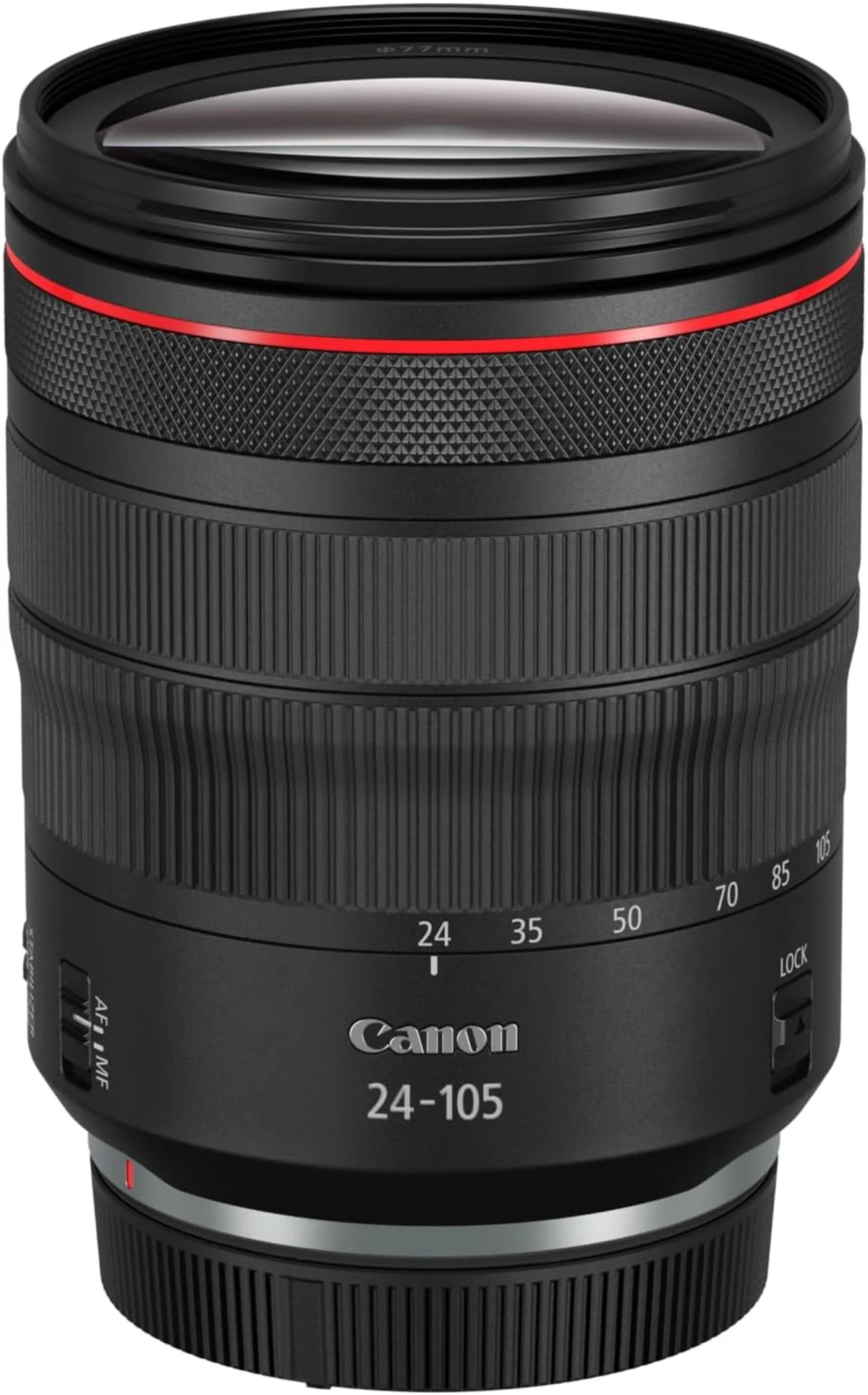
The hybrid approach (most common): Many working filmmakers own both. Cinema primes for A-camera narrative work, and one or two fast photo lenses for B-camera, run-and-gun, and behind-the-scenes coverage. A Canon RF 24-105mm f/4L IS USM handling B-roll while SIRUI anamorphic primes shoot the hero footage is a practical combination that covers production needs without breaking the budget.
Evaluating Cinema Lenses: What to Test Before Committing
Before buying a budget cinema lens (especially used), run these checks:
Focus ring smoothness. The focus ring should feel consistently damped across the entire rotation — no sticky spots, no loose patches, no gritty texture. Inconsistent damping makes precise focus pulls unreliable. On new lenses, a slightly stiff ring loosens with use. On used lenses, a loose ring suggests wear.
Iris ring smoothness. Click the aperture ring through its full range. Budget cine lenses occasionally have iris mechanisms that stick at certain T-stops or feel different between opening and closing. Any inconsistency here shows up as sudden exposure jumps during smooth iris pulls.
Breathing check. Set up a test chart, record video, and rack focus from close to infinity while watching the frame edges. Compare the breathing against the manufacturer's claims. If a "cinema" lens breathes as much as a photo lens at the same focal length, the cinema designation isn't delivering one of its core promises.
Flare characteristics. Point the lens toward a strong light source at various angles. Budget lenses may show unexpected flare patterns (veiling flare, internal reflections) that more expensive glass controls with better coatings. Some flare is desirable (the SIRUI anamorphic's blue streak flares are a feature), but uncontrolled veiling flare reduces contrast and makes images look washed out.
Essential Accessories for Cinema Lenses
Cinema lenses need supporting gear that photo lenses don't:
- Follow focus: A gear-driven system that attaches to lens gears for precise, repeatable focus pulls. Tilta Nucleus-Nano (wireless) is the most popular budget option. SmallRig makes capable wired units for less.
- Variable ND filter: Since cinema uses fixed shutter angles (typically 180° = 1/48s at 24fps), you control exposure through the iris and ND filtration. A variable ND filter is essential for outdoor shooting. The Freewell Step-Up system works well with matched front diameters.
- Matte box: Blocks flare and holds square/rectangular filters. Less critical with modern coatings but gives a professional look and workflow. Tilta Mini Matte Box fits most budget cinema lens front diameters.
- Lens support rail: Heavy cinema lenses need support beyond the camera's lens mount. A 15mm rod system with a lens support bracket prevents mount stress and stabilizes the rig. SmallRig makes solid options across every price point.
Accessories add a smaller sum on top of your lens investment. A working cinema rig (camera, lens, follow focus, ND, and support) built around budget cinema glass costs a fraction of what the same capability cost a decade ago.
Budget Cinema Lens Questions
Common questions about getting started with cinema lenses on a budget.
Can I use regular photo lenses for video?
Yes, and many filmmakers do. Modern mirrorless cameras shoot excellent video through photo lenses. The main drawbacks compared to cinema glass: focus breathing (field of view shifts during focus pulls), clicking aperture rings (audible on audio tracks), and non-standardized gear positions for follow-focus motors. For run-and-gun, interviews, and YouTube content, photo lenses work fine.
What is a cine-modded lens?
A photo lens rehoused in a cinema-style body. Companies like Duclos Lenses and Iron Glass take optical elements from photo lenses (Canon FD, Nikon AI, etc.) and mount them in standardized cinema housings with T-stop markings, clickless aperture rings, standard gear positions, and matched front diameters. You get cinema handling with photo-lens optics at a fraction of purpose-built cinema glass prices.
Should I buy a cinema lens set or individual lenses?
Sets offer matched color rendering, T-stops, front diameters, and gear positions — critical for multi-lens narrative projects. For YouTube, vlogs, and one-camera setups, individual lenses are fine since you rarely swap lenses mid-scene. If budget limits you to one or two focal lengths, buy the ones you need; you can build a matched set later.
Is anamorphic worth it on a budget?
Budget anamorphic lenses (SIRUI 1.33x series, Vazen) deliver the widescreen aspect ratio and distinctive lens flares that characterize cinematic footage. The 1.33x squeeze ratio on a 16:9 sensor produces 2.4:1 widescreen — the standard cinema ratio. The optical quality is slightly below spherical equivalents, but the look is unique and recognizable. Worth it if the aesthetic is central to your work.
What mount should I buy cinema lenses in?
Canon EF mount is the most universal for cinema — it adapts to every mirrorless system (RF, E-mount, Z-mount, MFT) with inexpensive adapters. If you only shoot on one system, native mount avoids adapter bulk and potential AF issues. For manual-focus cinema primes (which most budget options are), the mount adapter adds minimal complication since you are not relying on electronic communication.
How many cinema lenses do I need to start?
Two: a wide (24-28mm) and a standard (50mm). These two focal lengths cover 80% of narrative filmmaking — establishing shots and dialogue coverage. Add a telephoto (85-100mm) for close-ups when budget allows. Starting with three focal lengths and mastering them produces better work than buying five lenses and switching constantly.
Our Top Recommendation
Based on our research, the SIRUI Night Walker 24mm is our top pick — independent filmmakers and budget cinema production.