Nikon F-Mount Lens Compatibility: What Works on Z, What Doesn't
Nikon produced F-mount lenses for 65 years — from the original Nikon F in 1959 through the final F-mount DSLRs. That is the longest unbroken lens mount in 35mm photography history. Millions of F-mount lenses exist in the hands of working photographers, and the question of which ones carry forward to Nikon's Z-mount mirrorless system is not academic. It determines whether a photographer's existing glass retains its value or becomes a shelf display.
The short answer: most F-mount lenses work on Z cameras through the FTZ adapter, but "work" means different things depending on the lens type.
AF-S lenses get full autofocus. AF-D lenses lose autofocus entirely. AI/AI-S manual lenses meter on some Z bodies but not others. This guide breaks down every F-mount lens type, explains what the FTZ adapter does and does not preserve, covers third-party F-mount glass from Sigma and Tamron, and identifies when adapting makes sense versus buying native Z-mount. For the broader cross-system picture, see our lens mount compatibility guide.

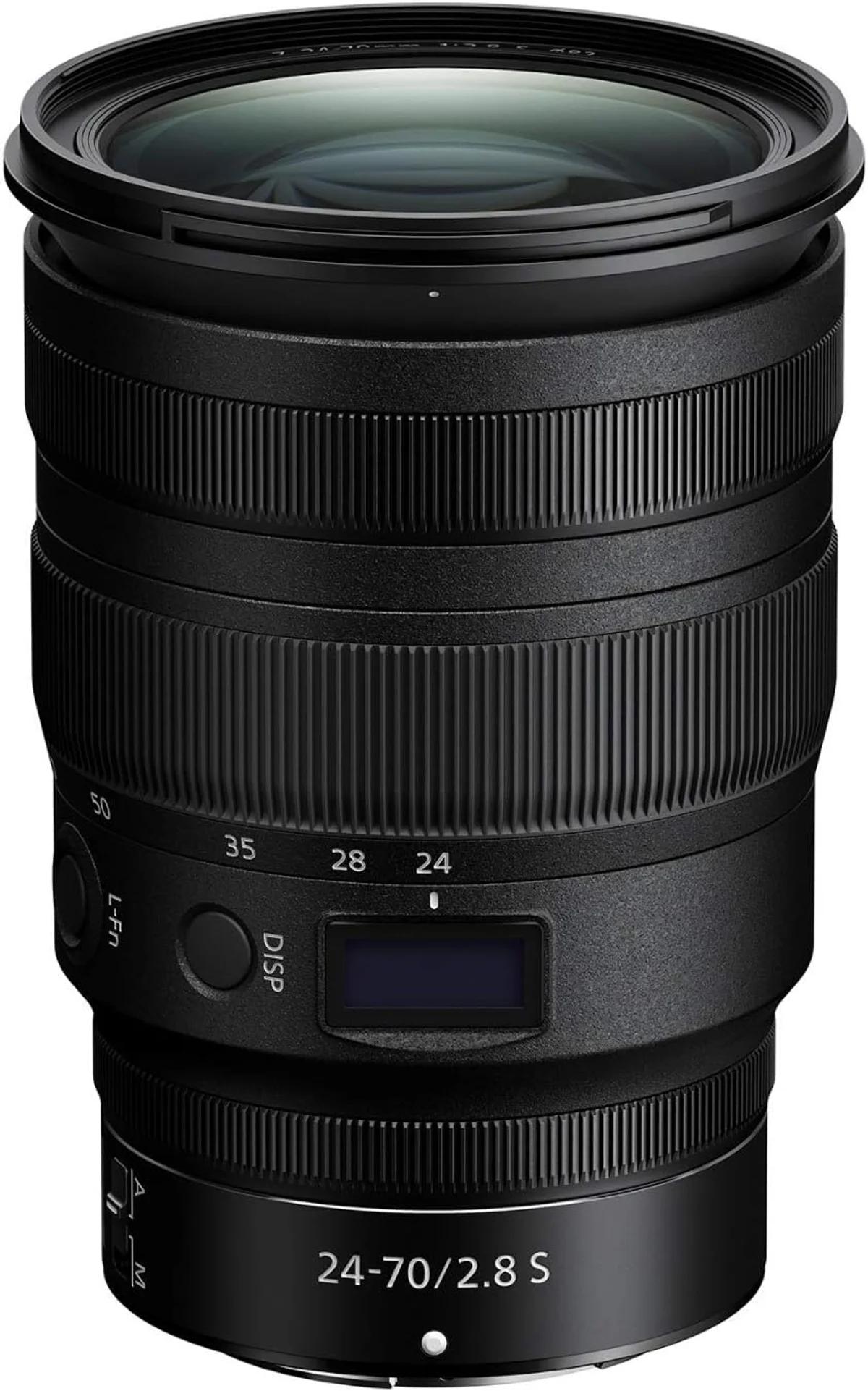
65 Years of F-Mount: Why Compatibility Is Complicated
Nikon introduced the F-mount in 1959 with a purely mechanical interface — the lens had no electronics, and the camera communicated aperture settings through a prong coupler on the aperture ring. Over the following six decades, Nikon added electronic contacts, autofocus motors (both body-driven and lens-driven), vibration reduction, electromagnetic aperture control, and multiple generations of communication protocols. Each addition created a new lens sub-type while maintaining backward physical compatibility with the original mount.
This incremental evolution is both the F-mount's greatest strength and the source of its compatibility headaches. A 1970s AI-S prime and a 2018 AF-S E FL telephoto both attach to the same bayonet mount, but they communicate with the camera body in fundamentally different ways. When Nikon designed the Z-mount system and FTZ adapter, they had to decide which of these communication methods to support — and some got left behind.
The key compatibility dividing line is the autofocus motor location. Lenses with built-in motors (AF-S, AF-P) brought their own focusing mechanism and only needed an electronic signal from the camera to activate it. Lenses without built-in motors (AF, AF-D) relied on a screw-drive coupler in the camera body — a small rotating shaft that physically turned the lens's focus helicoid from outside. Z-mount bodies have no screw-drive coupler, so that entire class of lenses loses autofocus when adapted.
F-Mount Lens Types: A Field Guide
Nikon's lens naming conventions encode compatibility information in letter designations. Understanding these abbreviations tells you exactly what to expect from each lens on a Z body via the FTZ adapter.
AF-S (Silent Wave Motor): These lenses contain a ring-type ultrasonic autofocus motor. They are the most common modern F-mount lenses and the best candidates for adaptation. Full autofocus, VR (Vibration Reduction), aperture control, and EXIF data all function through the FTZ adapter. Examples: AF-S NIKKOR 24-70mm f/2.8E ED VR, AF-S NIKKOR 70-200mm f/2.8E FL ED VR, AF-S NIKKOR 50mm f/1.8G.
AF-P (Pulse Motor / Stepping Motor): Nikon's newest F-mount AF motor type, designed for smooth, quiet focus — particularly suited to video. AF-P lenses get full autofocus through the FTZ adapter and often focus faster than AF-S equivalents during video recording due to the stepping motor's linear drive. Examples: AF-P NIKKOR 70-300mm f/4.5-5.6E ED VR, AF-P DX NIKKOR 10-20mm f/4.5-5.6G VR.
AF-D (Distance Information): These lenses add distance-encoding data to the basic AF communication but still rely on the camera body's screw-drive motor for focusing. On Z bodies via FTZ, they mount and meter correctly — aperture, exposure, and EXIF data all work — but autofocus does not function. Manual focus via the lens's focus ring remains available. Examples: AF NIKKOR 85mm f/1.4D IF, AF Micro-NIKKOR 105mm f/2.8D, AF NIKKOR 50mm f/1.4D.
AF (non-D): The earliest autofocus F-mount lenses, also screw-drive dependent. Same behavior as AF-D on Z bodies: metering and aperture work, autofocus does not. These lenses are older and less common than AF-D versions, often replaced by updated D variants. Examples: AF NIKKOR 50mm f/1.8 (the original "plastic fantastic"), AF NIKKOR 180mm f/2.8 ED.
G type: The "G" suffix means the lens has no mechanical aperture ring — aperture is controlled entirely by the camera body electronically. G-type lenses can be either AF-S (built-in motor, full AF on Z) or older screw-drive (no AF on Z). The "G" tells you about aperture control, not focus motor type. Always check for the AF-S or AF-P prefix separately.
E type (Electromagnetic Diaphragm): The "E" suffix indicates an electronically controlled aperture diaphragm, replacing the older mechanical aperture lever. E-type lenses are the most modern F-mount optics — they are always AF-S with built-in motors and get full functionality on Z bodies. The electromagnetic diaphragm provides more consistent aperture control during high-speed continuous shooting. Examples: AF-S NIKKOR 70-200mm f/2.8E FL ED VR, AF-S NIKKOR 500mm f/5.6E PF ED VR.
D type: Not to be confused with AF-D. The "D" suffix on any lens means it transmits focus-distance information to the camera for 3D Matrix Metering and i-TTL flash calculations. Most AF-S, AF-P, and AF-D lenses are D-type. This feature works through the FTZ adapter.
AI / AI-S (Automatic Indexing): Nikon's manual-focus lenses from 1977 onward. AI introduced a simplified aperture coupling ridge on the lens barrel. AI-S added linear aperture-to-diaphragm movement for programmed autoexposure. These lenses have no electronics and no autofocus. On Z bodies, they mount via the FTZ adapter and focus manually. Metering support varies by Z camera model — the Nikon Zf supports full matrix metering with AI/AI-S lenses via the non-CPU lens data menu, while other Z bodies offer more limited metering modes.
The FTZ and FTZ II Adapter: Bridging 30.5mm
The Nikon FTZ adapter is a hollow tube — 30.5mm deep — that holds an F-mount lens at the correct distance from a Z-mount camera's sensor. It contains electronic contacts on both sides (F-mount on the lens side, Z-mount on the camera side) and a microprocessor that translates between F-mount and Z-mount communication protocols. No optical elements sit inside the adapter. Light passes through unobstructed from lens to sensor, so image quality is identical to using the same lens on an F-mount DSLR.
Nikon released the FTZ II in 2021 as a physical redesign. The tripod foot present on the original FTZ was removed, reducing the adapter's size and weight. The FTZ II sits flush with the bottom of most Z camera bodies, giving a cleaner profile in the hand. Electronically and optically, the two versions are identical. If you own the original FTZ, there is no performance reason to upgrade. If you are buying new, the FTZ II is the obvious choice for its improved ergonomics.
The FTZ adapter supports VR (Vibration Reduction) on lenses that have it, transmits full EXIF data including focal length and aperture, enables in-camera lens corrections (distortion, vignetting, chromatic aberration) for Nikon lenses in the camera's database, and supports Nikon's flash communication protocols for CLS (Creative Lighting System) compatibility.
What the FTZ does not do: it does not add a screw-drive AF motor. This is the single most important limitation. Nikon chose not to build a focus motor into the adapter (as Pentax did with its K-mount adapter for the K-1), so AF-D and older AF lenses lose autofocus entirely. Nikon's publicly stated rationale was maintaining adapter simplicity and reliability, but the practical consequence is that a large portion of the F-mount lens library becomes manual-focus only on Z.

AF-S and AF-P Lenses on Z: The Full-Function Path
AF-S and AF-P lenses are the straightforward success story of F-mount adaptation. Mount an AF-S 70-200mm f/2.8E FL ED VR on a Z8 via the FTZ II, and the experience is nearly indistinguishable from native Z glass. Autofocus tracks subjects across the frame, VR stabilization coordinates with the Z body's IBIS (on bodies that have it), aperture responds to camera commands, and the camera applies automatic corrections for distortion and lateral chromatic aberration.
"Nearly" carries a small caveat.
AF speed with adapted AF-S lenses is slightly slower than native Z-mount equivalents — typically 10-20% slower to acquire initial focus in controlled testing. The difference is measurable on a test bench but rarely noticeable in real shooting. Continuous AF tracking performance is closer to identical, since the camera's subject-detection algorithms drive the tracking and the lens motor simply responds. For sports, wildlife, and event work, adapted AF-S telephoto lenses perform well enough that many professionals continued using them for years after switching to Z bodies.
AF-P lenses actually have an advantage in video autofocus. The stepping motor design produces smooth, near-silent focus transitions that work well with Z bodies' video AF systems. The AF-P NIKKOR 70-300mm f/4.5-5.6E ED VR, in particular, is a popular adapted lens for hybrid photo-video shooters who have not yet invested in the native Nikon Z 70-200mm f/2.8 VR S.
One functional note: some AF-S lenses with older firmware may not support all Z-body features. Focus-point selection, animal-detection AF, and certain custom function assignments were added to Z firmware after initial FTZ launch. If an adapted AF-S lens behaves unpredictably, check Nikon's compatibility list — a lens firmware update (available through Nikon service centers for older lenses) may resolve the issue.
AF-D Lenses on Z: Manual Focus, Full Metering
AF-D lenses occupy the most frustrating middle ground in the F-mount compatibility story. They are optically excellent — many are still among the sharpest lenses Nikon has produced in their respective focal lengths — but they lose the one feature most photographers consider non-negotiable: autofocus.
The electronic communication through the FTZ adapter remains intact. Matrix metering reads the scene correctly. The camera displays focal length, maximum aperture, and distance information in the viewfinder. Aperture control works through the camera's command dials. VR is not a factor since AF-D lenses predate optical stabilization. The lens feels and works like a fully functional manual-focus lens with modern metering — which, for some applications, is perfectly acceptable.
The AF-D lenses most commonly adapted to Z bodies are fast primes valued for their optical character: the 85mm f/1.4D IF (renowned for its portrait rendering), the 105mm f/2 DC (Defocus Control, unique to Nikon), the 135mm f/2 DC, and the 180mm f/2.8 ED.
These lenses produce images with a distinct rendering that differs from modern Z-mount optics — softer transitions, more optical character, less clinical correction. Photographers who value that look accept manual focus as the cost of accessing it on a modern body.
For general-purpose shooting where autofocus matters, AF-D lenses are not practical on Z bodies. The manual focus ring on most AF-D lenses was designed for fine-tuning after the camera's motor achieved initial focus — the rotation throw is often short, making precise manual focusing more difficult than with a purpose-built manual lens. Focus peaking on Z bodies helps, but the experience is not as smooth as using an AI-S lens with a long, damped focus throw.
AI and AI-S Manual Lenses: Body-Dependent Metering
Nikon's AI and AI-S lenses are pure manual-focus optics with no electronic contacts. They communicate aperture to the camera body through a mechanical coupling ridge on the rear of the lens barrel. The FTZ adapter passes this mechanical coupling to the Z body — but Z bodies handle non-CPU lenses differently depending on the model.
The Nikon Zf is the most AI/AI-S friendly Z camera. It includes a "Non-CPU lens data" menu where you can register up to 20 manual lenses by focal length and maximum aperture. Once registered, the Zf provides full matrix metering, displays the lens name in EXIF data, and enables aperture-priority autoexposure. This makes the Zf the natural Z-body choice for photographers who own and actively shoot AI-S glass.
Other Z bodies — the Z5, Z6 series, Z7 series, Z8, Z9 — also support non-CPU lens data registration, but metering is typically limited to center-weighted or highlight-weighted modes with non-CPU lenses. Matrix metering is not available for AI/AI-S lenses on these bodies. Exposure accuracy is still good with center-weighted metering, especially for experienced photographers who understand the metering pattern, but it requires more attention than the set-and-forget matrix metering available on the Zf.
AI-S lenses have a mechanical advantage over AI lenses for adapted use: the AI-S specification standardized the relationship between aperture ring rotation and diaphragm movement, allowing cameras to control exposure more precisely in programmed and shutter-priority modes. On Z bodies, this distinction matters less since you are typically shooting in aperture-priority or manual mode with manual lenses — but if you are buying AI-era glass specifically for Z use, AI-S versions are the better choice.
Pre-AI lenses (those manufactured before 1977 without the AI coupling ridge) do not mount safely on the FTZ adapter without modification. The original meter-coupling prong on pre-AI lenses can physically interfere with the FTZ adapter's bayonet mechanism. Pre-AI lenses must be AI-converted (a machining modification to the aperture ring) before use with the FTZ adapter. This conversion is available from Nikon service centers and independent camera repair shops, typically for a modest fee.
Third-Party F-Mount Lenses on Z: Sigma, Tamron, and Others
Third-party F-mount lenses follow the same motor-type rule as Nikon lenses: if the lens has a built-in focus motor, it autofocuses through the FTZ adapter. If it relies on the body's screw drive, it becomes manual-focus only. The additional variable with third-party glass is electronic compatibility — since Sigma, Tamron, and Tokina reverse-engineered the F-mount communication protocol rather than licensing it, adapted behavior is occasionally less predictable than with genuine Nikon glass.
Sigma Art, Contemporary, and Sports (HSM motor): Sigma's Global Vision lineup uses Hyper Sonic Motor (HSM) autofocus, which functions through the FTZ adapter. The Sigma 35mm f/1.4 Art, 50mm f/1.4 Art, 85mm f/1.4 Art, and 24-70mm f/2.8 Art all autofocus on Z bodies. Sigma reports good compatibility but recommends updating lens firmware via the Sigma USB Dock before first use on Z. Some early Art lenses had intermittent AF errors on Z bodies that firmware updates resolved.
Sigma also offers a mount conversion service for select F-mount lenses — they will re-mount the lens in native Z-mount at their service centers, eliminating the adapter entirely. This is worth considering for Sigma Art lenses you plan to keep long-term, since native Z-mount communication is more reliable than adapted F-mount. For a full comparison of third-party versus first-party options, see our third-party vs native lenses guide.
Tamron (USD and VXD motor F-mount): Tamron's F-mount lenses with USD (Ultrasonic Silent Drive) motors — the SP 24-70mm f/2.8 G2, SP 70-200mm f/2.8 G2, SP 150-600mm G2 — autofocus through the FTZ adapter with generally good results. Tamron does not offer mount conversion, so the adapter remains a permanent part of the setup. Tamron has since released native Z-mount lenses like the Tamron 28-75mm f/2.8 G2 (Z-mount) and Tamron 150-500mm f/5-6.7 (Z-mount), which are the better option for new purchases.
Tokina: Tokina's AT-X Pro series F-mount lenses (those with internal focus motors) work through the FTZ adapter, but compatibility is less thoroughly documented than Sigma and Tamron. The popular Tokina AT-X 11-16mm f/2.8 (DX format) autofocuses on Z50 and Z30 through the FTZ. Tokina's newer SZ series is produced in native Z-mount, avoiding the adapter question entirely.
Older third-party screw-drive lenses: Pre-2010 third-party lenses that used the body's screw drive (Sigma, Tamron, Tokina, and various budget brands) lose autofocus on Z, just like Nikon's own AF-D lenses. Additionally, some very old third-party lenses may have electronic communication issues through the FTZ adapter — symptoms include incorrect aperture reporting, erratic metering, or failure to be recognized by the camera body. If an older third-party lens does not function correctly through the FTZ, there is typically no firmware fix available.
When to Adapt vs When to Buy Native Z-Mount
The decision framework is simpler than it appears.
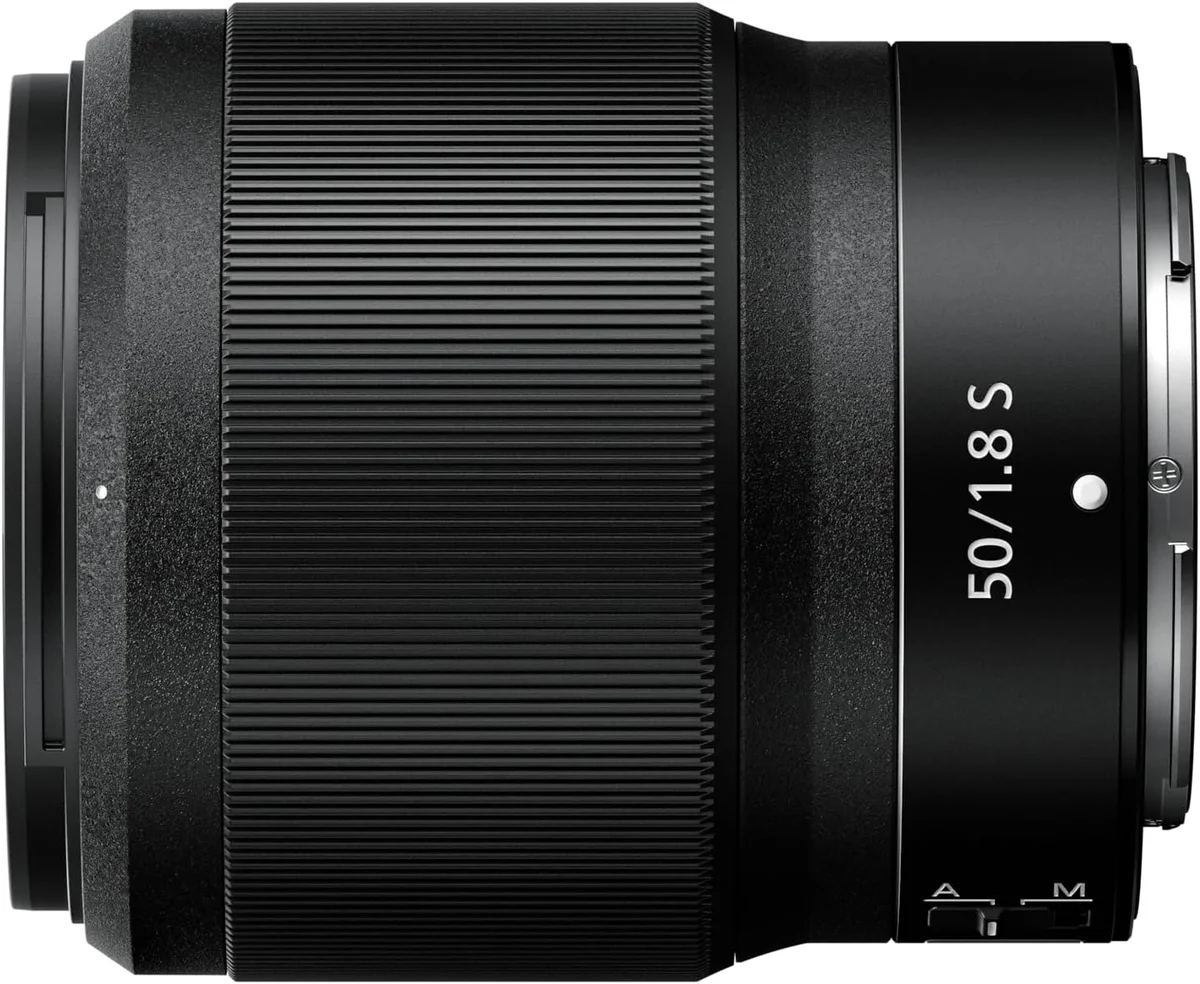
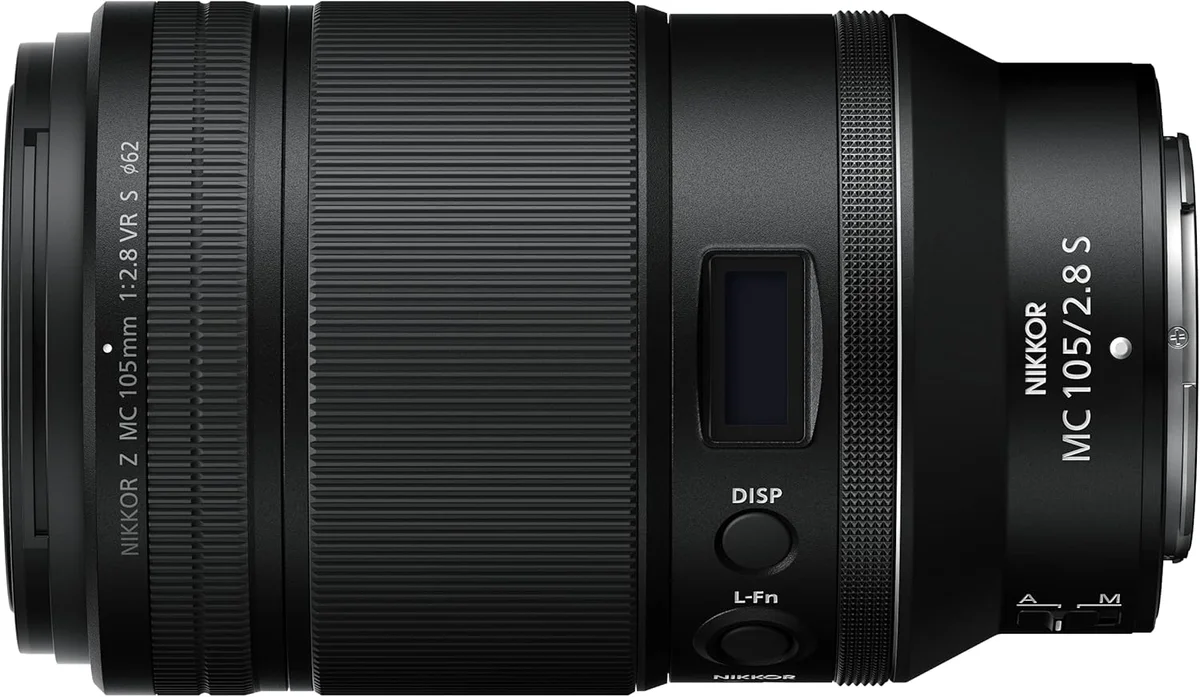
Native Z-mount glass is optically superior in most cases — the wider 55mm throat diameter and 16mm flange distance give lens designers more room for complex optical formulas than the F-mount's 44mm throat and 46.5mm flange ever allowed. Nikon's Z-mount S-line lenses set a new standard for the company's optical performance. The Nikon Z 24-70mm f/2.8 S, Nikon Z 50mm f/1.8 S, and Nikon Z MC 105mm f/2.8 VR S all outperform their F-mount predecessors on resolution, aberration control, or both.
Adapt when: You already own high-quality AF-S or AF-P F-mount glass and are transitioning to Z-mount.
The AF-S 70-200mm f/2.8E, AF-S 300mm f/4E PF, AF-S 500mm f/5.6E PF, and AF-S 105mm f/1.4E are all lenses worth adapting rather than replacing immediately — they perform at a level that makes buying the Z equivalent a luxury, not a necessity. The Nikon Z 24-120mm f/4 S is a strong native option when you are ready to replace an adapted standard zoom, but adapted AF-S zooms remain fully capable in the interim.
Adapt when: You want access to specific optical characteristics that no Z-mount lens reproduces. The AF DC-NIKKOR 105mm f/2 and 135mm f/2 offer Defocus Control — a unique feature Nikon has not replicated in Z-mount. Certain AI-S primes (the 28mm f/2.8, 35mm f/1.4, 105mm f/2.5) have rendering qualities that modern lenses, with their higher correction, intentionally do not reproduce.
Buy native Z when: You are purchasing new glass for the first time, replacing a lens you do not already own, or the Z-mount version offers a clear improvement for your work (faster AF tracking for sports/wildlife, better video AF for hybrid shooting, reduced size/weight).
The Z-mount third-party ecosystem has expanded enough that budget-friendly options exist: the Tamron 28-75mm f/2.8 G2 for Z is a strong standard zoom at a lower price than Nikon's own Z 24-70mm f/2.8 S. For a full ranked list, see our best Nikon Z lenses roundup.
Buy native Z when: Video is a primary use case. Native Z lenses communicate focus-breathing compensation data to Z bodies that support it (Z8, Z9, Zf). Adapted F-mount lenses do not transmit this data, so breathing compensation is unavailable. For stills-only photographers, this is irrelevant. For video shooters, it is a meaningful functional gap.
Practical Adaptation Tips
A few patterns emerge from years of photographers adapting F-mount glass to Z bodies.
Check compatibility before assuming. Nikon publishes an official FTZ compatibility list on its support website, organized by lens model. Not every F-mount lens is listed, and "compatible" on the list means the combination has been tested — unlisted lenses may still work but are not guaranteed. For third-party lenses, check the manufacturer's website separately.
Update firmware on everything. Both the Z camera body and any F-mount lenses with updatable firmware (AF-S and AF-P types from roughly 2016 onward) should be running the latest versions. Several early FTZ compatibility issues were resolved through camera body firmware updates rather than lens updates. Nikon's firmware download center provides a per-body, per-lens lookup.
Accept the size increase. The FTZ adapter adds 30.5mm of length between camera and lens. With compact primes like the AF-S 50mm f/1.8G, the adapter is nearly as long as the lens itself. This changes the handling balance and may not fit in a bag pocket. Native Z primes — the Nikon Z 50mm f/1.8 S is the direct comparison — are designed for the shorter registration distance and handle better on Z bodies.
Weather sealing varies. The FTZ and FTZ II adapters have a rubber gasket at the camera-body mount, providing weather sealing at that junction. The lens-side mount has no additional sealing — the F-mount bayonet itself provides whatever seal the lens was designed with. For weather-sealed F-mount lenses (pro-grade AF-S models), the combination is reasonably weather-resistant. For consumer-grade lenses without sealing, the adapter does not improve the situation.
DX lenses trigger crop mode automatically. F-mount DX (APS-C) lenses mounted via FTZ on a full-frame Z body (Z5, Z6, Z7, Z8, Z9) activate a 1.5x DX crop automatically. The camera reads the lens's DX designation and restricts the sensor readout to the APS-C center area. On DX Z bodies (Z50, Z30, Zfc), all F-mount lenses — both FX and DX — use the full sensor area as expected.
Nikon F-Mount Compatibility Questions
Answers to common questions about adapting Nikon F-mount lenses to Z-mount mirrorless cameras.
Do all Nikon F-mount lenses autofocus on Nikon Z cameras?
No. Only F-mount lenses with built-in focus motors — designated AF-S (Silent Wave Motor) and AF-P (Pulse Motor) — autofocus through the FTZ or FTZ II adapter. Older AF and AF-D lenses relied on a mechanical screw-drive motor in the camera body. Nikon Z bodies do not include this screw-drive coupling, so those lenses become manual-focus only when adapted.
What is the difference between the FTZ and FTZ II adapter?
The FTZ II is smaller and lighter than the original FTZ. Nikon removed the tripod foot from the bottom of the adapter, giving it a cleaner profile that sits flush with most Z camera bodies. Optically and electronically, the two adapters are identical — same autofocus performance, same lens compatibility, same image quality. The FTZ II is the better buy unless you specifically need the tripod foot for heavy telephoto lenses.
Can I use Nikon AF-D lenses on a Nikon Z camera?
Yes, but with manual focus only. AF-D lenses mount and communicate electronically through the FTZ adapter — metering, EXIF data, and aperture control all work. The only feature lost is autofocus, because AF-D lenses need a body-side screw-drive motor that Z cameras lack. If you own a few AF-D primes you love (the 85mm f/1.4D is a common example), they remain usable for deliberate, manual-focus shooting on Z bodies.
Do Nikon AI and AI-S manual lenses work on Z cameras with the FTZ adapter?
Partially. AI and AI-S lenses mount on the FTZ adapter and focus manually, but metering support depends on the camera body. The Nikon Zf supports matrix metering with AI/AI-S lenses when you enter the lens data manually in the non-CPU lens menu. Other Z bodies provide center-weighted or highlight-weighted metering only. No AI or AI-S lens will autofocus on any Z body — they were always manual-focus lenses.
Will my Sigma Art F-mount lens autofocus on a Nikon Z camera?
Most Sigma Art lenses with Nikon F-mount and built-in HSM (Hyper Sonic Motor) autofocus will work through the FTZ adapter. Sigma has confirmed compatibility for many of its Art, Contemporary, and Sports lenses. Occasional AF inconsistencies can occur — Sigma recommends updating lens firmware via the Sigma USB Dock before using adapted lenses. If your specific Sigma lens has AF issues on Z, Sigma offers a mount conversion service to native Z-mount for select models.
Should I buy an F-mount lens and adapt it, or buy native Z-mount?
Buy native Z-mount for new purchases. Z-mount lenses are designed for the shorter flange distance and wider throat diameter of the Z system, allowing optical formulas that are not physically possible in F-mount. AF performance is also faster with native lenses — no adapter communication overhead. The only reason to buy F-mount today is if you find a used lens at a steep discount and accept manual focus (for AF-D types) or slightly slower AF (for AF-S types) as a cost of entry.
Does the FTZ adapter affect image quality?
No. The FTZ adapter contains no optical elements — it is a hollow tube with electronic contacts that bridges the 30.5mm difference between the F-mount flange distance (46.5mm) and the Z-mount flange distance (16mm). Image quality is identical to using the same lens on an F-mount DSLR body. The adapter adds about 30mm of length between camera and lens, which changes the physical balance of the setup but has zero optical effect.
Can I use teleconverters with F-mount lenses on the FTZ adapter?
Yes, if the teleconverter is F-mount. Mount the F-mount teleconverter directly to the F-mount lens, then mount the combined stack onto the FTZ adapter. Nikon TC-14E III and TC-20E III teleconverters work this way with compatible F-mount telephoto lenses. You cannot use a Z-mount teleconverter with an F-mount lens — the teleconverter mounts to the camera side, and Z-mount teleconverters only accept Z-mount lenses.
Get Lens Picks Delivered
One email per week. Honest lens reviews, no spam.
Only when something changes. Unsubscribe anytime.